• Baysy belter

    THE Voice doesn’t usually start home reviews in the back garden, but this Bayswater home is a bit special.

    On the side of the large garden shed is a mural of a lush forest with a waterfall and blue sky in the distance.

    It could have easily been a naff indulgence, but it works extremely well and blends effortlessly into the rest of the greenery in the back yard.

    The mural is just one of the many highlights in this four bedroom two bathroom home, which has loads of charm and character and is a gorgeous family affair.

    The main open plan lounge/dining room/ kitchen is especially impressive.

    A huge artwork sets off the lounge, which is slightly off to the side and a nice spot to chill with family movies and the AFL come the weekend.

    The Voice like how it’s slightly around the corner so you have some noise separation from the kitchen when you are watching movies and TV.

    The dining room is tucked under a mezzanine but there’s plenty of natural light courtesy of the many windows overlooking the garden. Whipping up a meal will be breeze in the spacious kitchen which has a water filtration system, double sink, gas cooktop and built-in pantry cupboard.

    It’s nice that white has been eschewed in favour of dark counter tops and natural wood cabinets and drawers.

    It makes a change from the omnipresent white you seen everywhere and actually blends in better with the stainless steel appliances, giving the kitchen a chic industrial look, enhanced by the metal splashback.

    So the kitchen gets some extra points for originality and bold style choices.

    Up on the mezzanine is a couch, book shelves, digital piano and an old pinball machine.

    It’s a lovely little spot to escape the rest of the family and I’m guessing this might be dad’s ad hoc man cave.

    The jutting roof almost creates an architectural statement here and it’s all very stylish.

    With spring nearly sprung, it’s great to know this home has a balcony overlooking a massive backyard with a huge powered workshop/shed, with right-of-way access, and a sizeable lawn.

    If you have young kids you could leave as is or you might want to put in a pool. 

    The balcony has plenty of room for an alfresco setting, BBQ and couch, so you can enjoy this undercover space all-year round.

    The home includes driveway parking for 2-3 cars (one undercover), an electronic front gate, air-conditioning, security alarm and under croft storage.

    Situated on a 526sqm block on Kitchener Avenue, you are close to local parks, the Swan River, Meltham train station, Bayswater town centre and neighbourhood cafes.

    This is a lovely family home in a sought-after neighbourhood, and you’ll just love that mural!

    Buyers in the $900,000’s
    12 Kitchener Avenue, Bayswater
    ACTON Mt Lawley 9272 2488
    Agent Carlos Lehn  0416 206 736

  • ‘Tell our stories, see our songlines’


    • Barry Winmar conducts the Welcome to Country ceremony at the August 16 announcement of the chosen site for WA’s Aboriginal cultural centre.

    Cultural centre site chosen

    AFTER decades of talk and plans that come and go, an Aboriginal cultural centre for Perth is looking like a reality with a location chosen overlooking the city foreshore.

    Currently a Terrace Road carpark operated by Perth council but owned by the WA government, it was chosen after consultation with Whadjuk representatives selected by elders.

    The site was deemed the best of six options given its proximity to significant sites including Derbal Yerrigan (the Swan River), Matagarup (Heirisson Island) and Katta Koomba (King’s Park).

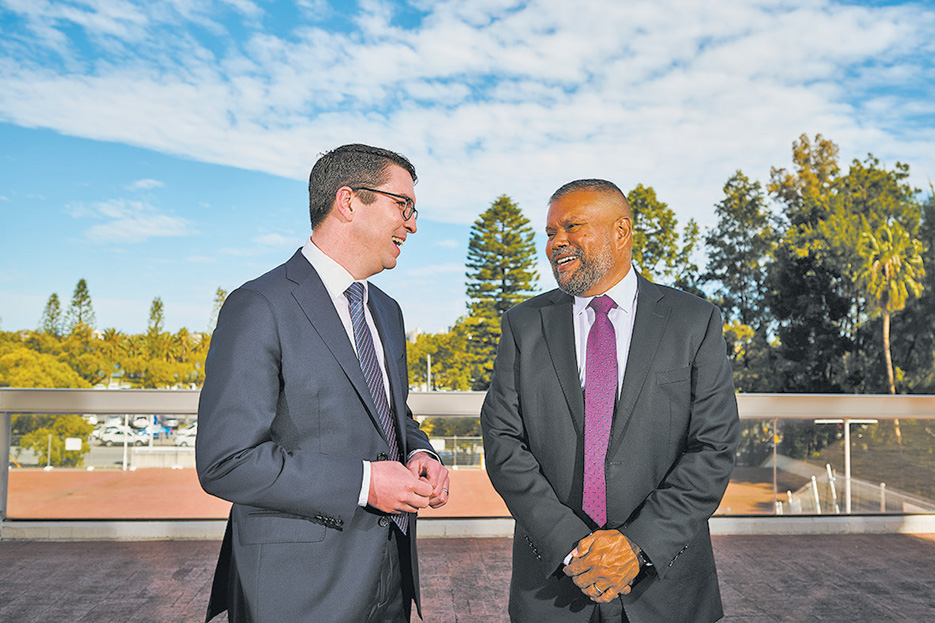
    Whadjuk Cultural Authority representative Barry Winmar said at the August 16 announcement the spot was “an iconic location right on the foreshore.

    “My ancestors walked these trails in years gone by and it’s a tribute to them to showcase the location and being a host for all those Aboriginal cultures across Western Australia, to give them an opportunity to showcase the richness and the diversity and the challenges they’ve gone through to be able to show the culture in the best light.”

    Mr Winmar said “we want to be able to have an on-country experience right here on the waterfront.

    “When the tourists come across the shores and they look at what Western Australia has to offer, Aboriginal culture is primary and underpinning everything that we do about our identity as Aboriginal people. It gives us an opportunity to tell our stories, see our songlines, showcase what our culture was like in art, dance and print and media.”

    Premier Mark McGowan said there were “so many different sites that could be selected, but I think that they have actually chosen the best one, not just because it’s culturally appropriate and very close to the river, which is of great significance. 

    Federal Perth MP Patrick Gorman and Barry Winmar.

    “It’s also an easy location for people to access. We want tourists from Australia, from around the world to come and visit and understand and enjoy that experience.

    “One of the things that surveys show is a lot of people from both Western Australia and other 

    parts of Australia, but especially internationally, want to enjoy an Aboriginal cultural experience. 

    “It’s one of the reasons they come to Australia, one of the reasons they come to Western Australia. So having an Aboriginal cultural centre that provides those opportunities is a great tourism attraction.”

    Federal Perth MP Patrick Gorman has been pushing for a centre since day dot of his time in politics, and welcomed the news. 

    “I’m very excited that we will have something of world class significance right here in Perth, something that not just people from other states wants to visit. 

    “It’s something that people from all over the world want to visit. 

    “This is something that we know visitors want when they come to Perth and I really feel that this project can be Western Australia’s answer to the Opera House.

    “We see this as part of that great nation building project of not just getting constitutional recognition, but being able to tell the stories of 65,000 years of continuous culture.”

    After consultation with local Whadjuk people on the location, there’ll now be state-wide consultation with Aboriginal people on the actual content of the centre.

    Perth council will lose about $1.2 million in parking fees once the state government takes back the carpark land, but lord mayor Basil Zempilas was unfazed and thought the city would benefit greatly from the centre: “The carpark land is owned by the WA Government, and as is the way with a management order that can be called in at any time. 

    “Our city stands to be the great beneficiary for this centre being in the City of Perth.”

    So far the centre has $50m of state funding and $52m in federal funding coming out of an Albanese government election commitment.

    Mr McGowan said “the plan is to have it finished by 2028.”

  • Appeal for port history
    Daniel A Elias is hoping to find old memories about wharfies from old timers and their families read his story below about the little-known 1899 strike that changed WA’s industrial relations forever.

    A HISTORIAN researching a century of tensions on the waterfront is hoping old wharfies and their families will be able to bring his ambitious thesis to life by sharing stories and ephemera from the key moments that shaped Australia’s maritime sector.

    Daniel A Elias is studying at UWA and looking at the issue of how maritime workers, shipping companies and state institutions navigated the tensions between each other and across the globe.

    “The history will explore four periods over a 100-year span,” Mr Elias said.

    Work stoppage

    “Starting with the work stoppage of 1899, moving to the waterfront tensions during the post-WWI era, followed by the Cold War era and the advent of containerisation, and finishing with the waterfront confrontations of 1998.”

    Mr Elias is hoping any relatives of people involved in those periods who has stories, personal correspondence, photos, posters, magazines, newspaper clippings or anything else related, will get in contact.

    “I want to make sure I keep the human life in my history, and the community’s contribution would go a long way in helping me achieve this goal,” he said.

    Mr Elias can be contacted on freo.maritimephd@gmail.com

    Tension on the waterfront

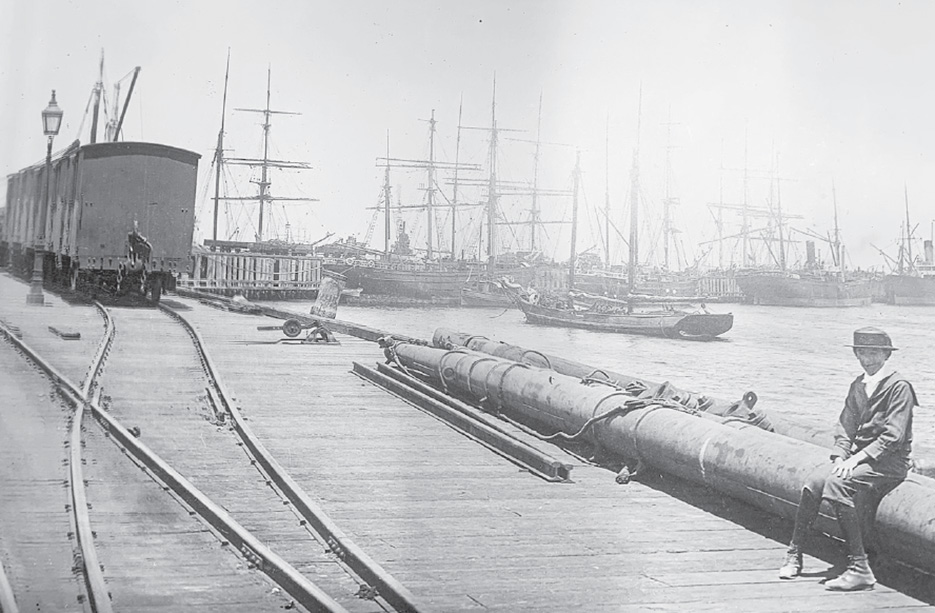
    THE five-week work stoppage at Fremantle Harbour in 1899 came to shape how Western Australian industrial relations functioned. 

    The urgency in which the following crisis was resolved echoes disputes throughout the 20th century, with striking similarities and obscure differences. 

    The demand for industrial peace existed because the harbour was pivotal to the rest of the colony. Fremantle (Walyalup) was isolated within the British Imperial trade network, which was a source of tension between governors, ship-owners, and maritime workers alike. 

    Members of the Fremantle Lumpers Union were a group of dockworkers who would load and unload cargo from ships. 

    Their work was irregular and brutal, with a safety review finding that there was “blood on the cargo”. 

    Blood

    Their working environment was at times deadly because the harbour was always congested. It was not a job that could be done five days a week, with a neat 9am to 5pm shift. 

    The lumpers preferred to work around two days a week, with five days to recuperate. 

    This gave rise to the perception from some in the community that they were lazy vagabonds, but that is far from the truth.    

    The discovery of gold in the late 19th century intensified trade through the already congested harbour, and masked the Long Depression that had hit cities across the globe. 

    Many people enthusiastically migrated to Western Australia in search of a fortune in the goldfields, nearly tripling Fremantle’s population from 5,607 in 1891 to 14,704 by Federation in 1901. 

    Premier John Forrest capitalised on the influx of people and finance to fund public works with the guidance of CY O’Connor. Fremantle was a buzz of activity, but it was all temporary. 

    As public works were completed and gold seams dried-up, the Depression came unmasked upon Fremantle.

    On February 15 a Steamship Owners Association member announced on their notice board that they would operate under the principle of “freedom of contract”, negating the gains which the union achieved through collective bargaining. It resulted in an average pay cut of 19.33 per cent and the loss of three hours of overtime pay.   

    The notice outlined the terms under which members of the SOA would hire maritime labour. 

    It was, in every respect, unfavourable to workers at the waterfront. 

    The president of the Association stated that the new terms, “were the rules under which the Association would in future work, [and there’s] nothing to state in regard to the new rules or the reason which led to their promulgation”. 

    Starved

    Another spokesperson for the SOA described the situation bluntly: “Unquestionably the time is a favourable one for the steamship owners to seek to reduce wages. The lumpers are pretty well starved down at the present time, and are to a large extent in the power of their employers.” 

    It was becoming clear Western Australia could not escape the Long Depression.

    The lumpers were stumped by the notice.

    However, the new terms were not in effect until March 1, and they assumed there was enough time to find a resolution. 

    But then, February 18, a new notice for employment was posted, stating it would give preferential work to old employees if they re-registered their names on the new terms of employment.

    Continued next week

  • Grand Leedy
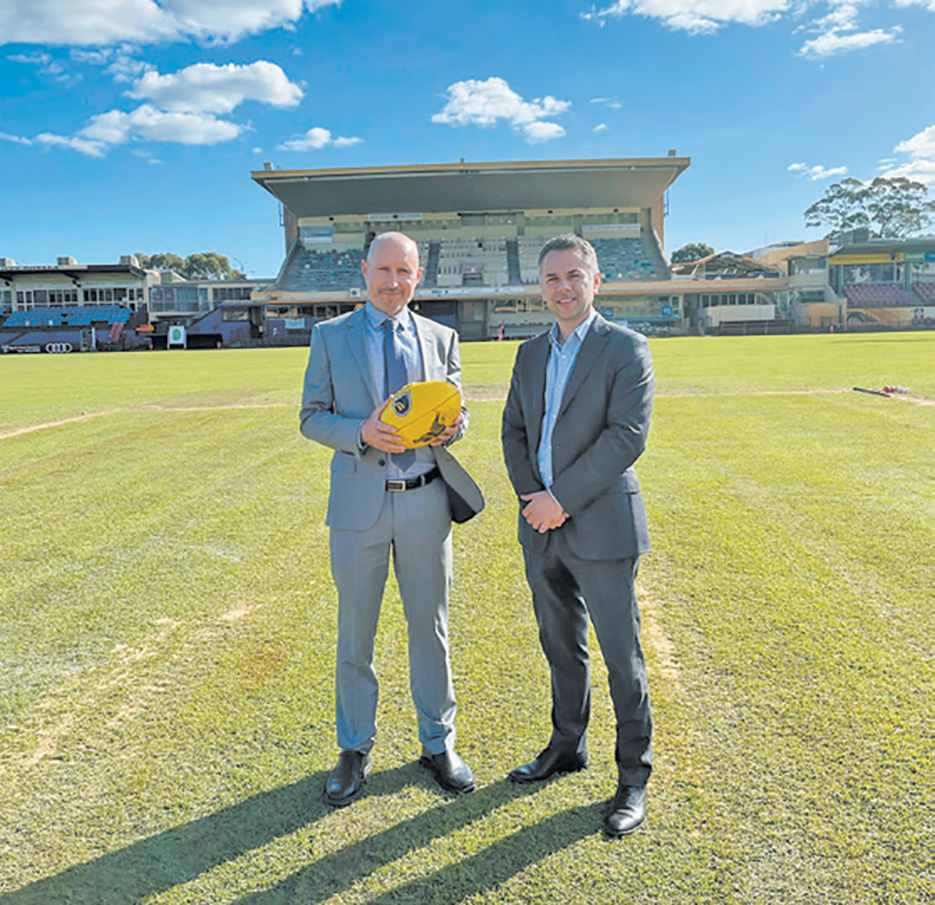
    City of Vincent CEO David MacLennan and WAFC CEO Michael Roberts.

    LEEDERVILLE OVAL’S won hosting rights for the 2022 WAFL Grand Final for what’s expected to be a big trading day for local businesses on October 1.

    It’s always a scramble among suburban ovals to host the big day and bring in the crowds: in 2020 Fremantle business owners pooled $50,000 in funding to help bring the game to their oval expecting visitors’ on-spend would be worth it. 

    In 2021 Optus Stadium had the deal cinched up and local ovals lost out to the state government-owned grounds, but this year Optus Stadium will be busy on game day getting into cricket mode for a rescheduled Twenty20. 

    This year Leederville Oval was chosen over bids from Fremantle and Bassendean. 

    Vincent council won the WA Football Commission over by pledging to close off the streets and turn Leederville and Oxford Street into a festival of football on game day, and to invest funds into replacing the turf and fixing up the soggy grounds. That’s been a bone of contention among players who don’t enjoy the muddy Melbourne style of semi-aquatic play. 

    WAFC CEO Michael Roberts said in a press statement: “It was never an easy choice to make but we believe after reviewing the submissions and the extensive meetings with clubs and local governments, that we have made the right choice.

    “Naturally, some fans will be upset it wasn’t their home ground, but we’ve tried to go for a central location that is currently looking like it will be a neutral ground for teams on the road to the Grand Final.

    “At the end of the day, we want to see as many people get to the game or in and around the precinct, cheering on their team and having the best game day experience while watching some of the best players in the competition.”

    Vincent mayor Emma Cole said in an announcement: “We are excited to have people experience the buzzing heart of Leederville.

    “Footy fans have plenty of places to dine, have a drink and shop in Leederville before and after the big game.”

    Leedy Oval has a capacity of 14,000, higher than Fremantle Oval’s 10,000 but still far too small to fit in the near 30,000 people who attended the 2021 grand final at Optus Stadium.

  • Proud return
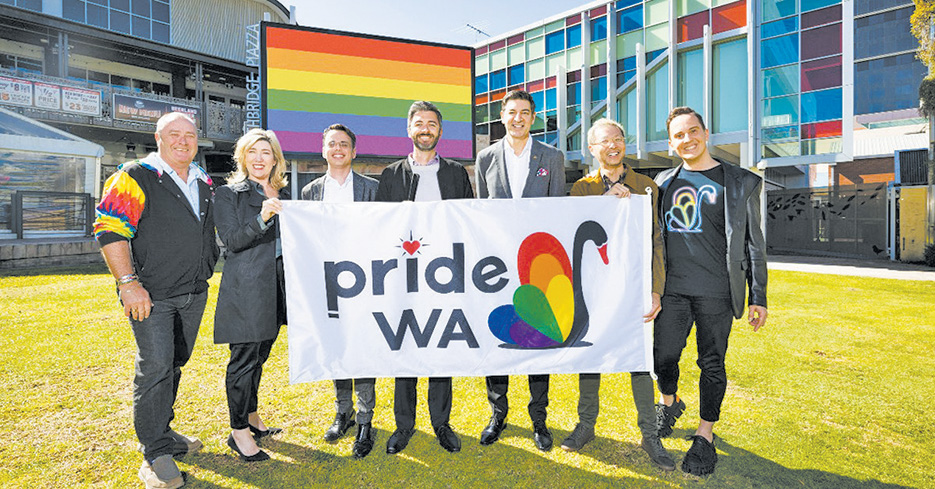
    City of Perth LGBTQIA+ Advisory Committee member Andrew Hall, Perth CEO Michelle Reynolds, committee members Michael Goncalves and Curtis Ward, Basil Zempilas, Choon Tan, and Callan Kneale from Pride WA.

    AFTER two years’ absence, the Pride Parade’s return to Northbridge has been locked in after Perth council offered up a record level of funding to secure the event. 

    Pride WA CEO Choon Tan led a deputation to a special Perth council meeting this week calling on the city to increase the amount of funding.

    The parade will cost the organisation $424,000 to run this year. Like many public events costs have ballooned due to security and the need for hostile vehicle mitigation barriers.

    Council staff had recommended $127,000 funding in line with the council’s usual policy that it’ll sponsor up to 30 per cent of an event. 

    Mr Tan said they wanted to build the festival and put it on the global map but the huge costs were a barrier: “We are concerned the City’s expectations cannot be met with the support the City has proposed … we cannot meet these major expectations without being given major support by the City.”

    Council staff advised councillors not to increase the funding as the $1 million event sponsorship budget had just $377,000 left, with more events in the pipeline to be funded.

    They also pointed out that Pride wasn’t quite the same draw as a big event like Fringe, which resulted in far more spending at local shops by city visitors. 

    But councillor Sandy Anghie moved an amendment and overruled that recommendation, increasing the funding to $210,000. That leaves $167,000 in the kitty.

    “We need to support this event to help make it bigger and better and help Pride put their Pride Festival on the global map,” Cr Anghie said.

    “I remember going to my very first Pride Festival in Sydney and as a youngster was blown away by the amount of people in the street and the activity, and I’d like to see our event get bigger and bigger and reach that scale.

    “It has been a few years as well since the last parade has been held in Northbridge and the world has completely changed, as Choon has rightly pointed out, and there’s more security to deal with and additional costs, so let’s help them make their festival fantastic.”

    The amendment was unanimously backed. The Parade is on November 26 and this year’s theme is “Shine”. 

    Council staff hinted there are some big events that are applying for the remnant cash but they remain confidential until the items go to open council.

  • Leedy towers plans released

    PLANS for two towers at Leederville’s 40 Frame Court block have been released with one stretching 25 storeys and the other 17, hosting 273 units including a new breed of 87 tiny “co-living” apartments built around communal areas. 

    The plans are a long time in the making with Vincent council paving the way for the project by changing its planning rules in October 2021 to allow the site’s owner EG Funds Management to build to this scale. 

    Previous limits here were five storeys but the council’s long regarded those as outdated, and has been keen on more height to get plenty of people into Leederville and keep the town centre lively. 

    The apartments will sit atop an art gallery, some communal spaces, and five commercial tenancies.

    An unusual feature is the 87 “co-living” apartments, with some levels set aside for 16 to 18 of the tiny units measuring 28sqm – 49sqm. 

    The owner is building these apartments to rent, rather than sell, and the micro habitats have a studio bedroom and basic kitchen and a small bathroom, and then have communal lounge and dining areas, shared laundries, bigger kitchens, and outdoor spaces.

    The development application says “the provision of co-living and one-bedroom apartments directly relates to the provision of affordable and diverse housing” and is “consistent with the desire for a range of dwellings” outlined in Vincent’s planning strategy for the area.

    A prototype co-living project The Switch opened at 555 Wellington Street in Perth this year attracting students and young renters trying to survive amid a housing shortage that made having a whole place to themselves out of reach. 

    The plans are out for public comment via imagine.vincent.wa.gov.au (under the development applications section) until September 7, then they’ll be voted on by the joint Vincent council/state government Development Assessment Panel. 

    by DAVID BELL

  • When Beatty Park rocked our world
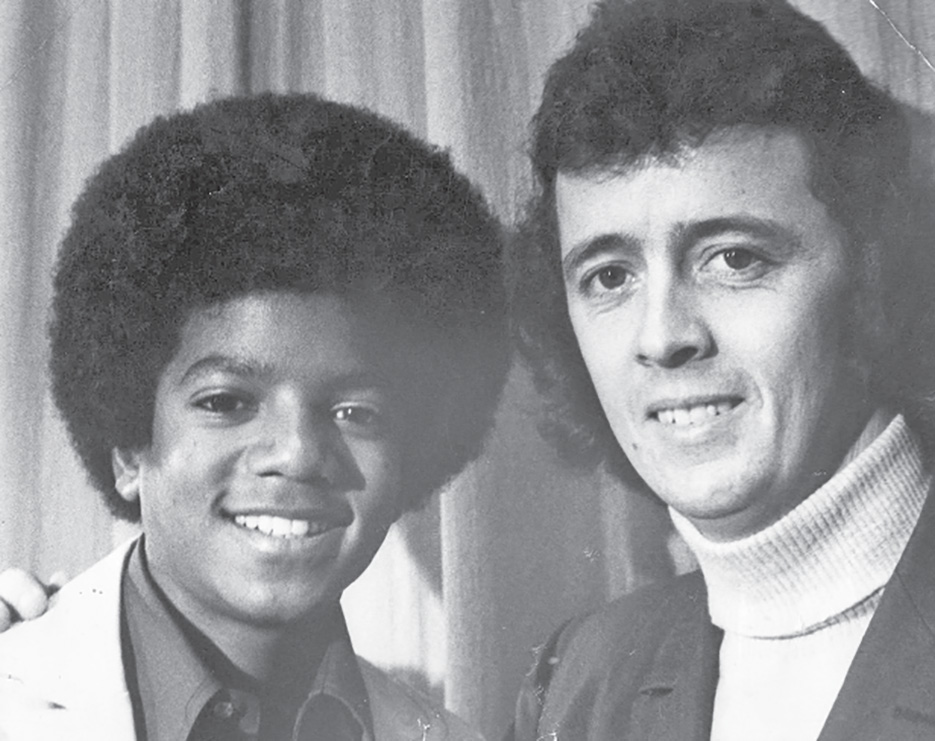
    Concert Promoter Paul Gadenne with a young Michael Jackson who played at Beatty Park with The Jackson Five on 29 June, 1973. Photo courtesy of Paul Gadenne. COV PHO3909.

    AS Beatty Park gears up to mark its 60th anniversary in November, the Vincent Local History Centre and Beatty Park kicks off with this celebration of the aquatic centres’ history with a tale of its time as one of Perth’s premiere music venues.

    MOST people know Beatty Park was built in 1962 as the major aquatic venue for the VIIth British Empire & Commonwealth Games. 

    Three days after the Games wrapped up, the pool opened to the public and created many happy memories for generations of Perth swimmers.

    Fewer people would know that for a brief period in the late 1960s and early 1970s, Beatty moonlighted as Perth’s go-to concert venue, hosting the likes of Santana, Deep Purple, The Bee Gees and more. 

    Prior to the opening of the Perth Entertainment Centre in 1974, Beatty Park was one of the few Perth venues that could seat 3000 – 5000 fans eager to see big name international acts, from Roy Orbison to The Jackson Five. Larry Wale is one of the many Perth locals whose fondest memories of Beatty Park is as a concert venue. 

    “My main memories of Beatty Park are from the concerts coming here in the early ‘70s. 

    “There were so many acts. One of the first concerts I saw was Suzie Quattro. 

    Crazy

    “Daddy Cool was another concert we saw along with Free; Manfred Mann’s Earth Band and Deep Purple. 

    “The crowd just went crazy all singing along. I remember Free doing All Right Now. 

    “I love that song cause I was a drummer and I just loved the drum beat. 

    “I remember at one concert the girls were jumping in the water to get to the band – it was either Daddy Cool or Deep Purple. 

    “The acoustics in the arena were great and the set-up of the stage was good – everybody had good vision. It was very exciting to be a part of seeing these overseas acts.” 

    The man responsible for bringing many of these international stars to Beatty Park was former radio announcer and concert promoter Paul Gadenne. 

    “The Beatty Park Aquatic Centre proved to be an excellent concert venue at a time when Perth was without any other venue of suitable size to host some of the world’s biggest names in music,” he said.

    “It did at times look spectacular with the image of what was happening on stage being reflected on the water of the main swimming pool adding to the ambience of many a memorable concert.” 

    While rain occasionally interrupted the open-air concerts, most shows were a huge success. 

    One of the memorable concerts that Paul was involved in organising at Beatty Park was a performance by Australian folk band The Seekers. In 1968, the band were at the height of popularity having just been named Australians of the Year. On February 9, 1968, the band played two sell-out shows as a fundraiser for the Floreat, Subiaco, Scarborough and City Beach chapter of Lions International.

    Larry Wale’s story has been captured as part of the Sixty Years of Beatty Park video story series available at beattypark.com.au/sixtyyears

    If anyone has photographs of the show, or of any other concerts at Beatty Park, please share them with the Vincent Local History Centre: (local.history@vincent. wa.gov.au or 9273 6534)

  • Our ‘writer for writers’


    HI, I’m Ariana Rosenberg. I feel very lucky to have been given the chance to sit and talk with the variety of writers this incredible city produces. WA punches well above its weight in terms of awards and acclaim, and as a writer myself, I hope to offer a unique perspective as I delve into who’s writing what – and why.

    On Fridays I volunteer at Civic Square Library, mostly shelving books. I’ll soon be studying online at North Metro TAFE for a Library and Information Services certificate. 

    I love books, reading and writing. I also enjoy the occasional painting session and taking photos – mostly of my cat, Sophie.

    As a writer, I have a few picture books and a collection of short stories published. I also have a few eBooks on Amazon Kindle. My Season’s Change is the first in a series on the importance of caring for the environment and the lessons that come from gardening.

    The process of writing is like putting together a puzzle. Each piece is unique but somehow it all comes together in the end.

    As a ‘writer for writers’ I hope to be a point of contact, offer a unique perspective and highlight the achievements of these authors, their unique stories, and their writing styles. 

    A writer creates with words; their mind is where the words flow from, just like the painter’s brush. I hope to capture some understanding of an author’s process and their books.

    To read about my books or find some of my stories, I can be found at http://www.roseonthehorizon.com

  • Poetry boots ‘n all

    NADIA RHOOK, Andrew Sutherland and Bron Bateman are all appearing at BeSpeak for Poetry Month. It’s at Freo.Social in Parry Street, Fremantle on August 25 from 7pm. Also on the bill are Scott-Patrick Mitchell, Talya Rubin, Elfie Shiosaki, Pidj Flavell, Slylar J Wynter, Zen Dogg, Timmah Ball and 2022 poetry ambassador Sisonke Msiman, plus live music with Tanaya Harper. It’s free, but book at www. eventbrite.com.au/e/bespeak-wa-poetry-showcase-2022-tickets-380142976877

    ANDREW SUTHERLAND’S book, Paradise (point of transmission) is a collection of queer poetry that engages with his lived experience as a person living with HIV. 

    “The collection situates my personal history within mythologies, cultural histories, horror films and science-fiction, and in doing so the poems 

    form a trajectory that spans seroconversion and diagnosis, to the legal and cultural ramifications of medicalised bodies and my departure from my residence in Singapore, where I trained and worked as an actor, to experiences of desire and stigma as well as toward attempts at writing the sustained living with HIV in ways that go beyond the trauma of diagnosis or the notion of tragedy,”  

    Debut

    This is Sutherland’s first book and debut poetry collection, drawing from a lot of varied experiences of illness and as a “queer human being”.

    Sutherland also has a decade of arts practice in theatre and performance as well as in poetry, prose fiction, creative non-fiction and theory under his belt.

    “For some time in the latter half of 2020, I feel like the density and the tone of my poetry started to evolve into something with a sense of humour and greater sense of freedom in the ways that what we perceive of as ‘low art’ can really speak to and interact with poetry and with theory,” he said.

    BRON BATEMAN has just released her latest collection of poetry, Blue Wren, through Voice fave Fremantle Press.

    It is built around a suite of poems about Mexican artist Frida Kahlo and encompasses a feminist narrative of motherhood, marriage and family. 

    Blue Wren is also a representation of illness and disabled embodiment.

    According to Bateman, good writing requires “a commitment to writing regularly and with honesty and integrity.

    “I want to write poems that are, as Franz Kafka says, ‘an axe for the frozen sea within a person’.”

    Bateman has written three poetry collections.

    “Each one is a favourite at the time I am writing it, but Blue Wren is my personal favourite as I think it is the most cohesive and mature collection,” she said.

    Bateman said the Kahlo poems were the most fun to write as she enjoyed the research that went into making them harmonious with the collection’s themes.

    “In the book, there are themes of love and redemption, grief and loss, erotic fulfilment, family tenderness and crip (or disabled) embodiment.”

    Bateman says she is currently working on her as-yet-untitled fourth collection.

    NADIA RHOOK’S second poetry collection, Second Fleet Baby (Fremantle Press, 2022), draws on the energies of 18th century English convict women, including her own ancestors, to open raw questions of belonging.

    “Through stories of childhood, fertility, and of nurturing new life during a pandemic, it casts off the patriarchal weight of history, pulling origins ‘from the seabed to the surface’,” she says.

    “It feels timely to share poems about the possibility of colonialism failing, about uncertain futures, and about love. And convict history lives large in Freo/Walyalup!”

    Rhook’s first collection was titled boots (UWA Publishing, 2020).

    “I’m so grateful to have had the opportunity to share work that reckon with my position in the world as a white settler woman,” she says.

    “Poetry is a place where I can create my own way of being a woman historian and rest in an authority that comes from sharing my personal (hi)story. 

    “Water was important to me as feminist motif in this book. 

    “Much Australian literature about colonialism focuses on land, and I also wanted to breathe into the inter-connections between land and water, masculinity and femininity, waves of authority and salt-healed wounds.”

  • Hot daddies
    • Some of the cool street rods and customs you might see at the Father’s Day Hot Rod Show in Fremantle.

    IT started out in 1965 with a handful of blokes who were into hot rods and modifying cars.

    Fast forward to 2022 and the West Coast Street Rod Club has hundreds of members and is busy preparing for its annual Father’s Day Hot Rod Show, which has been running for the past three decades.

    Forget about gifts of socks and pants, this is what dad really wants to see on Father’s Day – 100 stunning hot rods and custom/special interest vehicles from across the state.

    Show organiser and hot rod enthusiast Neil Gibb says the first two Father’s Day Hot Rod Shows were held in the car park of the Nookenburra Hotel in Innaloo, but it proved so popular they had to move it to a bigger site in Fremantle, where it has remained ever since.

    “For 22 years we’ve have been at St Patrick’s Primary School on the school grounds, but prior to that it was held under the large Morton Bay fig tree in King’s Square next to the town hall.”

    Another reason to go along is that some proceeds from the event will go to the Senses Foundation, which help the blind, deaf blind or multi-sensory impaired.

    Mr Gibb says hot rodding is an extremely popular pastime in Australia – especially in WA where there is mostly great weather – but once upon a time it was illegal to drive them on public roads.

    “The Australian Street Rod Federation was started in 1972 as an Australia wide umbrella for all hot rod clubs and individuals to belong to an organisation to lobby government on registering hot rods for legal use on the streets, and hence the term ‘Street Rods’ came about,” he says.

    “Australia-wide the ASRF has approximately 12,000 members, with 800 members of the ASRF and nine hot rod clubs in WA.

    “The Father’s Day Hot Rod Show is run by the West Coast Street Rod Club, who started the show as a fundraiser to help finish off their club rooms and workshop in Malaga.”

    Aside from the cars, there will be a food caravan, coffee van, stalls and a trophy presentation at the show, which is held on Father’s Day (Sunday September 4) from 10am-3pm at St Patrick’s Primary School on Point Street in Fremantle. $10 for a family ticket,$5 for adult and $2 for children.