• Canopy retreat

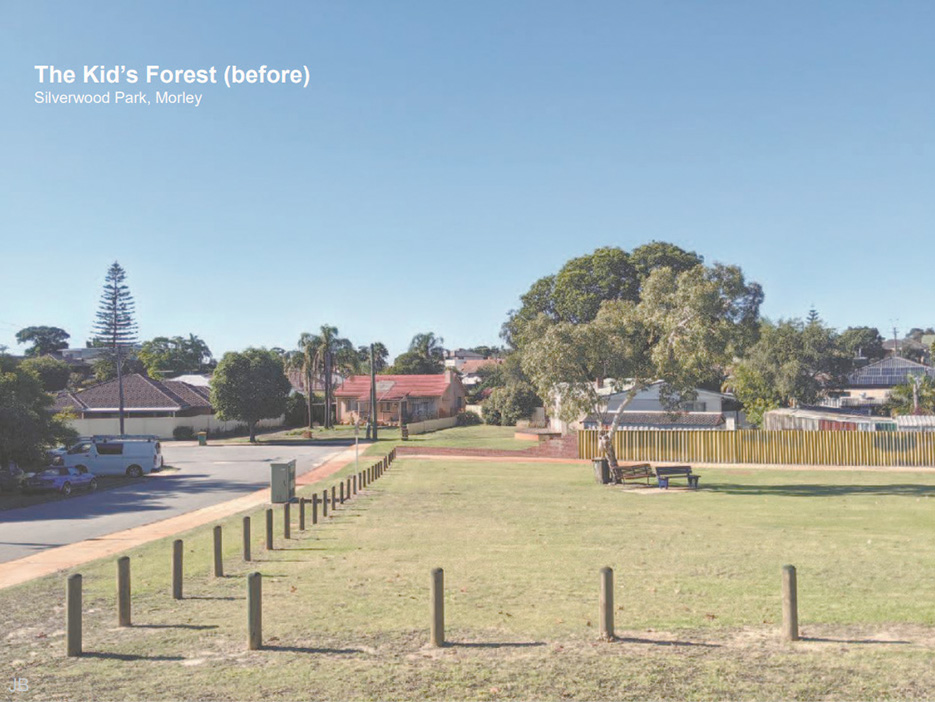
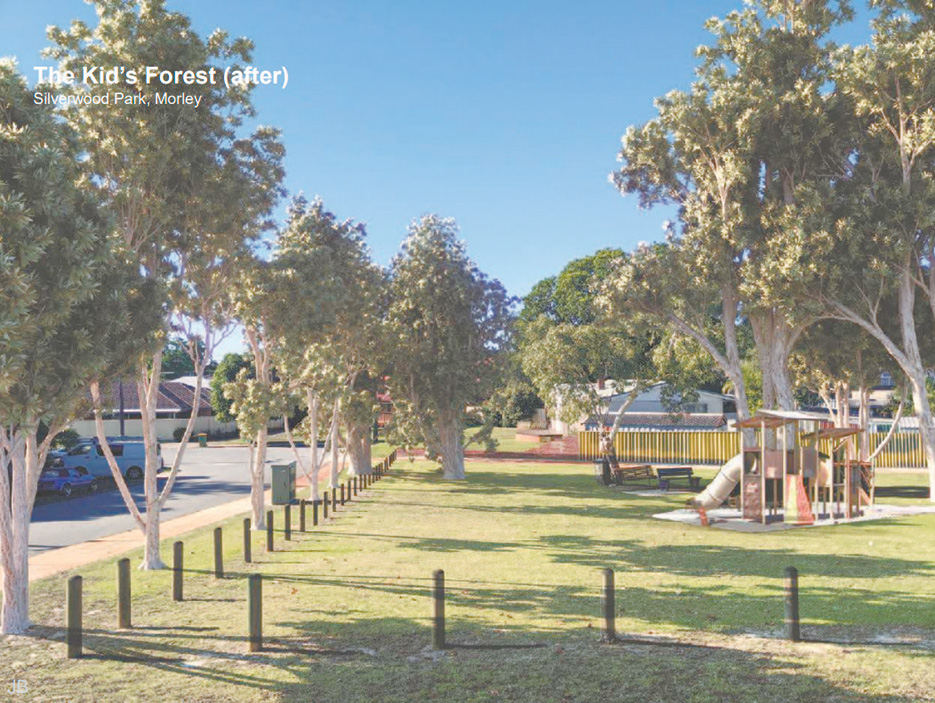
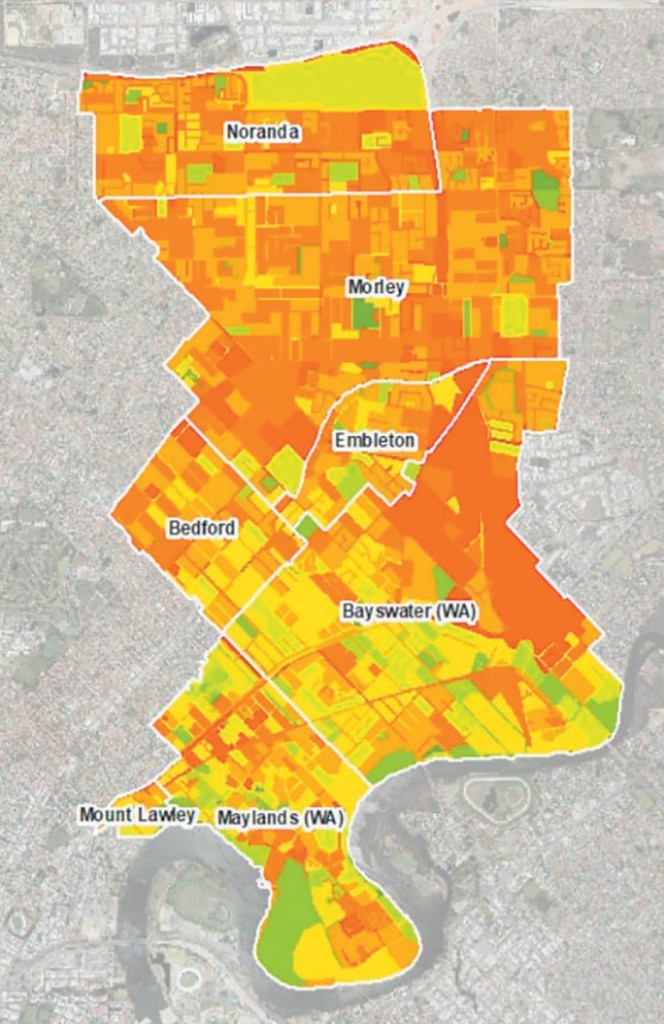
    TREE-starved Bayswater council has abandoned aspirations to reach 20 per cent tree canopy cover by 2025 with a majority of councillors deciding it’s unrealistic.

    Back in 2014 the council voted to set the aspirational target, as it had a paltry 13.2 per cent canopy cover and was one of the least green council areas in the nation.

    Despite planting new trees every year the canopy count has barely budged due to so many blocks being cleared for infill development along with big state government infrastructure works like the airport upgrades. The cover now sits at 14.5 per cent.

    Experts from UWA’s Australian Urban Design Research Centre have looked over Bayswater’s progress and run some modelling on how much more infill development is expected and found that at the current rate of planting they won’t hit the 20 per cent canopy coverage mark until 2040.

    So council staff recommended shifting the aspirational target date of 2025 to a firm date of 2040. Their advice to councillors read: “If this target is retained there is a reputational risk to the City should it not be achieved.”

    At the June 28 meeting Cr Catherine Ehrhardt argued that 2040 was a bit uninspiring and moved for 2030 as a specific target, which council endorsed.

    “There’s no denying that we need to put in more trees,” Cr Erhardt said. “I think we are definitely on track for that; the number of trees planted this season alone far exceeded any previous planting season,” a trend likely driven by the council doing more outreach this year and verge trees being the hot topic in the paper and among local community groups.

    “I also believe it’s really important you have goals that are aspirational, but possibly achievable, and I do believe that 20 per cent coverage by 2030 is achievable.”

    Councillors Dan Bull, Elli Petersen-Pik, Giorgia Johnson and Sally Palmer had wanted to massively increase planting efforts to go with a more ambitious stretch goal of 30 per cent by 2035, but after hearing the steep estimated costs the majority of councillors just voted for the 20 per cent by 2030 target.

    Cr Bull said their approach, not their target, should be what’s changing: “It’s disappointing to get a report in front of us saying we’re not going to meet our target.

    “If it’s the case that the target’s not going to be hit… that doesn’t mean you just shift the goalposts.”

    Many residents spoke at public question time urging the council to keep their aim high.

    Mayor Filomena Piffaretti responded to questions saying: “Not meeting the 2025 goal is not necessarily the result of any lack of effort, but rather the lag between effort and realising the results of that effort”,

    She said some of the trees planted now wouldn’t be large enough to contribute to the canopy count of 2025 as they need to reach three metres to qualify for inclusion.

    by DAVID BELL
  • Mental health in barren suburbia

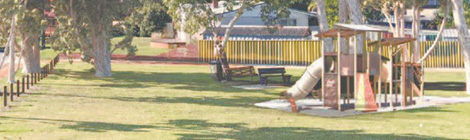
    MENTAL and physical health is at risk if Bayswater continues to lose trees to infill development according to the expert report by UWA’s Australian Urban Design Research Centre.

    The report used public health data to estimate that about 9.2 per cent of adults in Bayswater are at “high” or “very high” psychological distress.

    The report estimates those rates will rise to about 10.44 per cent if blocks keep getting cleared.

    But it claims if the council goes all out planting trees in town centres, verges, and around schools and parks and reaches an overall canopy of 30 per then the effect can be reversed.

    They predict “high” or “very high” psychological distress rates could drop to 7.68 due to trees cooling the area, calming stress, making it easier to exercise and encouraging more socialising.

    The report says with a “tree canopy of 30 per cent or more, adults had 31 per cent lower odds of developing psychological distress”.

    On the physical side the research centre estimated 63 per cent of Bayswaterians are getting either “low” exercise or even none at all, and that could be brought down a couple percentage points with more tree coverage.

  • Highgate heartbreak 
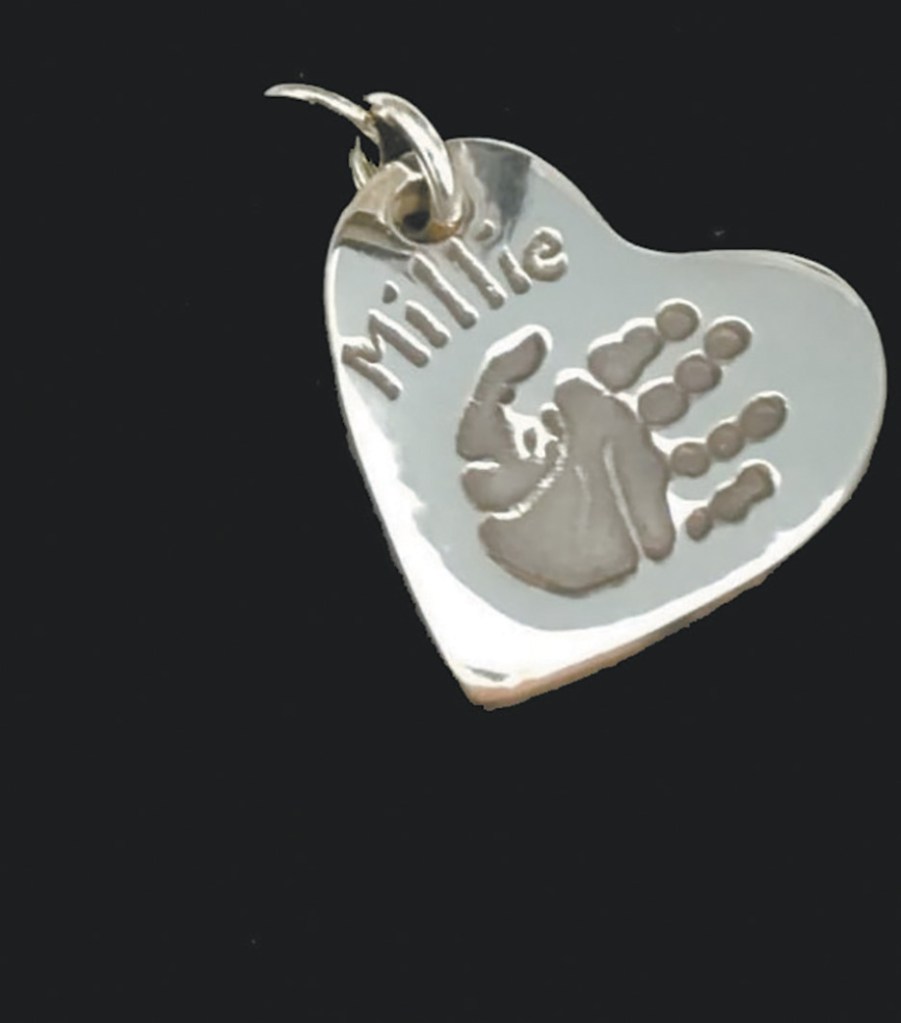
    A priceless memento: A daughter’s handprint engraved on a necklace was stolen in Highgate.

    Mum’s desperate plea over stolen pendant

    A HIGHGATE woman is pleading for the return of a stolen necklace that captured the handprint of her late daughter.

    The woman, who asked not to be named, found her car broken into on the morning of June 22. Her black Guess wallet was stolen, and inside was a necklace pendant imprinted with her daughter Millie’s handprint.

    She told us she doesn’t care about the other stolen items but the necklace is priceless.

    “I’m absolutely devastated as I can’t get another copy of her handprint as she is deceased now.

    “I’m heartbroken it’s gone – I’ve walked almost every street around here in hopes I find it.”

    A number of residents in the suburb’s local Facebook community group have commented on an increase in car breaks and vehicle damage in the past year or so. The area’s snug blocks means few residences have room for garages which makes for a lot of vulnerable vehicles at night. 

    If you have any information about the necklace leave a message with us at 9430 7727 or news@perthvoice.com and we’ll pass it on.

  • Hardware giant making a return
    Time is a flat circle: Don Stewart, Tom Bunning, and John Scott farewelling the old Charles Street Bunnings Bros office. From Jenny Mill’s book The Timber People and courtesy of WA Newspapers.

    AFTER seeing our story of Bunnings’ plan to move into the Pickle District, Andrew Main informs us this actually marks the hardware company’s return to their home patch.

    The Bunning brothers came to WA in 1886 and purchased their first saw mill, and “Bunning Bros” became incorporated in 1907. 

    The next generation of Bunnings sons expanded the timber business to start selling building supplies too and became a public company in 1952, operating out of the West Perth area south of Newcastle Street that’s now known as the Pickle District.

    Mr Main writes “I thought it was quite interesting that Bunnings used to operate in that area,” with its head office at 49-61 Charles Street which later became part of the Freeway area.

    “They opened their first hardware store at number 63-71 Charles Street in the 1950s, having bought a factory next door that was owned by a company called Felton, Grimwade and Bickford.”

    Today there’s little trace of the birthplace of the international hardware giant, but a small pond just south of the district is known as “Bunning Lake”.

    If you know any interesting historical tidbits about town get in touch via news@perthvoice.com

  • Anzac Cottage’s champ earns OAM
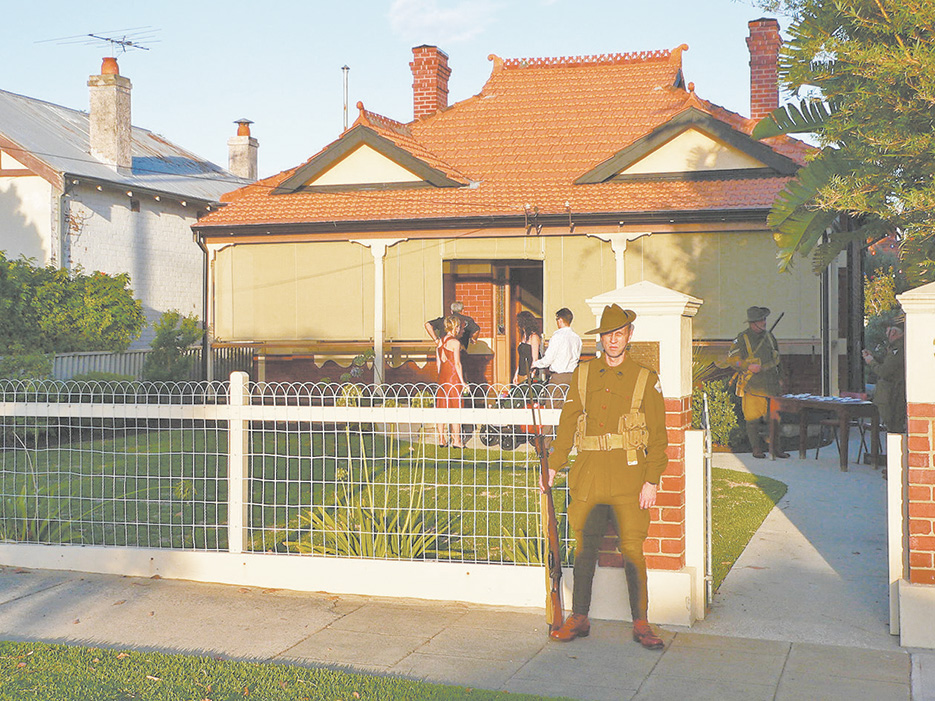
    ANZAC Cottage at its 90th Anniversary.

    ANZAC Cottage has had its share of controversies and the tales of trouble surrounding this historic Mount Hawthorn house will be told this July 10.

    A community coming together to build a house for a wounded war vet sounds like a cause everyone could get behind. 

    But progress was still dogged in the early days by local opposition that filled newspaper letter pages debating the merits of it being handed to Private Porter, and then there was the later struggle to save the cottage from demolition and preserve it for the public as a museum.

    The guided tour and talk is on July 10 at 2pm and 3pm, book via nationaltrustwa.rezdy.com/492638/anzac-cottage-talk-and-tour or call Anne Chapple 0411 445 582.

    Uncontroversially, Ms Chapple was awarded a medal of the Order of Australia general division at this year’s Queen’s Birthday honours.

    Ms Chapple, whose mother also served in the Australian Women’s Army Service in Bibra Lake during World War II, received the OAM “for service to community history”, including her work with the Friends of Anzac Cottage since 2002. 

  • Enough is enough


    HANA JESTRIBEK is the co-founder of Little Hawk Cafe. Despite taking a chance with a hipster cafe in a semi-industrial area of Beaconsfield, it proved a roaring success – and then Covid came along. With WA in the midst of its pandemic, she says the impact on the hospitality sector – and its workers – is being masked by WA’s booming mining economy and more needs to be done to support them.

    THE Hunger Games-esque feeling to running a small business in the fallout of Covid management is frustrating at best and debilitating at least. 

    Where to even start. 

    How about at the basics – of having the courage to have uncomfortable conversations about policy decisions, the inequities of a two tier economy and ineffective public health management that has continually moved the goal posts, and left many thousands of those in hospitality, tourism and retail small businesses – scrambling to stay ahead, afloat and sane.

    In Western Australia we boast of a $5.7 billion+ budget surplus, to the envy of the other states. 

    But where is this surplus 

    in the Covid fallout for small business? 

    In meagre ‘hardship’ grants that barely cover lost earnings?

    In the proving of losses beyond a certain percentage to even become eligible? What a joke. 

    Back to normal?

    When are we going back to normal is the question on everyone’s lips, yet this period is by far the least normal we’ve experienced in our nearly five years of business.

    We cannot compete with the generous wage provisions of the mining industry, and chronic staff shortages across the hospitality sector mean that trading hours are inconsistent, customers cannot expect the same products and services and owner operators are forced to work more than maximum hours or close doors. 

    But the thing is, we can’t afford to close our doors. 

    Unlike the public service, with its generous work from home entitlements, allowing its workforce to continue to engage in paid employment irrespective of policy decisions, restrictions, mandates or Covid status, hospitality employees are often in insecure employment – on a casual basis. 

    When a lockdown occurs, borders close, mandates are enforced – it is those in our industry who bear the brunt of an unstable and inconsistent employment tenure. 

    And when things finally go “back to normal” hospitality and tourism businesses are scrambling to meet demand with no staff. 

    It’s not OK to continue to sugar coat the impact on small business, whose revenue losses are hidden under the weight of the mining boom. 

    It’s not OK to continue to ignore the working from home implications on retail and hospitality outlets. 

    It’s not OK to continue to ignore the disparities that exist between various sectors in our economy. 

    Once we’ve had our uncomfortable conversations, we need to assist our small business sector to get back on its feet – in very real terms. 

    We need to make policy decisions that support a hospitality, retail and tourism workforce and provide actual financial assistance. 

    If policy makers had to endure the employment conditions of many small businesses over the last two years – the support for them would be minimal. 

    Let’s talk.

  • Stashbusters quilting group

    THE Beaufort Street Community Centre recently handed over 12 mums and bubs quilts made by the resident Stashbusters quilting group.

    The quilts, made from fabric donated by community members, will be used by single new mums living in a supported environment.

    The Stashbusters meets fortnightly at the BSCC, which is a non-profit centre offering a variety of lifestyle and craft courses throughout the year.

    For more info: https://www.beaufortstcommunitycentre.org.au

  • Mad for it 


    WHEN are you too old to wear a hoodie and when is it uncouth to wear one?

    Those were the philosophical questions I pondered when my wife gave me the ‘look’ as we drove to the swanky Petition for lunch.

    Apparently a hoodie is too casual for this upmarket CBD restaurant, but I didn’t see the problem and sauntered inside the State Buildings like a middle-aged, slightly overweight Liam Gallagher.

    Petition always seems to get good reviews, so I was keen to give it a whirl.

    The interior was quite small and narrow and our two-seater table was a bit cramped, with my wife on a comfy bench seat and me on a hard wooden chair, close to the people beside us.

    Good for an express business lunch, which I imagine is a lot of Petition’s trade, but not ideal for a long, lingering meal.

    The State Buildings – once home to the WA Treasury – make for a prestigious backdrop and you can’t help but admire the towering ceilings, huge windows and period architecture.

    The menu was a petite affair including smalls (confit chicken terrine, scallop ceviche, spiced eggplant) comestibles (grilled shark bay prawns, burrata) and substantials (market fish, duck leg confit).

    There was no set lunch menu which was disappointing, especially in this economic climate, but it’s not uncommon with upmarket eateries and I imagine they need to make a certain amount of cash to justify opening before 5pm. I was quite hungry, so I ordered the slow cooked lamb shoulder ($39) from the “substantial” section.

    It wasn’t long before the waitress, who was super polite and helpful, returned with my main.

    The slow cooked lamb had been moulded into a towering edifice, like the clay model in Close Encounters of the Third Kind, with a herb crust on its meaty summit.

    It was surrounded by chickpeas and green beans, semi-submerged in a creamy looking sauce.

    It was fun picking off the gorgeous, tender meat from the lamb tower and combining it with the beans and chickpeas, which had a nice firm texture. 

    The sauce had a sweet coconut refrain, almost like a korma, that gave the dish a slightly exotic twist and maintained your interest.

    It was deceptively filling and a superior dish, but for $39 I was expecting some culinary magic that never quite popped out of the chef’s top hat.

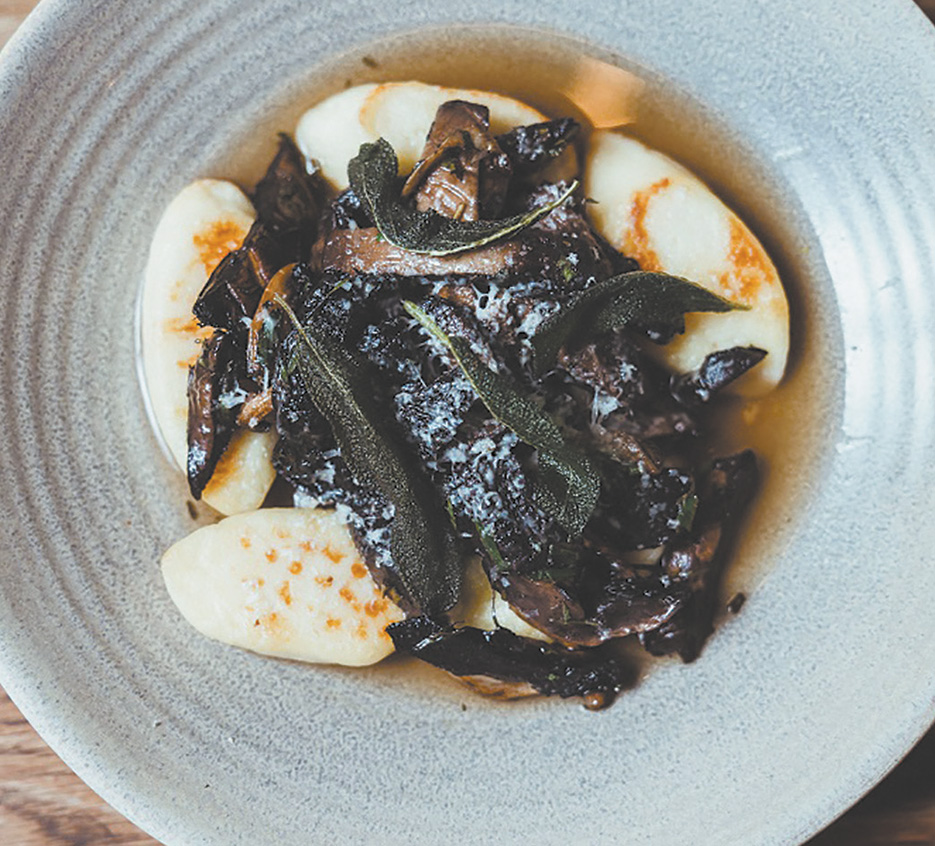
    Across the table my wife was enjoying her baked ricotta gnocchi ($37).

    “The gnocchi is light and fluffy and goes well with the sweet artichoke and creamy sauce,” she said. “There’s plenty of 

    wild mushrooms and indulgent pecorino, with the crispy sage adding a nice flavour twist.

    “I just wanted more of it!”

    The portion sizes seems to catch a few people out with the table beside us ordering potatoes ($12) after their fish had arrived.

    My wife rounded her meal off with a delicious brioche bread and butter pudding with creme anglaise and brown butter ice cream ($17) and I had a creamy cappuccino that wasn’t too strong and hit the spot ($4).

    Petition’s food was definitely high quality, but at those prices I wanted flavours that really knocked my socks off, or in this case my Liam Gallagher hoodie off, but it never quite reached those Supersonic heights.

    Petition
    Corner of St Georges Terrace and Barrack Street (State Buildings)
    statebuildings.com/venues/petition

    by STEPHEN POLLOCK

  • Bugs get to play
    • An illustration from Shaun Tan’s 2018 picture book Cicada.

    I WONDER if Goldman Sachs employees felt like the insect protagonist in Cicada when they were recently ordered to return to the office full-time after working from home during the pandemic.

    Cicada, a picture book by Perth oscar-winner Shaun Tan, follows a depressed insect who works in a grey cubicle in a grey soulless corporate office, where he is unappreciated and disliked.

    A searing satire on the mundanity of the nine-to-five, it draws on Kafka’s Metamorphosis and has exquisite illustrations with  drab claustrophobic colours. 

    Now the award-winning Cicada has been adapted into a play by Barking Gecko, premiering at the WA State Theatre next Saturday (July 9).

    Tan says he didn’t hover over artistic director Luke Kerridge like a worried mum on the first day of school, instead letting him develop his own vision for the play.

    “I’m far more interested in how different an adaptation is from the original work, rather than how similar,” Tan says.

    “What matters are the emotional truths of a work, not so much how they look or play out, and these can be expressed in many ways.

    “… I would also dread to think that other creators are hamstrung by that notion, are worried at all about what the author would think.  When creating a book, I myself try out countless different versions, different styles, characters, storylines, and any of them could work pretty well. It’s often a shame to have to pick just one. 

    “And then exciting to see somebody else pick another. I then get to see a new story, a new vision from the privileged position of the audience.”

    Extraordinary

    Kerridge says Tan showed him early draft sketches for the Cicada book, which have been expanded into new scenes for the play.

    “These sketches provided us with some brilliant and inspiring new scenes, and it is exciting to think some of Shaun’s ideas will now live on in another form,” Kerridge says.

    As part of the creative process, the play has been workshopped with children in community workshops across WA, and will go on a regional tour after its run at the state theatre in Perth.

    Tan was originally inspired to write Cicada in 2005 after he spotted a sole bright red flower in the window of a towering grey office block with hundreds of grey windows in Berlin.

    He also drew on his friends’ and his father’s experiences of corporate life, which were mixed with many feeling unappreciated.

    The last piece of the creative jigsaw was Tan staying in Melbourne and finding on his garden fence the empty casings of the cicada insect, which “spend up to 17 years underground before emerging all at once, overwhelming their predators, then mating and dying in a brief glorious period.”

    This is reflected in the story, where the protagonist dreams of escape and keeps his secrets hidden for years, until one day something extraordinary happens…

    With more and more people now working from home, the Voice asked Tan if the audience would now sympathise with the main character rather than empathise with him?

    “To be honest, I rarely think about how other readers might interpret a story when creating it, only because I’m too busy trying to do that myself, just trying to make it work coherently on the page,” Tan says.

    “But I did sometimes picture a parent possibly reading Cicada to a child at bedtime, and saying ‘You know, mummy/daddy actually works in a place a bit like this.’ and the child then saying ‘Why?’ And the parent then asking themselves the very same question.

    “Picture books can actually be a very effective way of reaching an unsuspecting reader, to slip a profound critique of adult life under the ‘bedtime story’ radar. 

    And I’ve always enjoyed moral questions that kids find easy to answer, but their parents (myself included) tend to struggle with.”

    Cicada is suitable for all the family and is showing at Studio Underground, State Theatre Centre, from July 9-16 with an encore showing on July 30. 

    Tix at tickets.ptt.wa.gov.au/overview/cicada-ptt-stc

    by STEPHEN POLLOCK

  • Bargain buy 

    AN apartment with a balcony in Maylands for $150,000?

    No, we’ve not lost our marbles, this one bedroom one bathroom apartment has been priced to sell.

    The Voice was expecting the inside to be like Lilliput in Gulliver’s Travels, but there’s actually a decent amount of space in the open plan living/dining/kitchen area.

    It’s nice and bright as well, courtesy of the glass sliding doors leading out to the super-long balcony.

    Having a balcony is a real bonus and will be perfect in the warmer months for sundowner drinks before heading out.

    The functional kitchen is a decent size too (I’ve seen a lot smaller) and has good cupboard space. The old-school natural wood finish won’t be to everyone’s taste (it does have that 1970s vibe) but it could be easily updated at not much cost.

    A nice surprise is the inclusion of a laundry, saving you boring trips to the local laundrette.

    There’s no getting away from the bedroom being a bit narrow, but you can fit a double in there and it’s nice and bright and long.

    Located in a tidy complex on East Street with a caretaker, gardener and lots of parking, you are only a few streets down from all the cafes, restaurants and pubs on Eighth Avenue, as well as Maylands Train Station.

    Whether you’re a first time buyer living on your own, or an investor, this would be a great buy.

    How can you go wrong with a house in Maylands that costs less than a lot of new cars?

    Mid to high $100,000’s
    14/72-76 East Street, Maylands
    ACTON Mt Lawley 9272 2488
    Paul Owen 0411 601 420