• Aged care border concerns over labour shortages
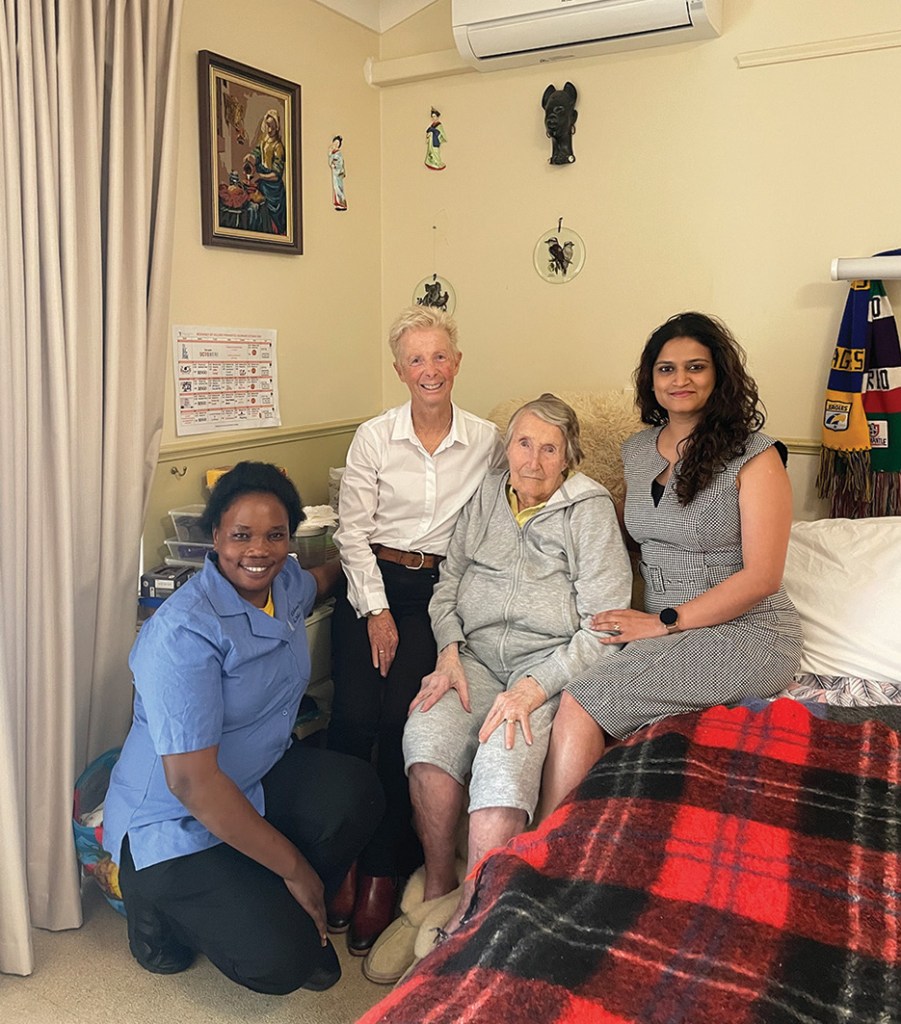
    Managing director Jackie Dillon (second from left) with Residency by Dillons staff Gloria Guo and Nikita Divekar, and resident Dorothy Bradford.

    LABOUR shortages in the aged care sector may place Western Australians in jeopardy if borders are reopened too early, says the managing director of Mt Lawley facility Residency by Dillons. 

    Jackie Dillon said many aged-care positions were traditionally filled by international students and workers, meaning Australia’s closed borders – and particularly WA’s hard-line stance on letting people in – had squashed the sector’s main source of staff. 

    “It’s not the sort of job many Australians want to do,” Ms Dillon said.

    On top of staffing issues, the pandemic has created a large strain on the aged care system, with residents of aged-care facilities contributing to nearly one third of all Covid-19 deaths in Australia.

    Alarming

    Ms Dillon said the statistics were incredibly alarming. 

    “In Australia, particularly, [Covid-19] was really frightening,” Ms Dillon said.

    “They didn’t know what to do, they didn’t know how to care for the people.

    “That was more so last year, but we’re not out of the woods yet.”

    Following the initial outbreak in 2020, Australia had one of the highest rates of death in residential aged-care as a proportion of total Covid deaths from around the world. 

    Ms Dillon believes the reopening of the borders needs to be a measured approach due to the staffing shortages.

    “A hard border means that the incidences of transmission are very small and it’s good that the premier jumps on it,” Ms Dillon said. 

    “We need more staff.” Australia’s aged care sector is below world standards, highlighted by the Royal Commission into aged-care, and Covid-19 has only worsened the situation.

    Ms Dillon said her staff were always about Covid affecting a resident, as it would be devastating to the facility.

    “They are the most vulnerable cohort, they’re the sickest, they are elderly, their ability to recover is very difficult.”

    With just over 50 per cent of the Western Australian population fully vaccinated against the virus, border restrictions still play a significant role in ensuring aged care residents remain protected. 

    “I don’t know whether, as a community here in Western Australia, we do actually understand that,” she said.

    Committee for Economic Development of Australia chief economist Jarrod Ball said Australia had failed to prepare for the challenges associated with aged care staffing shortages.

    “We will need 17, 000 more direct aged-care workers each year in the next decade just to meet the basic standards of care,” Mr Ball said.

    When asked on whether she thought it was safe for her residents to live with open borders, Ms Dillon said Western Australia needs to keep the conversation going on the health risk associated with people in aged care.

    “We’re a very informed community,” Ms Dillon said. 

    “Over the next 12 months, when we get to a very high vaccination rate, changes will occur, but it needs to be measured, we need resources.

    “We need to pay attention to our own health and look after each other.”

    by MADELEINE BUCKLAND
  • Home to roost
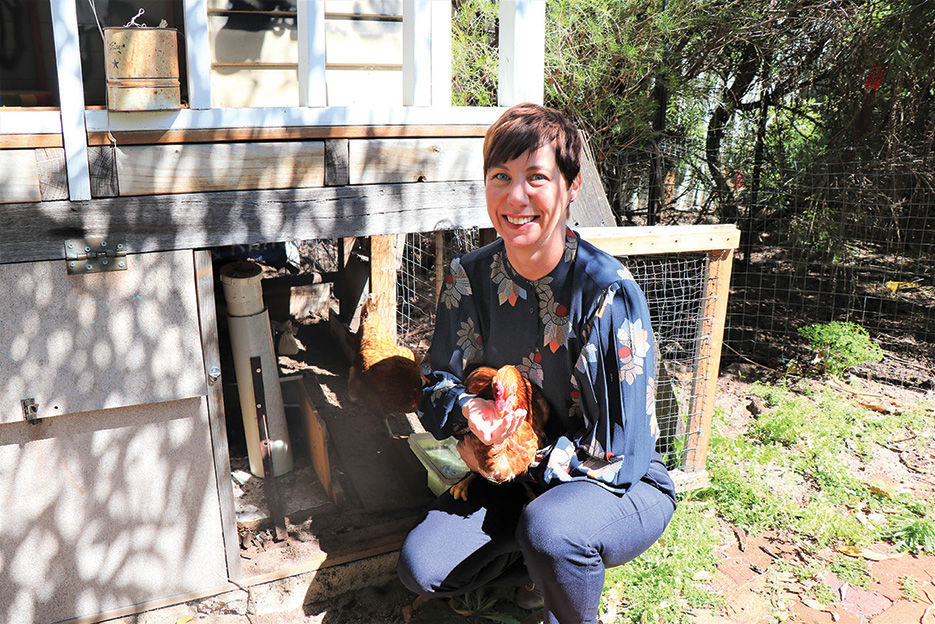
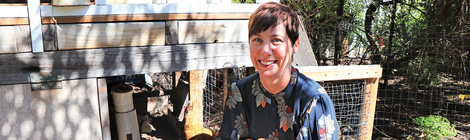
    Mayor Emma Cole and a feathered friend. Photo supplied.

    CHICKENS and bees will be easier to keep in Vincent under a new proposed Animal Local Law.

    Mayor Emma Cole tells us the existing rules make keeping chickens “really tricky: you might only be able to have one chicken in the middle of your backyard”.

    Currently chickens are required to be kept 15 metres away from any dwelling, can’t be within 18 metres of a street, and had to be kept in a minimum 30sqm enclosure with a smooth concrete floor – which chickens hate since their main hobby is digging in dirt for grubs and weeds. 

    Under the new rules residents will be able to keep six chickens, but having a rooster will still need city approval. 

    The new rules still need to go out for public consultation, and while chicken allowances are up, the maximum number of pigeons a member of a pigeon club is allowed to keep may plunge from 100 to 50. 

    A second part of the new Animal Local Law paves the way to create cat exclusion zones in environmentally sensitive areas, with penalties for owners who flout the rules.

    Vincent won’t introduce rules confining cats to the owner’s property unless leashed, which Cockburn council has adopted and will start enforcing from 2025, preferring to wait for the state government to take the lead.

  • Blessing’s resurrection
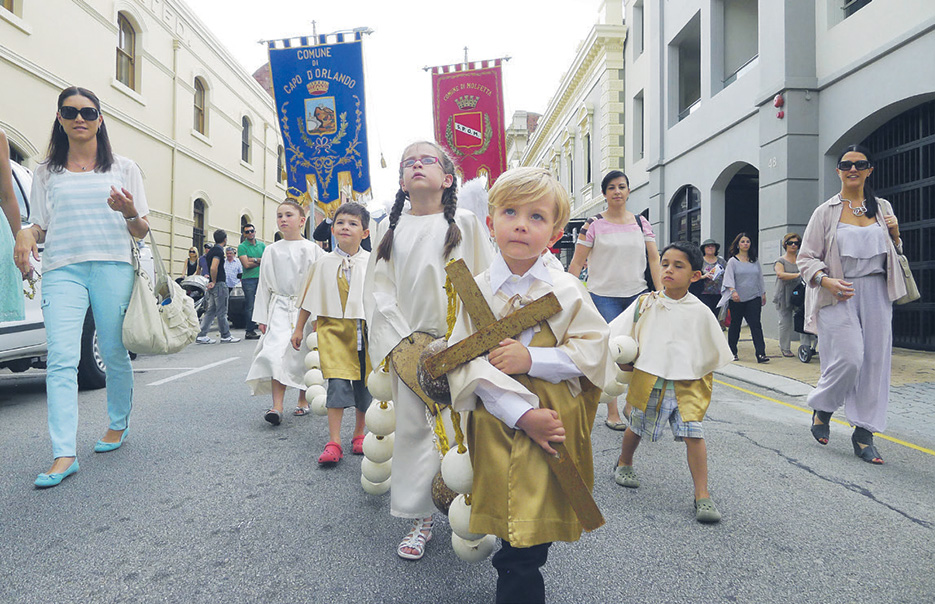
    Italian culture is in the spotlight at the annual Blessing of the Fleet.

    FREMANTLE’S iconic Blessing of the Fleet is back this year after last year’s was cancelled over Covid fears.

    Festival committee president John Minutillo said following the break, this year’s Blessing and parade on Sunday October 24 would be a return to basics with a focus on celebrating Italian culture’s integration into Australia.

    “I think the real success is that we are going to do it, and what we want to do is just tell the public ‘hey, we’re back’ and encourage them to come along and see this great Fremantle tradition,” Mr Minutillo said.

    While it is a religious festival at heart Mr Minutillo says it’s as much about a celebration of culture for people of all persuasions.

    “It just think it’s a really special day, when you look around and you see the quality of people that are walking around – the young families with kids pushing prams.

    “And, more importantly, it really shows what a great success story Australia is; Australians were wary of us when we first arrived, and we would have been the same, for sure, but they accepted us; they accepted our culture, they accepted our food.”

    Mr Minutello says older Italian migrants often spoke about how they couldn’t believe their luck when the huge gamble of sailing halfway around the world to an unknown country they’d been at war with just a few years earlier, paid off.

    “Many of our parents were able to come to Australia as refugees after the war, and they were able to start up businesses without having to pay someone protection, without having to pay off the local cops, without have to pay off this and that.”

    The return of the festival marks its 75th anniversary, and Mr Minutillo says in these days of manufactured authenticity, giving children the opportunity to experience something genuine was really heartening.

    The Blessing of the Fleet starts with an 8.30am Mass and Communion in honour of Our Lady of Capo D’Orlando at St Patrick’s Basilica, followed by a Solemn Mass by Rev Justin Bianchini, emeritus bishop at 9.30am.

    The big procession will start from the Basilica on Adelaide Street from 2pm and wind its way down to Fishing Boat Harbour where it will be blessed by the bishop at 3.30pm.

    At 4.30pm there’s a kids’ fireworks display at the Fremantle Esplanade Reserve before the parade returns to the Basilica at 5pm.

    The big fireworks display, back on the agenda after Fremantle council backed down from cutting its funding and opted for a review after three years instead, will be on at 8pm.

  • Blokes bang up a bandicoot bungalow
    Stirling Men’s Shed coordinator Guy Bongiorno, DBCA regional ecologist Geoff Barrett and Stirling mayor Mark Irwin with the new ‘bungalows’ for the city’s cute quendas (below).

    THE hardy blokes at the Stirling Men’s Shed have built homes for one of WA’s cutest critters – the quenda.

    Made from wooden pallets and chicken wire, the 11 ‘bungalows’ installed in Cottonwood Bushland Reserve in Dianella give quendas a place to shelter from predators.

    Recently, 21 quendas were released into the Dianella area to help boost the population of the local, native species.

    The bungalows were a collaboration between the City of Stirling, the Men’s Shed and the Department of Biodiversity, Conservation and Attractions.

    “The Quenda Bungalows are one of the many conservation efforts the city undertakes and by installing these, we hope to aid their survival from predators, which can include foxes, dogs and cats,” Stirling mayor Mark Irwin says. “Using two wildlife cameras, we will monitor the bungalows to observe their use and – hopefully – their success. 

    “The city has a Quenda Recovery Program which works in conjunction with our feral animal control programs, so we hope to see an increase in quenda presence and activity.  “To help provide their best chance of survival, the community is encouraged to keep their dogs on a leash and contain cats indoors where possible, near quenda habitat areas, and to avoid feeding quendas, as this can lead to obesity and related diseases and health issues.”

    Cottonwood Bushland Reserve has been restored in recent years and is an ideal site for the reintroduction of quendas, a species of bandicoot endemic to the Perth area.

    Quendas are a priority four species in WA and are protected under the Biodiversity Conservation Act 2016. 

    Plants and animals that are conservation-dependent require an ongoing active management to ensure their preservation. 

    Quendas can also be found in Dianella Regional Open Space, Star Swamp Reserve in North Beach and Trigg Bushland.

  • Quarantine station a grim reminder
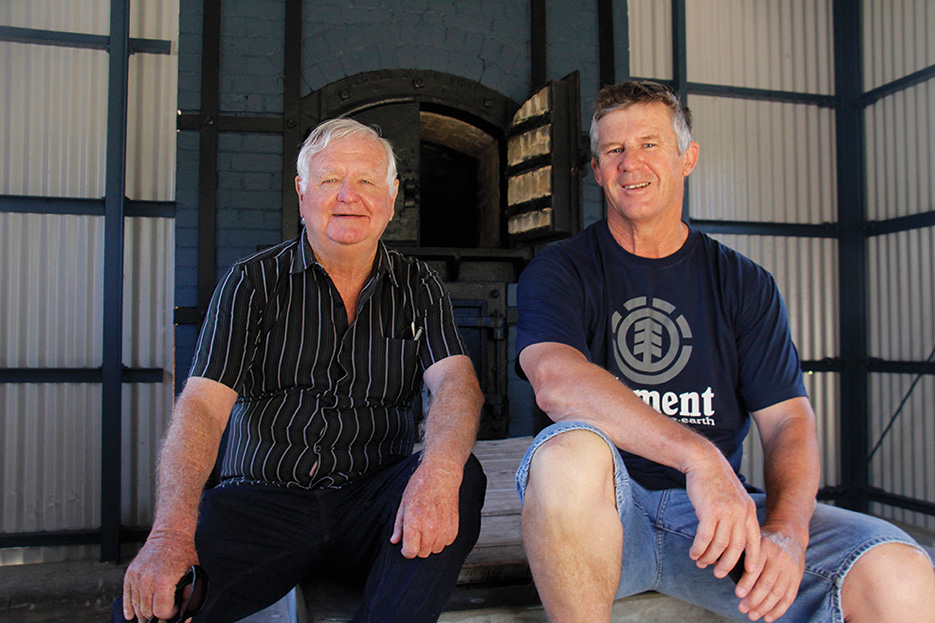
    Woodman Point Recreation Camp Friends president Gary Marsh and treasurer Mike Poore at the crematorium.

    ALMOST 100 years after the last great global pandemic, a reminder of its deadly toll has been getting some much-needed TLC.

    Tucked away in a beautiful patch of bush in Coogee, Australia’s oldest crematorium boasts a brand new paint job and a shroud of scaffolding around its chimney in preparation for some much-needed work to replace missing bricks and repair the tuckpointing.

    The crematorium is part of the Woodman Point Quarantine Station, built in 1900/01 while WA was going through a serious outbreak of bubonic plague that killed 33 people.

    But it was during the Spanish Flu at the end of WWI that the station and its grim morgue were really put to work, helping earn a reputation as one of WA’s most haunted sites.

    In October 1918 the HMAT Boonah was the last troopship to depart from Fremantle, with 1200 soldiers of the First Australian Imperial Force on board.

    A month later the Boonah landed in Durban, but the Armistice to end the war had been signed three day earlier and her captain was ordered to turn around and sail home. Influenza was rife in the South African city, and dockworkers preparing the Boonah for the return journey infected some of the crew; in the cramped conditions, the disease tore through the ship and soon 300 cases were reported.

    Another troopship, the HMAT Wyreema was asked to land 20 nurses at Woodman Point in preparation for the influx of sick soldiers. The Wyreema’s troop commanding officer PM McFarlane said despite the obvious dangers there was no shortage of nurses offering to help.

    “Volunteers were called for and there was not only a ready response but so many offered that it was necessary to place the names in a hat and draw the 20 required,” McFarlane later wrote.

    Sadly, four of the nurses contracted the flu and died, along with 27 soldiers, who were initially buried in the station’s cemetery before being reinterred later at Karrakatta.

    These days the site has been rebadged as the Woodman Point Recreation Camp and hosts school trips, but its medical heritage is preserved by a passionate Friends group which runs a museum and hosts tours.

    President Gary Marsh has a strong connection; his father was the station’s last officer-in-charge and despite the serious side of that job, he spent an idyllic childhood running through the bush and down to the beach with the other 10 kids who lived on site.

    His encyclopaedic knowledge makes a tour a real eye-opener; his ever-present smile sometimes at odds with the ghoulish subject.

    Marching down a section of the original “Plague Road” built in 1901, he recounts how a cart would be hauled all the way to Fremantle, its yellow flag a signal for people to bring out their dead and the driver warning the grievers to stay upwind before he made the long, bumpy trip back to the crematorium.

    The story behind the crematorium’s construction is also one to put the squeamish on edge. Bodies were initially burned on the beach when the plague hit, but Freo residents started complaining about the smell of burning flesh. An alternative was to take them out to sea, but that almost killed off the fishing trade because people started worrying they might get a chunk of diseased flesh with their serve of sardines.

    Another haunting story from the crematorium involved his own father, who was checking on a couple of bodies which were being burned, when suddenly one sat up. It was only gases moving the body around, but Mr Marsh says there was a previous case where a soldier was moments from being cremated when his hand moved; he was rushed back to the station’s hospital where he went on to make a full recovery.

    With the crematorium now a century old, Mr Marsh says the Friends found time had taken its toll.

    The Friends of Woodman Point Recreation Camp run tours every third Sunday of the month. 

    by STEVE GRANT and COOPER BYERS

  • Back in the spotlight

    A LITTLE-known quarantine station in Perth’s southern suburbs, including its ghoulish crematorium, has been in the spotlight recently thanks to its connection to the last great pandemic to hit WA’s shores.

    Woodman Point Quarantine Station is an evocative site, but tucked away in a slice of bushland in Coogee, even locals who live within a stone’s throw of its limestone and asbestos buildings often don’t know it’s there.

    These days it’s mainly used for youth camps, but the Friends of Woodman Point run a remarkable museum and run regular tours.

    FOWP vice president Neil Wilson will be shedding some light on the site’s history and the vital role it played during WA’s bubonic plague outbreak (yep, we had one) and the Spanish flu and smallpox epidemics during the annual Fremantle Studies Day on Sunday October 24 from 1-5pm.

    Although the vilification of Chinese people has thankfully eased since some disgraceful attacks in the early days of Covid, a talk from Michelle McKeough, an honorary fellow at Murdoch University.

    Dr McKeough will explore the unfortunate situation of Ah Keo, who was the face of the social vilification that began to appear in Fremantle as the bubonic plague found its way into Australia through the city’s port.

    Tarry Lawrie from the National Archives of Australia will look at the control of migrants by the all-powerful Customs department, while Vincent council’s local history librarian Susannah Iuliano has been documenting the influence of post-war Italian migrants.

    Run by the Fremantle History Society, the studies day will also include the announcement of the inaugural Ron and Diane Davidson research scholarship.

    Bookings essential from secretary.fhs@gmail.com.

  • Singing WA’s praises

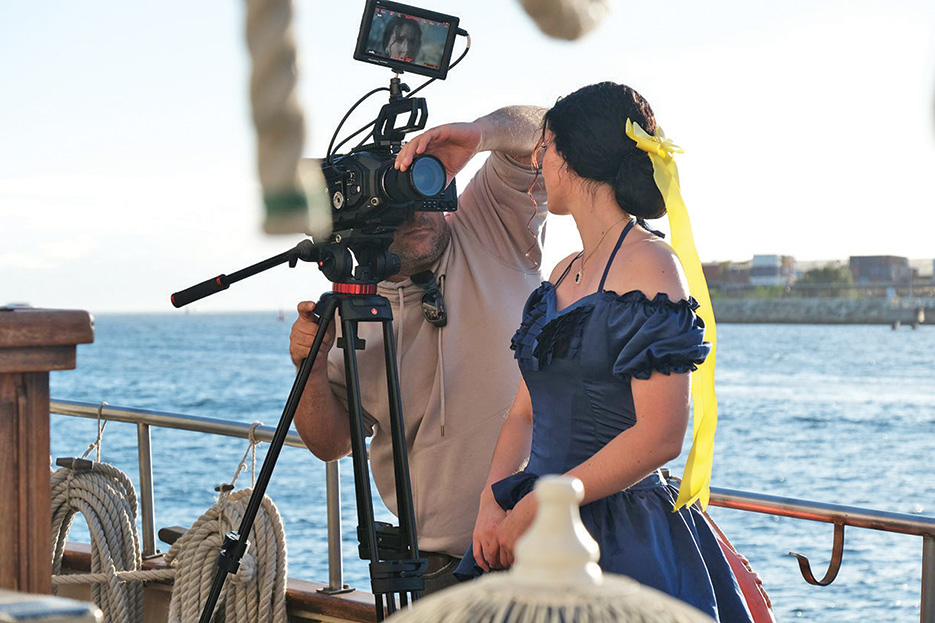
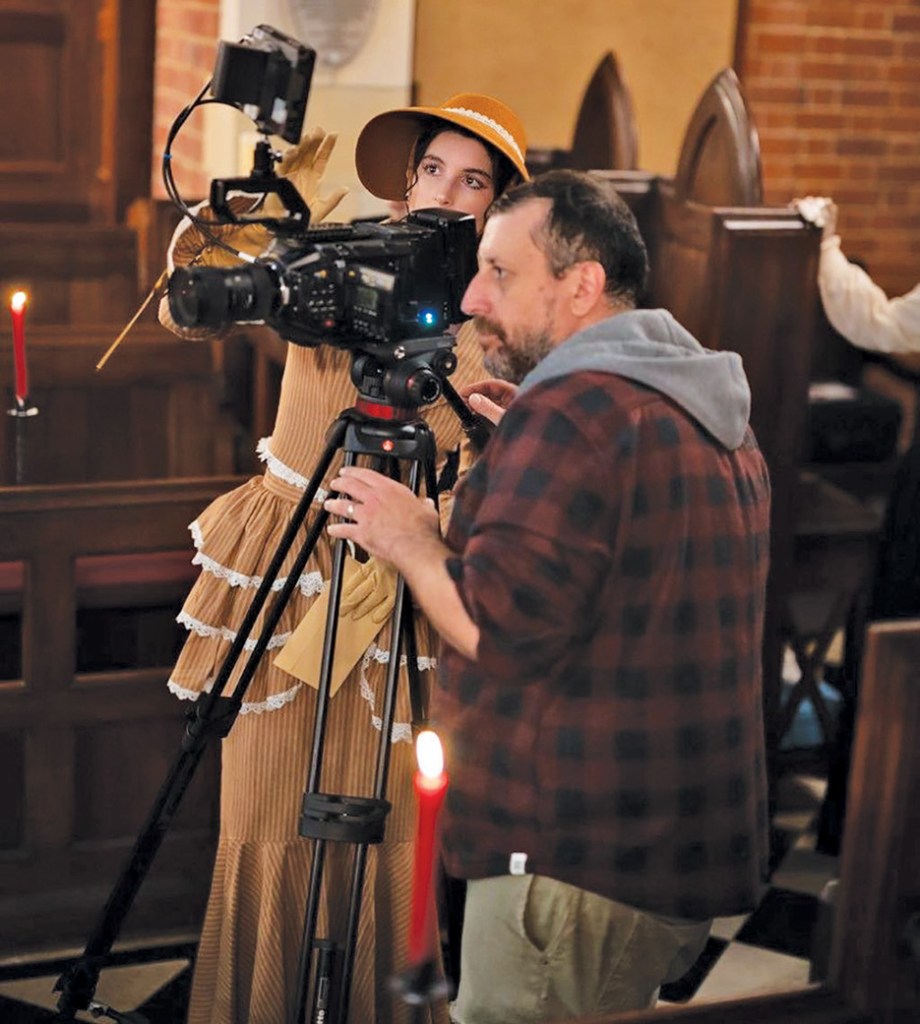
    UPCOMING feature film The Canary is set to showcase the visual beauty of the Indian Ocean off Perth.

    By Salt and Honey Productions, the 1800s period drama follows the mental and physical struggles of a young woman cast away on the open ocean with nothing but a lifeboat and a caged canary to aid in her survival.

    The project was made by a Western Australian cast, crew, locations and businesses.

    Writer, lead actor and co-director Emilie Lowe opened up about how her battle with dyslexia made it hard to pluck up the courage to take on a major feature film.

    “I have always been passionate, but really doubted if I could handle such a task,” Lowe said.

    On the other hand, co-director and Scudley Films producer Peter Renzullo says being a legally blind director makes his work “as rich and clear as it can be”.

    “The beauty of it is that I’ve got a focus assist on the camera which is a feature that lights up very harsh highlighted colours on the parts of the film that are in focus; if that wasn’t there I wouldn’t be able to see anything.”

    Lowe says it’s “super hard” for newcomers to the industry, but urged them to “try everything and get out there and create”.

    Renzullo agrees: “I think the most important thing is any free second you have; get on that camera, get in that studio, get whatever you’re doing, just go out and do it,” he said. “Go find the mistakes and learn to fix them.”

    Lowe described The Canary as being a mix of Picnic at Hanging Rock, Life of Pi and Black Swan. 

    “It’s been a wild ride so far, but we are all really enjoying working alongside each other and are so proud of what we are achieving together.”

    by AVA BERRYMAN

  • Down south

    IT’S worth taking the three hour drive to Shelter just to see the humungous ceiling fans.

    They are bigger than the blades on a chinook helicopter and when they are going full tilt they would generate enough wind to blow-dry Ted Danson’s hair in the 1980s.

    Situated beside the jetty in Busselton, Shelter is one of the more recent brewery/eateries in WA, opening to much fanfare in November last year.

    Maybe it’s just me, but brewery apathy is setting in.

    Like burger joints, they seem to spring up faster than Mark McGowan’s hard borders, and familiarity has started to breed contempt.

    But I visited Shelter with an open mind, and I must say I was impressed by the architecture and lighting on a cold, dark Spring night – the black facade helped soften the industrial shed-look (see The Jetty Bar in Fremantle) and the building really ‘popped’ when the lights were turned on in the alfresco, which had tasteful limestone and plenty of verdure.

    The inside is huge without being soulless – imagine Little Creatures on steroids – with the obligatory bench seating and looming steel vats.

    The menu had the usual burgers and woodfired pizzas, but there was also a decent range of salads, sweets and mains, including pork ribs, lamb rump, mussels and beef brisket.

    There was a decent kids menu too, with a healthy fruit basket option, so all-in-all the menu was well-rounded for a brewery.

    Interestingly, Shelter was a cashless venue, which may pose problems for those enterprising cash-in-hand tradies.

    My woodfired prawn pizza ($25) was a tasty affair with loads of plump prawns and a thick tomato sauce with plenty of garlic.

    The mozzarella was nice and stringy and the thin base well woodfired with crunchy, charred crusts.

    A really nice addition was the subtle chilli, which gave the pizza a flavour twist without overpowering the prawns. Overall, a very enjoyable number.

    After the drive down south my wife was famished and devoured her fish burger ($26) with all the gusto of Hannibal Lecter in that cage scene in The Silence of the Lambs.

    The star of the dish was the hand-cut chips, which were super crunchy and tasted like the frites you get in the Belgian Beer cafe.

    “The burger is really good too with a fresh-tasting snapper fillet and a nice assortment of onion, pickles and aioli,” she said.

    You could have the fillet battered or grilled.

    The kids were busy munching down their cheeseburger and chips ($14), and fish and chips ($15) from the children’s menu.

    There were no complaints, but I thought the price was a bit steep for a kid’s meal, and they left a lot because the portion size was too big.

    I’d go for a smaller portion with a lower price, but it’s hard to please everyone.

    Our friends shared a pepperoni pizza ($23) and a bowl of hand-cut chips ($10). 

    I had a taste of their pizza and it was crammed with flavour with plenty of pepperoni, olives and a liberal garnish of oregano.

    Shelter’s food was very enjoyable brewery grub, so I’ll be back to try the mains and the beer.

    It’s definitely out of the Little Creatures’ cookie-cutter mould, but like AC/DC said – if it ain’t broke, don’t fix it.

    Shelter Brewing Co
    11 Foreshore Parade, Busselton
    shelterbrewing.com.au

    by STEPHEN POLLOCK

  • Classy home

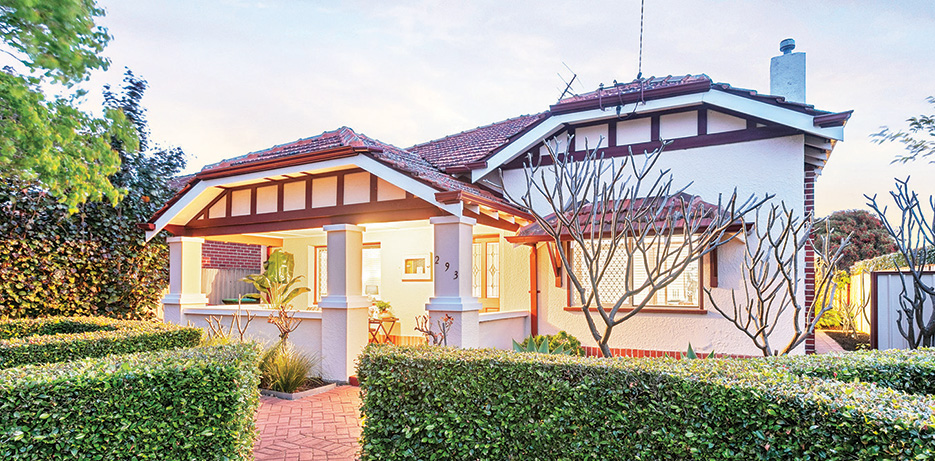
    THIS Inglewood home has some of the best period detail I’ve seen.

    There’s loads of beautiful burnished wood, art deco-style features, and a picture rail and ceiling medallion for good measure.

    The classy tone for this three bedroom one bathroom home is set with a classic exterior with white walls, wooden beams and an expansive porch.

    There’s a privet-lined path guiding you to the front door and the manicured garden has a tiered water feature, adding to the sense of yesteryear.

    My favourite room is the lounge – it’s got a lovely picture rail sweeping across the walls and beautiful cornicing, but tying everything together is the matching art deco cabinets either side of the vintage fireplace. 

    It gives the room a lovely symmetry and makes the fireplace a real focal point.

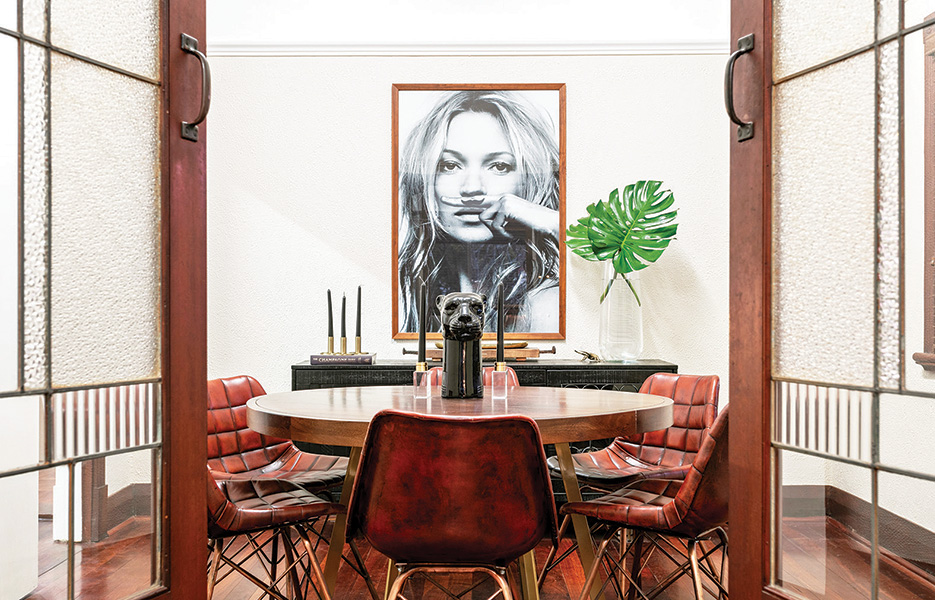
    Beautiful French doors with art deco leadlight glass open onto the dining room, which has a stylish round table and leather chairs.

    From here a sliding door connects to a modern kitchen, decked out in pristine white with marble-style tiles.

    For this era of house, the kitchen is really big and has a nice gas-top and oven.

    The bathroom is a delicate balancing act between old and new with dark wooden cabinetry and quaint taps contrasting with the large modern shower.

    It works rather well and provides some practicality with the style. Throughout the property there are gorgeous polished wooden floors, adding a lustre and stately feel to the rooms.

    There’s not a huge of amount of outdoor space at the rear of this property, but the owners have cleverly added a patio roof and an outdoor setting.

    Some vines help to soften the colorbond fence and it looks like a cosy arbour for evening meals in the summer with twilight drinks.

    There’s only one bathroom in this home, which might be an issue for some families, but there are two WCs and a dedicated laundry.

    The three bedrooms are all a good size, including a massive main, and there’s also a study space at the rear of the house.

    Situated on the attractive tree-lined Crawford Road, this 347sqm Californian-style bungalow is green title and close to Mt Lawley Golf Club, St Peter’s Primary School and the Terry Tyzack Aquatic Centre.

    This Inglewood home is a real charmer and will seduce buyers the minute they walk through the front gate.

    Home open today (Saturday October 16) and tomorrow 10:30am-11am

    293 Crawford Road, Inglewood
    Bellcourt Mount Lawley
    Shaun Pratt 0466 822 050

  • Dancing together
    Perth lord mayor Basil Zempilas joins in the celebrations with Shannon Kearing Senior after the signing of the Yacker Danjoo Nglada Bidi. Photo by Jarrad Seng.

    THE ‘Yacker Danjoo Nglada Bidi’ agreement between the City of Perth and Aboriginal elders has been signed.

    The Noongar title means ‘working together our way’ and acknowledges the Whadjuk Nyoongar as the traditional owners of Perth city’s land and promises to make the city more welcoming and culturally safer for Indigenous people. 

    The agreement was first raised by the council’s Reconciliation Action Plan in 2018 and was intended to mark a new beginning after some troubled relations in the past, including the city’s blunt response to Matagarup/Heirisson Island protesters in 2016.

    The agreement was signed October 5 by city officials and members from the council’s Elders Advisory Panel, and commits the city to listen to Indigenous voices, commit to partnership, and acknowledge past injustices.