
• Pride ban for queerwashers

    PRIDE WA says it’s had enough of big business running up the rainbow flag once a year while ignoring in-house discrimination. 

    In a move senior vice president Gerry Matera acknowledges is risky, Pride won’t accept sponsorship for its high-profile annual parade if businesses can’t show a long-term strategy to address issues faced by LGBTQI+ staff. 

    “It’s all good having purple shirt days and those sorts of things, but if it is only one dimensional it isn’t really having an impact in the wider community,” Mr Matera said. 

    “Historically we’d allowed members to participate in the parade for as little as $500 and then you wouldn’t see them again until the next year.” 

    Mr Matera said the move was in part sparked by Pride research which found more than half of the LGBTQI+ community still hid their identity at work. 

    Advocacy 

    He owns a small Inglewood café which partnered with the City of Stirling earlier this year on a program called Spill the Tea for LGBTQI+ children. 

    He noticed that a lot of young people would dress in what they considered “normal attire” before getting changed at the event. 

    “That shows to me that we have a long way to go when people don’t feel comfortable about, you know, catching public transport or just being who they are in a normal sense,” Mr Matera said. 

    At Pride’s AGM earlier this year members decided to pivot the organisation towards more advocacy work. 

    “Pride being in workplaces, educating their staff and corporates about what true diversity looks like is something that we’ve not seen before,” Mr Matera said.

    But that will require additional resources, and tied to the tokenism crackdown is a lift in the sponsorship threshold. 

    Blind eye 

    The 30-year-old organisation has relied on Lotterywest grants and corporate donations to accommodate other support services and education programmes, but Mr Matera said a more long-term strategy was required. 

    Fremantle LGBTQI+ community group This n That South Side Queers co-founder Felix Pal said people considered Fremantle a progressive area but they still tended to turn a “blind eye” to homophobic behaviour. 

    “Members of our community have been fired for being trans, we have issues around accessibilities of gender affirmation services [and] when we look at the state of the discourse online, for example in community pages, it doesn’t take very long to find some pretty homophobic or transphobic things,” Mr Pal said. 

    He said corporations and governments were guilty of flying the LGBTQI+ flag as a way to absolve themselves of further actions. 

    “I think one of the things that many queer people struggle with is being taken seriously,” Mr Pal said. 

    by CLAIRE CRAIG

  • Planning pushback

    PERTH council’s planners have recommended another tunnel be considered for the CBD to handle light rail or a rapid bus service.

    Back in July, Infrastructure WA released the state’s first 20-year infrastructure strategy which recommended planning for light rail and/or bus rapid transport to the city centre.

    Noting the “multiple unsuccessful attempts” to get light rail into Perth, the council’s planners could only offer it conditional support, saying the problems it’s supposed to fix need to be more clearly defined.

    “The city has concerns that a standalone system (without other changes to the network) is unlikely to succeed,” a staff report to this week’s council agenda briefing said.

    Duplicating

    The report also noted duplicating services would have implications for the long-term operating costs.

    “It is recommended a tunnel option is considered and included in a comprehensive business case – given the time to plan and construct the asset and its overall useful life.”

    The city’s planners also gave a small push-back after Infrastructure WA stepped on their toes over a vision for the city’s CBD.

    The department’s strategy included a recommendation that a “city opportunity plan” be prepared for the CBD spelling out a “compelling long-term vision”.

    But the planners noted they already had one in their draft Local Planning Strategy which was adopted in July and is sitting on a desk in the state’s planning department awaiting approval.

    Emphasising its visionary role thrice in two sentences, they also warned that leaving it up to state departments to roll out infrastructure needs could lead to siloed projects that didn’t link.

    “Each agency has multiple projects, however they are lacking in a unified purpose and only prioritise the needs of their specific agency.

    “This can result in inconsistent priorities and objectives and lost opportunities for leveraging off infrastructure or creating sound place-centred outcomes.”

    The council will use its response to the 20-year strategy to push for a new local primary school in the next five years to cater for the increasing population.

    “The City of Perth currently has a population of approximately 522 primary aged children,” the staff report said.

    “Under the city’s population targets, this is expected to grow to 1,111 primary aged children by 2036.

    “There are currently no public primary schools operating in Perth city.”

    The council also wants to work with the state to better integrate the cultural centre, including the new museum, art gallery and library, with the surrounding neighbourhoods.

    Other items on the wish list were help in combating the city’s heat island effect through joint funding of an urban forest, and an “immediate” investigation into housing and services for people experiencing homelessness.

  • Covid plea for artists falls flat

    FRINGE WORLD looks set to score almost $100,000 in additional funding from the City of Perth for next January’s festival, but Perth Festival’s hopes for a top-up have gone unrewarded.

    Funding recommendations were included in this week’s agenda briefing session for Perth councillors, and also included $100,000 to help Perth host the 2023 World Transplant Games.

    It’s the third time Australia has hosted the games, which were held in Sydney in 1997 and the Gold Coast in 2009.

    The organisers had sought $200,000 cash and $50,000 in-kind support from the council, but a four-person panel from its economic and community development departments gave it a trim on the basis much of the sporting activity was outside the city’s boundaries and unlikely to attract huge crowds.

    But it did score points for the international exposure it would generate, with competitors coming from 60 countries. 

    Destination

    It would also highlight Perth as a destination for similar scale events.

    Perth Festival had hoped to get its $263,750 cash contribution from the city lifted to $350,000 to help artists in their recovery from Covid, but the lack of further detail on how it would do that didn’t impress the panel.

    There was also concerns that the 2022 festival wouldn’t including a significant signature free event such as The Giants in 2015 and Boorna Waanginy: The Trees Speak in 2017.

    However Fringe World got its funding bump after putting forward a “culturally and linguistically diverse” program and clear performance outcomes that could be measured.

    It had also promised to drop venue fees so more income could flow back to artists and included a Fringe Artist Bursary to support first nations and emerging artists.

    A report from the 2021 Fringe found that loads of punters headed out for a meal or a drink before and after shows, giving a significant boost to local busineses.

  • Funds hit the right note
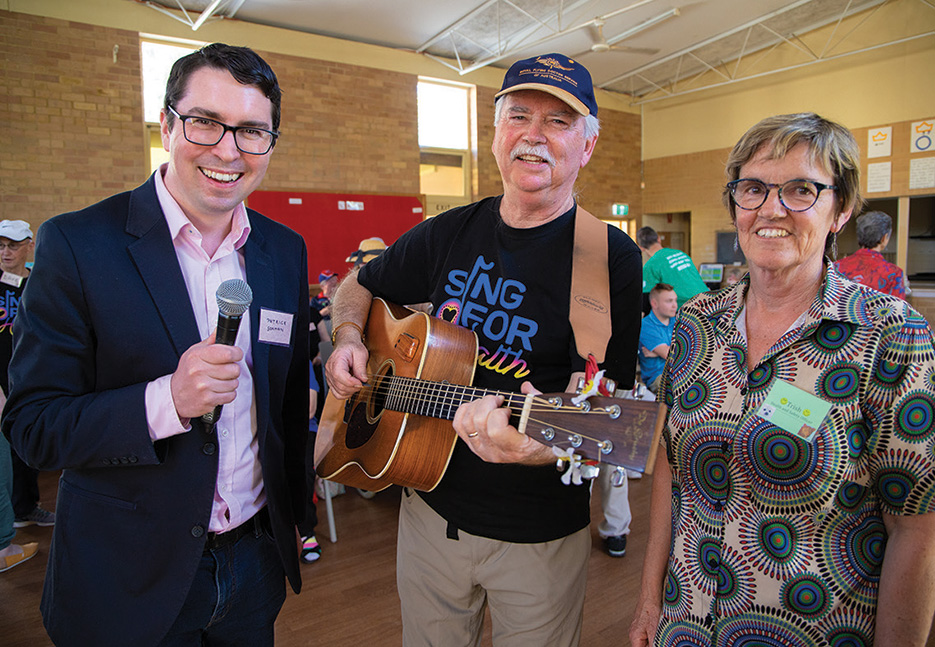
    Federal Perth Labor MP Patrick Gorman catching up with the Spirit of the Streets Choir.

    SOME much-needed federal funding’s come through for local homelessness providers around Perth, with Spirit of the Streets Choir, Tom Fisher House and Orana House among the beneficiaries.

    The federal government’s Stronger Communities Program gives up to $150,000 for each electorate for socially beneficial projects selected by MPs and their community consultation committees, and assessed by government.

    Federal Perth Labor MP Patrick Gorman said: “The work of these organisations has only intensified over the past 18 months, and these grants will give Tom Fisher House and Orana House the funds to modernise their service provision.

    “Groups such as Spirit of the Streets Choir offer a unique creative outlet for people experiencing homelessness and vulnerabilities, without the focus on what the individual is going through. 

    “We are all singing from the same song sheet when it comes to the importance of these programs.”

    Another round of federal funding is scheduled for later this year.

  •  Our disappearing delis

    THIS week’s tale from Vincent’s Local History Centre is Lucy Hair’s account of our town’s dwindling delis. 

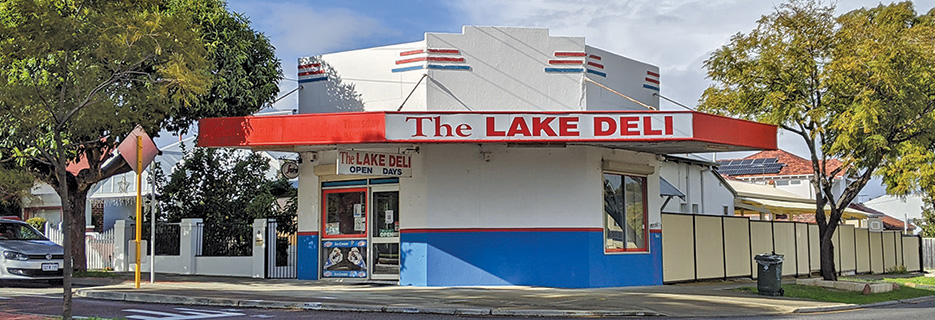
    The Lake Deli at 181 Anzac Road, constructed around 1938-39 and still standing today.

     THE local deli has been an essential element in the Australian landscape for many decades. 

    Also referred to as a corner store and more commonly referred to as milk bars in other states, many Western Australians have fond memories of their local deli. 

    Several delis still operate in Mount Hawthorn today, but their numbers have declined significantly over the last decade or two. Delicatessens (delis) evolved from milk bars, a concept based on American diners around the 1930s. 

    In the Mount Hawthorn area, Les Jacks developed the former Wallace Confectionery and Tea Rooms into a milk bar around 1945. 

    Mim Hodge remembers that many cyclists stopped at Les Jacks for milkshakes and other drinks after training runs. 

    There were many corner stores selling groceries, such as those along Scarborough Beach Road, and several more dotted throughout the suburb. 

    As was common at the time, these buildings had the shopfront on the corner and the adjoining residence behind. 

    It is likely that many of these stores may have started selling milkshakes and drinks modelled on the success of milk bars. 

    Over time, the range of products at corner stores diversified to accommodate changing fashions and tastes. 

    Post WWII migration patterns resulted in different cultural influences, particularly from Greek and Italian immigrants. 

    There were many delis/corner stores owned and operated by Greek and Italian families in Perth in the years after WWII. 

    The local deli became a social hub as well as where you purchased essential groceries. 

    In the late 20th century, the deli was a popular place for neighbourhood children to meet and spend their pocket money on drinks and lollies. 

    In the last decades of the 20th century, local delis had to compete with supermarkets for trade. 

    The emergence of stores attached to petrol stations became another place to purchase convenience items. 

    Retailing trading hours began to change across Australia from the late 1980s.

    These changes had a significant impact on local delis. 

    The introduction of Sunday trading hours in Western Australia in 2012 made it even more difficult for small retail shops like delis to compete against larger businesses. 

    Effectively, the number of delis within local communities has been in continual decline since the last part of the 20th century.

    It is possible to demonstrate the decline of delis based on my personal experience with reference to delis in Mount Hawthorn. 

    In 1997, I moved to a rented house in Anzac Road, Mount Hawthorn. 

    The deli on the corner of Coogee Street and Anzac Road was our local and handy for the weekend papers or when we ran out of milk and other essentials. 

    We moved to Killarney Street later that year and the Superdeli (on Scarborough Beach Road near Killarney Street) became our new local.

    After almost two years renting, we purchased a house in Dunedin Street near the intersection of Green Street and lived there until 2018.

    There was a deli in Shakespeare Street, but I do not remember having just one ‘local’. 

    There were several within easy walking distance. 

    Walking around the suburb, I noticed several buildings that were obviously former delis. As a professional historian working in the heritage industry at the time, I often wondered about the former owners and the shops they operated. 

    Delis were part of my childhood growing up in Perth in the 1980s. 

    I remember buying lollies with pocket money or money earned by filling an ice cream bucket with weeds! 

    I worked at my local deli in Nedlands while studying at university in the early 1990s. 

    Some of the delis began disappearing in our early years in Mount Hawthorn and this is possibly why I took photos of some of them in 1999.

    The five photos I took over 20 years ago could be considered a random sample of delis in Mt Hawthorn just prior to 2000. The photographs showed four operating delis and one shop converted for a private residence. 

    In 2021, only one of these delis still exists – the Lake Deli at 181 Anzac Road…

    You can read all of Lucy’s Local History Awards entry Disappearing Delis online at: https://librarycatalogue.vincent.wa.gov.au/client/en_GB/search/asset/2509/0

  • Finding dignity for the fallen
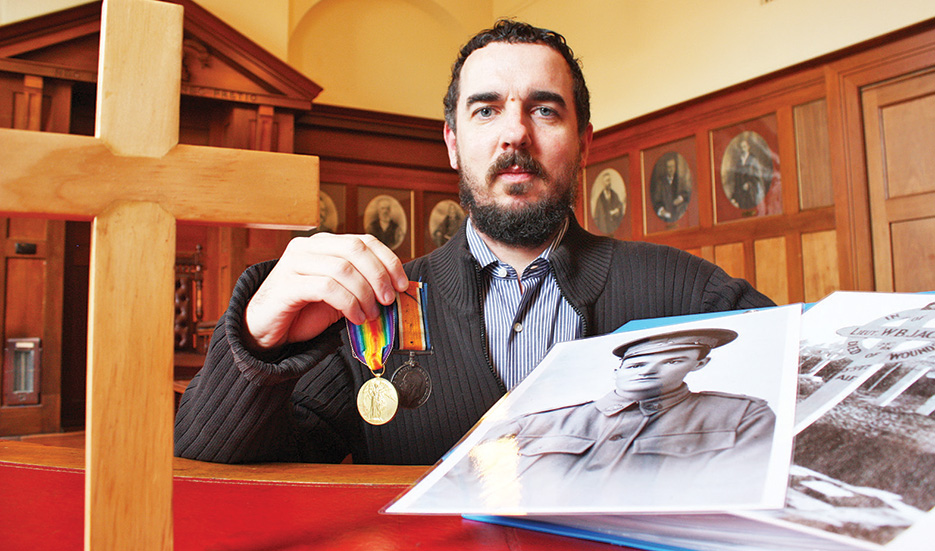
    Andrew Pittaway has helped identify another Anzac buried in an unmarked grave for more than a century.

    A LOCAL author has helped identify another World War I digger who spent more than 100 years in an unmarked grave. 

    Andrew Pittaway, a council records officer by day, collected diaries, letters, oral histories and photos from World War I while writing his book Fremantle Voices of the Great War. During his research he learned of 7000 graves in France and Belgium belonging to unknown Australian soldiers. 

    Intrigued he joined Fallen Diggers Incorporated, which gathers evidence to identify missing World War I and II military personnel so their families can know of their final resting places.  

    During the war Diggers would sometimes take the identity tags off their fallen comrades as proof of death, but the bodies were still buried in graves marked as unidentified, Mr Pittaway said. 

    Searching for evidence of identities involves looking through eyewitness reports, burial information and war unit diaries to build cases. FDI also trawls through archival documents from the Australian War Memorial and the National Archives of Australia. 

    The evidence must then be presented and approved by the Australian and British governments and the Commonwealth War Graves Commission. 

    It can take up to three years for a case to be concluded.

    Recently Mr Pittaway and fellow volunteer Dennis Frank successfully identified Albert Nicholson from Broken Hill, NSW who died on August 3, 1918. He was a part of the 15th division artillery and was killed at the bloody battle of Villers-Bretonneux. 

    “We do get asked at times to look for the burial places of specific soldiers,” Mr Pittaway said. 

    “The unfortunate reality is that many soldiers do not have any information about how they died and so proving where they are buried is very hard.

    “When we are researching a specific soldier, we do find information regarding other missing soldiers, so we mark those names down for further research,” he said. 

    In 2014 Mr Pittaway’s first successful identification of an Australian solider was Frederick Graham from Fremantle who died near Ypres Belgium in 1917. This inspired him to continue searching for others doing the research whenever he has time alongside his role at the council.

    “We know how much it means to the families even 100 years or more later,” Mr Pittaway said. 

    Veterans affairs minister Andrew Gee thanked Fallen Diggers as well as the graves commission for their work in recovering Australian war casualties: “The quest to identify Albert’s grave brings the number of Australian First World War soldiers which Fallen Diggers Incorporated has helped identify to 36, bringing closure to families of our fallen and allowing us to know the resting places of those soldiers who made the ultimate sacrifice for our country.”

    by KAITLEN ROWNEY

  • Looking for Vincent’s Hitchcock
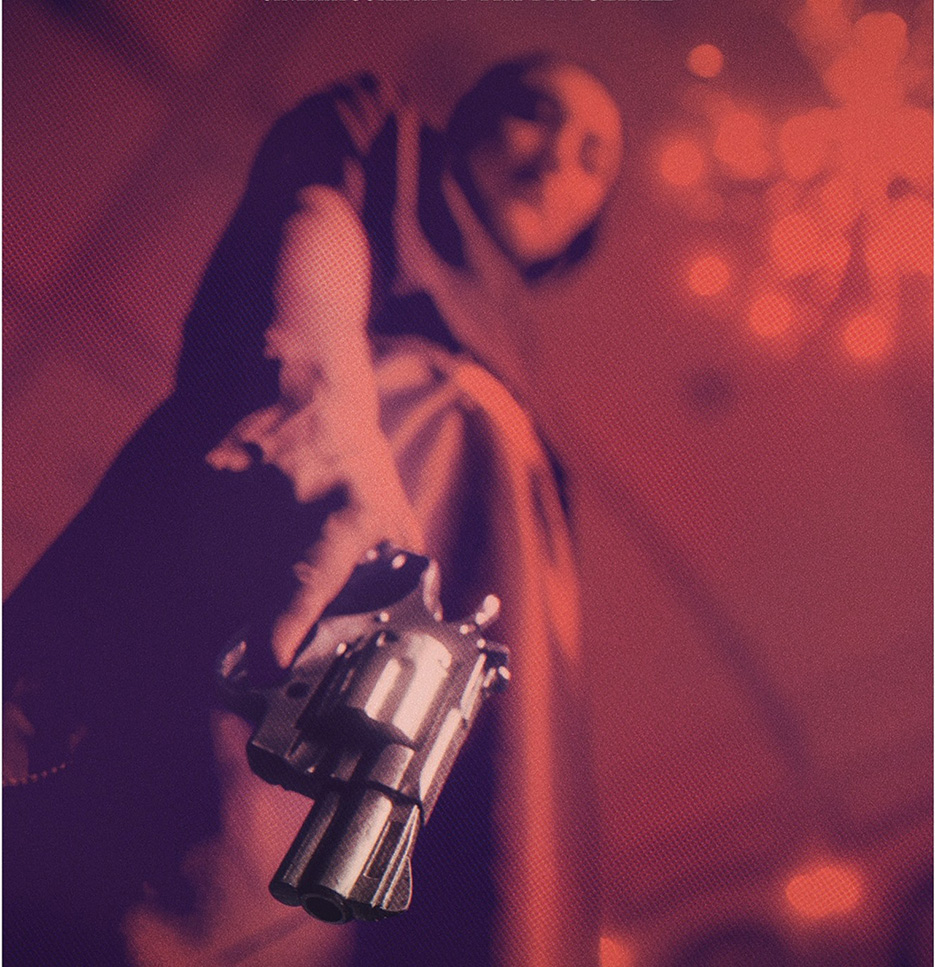
    Murder on the Dance Floor from last year’s City of Vincent Film Project.

    APPLICATIONS have opened for the fifth instalment of the City of Vincent Film Project.

    The three film-makers who make it through the assessment will get $7,000 and a mentor to help them produce a quick non-fiction film about Vincent.

    The successful films will screen during the 25th Revelation Perth International Film Festival in July next year.

    “We have a wealth of local talent and so many interesting stories in our community,” Vincent mayor Emma Cole said.

    “Past participants in the film project have gone on to win international accolades including the recent documentary Pacing the Pool, which won best short documentary this year at a festival in Wisconsin.”

    Directed by Radheya Jegatheva, the inspiring piece follows Richard Pace who for the past 30 years has woken up at 3.45am every day to enjoy his ritual swim at the Beatty Park Leisure Centre at 5.30am. 

    Diagnosed with a rare bone disease at the age of four4, the heart-warming documentary follows his incredible journey of resilience and courage.

    Film-makers’ applications can be lodged at www. vincent.wa.gov.au/filmproject by November 15.

  • Hyde parking limits

    RESIDENTS around Hyde Park might not have to walk half the suburb to get home with their shopping after Vincent council approved a trial of parking restrictions to push out bay-hoggers.

    The council has fielded complaints for years about CBD commuters clogging up the parking bays around the park, leaving residents and their visitors circling in the hope of catching someone leaving, or having to park several blocks away.

    The park itself is also growing increasingly popular as infill pushes up the local population, adding to the demand.

    To try and push out some of the hoggers, the council has now approved a trial of three-hour time restrictions along Vincent and William Streets, while a one-hour limit will be set for the southern side of Glendower Street.

    Although a botched pie chart slipped through to the council’s September agenda which converted 64 responses into an impossible 65 per cent, it did show there was broad support from residents for the restrictions.

    “Half the people who park around the park don’t even go to it – many just walk to work,” one resident responded.

    But not everyone was convinced: “I feel that you just want your rangers to come and start fining people who are just trying to enjoy their day,” said one visitor who thought a five-hour limit more suitable for people who might like to read a book or just have a good, long sit in the park.

    The council hasn’t said when it will start the 12-month trial.

  • Still flying

    I WAS a bit miffed when the Flying Scotsman in Mt Lawley closed down in 2020, as it was a classic old-school boozer that did a mean steak night.

    It was always busy and fared well, but apparently there was a stoush over the lease and it all ended acrimoniously.

    Anyway, as Ronan Keating said “Life is a rollercoaster” and we must accept the cuilnary ups and downs and move on.

    After lying fallow for a couple of years, the old Flying Scotsman was extensively refurbished and opened as The Elford this month.

    The pub is owned by the same people who did The Stables, The Reveley and The Camfield, so I was accepting a swish affair with plenty of cash behind it.

    The interior didn’t disappoint – restrained and classy with muted colours, dimmed art-deco style lighting, and natural wood and stone tabletops.

    The subdued lighting made it very cosy with almost an intimate jazz-bar feel, despite being very large and spacious with huge windows.

    There was also a nice alfresco where you could watch the lively comings and goings on Beaufort Street. 

    The menu was pretty small with a sophisticated take on pub classics, as well as pizzas, sides, desserts and a range of share plates like Katsu Crumbed Pork Slider, Kimchi and Tofu Crispy Wontons, and Chargrilled Local Octopus.

    I fancied a steak but it was $42 for the 300g Stirling Ranges Scotch Fillet, and that was before you added a side. In fact most of the mains were $30 or more. I plumped for a pub classic – the chicken schnitzel ($26).

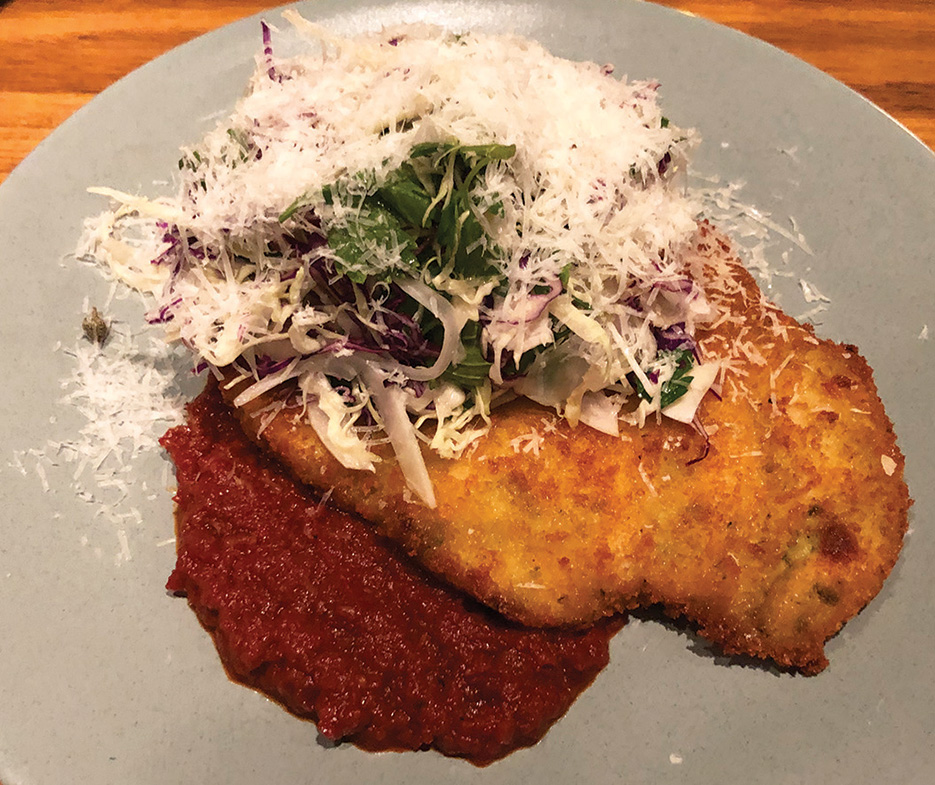
    I can hear you groaning “How boring”, but this was actually a deconstructed, uber sophisticated parmi with no chips – a bit like Noel Coward eating a Happy Meal. 

    The generous slab of breadcrumbed chook was accompanied by a seperate arrabbiata sauce and a mound of Italian slaw.

    The cheese came in the form of a fine layer of shaved parmesan.

    All very interesting and post-modern, but did it taste any good?

    The salad was a refreshing delight with red cabbage, rocket, radish and a very light Italian-style dressing.

    The secret weapon in the salad was the odd caper, which added a lovely piquant bite.

    The chicken was succulent with a nice crispy coating, and the arrabbiata sauce had a subtle heat.

    An intriguing dish which, despite my initial concerns, was very filling.

    Across the table, my wife was enjoying her Beetroot and Ricotta Gnocchi ($30) which was a colourful and beautifully presented dish.

    “I love the contrast in texture between the soft, velvety gnocchi and the toasted macadamias,” she said.

    “The beetroot flavour isn’t overpowering and goes well with the stracciatella and the Tuscan kale (cavolo nero).

    “Overall it’s a delicious and lovely presented dish.”

    Ou kids were busy tucking into their 6” Margherita pizza and cheese burger and chips (both $10) from the small children’s menu (three dishes). 

    My daughter’s cheeseburger was a bit on the small side, even for a kid’s portion, but they wolfed it all down with no complaints, and the pizza looked delicious.

    The service was great throughout with lots of smiles and chat from the super attentive staff, who seemed to be constantly hovering beside the table to top-up your water, like Gen Z versions of Gunga Din.

    I enjoyed my meal at The Elford, it’s a stylish affair with good service and food, but maybe they could expand the menu and include some cheaper mains.

    By STEPHEN POLLOCK

    The Elford
    639 Beaufort St, Mount Lawley
    theelfordhotel.com.au


  • Grand old show
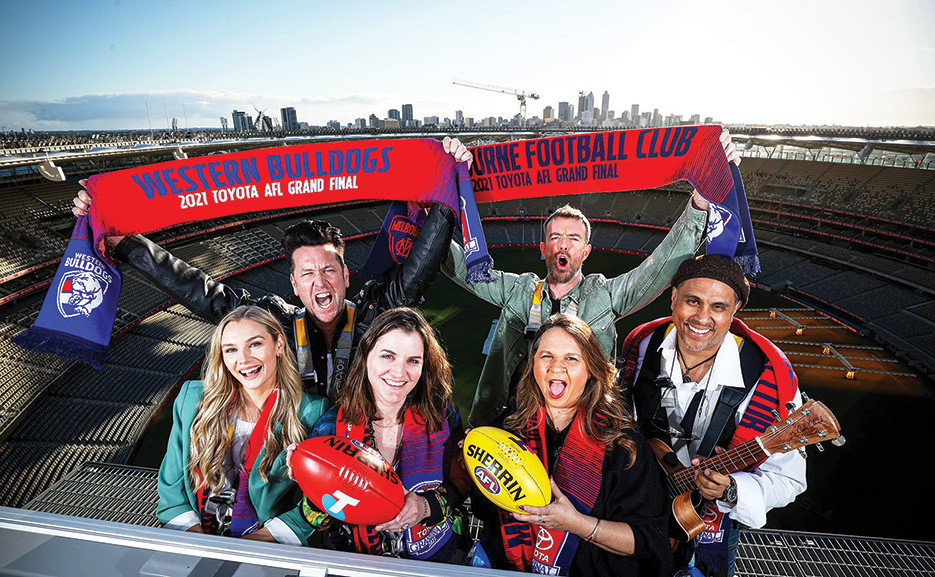
    • Some of the artists performing at this year’s AFL Grand Final (L-R): Amy Manford, Kav Temperley, Abbe May, Ian Kenny, Gina Williams and Guy Ghouse. Photo courtesy AFL Photos.

    LET’S face it, the entertainment at the AFL Grand Final is no Super Bowl halftime show.

    Over the years it has veered wildly from showcasing big-name overseas acts past their best to popular but overfamiliar Aussie bands that lack a bit of stardust.

    Oh, and every so often we had a toe-curling moment of car crash TV that was so bad you couldn’t believe it was actually happening (Meat Loaf’s ill-fated performance in the stands in 2011).

    Given the border restrictions in place, unsurprisingly the entertainment at this year’s Grand Final at the Optus Stadium is a WA-love fest. Plus premier Mark McGowan lobbied the AFL for a homegrown line-up.

    Headlining in the coveted half-time spot will be Birds of Tokyo, a Perth alternative rock band who formed in 2004 and scored big hits with songs like Plans and Lanterns. 

    They played pre and post-game at the 2013 Grand Final, as well as at the 2019 Grand Final Parade.

    This time, Birds drummer Adam Weston might have to watch out for flying tomatoes as he is a big Collingwood fan.

    “I’m a lifelong Magpies member, but I’ll start talking about the men’s again next year!” he laughs. “Our AFLW girls only just fell short earlier this year against Brisbane (which I was at the Gabba for, and yes I’m a huge footy fan) so they’re a super strong chance next season. 

    “I’ve had to isolate for two weeks but I’d do it for three months to have the opportunity to be part of such a historic occasion for WA and for football.”

    The skin pounder was tight lipped on the songs the band would play, but did reveal they would be doing a surprise cover and collaborating with the WA Symphony Orchestra.

    “One of the songs we’ve chosen should do pretty well to light up the stadium and since we have the absolute pleasure of teaming up with WASO again, we’ve got a surprise cover song we’re playing for the first time too.”

    Opening the final will be WA stalwart Abbey May, who has been rocking out for the past 20 years. 

    When the Voice asked the singer/songwriter about her setlist and footy allegiances, she was playing it too-cool-for-school and keeping her plectrums close to her chest.

    “I just hope everyone has a good time and eats some oranges at half time, y’know?”

    Thanks for that, Abbey.

    Perennial Perth favourites Eskimo Joe (they seem to play at every WA event going, don’t they) will also smash out a few numbers.

    Joe guitarist Joel Quartermain, originally from Melbourne, is another muso who might need to look out for airborne fruit.

    “I’m a born and bred Essendon supporter,” he says. 

    “I spent my earlier years in Melbourne and even after moving to Perth aged 12, stayed true to my roots. I do have a soft spot for the Freo dockers though and it was an honour for the band to be number one ticket holders. Absolutely excited about a Perth grand final and to be playing is a dream come true!”

    A unique WA supergroup has been put together for the final, featuring Stella Donnelly, John Butler and The Waifs’ Vikki Thorn and Donna Simpson. 

    There will also be a performance by rapper ‘Baker Boy’, a Yolngu man named Young Australian of the Year, who travelled to Perth and quarantined for the event.

    Under the theme of ‘Australian Anthems’, the entertainment will also feature renowned Noongar musician Gina Williams accompanied by Guy Ghouse, and Men at Work’s lead singer and successful solo artist Colin Hay.

    It was recently reported that Sacha Baron Cohen had moved to WA with his Perth-raised wife Isla Fisher, so rumours were swirling that Borat may put in an appearance at this year’s final. 

    So if you see a fluorescent ‘Team WA’ mankini in the stands, let’s pray its Borat and not Mark McGowan.

    The pre-Grand Final entertainment kicks off at 4pm (Saturday September 25) 

    By Stephen Pollock