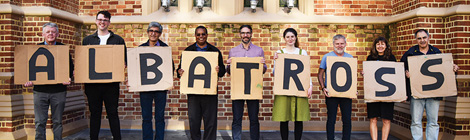
Funds raised by the majestic albatross’s film goes to helping local humble pelicans, like this poor bird who was helped by WA Seabird Rescue.
A FILM about a majestic albatross colony under threat from plastic in the Pacific Ocean will raise funds to help local birds.
The documentary Albatross was filmed on a tiny atoll in the north Pacific Ocean, an area swamped by plastic pollution. During the filmmakers’ first trip in 2009 they found thousands of young albatrosses lying dead with stomachs filled with plastic.
Over many visits and years of filming, the crew witnessed the albatross colony’s cycle of birth, life and death. Director, writer and editor Chris Jordan decided he couldn’t distribute the film as a material commercial product, fearing it would add tacit endorsement to what he called “the same destructive machine of mass consumption that had filled our beloved birds with plastic in the first place”.
Instead, it was offered as a free public artwork for people to host free screenings via the web.
An upcoming screening is now being hosted by the multi-faith group Australian Religious Response to Climate Change.
Supported by the Uniting Church, Doctors for the Environment, and the Perth (Boorloo) Climate Action Team, they’re calling on attendees to donate to WA Seabird Rescue, a group of volunteers who helps birds afflicted by pollution, illness, and the ever present threat of discarded fishing tackle.
There’s live tunes by Danny Gunzburg from 5.30pm and the film starts at 6.30pm, RSVP via bit. ly/3iVjWmf (or search “Albatross” on eventbrite.com.au).
CLEARING native vegetation under the guise of Covid economic recovery has highlighted major gaps in WA’s regulatory systems, says the Wilderness Society.
The society says projects funded by Covid grants are pushing Perth’s urban sprawl further and faster, while senior campaigner Jenita Enevoldsen warns the problem is sending the entire state towards “catastrophe”.
“If transformative steps are not taken, then the ecological function of vast tracts of WA’s bioregions will be pushed towards a tipping point,” Ms Enevoldsen said.
One of the society’s biggest issue’s is WA’s piecemeal monitoring of land clearing.
According to a recent society report, more than 7.7 million hectares were bulldozed across the state through logging, mining and development since 2000, making it one of the planet’s most impacted landscapes.
Despite the size of the area being cleared, barely 7 per cent was referred to the federal government for assessment under the Environment Protection and Biodiversity Conservation Act according to the Society for Conservation Biology.
The Wilderness Society report says no one’s keeping an eye on what’s been happening on WA’s vast pastoral leases either, meaning “it would take 20 years to inspect each pastoral station once” to determine how much vegetation has been destroyed.
This estimate is underlined by 2007 report by WA’s auditor general, who found “the management is in disrepair with no consistent data monitoring of native vegetation”.
However, despite the lack of accountability and available data, there’s no government framework to report on illegal land clearing in WA.
In a 2016 report by the WA Environmental Protection Authority, land clearing was found to be “one of the biggest threats to WA’s biodiversity”, with concerns about the “cumulative impact of clearing in the Perth, Peel, Wheatbelt and Pilbara regions”.
“This really is a line in the sand moment, where we either accept a catastrophic status quo, or we get serious about protecting, monitoring and restoring our native vegetation,” Ms Enevoldsen said, noting February’s firestorms which destroyed 80 homes near Wooroloo.
The society has called on the McGowan government to put $10 million into this year’s surplused budget for a statewide biodiversity monitoring program.
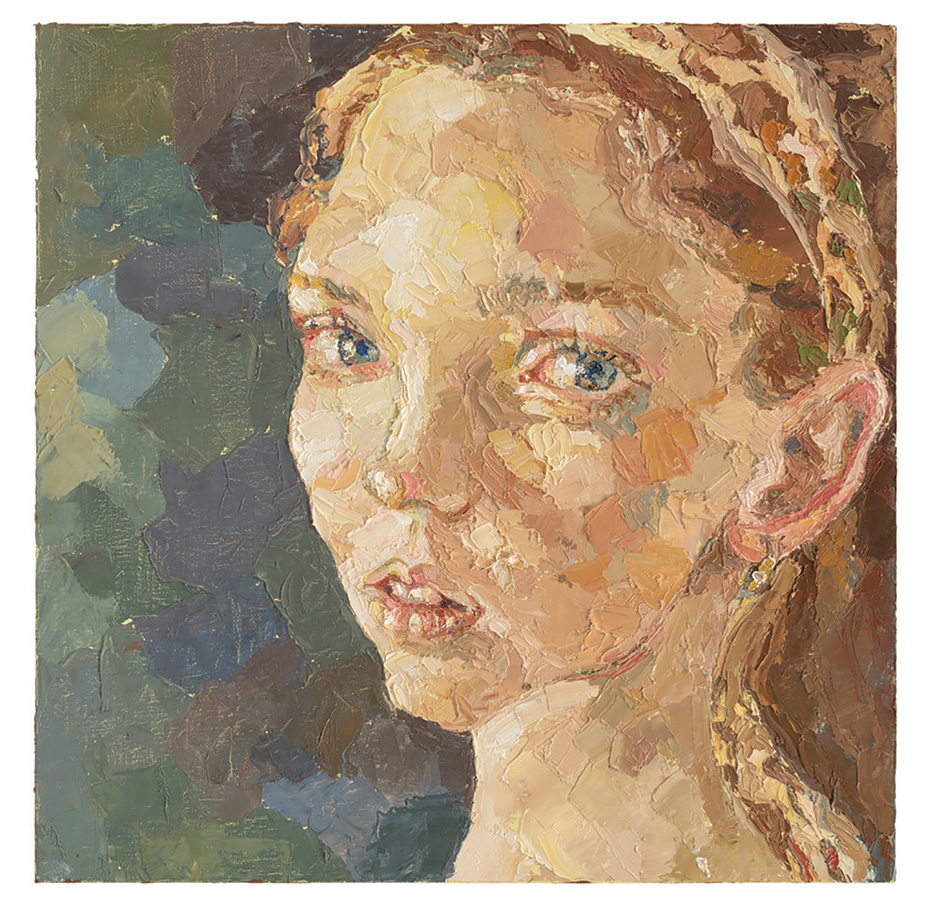
Two self portraits by Chloe Tupper painted in 2009.
A YOUNG artist’s legacy of works are on display in a memorial exhibition that she hoped would shed the stigma and myths around Anorexia Nervosa.
Chloe Tupper died June 9 2020, aged 32.
For most of her life she experienced severe and enduring anorexia nervosa, a chronic form that affects about one in five people with anorexia nervosa. She was hospitalised many times from age 14, often against her will.
Tupper found peace through her artwork, painting prolifically as she grew more unwell, and hoped her paintings and writings would shed light on the illness and fight some of the cliches.
Mental health
Laura Kiely is an eating disorders clinician and researcher who was close with Tupper and wanted to help share her story, helping catalogue a collection of the artists’ paintings and words in a new book A Life Within Stillness: Illuminating Severe Enduring Anorexia Nervosa.
“I collaborated with Chloe [in what] started out as a practical task: She was very unwell, and I offered my support to catalogue her prolific art collection, and through that process she then shared how her illness manifested in her artwork,” Kiely says.
“She would like her illness to be a little better understood and for the treatment to reflect that.”
Beyond just a desire to be “skinny”, about 70 per cent of people with anorexia nervosa have another mental health diagnoses including depression, anxiety or OCD. Some have a history of trauma and self harm, and some seek to control the only thing they feel they have domain over: What they eat.
The mortality rate of AN is high, about one in 20, sometimes by suicide or slowly by organ damage.
Highest mortality
Kiely says after many years specialising in eating disorders, being on maternity leave recently gave her the time to “reflect on the state of play regarding treatment, and that has led me to committing to tell Chloe’s story, because there really is a gap in how we understand and treat this illness.
“One in 20 die. It has the highest mortality rate of any mental illness, but it’s somehow forgotten about in terms of treatment and resources.
“People with anorexia nervosa often suffer in silence and die quietly.
“There is a severe lack of public or private services for anorexia nervosa which is one of the reasons I remained so committed to sharing Chloe’s story as her legacy.
“There were no suitable treatments available to her.”
A Life Within Stillness, the exhibition and book, launches August 19 at Stala Contemporary Gallery 6.30pm at 12 Cleaver Street, West Perth, and runs til August 28. Hours and works are at www. stalacontemporary.com.au
Proceeds from the book are donated to eating disorders research.
• Richard Pace in “Pacing the Pool”, directed by Radheya Jegatheva, produced by Jay Jay Jegathesan, and executively produced by Ashleigh Nicolau
RUSSIANS and Americans have been united in their appreciation of a short documentary filmed at Beatty Park, with Pacing the Pool impressing critics film festivals in both eastern and western hemispheres.
Part of the Revelation/City of Vincent film festival, Pacing the Pool tells the story of local swimmer Richard Pace.
When he was four he was diagnosed with polyostic fibrous dysplasia, a rare condition causing weak bones and uneven bone growth.
“I’m 64,” Mr Pace says in the film. “That’s nearly 30 years since I was supposed to be in a wheelchair. And that’s only, in my view, because I’m in the pool every day.”
After its initial screening at the Revelation Film Festival in Leederville in July, producers entered it in festivals worldwide.
Like the music of Billy Joel and The Beatles before him, Pacing the Pool’s director Radheya Jegatheva found his artwork has proved popular on all sides of historic national divides.
It was picked up for 11 festivals so far, from Szczecin in Poland to Los Angeles in the USA.
It’s now won best short documentary at the MLC Awards in Green Bay, Wisconsin in the USA, best doco in Paradise Film Festival in Budapest, Hungary, and an honourable mention at the International Short & Symbolic Art Film Festival in St Petersburg, Russia.
Russian Urals
There’s still time to catch Pacing the Pool at upcoming screenings in Perm Krai in the Russian Urals on October 15, Los Angeles on November 9, and at the state library of WA on August 21 (book by plugging “International Multicultural Film Festival” intro trybooking.com for that last one).
Meanwhile the Joondanna resident’s latest short Painting by Numbers has also gained acceptance into 115 festivals in 26 countries.
Premiering in January this year, Jegatheva spent eight months creating his own animations for the stunning visual effects of Painting by Numbers which see iconic artworks reimagined as critiques of modern society’s effect on the environment.
The filmmaker says he hopes it will encourage discussion about environmentalism, sustainability and climate change.
“Interweaving religious theology, environmentalism and art isn’t a natural fit but I believe audiences want to see something new and fresh,” Jegatheva said.
“I also thought using famous artwork would help people relate to the environmental issues more easily.”
Painting by Numbers was produced by Matt Hearn (Wolf Creek, Rogue), who teamed Jegatheva up with screen composer and sound designer Steeve Body (Dr Who, Walking With the Dinosaurs) who praised the young filmmaker’s ability to jump across disciplines.
“His work is timeless and stays with you long after you’ve watched it,” Body said.
Partway between the Urals and the state library, Painting by Numbers will be screening at CinefestOZ in Margaret River on August 28.
CLAISEBROOK COVE was in full bloom when I went there for lunch on Tuesday.
Spring had arrived prematurely and the beau monde flocked to the waterside cafes like flamingos on heat.
There was a European air to the Cove and it reminded me of holidays in the Mediterranean, where tourists leisurely promenade at night.
Unfortunately, I had misjudged the attire and was wearing some carbon-dated jeans and a green hoodie that had seen better days.
When I arrived at The Partisan, people were looking at me as if I had won a competition or received a voucher from a wealthy relation in East Perth.
I buried my head in the brunch menu, which had a delightful range of all-day breakfast dishes, and a smaller range of burgers, pasta, seafood, share plates and specials.
It was an extensive menu but not unwieldy, and The Partisan should be commended for a great range of dishes with everything from zucchini fritters to roasted chat potatoes.
I even spotted an “Immune Salad” on there – maybe one for the anti-vaxxers who could wash it down with a cup of ‘Flat Earth’ coffee.
The Partisan was pumping with the large waterside alfresco nearly full, but the service was still prompt and vey friendly, and there was additional seating inside.
The decor was French provincial with ornate chandeliers and some plush furnishings here and there, but it wasn’t over the top and the tables and chairs were fairly minimalist.
It wasn’t long before I was tucking into my sautéed mushrooms with poached eggs and smoked salmon ($18.50).
Great presentation and great value for money with a generous wad of high quality salmon and a liberal amount of delicious mushrooms, which were velvety and packed with flavour.
Underpinning the dish was some cornmeal bread, broccolini and grilled corn.
The broccolini provided some nice texture to the eggs, which were perfectly poached and oozed golden yolk over the salty cured salmon.
I’m not a fan of hollandaise sauce – I find it too sickly – but this incarnation was perfect and had a strong lemon tang and a slight hint of mustard, with the butter kept in check.
Despite all the strong flavours in this dish it came together nicely and didn’t overwhelm your palate, with the core ingredient – the mushrooms – being allowed to shine.
It went perfectly with my Green fresh juice ($7.50) a vitamin-boosting mix of apple, celery, cucumber, spinach, lemon and ginger.
It was presented in a stylish glass with a wedge of lemon, and had a large head of green foam that looked like The Incredible Hulk in a bubble bath. Very tasty and not too heavy on the ginger.
I washed it all down with a takeaway cappuccino ($4.80) which was nice and hot and came with a sugary Italian biscuit.
Throughout the meal the service was very friendly and polite, despite the busyness, and I had a nice chat with the lady behind the till. I couldn’t fault my meal at The Partisan and I’ll be back to sample their dinner menu and extensive range of alcoholic drinks.
I might even buy a new hoodie for the occasion and try their Immune Salad.
By STEPHEN POLLOCK
The Partisan 22/60 Royal Street, Perth thepartisanperth.com
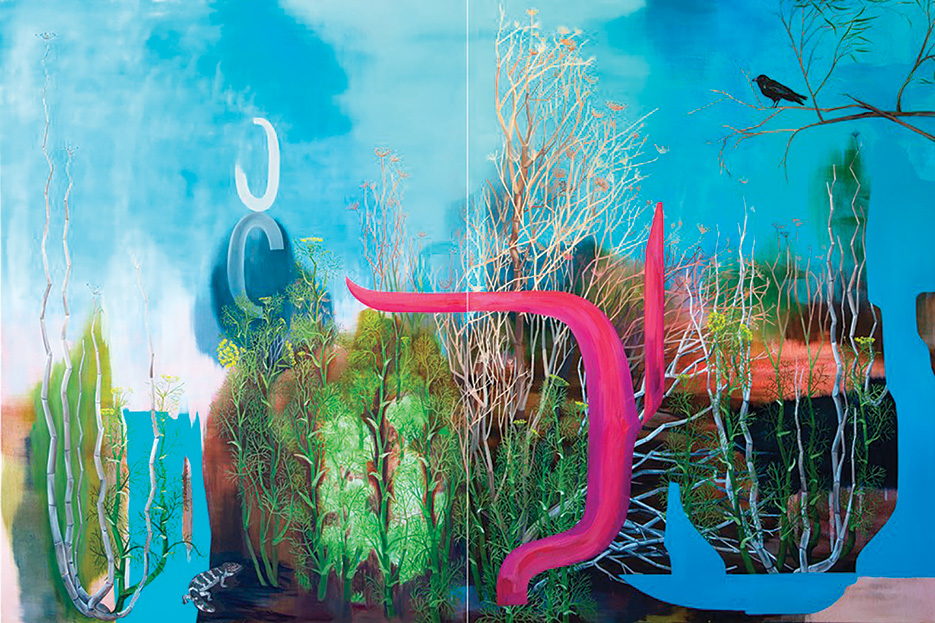
• Jo Darbyshire’s lockdown was the catalyst for the diptych Bluetongue.
THE conflicting emotions of lockdown are beautifully documented by Perth artist Jo Darbyshire in her latest exhibition Fennel and Crow – The Long Quiet.
During her one hour of exercise a day, Darbyshire sought refuge in the abandoned golf courses and industrial areas around Fremantle, as well as nearby Booyeembara Park, which has serpentine trails, open space and bushland.
Her stunning oil paintings have strong colours and are slightly abstract, reflecting the flora in the area including fennel.
“The Italians brought finocchio to Fremantle – Fennel is an introduced species in Australia (like many of us),” Darbyshire says.
“Its very ordinariness ensures its anonymity, and its survival.
“Traditionally it is prized for its healing properties; fennel seed oil activates the immune system and is a preventative for influenza (a perfect symbol during the pandemic).
“Fennel is also extraordinary because it contains all generations at once – it holds the old seeds high, while new growth springs forward.”
Although quite rich in colour, there is a delicate quality to the paintings in Fennel and Crow, hinting at the precariousness of life in the wake of the pandemic.
Redgum Ocean
Amidst the beautiful landscapes and sunsets, there is a solitary crow perched on a rocky outcrop, peering over the land, hinting at some distant omen.
“I tried to capture the sense of peace, stillness but also the foreboding that many people felt at that time,” Darbyshire says.
Darbyshire says she is inspired by abstract artists like the American Ross Blechner, and Australian’s Tim Maguire and Jon Cattapan.
Specialising in oils and large-scale works, she has become known for her paintings of underwater worlds including the reefs around Rottnest.
Fennel and Crow – The Long Quiet is at WA Art Collective’s gallery in Cathedral Square in the Perth CBD.
The not-for-profit Collective was formed in 2013 and is run by artists, often to the benefit of their careers.
Members’ works are displayed at the Cathedral Square gallery, at international fairs including Singapore Art Fair and Sydney Contemporary, partner art spaces like Holmes à Court Gallery, and regional art galleries in Geraldton and Bunbury.
The Collective also record interviews with artists for posterity, which are available on their website, and publish artist monographs.
Fennel and Crow – The Long Quiet is on from August 21 – September 18. For more details
WITH news outlets reporting it is cheaper to buy a home than rent in some Perth suburbs, there has never been a better time to get a mortgage.
George on Vincent is a new development in the heart of Leederville that is scheduled to be completed in 2023, so you would have plenty of time to save for furniture and appliances.
All 32 spacious apartments are three-bedroom two-bathroom and range from 107sqm to 193sqm, so they are suitable for professional couples, small families and downsizers.
You will be surprised at the amount of space in the bedrooms and bathrooms, turning the notion of apartment living on its head.
Enhancing the sense of room is the full-height doors and windows, which will allow plenty of natural light to flood in.
Large balconies will provide the perfect spot for pre-going out drinks with friends or relaxing with a coffee on Sunday morning.
The apartments will have low strata fees, two secure car bays each and plenty of storage.
To be situated at 291 Vincent Street, this nine level development will be a stones throw from all the pubs, cafes and restaurants on Oxford Street, and close to Beatty Park Leisure Centre and Leederville Oval.
You are also very close to the freeway and numerous public transport options for popping into the CBD and Northbridge, including Leedervile Train Station, or you could just cycle or even walk.
The George on Vincent display office is now open on Murray Street.
Call Realestate 88 director Brendon Habak on 0423 200 400 to secure a private viewing.
MAYLANDS has a childcare crisis, with dozens of families unable to find anywhere to book in their kids.
The critical shortage has forced Bayswater council to take the unusual step of helping find premises.
In June Maylands Peninsula Primary School principle Paul Andrijich and school board chair Peter Klinger wrote to Bayswater council seeking help.
“Our school opened with 280 students [in 2004] but, as a result of a rise in infill housing and multi-storey developments in the local area, our enrolments have steadily increased. Our current student population sits at 670 students,” they wrote.
The school has needed three after-school care providers to handle the numbers, but Helping Hands closed its Maylands’ service in 2019, leaving many of the school’s families struggling to find alternatives.
“The lack of [out of hours school care] options in the Maylands area has been a source of continued concern and frustration for our school community and has increasingly become an agenda topic at MPPS school leadership, P&C and school board level,” the letter said.
They’ve implored the council to help find a new space, suggesting either the Gibbney Reserve Pavilion or for a patch of land at the school’s border to be given over for a childcare provider to build on.
Pavilion
The school would prefer to use the pavilion so a provider can move in for the 2022 school year, and so the kids don’t lose any more play space from giving up a new building.
Cr Elli Petersen-Pik has now got up a successful motion that the council “assist the MPPS in finding a suitable location” adjacent to the school, and to look into the pavilion option.
The pavilion option will require some negotiation as it’s currently inhabited by Football West, which has a lease until January 2024. Most of their operations have since been moved offsite and it’s mostly used for storage now.
At the July 27 council meeting councillors Steven Ostaszewskyj and Michelle Sutherland queried whether they should get involved given their tight resources and noting childcare centres are privately operated.
Cr Sutherland said the council should sit down with state and federal governments to get them to pitch in more for childcare and other community resources as facilities get increasingly hammered by swelling populations.
But Cr Petersen-Pik said the motion was “about supporting our community. People do not have enough care providers for their kids. We all want parents to go and work, this is the message that we get constantly: parents, mums, everyone go to work, but somebody needs to also look after the kids.
“We do get involved with those kind of issues, local government actually deals with lots of different issues.”
Council staff will investigate potential locations and whether Football West was keen to end the lease early, given it’s about to move its operations to the new State Football Centre in Queens Park in 2022. A report goes back to councillors in November.
PEOPLE sleeping rough have a reduced life expectancy of up to 30 years according to new research by UWA and the Australian Alliance to End Homelessness.
And the figure of 56 rough sleepers dying in Perth last year is likely a “significant underestimate” as it only comprises deaths confirmed by GPs or hospitals that’ve been forwarded by UWA’s Home2Health research team.
Lisa Wood is associate professor at UWA’s School of Population and Global Health and says “Australia needs to follow the UK’s lead by annually releasing a count of homeless deaths and setting targets to reduce this atrocious life expectancy gap”.
“At the same time, we cannot lose sight of the people behind these grim statistics: each death is a life cut way too short. After all, no one sets out in life to become homeless.”
Dr Wood and researcher Shannen Vallesi have an article “Death Among People Experiencing Homelessness: Each One, a Life” in the August edition of the homelessness journal Parity.
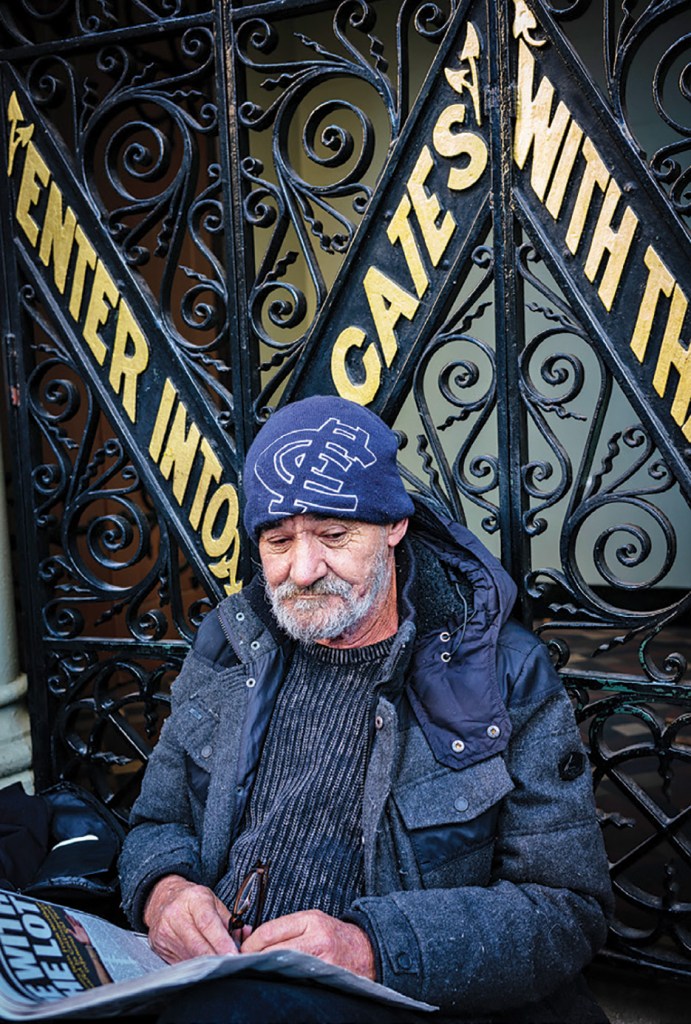
• Neil reconnected with his family in his last days, but the offer of a home to reboot his life was agonisingly late.
NO one sets out in life to become homeless.
Neil was a 63-year-old male, with a 10-year history of rough sleeping.
He was one of seven children, and had three children of his own, but had lost contact with most of his family in the few years prior to becoming homeless.
Neil has been through a number of traumatic experiences in his earlier life including a serious car accident as a toddler that hospitalised his mother for a year, and the tragic death of his youngest brother at age 21.
Struggles with alcohol plagued him most of his life, and contributed to being in and out of jobs over the years.
Family and others had offered to help Neil get off the street, but as one of his sisters recounts, he was too proud to accept assistance, and felt that he himself was to blame for his situation.
“Neil was a warm, caring person, a poet who just got lost in the world,” she noted.
He would sleep at a park where he felt safer, but each day for 10 years sat on the steps of Trinity Church in the Perth CBD, often reading a book. He was well known and respected by people working in the city who would pass by.
Here Homeless Healthcare’s Street Health outreach nurse and GP would stop by regularly to see how Neil was doing, and gradually he opened up that he had a plan “to get a house, job and rekindle my relationship with my children and grandchildren”.
He went onto the priority list
for public housing, and UnitingWA arranged interim accommodation while he waited for housing.
In early 2020 Neil contracted a chest infection and was experiencing shortness of breath when he tried to walk even a short distance.
He had had minimal contact with doctors for much of his adult life, but COPD was suspected and he attended hospital to get some tests.
He was diagnosed with a chest infection and Stage 4 lung cancer.
Neil had quit smoking just a few months before, but had been a pack a day smoker since his early teens, taking its toll on his lungs and health.
Neil sadly passed away in September 2020, only a few weeks after his diagnosis.
A public housing offer came through for him just eight weeks after his death.
In his final month, Neil was able to fulfil his wish to rekindle his relationship with family, talking regularly with his sisters, and reconnecting with his children.
Unfortunately, due to a Covid-19 lockdown, his son was not able to get to Perth.
Neil was well loved in the Perth CBD community as the friendly man who sat on the Trinity church steps, and there were many tributes left to him on the steps.”