The original HMAS Perth visits Fremantle on August 6, 1941.
AN ancient tradition dating back to the Roman republic plays out in the CBD this weekend as the crew of HMAS Perth (III) is granted Freedom of Entry into the City of Perth.
It’s the highest accolade a local government can confer on a military unit. It stems from Rome’s strict rules against armed soldiers crossing into the city for fear they’d topple the civilian leadership. They could only enter as soldiers when their actions had earned them a “Triumph” parade.
HMAS Perth’s commanding officer Tony Nagle said “it’ll be a case of us marching through the streets with the full pomp and circumstances of ceremony, with our swords drawn, with our drums beating and the band playing”.
And lord mayor Basil Zempilas is getting out the old school mayoral chains, made in 1886 and featuring 16 silver swans.
“The lord mayor of today doesn’t always wear the traditional robes and the original chain,” he said. “I’m delighted to be able to put it on for this very important and ceremonial occasion.”
The HMAS Perth (III) is the third ship to bear the city’s name, with the first sunk near Java in World War II and survivors taken as prisoners of war by Japan.
The current HMAS Perth is dotted with memorabilia of the original, including red paw prints commemorating the original ship’s cat “Red Lead”, lost in its sinking.
The parade is on August 28 10.30am to 12pm starting from Stirling Gardens and marching down Barrack Street.
A ROOF is on the way to protect an exposed heritage cottage at 54 Cowle Street and will be installed “shortly”.
Last week we reported the 137-year-old home, one of the five oldest in the City of Vincent, which had gone topless during this rainy winter after owner Palazzo Homes removed the old iron-over-timber shingle roof.
We still haven’t heard back from Palazzo as to why, but Vincent council’s responded to our queries. Conditions on an upcoming development at the site say before a building permit’s issued, Palazzo has to enter a legal agreement to retain the external “built form” of the cottage to the council’s satisfaction.
An emailed response from Vincent CEO David MacLennan states: “The City of Vincent and our community place great value on protecting the history and heritage contained in buildings like 54 Cowle Steet.
“City staff have been working closely with the developer to ensure this important building is restored appropriately.
“The developer has advised the roofing materials have arrived and will be installed shortly.”
He says the roof’s old timber shingles under the corrugated iron were in “extremely poor condition”, and the flooring and internal fitout were stored off site to reduce damage.
The legal agreement to retain what’s left of the built form is being drafted by the council’s lawyers and has to be signed before a building permit’s issued for Palazzo to build units on the lots encompassing the cottage.
REFERRING to the letter in the Perth Voice, August 5, 2021 from former City of Perth councillor and City of Vincent resident Reece Harley (“Speedy response”).
It seems all you have to be is in the ‘purple circle’ and within 24 hours some non-offensive graffiti is removed and Mr Reece hands out compliments.
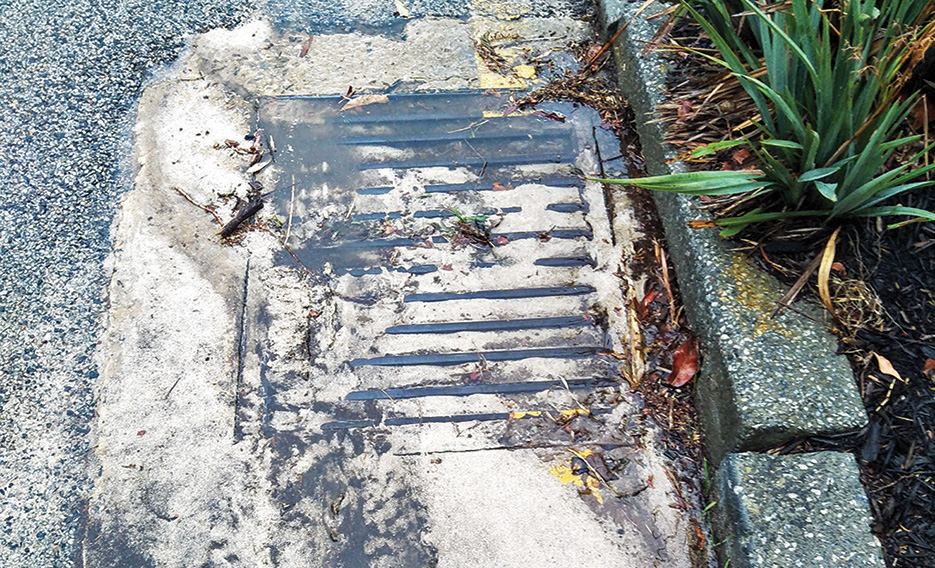
Yet for us common, unloved residents it took three complaints to the City of Vincent to get a blocked drain cleaned out in North Perth.
My personal dealings with the administration and councillors at the City of Vincent is that they do not act on complaints unless you send multiple emails or direct complaints.
They are out there at the opening of an event or ribbon-cutting ceremony to take all the positives and get publicity, but they then seem to disappear and common residents’ complaints are not followed up.
You only hear from the mayor and councillors by a flyer in your letterbox or, if you are lucky, a knock on the door at election time.
I wonder how many other residents have had these frustrating experiences.
What we want is not a purple circle but an administration, mayor and councillors who are for the good of the community, not there to enhance their political or professional careers and it might do them good to realise that the common residents pay the rates that pay their salaries and allowances.
Ray Stevenson JP Emmerson St, North Perth
We need our open space
THANK you for your recent front page article on the intended sale of the block at 26 Brentham Street, Leederville and the fate of the playground located at the rear of the block (“Deal or no deal,” Voice, August 21, 2021).
I am quite new to the area and although I knew about the land swap between Vincent council and Aranmore Catholic Primary School, I was unaware that a promise had been made to upgrade the playground and that they will now renege on that agreement. Thank you for drawing that to my attention.
I was disappointed that your article did not mention that the public open space in question contains not only the playground but seven large, magnificent mature eucalypts.
Also not mentioned was the fact that now that the previous house on the block has been demolished, visibility of the playground is much improved and of course, the block could be improved as part of the playground and open space.
I concede that there is plenty of open space in the area but such things are precious and as they well know, expensive to acquire.
If this sale is about raising money to fund acquisitions elsewhere, I’m sure there are plenty of other, more valuable blocks within the city boundaries more suitable for sale to developers.
For example, they could have sold the land that the school wanted from them.
I have concerns for the fate of the two large trees that are on the land gifted to the school, as I feel building more facilities for the school is part of the reason for initiating the land deal. And now the council reckons they will want to buy the playground area for millions?
Naturally as a nearby resident I object to more development in the street but mainly I fear for the future of the trees at risk. We know the amenity that public open space and trees provide to our whole present and future populations and there is little enough in the inner city.
I have written to the council of my concerns both for the present fate of the proposal but also for any future developments that may arise as a consequence should the sale go ahead.
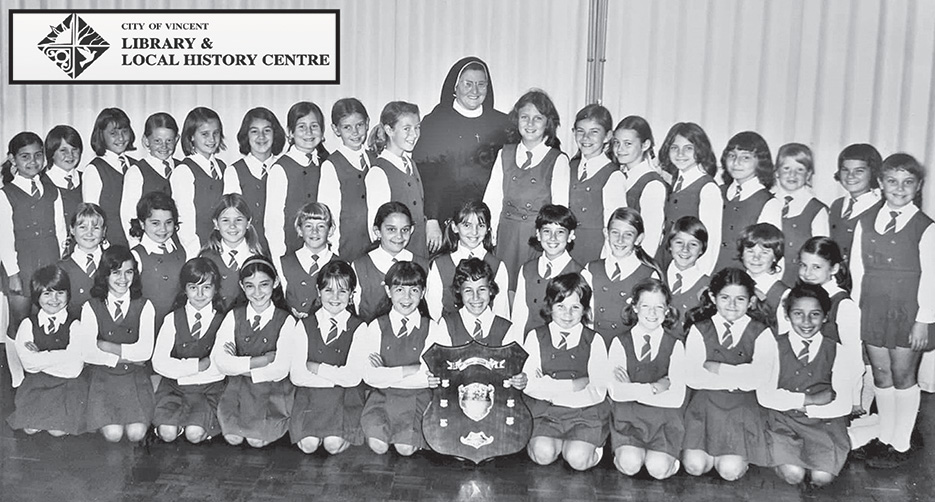
OUR series of tales from the Vincent Local History Centre returns this week with Julie Anglesey’s ‘Recollections from My School Years at St Mary’s 1971-1978’, one of the entries from this year’s local history awards.
I ARRIVED at St Mary’s, as the Aranmore College girls’ school was then known, as a nine-year-old in 1971.
What a culture shock it was for me to move from a small, blonde-brick school with a sun-burnt Aussie flavour near my beachside home in Trigg, to an “ancient” double-storey school where everyone seemed to be related, and Italian was spoken more than English.
It took two buses to travel to Leederville – the first bus from Trigg to the newly-created Karrinyup interchange, the second one dropping us on busy Loftus Street.
The smoke-filled buses would become crowded with office workers on their way to the city and we would politely stand for the adults, (“reluctantly” might be a more accurate word!), when there were no seats left.
My daily pilgrimage up tree-lined Franklin Street led me past rendered brick houses with brown-tiled verandahs, and unfriendly-looking weatherboard cottages.
My adult self now loves these renovated cottages with their high ceilings and jarrah floorboards, but my perception was different back then.
One white-rendered house (or was it blue? I can’t remember now) had a low path-side wall that was decorated with shells.
This struck my young brain as being odd; Leederville, to me, felt about as far away from the ocean as you could get.
Nevertheless, I could appreciate the patience and love that had gone into cementing each individual seashell into place.
The homeowner would stand guard over her maritime creation every morning as groups of blue sailor-girls marched our way to school.
One morning, with no guard in sight, my friend dared to walk on top of the wall, crushing beautifully formed shells with each disrespectful step.
Out of nowhere, a wild Italian lady appeared, yelling animatedly at us.
We may not have understood the words, but we certainly received their meaning…
These days, the shell house is gone, replaced by a modern home more in fitting with this now-trendy neighbourhood.
The sliced white-bread Vegemite sandwiches I retrieved from my lunchbox each day were a world apart from the large crusty rolls of my friends, full of unfamiliar meats and cheeses.
Words like mortadella, coppa, gorgonzola were a brand-new language to me; a language I learned to love.
By the time I reached Year 12, I’d drive down to the Re Store at lunchtime, my senses delighting in the rich sights and smells that welcomed me, and order these same delicious lunches for myself.
The church was a central point of our lives.
When people asked me where I went to school, I’d point out the steeple, its red-brick tower and white peak tapering gracefully above the roofs for miles around.
I’d never been in such a grand church before, but singing in the choir allowed me to skip class to sing at funerals.
The priest would perform the service in Latin, his smoky gold-chained thurible filling the air beneath the stained-glass windows with frankincense.
Our heavenly voices, trained by Sister Mary Magdalene, would rise angelically above the booming pipe organ in reverent tribute to lives well lived…
I decided to try Lupo Lab for lunch, but don’t worry it’s not a themed diner where you drink out of test tubes and eat from petri dishes.
It’s actually a stylish Italian restaurant on Scarborough Beach Road.
Situated opposite the Mezz shopping centre, the interestingly named Lupo Lab is part of a nice row of eateries and shops, including Diabolik Books & Records (good to see there are a few book shops still around).
Lupo’s lunch menu had a compact range of antipasti, pasta, main-style dishes, salads and sides.
I was tempted for the lamb chops marinated with garlic, rosemary and bay leaves, or the slow cooked beef cheeks, but they looked a bit heavy for lunch so I ended up going for the tonnarelli all’amatriciana ($25).
There was a good range of pastas and the gnocchi porcini and mushroom, and the fettuccine with spicy crab also looked very inviting.
Initially I thought my tonnarelli all’amatriciana was a bit on the small side, but it was deceptive with a deep bowl and thick strands of tonnarelli (a slightly thicker version of spaghetti with square edges).
The pecorino romano cheese added an indulgent creaminess to the locally sourced guanciale (cured pork cheek), which had great depth of flavour and intensity.
It was one of those pasta dishes which was both comforting and slightly refined, straddling Nonna’s house and a bistro.
The highlight was the combination of the cured pork cheek and the san marzano tomato sugo; a moreish and rich sauce that went perfectly with the al dente tonnarelli.
It had that slow cooked, complex flavour.
Lupo Lab use organic eggs, and specialty pasta flour and semolina from Italy, resting the dough in the traditional way to give it the best al dente texture.
It certainly had a nice firm bite and the sauce clinged well to the slightly rough edges on the pasta.
Apparently head chef Davide and his team make the pasta and gnocchi fresh every day.
The portion was just the right size for my lunch, but some might have wanted a bit more on the plate.
I washed it down with a large bottle of sparkling water ($6) which was very refreshing.
Lupo Lab’s founder Mirko, hails from Italy, where he grow up working at his family’s restaurants in Rome.
Lupo seemed authentic with two old Italians settling down for lunch and conversing with the owner and staff in their native tongue.
The interior was pretty classy with table service and refined fixtures and fittings.
Sometimes I’m put off going to restaurants for lunch where a waiter takes your order, as it can take too long if you have appointments looming, but the service was super quick and polite, so they obviously cater for a quick turnaround.
Lupo Lab also had a takeaway coffee and cake section, so I got a fruit tart and a chocolate tart (both $4.50) to take home for my wife and kids.
“The chocolate tart looks like it would be quite heavy, but the chocolate is actually lovely and light and the strawberries taste nice and fresh,” my wife said.
“The casing has a nice buttery flavour.”
Across the table, the kids enjoyed their deliciously looking custard tart, which was topped with kiwi fruit, blueberries and strawberry.
Lupo Lab is a bit more expensive for lunch, but you are paying for top drawer ingredients and dishes, so it’s definitely worth it.
I’ll be back to try some of their well-regarded coffee and maybe the odd limoncello from the bar.
The classic Australian movie has been digitally remastered for a 20th anniversary edition with bonus footage and a limited release in cinemas across Australia.
Chopper has never been shown on streaming services in Australia, adding to the myth and cult following it has attracted since hitting the big screen in 2000.
Featuring a stunning breakout performance by Eric Bana as criminal Mark “Chopper” Read, it is an unflinching account of his turbulent life in and out of prison in Melbourne in the 1970s and 80s.
The film was written and directed by Andrew Dominik, based on Read’s autobiographies, and several lines in the movie have become part of the Australian lexicon including “He couldn’t knock the fluff off a cappuccino.”
Cinema Australia founder Matt Eeles says Chopper tapped into our quirky obsession with criminals.
“Chopper gave audiences permission to root for the bad guy,” Eeles says.
“Like Scorsese’s Goodfellas, or Coppola’s The Godfather,Chopper manipulated audiences into an emotional connection with this evil character by telling it from his point of view only.
“Dominik tricked the audience into thinking Chopper was a likeable fella, just like the real life Chopper tricked people into thinking he was much more dangerous that he actually was.
“Chopper certainly hasn’t dated. If anything, it has gotten better with age.”
The early scenes were shot at Pentridge Prison, where Chopper had been incarcerated, creating a gritty and authentic feel, while later scenes have over-saturated colours, reflecting an older Chopper’s paranoia and mania.
“Although it’s a wild, brutal ride, the film has a simplicity about it that is seldom seen nowadays in Australian cinema,” Eeles notes.
The film launched the Hollywood career of Bana and Dominik – Chopper was his directorial debut – and he went on to direct Brad Pitt in The Assassination of Jesse James by the Coward Robert Ford and Killing Them Softly.
Dominik said he had so many agents calling him in Hollywood after Chopper’s success he had to change hotels, eventually signing with an agent who called every single hotel in Los Angeles to track him down.
Dominik’s Hollywood career stalled a bit in the mid 2010s, but he re-emerged in recent years, directing two episodes of the critically acclaimed Mindhunter on Netflix, and is now putting the finishing touches to Blonde, a film about Marilyn Monroe.
Eeles says the director still thinks a lot about Chopper Read, who died of liver cancer in 2013.
“Despite Chopper’s crimes and his claims of killing 19 people, Dominik genuinely cared for the guy,” Eeles says.
“He spent seven years of his life writing about this man. Following the film, Dominik and Chopper kept in touch, and according to Dominik, Chopper was very encouraging of him moving to Hollywood to make movies.
“Dominik told me that he still thinks about Chopper, the man, all the time.”
Before Chopper, Bana had never been a leading man and was known for his comedy turns in the sketch show Full Frontal and films like The Castle, making his transformation into Chopper even more remarkable.
At the time, industry insiders were sniggering when they heard Bana had been cast as the hardened criminal.
Twenty years on, Eeles says it’s still Bana’s best performance and he’s having the last laugh.
“Every time I watch this film I’m totally engrossed in Bana’s performance,” Eeles says.
“In fact, Bana’s performance is so good that even Mark Read’s father thought he was watching his son act in the movie.
“Despite going on to work with Brad Pitt and Steven Spielberg, Bana has never again reached the height of this performance since. He’s that good in it.”
Chopper (20th Anniversary) is showing at Luna Leederville until Wednesday (September 1).
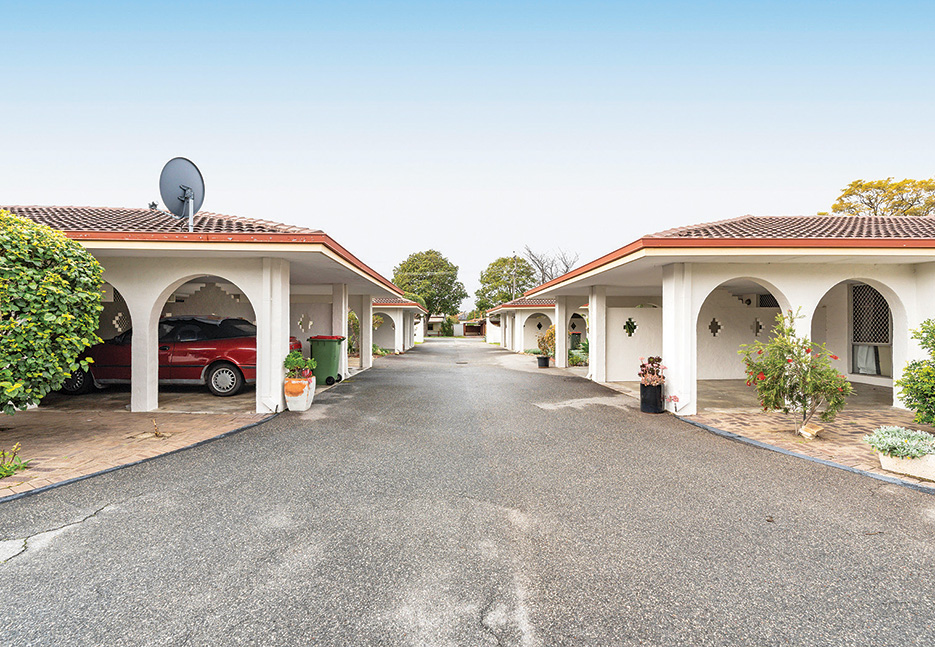
IF you are looking to get on the property ladder, this Maylands villa could be just the ticket.
With EOI for this two bedroom one bathroom property at $319,000, it’s nicely priced and a good in-road into the suburb.
Part of a stylish complex, the graceful arches on the villas and the rising gateway at the entrance are a nod to the art deco architecture throughout Maylands.
The gardens are neat and tidy and there’s a nice secluded, boutique feel about the place.
An added bonus – there is only eight villas in the complex – meaning you won’t be bothered by a lot of noise or comings and goings.
The villa is bright and airy with light wooden floorboards and a neutral colour scheme.
The living room and dining area are open plan, enhancing the sense of space, and the kitchen is a cute little number with a surprising amount of cupboard and storage space.
Both bedrooms are well-sized and share a well-presented bathroom with crisp blue and white tiles.
You’ll never feel claustrophobic with a sheltered courtyard out the back, where you can enjoy a coffee and a read of the morning papers.
This end villa includes a single carport and a private laundry area.
Situated in a quiet cul de sac on Elizabeth Street, you are very close to the Swan River foreshore and cycle paths, and all the restaurants, cafes and bars on Eighth Avenue.
There are loads of public transport options nearby for nipping into the CBD for work or pleasure.
The property currently has a “fantastic” tenant in place, so there is the option to become a landlord or buy and then move in later.
This is a fantastic pad for a couple or a single professional wanting to get on the property market.
All offers to be presented by September 6.
EOI $319,000 1/21-23 Elizabeth Street, Maylands ACTON Mt Lawley 9272 2488 Agent Paul Owen 0411 601 420
Council fudges on deal to make ‘under-performing’ playground more attractive, then plans to sell it off
VINCENT council is planning to sell off a Leederville playground it undertook to landscape and open up more to the public a year ago.
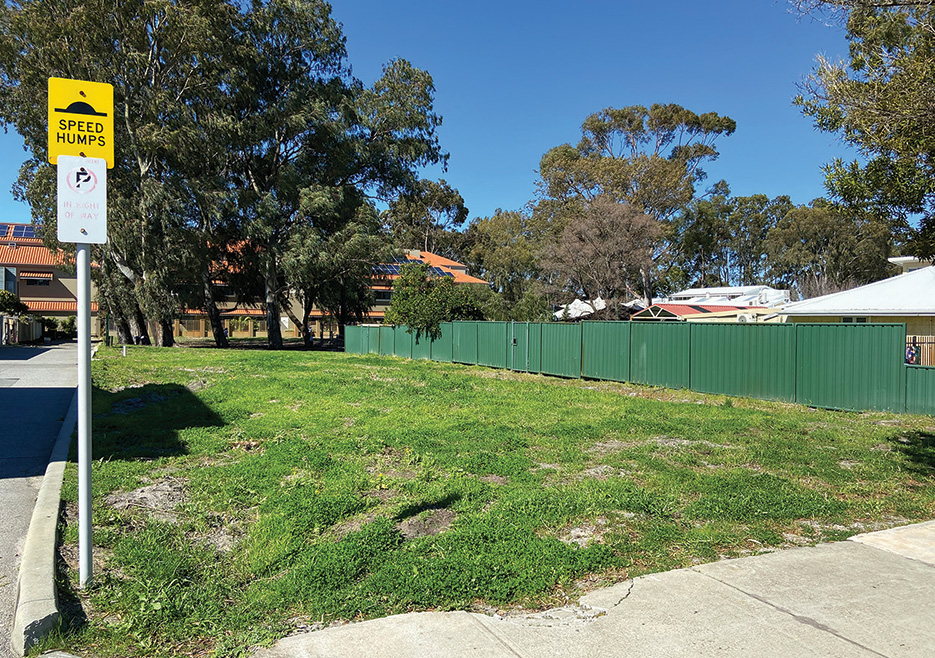
Back in 2020 the council picked up a 539sqm lot at 26 Brentham Street in a land swap with Aranmore Catholic primary school. The block had an old music room isolated from the rest of the school, while behind it sat a pocket of Brentham Street Reserve with a little-used playground only accessible via a narrow alleyway.
When advertising the swap, the council said it would demolish the music room and landscape the lot into a “local park”, making the playground more visible and enticing for the public.
But while the building’s been demolished, the landscaping has gone by the wayside and the lot is now a weedy, overgrown, lumpy and signless patch of grass.
And the playground’s now become less visible than ever, as the school has fenced off the area it picked up in the land swap, meaning access from the other side of Brentham Street Reserve is now impossible.
Unsurprisingly that hasn’t equated to great pulling power for the playground, so the council has now amalgamated the two blocks into a very developer-friendly 1784sqm parcel that it’s considering selling off as “under-performing”.
“The land in question has limited access to the public and is in an area where there is significant open space,” the council’s consultation page states, while other areas have little greenery.
“Sale of this land would allow for acquisition of land for public open space where gaps have been identified or improvement of existing parks and open spaces.”
Aranmore and nearby Rosewood Aged Care have both been flagged as potential buyers if the sale goes ahead, but it’ll all have to go back to council first.
Feedback’s open til October 8 via imagine.vincent.wa.gov.au or 9273 6000.
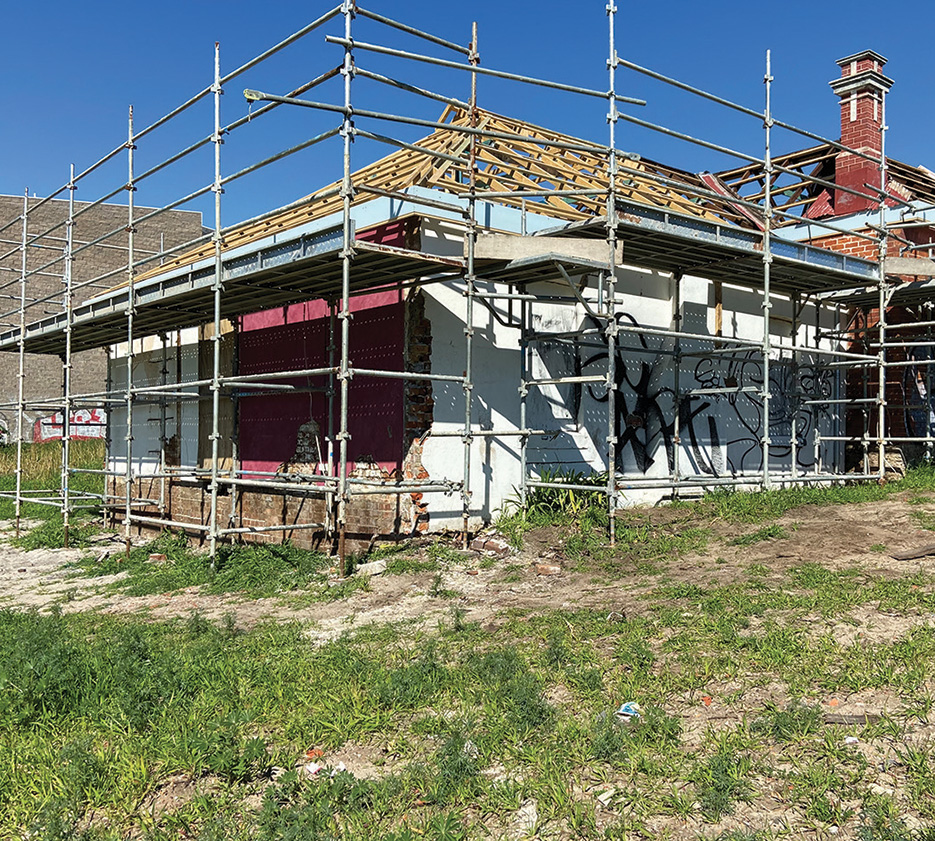
Hidden behind banners claiming “contemporary thinking, heritage charm”, this venerable cottage has had no roof amid weeks of rain.
BY fire, flood, and wrecking ball, Cowle Street’s historic strip of cottages has been all but obliterated.
Now the oldest cottage on the street, number 54, has just endured a rainy winter without a roof after the new owners pried off the old tin and wooden shingles that had kept the inside dry since 1884.
54 Cowle Street is one of the five oldest homes in Vincent according to the council’s heritage listing, the home of early colonist Joseph Gallop who arrived in 1829 and set up a market garden farming nearby Lake Henderson. He built the rear of the house in 1884 and a later owner extended the front in 1904. Gallop’s great, great grandnephew Geoff became premier.
The whole street was once an authentic strip of heritage houses, but in the span of just eight years most have been demolished, burnt down, or just left to rot.
In 2014 developer Giorgi Group knocked down three houses dating to 1890 to make way for the Dorrien Garden units.
Burned
Match Property bought a few of the remaining Cowle houses in early 2015, including the Gallop house at 54.
Later that year two of the other houses burned down, a semi-detached pair at 68-70. After the fire it was removed from the heritage list and demolished.
Match’s planned development never got off the ground and number 54 languished, spending years as the target of vandals as it changed hands a couple of times.
54 and nearby lots were most recently bought in August 2020 by Palazzo Homes, who are now preparing to start a development named “Cowle Collective” with the slogan “contemporary thinking, heritage charm”.
The planning approval conditions required them to retain number 54 as they built around it, but works appeared to stall over winter as the building was left in the rain without its venerable iron and wooden shingled roof.
The property was supposed to be retained to the satisfaction of Vincent council.
The council did issue an emergency building order to the previous owner in February 2020 when a small patch of the roof was missing, ordering its replacement, but this year the entire missing roof has not been rectified.
We’ve put questions to Palazzo Homes asking why the house has been left uncovered but haven’t heard back.
MAYLANDS foreshore regulars James Kozak and June Winsome-Smith usually remove garden-variety trash from the Swan River shoreline, but this weekend they stumbled across a safe carefully hidden on the bank.
The pair remove rubbish about three or four times a week for Keep Australia Beautiful, usually collecting “fishing line, fishing hooks/lures, drug paraphernalia, and other general trash,” Ms Winsome-Smith says.
But on August 15 during the Avon Descent, they found a safe in the wrong kind of bank.
It was “carefully concealed”, Mr Kozak reports.
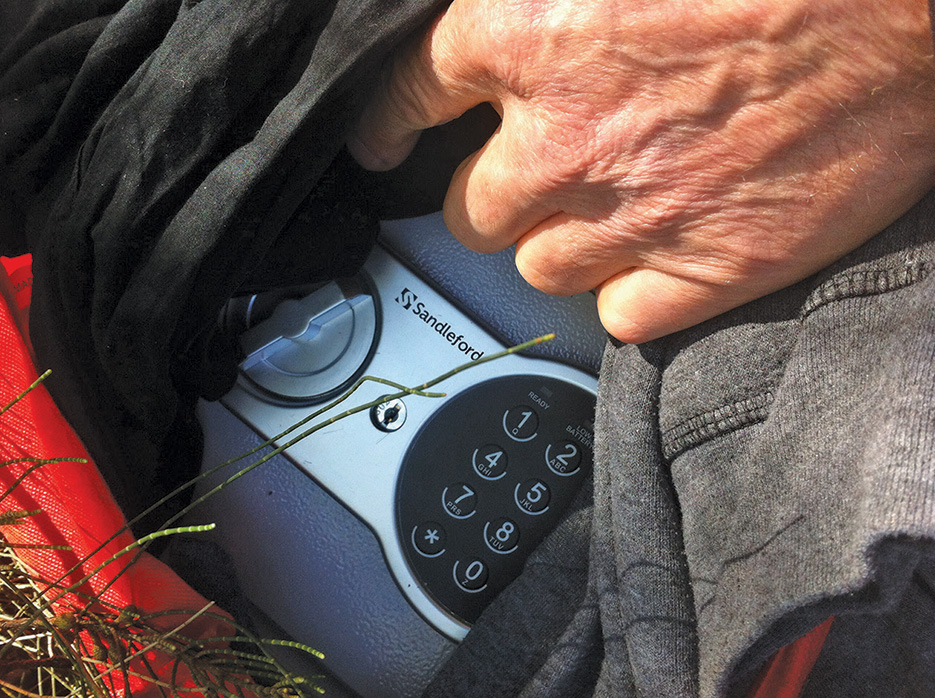
Ms Winsome-Smith says it was in “a bright red Salvos bag, apparently stuffed with dirty clothing and a rope, hidden in a drainage ditch.
“Inside was a small Sandleford safe,” the electronic panel peering at them out of the bag.
Believing it to be stolen, they called police who investigated the site and took it away for safekeeping.
Trash collecting
The pair’s regular trash collecting efforts have now resumed, and while the stream of litter seems unending they have had a win.
After hearing of a dead pelican being found with a golfball in its stomach last year, they began picking up the golf balls that’d accumulated in the wetlands surrounding the Maylands Peninsula Golf Course (‘Fore!’ Voice, August 15, 2020).
After their advocacy on the golfball matter, Bayswater council’s now agreed to do a quarterly collection to retrieve the stray shots that end up in the Baigup Wetlands.