The Furnace sheds light on the little-known connection between Australian and Arab history, and revived an ancient Indigenous language to boot.
A LOCAL film directorhas helped bring WA’s multicultural history to the Arab world while shedding some light on a little-known connection between the two far-distant lands.
After receiving critical acclaim at the Venice Film Festival, first-time director Roderick McKay’s feature film The Furnace made its official Arab premier at the El Gouna Film Festival in late October.
Set in WA during the 1890sgold rush The Furnace brings to life the forgotten history of Australia’s ‘Ghan’ cameleers.
“We always wanted Australia and the world to pay attention and be aware of this history,” McKay said.
“It’s pretty incredible to have gotten there.”
Sikh, Muslim and Hindu camel drivers, given the derogatory name ‘Ghan’s’, crucially opened up Australia’s outback interior to trade and sought local knowledge from indigenous tribes.
“This film was our attempt to correct this historic omission and honour them and their contribution to the formation of the country,” the director said.
Mr McKay sought community guidance and input to authentically portray a diverse range of cultures.
Language revived
Actors seamlessly switched from Hashto, Dari, Punjabi, Badimaya, Cantonese and English throughout the action-packed film.
The dormant indigenous Badimaya language was also revived in the making of the film following a delicate and complex consultation process.
The director said his proudest moment was seeing the Badimaya language consultant in tears after hearing the actors speak his language on set for the first time.
“You can’t really top that,” he said.
McKay and his wife Tessa are recently out of quarantine after attending the Venice Film Festival as the only Aussie entrants; The Furnace received a two-minute standing ovation.
But McKay says the Covid-outbreak meant an extra trip to Egypt for the El Gouna festival wasn’t on the cards.
“I’m not leaving Western Australia for a very long time,” he said.
The Furnace will hit Australian cinemas on December 10.
Jenny Dawson (left) worked with members of ARMS to make the mosaics that will raise awareness about their poor treatment. Photos by Peter Zuvela
Art project helps deal with loss
A GROUP of women whose children were forcibly taken by authorities are finding solace through a collaborative artwork with Fremantle ceramic artist Jenny Dawson.
The women belong to an 80-strong national organisation known as the Association Representing Mothers Separated from their Children by Adoption (ARMS) which lobbies for awareness about the history and impacts of forced adoption.
Forced adoption was conducted by various religious and government bodies who took babies from mothers they deemed unfit; the practice was the focus of an apology adopted by former prime minister Julia Gillard.
The local artwork consists of three mosaics depicting sunflowers and lined with personal tiles made by ARMS members in a series of workshops lead by Ms Dawson at her J-Shed studio in Fremantle.
The artwork is meant to raise awareness and offer some catharsis for the women by allowing them to physically manifest their emotions and experiences.
“It’s hard in a way, becauseyou have to go back again, but it’s healing,” ARMS member Kath Smith said.
ARMS coordinator Lynne Devine said the group hoped to educate people about the long-term health effects on both mother and child when they are forcibly separated at birth.
Effects include feelings of loss and grief, problems with identity development, reduced self-esteem and self-confidence, increased risk of substance abuse, and higher rates of mental health disorders.
“We want people to understand that adoption is not necessarily a perfect solution,” Mrs Devine said.
“For every child obtained for adoption it means that someone, somewhere, has sustained a grievous loss.
“The maternal instinct is powerful and an unplanned pregnancy does not mean the baby is unwanted.”
After seeing Ms Dawson’s 2018 War Memorial in West Leederville, Ms Devine contacted her to discuss doing a project together.
The Town of Victoria Park offered them a site in Read Park and stage one of the project, a plaque and several sculptures, was unveiled in 2019.
The plaque is inscribed with the sobering sentence: “Approximately 200,000 mothers and babies were torn apart at birth through forced adoption.”
Completion of the memorial was delayed by Covid-19 restrictions but is now back on track and at a second workshop on October 19 ARMS members finished inscribing most of the tiles with their personal messages.
They hope to unveil the mosaics by March 21 next year, the anniversary of Ms Gillard’s 2013 apology.
The apology was a significant moment for ARMS, with Ms Devine flying to Canberra with a small group to witness Ms Gillard’s speech at Parliament House.
She said group finally felt their experiences had been recognised on a national level.
“Too often they did not see their baby’s face. They could not sooth their baby’s first cries, never felt their baby’s warmth or smelt their baby’s skin,” Ms Gillard said in her apology speech, to which Mrs Devine and the other ARMS members were first to applaud.
Apology
The apology was influenced by the Commonwealth Commission into Former Forced Adoption Policies and Practices which ran from 2010 to 2013, with the committee interviewing 418 women who were victims of the practice.
Ms Devine said that without the prime minister’s efforts, ARMS would not exist to the degree it does today as her government helped set up the Forced Adoption Support Service (FASS) with a$6 million dollar budget which was redistributed to smaller organisations. ARMS has used its portion to fund the memorial project.
Creating and installing community art can be a difficult process, but Mrs Dawson believes it is a great way to raise awareness.
“Community art of this type is a wonderful medium to encourage telling of stories, expression and healing through participation and empowerment in a non-threatening environment,” she said.
Forced adoption and its impacts is a grave issue although the women always strive to uphold a high-spirited atmosphere at their workshops.”
The Read Park memorial is open to the public 24/7 and is located on Salford Street in East Victoria Park.
TRATTORIA Ilaria is literally overflowing with red and white checkered tablecloths.
It’s not a sign of a restaurant in the throes of senility, but a knowing wink to the good old days of Italian cuisine and hospitality.
Situated on the corner of Angove and Fitzgerald Streets, Ilaria has massive bay windows, creating an entertaining vista of pedestrians and vehicles fizzing by.
The interior is cosy, featuring leather bench seats and a stylish bar with pendent lights and illuminated bottles of spirits.
Setting off the interior is a huge photo of an Italian courtyard that occupies the entire length of one wall.
The menu has a classic range of Italian entrees, pasta, and meat and seafood dishes. It also includes a small number of kids dishes and $17 pasta nights on Tuesday and Wednesday.
Interestingly there were no pizzas, but I suspect this was down to some nearby Italian restaurants specialising in them.
The trattoria was pretty busy on a Tuesday night, but the kitchen was incredibly quick and our meals were out in well under 10 minutes.
I went for the risotto funghi ($28) from the specials menu, and I wasn’t disappointed.
The huge plate was teeming with thinly sliced mushrooms which had that intense flavour you only get with the finest produce.
The creamy risotto had the perfect consistency (no gluggy rice here) and was sprinkled with a lovely assortment of herbs.
Rounding the dish off was some grana padano cheese, which made the dish slightly decadent and moreish.
There weren’t many flavour surprises in the risotto, but it was a first-class and very satisfying dish.
My only grumble was serving it in a shallow bowl, which meant the food presented well but tended to cool faster.
Across the table my young kids were getting tore into their rigatoni ragu ($10) and fried calamari ($14).
My son wolfed down his yummy pork and beef tomato ragu with no complaints, but my daughter said her crumbed calamari was too salty. I had a taste and can confirm she was on the money.
Thankfully the accompanying chips, homemade tartar and salad garnish helped redeem the dish.
My wife was busy scooping up large ribbons of home-made pasta in her pappadelle ragu ($17).
“You can tell the pork and beef ragu has been slow-cooked to perfection; it has that deep rich flavour and just a hint of smokiness.”
“The fresh pasta is delicious and beautifully cooked. It’s a very comforting and enjoyable dish.”
The service was excellent throughout with the smiley waitress attending to our needs, and plenty of staff ensuring a quick turnaround.
Trattoria Ilaria does what it says on the tin with comforting Italian classics that remind you of nonna in her prime.
The staff are very welcoming and going by the patronage on a Tuesday night, it has become a cosy pair of slippers for many locals.
By STEPHEN POLLOCK
Trattoria Ilaria 10 Angove Street North Perth ilaria.net.au 6162 9406 Open Tuesday – Sunday
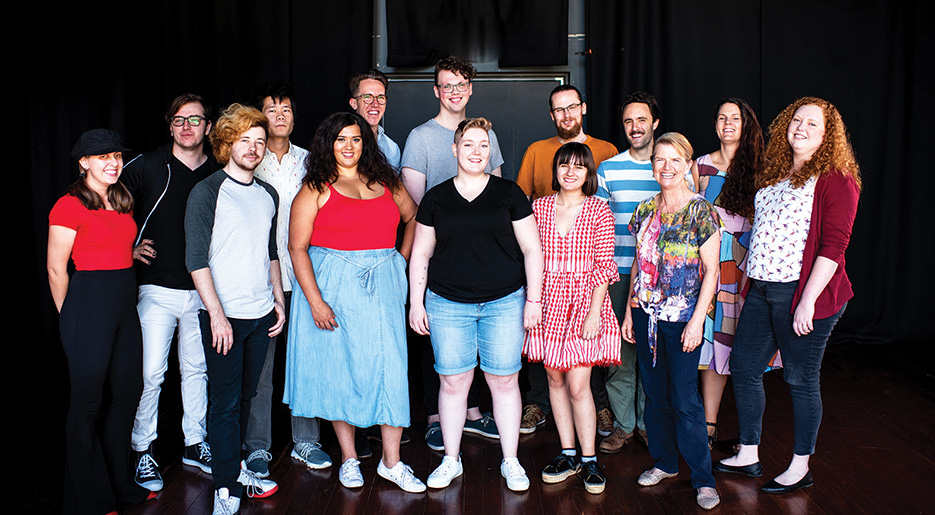
• Members of Only The Human, a unique Perth imrpov group.
A NEW ground-breaking improv group will tackle the lack of diversity and female-friendly venues in Perth’s comedy scene.
Only The Human will be the first cooperatively controlled arts organisation in WA, with members deciding what artistic direction it should take and how it should be run.
Any money generatedfrom classes or festivals willbe ploughed back into the co-operative.
OTH director Aden Date says they started out as a not-for-profit, but soon realised they needed a more collegiate approach.
“We love improvising because it’s an art form rooted in collaboration, equality and deep listening,” he says.
“We wanted to become a cooperative because that allows us to take what we’ve learned from playing together and apply it to how we run the organisation.
“The original organisation was set up in 2015 to explore more experimental comedy in Perth.
“We believed the scene was dominated by large venuesand male-dominated standup.
“We wanted diversity in the comedy scene, of performers and performances alike.
“That part of our mission continues today under the cooperative structure.”
The co-operative will be launched at the group’s mini comedy festival Only Us Humans, held at the old Naval Stores in Fremantle from November 26 to December 17.
There’ll be four shows including an improv night, a sketch night and the intriguingly-titled“Anarchist’s Ballroom”, where just about anything can happen.
Date hopes to get about 70 members from the festival’s unofficial recruitment drive.
“We saw the festival as a way to get people used to a cooperative way of doing things, where members take initiative on projects they care about,” he says.
“The festival provides an opening for people to form their own teams, hone their artistic voice and present something back to the rest of the community.
“We’re holding it in the Naval Store because Enkel, who are currently leasing it, are also a cooperative organisation and share our desire for a regenerative economy and culture.”
With covid-19 altering the way we live, Date says comedy has always helped society deal with unprecedented change.
“We think improvisation, playfulness and comedy are important in times of transition,” he says.
Improvisation was born as an art to help America see itself during the late-50s and early-60s – it helped midwife the sexual revolution and the civil rights movement.
“It helped Americans see the absurdities of the cold war and the space race. Today we believe that improvised comedy can bring lightness, imagination and collaboration.
“These are all essential for creating a new, post-covid world together.”
Only The Human also run improv classes, and workshops for businesses who want a more flexible approach to problem-solving.
To find out more about Only The Human, and to buy tickets to its comedy festival, go to onlythehuman.com
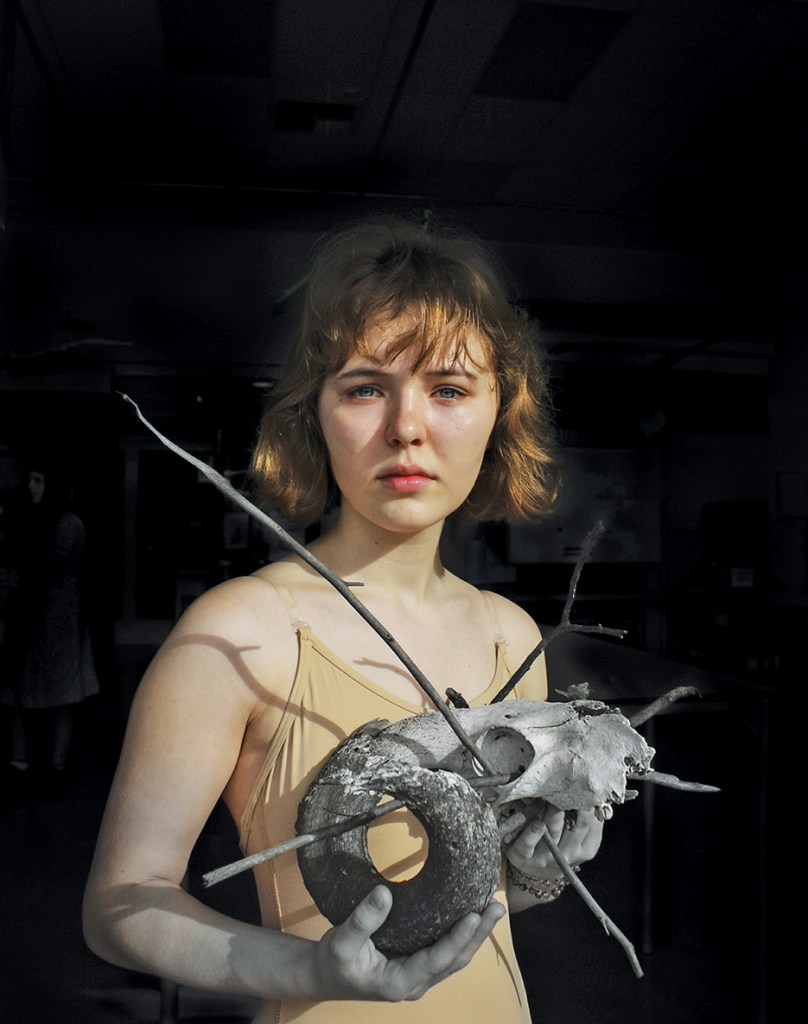
Annabelle Watling has picked up the best young photographer gong at this year’s Blink Photography Awards in Stirling for her confronting image “Remorse”. The judges said: “This reflection upon the catastrophic 2019 bushfires, challenges the viewer to take responsibility for their contribution to global warming. Youth’s confronting gaze, a judgement on the sudden unprecedented losses of our cherished flora and fauna.”
STIRLING’s 2020 Blink Photography Awards winners havebeen announced and voting is now open for the people’s choice awards.
The judgingpanel commented that this year’s entries were of the highest standard.
Annabelle Watling’s Remorse won best photograph by a young entrant (under 18), Jesse Pretorius won best photograph for 2020 for HK Bathers, and Alan Rogers won best photograph by a Stirling resident for Safe to Dance.
All the photos are in an online exhibition and voting for the peoples’ choice award is at stirling.wa.gov.au/photo until November 30.
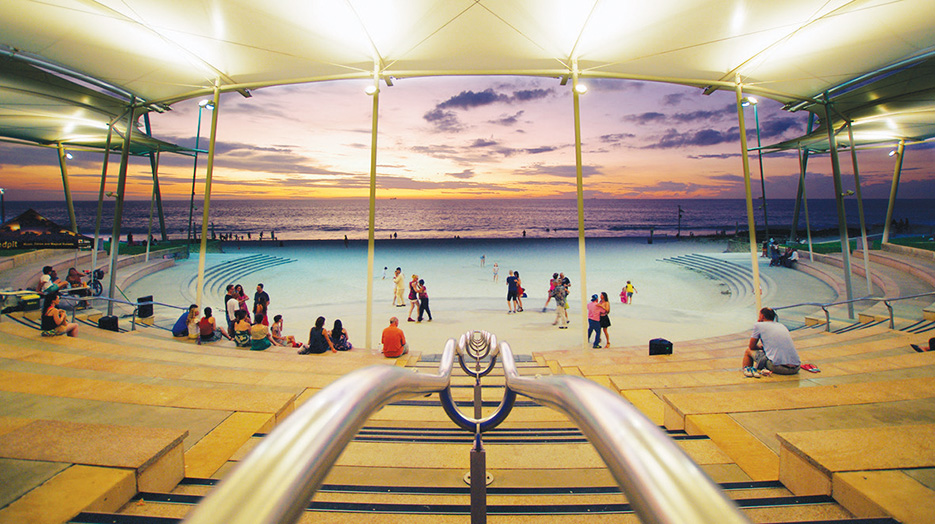
Best photograph 2020: Jesse Pretorius for HK Bathers. “HK Bathers is a 120 film photograph taken in Hong Kong in December of last year. It depicts a group of sunbathers in central Mong Kok district; this leisurely activity juxtaposes the ongoing democracy protests occurring at the same time.”Best photograph by a Stirling resident: Alan Rogers for Safe to Dance. “This was taken in the Summer of 2020 just before the Covid-19 pandemic hit. We took it for granted being able to dance, touch and interact with other people. Months later we’re told not to congregate in public, distance yourselves from others – dancing was not safe anymore.”Asta Kins’ COVID and black lives matter, depicting local protests after the death of George Floyd in May.
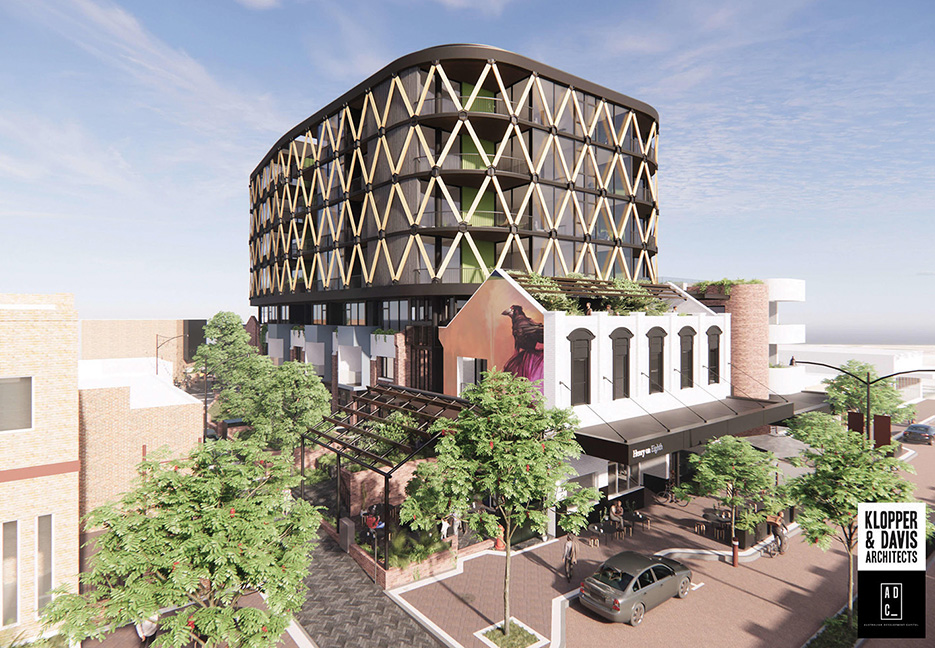
Klopper and Davis’ picnic hamperish design for apartments over the old Lyric Theatre.
APARTMENTS are planned to be built on top of Maylands’ former Lyric Theatre on Eight Avenue.
Australian Development Capital, who are also doing the Perth Girls School precinct project, are planning 52 apartments. Two levels will be “heritage-character style apartments, followed by four levelsof more contemporary apartments designed to respect and celebrate the rich history, character and heritage of Maylands”.
The decision to approve it will be made by the state Development Assessment Panel, and it’ll be an early test for Bayswater council’s new heritage inventory adopted in March this year.
At the urging of cinema historian Greg Lynch who provided information on the 1923-built cinema’s historical significance, the council gave it a category 2 heritage rating.
The inventory states it is“very important to the heritage of the locality” and has a “high degree of integrity/authenticity.
“Conservation of the place is highly desirable. Any alterations or extensions should reinforce the significance of the place.”
The plan maintains the front part of the building and redevelops the rest of the interior, and Mr Lynch is not a fan of the proposed changes.
“There is some talk of salvaging the walls, but what about the Romanesque pillars that enhance the proscenium?” he says.
“The Lyric was the heart of the community. More people have passed through the Lyric than any other building in Maylands. This was a time when most of the population went to the movies, at least once, sometimes twice a week.
“The Lyric is a sacred place and I would like to see it stay a theatre,” he says, or as a second option be purchased by the council for community use. In the Lyric Residences websites’ FrequentlyAsked Questions section, the developers state the former cinema’s “unique character and history is something we plan to incorporate and celebratein the redevelopment… it has been many years since the building was used as a theatre, and after decades of various renovations and repositioning there are few significant internal heritage elements remaining. There is also no opportunity to use the building as a cinema or theatre again.”
ADC says it will set a benchmark for development in Maylands and the community will benefitfrom a 262sqm public park and piazza and more activation of Lyric Lane.
There’s an open-invitation community information session at Rossonero in Lyric Lane, Monday November 23 at 5pm.
“HIGH risk” flawsin Vincent council’s computer systems leave it wide open to internal malfeasance and external attacks.
A report by the WA auditor general has found the council’s security gaps have left its confidential and sensitive information vulnerable to unauthorised users.
The external audit found there’s no restriction on which staffcan access or change data, and no log of changes is kept.
A Victorian government report just released on the issue found lax controls like Vincent’s heightened the risk of council staff being bribed for official information, leaking data to associates, or using insider information for financial benefit on land and planning matters.
The audit also found six council computer accounts belonging to terminated employees were still active, “and two have accessed the system after their termination date”.
The council’s database also hasn’t had software updates since 2012 (older softwareis more vulnerable to hacks, as updates close backdoorsto hackers) and information isn’t encrypted but stored in“plaintext”.
That means hackers would have easy access to sensitive information, such as the 2011 Sony hack when it was revealed a million passwords were stored as plaintext instead of being encrypted.
It’s a timely audit as petitioners against the council’s new electronic parking permit system recently raised concerns over privacy breaches. The new system means visitors to properties would have their car rego details logged in a council database (“E-Permits locked in,” Voice, October 31).
Petitioner Fiona Keating told us last month: “I amnot convinced that council administration has fully considered the potential breach or mis-use of personal data. It is not just my privacy that I need to consider, but more importantly that of my visitors.”
High risk
Another “high risk” problem related to external hacks: “The audit identified 56 critical and 47 high vulnerabilities” in the council’s outdated software.
“These vulnerabilities could be exploited and may result in unauthorised access to sensitive data or the loss of system operation.”
The council’s wifi is also not very secure and a smart-enough hacker sniffing around nearby could intercept staff login details.
The council’s computers also don’t recognise “segregation of duties,” intended so one person can’t perform conflicting roles and which can “possibly lead to fraud,” the audit says.
A lack of “segregation of duties” was identified as a major failing at the Department of Housing that allowed Paul Whyte to authorise $25 million in illicit payments without anyone else having oversight.
All up the auditor general’s review saw 24 to-do items added to Vincent’s audit log, with some fixes to start in December. Some of the database problems will take until March 2022 to fix.
Previously councils were able to self-audit these areas, but as of this year the state government empowered the auditor general’s office to carry them out.
When the new audit laws were rolled out local government minister David Templeman said “this provides more independent oversight than has previously been the case and increases transparency and accountability”.
• Former councillor Chris Cornish fought for more tree cover. File photo.
BAYSWATER council’s domain has been ranked the worst in the nation for its paltry urban tree canopy.
Bayswater also took the un-coveted award for the greatest spread of pavement, roads, roof and carparks.
A new report “Where Will All the Trees Be?” ranked the areas with the highest “grey growth”(pavement etc) across 131 urban councils. It stated “the most significant increase was City of Bayswater (WA), up 6.9 per cent” since 2016, and 59.9 per cent is now hard grey surfaces.
Bayswater’s tree canopy and green cover is also the lowest ranked in the report, and though the study breaks regions down by local government area it’s not just the council to blame, with state government departments overseeing massive denuding in recent years, including airport-associated works and housing at Carter Wetlands.
When Bayswater councillors endorsed the current canopy targets back in 2014, 13.2 per cent of the suburb was leafy and they aimed to hit 20 per cent by 2025.
But the area’s gone backwards: Tree canopy now covers just 10.9 per cent of Bayswater.
The report was jointly written by RMIT university and the horticultural industry body Greener Spaces Better Places and it names Bayswater, Fremantle and Gosnells as places which will struggle to maintain their green cover.
The risk is based on the current low levels of greenery exacerbated by the lack of growth momentum.
Former Bayswater councillor Chris Cornish, who made inroads on getting the council to adopt more tree-friendly policies, says “the wetlands housing development is just one of many examples where state government departments are to blame for the dwindling tree canopy.
“The state government are laggards when it comes to tree management and this is illustrated in many Development Assessment Panel and State Administrative Tribunal decisions.”
He cites an October 2019 DAP decision on a Collier Road petrol station that saw verge trees ranging from 40 to 100 years old cut down, “which was not only contraryto established City of Bayswater policies but is essentially gifting public assets, which DAP don’t own, over to a private developer.”
Greg Smith from Bayswater Urban Tree Network, proposes two options for fixing the tree-felling epidemic: “The WAPC have gotto define cutting down trees as‘development’,” requiring approval, “or the local authority has gotto adopt within their scheme a significant tree register [listing] every tree three metres and above”.
He says the withering of the canopy “is not happening by accident, it’s happening by deliberate policy.
“When you have a town planning system that doesn’t recognise trees, in a legal sense, and at the same time you’re promoting infill, then what other result can you expect?
YOUNG men are struggling to deal with gambling habits picked up during the Covid-19 shutdowns.
Levels of sports betting among young men increased dramatically during the coronavirus lockdown, with a study by the Australian Gambling Research Centre finding they were spending nearly $400 extra each month.
But many, like local student Luke, are finding it hard to wind back their punts even though most of the country is now emerging from lockdowns.
Luke said before Covid he rarely bet on sport.
“Although lockdown was quite short in WA, there was nothing to do except for watching and betting on the races,” he said.
“I had never watched racing before, but it was the only sport that was still going, and it seemed it was only enjoyable to watch if you were gambling on it.
“I told myself once lockdown had finished and other sports came back that I would stop, but I haven’t stopped yet and have really increased my gambling by betting on the returning sports.”
Fellow student Tom is also feeling the effects of a gambling addiction and believes there isn’t enough support to help young men kick the habit.
“Like a lot of my mates, I took up gambling during lockdown fully expecting to stop once lockdown was over,” Tom said.
“However, lockdown has long been finished and I don’t know how to quit.
“There are no easily accessible organisations who can help young men like myself quit gambling, and I’m not sure how to make myself stop.
“There needs to be more awareness about where to go if you have a gambling addiction, because I’ve got no idea what to do.”
Both young men said most of their male friends had developed similar gambling addictions and showed no signs of slowing down, with many of them far worse off than they are.
Increased levels of gambling can have very detrimental effects to the health and wellbeing of both gamblers and the people close to them.
According to Gambler’s Help, gambling can result in relationship conflict, reduced work or study performance, financial difficulties and serious mental health problems, among other issues.
MORE than a year after a state government auditwarned Vincent council was vulnerable to fraud,almost nothing concrete has been done to fix it.
The state Auditor General reviewed Vincent and four other councils in August 2019 in response to high profile fraud investigations in the sector.
It didn’t set out to find instances of misdeedsbut just to review their fraud control systems, and found them lacking. The five councils were advised to develop a “fraud and corruption control plan” including better (and anonymous) reporting avenues so whistleblowers can speak up, and fraud awareness training for staff.
They are considered “high” risk items by Vincent’s audit committee and the work was supposed to be completed by December 2020.
The most recent audit committee minutes reveal there’s been almost no progress to date.
The only action taken was in March this year when Vincent had “initial discussions” with another of the audited councils, Nedlands, about going halfsies on a consultant to fix the issues. It was then put “on hold due to change in priorities due to Covid-19”.
Former councillor Dudley Maier attended the November 17 council meeting to query the inaction at public question time. He asked: “Does the CEO consider this lack of response to be acceptable? Who is responsible for the lack of progress in this high-risk area?”
CEO David MacLennan said of the new fraud management plan: “That is a large project and we do have a working draft we’ll be bringing to the audit committee shortly.”
Mr MacLennan said it’s not yet set whether the draft will go to the next meeting or the one after, as they’ve spent the last two months on a huge financial audit and an IT audit.
“But that project is in hand and will be presented shortly to the audit committee for consideration.”











 Perth Voice Interactive