• Inquiry fallout: Busy times ahead

    “POORLY led, badly governed, dysfunctional”; inquirer Tony Power says the City of Perth deserved to be dismissed and there are dozens of potential crimes to be investigated by other authorities.

    Presenting his closing address on June 30, Mr Power said “the inquiry has referred over 135 matters, many concerning suspected criminal behaviour, in respect of 23 individuals and one organisation, including council members and senior members of the administration, to 17 different Commonwealth and state authorities”. 

    Mr Power was originally supposed to make a recommendation on whether the local government minister should dismiss the council, but there are no councillors left – during suspension the majority had their term expire, and the rest were removed as they no longer had the numbers to hold a quorum.

    Mr Power said “had it been necessary, the recommendation would have been that the entire council be dismissed”. 

    He slammed the council’s fo r mer senior management as “dysfunctional and inefficient”.

    He said since the WA government appointed commissioners to replace councillors, “a number of positive steps have been taken to address many of the failings identified in this inquiry’s report”.

    None of the senior executives which ran the administration during the period investigated by the inquiry remain.

    “Overall, the city was poorly led, badly governed, dysfunctional and as a result failing in its most important duty of all, namely, to properly serve the needs and interests of its community.”

    Mr Power said he makes no apology for the length of the inquiry, which was extended because of the depth of the problems and to give the 39 people initially facing “adverse findings” in December 2019 time to respond. 

    The report’s 250 findings and 300 recommendations are now with local government minister David Templeman, who says he intends on releasing the report but first wants to read it and take legal advice.

    Mr Templeman said Tuesday: “I will need to take appropriate time to consider the report and its findings… there are some issues that raise some deep concerns”. He’d prefer to table it at parliament’s next sitting on August 11. 

    Cankerous

    INQUIRER Tony Power gave a preview of the problems that have been uncovered in his report:

    • Council candidates “interfered with election processes and corrupted the democratic process”.

    • Councillors made decisionsto advance their own “personal interests”;

    • Councillors interfered withadmin’s day-to-day operations;

    • “Cankerous” relationshipsbetween councillors affecting their working relationship. Mr Power said “the lord mayor, Ms Lisa Scaffidi, occupied an important role and had a statutory obligation to provide leadership and guidance to the whole of council. Instead, she too often encouraged division and factionalism”;

    • “Misuse by some councilmembers of entitlements”;

    • “Council membersreceiving gifts, including tickets to events,” and then sponsoring the gifting organisation;

    • A “peculiar partnership”between the City of Perth and a not-for-profit organisation, which didn’t comply with council policies and “involved significant funding”;

    • Poor decisions byadministration, including not reporting misconduct, poor project management, poor financial management;

    • Problems with procuringgoods and services, with issues including “unauthorised expenditure and undeclared conflicts of interest, to manipulation of tender documents and a failure to properly deal with allegations of serious misconduct by employees”. Last year the inquiry heard across two days the case of council employees manipulating tenders so the company they favoured would get a lucrative contract. A weak internal investigation found no wrongdoing.

    • “The termination of anapparently competent CEO and his replacement by one more favoured by the then-majority of council,” referring to the council ousting Gary Stevenson shortly after he advised them he had a duty to report misconduct. 

    Mr Power said many of the problems “exist in some form or another in many local governments in this state”. 

    Harley urges quick release

    FORMER Perth councillor Reece Harley, who’s yet to decide whether he’ll run in October’s local government elections, has written an open letter to local government minister David Templeman imploring him to release the City of Perth inquiry report “as soon as possible” in the interests of transparency.

    “There are hundreds of hard-working and dedicated professional staff at the city who do not deserve to have their reputations tarnished with a cloud of suspicion hanging over them.

    “Once the report is released residents, ratepayers, business owners and stakeholders of the city will be able to read it for themselves and make up their own minds about what transpired over those years.”

    By DAVID BELL
  • Budget sneaks in

    “NOT fair” and “a sneak attack” is how some Bayswater councillors have described the city’s proposed budget.

    Councillors Catherine Ehrhardt, Elli Petersen-Pik, Steven Ostaszewskyj and  Michelle Sutherland, voted against the budget at the council’s June 30 meeting, over concerns a Covid assistance measure will see owners of less valuable properties subsidising their fancier neighbours.

    Like other councils Bayswater is “freezing” the amount it takes in rates this year because of coronavirus impacts, but while most councils have stuck to basing their bills on the rental value of a property, Bayswater has introduced a “concession” system.

    What that means is that while other councils will still have some rates bills going up and some going down depending on how each property’s value has fared since the last valuation, everyone in Bayswater will get the same bill as last year.

    Cr Petersen-Pik doesn’t think that’s fair: “I don’t consider it fair to not apply the gross rental value, and have some ratepayers essentially subsidise property owners whose rental values went up.”

    Bayswater’s gross rental values have fallen 15 per cent since the last review by WA’s valuer general, which Cr Ehrhardt says should have seen around 58 per cent of ratepayers getting a smaller rates bill, which would have be offset by higher bills going out the rest.

    That, she said, made the budget “nothing more than a sneak attack to make the majority of our ratepayers pay more than they ordinarily would this year had we continued rating under normal circumstances”. 

    Cr Ostaszewskyj said of the concession system: “I feel it is too risky and I feel it is not fair.

    “I do not feel it is the right time to try this experiment, nor do I feel that this rebate or concession is fair to all ratepayers. It distorts the rating system.”

    Cr Sutherland said her main concerns were they were still relying too much on rates and draining far too much from reserves to fund projects this year. 

    Cr Petersen-Pik was also concerned about the reserves, which would be depleted by a third.

    “Those reserves were built very slowly by previous councils for specific purposes to ensure that if there are unexpected failures, or sudden needs for specific infrastructure or services, we will have the money to provide them quickly… how and when are we going to replenish those reserves?

    “By taking $14m from the reserves, we are going to lose $1.3m in interest revenue each year. It’s not a one-off loss, but an ongoing one. I don’t think it is financially sustainable.” 

    But the majority voted in favour of the budget, with mayor Dan Bull saying it delivers on the promise of a zero per cent rate increase and injects “$31m in works to help stimulate our local economy – this is double that of the previous year”.

    By DAVID BELL

  • Seat to disappear

    WESTERN AUSTRALIA will lose a seat in federal parliament under an Australian Electoral Commission rejig on July 3.

    Federal Labor MP Patrick Gorman, whose division Perth is safe from the chop, says it’s a huge shakeup. 

    “For the first time since Federation, WA is going to lose a federal seat,” Mr Gorman says.

    The numbers of seats each state gets is based on population and Victoria’s set to get a new seat at WA’s expense.

    ABC election expert Antony Green says boundary changes will be “enormous” and predicts Burt, Hasluck, or Tangney might go, with Burt a prime candidate as it was only created in 2016.

    Mr Gorman says WA needs strong representation to tackle issues like unemployment (his most recent speech in parliament urged the Morrison government not to abruptly cut off JobKeeper in September).

    Mr Gorman says one upside is he’ll get  7,000 new voters in his electorate. 

    No border proposals are out yet, but Perth might edge northwards to take in some suburbs it used to hold.

    “I love the diversity of the electorate,” he says. “Adding 7,000 people, you’re going to add more diversity, which is a good thing.”

    The AEC’s formal decision is due July 3 and then consultation starts on potential boundary re-drawings, and renaming electorates is also up for debate.

    Mr Gorman says he likes his electorate’s name. “It’s a Federation seat and it’s stood the test of time,” he says, adding other capitals have a seat named for them, and it’d put Perth at a disadvantage advocacy-wise if the name didn’t match. 

    Tradition follows that after the death of a former prime minister, a seat is named for them, and Mr Gorman says “I’d love to see a seat named after Bob Hawke here in WA.

    “We know it’s where he developed his love for politics. We know that Bob Hawke, without Hazel, probably would never become prime minister, [and] he met Hazel in WA.”

    By DAVID BELL

  • Carmageddon without buses

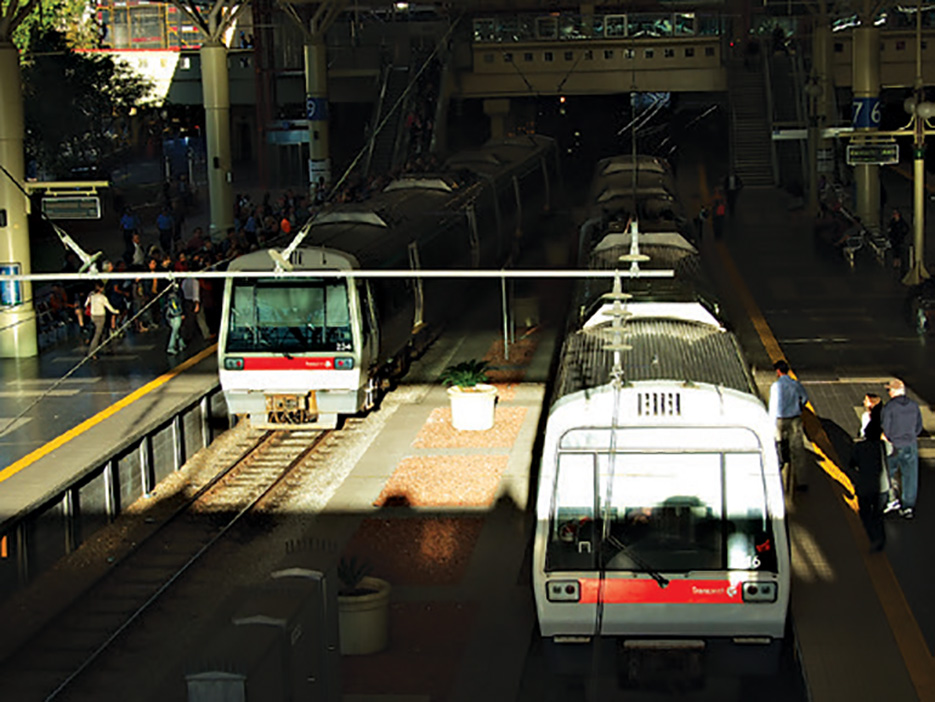
    A TRAFFIC apocalypse is predicted after the July school holidays if Perth people don’t return to public transport pronto.

    During the height of restrictions at the end of March, freeway use dropped from 1.5 million cars per week to about 1 million.

    They’ve now sprung back up to 95 per cent of pre-Covid levels and city car bays are filling up as commuters take advantage of free on-street bays and the cheap $10 all day rates in undercover council carparks.

    Department of Transport stats show bus and train use has likewise tumbled from about 430,000 SmartRider boardings per day to below 50,000 per day. 

    Despite public transport resuming usual schedules and premier Mark McGowan ensuring people it’s safe, boardings are still down 150,000 from what they should be in a typical wintery June.

    Not sustainable

    A Perth council report says “the proportion of commuters currently driving to the CBD is not sustainable” and bays are filling up with city workers rather than shoppers. Some retailers have reported shoppers saying they’re having a tough time finding a spot. 

    “The city has observed increasing levels of congestion with each announcement by the premier on the lifting of restrictions, with the next announcement to occur after the July school holidays,” the report warns. 

    This week chair commissioner Andrew Hammond moved the city incrementally restore the old prices in city carparks buildings, getting them from $10 a day back to pre-Covid levels by the end of the year (averaging a bit under $20). 

    “What we need now is the people that were commuting [on public transport] prior to Covid to start commuting again so that’ll free up some of this parking space for our retail customers,” Cmmr Hammond said.

    The other commissioners endorsed his plan.

    The council’s parking staff say it’s tough to predict whether the higher prices will have an impact on parker behaviour but they’ll keep an eye on levels.

    Commissioners also voted to extend the one-hour free street parking trials on Royal Street and Hay Street, and extend the three-hour free parking in some of the city carparks on weekends, both until mid 2021. They’d hoped to use those trials to see if retailers got a boost, but the numbers were skewed by the pandemic. 

    By DAVID BELL

  • Skyworks planning goes ahead

    CITY of Perth commissioners have confirmed planning will go ahead for the 2021 Australia Day Skyworks.

    Planning on the $2.8 million event has to start soon if it’s to get sorted in time, and chair commissioner Andrew Hammond said staff should get the ball rolling so as to not tie the hands of the new council to be elected in October.

    He says there’s many varied viewpoints on Skyworks but commissioners shouldn’t be cancelling it, and the new council should have a discussion with the community about whether to fund Skyworks and celebrate Australia Day.

    If the new council decides to pull the plug immediately after getting elected, the city would’ve already spent about $556,000 in planning and staff time. 

    They’ll keep in regular contact with WA’s chief health officer and police commissioner to check if the event can still go ahead. 

    When deciding who to buy their fireworks from, a key part of the tender criteria will be whether the supplier is willing to shoulder some of the financial risk if it’s cancelled, instead 

    of leaving them with 45 tonnes of unwanted explosives.

  • Nod for sign
    A mockup of how the sign might look.

    THE big Northbridge (à la Hollywood and Venice) sign has got its $35,000 grant.

    The sign by organisation Happy Heart (Adrian Fini and Marcus Canning’s venture to re-launch the Rechabite) will go up on William Street near the horseshoe bridge as part of an overall $1 million improvement program, also redeveloping Hook Lane and Lock Lane. 

  • A proud history
    Robert and Selina Eggington with artist Kevin Wilson, finishing the mural he painted with Graham ‘Swag’ Taylor.

    A TWENTY-METRE mural has sprung up in one day on the wall of YMCA’s Leederville HQ.

    The idea came about when some of the HQ folk went to the June 13 Black Lives Matter rally and loved a snake design worn by rapper Josh ‘Flewnt’ Eggington and organisers from Dumbartung Aboriginal Corporation.

    They asked mural artist Kevin Wilson and he got in touch with Robert and Selina Eggington from Dumbartung to bring them in on the design, and renowned Noongar artist Graham ‘Swag’ Taylor swapped his oil paint brushes for spraycans to help paint it.

    Mr Eggington says there’s a lot of history to the snake, which was used at the Kyana Corroborees on the Perth Esplanade back in the early 90s. The events were a celebration of struggle and survival following the Royal Commission into Aboriginal Deaths in Custody. 

    Mr and Mrs Eggington put their handprints in paint as a final touch, and Mr Eggington says he’s proud to see the symbols kept current by the next generation: Along with the snake, the mural features the corroboree’s maxim “may our campfires burn forever” 

    “This is more than a mural,” Mr Egginton says. “It’s a historical statement… that our cultural identity and spirituality is as strong as it has been since the beginning of time. 

    “To see that symbol now in 2020, 30-odd years later, maintaining its prominence, gives me a sense in my twilight years that as Dumbartung and Kyana both merge into the next generation, that it’s in capable hands of people understanding where those symbols of strength came from.”

    Like the corroborees, the painting on June 23 wasn’t untouched by racism: “Even when we were finishing it, there was one word of abuse shouted out from the freeway.” Mr Eggington says that was outweighed when he saw “a car of four or five Noongars, smiling, taking a photo”. 

    A skater told him “we will look out for this one”.

    By DAVID BELL

  • Letters 4.7.20

    Who’ll come out clean?

    THE initial findings of the state inquiry into the City of Perth states there’s 39 adverse findings and 23 possible prosecutions.

    Also some witnesses were “obstinate” and many “obstructionist”; this while all under oath. Inquirer Tony Power also found that if the elected members were still in council he would recommend dismissal.

    It is now three months or so until we vote in the City of Perth on the elected members of, what is after all, our local government authority.

    To my knowledge three of those former councillors have stated their intention to nominate in October. 

    We should know now, at least this month, if any adverse findings were stated against any candidate for the October election. 

    If any referrals are breach of the Local Government Act it is as important as criminal or other as to eligibility.

    We need to know well before in assessing which of the nine candidates we will have to elect best serve us going forward, now with a roadmap from the inquiry on best practice.   

    Terry Maller
    East Perth 

    DJAPs anti democratic

    WHILE I am not totally ‘in sync” with Gordon Westwood (“We are not a democracy,” Speakers Corner, Voice June 27, 2020) about whether or not we are a “democracy”, there is one aspect of undemocratic governance ruling over all of us, that I feel must be called out. 

    And that is the Joint Development Assessment Panel otherwise known as JDAP.

    These unelected groups have a huge sway over whether or not certain building development applications go ahead within a local council area. 

    The individuals who sit on them and look through plans are often drawn from building industry groups and are biased towards developments going ahead. 

    If they hear testimony from local residents (who must pass a challenge test to even give local evidence) that evidence is often down played and scrubbed from the hearing.

    State governments have been keen to do away with “red tape” in building applications and through this guise there have been installed unelected proponents of never ending developments that are seen as fantastic extensions of life (read, crammed in residential living, in small spaces) and a fix for stupid over-extended population growth. 

    The people on the panel are all from industry, and governments get around this by saying…”well, who else is better qualified to look at building plans?”. Well, maybe local people are!

    If we want to consider the issue of democracy and having locally elected people who are elected by a majority and make decisions for us, then consider the reverse is true in that having JDAPs in existence is akin to local communist authoritarian rule over a local population. 

    In such a situation, the normal process of communicating with your local councillor about a concern is basically null and void.

    JDAPs are NOT a democratic system and should be done away with.

    The non-democratic rot sets in with such systematic decisions that influence lifestyle in a neighbourhood being taken away from us, by unelected JDAPs, and all of us being told it’s for our benefit. Absolute rubbish.

    Colin Scott
    Deague Ct, North Perth

    What a clear contrast

    YOUR story about the “Hollywood” sign for Northbridge (“’Hollywood’ moment for Northbridge,” Voice, June 27, 2020) demonstrates the clear contrast between the City of Perth and the City of Vincent when it comes to openness of decision making.

    The report which went to the City of Perth council identified the project, who the recipients were, what would be delivered, and that it would cost the city $35,000.

    As well, Perth staff assessed the proposal against 12 criteria and included both the scores and a comment for each criterion.  Their report also addressed eligibility criteria such as community benefit, community support, and alignment with the city’s Covid-19 response.

    in the public domain prior to the council making a decision.

    Compare this with Vincent’s recent approach to grants for local artists as part of a proposal to spend up to $500,000 on arts projects as part of the city’s Covid-19 response.

    Three reports have been presented to Vincent’s Covid-19 Committee. All three reports have been confidential and the only public information released is that artists 1, 2, 3, 4 etc have been successful. There is no indication of who the artists are, what they will produce, or how much they will receive.

    The reason given for the secrecy is that it may “reveal information that has commercial value to a person”.

    This is a clear abuse of the provision in the Act which seeks to protect some commercial interests. How it can be stretched to cover an artwork, for which one of the requirements was that it be in the public domain, is beyond me and reminds me of a quote from the federal auditor general. 

    In a presentation to a conference in 1999 which concerned the excessive use of “commercial in confidence” as a reason to keep information secret he quoted “defence (that papers were commercially sensitive and should not be released) 

    is over-used by governments trying to avoid scrutiny and embarrassment, and often represents arrogance of the first order”. 

    Sadly the level of secrecy at the City of Vincent has increased in recent years.

    A classic example is the annual budget. The latest budget shows just under $23 million to be spent on “recreation and culture” operations. There is no further information of how this will be spent other than $5 million will cover depreciation. 

    Hopefully council members would be aware of where the other $18 million was to be spent as it would have been discussed at one of their ‘secret’ council budget workshops.

    Contrast this to the level of detail that was previously publicly available in former CEO John Giorgi’s time.

    Those budgets showed details of individual projects and programs as well as staff costs. It could be argued that there was too much detail but I think it demonstrated that the city had nothing to hide, and it was advertised for public comment.

    I do have some sympathy for newer council members who have not seen anything else and naturally assume the level of secrecy is the norm.

    It isn’t, and it should not be. 

    Dudley Maier
    Highgate

  • Hidden depths
    Sharky is one of the artworks in the exhibition Blue Skies and Broken Hearts.

    BEHIND every summer lurks a broken heart.

    That is the bitter-sweet theme of Frans Bisschops new exhibition, Blue Skies and Broken Hearts.

    “My main goal was to create new imagery of summer, especially a Perth summer. Images that were simple and fun on the surface, but a little uneasy and anxious underneath,” he says.

    With more than a nod to David Hockney, Bisschops’ vivid paintings of sharks and sunbathers are slightly ambivalent and perturbing.

    “Summer for me can be a happy time but it can also have a sadness to it; the beginning and end of relationships, the sadness and anxiety of climate change, especially living in Western Australia,”   Bisschops says.

    “Also to me the beach and a Perth summer can be quite brutal – the sharks, the heat, the melanomas and the isolation, they’re all a bit of a worry.”

    Blue Skies and Broken Hearts is the sixth solo exhibition by Bisschops, a self-taught artist who lives in Perth and works as a graphic designer.

    “I often plan my paintings on screen and create the starting colour and compositions before I start.

    “I always loved figurative art that could be reduced to simple shapes and compositions, such as the work by David Hockney and Edward Hopper or Australian artist John Brack. 

    “As a designer I have also spent years creating logos and beer labels, so I realised the hidden challenge in reducing things to their most basic.”

    Blue Skies and Broken Hearts is the first exhibition at Moores Gallery in Fremantle since it was closed because of covid-19 restrictions.

    Most of Bisschops’ previous works have been dark and dreamy nightscapes, but Blue Skies has seen him go bigger, brighter and beachier.  

    He says the fallout from the global pandemic could influence artists for years to come.

    “For me especially as a father it made me question a lot of things currently happening in the world and what I can contribute to make it better,” he says. 

    “I hope this exhibition is something that people of all ages can enjoy and get something from. There is a simplicity and joyfulness to the paintings that belies some of the heavier themes lurking below.”

    Blue Skies and Broken Hearts starts next Friday (July 10) and is on until July 27.

    BY STEPHEN POLLOCK

  • Under attack
    A hospital worker is threatened by a patient’s angry mother.

    AN Australian law firm is demanding better protection for WA hospital, aged and disability care workers after research revealed more than one in three feared for their own safety.

    Close to half of Australian hospital workers said they felt threatened in the workplace due to aggressive behaviour from patients and their families in the last 12 months, and 46 per cent said they felt more at risk because of the covid-19 pandemic.

    Slater and Gordon practice group leader Joel Schneider says it’s time for employers to provide better training and safety measures for frontline health workers.

    “In the past I have supported healthcare workers through the legal process, who were either assaulted or injured while caring for patients with mental health conditions or dementia in a disability care or aged care setting,” he said.

    “In some instances, their employer had allowed the worker to be in a potentially dangerous situation with aggressive patients, due to a lack of workplace processes and adequate training provided to the carer. 

    “In some situations, attacks and violent assaults could have been avoided if a second carer was in the room. 

    “A violent attack or assault can affect the individual’s ability to continue working, and the worker can end up with a psychological injury such as PTSD, anxiety and depression or nervous shock, as well as a physical injury.”

    Mr Schneider said disability care workers were especially at risk, with many working in people’s homes.

    “These workers are not always told or warned about the risks of working with individuals and they are expected to enter their homes to provide support to them,” he said.

     “We know that healthcare and social assistance workers suffer higher rates of injuries than most other industries due to the care they provide, such as showering, lifting and transporting vulnerable people in our communities. So they are already at risk of injury.”

    Mr Schneider says the concerning findings of the recent study by Kantar Australia – surveying 500 Australians who worked in hospital, allied health, disability care and aged care settings – is proof we need more training and security measures in place.

    “Workplaces need to provide safe systems of work to protect frontline workers from violent incidents,” he says.

    “There can be a lack of security available in some healthcare and residential care facilities, and some patients are known to be aggressive or violent. 

    “Staff need adequate training on how to safely restrain patients who are continually aggressive or violent. 

    “The issue raises questions around whether hospitals should be admitting patients who are violent if they are unable to be safely housed in the facility.”