WHILE school kids holding placards and chanting heart-felt slogans have dominated news headlines, many youngsters are more interested in a collaborative approach to tackling climate change, says the CEO of Millennium Kids.
Millennium kids work with schools, councils and leading scientists to plant endemic species to tackle Perth’s diminishing tree canopy, which in some local government areas is as low as 8 per cent.
CEO Catrina Aniere says young people are interested in having a greater say in the climate debate, but not everyone is interested in striking.
“In 500 kids we interviewed, striking didn’t come up once but they wanted a voice; so we chose to meet with parliament and councils to enact community action,” Ms Aniere said.
“Children have been talking about the need for more care for the environment – sitting politely around a table, and now the time is right.”
The project has had a boost after receiving a $300,000 grant through the State National Resource Management Program.
The funding will allow Millennium Kids to partner with five local governments and restore cleared bushland.
The cities of Melville and Bayswater are early adopters of the project, followed by Cockburn, South Perth and Stirling.
Millennium Kids board member Elizabeth Baudains (12) says trees provide shade and cool our climate.
“They also take in carbon dioxide and use it to grow; they could reduce the carbon in our atmosphere.”
MLA Simon Millman says he is ‘“delighted Millennium Kids have been recognised for their hard work.
“This is the epitome of thinking globally and acting locally,” he says.
“Here is the state government working with a grassroots organisation to nurture regrowth and renewal.”
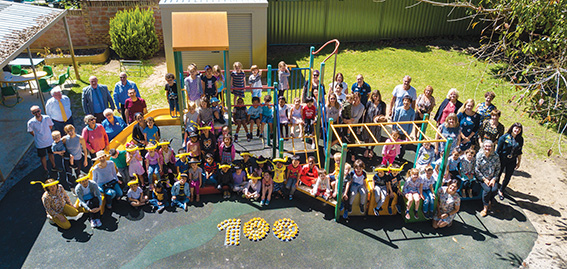
• Kids gathered on November 5 to mark their 50th year on the spot and 100 years in operation. Photo by MSP Photography.
HIGHGATE Kindergarten has marked 100 years of operation, and 50 years at its current home.
The kindy was originally named Little Citizens when it opened on Robertson Street in East Perth in October 31, 1919.
In 1969 it relocated half a mile to 4 Broome Street and became Highgate Kindergarten, opened by the lord mayor on November 8.
It’s now part of nearby Highgate Primary School and principal Stephen Ivey invited families along for a photo on November 5 to mark the occasion, while City of Vincent historian Susanna Iuliano dug up news articles from its early days.
It was the third kindy opened by the Kindergarten Union of WA which wanted to turn children into “the best little citizens”.
KUWA’s director Ethel Donnell said at the organisations first annual meeting in 1912 that behind “each game and play is a life principle, and that through them we are preparing the child for the great game of life.
“He is learning self-discipline, self-control, self-respect, self-abnegation… [Francis] Bacon says ‘give me the child, and the state shall have the man.
Self-expression
“We are training the children to be doers, not don’ters, workers not idlers, leaders not followers. Self-expression – doing is the keynote of our work.”
The union’s first premises was a small cottage on Pier Street, which quickly filled to have 45 children enrolled.
“So crowded it is in parts that owing to the house problem in Perth two or three families are often found living in one tiny cottage,” Miss Donnell said in 1912.
She said visitors to the centre might be disappointed not to see the latest technology, but it was by design: “The child is far happier with a toy motor car he has made himself out of a few cardboard boxes, cotton reels, paper and paste, than the most elaborate mechanical toy bought in the toy shop.”
They funded the school with “subscriptions” to the union from 80 members who contributed anywhere from 5s to £10.
Some prominent Perth figures backed KUWA: Winthrop Hackett was vice president, and merchant and philanthropist Alfred Sandover (who the football medal is named after) was on the first committee. Chief justice Edward Stone was first president, and later opened Little Citizens in its first Robertson Street spot.
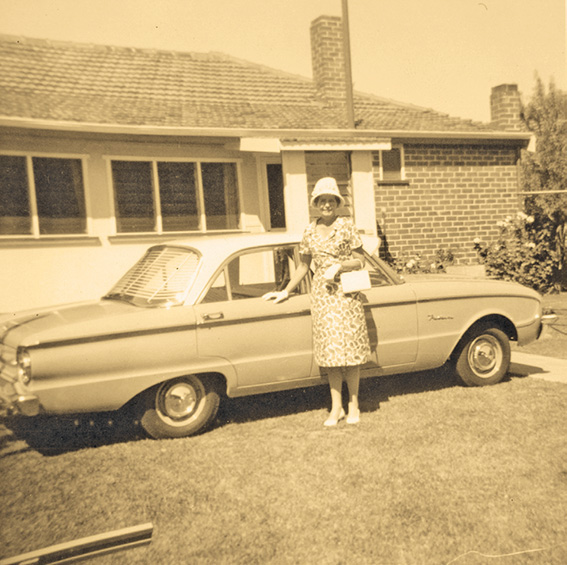
• Mrs Ivy Woods at her family home in Green Street, Joondanna, circa 1960. Winning entry from the previous Stirling history and heritage awards.
NOMINATIONS are open for next year’s City of Stirling history and heritage awards.
Council are calling on locals to submit evocative photos of Stirling pre-1990, and to nominate people or groups who have contributed to the education and preservation of the suburb’s heritage.
This time the biennial awards have been split into two categories, with “history” focusing on photographs from yesteryear, and “heritage” focusing on the conservation of landmarks like houses, streets and parks.
“The awards are an excellent way of raising public awareness of the history and heritage of the city and encouraging people to actively engage with it,” says Perth historian Richard Offen.
The awards ceremony will be on May 27 next year, with an exhibition of entries in early June.
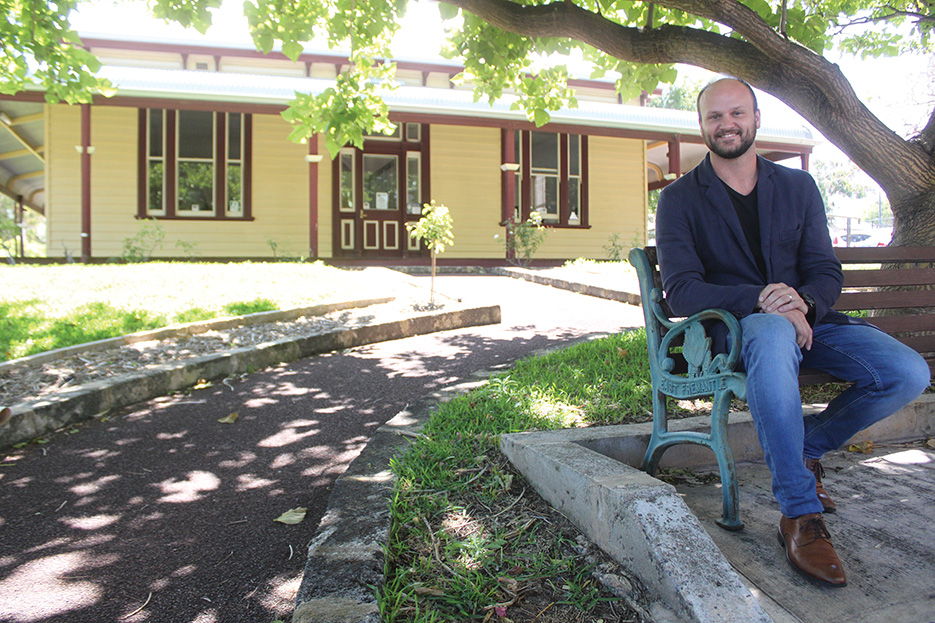
• Museum of Perth director Reece Harley outside Dovenby House in East Fremantle.
THE Museum of Perth has branched out of the CBD, launching a growing encyclopaedia of East Fremantle’s history, houses and people.
It’s a pilot project that could one day be expanded across the suburbs.
“We’re hoping we’ll be able to do it with other areas,” Museum director Reece Harley says.
“Subiaco, Peppermint Grove, Crawley, West Perth, East Perth, many parts of Vincent. Any place that’s got a bit of built heritage.”
For the last year a team of researchers led by artist and social historian Jo Darbyshire has been gathering a street-by-street history of more than 1100 heritage-listed homes in the tiny municipality.
Newspapers from the National Library’s online Trove archive have provided some articles up til the 1950s, and now residents, past occupants, or anyone else with an interest is invited to share family tales, photos, old articles or documents.
The soft launch onto streetsofeastfreo.com has already seen past residents come forward with stories and photos that otherwise might’ve been lost.
Museum director Reece Harley says the personal stories have filled gaps missed by archived history, such as peoples’ warm memories of grandmothers covering what the papers of the day didn’t.
“It’s much more difficult to find information about women in the past, because they didn’t necessarily hold public office, or run their own businesses,” Mr Harley says.
Fifty prominent figures also have entries on the site so far, and Mr Harley says they’re looking beyond the toffs and titans of industry to the untold stories of working class lumpers, chimney sweeps, midwives, soldiers.
The City of Bunbury recently signed a two-year agreement for the museum to chronicle and digitise its local history.
The MoP, which last year branched out of its Perth CBD home with a peppercorn lease on Dovenby House behind the East Freo town hall, will have a stall at the George Street Festival, Sunday December 1 from 11am-7pm.
Bridging two cities
THE divide between the Swan River colony’s “two cities” was even more pronounced in the days before the motor vehicle.
But even back then there were those who’d straddle the distance between Perth and Fremantle, like the prominent Strelitz brothers merchants.
Richard Strelitz was a German-born Jew who came to WA in 1893 and lived in High Street and then Richmond Crescent in East Fremantle, becoming a lieutenant in the Fremantle infantry (militia).
His brother Paul arrived in 1894 and they established Strelitz Brothers Merchants and Shipping Agents serving Fremantle and Kalgoorlie.
The brothers ran the local outlets for inventor Alfred Nobel’s Hamburg Explosive Company, and made it big off the gold boom selling explosives, railway material and mining equipment.
Their wealth helped spur development up the river in Perth, and they built Viking House on William Street in 1912 (demolished in 1970) and the old Perth council chambers on Murray Street in 1908 (also demolished 1970).
Richard’s popularity saw him made consul to Denmark in 1901, then also to Sweden and Norway.
Journeys became easier with the £1250 purchase of his 1906 Daimler motor car (around $184,000 today).
Back then the “Round the River Trip” from Fremantle to Perth and back along the other side of the river was said to be “for beauty of scenery… unequalled in the Commonwealth” according to the 1908 pamphlet “The Motor Car in Western Australia”.
It said “along the river, vistas of the inland sea are caught, and yet the road is through what is practically virgin bush”.
Richard was a keen driver and a key founder of the Automobile Club of Western Australia, which became the RAC.
MoP researchers have found that “contrary to historic references of Richard Strelitz being interned as an enemy alien during the 1914 – 1918 war, he was not.
“But he was under a heavy cloud of suspicion from those who didn’t know him, and he moved his family to Sydney in 1917.”
Paul Strelitz was an inaugural East Fremantle councillor in 1897, and lived behind his brother at “Aldgate”, still there today at 7 Aldgate Place.
After his stint at East Freo he went on to be WA consul for the Netherlands.
He later followed Richard “and in NSW, they flourished”.
Former premier John Scaddan weighed in against the rumour-mongers, calling them “malicious purveyors of these cowardly lies” and saying Richard Strelitz was “the last man to ever dream of disloyalty”.
BEAUX LANE in Mt Lawley has a great mix of eateries to suit all tastes.
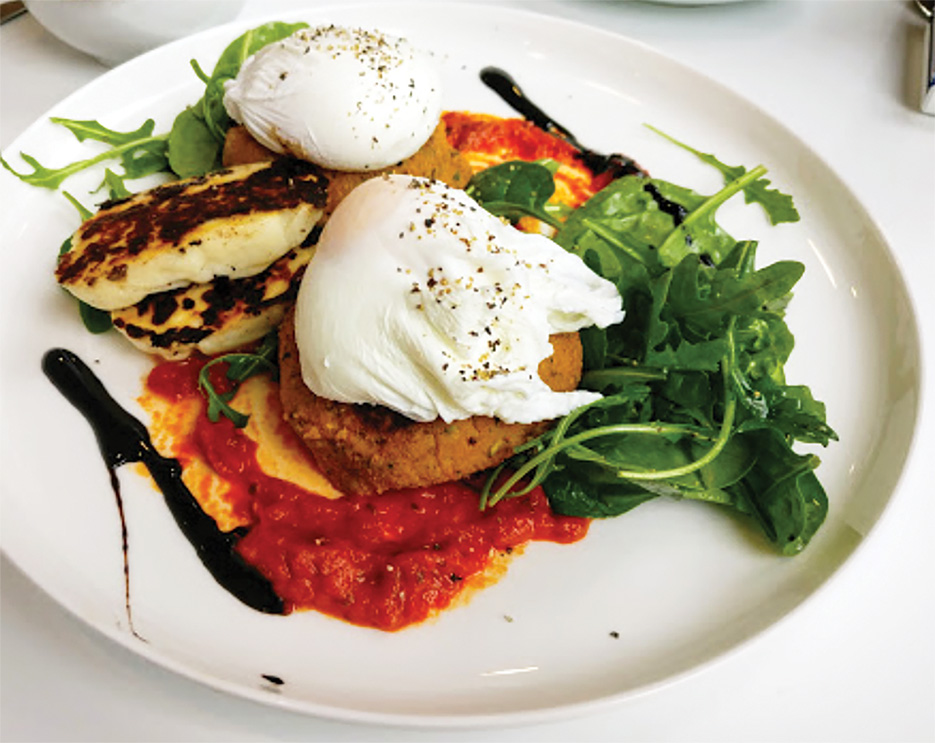
Pax & Co is one of my favourties and has the best nasi goreng ($15.50) I’ve ever eaten.
Brown rice gave the dish a pleasant chewiness, and the flavours were simple but layered, creating a complex tang.
The Asian eatery prides itself on serving wholesome food with fresh ingredients, and the vegetables in my nasi goreng didn’t disappoint.
“We believe healthy eating and flavour can exist in harmony,” states the eatery’s blurb.
The owners came to appreciate the importance of healthy eating while supporting a family member with cancer.
“We realised how important clean eating was for the body and how vital sharing a good meal was for the soul.”
With this in mind, I took comfort from the notion that sweet potato fries ($8) were actually good for me.
Well, I’m not sure if that’s true, but they were the best I’ve ever had – crisp on the outside, soft in the centre and with just the right amount of salt.
The menu had a wide range of meat and vegetarian dishes including vegan avo smash ($15), mushies on toast with kale, feta and poached egg ($18), and Penang chilli scramble ($18).
The pax to the max ($24) is a healthy version of the big breakfast with avocado, tomatoes, mushrooms, blanched kale, nitrate-free bacon and pork sausage.
I can see a return visit because the eatery’s beetroot and cacao pancakes ($16.50) looked divine.As the dish whisked past my table, I was in awe at the deep-pink flapjacks with lashings of mascarpone, chocolate sauce, fruit and pistachio crumble.
Pax & Co 609 Beaufort Street, Mount Lawley open seven days
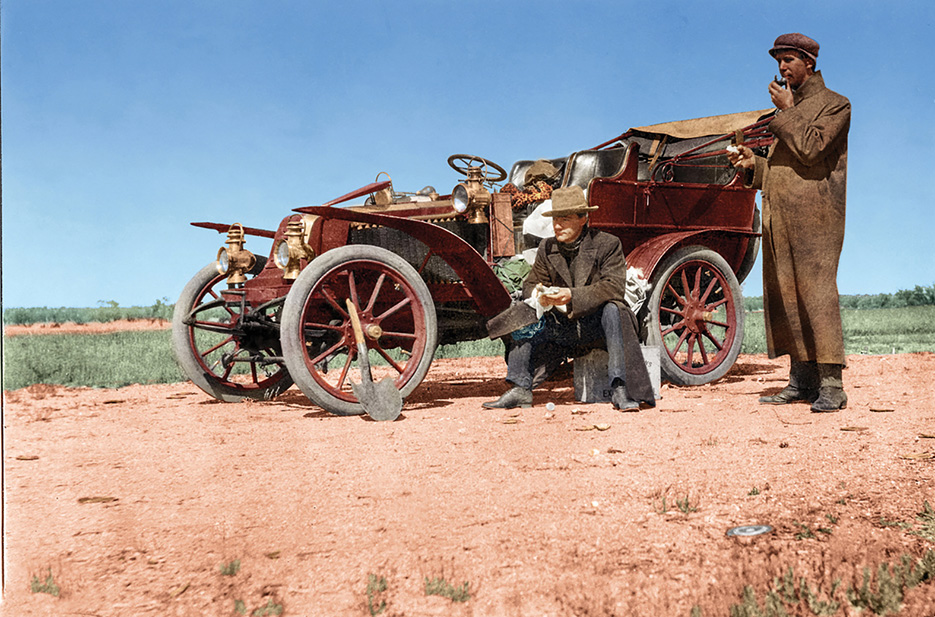
HE introduced American automobiles to WA, sold the state’s first petrol-driven car and helped found what is now the RAC, but not many people will have heard of Claude Deane.
Inglewood author Graeme Cocks’ new biography Claude Deane: Western Australia’s Motor Dealer Extraordinaire, shines an overdue light on the man who was WA’s biggest car importer and went on to lose it all.
Cocks says Mr Deane led a colourful life that included madcap stunts like riding a motorised tricycle across the outback.
“He was sort of an outsider and that’s why nothing has been written about him,” Cocks says.
“I was researching a car, an Oldsmobile that was being restored here.
“The owner had asked me to find the true history, which led me to Claude Deane, and I just became obsessed.
“I found that his remarkable life had many twists and turns, ending in virtual obscurity. It was a story I had to tell.
Nomadic
“He laid the foundations of the motor industry but there is not even a plaque acknowledging his contribution. His story has never been told until now.”
Deane was born in Melbourne in 1871 and moved to WA in 1897, during the state’s gold rush. He died aged 74 in Cape Town, South Africa in 1945.
Cocks says Mr Deane’s nomadic lifestyle made research problematic, but he managed to track down his grandson Richard Deane and family member Tanya Insley, who had saved boxes that were heading to the skip, after her mother passed away.
“They were full of Claude’s notebooks; all sorts of records and great stories,” the author says.
Cocks also managed to source information on Mr Deane from the Battye Library, the State Records Office and the WA Museum.
Last week the book was launched at Shacks Holden in Fremantle, with attendees including Mr Deane’s relations who flew in from Cape Town, Queensland and Melbourne.
The Fremantle dealership is run by Doug Carr, who owns one of Mr Deane’s original cars.
Deane’s first motor business was opened in Fremantle almost 120 years ago, and Shacks will shortly celebrate its centenary.
“Shacks is pretty much the oldest new car dealer in WA and Claude was the first car dealer,” Cocks says.
Claude Deane: Western Australia’s Motor Dealer Extraordinaire is available from motoringpast.com.au
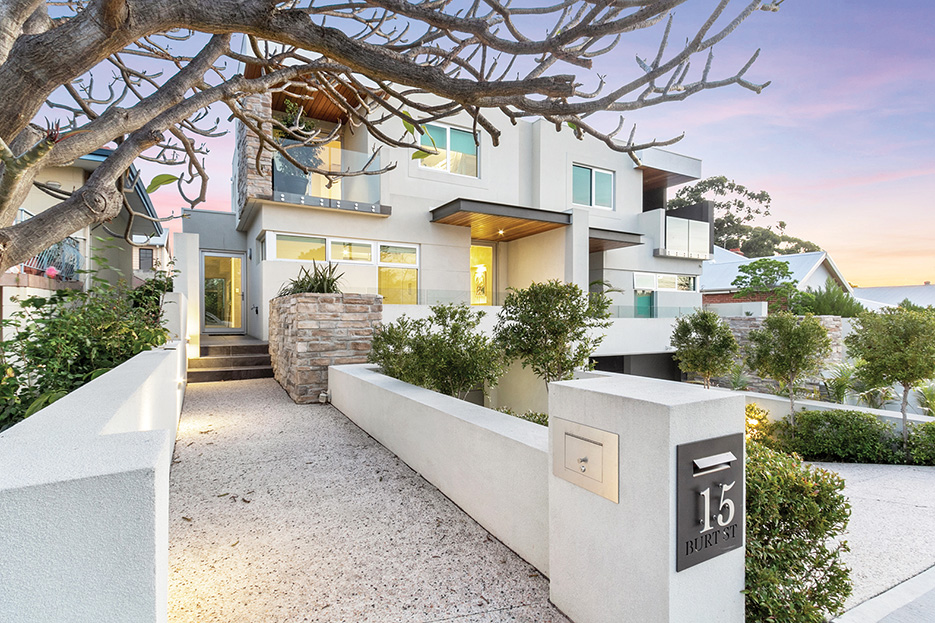
THIS Mt Lawley home is the epitome of modern living with sleek lines and gorgeous fittings.
There’s even a funky, post-modern chandelier in the gorgeous entry.
But this four-bedroom/four-bathroom home is not just a looker;it has the highest energy rating available, making it easy on the eye and the environment.
In the kitchen there’s an InSinkErator which grinds food waste to a pulp so it can be flushed down the sink, instead of going to landfill.
Spotted gum floorboards cast a golden glow onto pristine white walls throughout the home.
The gorgeous, streamlined kitchen has a clear glass splash-back – creating the look of an aquarium behind the induction stove – and there’s lovely marble benchtops and an island bench/breakfast bar.
A glass balustrade in the kitchen/dining area provides views of the living room and garden below.
Floating spotted-gum stairs lead down to this large space, which has a gas-powered “coal” fire and loads of natural light.
Bifold doors provide access to a pleasant courtyard alfresco with raised, manicured garden beds.
One of the bedrooms is on the ground floor and is perfect for a guest suite, with plenty of space and a semi-ensuite.
The rest of the bedrooms are on the second level, including the main which has a funky stone bathtub.
There’s a spacious balcony with city views and like all of the bathrooms, the double vanity is topped with marble.
The four-car garage is so big it doubles as a theatre/games room.
Situated on Burt Street, this home is close to all the shops and cafes on Walcott, Fitzgerald and Beaufort Streets. Hyde Park is nearby and you can hop on the bus to the Perth CBD.
15 Burt Street, Mt Lawley offers from $1.399 million Donna Buckovska 0419 928 467 Bellcourt Property Group Mt Lawley
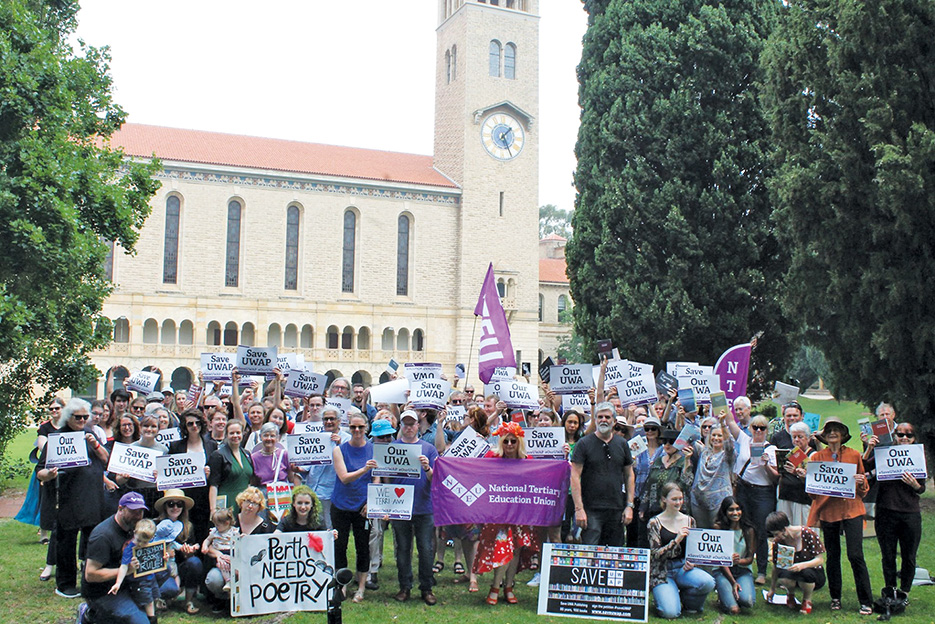
• About 120 people attended a protest over UWA’s decision to close its publishing arm. Photo from NTEU WA Division Facebook page.
THE closure of UWA’s publishing arm is a severe blow to local Indigenous writing, says Miles Franklin Award winner Kim Scott.
The Noongar author, who grew up in Menang country around Albany on the South Coast but now lives in the Perth suburb of Beaconsfield, has added his signature to a letter calling on UWA to reverse the decision, which was announced earlier this month.
Scott says UWA Publishing’s combination of Aboriginal and regional literature was something that made it “special” and “distinctive” and he says it’s unlikely the bigger commercial publishers will be interested in supporting those areas.
He wondered whether important works by indigenous illustrators and authors such as Laurel Nannup, Vivienne Hansen or Anna Haebich would have got the same treatment without UWAP.
“It brings them into the mix; otherwise there wouldn’t be that opportunity,” Scott said.
Voice
“It gives a voice akin to the opportunities that the Uluru Statement might offer.
“It is publishing this really distinctive cultural material that hasn’t yet got a mainstream audience.”
Scott collaborated on a series of Noongar-language books published by UWAP which are now used in schools, and has recently been part of a group collecting rare Noongar-language songs from Albany. They’d also been slated for release through UWAP but Scott says he doesn’t know what will happen with that project now.
There was a protest held on Tuesday at UWA’s Crawley campus which attracted around 120 people.
REPAIR work along the Swan River foreshore in Bayswater needs a tenfold increase in funding to cope with climate change, says the local council’s environmental team.
Bayswater is sending a submission to the McGowan government following the release of a discussion paper on climate change that paints a grim picture of the Swan turning even saltier as sea levels rise and replenishing rainwater diminishes.
Bayswater’s enviro staff have a laudable track record on river care (Maylands foreshore stabilisation, Eric Singleton sanctuary rehabilitation, the drains-to-waterways projects) but have urged councillors to prod the state for more money.
They say the extra money could make the foreshore resilient against erosion and other withering effects of climate change over the next 10 years.
They also want the state government to spend some of the cash it collects from landfill levies to help councils remediate their old landfill sites.
At Bayswater’s November 19 council meeting councillor Barry McKenna described the landfill levy as “a cash cow” that mostly went into propping up the state’s environment department.
“The current Labor government has not made any inroads to correct what the previous government did,” Cr McKenna said.
Baysie’s third complaint was that state government projects often left an environmental impact for councils to deal with, such as highway upgrades that saw trees removed.
The council wants future projects to include a “liveability assessment” so these big splashes of infrastructure didn’t leave legacies such as urban heat, biodiversity loss or worse air quality.
Cr Stephanie Gray said: “That’s something the state government really needs to be looking at… it often falls back on local government to look after state government projects.”
THE Inglewood span of Beaufort Street could soon be dropped to a 40kmh zone.
Stirling council’s proposal to lower the limit would affect the strip between Central Avenue and Crawford Road and would apply from 7.30am to 10pm Sunday to Thursday, and til 1am on Fridays and Saturdays.
The council says it’s been getting a lot of requests over the years to lower Beaufort’s speed and the new limit will “likely increase safety and vibrancy, and will foster greater community and commercial activity in the area”.
Consultation is open until December 20 via yoursay.stirling.wa.gov.au or 9205 8555.
Stirling says the reduced limit is backed up by traffic data showing drivers are already slowing down on the busy road.
Main Roads prefers posted speed limits to be based on how fast cars actually travel on the road, rather than dictating how fast people go.
Transport boffins have found it’s safest to have everyone travelling around the same speed: If some go fast and some go slow that causes the most accidents, so the ideal speed limit reflects what most people naturally drive at anyway.
Safest
Posting a very low speed limit on a wide, straight road where people tend to drive fast can undermine road safety, according to US-based transport behaviour expert Fred Mannering.
Drivers start thinking it’s safe to go 30km over the limit and start disobeying other posted signs too.
Community group Inglewood on Beaufort put a petition to Stirling council in 2017 requesting the lower speed.
IoB chair Damien Giudici said 40kmh had been a benefit to the Mount Lawley and Highgate sections and it made sense to extend it to Inglewood.
He says with an Aldi planned for the already troublesome 10th Ave intersection (a driver took out the traffic lights there about eight weeks back), the added safety will be a welcome relief.
Mr Giudici expects some opposition from “parties who utilise Beaufort Street as a thoroughfare and don’t stop and enjoy the great cafes, restaurants, hairdressers and other great services” but says the reality will be less than a minute of extra driving.
While the change for drivers from 60km to 40km is small, for someone hit by a car “there’s an appreciable change in the health of that party who gets hit”.