• City Slicker

    PERTH restaurant Garum is a collaboration between the ritzy hotel Westin Perth and celebrated Aussie chef Guy Grossi.

    The My Kitchen Rules judge is the brains behind Garum’s Roman-inspired menu, but the real star is head chef Stefano Pingue.

    If you sit back and watch Pingue work the pass, you’ll see a serious chef dedicated to his craft.

    Pingue fine-tunes every dish before it leaves his watchful eye and imparts his knowledge to a young apprentice who never seems to leave his side.

    The dining space is bright and vast with tall ceilings and plenty of indoor plants, but like most hotel restaurants Garum feels sterile and clinical.

    Apologies to my fellow white-collar workers, but a sea of suits escaping the office for a quick lunch doesn’t help matters.

    Thankfully, the quality food and exceptional service compensate for the restaurant’s lack of personality.

    Everybody loves a complimentary starter, and Garum’s house-baked sourdough was a great way to kick things off.

    The warm and fluffy bread is served with a palate-cleansing moretum–a fresh virescent dip made with ricotta, parsley, celery and olive oil.

    They say beauty is in the eye of the beholder, and that couldn’t be truer for my crostini appetiser ($6 each).

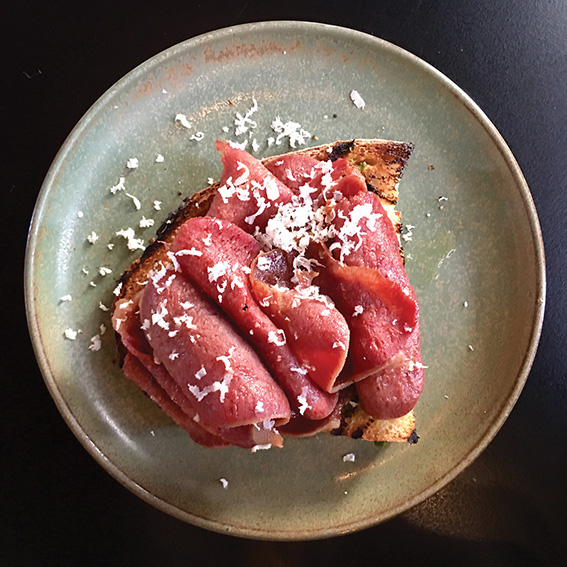
    A thick slice of grilled bread is topped with thin slices of ox tongue, which is a similar colour to deli polony.

    It’s a stunning looking dish, but I can understand how some might be put off.

    The smoky flavour of the airy tongue meat is complemented by a tangy salsa verde spread and a generous shaving of peppery horseradish.

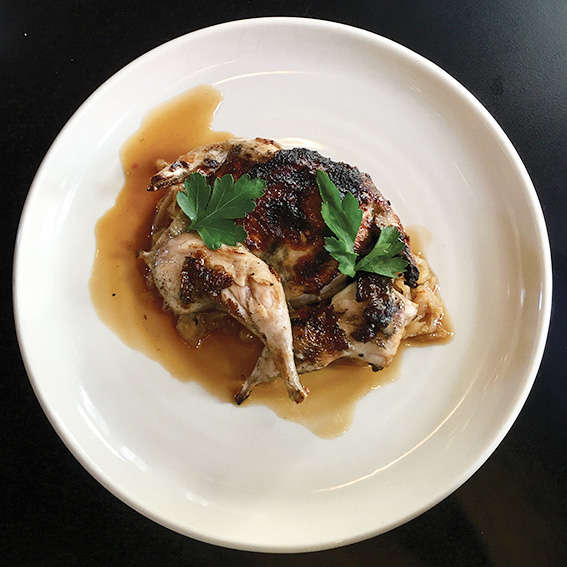
    I order quail ($22) at every opportunity and Garum’s didn’t disappoint.

    The full roasted bird is butterflied over a bed of slow-cooked onions with honey, fennel, currents and crunchy pine nuts.

    The dainty quail was a fussy delight, and I enjoyed trying to get to the sweet meat closest to the bones.

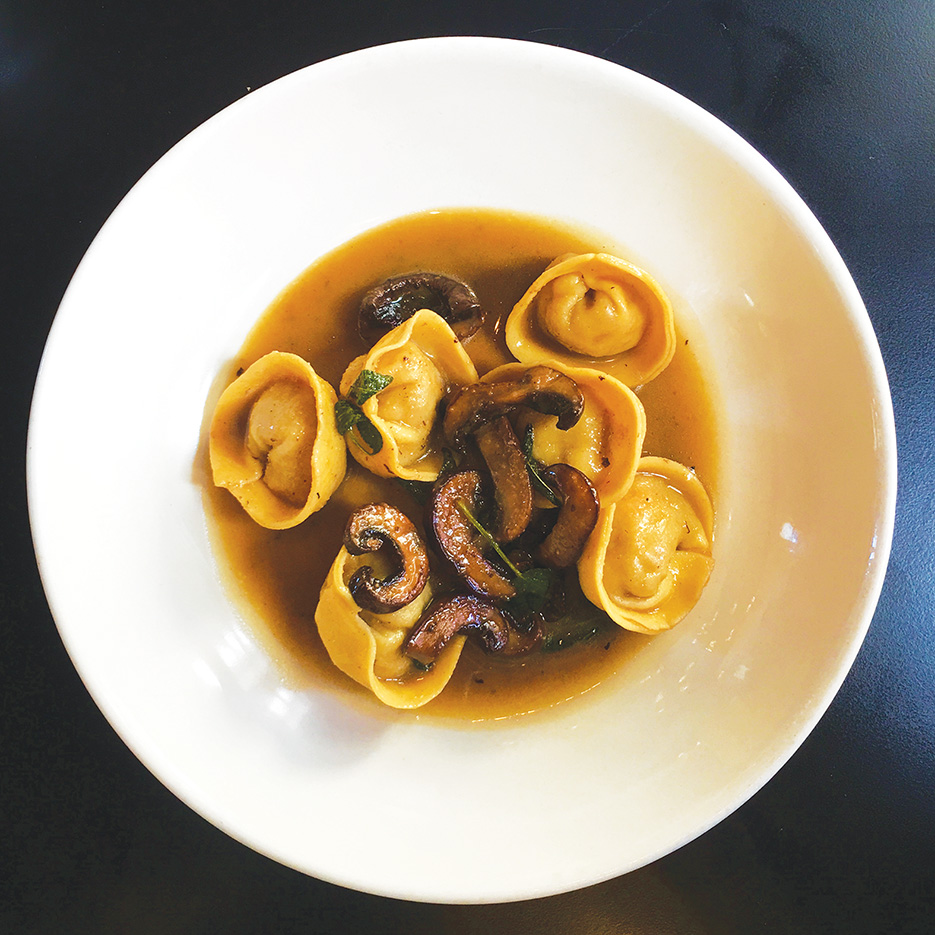
    I rounded off my meal with another poultry dish–the duck tortelli ($28).

    The al dente pasta is stuffed with rich duck meat and swimming in a buttery mushroom sauce.

    This moreish dish is crowned with meaty mushrooms and crispy fried sage leaves. It’s absolutely divine.

    I asked for a spoon to scoop up every last bit of sauce, but my attentive waiter went one better by offering me another round of complimentary bread to soak it all up.

    Now that’s service.

    by Matthew Eeles

    Garum
    480 Hay Street, Perth
    6559 1870
    http://www.garum.com.au

  • Decision time

    MADDIE is the sort of protagonist you can’t help but love–caring, loyal and lots of fun.

    But she loses her way and ends up in all sorts of trouble in Julia Lawrinson’s new book Maddie In The Middle.

    The year six pupil starts to feel lost and lonely when her best friend Katy becomes busy with school duties, so Maddie befriends a new mysterious girl at school, Samara, but it comes at a high price.

    Nuanced and sophisticated, the book explores the moral dilemmas we all face in life–no matter our age or experience.

    “It’s about a girl who’s at a crossroads in her life; she wants to feel a bit special,” Lawrinson says.

    “I really wanted it to be about those crisis moments, what goes into making someone do the right or wrong thing.

    • Perth author Julia Lawrinson.

    “People are confronted with those choices all the time. For example, if you see a $20 note on the ground outside a supermarket.

    “From the trivial to the serious, it’s something really important to how we are as human beings.

    “If I’m confronted with that kind of choice, what happens if I make the wrong decision? What are the consequences?”

    Maylands resident Lawrinson is an award-winning writer of books for children and young adults. She studied law at university and her books explore the complex relationship between morality and justice in society.

    In one powerful scene Maddie is in juvenile court facing community service unless she mends her ways; but at what cost to her friendship with Samara?

    Lawrinson delves headfirst into friendships and the difficulties in keeping relationships alive.

    “Friendship’s a theme of mine in all of my books because it’s something that’s important in all our lives.”

    But the Perth author festoons the drama with humour, making the book laugh-out-loud funny at times.

    Lawrinson won the WA Premier’s Book Award in 2001 for her debut novel Obsession.

    Her writing deals with a wide spectrum of issues whilst still being accessible for younger readers.

    “Children need lots and lots of different ideas…they need lots of different ways of looking at the world presented to them. I like to think that I’m part of presenting those different ways of looking at things.”

    Maddie In the Middle is published by Fremantle Press.

    by ALEX MURFETT

  • It’s all Greek this week

    THE inaugural Perth Greek Festival kicks off 10 days of celebration on Saturday October 19.

    Along with democracy, we owe many of our delis, fruit and veg stores and fish and chip shops to Greek migrants arriving in the 50s and 60s, while many more worked in forestry, farming and on the wharves.

    They settled in Northbridge and North Perth, and more recently Dianella, influencing the architecture and cuisine as they went.

    Now the many groups in the Hellenic Community of WA have come together to celebrate that influence.

    The festival features a Greek heritage walking tour culminating in a guided tour of Northbridge’s St Constantine and Helene Church by Father Elpidios (the first dates of the free tour were so popular they’re now booked out, so more dates have been added).

    The country’s ancient history is also on show, with a talk on the Greek sea battles that changed the world delivered by former state MP Bob Pearce—not Greek himself, but such a philhellene he speaks the language.

    • Father Emmanuel Stamatiou will guide people through the iconography at the Orthodox Church of Evangelismos. Photo by David Bell.

    And while a lot of North Perth residents might have seen inside one part of the Orthodox Church of Evangelismos when they go to vote there on polling days, the main chamber of the Carr Street church will be open for free tours on the afternoons of October 19, 20 and 26.

    For the past decade the church has been undergoing a huge internal transformation as one diligent iconographer John Kalentzis, self-taught in the ancient Byzantine style, has covered the walls in iconography of holy figures and Biblical scenes.

    Iconography holds a special place in the Orthodox Church: It’s not referred to as ‘drawings’ or ‘paintings’—they’re a more profound visual channel to the icons depicted, and Parish Priest Emmanuel Stamatiou will guide viewers through the meaning and detail of the vast works covering the walls.

    The highlight of the 10 day festival is the October 26 Perth Greek Festival Day at Russell Square, a nexus of Greek settlers in the early days of migration.

    There’ll be Grecian cooking demonstrations, food and market stalls in the classic style of the Agora, Greek dance and theatre, and the kids from Mount Hawthorn Primary School are heading along for “Boxopolis,” recreating ancient chariots, armour and buildings out of cardboard boxes.

    There’s a full list of all events at facebook.com/perthgreekfestival

    ———

    Oxi Day: Celebrating a history of resistance

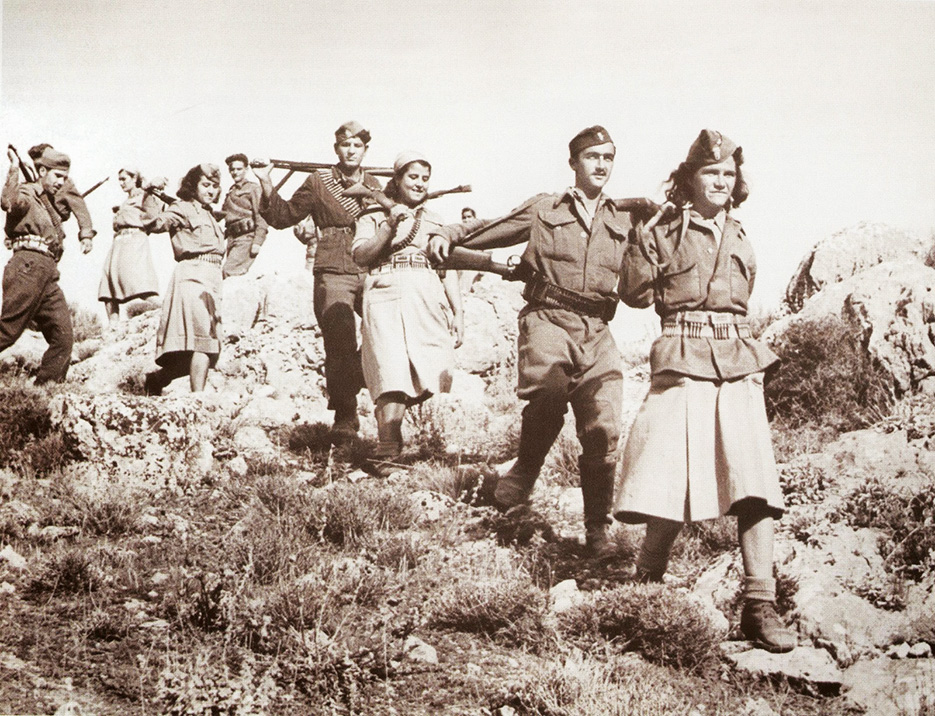
    THE 10 day festival builds up to the final day on October 28, an important Greek date known as “Oxi Day”.

    In the early morning of October 28, 1940, the Italian ambassador demanded Greece allow Nazi-aligned Axis forces to enter their country and occupy strategic areas. He said if Greece refused, there would be war.

    Greece prime minister Ioannis Metaxas’s recorded reply came in French, the diplomatic common language of the day: “Alors, c’est la guerre” (so, this is war).

    But popular tradition recalls his laconic response in Greek: “όχι”, or “no”.

    The population took to the streets shouting “όχι,” and it became a watchword among the members of the Greek resistance in the following years of brutal occupation by German, Italian and Bulgarian forces.

    Mr Metaxas’s single word response would have resonated with Greeks familiar with their country’s long history of resistance.

    It was spoken in the tradition of the “laconic phrase”, named for the Spartan region of Laconia.

    2300 years before the Greeks defied the Axis, the Spartans were facing invasion by Philip II of Macedon.

    He sent an ultimatum to the Spartans demanding they submit to him, and just like the Axis ambassador he threateningly asked whether he should come into their land as friend or foe.

    The Spartans responded with one word: “Neither.”

    Philip II told them: “If I bring my army into your land, I will destroy your farms, slay your people, and raze your city.”

    The Spartans responded: “If.”

    He heeded their first answer, and did not come to Sparta.

    As part of the festival, there will be an Oxi Day event held at Kings Park (details to be confirmed on the festival Facebook page)

    ———–

    The Jews of Greece

    JEWS had a special place in Greek society dating back to its earliest years, and a photographic exhibition “The Jews of Greece: Then and Now” will tell their story as part of the festival.

    Photographer Emmanuel Santos and documentary filmmakers Carol Gordon and Nathalie Cunningham have documented insights into the life of the Romaniote Jews and other Jewish peoples, telling the story of those who still carry on the cultural practices today.

    Greece was a relative safe haven for Jews throughout history as other parts of Europe were stricken by waves of antisemitism.

    The Romaniote Jews came after the Romans destroyed their second temple in Jerusalem in 70 AD. Sephardic Jews resettled in Greece after being expelled from Spain in the 1400s. More came from Russia in the 1800s, as Russian antisemitism swelled to a series of murderous pogroms.

    The Nazis faced a peculiar problem when they invaded Greece: Unlike more antisemitic nations where Jews were segregated, the Jewish Greeks were well accepted into society and not so easy to spot. Greeks tried to protect their Jewish citizens, and the Orthodox Archbishop Damaskinos of Athens provided thousands of Jews with false papers proclaiming them baptised.

    • Greek Jewish survivors from “The Jews of Greece: Then and Now”, by Emmanuel Santos, Carol Gordon and Nathalie Cunningham.

    Ancient traditions

    They saved many, but by the end of the war the Nazis had killed more than 80 per cent of Greek Jews.

    Those who remain still carry on the cultural practices and ancient traditions of their forebears, documented in photo and film as part of the exhibition.

    The Hellenic Community of WA and the Jewish Community Council are hosting the free exhibition at the Hellenic Centre, 20 Parker Street Northbridge, daily from October 24 to November 5 (noon to 4.30pm weekdays, and 10am to 4.30pm weekends).

    Stories by DAVID BELL

  • Perth charmer

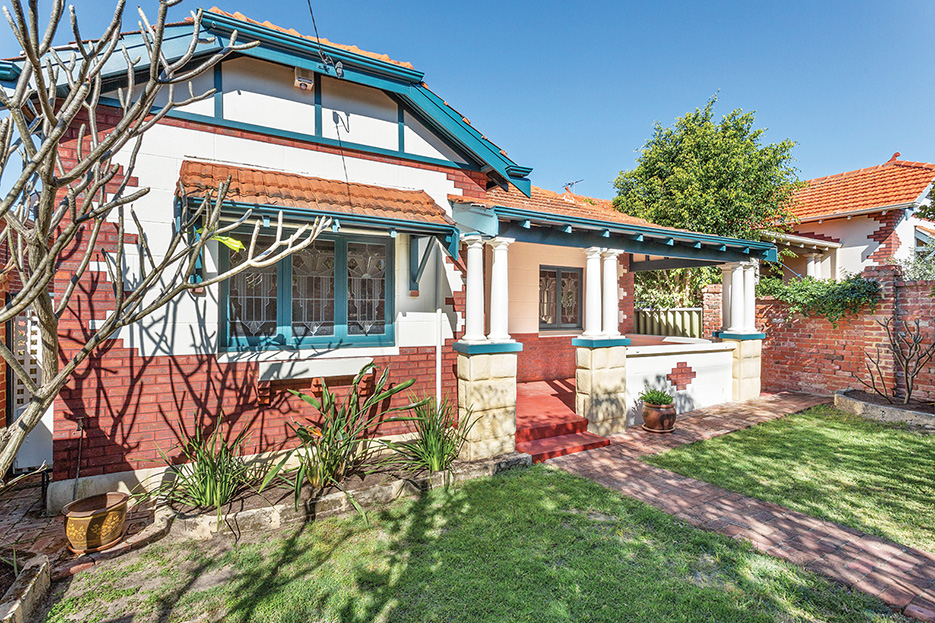
    This roomy Californian-style bungalow would make a great family home.

    Located in Mount Hawthorn, there’s plenty of living space, a garden with a lawn (which the owner says is unusual for the suburb) and many quaint features from the 1930s.

    In between the kitchen/dining area and the third bedroom/living area there is an original servery.

    The current owner says his children used to love playing with it when they were younger.

    There is an enchanting sailboat motif plastered onto the wall above the fireplace in the living room (currently being used as a third bedroom).

    Motifs like this were left by the builders during the era to show buyers it was an original Plunkett home.

    The fireplace has the original timber mantle and firebox, and the house has beautifully restored tuckpointing and brickwork, sandstone pillars, original lead-light windows, decorative ceilings and stucco walls. This house is not easily forgotten.

    The master bedroom has the most stunning art deco ceiling and light fittings.

    With the high skirting boards and wide jarrah floorboards, this room will be worth a tussle to score.

    The bathroom has a slate floor but continues the warm woody style of the house with a natural-looking jarrah bathroom sink, and there are plenty of towel rails.

    The kitchen and dining area is airy and comfortable, with light streaming through the full-height sash windows.

    At the rear there is an 1980s extension that includes a spacious living area, an activity area with slate floors and a laundry that overlooks the garden.

    French windows/doors and timber beams on the ceiling in the extension provide continuity with the original section of the house.

    The garden has a pergola, and a garage/studio with a roller door providing access to the back lane. The garage/studio is currently being used as a home office.

    Situated on Flinders Street, this three-bedroom home is near local primary schools and the Mount Hawthorn cafe/shopping strip.

    by ALEX MURFETT

    120 Flinders Street,
    Mount Hawthorn
    Offers over $949,000
    Louise Simonette
    0424 205 440
    Edison Property
    9201 9800

  • BLOOM WITH JUSTINE STAHL

    THE benefits of a community garden are endless, and to list them all would take more space than we have. That being said, some key bonuses are:

    1. A sense of community
    Community gardens are a great way to make friends and to meet people with similar interests, as they tend to attract people who are willing to take time out of their days for a higher ideal. The sharing of resources and knowledge is a key aspect of a communal garden, and invariably surplus produce will be shared amongst the participants, fostering strong social bonds. It brings together people of different ages, backgrounds and incomes, and unites them in getting their hands dirty for a good cause.

    2. Food security
    With food scarcity growing by the day, securing a food supply can logically be a high priority for many people. While a serious food shortage would likely see community gardens easily raided by hungry opportunists, growing your own food in the meantime not only means less money spent at the supermarket, but developing the skills required to grow food in the family home. The spread of African Swine Fever has now reached East Timor, and is so serious that China has already exterminated between 40 to 70 per cent of its pigs, which a recent ABC report equating it to a loss of around 20 per cent of global meat protein. This is unprecedented in world history, and is already causing significant price rises in alternative proteins from salmon to chicken.

    3. Health
    The health benefits of community gardening are numerous, from the sunshine’s Vitamin D to the vitamins in the fresh produce you can grow. It is far easier to grow pesticide and chemical free food in a small controlled plot than on a large commercial farm, and so you can ensure you know exactly what you are eating. Aside from the physical benefits, it has been shown in numerous studies that gardening benefits mental health, and in a community setting prevents social isolation, particularly among retirees.

    4. The Environment
    Growing food in a sustainable manner is not only good for the planet, but can regenerate the area itself. The effort made in improving soils and removing toxins naturally improves the local ecosystem, and the encouragement of bees benefits the surrounding area as well. Children who participate will likely be more mindful of the environment as well as the energy required by food production, meaning less food wastage and hopefully future environmentalists.

    PITFALLS

    Of course, no community garden will run completely smoothly. One of the key problems that plot-plodders face is the pinching of their hard earned produce, and this is incredibly hard to police. Nobody wants an environment of suspicion or a CCTV camera hiding under each cabbage, but in general it’s the wider public that might treat a garden as a free-for-all. Controlling access is therefore important, and many gardens have put up fences around the perimeter, granting anyone with a plot access while protecting the garden from vandalism (yes, it happens) or outright theft.

    One of the other thorny issues that local community gardens face revolves around governance. Each community garden, at least in WA, will have a different method of administration. Some will have a rudimentary committee formed from the plot holders, while others will elect a management team. Controlling both access and rental fees can be contentious, with rumours abounding of favouritism and political-style machinations as management seeks to determine who grows what, or who is allowed a space.

    The other major issue is much harder to resolve, and that is the problem of combining different aims, abilities and ambition in a small space. If a gardener’s plot is attracting nuisance pests, or is cross-pollinating everyone else’s crops, it can be hard to resolve fairly. A neglected plot can infect a whole garden with fruit fly, leading to questions about whether it is appropriate to remove a person’s crops without their permission in order to protect other areas.

    It seems that the most successful community gardens are those with a more liberal ethos, providing essential services like security and watering whilst remaining hands-off or at least consultative with the plot owners. A healthy online social media component can be democratic and allow for many issues to be resolved quickly without needing a meeting in person, but care needs to be taken to ensure those older or security-conscious people without social media accounts can still be included.

    CURRENT STATUS

    Community gardening is undergoing something of a renaissance in Australia and around the world, as local governments begin to understand the benefits of urban farming. Some councils are even beginning to allow native plants on household verges, but still tend to discourage food production.

    With so many new gardens popping up, and their establishment increasingly being encouraged as part of new developments, there’s likely to be one close to you. Just a few hours per week is enough to start and maintain a small plot, and a new generation of gardeners are usually welcoming and friendly.  Your local council or a quick online search will let you know where to find one that suits you, and the cost, if anything.

    —————-

    Capsicum and Chilli

    The humble capsicum ‘capsicum annuum’ and its close relation the chilli pepper share much of their history and genetics with tomatoes, and are also in the ‘nightshade’ category.

    Originally from the Mesoamerican region and what is now Mexico, it too was brought back to Europe after Christopher Columbus’ travels in 1492.

    A pleasant surprise 

    His journey was driven in part by a European desire for peppercorns which were essentially a currency to themselves, and finding chillies already domesticated around 6000 years ago by the native populations was a pleasant surprise.

    Like most of the South American foods we now take for granted, it was the Portuguese who widely spread capsicum around the world via their extensive trade routes, and now it is estimated up to 25 per cent of the global population eat capsicum or chilli daily.

    Curiously, it only seems to be Australia, New Zealand and India that call it ‘capsicum’, with most other parts of the world calling it a ‘pepper’, with ‘chilli’ being reserved for hot varieties.

    It also holds the unfortunate distinction of being one of the only fruits that is commonly used as a weapon (aside from the occasional thrown tomato), as the ‘capsaicin’ that produces the heat is a primary ingredient of pepper spray, with concentrations of around two per cent causing a burning feeling and temporary blindness.

    With capsicums being perfect for stuffing, and chillies being a great way to make bland food exciting, their enduring popularity is no surprise.

    Growing them isn’t hard, and many pests will ignore them due to the capsaicin. Being similar to tomatoes, they require similar conditions, including as much sun as you can give them, regular watering and they can be staked-up to produce a neater plant that spends less effort supporting its own weight, instead growing big, juicy fruit.

    While many people grow chilli plants in small pots, and capsicum plants are generally small enough to allow this as well, it needs to be a well-draining soil with plenty of nutrients and have sufficient space for a decent root system.

    Like many nightshades, including tomatoes and eggplants, they respond well to the seeds being first sown in punnets or trays before being carefully transferred to the garden or pot.

    Liquid fertiliser works well, and application once a week when the fruit is growing is sufficient.

    A commonly overlooked fact is that all capsicums and peppers start out green before changing colour as they mature, and many complaints have been made to garden centres over the years by impatient gardeners who thought they’d mistakenly been sold a green variety.

  • 91 and left to sleep in a shed
    • Bill, 91, from Northern Ireland, wants to keep living independently. Photo by David Bell.

    A 91-YEAR-OLD man has been forced to sleep in a shed after residents of a run-down hostel in Murray Street were evicted to make way for a 35-storey hotel redevelopment.

    The lodgers and the keeper of Hostel Milligan, some who’ve been there for more than 30 years, were told to leave the ageing property by September 30.

    But some, like 91-year-old Bill, have found even “affordable housing” is out of their reach, with newer hostels charging more than twice as much for a private room.

    Evictee Tom says it’s been hard knowing the redevelopment was looming. He says he’s felt “numb”.

    “I don’t know what to do,” Tom told the Voice.

    He’s looking at going interstate for cheaper accommodation.

    “I might have found a place in Dubbo,” he says – if he can get there.

    Shelter

    Later that night he carried his belongings off to look for a youth hostel nearby, but says he can’t afford their rates for long.

    Another resident who’s lived on and off at Milligans for nearly 30 years said he’d applied at a shelter and was hoping to hear back by next Thursday. It’s south of the river as he’s previously used up his quota of accommodation at local shelters.

    He doesn’t know what to do in the meantime.

    Hostel keeper Tony Ransom has been running the place for 30 years. Both a caretaker of the premises and residents, he’s worried about the fate of the last few.

    “From the time [developer] Fragrance first bought the property I stopped advertising for new guests. I even removed the vintage sign from above the front door. This was to ensure I did not have to inconvenience so many residents to relocate,” Mr Ransom said.

    He’s helped some find a new spot, and he’s let those in desperate straits skip rent since the August 20 notice to vacate in the hope they could save up money for a bond or moving costs.

    Bush

    Bill can’t remember how long he’s lived at Milligans, but he came from Northern Ireland some misty years ago and “worked all over the bush”.

    “I’ve had a lot of addresses,” Bill said.

    His memory’s going but he’s still physically fit — he carried his own luggage down the stairs himself on the last day – and doesn’t want to give up his independence and go into an old age home.

    “Bill’s been here since 1988,” Mr Ransom says.

    “I keep him mentally active,” taking him out to exercise on park equipment, and for a visit to the zoo on the day before the eviction.

    With the locks changed on October 1, Mr Ransom drove Bill out to Midland where they both stayed the night in a shed.

    “It’s a friend’s shed, where the chaps lived picking grapes off vines since the year dot,” Mr Ransom says.

    “We’re safe,” he says, though Bill kept wanting to return to the hostel. “It’s not all bright and shiny, there’s nothing to it, but there’s lots of new little things to distract him from the circumstances.”

    by DAVID BELL

  • XRWA activists take on The West

    CLIMATE change activists Extinction Rebellion have vowed to take on Perth’s monopoly daily The West Australian during a week of disruption they’re expecting will lead to “dozens” of arrests.

    On Tuesday representatives of the group delivered a letter to SevenWest Media with a list of three demands, which were that the company:

    • Had to run stories about climate change and biodiversity every day;

    • Ensure a broader range of opinions about the “climate emergency” were aired, including opinion pieces by activists; and,

    • Disclose owner Kerry Stokes’ interests in the energy and resources sector in all articles about climate change.

    XRWA spokesperson Jesse Noakes told the Voice they’d had three opinion pieces knocked back by The West, which also headlined a story about the group disrupting Parliament as “Laughing stock”.

    “Ten thousand children marched through Perth last week to demand action, and the West barely noted it,” XRWA said in a release.

    “Its editor claims to value free speech above all, but free speech is meaningless if only a few voices are amplified and the rest are suppressed.”

    The Voice contacted West editor Anthony De Ceglie for comment, but he didn’t get back to us.

    Mr Noakes said XRWA members would gather at SevenWest Media’s Osborne Park headquarters on Tuesday to consider its response.

    It will be part of the group’s “spring rebellion”, which he says will involve action each day of the week.

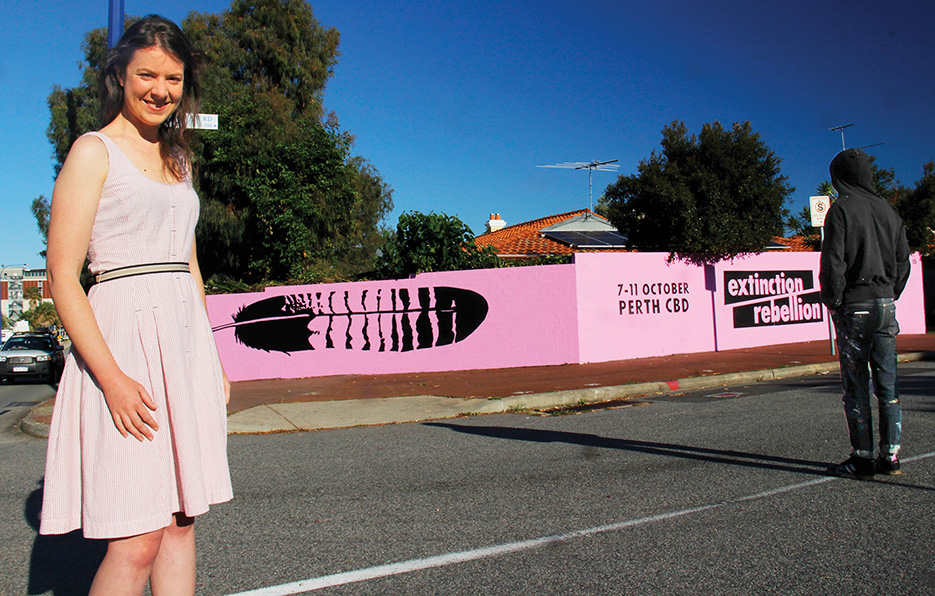
    “All through the CBD will be a rolling series of actions – artistic and disruptive,” Mr Noakes said.

    The big event, “flood the city” will be on Friday October 11, highlighting the wetlands that once dominated the CBD area and how climate change predictions suggest the water will soon be coming back.

    Mr Noakes said they’ve been training members in arrest techniques for several months.

    by STEVE GRANT

  • Hidden gem
    • The new Hotel Milligan: Nicer but pricier. Scanlan Architect has incorporated Pearl Villa into the design, saying it will now be more visible publicly.
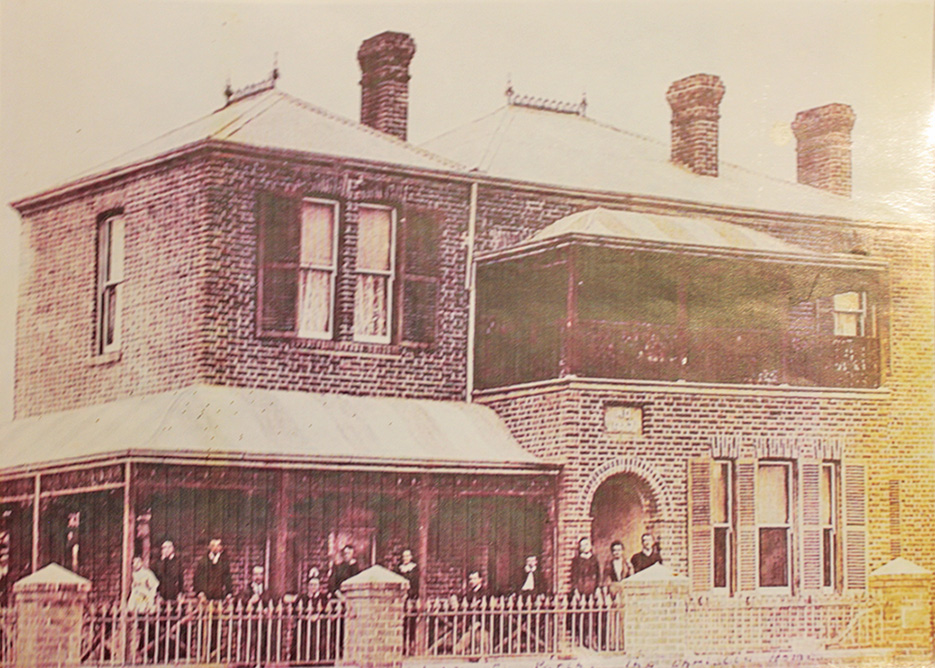
    • Pearl Villa in its heyday.

    HIDDEN behind the now-tatty 1930s exterior of the Hostel Milligan lies one of Perth’s hidden historic gems.

    Built somewhere between 1874 and 1886 by pearler Joseph Clarkson, Pearl Villa’s brick walls and chimneys are still visible from Murray Street, a reminder of the wealth that came to some from the colony’s early pearling industry. And according to architecture devotees Art Deco Perth, within those historic walls are the remnants of an even earlier “pioneer cottage” which hostel keeper Tony Ransom says he’s aware of.

    Settlers

    Clarkson’s family were among the first Swan River colonists; his mother Hannah Leeder arrived in the Rockingham in 1830 as a young girl and Leederville is named after her family, who were its first European settlers. His uncles Michael and James Clarkson received some of the first land grants at what is now Maylands, but soon sold up to try their hand farming in the Avon district.

    When pastoralists started opening up the North West of the colony, Joseph and his brothers William and Henry looked there to make their fortunes, but had mixed results.

    William and Henry were killed by Aboriginal people at the remote Hooley’s Well in 1874 as they tried to drive a herd of 800 cattle and 70 horses up to the De Grey River, the elder brother just 31 years old.

    Slave labour

    Joseph fared much better in the pearling industry at Cossack, profiting handsomely from the pearl shell itself, which was used in the manufacture of buttons. But it was an industry built on brutality, where Aboriginal people, including children under the age of 10, were used as slave labour.

    From its profits he built Pearl Villa, but eventually he too came to a sticky end; the Western Mail reported in November 1890 that he had been declared a lunatic unable to manage either himself or his affairs, and a committee was established to oversee the sale of his property. He was dead by the end of the year.

    Fragrance Group Ltd, the Singaporean company which purchased the site from the Osborne Park-based Georgiou Capital in 2014 for $30 million, says its development will “enhance” its heritage.

    “The main heritage benefit will be the way in which it reveals, conserves, and in-part reconstructs Pearl Villa, an element which has been hidden from view, with restricted access since the 1930s,” it’s report to the JDAP said.

    Part of the 1930 hostel wall will be removed along Murray Street and a “glass box structure” will make the original building, or the rebuilt version, visible to the street.

    by STEVE GRANT and DAVID BELL

  • Creating great students
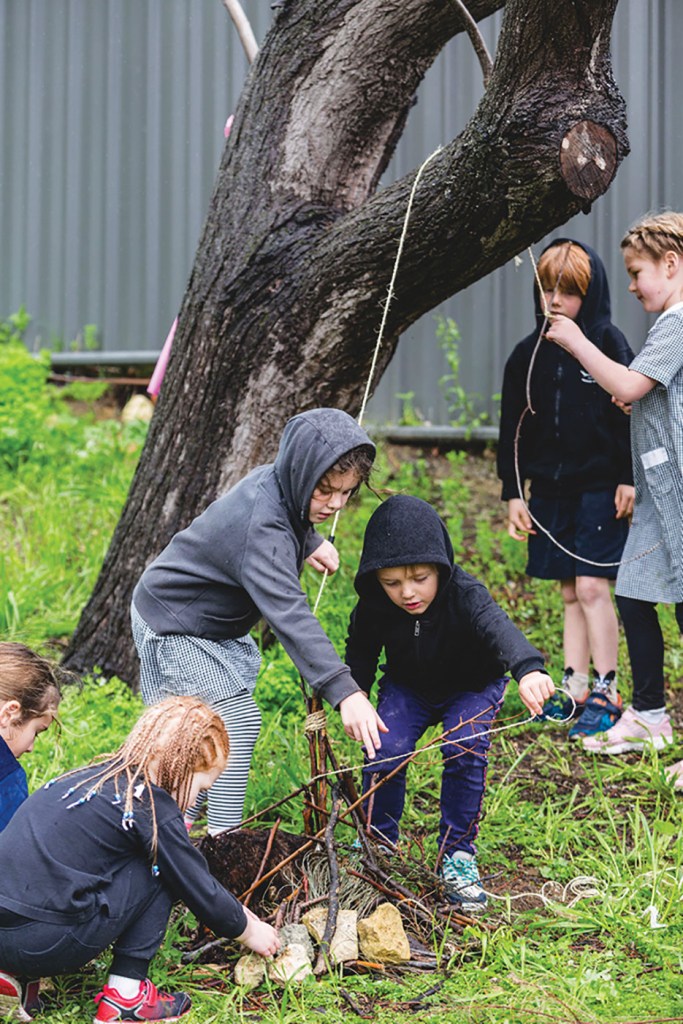
    • Getting close to nature and creative is helping kids learn better. Photo by Taryn Hays

    A PILOT project encouraging Highgate primary and Mount Lawley high school students to get creative has helped improve their academic learning while giving teachers back their “mojo”, says a UWA researcher.

    Mathilda Joubert has been evaluating WA non-profit creative agency FORM’s Creative Learning program, which was rolled out across 16 state schools last year and is based on an Australian-first collaboration with UK-baseds and to see them through.”

    International research has highlighted the importance of creative learning, nature play and child-led practices in education outcomes, and how the effects can ripple throughout a school.

    Perth educational leader and researcher Gillian Howarth says Creative Learning is a good start, but the school system could offer more well-rounded education.

    The co-founder of the Conscious Education Movement works predominantly with homeschool communities and educators promoting creativity, mindfulness and child-led observance as a foundation for teaching.

    “Our schools don’t represent the needs of the future,” Ms Howarth said.

    “They don’t even represent the needs for now.

    “It can take a big shift in perspective, though, in order to bring the changes to education and schooling from the way things have been done in the past towards a more relevant model for the future.

    “It’s not just about fostering creativity in children – it’s about being creative as a culture and community in finding the best ways forward.”

    Ms Joubert says it’s vital that a school’s principal and leadership team backed teachers who wanted to increase their creativity.

    by TATIANA DALIN

  • Skyworks to fly

    NEXT year’s Australia Day celebrations will feature the first aerial show since the death of two people in a plane crash on the Swan River in 2017.

    Pilot Peter Lynch and partner Endah Cakrawati were killed when their seaplane crashed into the water, leading to the mothballing of the event.

    The Australian Transport Safety Bureau’s final report is still awaiting external review, but a preliminary version said the plane was fine, the pilot was not incapacitated, and the crash was “consistent with an aerodynamic stall”.

    This usually happens at “high angles of attack”, when airflow separates from the wing’s upper surface and becomes turbulent.

    Perth city council is working with the Civil Aviation Safety Authority to plan the 2020 air show, but is playing it safe and seaplanes will not be used.

    Prominent pilot and plane safety expert Glyn Butchard has been chosen to coordinate the airshow.

    “With experience in safety and aviation services, he is highly reputable in the aviation industry,” PCC community development GM Anne Banks-McAllister said in a press release this week.

    He has experience planning the Australian International Airshow and Defence & Aerospace Exposition, bringing to it a culture of heightened awareness about safety.

    Ms Banks-McAllister said the air show was still being planned, but it would be a spectacle involving planes and helicopters.

    “Elements of the air show will continue to feature a crowd favourite — the helicopter towing a 60-metre Aussie flag.”

    by DAVID BELL