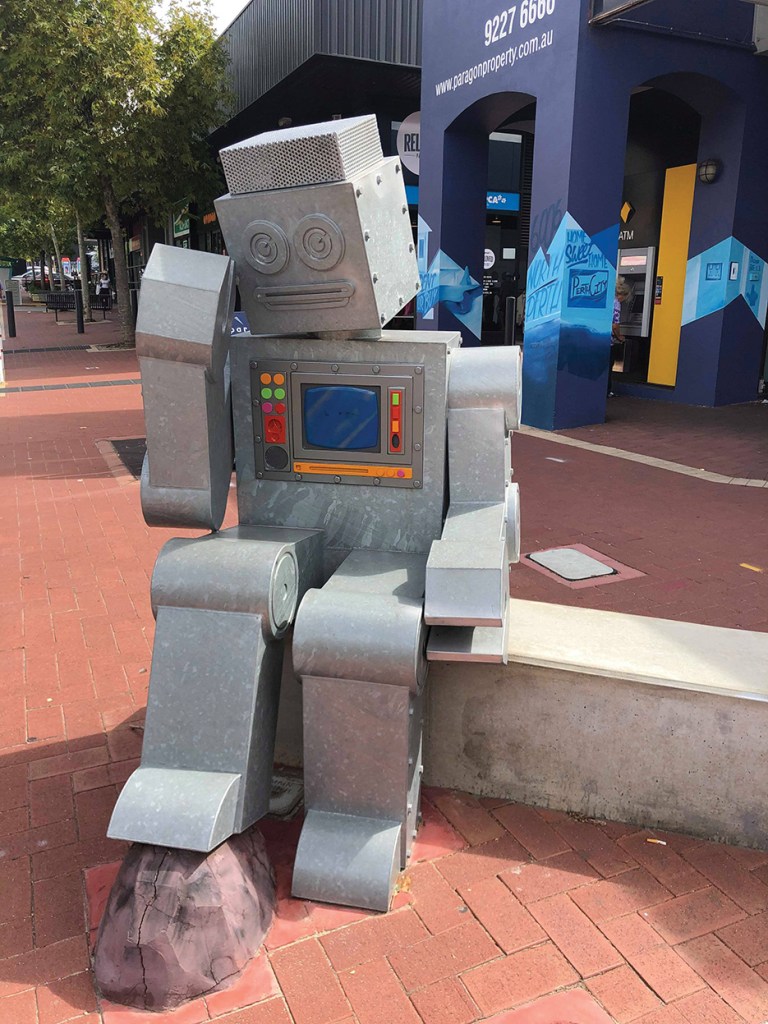
The robot sculptures on Fitzgerald Street inspired Alex Uchanski to write this reflective poem about the relationship between humankind and technology. Photo by Madeleine Mazza.
We are always there,
day in day out‚
We do what we are programmed,
but have we been programmed right?
On auto-pilot, working hard in the city‚
Life races past us, but we are always the same‚
Hardly sleep, always switched on‚
A fresh coat of paint and on the surface we look happy‚
But are we mechanically sound?
Built tough in a malfunctioning society,
Restarting is not an option…
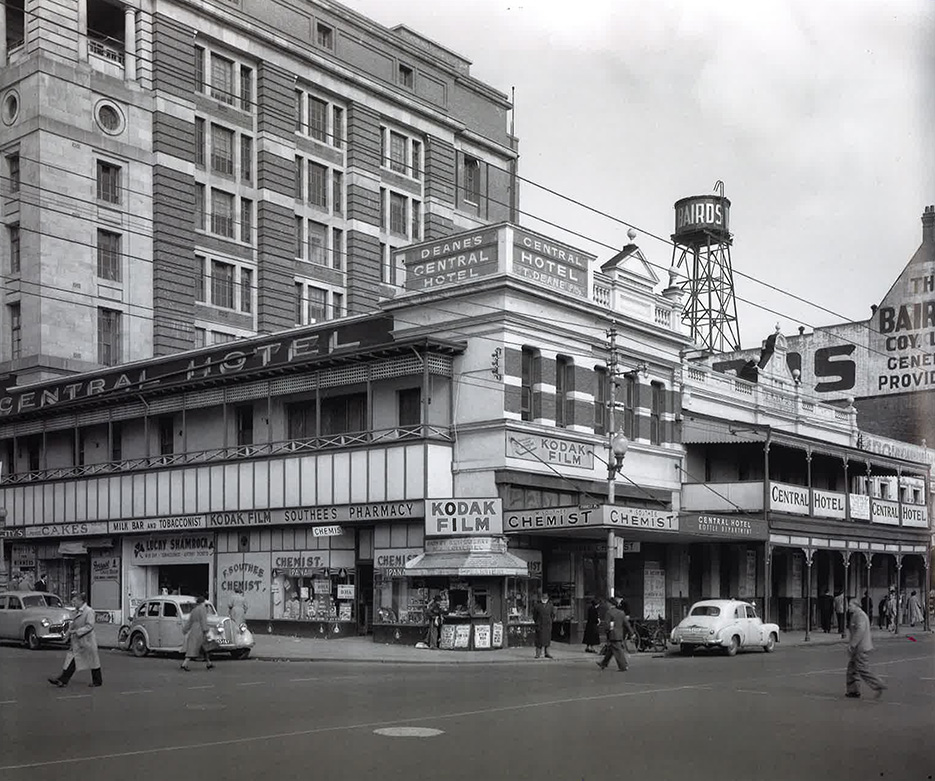
The Central Hotel on the corner of Wellington Street and Forrest Place in about 1928. Image courtesy of the State Library of Western Australia.
HISTORY buff RICHARD OFFEN is the author of Lost Perth, and the former executive director of Heritage Perth. In this week’s HERITAGE CORNER he tells us all about the “infamous” Central Hotel in Forrest Place.
THE Central Hotel once stood on the northern side of the GPO Building in Forrest Place. This hostelry started its life as the Miners’ Arms Hotel, which appears to have opened some time during the 1880s, although it has so far proved impossible to establish an exact date.
Throughout its history the hotel was continually in the news, usually for all the wrong reasons!
During December, 1898 for instance, not only did the landlord have his licence cancelled for “wilfully delaying the admission of the police to his hotel”, but a ‘daring robbery took place when a man calmly walked into the hotel, up to one of the bedrooms and stole money out of the trouser pocket of the room’s occupant, whilst he was still wearing them. Six months later one of the guests committed suicide in the building.
Eyesore
By the beginning of the 20th century, the hotel was clearly considered to be a ‘dive’ and was purchased by Daniel Mulcahy who, according to the Sunday Times in June, 1901, transformed the building: “As evidence of how an eyesore can be changed into a beauty spot, one has only to pay a visit to the Central Hotel, Wellington Street, immediately opposite the railway station, where Mr. Mulcahy has effected a complete transformation.” The report continued, “…on the eastern side of the public entrance is a large and beautifully fitted threepenny bar, at the back of which is the sitting room, while on the eastern-side is the saloon bar, a charmingly pretty place, artistically laid out.
Immediately behind is the billiard saloon, a well ventilated and bright room, where a pleasant hour can be whiled away with the cue.”
The report then concluded, “Mr. Mulcahy intends giving the Central his personal supervision at all times, and hopes that his efforts will be rewarded, insomuch that the malodorous name which the place had when it was the Miners’ Arms will be entirely eliminated.”
The hotel was once again renovated in 1923 as part of the creation of Forrest Place, when the new GPO building next door was completed.
Two years later Mulcahy died and the property was acquired by Thomas Deane. Yet more trouble was to ensue.
In 1928, there was a scuffle in the bar, when two men were refused service.
This resulted in one of the barman dying two days later from injuries caused during the fracas.
Several other minor incidents were reported in the newspapers during the ensuing years until 1944 when the Daily News noted, “Licensee Thomas Deane, of the Central Hotel, Perth, was charged in Perth Police Court today with having on December 8, 1943, attempted to influence Harry Ottewell as a juror in the event of his sitting on the jury in the trial of Lavus O’Connell Gorman.”
Deane, along with another man, was convicted and had to forfeit the hotel license, which was transferred to his sister, who a year later was fined for “for not having had every door or other entrance by which admission could be gained to the bar room closed and locked at a time when the premises should not have been open for the sale of liquor.”
The lease on the hotel, which was situated on land owned by the federal government, expired in June 1953 and the building was converted into commonwealth government offices.
It was then demolished in about 1989 to make way for Albert Facey House.
• “Das Glory Hole ist museumsreif!” (musem piece), wrote German news site queer.de
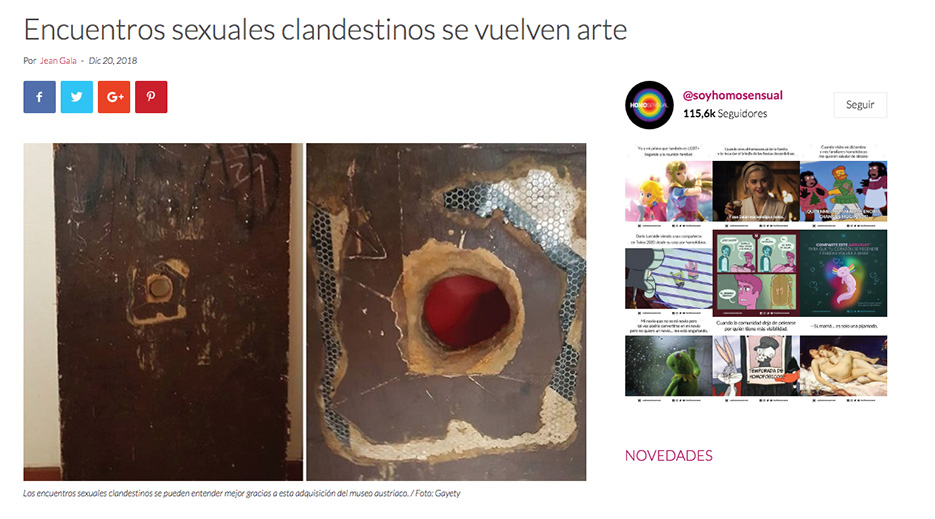
NEWS outlets across the world followed up on our story about the WA Museum acquiring a toilet door with a “glory hole” in it (“WA’s glorious history”, Voice, December 8, 2018).
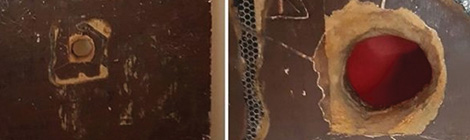
Used by gay men for anonymous sex, the door was salvaged from the demolished Gosnells train station in 1997 and donated to the Museum by Perth local Neil Buckley in December.
The West Australian/PerthNow ran the story, with shadow arts and culture minister Tony Krsticevic criticising the museum’s acquisitions committee for accepting the door.
He told them “such an object is too tacky for display” at the new museum, scheduled to reopen in 2020.
Despite the Voice facilitating the hook up between The West journo and Mr Buckley, there was no mention of where they found the story, but outlets like QNews Magazine and Out in Perth, and even Mexico-based “Soy Homosensual”, cited The Voice.
Mr Krsticevic told PerthNow the door represented the illegal act of public sex, a scourge for families trying to use public facilities.
Recently a 61-year-old man was convicted of an indecent act by sticking his penis through a glory hole in the Woodman Point toilets in Coogee.
A man and two children were in the other stall, and the offender got a 12-month intensive supervision order in June last year.
He did not observe glory hole etiquette, which is to get consent from the other person first.
But nowadays the gay glory hole culture is all but gone, replaced by hook up apps which instantly put you in touch with nearby partners.
There are a few glory holes in the back of sex shops, but people often arrange to meet there online, and heterosexual people have become involved in that scene too.
In the days following the Voice’s glory hole article, Mr Buckley says he wasn’t surprised at some of the reactions, “especially from the conservative dinosaurs still getting over losing the same-sex plebiscite”.
He says “I feel the reaction really justifies the WA Museum adding something to their collection that is socially interesting and important, that does create conversation and thought”.
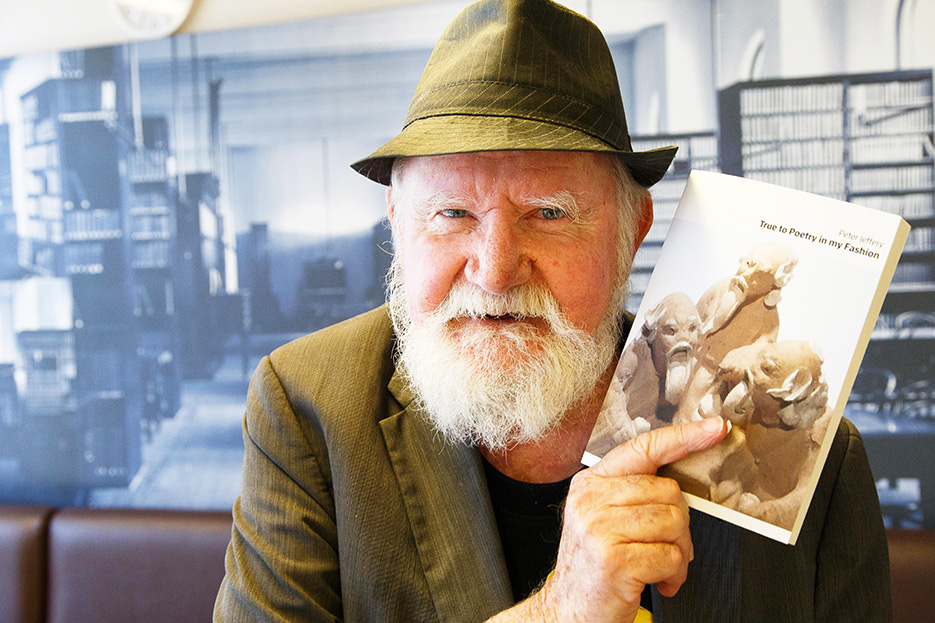
A LOCAL writing institution in himself and catalyst for a generation of young writers, PETER JEFFERY talks about what led to the formation of the new Vincent Writing Centre and how successful the venture has become. Keep your eyes out for some contributions from the centre’s first anthology in the coming weeks.
SOME people say human communication began with dance and body gestures, but I choose oral expression and memory which took full force from the binding nature of narrative.
Most impressively our first people in small tribal groups took an annual walkabout cycle of over 300 miles, framed in their six seasons and the available food at various sites by mythologising landmarks in their narratives around the evening campfires.
Each adult was the sole custodian of her or his particular story that gave an oral anchor to a particular resting place.
But with the development of writing civilisation surged forward with its great capacity for data storage that carried genealogy, law, religion, property rights, specific occupational knowledge, entertainment, and allowed records of creative imagination speculations that inspired fresh cultural initiatives.
Indeed the whole of human birth, life and death are sustained by the constant presence of writing and it is no accident that advanced cultures place the strongest educational emphasis on reading and writing.
So why a Vincent Writing Centre?
West Australia had three such centres established over many decades and housed in pepper-corn rent heritage properties – The Fellowship of Australian Writers WA Tom Collins House in Swanbourne-Cottesloe, Katherine Susanna Prichard’s home in Mundaring and Peter Cowan’s mother’s cottage in Joondalup, but as yet no permanent site in Perth’s CBD.
I approached Vincent mayor Emma Cole and the Vincent library, and applied for the seeding Vincent cultural quickstart grant, with the backing of WA Poets Inc.
Gaining the grant for a 16-week trial period, and with its emphasis on community development, we pitched its recruitment towards the general public and established writers with great success.
By the trial’s end we had many impressive outcomes such as regular member interviews, written contributions and radio drama on KCR’s In Life Art Abounds, on the Wednesday morning Arts Magazine.
We collaborated successfully with local musicians, especially the Perth Folk and Roots Society, and our Anzac Vigil, performed on April 24 at Vincent’s Heritage Anzac Cottage, involving music from the PFRS and the Vietnamese Classical Opera Society and poetry from three WAPI members, was well attended and supported by the Voice and The West.
During the winter poetry festival WAPI and some of the VWC members joined in with Lorikeet, a halfway house that marries the artwork of the disabled with the work of WAPI poets.
It is in this manner that we build up the confidence of the disadvantaged.
Following a December/January recess we’ll once again be on the community billboard, so if you are interested in becoming a writer, regardless of your skill level, email me at peter.jeffery@iinet.net.au or call 0481 462 612.
BAYSWATER chanteuse Jessie Gordon will play at the opening of WA’s hottest new jazz and blues club, the Duke of George, as part of Fringe World.
Situated in East Fremantle, the club is in the basement of the old heritage-listed Brush Factory, which has been transformed into a dimly-lit jazz venue.
Accompanied by pianist/clarinetist Adrain Galanté, Gordon will delve into the dark corners of pop music from the 1930s and 40s.
“People think of jazz as staid, their grandparents’ music, something tame,” she says.
“But jazz was one of the first pop music forms. It dealt with the same issues of today – sex, drugs…and swing.”
Gordon says that pleasant, melodic songs from the era were laden with double-meaning and innuendo.
“Some of the blues are wildly filthy and hugely entertaining.”
Just back from a four-month European tour, Gordon will perform a staggering 44 shows in 31 days at Fringe World.
“No show is the same,” she says.
In Under Paris Skies, at Ellington Jazz Club, Gordon will pay tribute to the city of love with songs by Edith Piaf and Django Reinhardt.
There’s a change of tempo in February when Gordon’s Fairly Average Dance Band plays nostalgic stompers from the 80s, 90s and naughties.
While Western Swing Hour will see the singer perform with iconic roots muso Lucky Oceans.
And if that wasn’t enough, she’ll be teaming up with Ali Bodycoat in a tribute to Judy Garland and Peggy Lee at the Ellington.
Gordon will play with Dirty Jazz at the Duke of George on January 18-20.
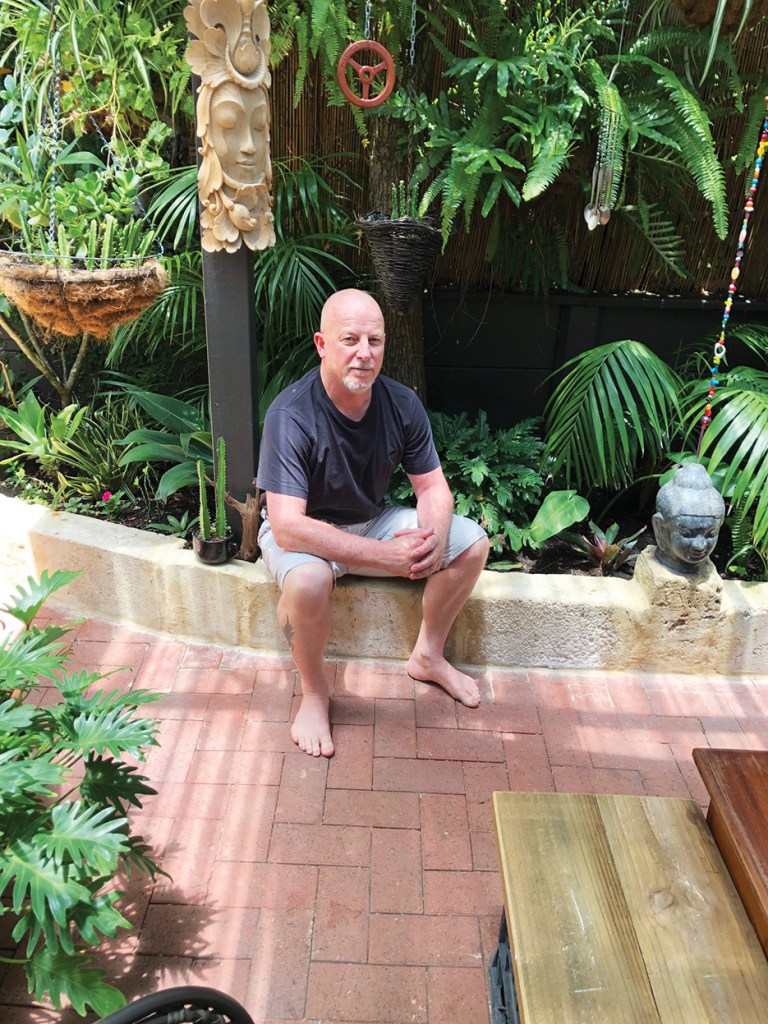
JOHN WALKER is 53 years old and lives in Inglewood. He started writing poetry 18 months ago – proving it’s never too late to start – and reckons it’s become fun, therapeutic and expressive. “I have two rescue cats, two fish tanks and about 300 plants in my three-bed villa in ‘The Avenues’ of Inglewood,” he tells us. “I’ve lived in Mt Lawley and Inglewood for 13 years now and I wouldn’t live anywhere else, I love it here, especially the Inglewood village life.”
He wrote this poem, Inglewood, the week the local Bunnings burned down. Passionate for its return at the time, John says he’d now be happy with the new proposed Woolworths development.
A Perth Voice Promotional Feature – Promote your business by calling 9430 7727:
Fresh new eatery a celebration of Thai cuisine
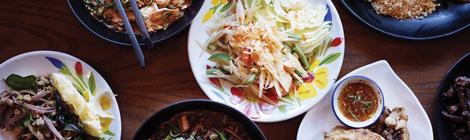
Fun, fresh, and full of flavour – new Thai eatery Louder Louder Restaurant & Bar is a welcome addition to the Northbridge dining scene. Offering an enticing blend of regional specialities and well known classics as well as a wide range of specialty drinks, Louder Louder has broad appeal. A stunning fit out provides a relaxed yet upmarket feel, with the extensive use of honeyed timbers adding warmth and style.
Thai food is one of the most famous cuisines in the world, and is especially known for its spiciness, thanks to the generous use of chillies. The origin of chilli peppers in Thai food dates back to the late 1600s, when chillies were brought to Thailand by European traders. Chilli peppers blended well with Thai ingredients, and have been adopted into Thai culinary traditions ever since.
At Louder Louder, you can choose your own level of spiciness. For those who have never experienced Thai-level spiciness before, it’s best to start mild. Immerse yourself into the world of Louder Louder, let them show you why Thais and millions of people around the world can never have enough Thai food!
Louder Louder’s wide range of tasty offerings pays homage to Thailand’s vibrant and diverse street food scene. Secret family recipes from the experienced kitchen staff will make your eating experience a treat! Louder Louder want you to feel at home, a place you’re drawn to when you’re hungry, when you want a warm, relaxed and fun atmosphere. Louder Louder’s staff, your new family, are friendly, lively and funny with a professional service attitude. Louder Louder kitchen staff have much experience cooking for the people of Perth and has trialled thousands of recipes using locally sourced ingredients.
Louder Louder’s Mussaman is a homemade recipe from the central part of Thailand. The aromas of mace, cumin, coriander seeds and dry roasted peanuts are the main characteristics represented in this dish. These ingredients serve to bring out the sweetness and intense flavour of the curry. This delectable Mussaman uses premium quality beef ribs from a local WA producer. The 2-day slow-cooking process gives the ribs an extraordinarily tender texture. This signature dish is accompanied by juicy ripe pineapple wedges and fresh coriander to give the Mussaman perfectly balanced flavour.
PLANS to rejuvenate Banks Reserve with a new plaza, boardwalk and playground is open for another round of public comment.
The proposed masterplan includes demolishing an ageing, largely unused pavilion and replacing it with an open plaza and building a boardwalk that winds through the vegetation and provides access to the river
There is also a possibility a new community facility will be built, although that will almost double the $2.4 million cost of the project.
The Whadjuck Working Group and elder Noel Nannup were consulted to make sure the plan respected the traditional owners, and it’s intended to incorporate Whadjuk Noongar history through landscaping, planting, artwork, signs and interpretation.
• Surveying Banks Reserve: Rob Jenkinson from the Perth Paddlers Kayak Club, elder Noel Nannup, Vincent mayor Emma Cole and council projects officer Wayne Grimes.
Subtle
The works are intended to be “subtle” and not overdevelop the area.
Vincent mayor Emma Cole says they’re aiming to make it more accessible and attractive while preserving the natural and cultural aspects.
The area is set to become a lot busier with up to 8600 people projected to pass through on the way to Perth new stadium, although Vincent staff reckon that figure is on the high side.
The consultation was meant to close on November 28, but they’re reopening it for a little longer because the initial forms didn’t tell people when the council would be voting on the masterplan.
Ms Cole says they want to be thorough and give the community time to have their say before it’s voted on at the February 5 council meeting.
• The works are intended to be “subtle”
Of the 35 submissions so far, nine were opposed, with people concerned that the boardwalk was “desecration of a renewed natural environment” and an “unnecessary waste of money”.
Council admin responded saying they’d be sensitive and work with the state’s conservation department to minimise the impact on plants and animals.
BANKS RESERVE was named in the early 1960s after Perth city councillor Ronald Banks, and before that it was known as the Swan Street Reserve.
But the land is significant to Nyoongar people, so Vincent council is considering renaming it. They brought in elder Len Collard to suggest some names that reflect the Noongar cultural knowledge of the area:
TWO ‘little libraries’ handcrafted by Bayswater Men’s Shed have been installed at Bert Wright Park and McGilvray Oval.
The cute libraries are free for anyone in the community who wants to take a book and swap it with one of their own.
Bayswater mayor Dan Bull said the little library concept was a great way to make books accessible in different parts of the city. “Anyone can stop by, take a book and leave another one in its place for someone else to enjoy,” he said.
• Bayswater local Janine Kelley beside the ‘little library’ in Bert Wright Park. Photo supplied
“Little libraries are like a neighbourhood book exchange. If you enjoyed a book, why not pay it forward to someone who can get as much joy from it as you have?
“It’s a way to bring the community together and encourage conversation and excitement around reading.”
A PLAN to keep Maylands Waterland open has been sunk by a council technicality.
Bayswater councillor Elli Petersen-Pik’s wanted to set aside $1.5 million of the city’s budget surplus to refurbish the ageing waterpark, but his proposal was torpedoed at a council meeting earlier this month.
At the meeting council CEO Andrew Brien said the proposal was a non-starter because it conflicted with a previous council resolution “not to proceed with any work on the Waterland facility”—referring to the July 3 decision to close the park if they couldn’t get funding within four months.
Meeting chair Cr Bull said “sorry councillor, we won’t be able to accept it on that basis.”
Cr Petersen-Pik started to say why he thought his motion didn’t contradict that decision. He got as far as “my motion, if I can explain,” before mayor Bull told him “No you can’t, because we’re under standing orders.”
The atmosphere got frosty as he tried twice more to explain it but was stopped each time: “Councillor, I’m ruling it,” Cr Bull said the final time.
Cr Petersen-Pik told colleagues he couldn’t support putting the $2 million budget surplus into the reserves.
Petition
“I cannot support it in good consciousness because I’m here on council to represent the community’s views, and I think it’s pretty clear that people have spoken.
“As all of you know almost 3000 people have signed the petition to keep the Maylands Waterland open.
“We witnessed once again an unprecedented support for this unique facility, what else do we want people to do to signal to us that this is their priority, that tearing down the Waterland for good should not be an option?” he said
The mayor ruled he was “not speaking on the motion”.
The last chance for Maylands Waterland looks to be Cr Petersen-Pik’s notice of motion on January 29: It proposes delaying a final decision on the water park until after the next state government election to give more time to secure funding.
The motion has been co-signed by fellow south ward councillor Catherine Ehrhardt, and councillors Filomena Piffaretti and Michelle Sutherland.
The council-owned playspace needs about $3million to stay open after the summer season, but earlier this month Cr Bull said “we simply can’t afford it”.
The council also has a grant application in with the local government department that they should find out about in February or March.