• Low point

    HIGHNITCH didn’t make it.

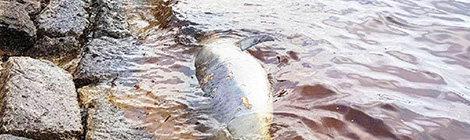
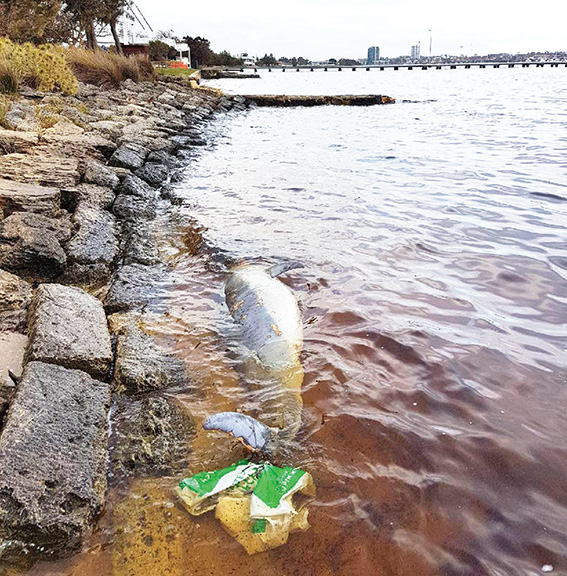
    Tangled up in fishing wire and a trailing plastic bag, the dolphin’s body was discovered on the banks of the Swan River in Como on Tuesday.

    Last week the Voice reported that the parks and wildlife service unsuccessfully tried to remove the wire from her dorsal fin (“High drama”, Voice, August 18, 2018)
    Infection

    Department officers are now looking for her calf Splash.

    They initially thought it was too young to survive, but have now estimated that Splash is about 18 months old and might have a fighting chance if it can latch on to another adult dolphin.

    Parks and wildlife reported Tuesday that “the entanglement was more severe than expected… a plastic bag was entrapped in the fishing line. The dolphin’s skin was also showing signs of an infection that may have impacted the healing of its wounds”.

    Highnitch was a long-term resident of the river: The first recorded sighting of her was in 2001, and one of her babies was discovered dead near Point Walter the following year. She was seen trying to support the dead calf and push it along for a few days.

    Highnitch had another baby in July 2011, two years after a spate of dolphin deaths when six died within four months.

    The state government ran a naming competition for the calf and the winning entry was “Highhope”; but sadly she only survived for two years.

    Highhope had been dismembered by a shark but it wasn’t clear if the shark killed her or if it ate her post-mortem.

    Infant bottlenose dolphins generally have a high mortality rate: 20 to 30 per cent will die in their first year, but the rate of first-calf deaths is much higher compared to infants born to experienced mums.

    Highnitch still has an adult daughter, Daniele, who is regularly seen in the river and was often spotted swimming with her mother.

    Highnitch’s body was taken to Murdoch university to determine the exact cause of death.

    Parks and wildlife are asking anyone who spots Splash, just over a meter long, to give the calf a wide berth but to report the time, location and direction of travel to Wildcare Helpline on 9474 9055.

    by DAVID BELL

  • Chin-chin for win

    A NEW speakeasy-cum-barbershop on Beaufort Street was approved by Vincent council this week.

    City planning staff had recommended councillors reject the application for the Blind Pig Speakeasy at 559 Beaufort Street because it didn’t include any parking bays.

    Applicants Bootlegging Wolves were looking at having to provide 27 bays to comply with the council parking policy or pay almost $100,000 cash-in-lieu.

    The cash-in-lieu is used at a later date to fund public parking or other transport options to compensate for the lack of bays.

    But Vincent deputy mayor Susan Gontaszewski tabled an alternative motion to approve the bar with a maximum of 100 patrons and $42,300 cash-in-lieu over five years, which was approved by council.

    Public health

    She said it wouldn’t need 27 bays because it’s on a high frequency bus route, there’s public carparks and a taxi rank nearby, and people are increasingly using rideshare services to get to bars.

    She noted there’s also a condition they install bike parking.

    Cr Ros Harley said it was a bit of a concern council’s policy required parking at bars: “I think there’s a fundamental issue with combining the need for carparking with an alcohol or liquor outlet….for me the linkage between them is a worrying one.”

    One big point in the bar’s favour was that it’d have a barbershop at the front, as Beaufort Street has become more of a night-time precinct over the last decade and now has fewer businesses open during the day.

    Cr Jonathan Hallett, a senior lecturer in public health by day, said; “I’m not a big fan of increasing the number of alcohol outlets in the city, particularly when we’re talking about some of the town centres and the number of small bars” but the day time activation was a plus.

    Mayor Emma Cole says: “One of the issues we have identified is where small bars wholly take over retail, it can have an impact on our day time activity in our town centres…I think this was a really clever way of keeping that daytime interaction whilst having a speakeasy concept behind the barbershop”.

    by DAVID BELL

  • Checking out bees

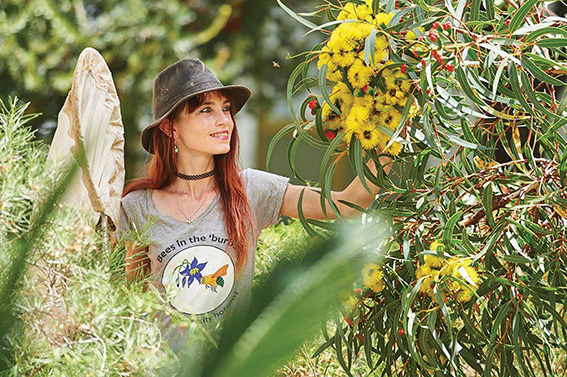
    PERTH’S burbs are full of bees and a new research project aims to find out how many species there are using DNA barcoding.

    Bee scientist Kit Prendergast has been surveying native bees in WA’s urban southwest for more than two years.

    The region is a biodiversity hotspot and she’s identified about 150 species in Perth alone.

    The majority of Australian native bees are very different from the introduced European honey bees: “Most of them are solitary and don’t make honey, they don’t live in hives or large colonies, and each female can reproduce,” Ms Prendergast says.

    But species are hard to identify by sight: “Some of them look so similar you can only tell them apart by looking at the genitalia under a microscope.

    • Bee scientist Kit Prendergast. Photos supplied

    “Then there are cryptic species – they look extremely similar but are still in fact genetically distinct,” indicating they do not interbreed.

    In some cases the male and female might look so different you’d never guess they were the same species, unless they’re seen breeding.

    DNA barcoding is a surer tool for identifying species: DNA is extracted from a bee’s leg and the DNA from a particular gene is sequenced. Each species has a unique DNA sequence which acts as a “barcode”.

    “It will really help us understand the diversity of bees we have in WA,” Ms Prendergast says.

    Her ‘Barcoding Bees for Biodiversity Assessments’ project has been awarded $5000 from the NSW-based company BeeInventive. They’re donating all of the profits from their flow pollinator house – which allows honey to drip out of hives into waiting containers with less bee disturbance than traditional harvesting – to eight not-for-profit, pollinator projects in Australia and the US.

    “With this funding I’ll able to identify species with confidence,” Ms Prendergast says. “In Australia much of our species have not been described, and so by DNA barcoding them I’ll be able to create an inventory of the biodiversity of bees in the ‘burbs.

    Remnant bushland

    “This is very important so we can identify hotspots of bee biodiversity and see what environmental factors enhance the diversity of bees. Our cities are expanding, so we really need to make sure we protect our pollinators as our human population grows.”

    Most native bees are reliant on remnant bushland: The smaller ones, some as little as 2mm long, have a much shorter flight radius than European honey bees and can’t travel far to remnant pockets of native vegetation.

    • Many native bees are tiny (as little as 2mm) but this chubber is a biggie: it’s called the “megachile monstrosa”.

    “If they’re isolated from other bushlands, they can’t just fly to another one: for most native bees their flight ranges are only 500m or less”; Ms Prendergast says.

    But suburban gardens can provide some respite if they have the right plants.

    Native bees seem to do okay co-existing with European bees provided they’re not all competing for the same few plants: “If we keep clearing keystone native plants like the marri, jarrah and native pea plants, which are especially common in the bushland remnants, then there’s not going to be enough foraging resources for all of them to go around.”

    by DAVID BELL

  • Happy herd

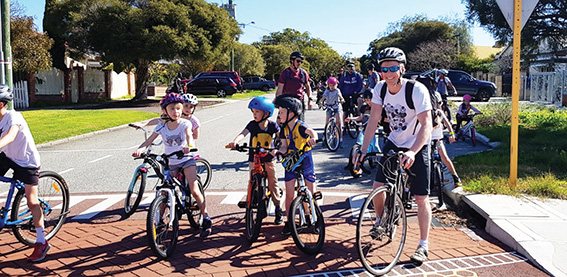
    SIXTY dads and kids rode en masse to watch the East v West Perth WAFL match at Leederville oval on Saturday August 18.

    The event was organised by the Mountain Goats, aka the Mt Hawthorn Fathering Project, which aims to make men into better dads, and has been running at Mt Hawthorn Primary for just over a year.

    “I rode with my three-year-old daughter on the back of my bike down the safe active street, listening to her giggle the whole way there,” said Mountain Goat member Dan Loden. It was great fun and great to see all the kids enjoying the novelty of riding on the road”.

    • Dads and kids ride in Leederville. Photo by Jools Spon-Smith, champion dad in the Mountain Goats

    He says the safe active street – the new name for the bike boulevard down Shakespeare Street – gave them a pretty clear run unbothered by traffic: “The cars we encountered were travelling slowly and stopped to let us pass and I felt safe the whole way.”

    The Mountain Goats have a few more dad events in the pipeline, and they’ve got a page up at facebook.com/mhmountaingoat

  • Controversial talk axed

    THE Voice was barely in letterboxes when UWA cancelled last Friday night’s talk by controversial US doctor Quentin Van Meter.

    UWA’s decision to host the talk sparked an outcry from UWA students who had planned to protest, and more than 9000 people signed the online petition “UWA, don’t host anti-LGBT hate on campus!”

    But the university announced it had pulled the plug on the talk on Friday morning, with just hours to spare.

    “We have been advised the risk surrounding the event has been elevated to a higher level, which mandates a more robust event management plan.”

    The uni’s statement said organisers could not provide that management plan, so the event was cancelled under its booking policy.

    Archaic

    “The University holds firm on the principles of freedom of expression and maintains its position that it does not wish to set a precedent for the exclusion of objectionable views from the campus,” the statement read.

    Before the cancellation the Australian Medical Association WA’s president Omar Khorshid said the statements put out by Dr Van Meter’s group “in regards to transgender topics are archaic, outdated and completely contradict most reputable research in this area.”

    “We do not want to shut down discourse on these topics, and universities are the best placed institutions to discuss conflicting ideas.

    “However, these messages are anti-health, devoid of any robust evidence and could ostracise an already vulnerable group of people.

    “The AMA (WA) urges any concerned students to make their voices heard and rebut the assertions put forward by this fringe group using peer reviewed studies that are available.”

    Instead, those students concerned about the talk neither had the satisfaction of having their uni come out in support of them, nor the chance to rebut Dr Van Meter.

    Protestors were disappointed it was cancelled based on a technicality, instead of its content.

    Lead petitioner Thomas Drake-Brockman called it the “wrong response” on the part of the uni.

    A student doctor, Drake-Brockman tried to deliver the printed petition to the vice chancellor Dawn Freshwater but was stopped by security from entering the VC’s office, and had to hand it over to the UWA executive while standing outside.

    by DAVID BELL

  • Demolition man

    RICHARD OFFEN has been busy since retiring from Heritage Perth last year.

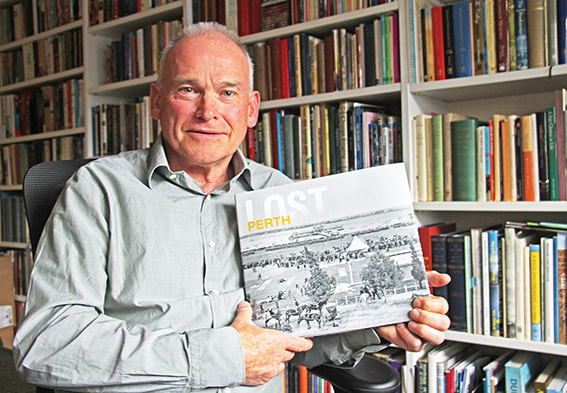
    As well as giving countless talks on WA history, the former executive director has just released his new book Lost Perth, a fond tribute to the buildings we’ve sadly lost over the past 130 years.

    It’s well documented that the demolition-friendly 1960s and 70s claimed many of Perth’s historic buildings, but Mr Offen reveals the build-demolish cycle stretches back to the 1880s.

    He notes the first cultural demolition happened way before any building was pulled down: “The displacement of the Aboriginal people, who until that time had enjoyed unbroken access to the land, is perhaps the first loss that should be acknowledged in this history”.

    The earliest significant building to be demolished was the first government house in 1887.

    Described as being designed in a “well proportioned but rather stark form of classical architecture,” the columned house was unbearably warm in summer and icy in winter.

    When WA governor Arthur Kennedy arrived in 1855 he was thoroughly unimpressed and a board of inquiry was set up that found the carpentry was so poor “that it would be much more advisable to erect a new building than to attempt to repair the present one”.

    • Richard Offen with his new book Lost Perth. Photo by Steve Grant

    The present government house was built, and the old one limped on as a private residence until its demolition in 1887. There were other early demolitions: St George’s Church was pulled down in 1891 and Alpha Cottage, the first private residence on the sandy track that was St George’s Terrace, was razed around 1896.

    “Certainly in the 60s there was the protest about the removal of the Barracks, there was the fight to save His Majesty’s Theatre and the Palace Hotel, but before that people had no compunction: If it wasn’t fit for service, you just knocked it down and built something better,” Mr Offen told the Voice.

    “They didn’t have the—and I’m loath to use the word—sentimentality about buildings that we have today. They were far more pragmatic.”

    Despite protests and our growing fondness of the past, Mr Offen notes the demolitions continue to this day: The Michelides Tobacco Factory on Roe Street was knocked down in 2014, and the Loreto Bell Tower on the corner of William and Francis Streets went just last year.

    But the history buff is sanguine about our future heritage: Through the 1990s, 2000s and 2010s, the rate of loss slows, and he’s encouraged by changing attitudes.

    He closes the foreword in Lost Perth by saying; “we now have different attitudes and the evident interest in our past and our architectural history is, to me, a great encouragement that the decisions of our future will be better informed.

    “From the demise of these iconic places we can learn; if history is for nothing else, it is for guiding our future.”

    Lost Perth is out now “in all good book shops”.

    by DAVID BELL

  • LETTERS 25.8.18

    A simple solution
    VINCENT mayor Emma Cole has provided two “facts” in defence of the city’s plan to spend ratepayers’ money on a supposed trial of lower speed limits.
    The first was the well-used and accurate research on the relationship between speed and damage on impact.
    This is typical road safety muddled thinking. Not only does it lead to a nonsensical conclusion that if we all stayed perfectly still then no damage would occur, but it diverts attention away from the essence of the problem – to avoid impacts.
    The second argument implied that ratepayers were not walking enough because they were too fearful to venture outside because traffic was too fast. I suspect the weather is a greater determinant.
    There is a simple solution to this debate: Vincent council provide a statistical summary of traffic incidents in the area of the proposed trial over the last five years.
    As all accidents involving personal injury or damage over $3000 are reportable, this data would be readily available.
    This would inform the debate and if the city provides an estimated cost of the proposed trial, ratepayers and the council might be able to make an informed decision on the matter.
    Tom Goode
    Harold Street, Mount Lawley

    Too many regulations
    IT has become very apparent local councils relish in regulating their ratepayers and I feel we are drowning in over-regulation.
    The proposed 40kmh trial in Vincent’s south was estimated to cost $150,000 for the installation of 40kmh signage.
    That was in 2016 as stated on the council’s website. What additional costs will there be two years on? How much will it cost for the monitoring by Monash University and the potential removal of signage on completion?
    I don’t accept speeding is acceptable and object to those drivers that rat run, and in some cases drive in excess of 80kmh down my small side street usually late at night.
    Over-speeding is the main issue on the whole, not the council’s ideology of dictating and enforcing a lower speed. Rat running will not change until it is addressed seriously and comprehensively; not tacked on to justify a trial.
    When did 50kmh become so evil? I’m sure many residents don’t do 50kmh to get to their homes.
    The City of Vincent should concentrate on managing their current obligations far better, before they over-reach their role within our community. Trying to be every thing to every one.
    Install timed pedestrian crossings where you know there are issues.
    Install red light cameras where you know there are issues.
    Fix council-created parking issues on footpaths due to one-way street initiatives that are enforced piecemeal.
    Enforce existing 40kmh school limits that you know are being flaunted daily. Stop excessive speeding on arterial roads.
    Stop illegal use of bus lanes in peak hour on arterial roads.
    Employ more rangers.
    The “active and connected community” is alive and well in areas like Hyde Park, the Beaufort street strip and Oxford Street.
    An additional $150,000 or more would be better spent on these areas.
    Gavin Hicks
    Bulwer Avenue, Perth

  • Plucky tribute to a rock icon

    A DAVID BOWIE ukelele tribute band may sound like a piss-take, but the Thin White Ukes take their music very seriously.

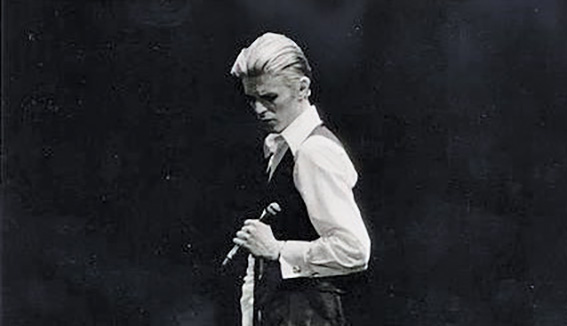
    The band’s name is a tongue-in-cheek reference to Bowie’s mid-70s persona The Thin White Duke, and like the glam rocker’s shadowy character their music is deep and layered.

    “Our music is complex,” says frontman Michael Dwyer.

    “A lot of people think it’s a joke, but we absolutely respect the man.

    • Bowie as The Thin White Duke

    Intuitive

    “Bowie was a very intuitive musician; he had a unique sense of harmony so the chords are complicated.”

    There are six instruments, three singers and three ukeleles of varying sizes on stage, making live performances tricky.

    But Dwyer says it’s a challenge the band thrives on: “We love going ‘there’s a horn line or a piano motif, who’s going to play that?’.

    “The songs aren’t straight covers, but are very identifiable.”

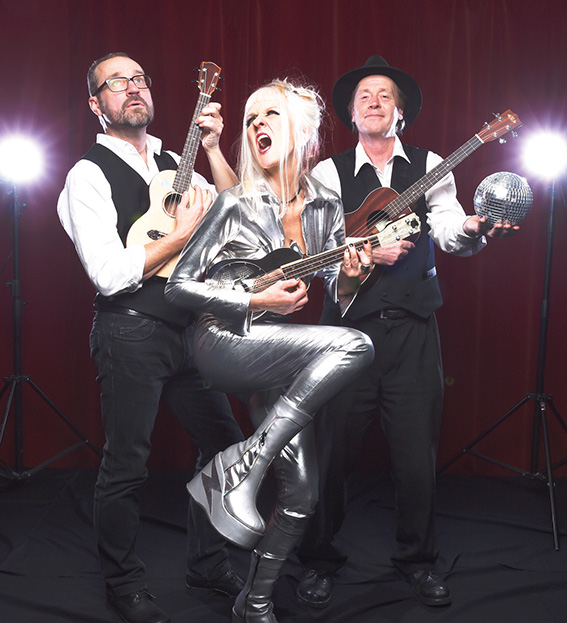
    Since the late 1990s ukelele bands have been popping up around the world, including the Melbourne Ukelele Collective, where Dwyer, Betty France and Robert Stephens first met; going on to form the Thin White Ukes.

    Just back from their first tour of China, the elegantly-attired trio is playing the Rosemount Hotel in North Perth.

    On the same bill are celebrity DJs Poor Stanley and Bloke Collins, electro-musician Kopano, and Greg and Flick Dear.

    • Michael Dwyer, Betty France and Robert Stephens are The Thin White Ukes. Photo supplied

    Ironically, Dwyer lived next door to the Rosemount when he moved to Perth from Sydney in the 1980s.

    Intent on becoming a full-time musician, he ended up as a music journalist, and was editor of X-Press magazine and wrote for Rolling Stone and the UK’s Melody Maker.

    “This will be my first gig in Perth – 30 years later than expected,” he laughs.

    You can catch the Thin White Ukes this Saturday (August 25) at the Rosemount Hotel.

    by JENNY D’ANGER

  • ASTROLOGY August 25 – September 1, 2018

    ARIES (Mar 21 – Apr 20)
    The Sun is in Virgo. This changes the mood of the moment significantly. It brings you to ground. It makes you take care of details. It stops you from going headlong into the unknown. Use this moment to consider the true nature of your journey. Forgo the fun of chasing your own tail.

    TAURUS (Apr 21 – May 20)
    As Uranus starts to bring in his cup full of surprises, so you may find yourself contemplating the nature of your hopes and dreams. Which ones are desirous phantasms – and which ones are truly dear to your heart and soul? This is a turning point of sorts. You are preparing for spring.

    GEMINI (May 21 – June 21)
    Even if nobody is picking up on all that you are giving to the world, know in your heart that you are an emperor, or empress. External opinion rarely has much to do with what is going on in reality. Opinion and wisdom are generally miles apart. Esteem yourself, separately to public opinion.

    CANCER (June 22 – July 22)
    The Moon will be full this week, in fellow water sign, Pisces. Though you are capable of navigating both practical earth and intuitive water, this week is weighted to the latter. Allow the full Moon to do her work of opening your heart to all the deep feelings that often get covered in grime and dust.

    LEO (July 23 – Aug 22)
    As the Sun moves into Virgo, so you are left to contemplate events that have recently unfolded. Mercury is still in Leo. Should you go for insight and understanding, it will be made available to you. Should you wish to narrate your tale to embellish your ego, that is your responsibility.

    VIRGO (Aug 23 – Sept 22)
    As the Sun moves into Virgo, so life pulls all your frayed and fragmented bits into alignment. This is what the Sun does. It creates order. It promotes unification. The full Moon in Pisces will challenge you almost immediately – to keep your humanism alive and stop taking hard lines.

    LIBRA (Sept 23 – Oct 23)
    Venus is in your sign, bringing you the sense of harmony and justice that keeps you sane. The full Moon in Pisces early in the week, gives you a chance to take your experience of delight a whole step deeper. Keep your eyes open for moments of intimacy that can give you a taste of bliss.

    SCORPIO (Oct 24 – Nov 21)
    The focus is shifting from saying what you have to say, to consolidating your resources and building on your resilience and strength. You have given what you needed to give. It was either accepted, rejected or ignored. Now it’s time to move on. Put your own house in working order.

    SAGITTARIUS (Nov 22 – Dec 21)
    Communication is imperative. There are things you need to say. The Virgo Sun is making you circumspect, which is fortunately tempering your tendency to shoot from the hip. Slow down. Know your audience. With compassion and awareness, you won’t shoot yourself in the foot.

    CAPRICORN (Dec 22 – Jan 19)
    There is more reflection going on than action. This is inevitable, as the three powerful planetary guests you are playing host to (Mars, Saturn and Pluto), all go retrograde. The full Moon in oceanic Pisces brings all sorts of currents of longing to the surface. The Virgo Sun will keep you steady.

    AQUARIUS (Jan 20 – Feb 18)
    The Moon sails through Aquarius, on the way to becoming as full as a boot in Pisces a day later. This particular Moon will put wind in your sails and give you the capacity to navigate currents that would normally stump you. You will find your feet in places you normally avoid treading.

    PISCES (Feb 19 – Mar 20)
    The full Moon arrives in your sign early this week. This will give you all the confidence you need, to confront practical obstacles that generally tend you make you nervous. By staying in the present moment and not letting your worries and imagination get the better of you, miracles abound.

  • Pure luxury

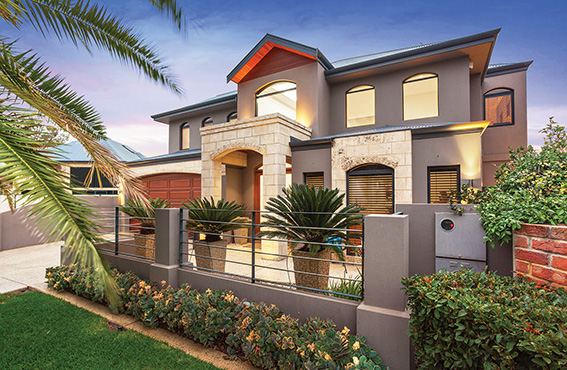
    SOARING limestone arches add a hint of Tuscany to this stunning Inglewood home.

    The builder/owner created this massive five-bedroom house for his family, and the attention to detail and finishes are second to none.

    For starters there’s a gorgeous family/dining area, and a kitchen with Caesarstone benchtops and cedar cupboards

    The kitchen ceiling follows the curve of the breakfast bar adding a stylish twist to the open plan, and there’s a spacious walk-in-pantry and built-in-wine rack.

    Swish ensuite

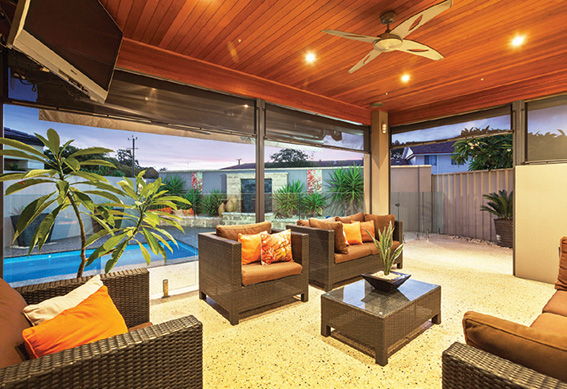
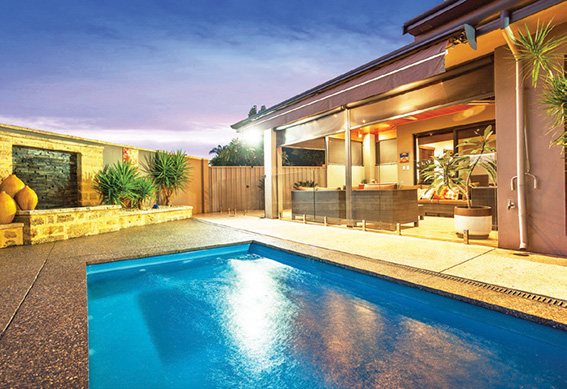
    Floor-to-ceiling glass wraps around a spacious alfresco, which is more outdoor room than patio, overlooking a low-maintenance garden and a small but deep pool.

    A ledge around the perimeter suggests that this is a spot to cool off with a glass of wine, rather than doing laps.

    Gorgeous blackbutt floors add a rich glow to the ground and second floors. On the second you’ll find four of the five bedrooms.

    The main is a huge space with an attractive recessed ceiling and a generous walk-in-robe and swish ensuite with double vanities.

    Relaxing after a hard day’s work will be a cinch in the theatre room, which has Bose speakers and a 110-inch screen.

    Sitting on 484sqm, this home in Isola Close is a rarity in Inglewood, offering a city lifestyle with plenty of luxury.

    The Mt Lawley Golf course is just around the corner and there’s a heap of parkland nearby, including Macaulay and Hamer Parks.

    by JENNY D’ANGER

    6 Isola Close, Inglewood
    $1.349m
    Natalie Hoye
    0405 812 273
    Acton Mt Lawley
    9272 2488