• Clearing a few things up

    A NEW book is set to hit Freo’s shelves telling the tale of discrimination, hardship and resilience which intertwines the experiences of Italian and Croatian immigrants and their central involvement in the WA timber industry in the 20th century. 

    Growing Roots – Italians and Croatians in the Development of the Western Australian Timber Industry addresses the “previously undocumented” experience of Mediterranean immigrants to WA. 

    Freo-based author Christina Gillgren interviewed over 50 people as part of her PhD project in the 1990s and says the Croatian and Italian experiences are an “important” and part of WA’s history and economy. 

    • On road clearing work Nyamup 1949. Photo courtesy J Grguric

    Tapestry

    “The stories complement the tapestry of settlements in Western Australia, so that is why I think it’s so relevant to the history of WA,” Ms Gillgren said.

    “It’s a story of which [the interviewees] narrate through their interviews, and a story which is part of the heritage of Western Australian settlement.

    “There were other migrant groups, but in WA the majority were these two groups.”

    The book details how employment for immigrants was limited to the goldmines, wood lines, and the timber industry.

    “When I first interviewed them, many were reluctant, because in those days they grew up in the times where there was a lot of antagonism and prejudice and exploitation,” Ms Gillgren said.

    “Despite the White Australia Policy, in 1923 the federal government had an agreement with Italy for migration and supposedly there were no restrictions, but the reality was very different.”

    • Around Busselton circa 1937. The immigrant influence is clear to see, but sometimes they would hide their heritage. Photo courtesy Joe Palandri

    This was not limited to employment opportunities – the ability for Italian and Croatian immigrants to become citizens was also restricted. 

    “It was only after the Second World War that they got Australian citizenship,” Ms Gillgren said.

    “Until then, when you became naturalised, you became a British subject.

    “Not only that, women, Australian women who married Italians or Croatians lost their citizenship, and it wasn’t until their husbands would become naturalised that they would get their citizenship back.”

    At least 1200 Italians were also interned in camps during WWII despite many being naturalised, which Ms Gillgren says was “indiscriminate”. 

    According to Ms Gillgren, many interviewees were reluctant to open up about the hardships and challenges of being first- and second-generation immigrants trying to establish themselves in Australia.

    • Timber and sleeper cutters around Busselton circa 1938-39. Photo courtesy Joe Palandri

    Opening up 

    “These were their experiences in the ‘50s and ‘60s; when we moved into opening up Australia, a lot of the laws still not had changed sufficiently, so their experience was to be quiet and not talk about what they experienced,” Ms Gillgren said. 

    “I asked them how they felt now, which was in 1990s, they were still very quiet and subdued, and they didn’t want to really talk about the really bad things that happened. 

    “But after I switched off the interview tape, a lot more personal stories came out, of the things that happened to them.”

    The book also details the “tug-of-war over the preservation and use of native forests” – a debate which Ms Gillgren says “still rages on today”.

    Ms Gillgren says it was “important” to document the often-heartbreaking experiences of immigrants from Mediterranean countries to combat intergenerational shame of coming from a non-British background. 

    “What particularly troubled me is how they felt they couldn’t speak about it and how the second generation almost didn’t want to own up to being Italian,” she said. 

    “It’s only the third or fourth generations that are starting now to embrace that heritage…it broke my heart.

    “Very few Australians know this story, and they don’t know how they changed, how Australia moved into multiculturalism.”

    Growing Roots – Italians and Croatians in the Development of the Western Australian timber industry will be launched by mayor Hannah Fitzhardinge on June 14 at 5.30pm, at the Fremantle Italian Club. 

    If you are unable to attend the launch and wish to purchase the book, email salinabooks@gmail.com 

    by KATHERINE KRAAYVANGER

  • Greek tragedy for strays

    KELLY BOULTER was so shocked at the state of stray cats and dogs on a recent holiday to Greece, she’s founded an organisation to help them.

    All funds raised for her not-for-profit Save Greek Cats and Dogs will go to animal shelters in Greece, and after seeing the state of some strays back home, Boulter’s decided to donate money to WA shelters too.

    “On a recent trip to Greece I discovered the appalling and massive scale of suffering and cruelty experienced by stray cats and dogs living on the streets,” she says.

    “These poor animals often go hungry and starve to death, have little access to water, shelter or veterinary treatment.

    “I spent a lot of my trip feeding the stray cats and dogs, and building shelters out of cardboard boxes wrapped in plastic, and putting a cushion inside.

    “After I returned from my holiday, I became aware of cat and dog rescue groups in Perth being inundated with surrendered animals, and so have decided to help these groups as well.”

    It’s estimated there are more than three million stray dogs and cats in Greece, and Boulter was taken aback at the scale of the crisis on her month-long trip across the ‘cradle of Western civilization’.

    “Emaciated cats and dogs rifled through garbage on the ground or in dumpsters; cats and dogs begged at the feet of outdoor diners, eyes pleading for scraps of food; and ravenous dogs crawled sideways through a gap underneath a mesh cage covering dumpsters to lick empty food containers,” she says.

    “While locals in certain regions do provide food for stray animals, these offerings can be sporadic, particularly during the off-peak tourist season. Sadly, this often leads to numerous animals facing starvation. 

    “From the bustling streets of Athens to the tranquil villages and enchanting island, a consistent and heart-wrenching sight is evident for those willing to see: a desperate fight for survival fought by millions of cats and dogs who are deprived of life’s basic necessities-food, water, shelter and veterinary care.”

    Boulter says the extreme temperatures in Greece make life even tougher for stray cats and dogs, and she tried to help out by making makeshift shelters.

    • Kelly Boulter

    “Scavenging cardboard boxes from businesses or dumpsters, I wrapped them in black garbage bags to protect them from the rain, and bought cushions from pet shops to put inside them,” she says,

    “The tragedy of a mother dog and her puppies abandoned in Santorini epitomised the crisis for me. Efforts to find help were met with the stark reality of overwhelmed shelters reliant on the support of few volunteers. Worse still, I discovered the disturbing practice of intentional animal abandonment and starvation.”

    Boulter will kick off her fundraising with an Aussie Bogan Bash with bogan bingo, quizzes, games and entertainment at the Fremantle Police and Community Youth Centre in Hilton. 

    There will be a prize for best-dressed bogan and a bar selling beer, wine and soft drinks, as well as food platters available to pre-order.

    The Bogan Bash is on Saturday June 22 at 6.30pm-10pm. Tix at events.humanitix.com/aussie-bogan-bash. To donate directly to Save Greek Cats and Dogs see savegreekcatsanddogs.com

  • Tasty voyage

    PAINSTAKINGLY arranged in neat, colourful rows like some boutique food army.

    The exotic jars, tins and boxes on the shelves at the Boatshed Market were perfectly dressed and would have pleased even the sadistic drill instructor in Full Metal Jacket.

    Having worked as a shelf filler during my uni years, I appreciated the attention to detail and the military precision that went into making the gourmet market in Cottesloe look so clean, tidy and pleasing on the eye.

    With a butcher, fishmonger, cheese counter, deli, caterer, florist, bakery, daily hot food and “wine loft”, the Boatshed is a sprawling deli-cum-gourmet market.

    Imagine an IGA owned by the Sultan of Brunei and you’re getting close.

    The place also has a fascinating history and the Australia II was built there when it was still a working boatshed (it went on to win the 1983 America’s Cup, ending a record 132-year winning streak held by the New York Yacht Club). 

    It would take several visits to review the whole Boatshed shebang, so the Voice focused on feeding a family of four on a modest budget.

    There was a nice range of store-made oven-ready pies including butter chicken, wagyu beef and Guiness, seasonal vegetable, beef Bourguignon, and chicken and porcini, but I couldn’t go past the Thai Green Curry pie ($28.95).

    On a cold, wet winter’s day it ticked two comforting boxes – curry and pie. Mmm, Homer Simpson would be proud.

    After putting it in the oven for 45 minutes at 170C degrees, my family was salivating at the fragrant aroma wafting through the house.

    The pie didn’t disappoint with a delicious short-cut pastry that was golden and held together nicely when sliced.

    The filling had a lovely creamy mix of carrot, potato, peas and coconut milk, with just the right amount of curry paste (not too spicy for the kids).

    It was a high-quality affair with fresh veg and a moreish sauce, while the pastry added a nice buttery texture. 

    Accompanied by some peas on the side, it was the perfect serve for a family of four. A few nights later we followed up with the Family Shepherd’s Pie ($32.95). Another pie, Homer. Mmm… This was nicely presented with a wavy swirl through the mash and a little sprig of rosemary on top.

    My favourite winter comfort food is probably shepherd’s pie, so I had high expectations.

    Thankfully it tasted as good as it looked with a delicious mix of minced beef, fresh veg and a creamy indulgent mash.

    Coming in at just under a kilo, it was a hearty serve. It was so delicious I was back for more and we polished it off.

    My wife “Special K” said it was up there with her mum’s shepherd’s pie, which is the ultimate compliment.

    “It tastes homemade with a rich, thick gravy and a lovely creamy mash,” she noted.

    “It’s a good one when you’re time-poor during the week – just bung it in the oven.

    “One of the best pies I’ve had from the shops.”

    The Boatshed also had a large Japanese counter with lots of sushi and warm dishes to take-away.

    I got the kids a tray of tuna mayo rolls ($9.95) as an after-school treat. It was some of the freshest well-prepared sushi I’ve seen outside a Japanese eatery, and Bamm-Bamm and Pebbles wolfed down the five large wheels no problem.

    Opened in 1988, The Boatshed Market is still going strong (they added the wine loft in 2017) and I can see why – it’s a high-quality store with a mind-boggling array of gourmet produce.

    You get what you pay for and some of the prices are up there, but if you shop smart there’s lots of affordable goods. Or it could be your once-a-week upmarket treat (they do some lovely dry-aged beef in the butchers).

    Boatshed Market
    40 Jarrad St, Cottesloe
    boatshedmarket.com.au

    by STEPHEN POLLOCK

  • Fresh approach

    IF a picture is worth a thousand words, surely a piece of classical music is worth a million.

    Orchestral works can move people to tears and it’s no surprise  they feature heavily in iconic films.

    Who can forget the soaring theme in E.T. the Extra-Terrestrial, the dramatic fanfare in Rocky or the moving refrain in Schindler’s List. 

    Perth’s Rebecca Guy knows all about the power of classical music.

    • Flautist Sally Walker is playing Leederville Town Hall.

    She has used it to get through difficult periods in her life when the ‘black dog’ came to visit.

    Guy wanted to help others suffering with their mental health, so in 2018 she founded the support group WA Classical Music Connect.

    “I had suffered a great deal of my own depression and in my dark times the only consistent thing that could bring me out of the fog was music,” Guy says.

    “I wanted to offer this option to others in hope that music can lift their spirits too, even in their own dark times which can bring more meaning and purpose.

    “Making social connections through music too is very special and we encourage a sense of belonging. Music is a language in itself and sometimes communicating through music can work when words don’t seem to be enough.”

    Guy’s classical gigs aren’t held in ritzy concert halls with eye-watering prices, but in places like local town halls with cheap tickets, making them more accessible.

    “Making live music affordable is a huge barrier for many and WA Classical Music Connect breaks this down by subsidising concerts and creating very low ticket prices or free tickets too,” she says. 

    Free concerts

    “Or even just going into the community and performing. We are surrounded by music all the time online, TV, radio.

    “Sometimes we just need direction and to stop and admire the beautiful music around us. At WA Classical Music Connect, we are always exploring ways to be more inclusive.” 

    Over the years the not-for-profit has held a variety of concerts with notable players including WASO flautist Andrew Nicholson and French horn player Rob Gladstones, as well as up-and-coming singers like Perth soprano Beth Redwood.

    They also hold regular concerts in the community.

    “Our tutti flute ensemble, compiling of amateur flute players around the community, comes together each week to rehearse and presents free concerts once a term at various places in Perth,” Guy says.

    But perhaps Connect’s biggest coup will be on Friday June 21 when internationally renowned flautist Sally Walker plays a special gig at Leederville Town Hall.

    A senior lecturer in flute performance at the Australian National University and guest flute teacher at the Australian National Academy of Music, Walker had toured internationally with the Berlin Philharmonic and Leipzig Gewandhaus Orchestra, and has performed as guest principal flute with a host of orchestras including the City of Birmingham Symphony Orchestra, BBC National Orchestra of Wales and Radio Philharmonie Hannover.

    She’s also been a soloist with the Dortmund Philharmonic Orchestra, Klassische Philhamronie Bonn and Accademia Filarmonica de Verona.

    Keen on performing new music, Walker has commissioned works from a range of contemporary composers including Andrew Ford, Henning Kraggerud and Coco Nelegatti.

    Guy says two of her favourite Walker performances are the Road Trip for flute and piano by Sally Whitwell, and the Night and Now flute concerto by Elena Kats-Chernin.

    “Sally Walker is a super star and is always being featured on ABC Classic FM,” Guy says.

    “She is so calm when she plays and her sound is angelic. Sally performs a great deal of music written for her by Australian women composers. She is so inspiring; I can see why.” 

    On the night Walker will be accompanied by pianist Yi-Yun Loei, a talented local who studied at UWA. Walker was also hold a special flute masterclass on Sunday June 23 at Holyrood Pavilion in West Leederville from 9am-11am.

    For concert tix go to events.humanitix.com/classical-music-club-concert-series/tickets and for more info on WA Classical Music Connect see wacmconnect.org.au.

    by STEPHEN POLLOCK

  • Space galore

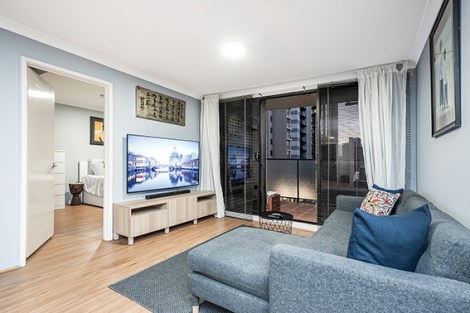
    SOME apartments can feel a bit poky, but this two-bedroom two-bathroom number in East Perth has 90sqm of living space plus a balcony. 

    It’s got plenty of style too with light wooden floorboards, high ceilings and a relaxing neutral colour scheme.

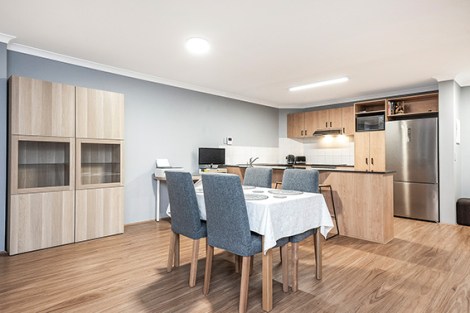
    The open plan living/dining/kitchen area takes full advantage of that living space and feels super bright and airy.

    The chic kitchen is super-sized for an apartment with speckled stone benchtops, stainless steel appliances and a white tiled splashback.

    Whipping up meals will be a joy and it’s a great hub for entertaining.

    There’s plenty of room for a large dining table and lounge setting, where you can enjoy lovely views through the glass doors leading to the balcony.

    It’s got pretty views of the modern architecture in East Perth and will be a favourite for sundowner drinks with friends come summer. 

    But during winter the Voice reckons you’ll be enjoying long soaks in the spa bath in the spacious ensuite bathroom, which also has a huge shower.

    The second bathroom has a laundry with washer/dryer, sink and two big linen storage cupboards. 

    Both bedrooms are spacious and have built-in robes.

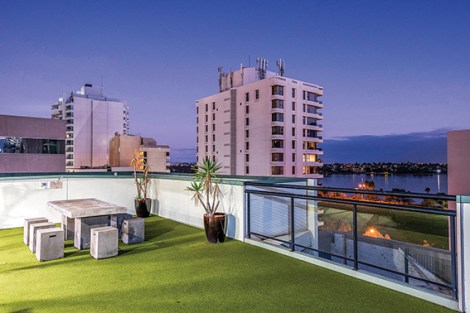
    The apartment is in a swish complex with great facilities including rooftop pool and spa, gym and residents’ lounge/meeting room with kitchen.

    Langley Park, Elizabeth Quay and Optus Stadium are all on your doorstep and the CBD and Northbridge aren’t much further away.

    The home is fully furnished so buyers can move straight in or lease the apartment out for an estimated $700-750 per week.

    Home open today (Saturday June 15) 10am-10:30am
    16/7-9 Bennett Street, East Perth
    Halyn Property 1300 149 116
    Brian Lynn 0407 932 583

  • Hotspot appeal

    KINGS PARK’S long-serving director of science has added his signature to a letter calling on prime minister Anthony Albanese to protect at least 30 per cent of the South West from further deforestation and development.

    Kingsley Dixon, who’s also a professor at Curtin University’s School of Molecular and Life Sciences, said Australia was facing a “catastrophic” decline in flora and fauna which needed to be addressed.

    “Australia is facing an extinction crisis unparalleled globally, where the abundance of plants has fallen 71 per cent, birds have been reduced by 55 per cent, and mammals have declined by 46 per cent since 2000.”

    Prioritise

    Prof Dixon, whose signature joins those of former premier Carmen Lawrence, Australian of the Year Fiona Stanley and Conservation Council of WA president Richard Yin, has urged Mr Albanese to prioritise the 48.9 million hectare Southwest Australia Ecoregion for protection.

    The Southwest Australia Ecoregion stretches from Shark Bay to the south coast and according to the World Wildlife Fund has the highest concentration of rare and endangered species in Australia. It’s one of only three acknowledged hotspots in the country.

    The signatories want the government to focus its attention on the hotspots rather than trying to fulfil its obligations towards the UN Kunming-Montreal Global Biodiversity framework with less valuable but less contentious arid areas.

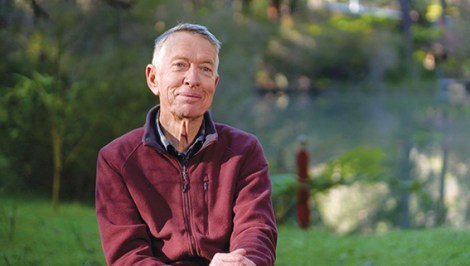
    • Professor Kingsley Dixon

    “There is no better place to start than by restoring and protecting our global biodiversity hotspots,” Prof Dixon said.

    Prof Stanley said biodiversity loss affected the health and wellbeing of current and future generations.

    “The pathways into climate change and biodiversity loss are the same and they are linked to human health,” Prof Stanley said.

    “Whist not yet too late to reverse this, we are getting dangerously close to not being able to avoid serious damage.”

    Dr Yin said 100,000 hectares of forest had been wiped out through prolonged drought and “heat-making ecological restoration” in the last six months.

    “The South-West of WA is one of Australia’s Global Biodiversity Hotspots and home to thousands of plant species found nowhere else in the world,” Dr Yin said.

    “It is also a region most vulnerable to climate change impacts.”

  • Red Rebels

    Extinction Rebellion has gone under the radar since Covid took the sting out of public protests, but their Red Rebels were out again last Friday to air their concerns about a possible localised extinction of snake-necked turtles at Bibra Lake after climate change was cited as a factor in a major fox attack that killed more than 100 of the reptiles.

    • Photo by Miles Tweedie

    It comes as Kings Park’s long-time director of science and a former premier added their signatures to a letter calling for better protection of the Southwest Biodiversity Hotspot.

    Read the full story here.

  • Lord mayor: Safe space on ice

    PERTH lord mayor Basil Zempilas has taken aim at the Cook government for failing to re-open a Safe Night Space for homeless women before winter set in.

    The centre has been something of a political football between the City and the state government after councillors voted in November to stop funding a two-year trial at the Rod Evans Community Centre on Hay Street.

    The council then pushed for Uniting WA to run a SNS from its Tranby hub on Aberdeen Street, but that was reliant on state government funding that didn’t eventuate.

    Ruah, which had managed the SNS at Rod Evans, then put forward plans for a space in James Street which were approved by the City, but with conditions which included a contentious demand that security guards be posted outside at all times.

    Challenge

    Ruah lodged a challenge against the conditions in the State Administrative Tribunal, but planning minister John Carey pulled it for a ministerial decision before handing it over to health minister Amber-Jade Sanderson to avoid any perception he had a conflict of interest.

    Mr Zempilas said that since then he’s heard crickets.

    “I counted these numbers up today,” he said at the last council meeting.

    “From the Safe Night Space closing when this council unanimously voted for it to re-open in a new location in James Street was 89 days, and within those 89 days another site was put forward which was rejected by the state,” he said. “From then until today has been 91 days.

    “The Safe Night Space has now been closed longer than when it initially closed off the back of our decision [of] November 30.

    “Winter has set in, the cold weather has come, the rain has come, and the Safe Night Space in James Street could have been opened three months ago.”

    by STEVE GRANT

  • Safety forum told of needles in gardens

    VINCENT council will ask WA health minister Amber-Jade Sanderson to look into why Vincent streets are being swamped by used needles.

    Vincent mayor Alison Xamon attended a community safety forum in Claisebrook called to address a rise in antisocial behaviour where residents reported finding hypodermic needles in their gardens.

    “One of the concerns is that a number of people are entering the Vincent area using public transport specifically to purchase and take drugs and then stay in the area,” Ms Xamon said.

    “There are real concerns about how to ensure that people who find themselves in the unfortunate cycle of drug abuse are able to be connected with services to get the support they need and residents can feel safe in their communities.

    “I am a big supporter of needle exchange regimes, as they ensure drug users are connecting with services and can be monitored and warned about dangerous batches of drugs going through the system.”

    During the forum residents complained about the number of homeless people hanging out in the Claisebrook area, but Ms Xamon said a link shouldn’t be drawn to antisocial behaviour.

    “Close examination of the types of behaviour being discussed revealed that it is clear that the issues are not from people looking for shelter, but a different category of behaviour.”

    Ms Xamon said people had been deterred from reporting every incident because it was time-consuming, but this meant police weren’t aware of the scale of the problem and hadn’t beefed up their presence.

    “It is important that residents don’t assume that this is something they can’t do anything about; reporting is critical,” she said.

    by STEVE GRANT

  • One-way plan hits dead end

    VINCENT council has put off plans to make Harold Street one-way after backlash from neighbours, with mayor Alison Xamon summing the issue up as “frustration”.

    The little slither between Beaufort and Vincent streets has long been a source of frustration for locals because of rat-runners and pick-ups from the Sacred Heart primary school making it difficult to get out of their own homes.

    In March the council deferred a decision on whether to make it one-way, but at its last meeting the council backed away from that plan to focus on a precinct-wide strategy to deal with increasing traffic and density.

    The biggest opposition came from residents of Chatsworth Road in Highgate who fear Harold’s problems will simply be pushed onto them.

    • Rat runners and parent pick-ups have been a constant source of problems for Harold Street residents, with Vincent now looking at ‘nodes’ for the end of their street.

    Lou Cotter lives on Chatsworth Road and says he’s aware of the problems Harold Street residents face.

    “Harold Street needs something to sort out their problem, but we don’t want the problem shifted to Chatsworth,” Mr Cotter said.

    He disputed a traffic assessment from Vincent staff showing Chatsworth as a fairly trouble-free thoroughfare that wouldn’t be adversely affected by the changes to Harold.

    “The evidence of accidents along Chatsworth Road is not reflected in the statistics, because there’s a log of people – including myself – who’ve had cars damaged and not reported them to anyone,” Mr Cotter said.

    “It’s pretty expensive because they’re usually hit and runs.”

    Neighbour John Meggitt agreed and said the plan ran counter to best-practice guides because it would divert traffic onto a lower-rated road.

    “It’s an ad hoc response to managing traffic in the area, which will limit future options within the precinct.

    “As a result of this we are seeing the residents of Chatsworth Road lining up against the residents of Harold Street,” he said, urging councillors instead to focus on the precinct-wide plan.

    • Vincent mayor Alison Xamon says the state government isn’t keeping pace with local councils trying to increase their density.

    That got a sympathetic hearing from councillor Jonathan Hallett who moved the amendment to focus on nodes along Beaufort Street and a broader look at why the area has so many black spots.

    “And so it’s really important that we do act across the precinct, but some areas are going to require works more quickly than others,” Cr Hallett said.

    “If we have a coherent plan that addresses the entire precinct, it allows people to see where they fit within that timeline.”

    He says Harold Street would be a priority for a node at the intersection with Beaufort, but Chatsworth would be soon after and he hoped that was something its residents could live with.

    Ms Xamon took aim at Main Roads for lagging behind the growing city, saying she supported increasing density, but it needed greater state government investment and co-operation with councils.

    “Like every other councillor I’m supportive of a precinct-wide approach, at the same time acknowledging the sheer frustration of those residents that are being affected on a daily basis,” she said.

    Council staff will now have until February to present councillors with a plan, with the aim of having it adopted in 12 months.

    by STEVE GRANT