• Tree deaths raise drought fears

    LOCALS noticing a massive die-off of trees around Voiceland have raised fears WA is in the grip of a drought and have called for more government action.

    Driving their fears is that many native trees and bushes appear to be affected far more than usual, and they fear climate change means it’s only going to get worse.

    Inglewood resident June Winsome-Smith asked the Voice to look into the deaths after noticing the “unprecedented” loss of trees around her suburb.

    Ms Winsome-Smith says she’s been on to her local councillors who’ve also noticed the city’s increasingly brown streets.

    Bayswater deputy mayor Elli Petersen-Pik said he’d put forward several motions to council encouraging measures to increase tree survival.

    • Heat, and not just low rainfall, is being blamed for the high death rate of trees across the city and even into bushland areas.

     “Everywhere I go around our city, I see dead or struggling young and mature trees,” Cr Petersen-Pik said. 

    Back in 2020 Bayswater’s tree canopy was one of the worst in the country, sitting at 10.9 per cent (“Greyswater,” Perth Voice, November 21, 2020).

    Cr Petersen-Pik said he’d suggested extra watering and increased budgets, saying the loss of trees was not only costing the environment; he says the lost trees over 2022 alone were estimated to be worth $417,000. 

    “Each tree that dies is a significant loss to the city,”

    “The City spent $233,815 on tree removals in 2022/23.” 

    Cr Petersen-Pik said he’s not aware that the city’s tree care regime has changed in response to climate change; “I’m still advocating for us to look into improving it.”

    WA Parks ambassador Simon Cherriman said the issue goes beyond just Bayswater’s borders.

    “In the Perth Hills I’m seeing very mature trees that have obviously weathered lots of dry conditions over their lifetime of several hundred years, just deciding they’re going to give up,” Mr Cherriman said. 

    Weathered

    He says research suggests heat is responsible, not just the lack of rainwater.

    “Lots of trees and shrubs are all dying at the same time, which seems to be after these prolonged days of 40 degree heat with no respite,” he told the Voice.

    Heat absorbent surfaces such as bitumen, concrete and even natural rock outcrops in the bush are capable of maintaining heat for long periods and have also contributed to mass tree and shrub death.

    But Mr Cherriman said the community should not to lose hope, urging gardeners to choose “the right locally native plants which are adapted to these long hot summer periods”.

    He suggested Australian species such as Eucalypts with a heat-reflecting wax coat on their leaves.

    “They’re more likely to have some kind of drought resistance,” Mr Cherriman said. 

    According to a drought statement from the Australian Bureau of Meteorology in April, for the 11-month period since last May, rainfall hit record lows across much of WA’s central west and southwest districts, with predictions it will remain below average through the traditionally wetter months.

    Rainfall levels are similar to some of the driest periods across the last century and have parallels with the brutal Federation Drought, labelled by the bureau “one of Australia’s worst droughts”.

     The seven-year dry peaked in 1902 and saw loss of livestock, land degradation, and hammered wheat crops.

    “The national wheat crop was all but lost, with close to the lowest yields of the century,” the bureau noted in a drought fact Sheed.

    The BoM said declaring a drought was a matter for state governments. 

    However, Department of Primary Industries and Regional Development media adviser Megan Broad said in lieu of declaring a drought, the government was taking a “hands-up” approach to long periods of record-low rainfall, including “significant investment in initiatives, projects and scientific research that builds climate resilience on farms and in regional communities”. 

    Ms Broad said the previous practice of declaring a drought had not existed in Australia for more than 20 years. 

    A Perth and Peel Urban Greening Strategy recognising the importance of enhancing tree canopy, was introduced by the Cook government on February 9 this year. The strategy recommends a tree canopy measurement program, education campaigns and identifying under-used state government land that could be greened up.

    by OLIVIA MINTY

  • Class clown’s a winner

    PERTH student Shayla Keane has won the Melbourne International Comedy Festival’s 28th Class Clowns grand final.

    Class Clowns is one of the festival’s developmental programs, helping hundreds of young people develop their comedy potential with access to workshops and audiences, and cultivating the next generation of funny people and those with unique voices.

    The Santa Maria College student says the inspiration for her comedy comes from travelling the world with her family and finding humour in everyday situations within different cultures.

    • Shayla Keane at the Melbourne International Comedy Festival.

    “Culture is a big part of my life,” Shayle told the Herald.

    She first entered the contest in 2022 and was a runner-up in the grand final, and says this year she was more prepared.

    “In 2022 I had just started out in comedy.

    “I was really nervous and had little confidence in myself as a comedian.

    “In 2024 I had a lot more confidence, was less nervous and more excited to be on stage.”

    Shayla was one of 11 finalists from around the country and walked away with a first prize of $1500, a $1000 workshop package for Santa Maria, as well as the Class Clowns trophy.

    Shayla’s comedy routine occasionally references her “brown skin” as she has Indian/South African parents and she gently mocks some of the compliments from well-meaning peers, but says overall race has been “a positive influence on my life”.

    “I don’t think I will be focusing on my race as part of my future comedy routines,” she said.

    Shayla’s keen to grow a career as a stand-up comedian, but balances that with a desire to obtain a degree at university once she’s finished high school.

    “I enjoy making people laugh and forget about their problems for a while.”

    She plans on doing some open mic gigs around Perth in the near future but for the long term is considering a move to Melbourne to try out its comedy scene;, which is incredibly competitive but can help launch a career.

    Class Clown’s former alumni includes Aaron Chen (Fisk, 2017 best newcomer award and 2019 director’s choice award at the Festival).

    by MALAKAI LELIEVELD

  • Old school twittering brings the generations

    AGE was no barrier for Mt Lawley’s Esther Finkelstein last weekend, the 87 year old taking out one of four main sessions at the WA Mahjong Festival.

    The one-day competition attracted 88 players from around WA, including a contingent of 13 from Bunbury and one intrepid Queenslander.

    Ms Finkelstein said she was hooked on Mahjong because it was challenging, exercised her brain and was a great social outing.

    “The first time I went to Hong Kong many, many years ago I saw these people playing in the garden and I was fascinated,” Ms Finkelstein said.

    “I tried to play it when I got back, but there was always something coming up, but 10 years ago I went to South Perth and got hooked.”

    •Mahjong festival winner Cindy Livshitz. Photo by Geoff Graham

    Ms Finkelstein says there’s definitely an element of luck to the game, which she felt was on her side during the festival.

    “I was just lucky; one hand I picked up the last tile, not from the discard pile, but from the wall and got a bouquet of flowers, which helped,” she said.

    Mahjong developed in China during the 1800s and was a favourite for the men who’d enjoy a flutter. Its name means “sparrow” and refers to the twittering sound the ceramic tiles make when they are shuffled on the table.

    Ms Finkelstein said another great aspect of the game was its appeal to all ages, having taught her granddaughter while she was visiting from over east – and she reckons the young’uns are pretty adept at learning and retaining the rules.

    The festival, which is in its second year, had three generations participating this year from the same family; Scarlett James, her mother Rikki and grandmother Lyn Corrigan.

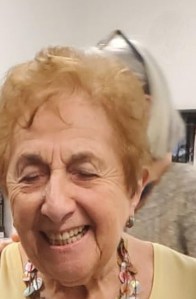
    • Esther Finkelstein

    “Our family mahjong tradition is a lively affair,” Rikki said.

    “My mum Lyn introduced me and my children, Scarlett and Levi, to the game during our weekly visits.

    “Recently I’ve been spreading the joy by teaching friends in Floreat and Wembley, all thanks to my passion for the game.

    “Even my husband Nathan joined in and managed to win his first two games, much to everyone’s sore disappointment.”

    Festival co-organiser Ivy Branson said they set it up because WA kept missing out on hosting the Australasian Mahjong Festival, which has graced various towns over east since it was launched in 1994, but he never made it across the Nullabor.

    “Mahjong is undeniably a beloved pastime, readily accessible to enthusiasts throughout Perth,” Ms Branson says.

    “I have personally identified a wealth of opportunities, with no less than 65 public venues in the metro area, including public libraries and community centres spanning from Yanchep to Kalamunda to Rockingham, generously hosting free weekly mahjong sessions. 

    “It’s truly heartening to see this tradition thriving within our community.

    “Each week over a thousand players in Perth sit down to play mahjong, fostering connections and enjoyment across generations.”

    The overall winner of the festival was Cindy Livshitz who scored 52 points, five ahead of her nearest rival Yuk Ying Michelle Ng.

    by STEVE GRANT

  • Earned their stripes

    LIONS and Tigers on Bannister Street in Freo is not your average Indian restaurant.

    If you rock up expecting beef vindaloo and garlic naan you’re in for a surprise. A great surprise!

    My handsome co-reviewer and I rolled on in one Saturday for lunch, to be greeted by the loveliest server ever. She took us through the menu and how it works and made sure we totally understood things.

    There’s the Chef’s Choice menu for those amongst us who are undecided – $68 per head gets you an amazing selection of dishes that can be tailored to suit your needs (if you don’t do seafood for example).

    We decided to choose a few dishes, which are share plates, so everyone could have a bit.

    Curry leaf “nemesis” papadums ($24). Now, these are not your usual papadums. They were bubbly. 

    Steve #1: the sourdough Naan (Steve is the name of the sourdough starter) with whipped ghee, black cardamom and jaggery ($11).

    I can officially say I am addicted to whipped ghee, and proceeded to put it on everything. Apparently jaggery is a type of sugar. I am probably addicted to that too.

    Leek and Onion Bahjis with roast chilli aioli ($12). A traditional Indian treat sneaking in here with the onion bahjis. So very good.

    Wagyu Beef Skewers with fermented chilli, chana hummus and mint chutney ($24). Simply the most divine wagyu beef ever. Only two skewers, which left room for more deliciousness. The fermented chilli was surprisingly mild; good if you’re not a lover of the hot stuff.

    Chicken Supreme, Sandalwood and Pistachio Korma, Rosemary Chicken Skin Crumble ($39). This one was fascinating. Apparently the skin is removed, fancied up, then put back. The meal is simply amazing, and we were stoked when our server was able to answer all our stupid questions about sandalwood in a korma.

    Crushed Fried Potatoes, kasundi and curry leaf aioli ($14). Honestly I was getting very full by this point and the potatoes ended up coming home with me. I may or may not have eaten them for breakfast the next day and they were absolutely top notch. Kasundi is like a relish. There. Saved you a Google.

    We were vaguely surprised that the dishes didn’t come out in perhaps the order we expected. 

    For example, the papadums and crushed fried potatoes came out very late in the meal when we were expecting them earlier. This did nothing to change the abject marvellousness of the meal.

    As a wheelchair user, Lions and Tigers is truly a delight. The front entrance is flat (a rarity) and the disabled toilet is easily accessible at the back of the restaurant.

    If it was busy you may have to ask the odd person to move.

    I have spent my wheelchair career in search of the perfect bathroom and this may just be it.

    No baby change table competing for room so plenty of space to manoeuvre the chariot. Sink and mirror at wheelchair height (you’d be surprised how many disabled bathrooms have standing-height mirrors, usually allowing for a lovely view of my upper forehead) and paper towels to wipe your hands.

    Those blowy things are crap, and wheeling with wet hands is a challenge. So it’s a win, win, win.

    Overall a 10 out of 10 experience. Amazing food, wonderful service and a brilliant accessible venue.

    Lions and Tigers
    8 Bannister Street, Fremantle
    lionsandtigers.com.au

    by BELINDA GREEN

  • Barracking knocks issue on the head

    SPORTS-related concussion injuries are increasingly gaining attention in Australia with almost 3,100 hospitalisations in 2020–21, according to the Australian Institute of Health and Welfare.

    Now Perth’s Black Swan Theatre Company is shedding light on the issue through its state-wide tour of the award-winning play Barracking for the Umpire, with a Perth pre-tour, encore season.

    Set in Donnybrook (the hometown of playwright Andrea Gibbs), the play delves into the lives of a football-loving family, highlighting the deep impact of the sport on their community and family bonds. 

    As Delveen (Pippa Grandison), the wife of retired footy legend Doug Williams (Steve Le Marquand), says early in the play: “Footy’s a religion. Having it described as ‘just sport’ doesn’t do it justice … It’s Australia’s beautiful game.”

    However, Delveen has to try to manage the cumulative effects of Doug’s history of hard knocks. 

    Building on this, the play explores not just football’s cultural significance but raises questions about identity, sexuality, and gender bias in sports, particularly in the treatment of female athletes and journalists.

    Along the way there are plenty of laughs. 

    As playwright Andrea Gibbs explained, her intention is that “the audience falls in love with and is involved with the family.”

    This balances the tragedy of watching Doug lose his relationship with what he values most, his connection with his loved ones.

    The central plot device is simple: Donnybrook Football Club, The Mighty Dons, want to honour Doug with a Lifetime Achievement award and that draws his children home. 

    So, Ben (Ian Wilkes), a rising AFL star, and Mena (Ebony McGuire), an ambitious sports journalist, travel back home to celebrate. 

    They reunite with their parents and eldest sister Charaine (Jo Morris), who lives in town and has just broken up with Tom (Michael Abercromby), who runs the local footy club.

    The audience easily relates to this family as they gather for their patriarch’s big day. 

    But subtly difficult truths emerge, and not just about Doug’s mental fragility.

    Should gay players come under pressure to come out publicly about their sexuality? 

    Are women sports journalists condemned by sexism to second-rate careers? 

    Do women in relationships with hero players have to surrender their own identities?

    Gibbs has seen the realities of these issues in her own life. 

    In her ABC career she witnessed female sports reporters limited to reporting from the sideline or interviewing in the change rooms, never in the commentary box.

    The play also addresses the challenges of toxic masculinity and its toll on families, particularly when dealing with the mental and physical decline of a beloved player. 

    Actor Joel Jackson is terrifying in the role of a ghostly, psychopathic coach haunting Doug, taunting him to relive the tough games and by turns smarmily comforting him and then mercilessly berating him.

    Jackson’s performance is just one component of a superb ensemble cast working its way from a gentle, humorous look at a family and its secrets to a confronting portrayal of the cost of sporting heroism.

    Barracking for the Umpire is Andrea Gibbs’ first play and won the Performing Arts WA (PAWA) Award for Outstanding New Work after its 2022 season. 

    She is also known for her work as an ABC Weekends presenter and Barefaced Stories.

    Gibbs was invited to write the play by the Black Swan Theatre Company under its Funny Girl Initiative writing program. 

    The Company noticed a dearth of comedies and other plays written by women in its repertoire and established the program to plug the gap.

    Gibbs is particularly interested in seeing regional reactions to the play. 

    She believes country audiences will see their communities mirrored. 

    She is looking forward to heartfelt conversations in the foyer after each performance.

    Barracking for the Umpire is at the Subiaco Arts Centre from April 23 to May 5, followed by an extensive regional tour from Albany to Broome.

    by BARRY HEALY

  • Attadale whopper

    A GORGEOUS family home on a giant 1214sm block near the river in Attadale ?

    Tell ‘im, he’s dreaming.

    Well he’s not, because this four bedroom two bathroom property is up for sale and will attract a lot of buyers.

    There’s plenty of space to put in the dream pool and tennis court, or you could subdivide the land into three lots and sell two of them.

    The development options are vast and it’s not often this kind of opportunity comes up in Attadale, especially on Dandenong Road, which is only a few streets back from the river.

    So what’s the actual house like?

    Well, it’s a very pleasant two-storey family abode with plenty of room and modern facilities.

    The open-plan lounge/dining/kitchen area is massive with light wooden floors, a neutral colour scheme and lovely views of the lush back garden.

    Slightly recessed, the chic kitchen has a big island bench/breakfast bar, stylish floor tiles and a nice range of colours and textures on the cupboards and drawers.

    It’s a very relaxing space with top-end stainless steel appliances, loads of benchspace and a double sink (whipping up meals will be a cinch!)

    The home has a great layout with a theatre room, study and laundry on the ground floor, and the four bedrooms on the first floor. The main bedroom is a cracker with a ginormous walk-in robe and plush ensuite with double vanities and corner spa-bath.

    There’s even a spacious balcony, where you can relax with drinks at sunset.

    Two of the other bedrooms have walk-in robes with the fourth featuring built-in robes.

    This 2009 north-facing home includes reverse-cycle air con, reticulated easy-care gardens with bore, gas hot water storage system, and a double car garage.

    It’s situated close to Santa Maria College, Attadale Primary School, Point Walter Reserve, Point Walter Golf Course and it’s easy walking distance to the Swan River.

    This is a great family home with unique development opportunities.

    Offers in the high $2 millions
    7 Dandenong Road, Attadale
    Ross & Galloway 9333 5999
    Sharon De Pledge
    0408 911 261

  • Baysie the latest to ditch Australia Day

    THE City of Bayswater has become the latest council moved to ditch its annual Australia Day citizenship ceremony.

    During an hour-long debate last Wednesday, Bayswater councillors discussed the result of consultation with its Reconciliation Advisory Committee and a survey of 431 Bayswater residents conducted over June and July 2023. 

    Councillor Sally Palmer said the advisory committee’s advice to council was to move the ceremony and associated events to three days after January 26.

    The RAC also wanted more Aboriginal culture such as traditional food and a welcome to country at the ceremony, saying it would be a “positive experience for new citizens and an integrated approach”. 

    “Having it three days after… it’s not a devastation,” Cr Palmer said, encouraging extra weight to be given to the RAC’s advice.

    The community survey highlighted the division in the wider Australian community about celebrating Australia Day; 47 per cent voted for Baysater to “retain the status quo” and 44 per cent wanted the ceremony moved. Another 9 per cent indicated they would be satisfied with either option.

    Councillor Steven Ostaszewskyj said he wouldn’t be supporting a date change.

    “I acknowledge the hurt that is out in the community in regard to the choice of Australia Day… but I also do acknowledge that many people from all over the world want to have their citizenship ceremony on Australia Day.”

    Cr Ostaszewskyj said there were other citizenship ceremonies throughout the year that people could choose if they didn’t like Australia Day.

    Dismantled

    More than 80 councils have voted to separate their Australia Day citizenship ceremony from January 26, including the City of Fremantle. 

    That came after the Albanese government dismantled former prime minister Scott Morrison’s 2019 amendment to the ‘Australian Citizenships Ceremonies Code’ which legally required councils to hold a ceremony on January 26, with the threat of losing that power if they disobeyed.

    Staff had recommended retaining January 26 for the ceremony and celebration, saying the survey results didn’t justify a move.

    Mayor Filomena Piffaretti said this was also her view, but when councillors voted it down, she suggested a move to any time in the three days after January 26.

    Deputy mayor Elli Petersen-Pik suggested a six-day window either side of January 26, but the RAC had concerns the time leading up to Australia Day was also distressing for First Nations people. He was the only supporter of this option, and despite voting against a change herself, the mayor’s option was voted in 6 – 4.

    by OLIVIA MINTY

  • Artageddon over as arts funds flow

    ARTAGEDDON is officially over.

    The Albanese Labor government this week announced the first Perth recipients of funding aimed at shoring up small-to-medium arts organisations which were hammered under the former Abbott government.

    Back in 2015 former arts minister George Brandis blindsided arts organisations when he stripped $105 million from the Australia Council to set up his own “excellence” fund; many had spent months preparing funding applications which suddenly had to be scrapped (“Artageddon,” Voice, June 19, 2015).

    Part of the Brandis overhaul was ending recurrent funding, with many in the arts community, such as former PICA director Amy Barrett-Lennard, fearing it would make forward planning difficult and job cuts inevitable. Ms Barrett-Lennard had been seeking a six-year funding agreement to expand PICA’s coverage of all art forms.

    • Back in 2017 PICA was contemplating a big expansion, until an Abbott government cut to arts funding pulled  some $300,000 from the budget.

    When Mitch Fifield took over the arts portfolio in the Turnbull government he rebranded the fund Catalyst and gave the Australia Council back $32m, but Labor made it an election promise to scrap it completely.

    Perth federal Labor MP Patrick Gorman told the Voice this week’s $5m for local arts organisations was proof they were living up to that commitment.

    Saying it had been an important issue for him personally, Mr Gorman said the new model was “fairer and aimed at more small and middle-sized arts organisations” and would see a bigger share making its way across the Nullabor.

    Centre for Stories

    The Northbridge-based Centre for Stories received $960,000 over four years, which Mr Gorman said would enhance Australia’s engagement with the Indian Ocean region and beyond.

    “It is our premier incubator for literature,” he said.

    “They are ensuring stories of the Indian Ocean are captured, which Western Australians can do better than their colleagues over east.

    “The Centre for Stories describes their mission statement as: ‘To create a vibrant, inclusive arts and cultural organisation that uses storytelling to inspire cohesion and understanding through rich and diverse programs’,” he said.

    “In pursuing this goal, they enrich our local and national arts sectors.

    “This funding will give them the security and stability to do so in the future.

    “Funding the arts in Western Australia celebrates our unique perspective and the stories that only Western Australians can tell.”

    Also receiving funding in the current four-year round was STRUT Dance ($1m), PVI Collective ($1.32m), Barking Gecko theatre ($1.06m) and the Performing Arts Centre Society ($800,000).

    The funds will come through Creative Australia, which replaces the Australia Council after its launch in August last year.

    Creativity

    Federal arts minister Tony Burke said at the launch it was a “body that can be dedicated simply to Australian stories; simply to Australian creativity in all its forms”.

    Mr Burke said there had been a long discussion about making sure people outside big cities had more access to arts.

    “It’s important we’re going out to the suburbs, we’re going out to the regions, but not simply to perform other people’s stories, but to create together.

    “If we get this right we will see each other – no matter who we are – we will get to see ourselves on stage, hear ourselves in song, read our own stories that reflect our homes, in poetry, in narrative, on the screen,” Mr Burke told the crowd.

    by STEVE GRANT

  • Music to their ears

    AN enrolment boom in Edith Cowan University’s music teaching courses could help get singing and playing back in Perth classrooms, and even go some way to reversing declining academic outcomes.

    A doubling of enrolments in ECU’s postgraduate courses has been driven by a one-year graduate diploma in teaching aimed at aspiring school teachers who’ve completed a three-year degree in another field

    ECU music education coordinator Jason Goopy said it showed musicians who’d been through the WA Academy of Performing Arts gaining a bachelor of music were busting to get into classrooms.

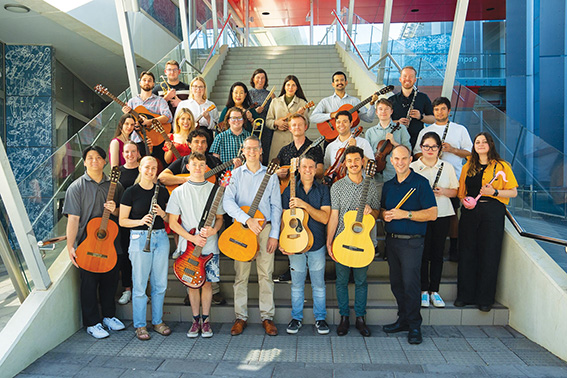
    • ECU music education coordinator Jason Goopy with students.

    “This year the music education major and instrumental music education minor were the largest single subject areas in ECU’s postgraduate teacher education courses,” Mr Goopy said.

    “Our students range from graduates who have recently completed their bachelor degrees, to highly experienced instrumental tutors in schools now looking to gain a formal teaching qualification.”

    The uni’s executive dean of education Caroline Mansfield said it was good news for schools.

    “As the largest provider of graduates to public schools in WA, we are dedicated to ensuring that future teachers experience quality initial teacher education, developing knowledge and skills to support success in the future.”

    The boom in enrolments follows a report from June last year that found the teachers are getting less than half the music education in their degrees than they were 15 years ago.

    The Fading Notes report by Rachel Hocking was the latest as part of a partnership between Alberts/The Tony Foundation and award-winning educator Anita Collins.

    Worsening

    “There are insufficient numbers of trained and/or upskilled teachers of music in all education systems, and this situation is predicted to worsen in the future,” the report found.

    It said music was worth just 1 per cent of a primary education degree.

    • Magdela Lisek has enrolled in the graduate diploma and is keen to get music into classrooms.

    “The inadequate provision of music education in primary teaching degrees, along with indifferent attitudes towards music teaching, is having a detrimental impact on the quality and quantity of music education in Australian schools, ultimately failing school students,” the report found.

    And that can have implications for academic results, with a 2019 study by the University of British Columbia finding that music students were scoring “significantly better” exam results than their tone-deaf peers in other subjects.

    Study author Peter Gouzouasis noted that North American schools mirrored those in Australia by under-funding music education compared to other areas.

    “It is believed that students who spend school time in music classes, rather than in further developing their skills in math, science and English classes, will underperform in those disciplines,” Dr Gouzouasis said.

    “Our research suggests that, in fact, the more they study music, the better they do in those subjects.”

    Magdela Lisek is a new student in the graduate diploma in teaching course and is majoring in music education, but she is no stranger to ECU.

    “I completed my bachelor of music (classical performance) and graduate diploma (opera) at the Western Australian Academy of Performing Arts and know the strong reputation of ECU’s School of Education,” Ms Lisek said.

    She currently works as a school music tutor and looks forward to gaining her formal teaching qualification.

    “I want to share my passion for the art form and make music and musical knowledge more accessible,” she said.

    by STEVE GRANT

  • News ban to hurt small publishers

    SMALLER local publishers will be disproportionately affected by Meta’s removal of it news tab from Facebook and Instagram says a lobby group.

    Facebook’s news tab disappeared from Australian accounts on Tuesday after Meta thumbed its nose at the federal government’s news media bargaining code, introduced in 2021 to make digital companies pay for news content they share and benefit from through advertising, but don’t contribute to.

    Some smaller publishers received funding from Meta through the Walkley Foundation, but most were excluded because of a high revenue threshold.

    The Local and Independent News Association says these publishers would lose out through the loss of website traffic driven by Meta.

    LINA executive director Claire Stuchbery said government support would be needed to counter the losses and help newsrooms transition to new income streams.

    “These local and independent media publishers play a critical role within their communities, combatting misinformation and disinformation, supporting community health and safety (including emergency preparedness and resilience), promoting workforce development and fostering social cohesion and civic engagement.

    “They are also key to platforming diverse voices and experiences, as these tend to be the most affected by the closure of larger newsrooms and the rising syndication of content.”

    Many small newsrooms formed in response to misinformation about Covid and to fill news deserts with locally relevant updates

    during the pandemic, and in the context of rising natural disasters and the advancement of generative AI technology.

    Ms Stuchberry said while big news organisations had brand awareness, these hyperlocal newsrooms tended to rely on Facebook and Instagram to find an audience.

    “Not only would this affect the viability of existing news publishers, but the ability of new organisations and publishers to start-up and build their audience would be hampered in the future, further consolidating what is already one of the most concentrated m0edia markets in the world,” Ms Stuchbery said.

    by STEVE GRANT