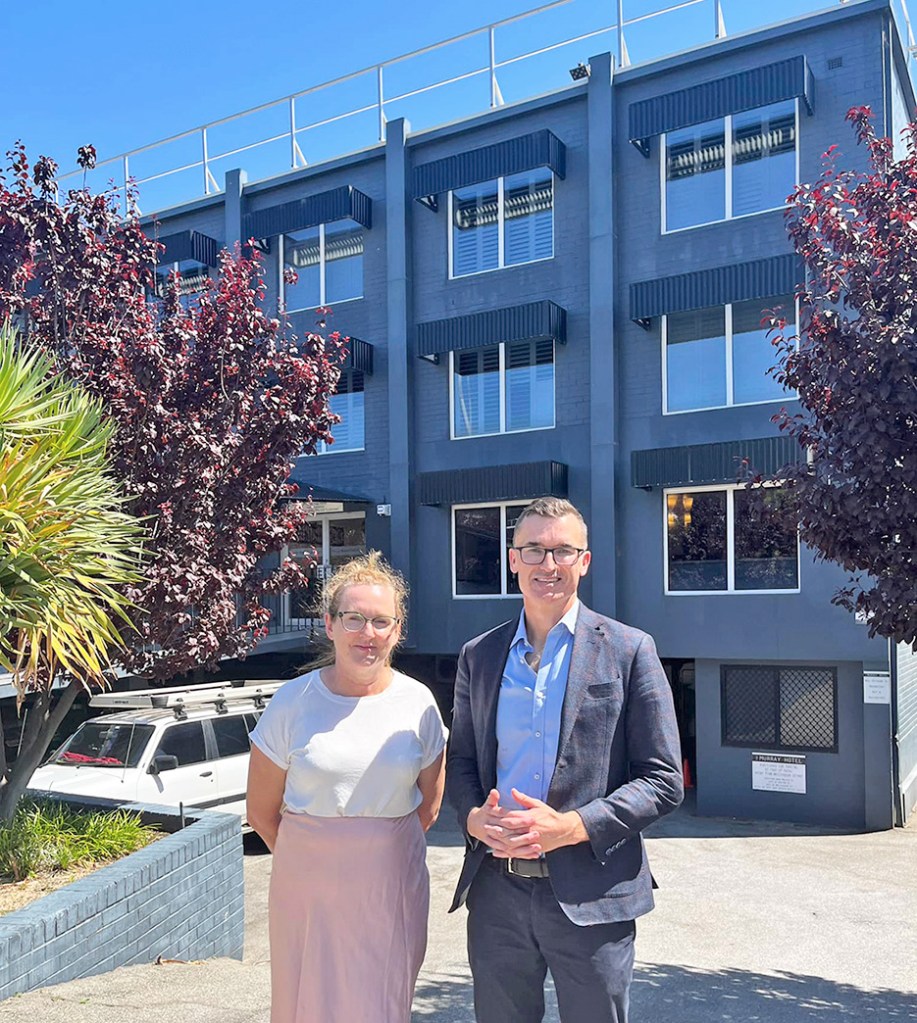
Nedlands MP Katrina Stratton with Perth MP John Carey announcing the purchase of the Murray Hotel.
WEST PERTH’S ageingbut tidy Murray Hotel has been bought by the state government to house around 30 homeless people.
The purchase comes as the timeframe for completing the government’s flagship “Common Ground” long-term supported-living facility in East Perth has been pushed back another year to 2025 and other homeless facilities remain at high levels of occupancy.
Labor’s state housing minister John Carey said in his announcement of the Murray Hotel purchase: “As a housing-first supported accommodation service, this accommodation option will provide intensive wrap-around supports to help people who are sleeping rough access appropriate, longer-term housing.”
The government spent $5.15 million on the building which still recently operated as a family-run hotel, and is now seeking a tenderer to run the support services there.
It’ll mostly cater for single people but have a few rooms for couples.
As of December the Boorloo Bidee Mia, the 100-person facility set up in the old YHA hostel at 300 Wellington Street, was at 92 per cent occupancy.
The government also opened Koort Boodja in mid-2021, another interim measure with a 30-person capacity.
As of last summer’s count there were about 190 people sleeping on Perth’s streets.
When the government’s silver bullet Common Ground was first announced in December 2019 and construction was meant to start in the 2021/22 financial year.
An attempt to find a tenderer to build it fell flat mid-2022 when no satisfactory contractor was found, leading to a second search being launched in late 2022.
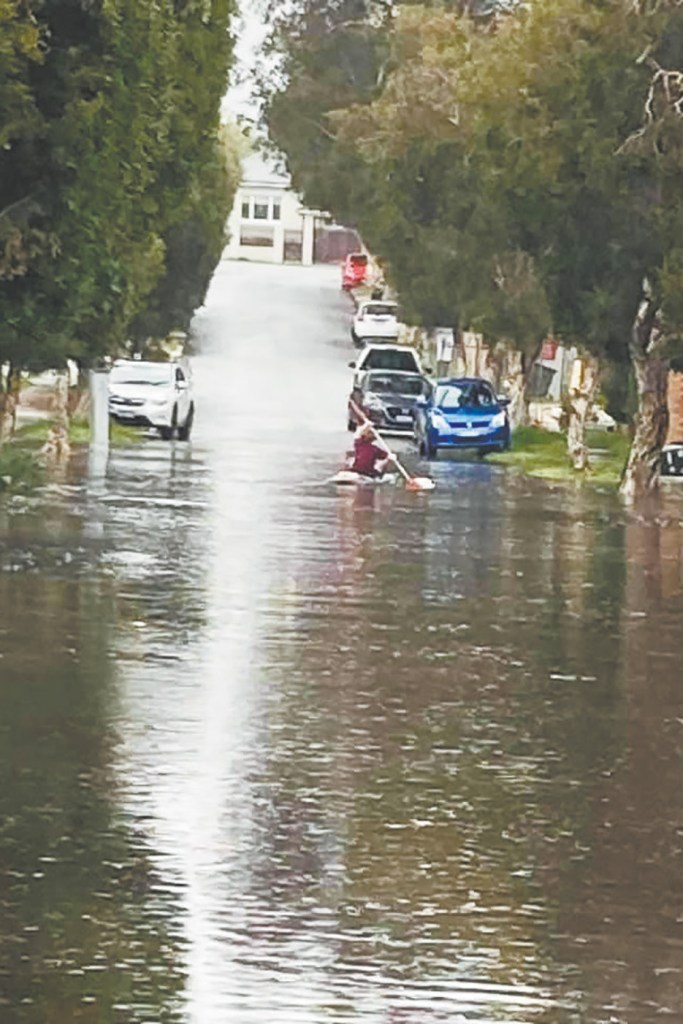
Lynton Street in Mount Hawthorn was flooded in 2021. Photo by Fiona Kemp via City of Vincent
TWO HUNDRED flood risk hotspots have been identified around Vincent, with works underway to address the most urgent.
Lynton Street in Mount Hawthorn was turned into a canoeable river in 2021, and nearby Menzies Park was a lake for a day.
In recent year’s Vincent’s copped a heavy downpour of criticism from residents who feel the flood response has been too slow.
Residents opposite Beatty Park had a years-long struggle before the council installed a flood wall in 2022. A year earlier they’d purchased their own sandbags and built a makeshift dyke to stave off heavy rains.
Low-lying Leederville too, suffered in 2021. Residents there have gone as far as clearing council drains themselves, buying their own pump, and bricking up their boundaries to keep water at bay.
Mount Hawthorn resident Lesley Forey fronted the final council meeting of 2022 to query what was happening with the drains in her suburb, askingif the pipe’s diametre was still adequate for modern rain levels and if the pipes were still within their service life.
Vincent has $425,000 on the books this year to map out which bits of the drainage systemare struggling most and to get started on priority upgrades.
Mayor Emma Cole told Ms Forey: “This spot in Mount Hawthorn is probably our number one priority in terms of drainage in the City of Vincent.
In a media release this week the mayor announced upgrades would start in Lynton Street, East Street and Sasse Avenue.
Climate
“Our climate is rapidly changing so it is important that we are ready to adapt,” Ms Cole said.
“We need to ensure our essential infrastructure, like drainage, is reviewed and upgraded in response to changing weather and storm frequency.”
The council will also run the numbers on whether it should keep spending $160,000 a year on external contractors to clear out drains, or whether it’ll be more efficient to have an in-house team and equipment.
be regularly monitored and unclogged when needed.
One North Perth resident told the Voice he hadn’t seen regular unclogging: In 2022 he says workers cleaning out a leaf-laden drain near Beatty Park found a wallet which had been stolen from a nearby residence in a burglary.
“The funny thing is that the burglary took place 10 years ago,” our source said.
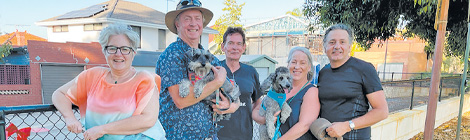
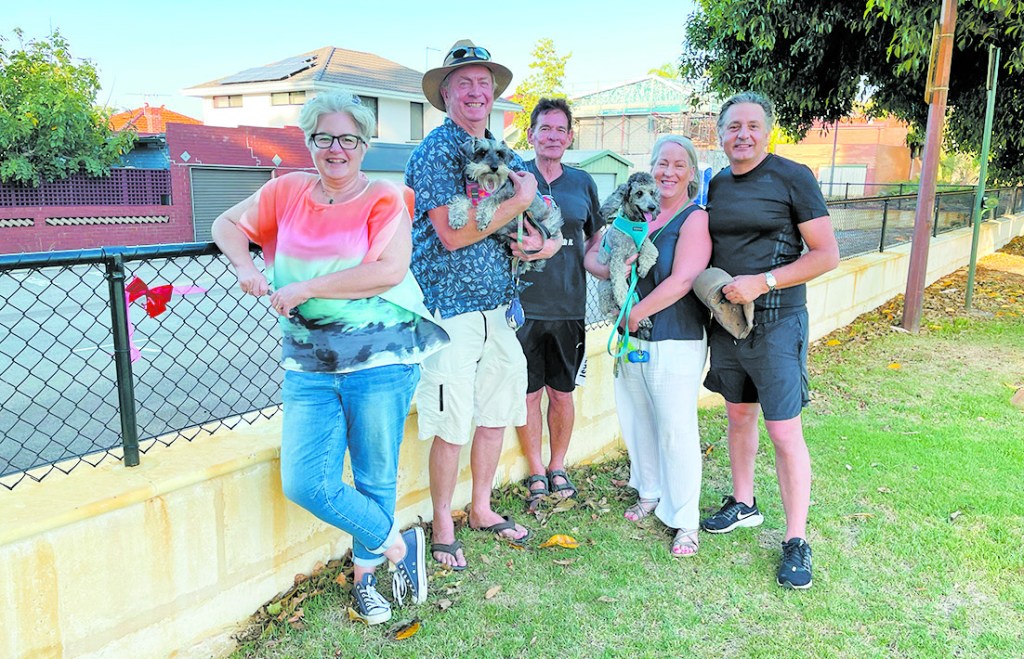
Vincent Cr Suzanne Worner, residents Steve Burke, Ray Stevenson and Suzanne Burke, and Cr Ross Ioppolo.
A WEE win in Vincent’s war on water was marked last weekend when residents gathered to celebrate a new floodwall at Beatty Park.
It’s been a long campaign by residents to get a wall to prevent run-off from the park, starting shortly after homes on Emmerson Street were flooded in the great storm of 2010.
They came close to similar flooding catastrophes in later years. Residents spent some rainy nights unclogging drains in the carpark between the park and their properties to keep their homes dry.
An expert’s consultant report in 2017 recommended a wall to prevent park runoff from hitting homes, but the plan seemed to be forgotten for years.
Residents Steve and Suzanne Burke and Ray Stevenson kept up the campaign with many delegations to council requesting the work be completed.
They’ve credited the efforts of the three newest councillors who were elected in 2021, Ron Alexander, Ross Ioppolo and Suzanne Worner, for getting the wall across the line.
A motion moved by Cr Alexander to get on and build the wall won unanimous support from council in April 2022.
“This is our grand opening of our 10-year wall,” Mr Burke said last weekend. “I’d like to thank Suzanne [Worner] and Ross [Ioppolo] and also Ron [Alexander] … for all their efforts to get it where it is.”
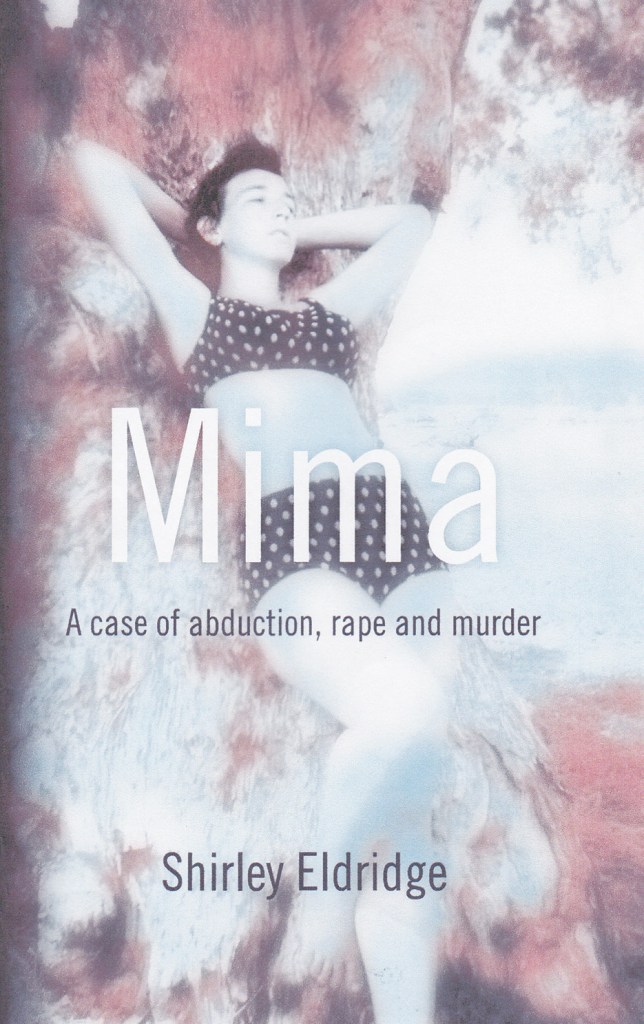
Shirley Eldridge’s 2016 book Mima: A Case of Abduction, Rape and Murder
AUTHOR Shirley Eldridge was better placed than many to deal with revisiting past trauma, but still found reliving the events of a 1967 murder “horrific”.
Eldridge’s background is in counselling psychology. She’s worked at Lifeline, trained counsellors, and run suicide prevention courses overseas before settling in Perth and turning to writing.
But even decades later, telling the story of her friend and colleague Mima Joan McKim-Hill, who was abducted, raped and murdered in Queensland in 1967, was painful given how close she was to the events.
“More than once I got up from the computer and got a glass of wine and thought, I can’t do this,” says Eldridge.
Persevere
She found ways to persevere. Breaks, wine, friends, a Jungian analyst. And “very deep breaths… it had to be done.
“It was ‘put the biggirl pants on’, and be a counsellor to some of these people,” even when the conversations were hard, talking with McKim-Hill’s family members who hadn’t found closure, or having to interview difficult figures from her past she would have preferred to never speak to again.
McKim-Hill’s murder is still officially listed by police an unsolved case.
But Eldridge’s efforts decades later helped renew police interest in the case.
Eldridge says through extensive investigations, quiet conversations with police investigators, correspondence withher home region’s local newspaper, and a proxy-confession from a suspect’s daughter, she is satisfied the killer was identified in 2009. She says he died the weeks before police planned to arrest him in South Australia.
A few years passed but Eldridge couldn’t move on. It was hard “to hold information that no one else holds,” she says. She would go on to pen the story of her friend and the failed police investigation in her 2016 book Mima: A Case of Abduction, Rape and Murder.
It was written out of a sense of duty to set the record straight with the new information uncovered, but it wasn’t cathartic.
“I hate that word,” she says. “I had relived an horrific event.
“I wallowed in the horror for a couple of years but thought, knowing now new information, that I had an obligation to share.”
Writing a nonfiction book about a shocking event can look like the opposite of the type of therapy typically given to people who’ve gone through trauma.
Trauma therapy usually isn’t about remembering exact details: the factsof an event don’t matter compared to the person’s feelings and thoughts about their experience.
But when writing a book to set the record straight, “the facts were critical,” Eldridge says.
Horrific
For many difficult experiences like finding her friend’s empty car and some of her discarded clothes, Eldridge feels she’s lived them out three times: First in 1967, again when the detectives and profilers interviewed her, and again in preparing the book.
“Seeing all of that was horrific” then, Eldridge says, and “it’s confronting reliving it. And it was reliving it”.
As the Society of Women Writers WA recommences its writing classes for 2023, Eldridge will again revisit her experience researching and writing the book, and share ways writers can tell authentic stories about traumatic events, remain objective, and be mindful of their own self-care.
Eldridge says when writing fiction, authors should also keep an eyeto their mental health, as fictional stories often draw authenticity from real experiences.
“The motivationfor writing is often a traumatic event,” she says. “Miscarriage, loss of child, victim of domestic violence, witness to or victim of an accident.
“Caring for self, as well as the characters in the memoir… is essential.”
Eldridge didn’t find catharsis, but she found some sense of closure after the book was released.
“I came home from all the launches,” she recalls, and gathered the years of notes, correspondence, everything she’d used in her research. “I packed everything in a box.
“I had a little ceremony. I put Mima to bed myself. That’s peace for me. She’s packed away forever. I’ll never unseal that box… there she is in the bottom of the cupboard… and she’s okay.”
The SWWWA’s next classes start February 1at Citiplace Community Centre at the Perth Railway Station, and Eldridge appears at the February 8 class Basic Psychology for Writing Characters, $20 for members and book via swwwabookingofficer@gmail. com
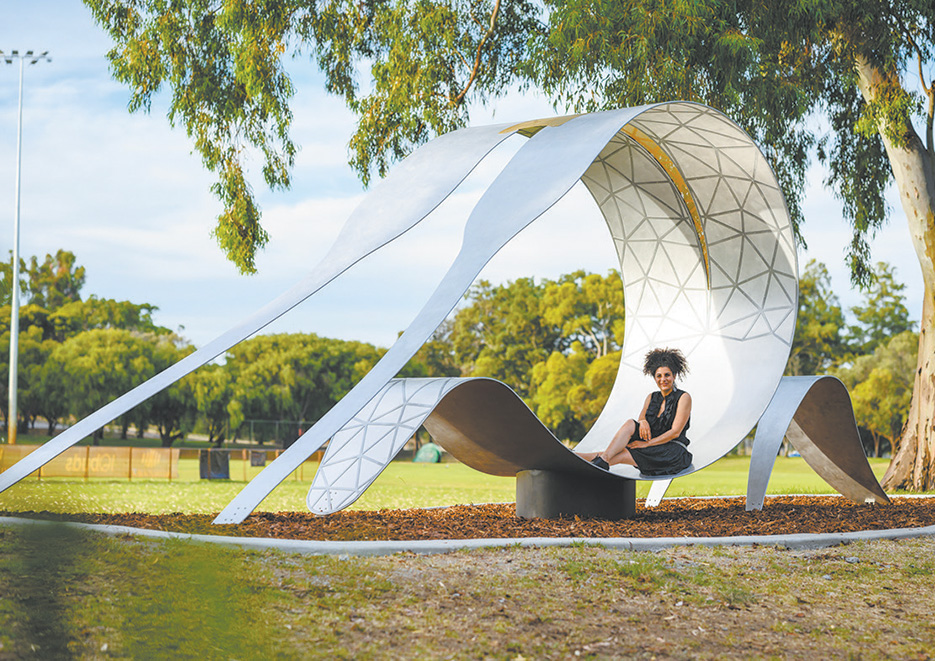
Addam in the new artwork Araa. Photos by Miles Noel via City of Stirling.
TWO sculptures by WA artist Addam have been unveiled in Hamer Park and Inglewood Oval as the capstone on the park’s $6.3 million redevelopment.
Addam’s work melds sculpture and jewellery and this is her first public art commission. Addam was selected by Stirling council to team up with veteran public artist Rick Vermey as a mentor.
The works are inspired by flora that grows nearby at the delicate patch of bushland in the Inglewood Triangle: Araa evokes the local spider orchid, and Ember is based on the banksia menziesii.
Stirling council allocated 2 per cent of the construction cost of its major capital works towards public art.
The $6.3m redevelopment was mostly completed in April 2022 and involved new versions of the Moyle Pavilion and Hamer Park Clubrooms, after local sports clubs identified an was about eight years overdue.
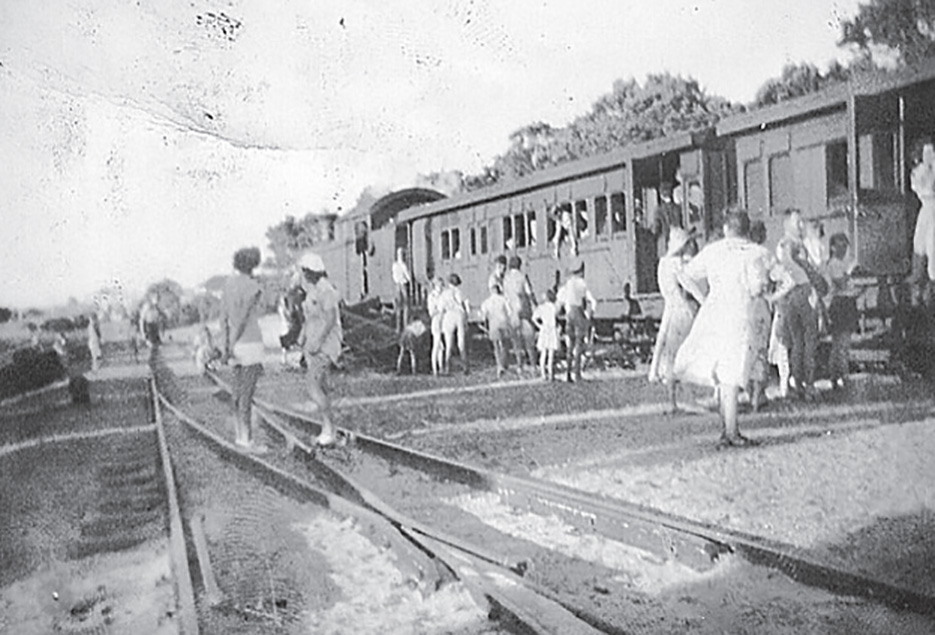
The opening of Perth to Fremantle railway opened up the city’s beaches to many in the days before car ownership was so common.
WITH warm weather seeing people flocking back to the beach, this week the archivists at Vincent Local History Centre continue the series on memories of summer by bringing us back to a time before the beach was a popular swimming spot.
BEACH culture is synonymous with Perth, but this has not always been the case.
Most people did not look to the sea for recreation until the 1880s, when the opening of the Perth to Fremantle railway made beaches more accessible.
Cottesloe Beach pioneered the new form of seaside fun.
After World War I, City Beach became more popular with the introduction of a plank road in 1918.
By the 1930s, swimmers could paddle and promenade at a range of beaches along the coast, from South Beach to Scarborough Beach.
Today, a trip to the beach for Vincent locals is just a 20-minute drive or an hour-long bus or bike ride.
Back in the 1940s and 1950s, going to the beach was a slower, more complicated outing.
Life-long West Perth resident Marie Slyth recalled the intense preparation and excitement of her family’s annual summer camping pilgrimage to Coogee Beach in the 1940s and early 1950s.
“Every year we used to go to Coogee Beach with dad… that was our Christmas holidays,” Ms Slyth said.
“Usually, it was two weeks but sometimes on rare occasions, it was three weeks.
“We’d pack up all the tents, bars and poles for the tents, the flies you put over the tents and all the hessian flooring and then you’d have a little miniature water cooler.
“When we got down there, we had to help dad pull all these things up.
“Every other year I remember it used to rain at least one night, or one day there’d be a storm.”
Ms Slyth said her family used to go fishing, where they used to throw from the shore as there was no jetty.
“After a couple of years dad used a little rowboat, which I insisted to be called ‘the Marie’,” Ms Slyth said.
“I used to help dad row intothe deep (sea) and we’d throw the line and catch fish and bring them in and have them for breakfast sometimes. Mum had to always scale the fish, but she used to like to come fishing too.”
There was an old wreck off Coogee Beach where Ms Slyth’s family used to walk, climb up the side and look at the water in the middle section.
“In the very clear water, you could see coloured fish – football fish we used to call them – with coloured stripes on them, and climb through the portholes on the boat,” said Ms Slyth.
“Sometimes we used to go in the evening and sit on the beach on mats.”
Read more about Ms Slyth’s childhood memoirs at the Vincent Local History Centre or onlineat https://librarycatalogue.vincent. wa.gov.au/client/en_GB/search/asset/362/0
I wonder if Ragnar comes back from the dead?” asked my wife as we drove to Inglewood.
She’s become hooked on Vikings over the festive break – binge-watching the first three seasons in as many days.
I’ve done my bit to jump on the pagan bandwagon – trading in my Holden Astra for a longboat, eating turkey leftovers withmy bare hands, and routinely pillaging Old Bert’s lemon tree next door.
It was time for some civilisation, so we set sail for General Public Food Co on Beaufort Street.
I was expecting cafes and restaurants to be pretty dead on a Tuesday night in January, but General Public Food Co was doing a roaring trade and almost full with hungry punters.
Situated on the corner of Beaufort Street and Ninth Avenue, it felt slightly removed from the hustle-and-bustle with a nice alfresco that stretched around to the quieter suburban side.
The eatery had a very friendly, casual vibe and there was a mix of young couples, families, and middle-aged blokes catching up over a beer.
The staff were super friendly too with a young waitress greeting us with a big smile as we walked inside and looked for a table.
With its natural wood benches, seats and subtle paintwork,the interior was modern and uncluttered. The sense of space was enhanced by the large glass doors letting in a refreshing evening breeze.
General’s menu was clear and to the point – they specialised in sourdough pizzas and also did sides, salads, desserts and sourdough folds (basically a fancy sourdough toasted sanger).
It was like something you would get at a casual beachside hotel.
My young kids, Bamm-Bamm and Pebbles, decided to share an adult Margherita pizza (sans basil $19) and a side of loaded fries ($15).
The pizza had that trademark mottled edge, wafer thin base and gooey mozzarella on top.
They wolfed it down in no time. I had a sneaky taste and can confirm it was delicious with a rich tomato sauce and a hint of Fior Di Latte cheese, which is made exclusively from cow’s milk as a opposed to Mozzarella which is traditionally made from buffalo milk. I’m not normally a fan of loaded fries; they seem like the epitome of crass, over-indulgent American cuisine – let’s take something already quite unhealthy and chuck in some more unhealthy stuff. But these made me rethink the concept – crisp, non-greasy fries topped with quality chunks of thick smoky bacon, cheese, sour cream and fresh spring onion.
Top notch and the first time I’ve had loaded fries and felt vaguely human afterwards.
Across the table, my wife“Special K” was devouring her beef brisket pizza ($26) like some middle-class Viking enjoying their last meal before entering the hallowed Halls of IKEA.
“I’m loving the sweet caramelised onion, jalapenos and drizzle of sour cream on top,” she said.
“The brisket is good but very thinly cut and I would have preferred it a bit more chunky or pulled. Apart from that, it’s executed perfectly and has a nice smoky BBQ sauce.”
Rounding things off were some delightful cheesy haloumi croquettes ($12). They had the perfect combination of crispy exterior and moreish gooey centre.
A lovely touch was the creamy, slightly mustardy dip, which had wholegrains punctuating the sauce. A great side dish.
General Public Food Co is perfect for a casual meal and I can see why it was so busy in early January.
I’m sure it would even appease the viking Gods, who would no doubt enjoy a midi of Swan lager and some pepperoni pizza.
General Public Food Co 882 Beaufort Street, Inglewood eneralpublicfoodco.com.au
• Cleverman is one of the great summer exhibitions at the WA Museum Boola Bardip.
KIDS driving you nuts at the tail end of the school holidays?
Sick of going to the beach and the hot weather?
It might be time for a little edification and air con – step forward the WA Museum Boola Bardip.
They’ve got some cracking summer exhibitions for a broad range of ages and interests with everything from the immersive Lewis Carroll-inspired Wonderland to a behind-the-scenes peek at the popular Bush Mechanics TV show.
But if you want to exercise your brain and body at the same time, you can’t go past the Codebreakers family tour.
Part scavenger hunt, part escape room, Codebreakers is a series of challenging puzzles, codes and clues leading you across galleries and through the museum.
Your mission is to identify an agent from the mysterious Shadow Society who is intent on raiding the museum’s collection. It’s on daily from 2pm.
After all that mental exertion, why not let your mind drift down a rabbit hole into Wonderland, an interactive exhibition that celebrates Lewis Carroll’s timeless stories and Alice’s adventures on film.
Explore Alice’s journey from book to screen, through original picture books, magic lanterns, images, and film and TV moments. Then join an immersive Mad Hatter’s Tea Party that comes alive with digital wizardry.
Get lost in the Hallway of Doors, squeeze into a tiny house, climb a giant chair to peek into Alice’s room, and post your personalised soldier avatar on the Queen’s croquet ground.
Wonderland is a fun, interactive tribute to the legendary children’s writer.
After all the fantastical fare, it’s time to get firmly back down to earth with the Bush Mechanics exhibition, featuring a range of items from the series, including two original cars, clay figurines, specially commissioned artwork, and interactive displays about Aboriginal life and culture.
Developed by the National Motor Museum, it’s a fun odeto the ingenuity of outback mechanics whose clever resourcefulness can turn branches, spinifex and sand into tools and spare parts to get cars back on the road.
Another great TV tie-in is Cleverman, an exhibition about the dystopian sci-fi show of the same name.
First aired in 2016, it broke the mould with a predominantly Indigenous cast and senior crew, featuring a series of Aboriginal-inspired stories that tackled class, racism and power.
Discover original props, costumes and make-up from the series, and explore Aboriginal storytelling, language and creativity in this free exhibition.
For parents and older kids, the free commemorate exhibition Remembering the Bali bombings: 20 years on examines the biggest loss of Australian lives to a terrorist attack. Three bombs exploded on Bali in 2002, killing 202 people from 21 countries and injuring many more. A total of 88 Australians lost their lives.
Many of the severely injured were evacuated to Australian hospitals with 28 flown to Royal Perth Hospital on private, commercial and Australian Defence Force aircraft.
Featuring photographs from Royal Perth Hospital, video testimonials from survivors and key medical staff, this exhibition reflects on the challenges the hospital faced in dealing with injuries of a magnitude and severity never experienced before.
It recalls the outpouring of community support, lifting morale in a time of great hardship.
For more info and exhibition dates see visit.museum.wa.gov.au/boolabardip/tours-events
This four bedroom two bathroom property ticks a lot of boxes – from the top-of-the-line kitchen to the plantation shutters and built-in floating cabinetry, a lot of thought and money has been put into designing this home.
It was built only 18 months ago and still has that new out-the-box look.
The kitchen is especially sleek with white benchtops contrasting with natural wood and black matt cabinets.
It’s got a minimalist air and no expense was spared on the 40mm stone benchtops and 60mm stone breakfast bar with waterfall edge. Rounding things off are some European appliances and a stylish glass splashback.
The kitchen is part of a bright and airy open plan lounge/dining area.
Floor-to-ceiling glass doors and high ceilings make it feel spacious, and it’s a lovely spot to lounge and watch the Australian Open during the summer.
There’s a nice indoor-outdoor flow and you can slide back the glass doors and walk out onto the sheltered alfresco.
With an insulated roof it would be pleasant all-year round and there’s plenty of room for a barbie and pizza oven.
Around the corner is a decent patch of grass, where young kids can play and pet dogs can stretch their legs.
Inside, there’s another living area, where the owners have put in a massive couch and a huge wall-mounted TV.
It’s the perfect retreat for kids to play video games or for mum and dad to watch a movie (having that extra living space is gold as the kids get older).
There’s also room for a fourth bedroom/nursery or office, giving you plenty of flexibility.
Another highlight is the ensuite in the main bedroom. It would have been easy to go for the tried-and-tested, and frankly a bit boring, white tiles and vanity.
But the owners have gone for lovely bluey-green tiles with a herringbone pattern, giving the impression of being surrounded by giant leaves as you brush your teeth.
It’s a great little design flourish that sets it apart from your cookie-cutter 4x2s.
The bathroom has double vanities and a lovely shower with a recess. The other two double bedrooms both have built-in wardrobes and share another beautiful bathroom with free-standing bath.
The home includes zoned, ducted reverse cycle air-con, security alarm and cameras, double garage with additional storage, 31c ceilings and additional 34c in the main living area, and a king-sized main bedroom with his and hers walk-in wardrobe.
Situated on a 369sqm green-titled block on Phoenix Street, there are loads of lovely parks close-by and it’s a short drive to Mt Lawley and into the city.
If you are after a luxury family home in Dianella with all the trimmings, this is well worth a look.
COME rain, hail or shine, you’ll find them sitting in a tub of ice every weekend at South Beach in Fremantle.
Some might call them masochists, others just plain crazy, but they are part of the “Breath and Ice” group, formed two years ago by Fremantle local Florian Obst.
The group start with a 30 minute breathing exercise to prepare for the ice bath, which is purported to have numerous health benefits including reducing inflammation and swelling, boosting the immune system, increasing metabolism, providing a cardio workout and improving mental health and resilience to stressful situations.
Obst got into icebaths because of legendary “Iceman” Wim Hof, a Dutch extreme athlete and motivational speaker known for his ability to withstand low temperatures.
He created a method combining frequent cold exposure, breathing techniques and meditation, and previously held the world record for swimming under ice and prolonged full-body contact with ice.
“I first came across Wim Hof in a documentary on YouTube five years ago,” Obst says.
“I was fascinated by all the records he broke, all related to cold exposure. He also practiced a certain breathing technique, which I was curious about. I tried his breathwork and started with cold showers every morning.
“Then three years ago, I participated in a Wim Hof method fundamental workshop in Sydney,where I also had my first icebath. That first icebath was an amazing experience, and as runner I felt the anti inflammatory benefits straight away. Since then I was hooked and joined other icebath groups every weekend.”
But when Obst moved from Sydney to Perth, he couldn’t find a local icebath group, so he started “Breath and Ice” in South Fremantle.
“I wanted to get like-minded people together who are lookingfor a mental and physical challenge,” he says.
“We meet all-year round, in every weather condition, every weekend, alternating between Saturday and Sunday.”
Ironically, Obst works as a coffee roaster in Bibra Lake, serving hot drinks to people all day (maybe he needs a warm-up after all that ice).
If you fancy trying an icebath, check out the “Breath and Ice Fremantle” page on Facebook or email Obst at floobstler@gmail.com.
It’s donation based and you just need to bring along two or three bags of ice.
“I always take time for first timers, and happily guide them through the experience,” Obst says. “Everyone is welcome.”










 Perth Voice Interactive