A still from Wayne Waples’ The City of Art, by WW Films.
A SHORT film delving into Perth’s street art scene has documented the good, the bad and the ugly of graffiti and murals.
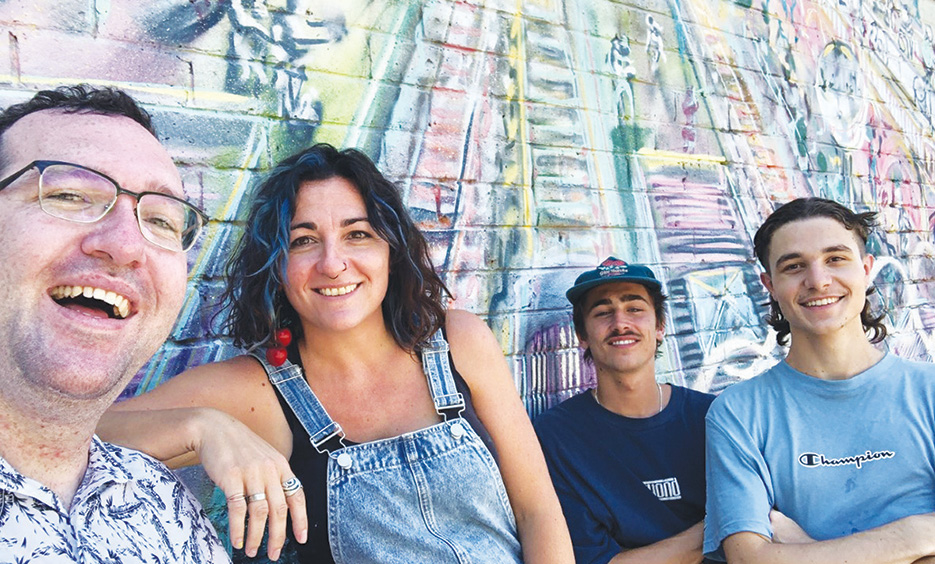
From grand commissioned murals to tag-ridden alleyways, filmmaker Wayne Waples has sought out the people behind both endorsed and illegal pieces for his doco ‘The City of Art’.
“Initially it was very hard to speak to the ‚Äî let’s say ‘illegal’ ‚Äî graff writers,” Waples told us. “There were trust issues between them and the media … the graffers or taggers, those ones were a lot harder to convince to talk to me.”
He started with the aboveground; professionals paid by property owners and governments to pretty up the neighbourhood, and eventually worked his way to the more clandestine artists.
“It’s all nice and dandy to get the legal perspective, but the illegal ones, to find out why they do what they do, that’s interesting.”
He says “what I found fascinating is these graff writers don’t always do it to bignote themselves” by spraying their signature around. “Sometimes they just want to relax. They’ve found some older building that’s not in use or some wall that’s not in view, so for them it’s just a nice weekend where they can do some painting and enjoy the time.”
The scrawls are usually just a lack of time or not understanding the etiquette, someone “who doesn’t know the ‘rules’ about not going over someone’s work… either young people who are new to the scene, or just opportunistic people.
“If that person had more time, they would probably go back and do a bigger, nicer piece.”
Waples says while property owners are often distraught by taggers, mural artists are pretty philosophical about getting their work marked up, taking an “it is what it is” mindset.
“I think everyone does expect that once you put the work out there, you don’t know what’s going to happen to it.”
THE Joys of the Women Italian Choir (Le Gioie Delle Donne) is preparing to serenade Fremantle when its Italian community celebrates the long-standing Blessing of the Fleet next weekend.
Choir coordinator Silvana Wiley says the choir will sing three songs throughout the procession that winds its way through the port city from St Patrick’s Basilica to deliver the two Madonna statues to Fishing Boat Harbour.
Ms Wiley says the songs reflect the strong ties of the Italian fishing community to Fremantle, with a shared culture stretching almost a century.
Le Gioie Delle Donne was formed almost by accident 32 years ago by a group of Italian ladies who loved singing the folk songs they grew up with. Soon enough, the choir developed and was joined by women with both Italian heritage or with a love of the Italian culture.
“Our choir is for everyone, not only Italians. We welcome anyone who loves the culture and wants to learn the language,” Ms Wiley said.
The choir’s aim is to pass on the messages of the old folk songs and the Italian culture to their families and to the wider community.
“Even though I was born in Perth I always wanted to get more involved in my culture, I joined the choir to celebrate it and learn the language better,” Ms Wiley said.
There are currently 17 members of the choir ranging from 40 to 89 years old and they are looking to expand into the younger demographic to preserve the rich folk music tradition of Italy.
The women’s choir has been active in the local and wider community for many yearsand performs regularly at aged care homes, senior centres and multicultural events but this the first time they have been asked to perform at the Blessing of the Fleet festival.
“We took out two birds with one stone as we love to get out into the community and sing and also many of the ladies in the choir wanted to be a part of the procession as well.”
This year the procession will take a slight detour down Mouat Street, as the organising committee has been fostering closer ties with Notre Dame University.
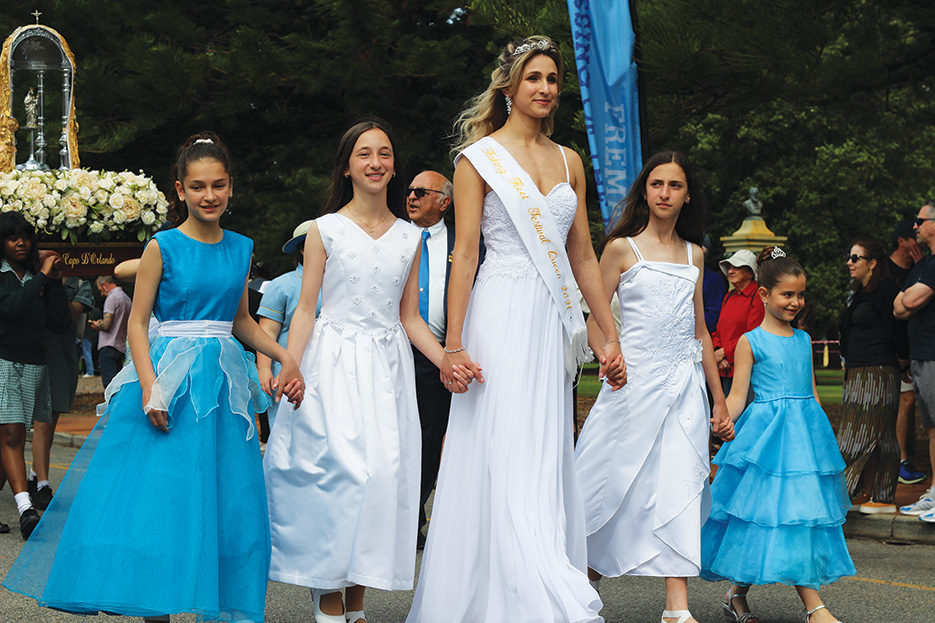
The Blessing of the Fleet procession will take place Sunday October 23 at 2pm, starting at St Patrick’s Basilica with the blessing of the statues Madonna dei Martini and Madonna de Capo d’Orlando.
• The Madonna di Capo d’Orlando
The Star of the Sea
SHE stands 152cm tall, her replica figure dressed in a bright red sash held up by two baby angels.
Wearing a crown and halo of stars, her gown adorned in gold craypots and wedding rings, the divine statue moves through the streets on the shoulders of fishermen praying for a safe and bountiful season while children cradle flowers and sing hymns.
That is how many Australians of Italian descent remember their first glimpses of the Star of the Sea. Our Lady of Martyrs. Queen of the Universe. This year the statue will shine even brighter, having undergone a major restoration.
Ever year, thousands flock to the Fremantle Fishing Boat Harbour to witness one of the state’s biggest religious and civic ceremonies, the “blessing” of the fishing fleet.
This year’s Blessingis being held on Sunday, October 23, with a mass at St Patrick’s Basilica, Fremantle at 9.30am and the procession kicking off at 2pm.
Celebrated around Australia and overseas, the annual ritual had a rocky start in Fremantle, the event at first opposed by the local Catholic priest and ridiculed by locals.
The tradition was introduced in 1946 by a group of fishermen led by Francesco Raimondi at a time when thousands of Italian migrants had been released from internment camps.
It was early September 1946 and the weather was not kind for fishing, so the fishermen went to church instead. After mass, they decided to hold the annual “festa” or festival.
The first official blessing ceremony in Fremantle was held in 1948 by Italian fishermen from Molfetta and Capo d’Orlando, which later became sister cities of Fremantle.
In Port Pirie, South Australia, the first festival was held in 1934; Adelaide 1954; Tuncurry, NSW 1958; and Sydney 1984.
Madonna
One of the earliest festivals in the US was held in 1927 in Hoboken, New Jersey, the event based at Sinatra Park (named for Hoboken’s favourite son Frank Sinatra and used as the setting for the 1954 film On The Waterfront).
In Molfetta, the first procession was held in 1840, though the tradition dates back to the early 12th century.
In Fremantle, leaving St Patrick’s Basilica on Adelaide Street, the symbol of Mary holding baby Jesus is carried through the port city until it reaches the harbour where the assembled fleet pays homage to their patron.
This is the Madonna dei Martiri of Molfetta, paraded for the first time in 1950 before being taken out to sea by a local fishing boat, Invincible.
Before that, an icon or image of the madonna was carried in the procession because the statue had not yet been made.
A second silver statue, the 25cm Madonna di Capo d’Orlando, was donated to Fremantle in 1952 after a visit to Capo d’Orlando by Sicilian fisherman Francesco Vinci.
In 1954, both statues joined the procession. Both are housed in the Marian Chapel in the basilicaand both are loaded into separate boats.
The legend goes that a boat filled with injured and dying Crusaders returned from the Holy Land in 1188 and found a Byzantine-style icon of the madonna and child floating on the water. They took it to a hospice built in 1162 in Molfetta on the orders of the Norman King, William II. The statue honours soldiers who died as martyrs of the faith.
Other versions have the Crusaders bringing back with them paintings and pictures of the madonna and child which they’d carried into battle for protection.
For generations in Molfetta, people would attribute many miracles to the icons they worshipped.
In 1485, Turkish pirates in the Adriatic entered Molfetta and looted the church. They left the painting of the Madonna and set fire to the church, only to reportedly be thwarted by the hand of God when their boats would not move. Fearful of having offended some deity, they left the loot on the beach and sailed off. The church was destroyed but, according to legend, the painting was neither burnt nor damaged.
In 1530, the image of the madonna and child surrounded by angels is said to have appeared in the sky over Molfetta and scared off French soldiers poised to overrun the town.
In 1560, earthquakes destroyed several towns and villages around Molfetta but the seaport was unscathed—another sign from the town’s protector.
In 1840, the first carved statue of the madonna was made in nearby Naples and donated to Molfetta, which held its first procession on August 30 that year.
I VENTURED outside of Voiceland to try the exotic cuisine of a country I have never visited before – the Philippines.
Inspired by the carinderias (casual eating stalls) in the Philippines, Lola’s Diner in East Victoria Park opened mid-2021 and has enjoyed good reviews from food critics and Filipino ex-pats.
I was initially worried whenI read the one-page menu and saw there was quite a lot of fried chicken with gravy, as well as cheeseburger spring rolls and fried chicken spaghetti (I’m not really a fan of the fried stuff).
Thankfully there was a “grilled” section with chicken and pork belly dishes, and some other interesting fare including pork belly adobo(pork belly slowly braised in vinegar, soy and garlic) Longanisa (house made pork sausage lasagne) and vegan adobo (mushroom, fried eggplant, braised in vinegar, soy and garlic).
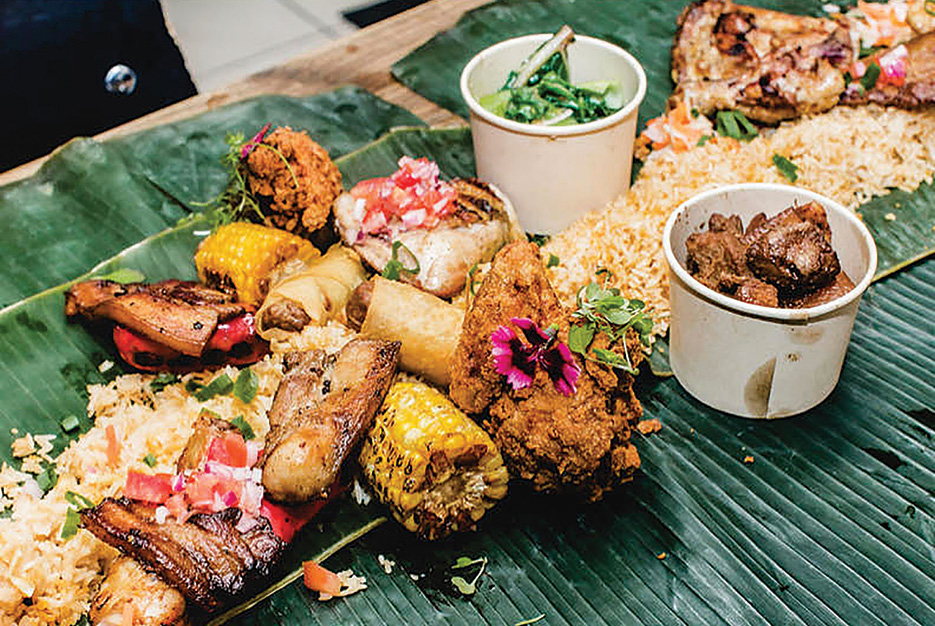
There was also some delicious sounding share plates – grilled and chopped liempo (pork belly) on a sizzling hotplate with tomato salsa and chilli egg, and “Boodle Fight” where a whole table share food served on a banana leaf for $38pp, as well as a kids menu with all dishes $12.
The man wearing a bandana behind the counter was a charismatic and friendly chap, full of smiles and chat as he took my order for a Boneless Inasal Chicken Maryland ($17).
The small cafe was a colourful affair – think those bright colours of Cuba – with a huge fun mural of Lola’s bus and photos of the Philippines on the walls.
I arrived at 11:50am and there were already two Filipino families in there (a good sign) and Uber deliverers were regularly streaming in and out.
Blaring away in the background was some Shakira-style music, including the lovely ditty “I just Called to say I Hate You.”
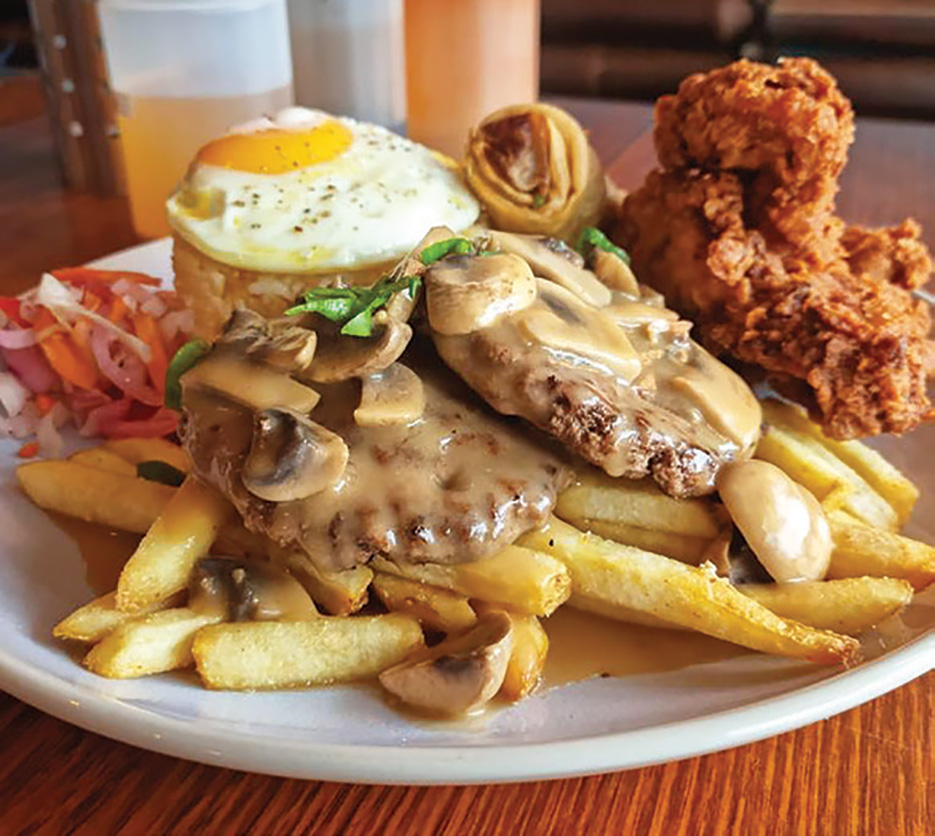
It wasn’t long before the friendly chap behind the counter came over with my boneless inasal chicken Maryland.
The skin-on marinated chook was cut into thin strips and tasted very fresh with the chipotle basting giving it a lovely sweet-spicy tang (there was also BBQ and inasal bastings available).
The trump card was the fresh salsa with diced tomato, red onion and spring onion, adding a fragrant burst of flavour.
Off to the side was a substantial mound of garlic rice (you could get chips instead) which was incredibly moist and had a strong punch that would see off any wannabe Draculas. At first I thought there wasn’t enough chook on the plate, but was I was full after eating all the rice and it was a nice size for lunch.
If I was getting it for dinner, I’d probably go with the optional fried egg on top.
I was looking forward to trying one of the “Filipino sodas” on the menu but unfortunately the fridge just had western drinks when I visited, but you could still order a Sago Gulaman, a Filipino beverage made from brown sugar, water, gelatin and tapioca pearls.
Run by brothers Al and Ken Craigie, Lola’s diner is a nod to their Filipino heritage, and they originally started up the cafe with their mother Estrella.
The diner was inspired by Al’s first visit to his grandmother’s carinderia in Santa Cruz Manila; his earliest memory of being in the Philippines and introduction to its cuisine.
“If there was one crowd favourite it will be the fried chicken and gravy. It’s our nod to Filipino chain Jollibee’s – chicken joy,” said Al. The brothers are also behind the successful RoyAl’s Chicken & Burgers, which started out in East Vic Park in 2016 and now has outlets across Greater Perth.
“Lola” means grandmother in Filipino and I’ll definitely be back with my family to try the “Boodle Fight” – a feast of inasal chicken, liempo, pork adobo and longanisa served on a banana leaf.
Lola’s Filipino Diner 8/885 Albany Highway, East Victoria Park facebook.com/lolasfilipinodiner
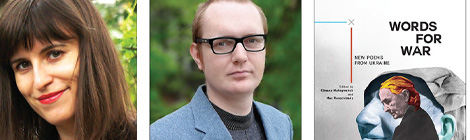
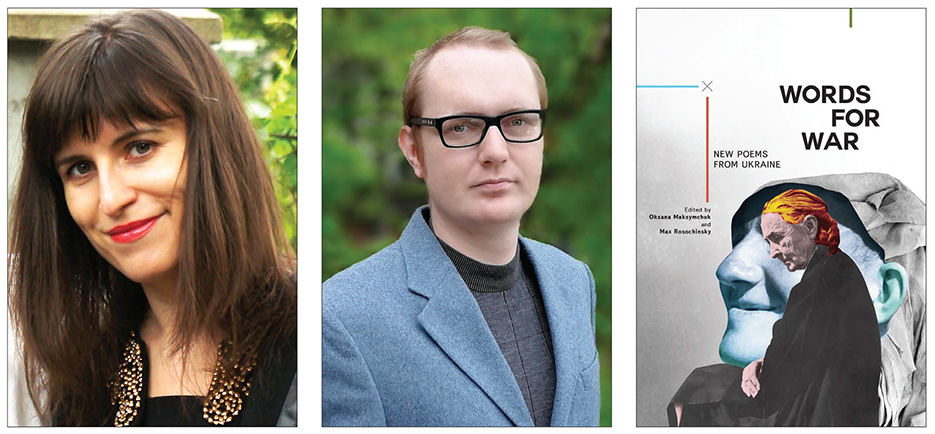
• Poets Oksana Maksymchuk and Max Rosochinsky co-edited Words for War: New poems from Ukraine.
TWO acclaimed poets who fled Ukraine just before the Russian invasion will give a fascinating insight into the war-torn country at Perth’s Ubud Writers and Readers festival.
Couple Max Rosochinsky and Oksana Maksymchuk had been diligently preparing for the invasion, even though they didn’t fully believe Vladimir Putin would go through with it. That all changed after a dramatic few days when Russia upped the military ante, so they hastily grabbed some backpacks and hotfooted it to the train station with their son.
“We didn’t say goodbye to friends – only to my father and his wife,” Maksymchuk says.
“As we were waiting for the train to Budapest at the gorgeous art nouveau train station in Lviv, I said to our son: look how eerie this is, the station is nearly empty now, yet in the wartime, it would be the most crowded place in the country.
“Just a week later, the Lviv train station did become the main hub for refugees fleeing the invasion, from the capital of Kyiv and from cities all over the Ukrainian south and east.”
Maksymchuk, who is from Ukraine, has a dad and stepmum in Lviv, while Rosochinsky is originally from Crimea, where his parents still live. It was annexed by Russia in 2014.
“We also have close family in the occupied Kherson, as well as in Kharkiv and in Mykolaiv, two towns affected by constant bombardment,” Maksymchuk says.
“And since we write and translate, we’ve collaborated with writers, artists, playwrights, and filmmakers from all over the country, a few of whom have lost their homes.
“Many of people we know are at the front, in the army or in volunteer battalions engaged in the humanitarian relief work and medical care. The whole society is deeply affected by this war – and as far as we know, intimately engaged in the defense effort on various levels, from donating money and time, to making much bigger personal sacrifices for the safety of their communities.”
Maksymchuk is the author of the award-winning Ukrainian poetry collections Xenia and Lovy, and her English poems have appeared in publications like the Cincinatti Review, The Irish Times and Poetry Review.
Rosochinsky’s poetry had been nominated for the PEN International New Voices Award and his poetry translations have featured in Words Without Borders and Poetry International.
The couple recently co-edited Words for War: New Poems from Ukraine.
“Words for War mostly constitutes a collective response to the Russian invasion of Ukraine that started in 2014,” Rosochinsky says.
“However, when we solicited the poems for the anthology in 2015, we found that some of the poets had written about other wars and conflicts: so poets Ostap Slyvynsky and Oksana Lutsyshyna wrote about World War II, and Kateryna Kalytko wrote about the Bosnian War.
“We chose to include poems about those other wars as a testament to poetry’s capacity to bring out universal features of human experience of catastrophic events, transcending a specific time, place, and context.”
Hailing from Crimea, Rosochinsky is a Russian-language poet, but stopped writing in Russian shortly after the annexation of his homeland.
About this time, Maksymchuk decided to break from writingin Ukrainian and switched to English.
She has just started working on a “multi-modal war dictionary” experimenting with hybrid forms of writing from poetry, flash-fiction and interview to memoir and news report.
So will they ever get back home to Ukraine with theirson, or has the concept of home been destroyed by the Russian invasion?
“Mourning and commemorating our country’s tremendous losses, the destruction and violence it has endured, we can nevertheless also celebrate our people’s resilience, heroism, and beauty,” Maksymchuk says.
“Because it is not only their commitment to some abstract ideals of freedom, democracy, and human rights that inspires Ukrainians to push back.
“They are defending their communities, their values, and their way of life – all the things that make a place a home.”
The couple will be talking with Natalie D-Napoleon about their experiences at The Rechabite Hall in Northbridge on Sunday October 23 as part of the Ubud Writers and Readers festival. Also being interviewed at the Beacon of Hope talk is award-winning Iraqi poet Hassan Al Nawwab, who came to Australia to escape Saddam Hussein’s oppressive regime. Tix at megatix.com.au
THIS Third Avenue house is quintessential Mount Lawley.
Leadlight windows, period fireplaces, jarrah floorboards and Metters stove – it’s literally an A to Z of what you would expect from a character house in the suburb.
But this two bedroom one bathroom has also got a few tricks up its sleeve, including a 524sqm block with large garden, established fruit trees, vegetable patch and fish and frog ponds.
But we’re getting ahead of ourselves – what’s the actual interior like?
Well it’s a charming affair with a beautiful entrance hallway and gorgeous architrave chaperoning you into the lounge.
The Voice loves how the owners have gone for a subtle buttermilk colour on the walls; it really adds a lovely warmth and makes the floorboards and polished wooden mantel pop.
So many new builds gowith the boring old magnolia paint, creating a never-ending production line of bland houses that have all the charm of a shovel.
The lounge has a gorgeous period fireplace complemented by some rugs and plantation-style shutters on the windows.
Rounding things off is some lovely cornicing, which adds depth to the room.
The farmhouse-style kitchen makes lovely use of wood on the benchtops and cupboards, showing off the natural grain to full effect.
The kitchen has the best of both worlds – a modern cooker in the corner and a Metters stove in a little recess, adding a lovely heritage touch to the room.
Both bedrooms are a decent size and have fireplaces, giving them a stylish air of yesteryear, with the second featuring built-in robes.
So often these type of character homes are let down by dated bathrooms where the owners have run out of cash.
Thankfully in this home the bathroom is a cracker with lovely subway tiles, a standalone bath/shower and floating cupboards/vanity.
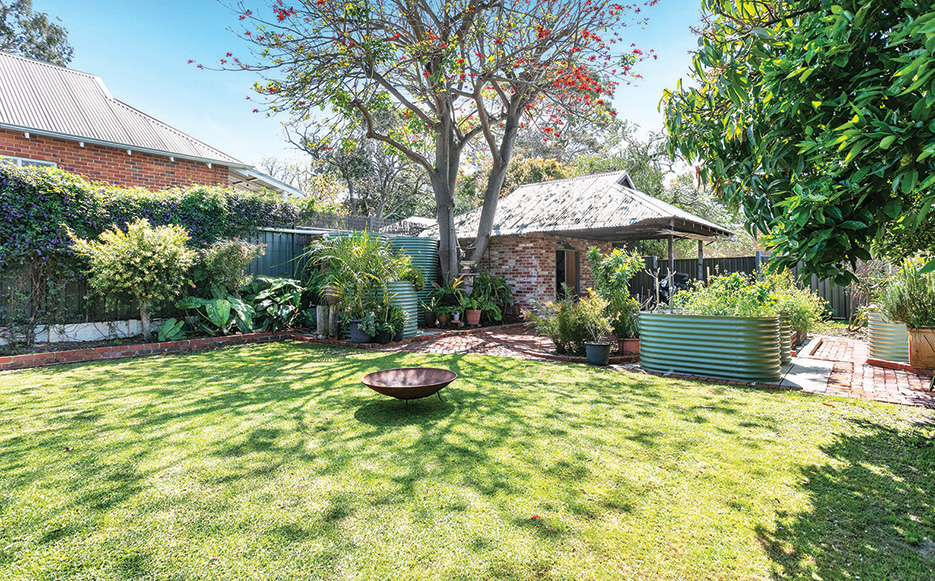
With summer on our doorstep, you’ll be enjoying that glorious back garden, tending to the veggie patch and hosting late night gatherings around the fire pit.
There’s a lovely flame tree in the corner and a big patch of lawn that could accomodate a smallish pool or you could leave as is.
In the rear corner of the garden is a large brick, powered workshop, where dad can tinker with his hammer and tools.
A bonus is the workshop’s floored loft which means you have loads of storage space.
It really is a lovely garden and there is a wide sheltered patio where you can relax with family and friends with a drink and some nibbles.
There’s also a verandah in the front private garden, if you fancy a quiet coffee or a change of scene.
Built in 1917, this green title home includes a rear right of way, re-wired electrics, two 2000L rain water tanks with pump, new fencing on all sides and 6.5kw solar panels.
Situated on Third Avenue, you are close to all the cafes on Coode Street and a short walk from the train station, Perth College and Beaufort Street.
This stylish Mt Lawley home is beautifully presented and will be snapped up quickly.
Buyers in the $1.2m’s 12 Third Avenue, Mount Lawley Beaucott Property 9272 2488 Carlos Lehn 0416 206 736
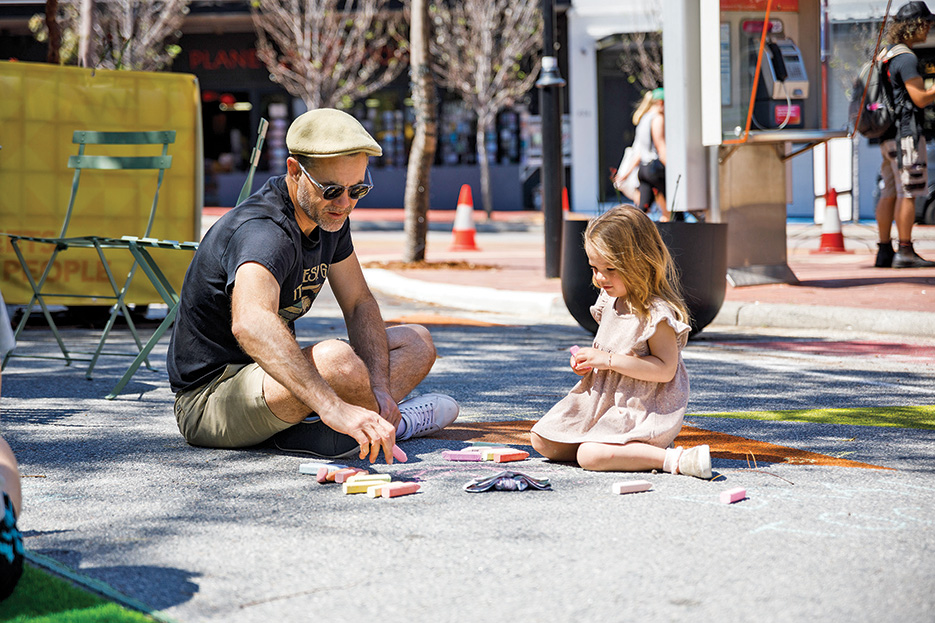
A TRIAL public plaza on Grosvenor Road opened this week.
Traffic will be banned until October 16 to see if it’s a good spot for a permanent public space connected to Beaufort Street.
The strip needs more places to sit, although closing Grosvenor drew concerns from business owners that tricky carpark access might send shoppers elsewhere.
Until October 16 it’s completely closed, and then until November 14 it’s a partial closure to trial a “shared space” setup.
The council will decide whether one of those could work as a permanent public space.
Feedback via imagine.vincent.wa.gov.au or face-to-face with the surveyors who are roaming the site with tablets.
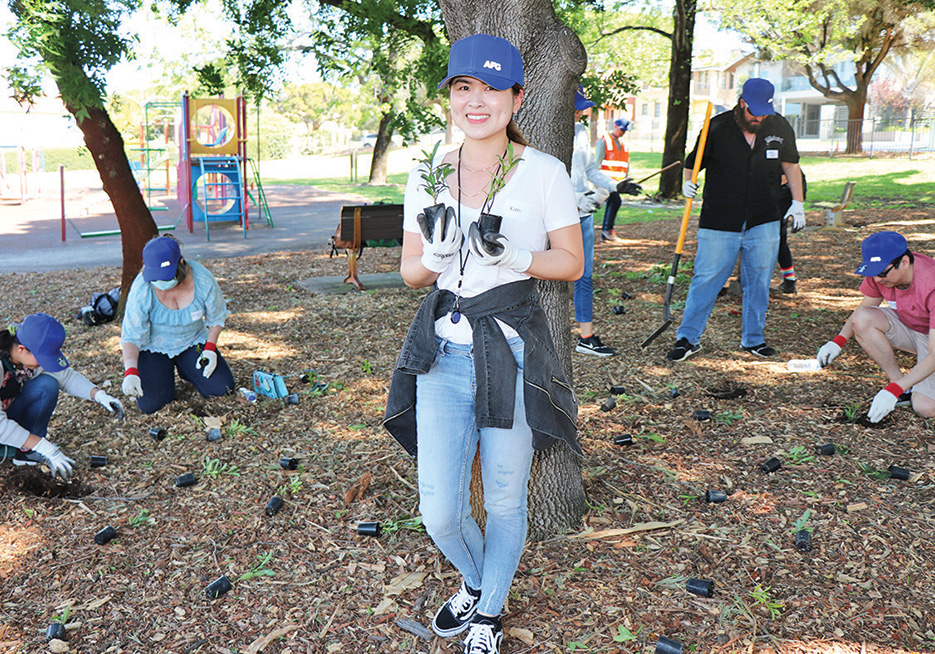
TWO thousand native plant tubestocks were put in the ground at Edinboro Reserve on the weekend to help build food sources for cockies.
The reserve had some diseased exotic trees that had to be pulled out and were replaced by five large trees along with the 2000 babies.
The species were selected based on what the Carnaby’s black cockatoo likes to feed on, like corymbia calophyla, eucalyptus caesia, banksia, hakea, grevillea and melaleuca.
Local workers from West Perth’s AFG volunteered to “ecozone” the reserve, part of Vincent council’s push over the past 10 years to replace water-hungry turf with native plants.
The project targets areas where the grass goes underused and vegetation corridors for wildlife can be created.
The native plants need water at first but once they’re established the ecozoning at Edenboro Reserve will save about 1.38 million litres of water a year.
BAYSWATER council’s permit policy for personal trainers using public parks is so punitive that one fitness instructor has pulled out of operating in Maylands Reserve.
Bayswater charges personal trainers $1100 per year to train classes at a reserve, but they have to pay a separate fee for each park they want to use. They also have to pay that fee for each personal trainer, so an organisation with more than one trainer can end up paying far more than they could profit.
Cr Elli Petersen-Pik said it was clear the system was too onerous, given that there were only three personal trainers using parks in the whole City of Bayswater.
“I’ve become aware of a story by one personal trainer, and there are only three – and I think just that figure itself shows that the city doesn’t really attract many personal trainers – who has shared a story of how difficult it is for him to operate,” Cr Petersen-Pik said at the September council meeting.
“He pulled out from oneof the reserves. It was too much. Too much money, and not financially viable for the business, and the loss was for the residents who use that service.”
He said public fitness training helped residents stay active and connect with neighbours and the permit system shouldn’t stand in the way.
Cr Petersen-Pik got unanimous support to make the system less onerous and now one permit will cover all parks, and one permit can cover multiple trainers from the same organisation.
The usual restriction stays to prevent the parks becoming packed with armies of fitness classes, as the classes are only allowed where there’s enough space to not impact other users.
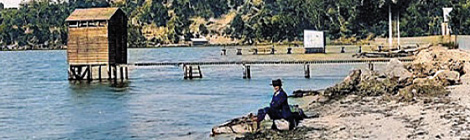
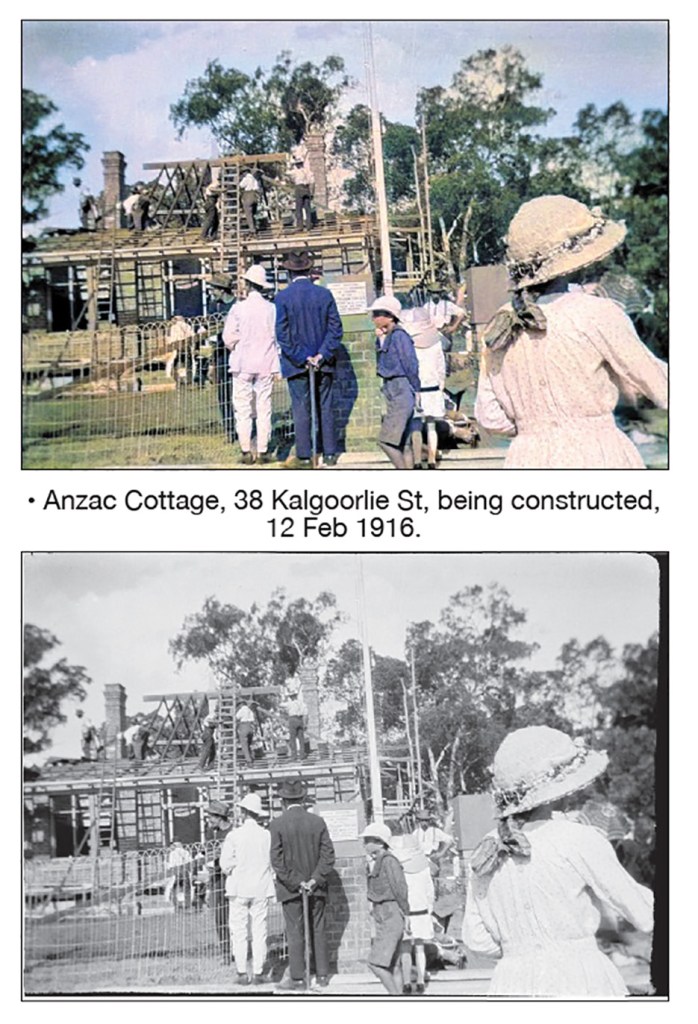
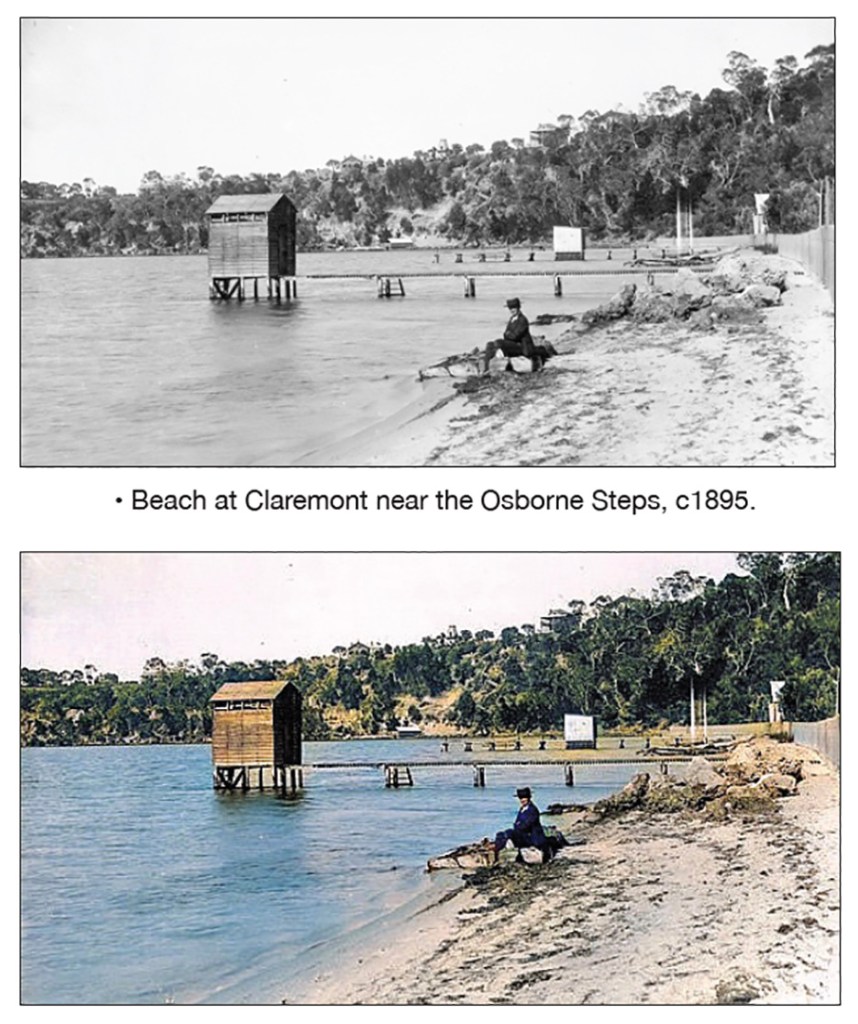
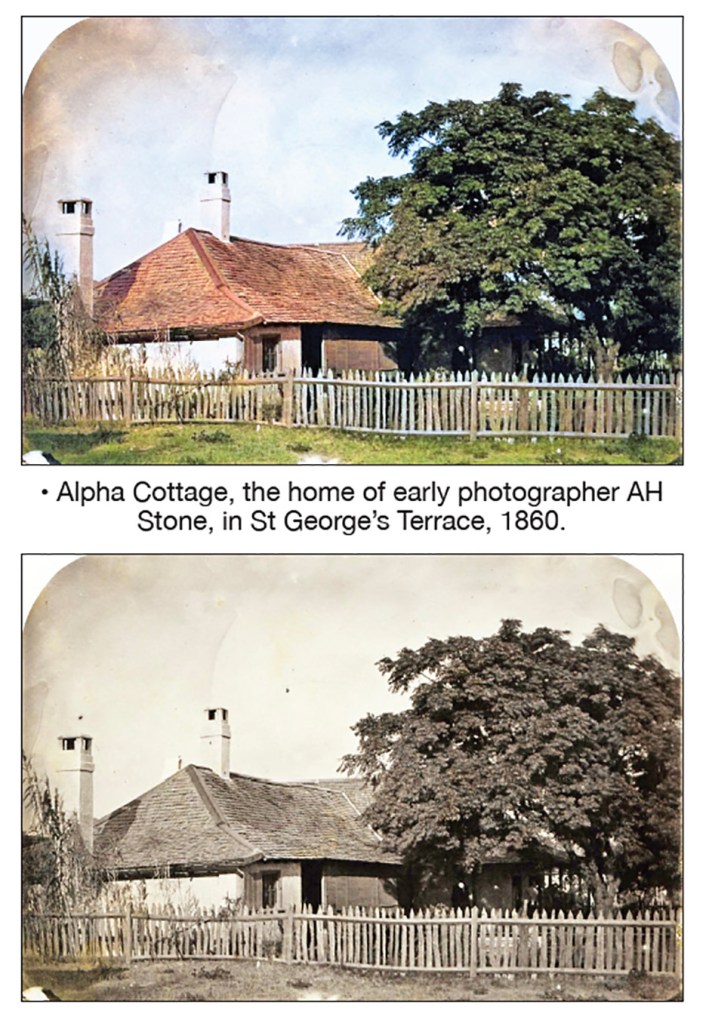
WITH the help of artificial intelligence (AI), library archives and out-of-print photo books, local history fan Dallas Robertson is bringing colour to Perth’s past.
Adding colour to black and white photos used to only be possible via a painstaking hand-colouring process. But as the AI gets more advanced the programs have gotten pretty smart about where to add colour.
Mr Robertson has been working on the online “Colour Me Perth” curation for about five years now, working his way through 11,410 images of Perth from archives and out of print photo books.
The online AI Mr Robertson uses seems to know that when it sees an old photo with a brickwork and frieze that it should apply some subtle manor red colouring to the bricks and a federation cream to the adornments.
But the AI needs some shepherding. Some things trip it up, Mr Robertson says.
Sometimes it sees a horizontal surface and assumes “grass”, and suddenly what’s pretty clearly a road turns green. And the program seems to think Model-T Fords were probably yellow, colouring them a pale canary, despite Henry Ford saying a “customer can have a car painted any colour that he wants so long as it is black”.
Rarely, there are too many tonal oddities for the photo to be salvaged and published online, but typically Mr Robertson wrangles with the colourised photos inan image processing softwareto balance out the colours and tones. For many buildings there’s images of them from the colour era to refer to, while for others it’s a best guess. The bot can’t truly know what colour people’s clothes were from a greyscale image, but it makes some pretty plausible guesses of period-appropriate subdued blues and greys, at least convincing enough to evoke the feel of the scene.
“You notice details you might not otherwise see,” Mr Robertson says, as shades of grey that don’t look much different to the human eye are made more distinct and patterns emerge from what was a blurry charcoal palette.
Mr Robertson has long had an interest in WA history. He was also one of the founders of the Museum of Perth, and has also recreated a snapshot of the colony in 1870 in the video game Minecraft (“Perth in Pixels,” Voice, February 13, 2016).
He’s also turned the colourisation AI onto some family photos.
One was a family portrait on an old black and white slide.
It was only when he let the program add colour that he noticed that his mother was wearing a floral dress.
The pattern wasn’t obvious to the human eye in the shades of grey in the original, but the computer noticed it, and even gave them flowery colours.
“All the years I’ve looked at that photo. I’d never seen that before.”
The images of Colour Me Perth are hosted on twitter @ ColourMePerth
SINCE artificial intelligence (AI) helped give us a look at Perth’s past, we decided to play around with the recent advances in machine-generated imagery by asking an AI to show us Perth in the future.
The program, Midjourney, has access to countless millions of images on the web that are typically associated with related keywords.
When users enter a phrase it finds photos just like a regular image search, but then melds elements of a multitude of images together.
Over generations the program gets ‘trained’ by humans telling the designers it’s done a good job and created a sensible image and not a deranged monstrosity that would only make sense to a computer.
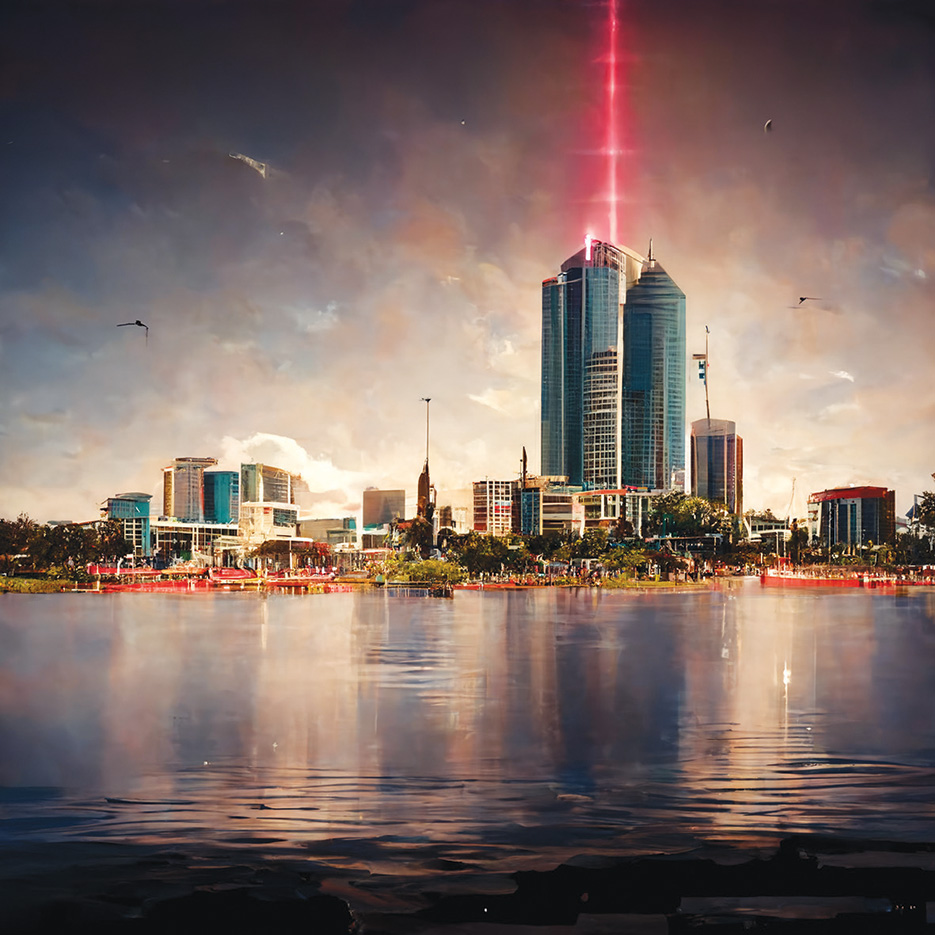
When we plugged in “Perth, Western Australia, 1000 years in the future”, the program tooka few minutes to consult its massive store of images, working through many blurry iterations as it honed in on a consensus for what would make a good image, and finally it shortlisted some imagined variations of Perth in the year 3022AD that revolved around two main themes.
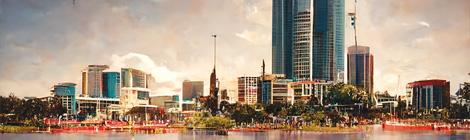
One was a pretty recognisable futuristic waterfront view of the skyline. Elizabeth Quay finally looked finished, appearing to be peppered with mature trees. A lightsabre was coming out of what appears to be the Brookfield Place, to remind us this is the future.
In its alternative vision for the future, the city’s citizens have tried to grow plants on the sides of buildings in a harsh environment. The scene looks influenced from the program drawing on landscape artists from the Heidelberg School mixed with some vivid Sydney Nolan, and the AI decided the riverbed would be dry 1000 years from now.
The programs have drawn some complaints from artists that their hard work is being used in the final products. An image generated by Midjourney has already managed to win a prize at the Colorado State Fair, prompting arts organisations to scramble to come up with a rulebook to handle machine art.






 Perth Voice Interactive