• See your bills slashed

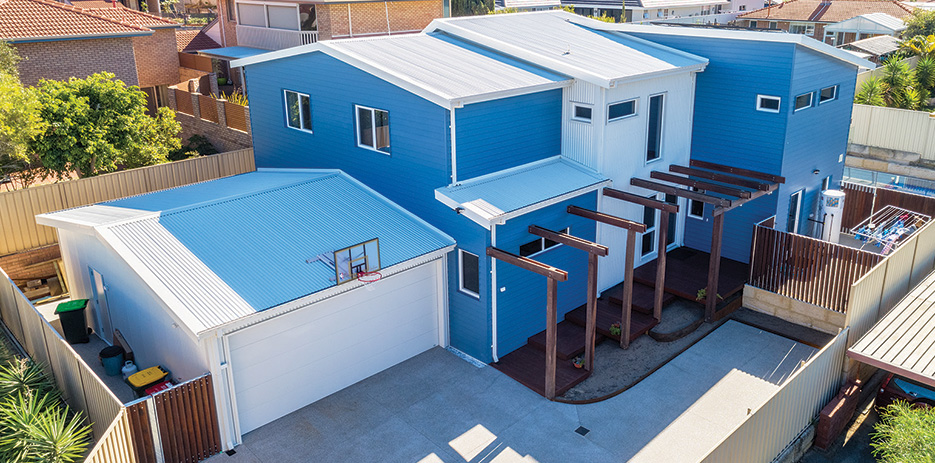
    AN AMERICAN couple have reduced their heating and cooling bills to just $400 a year by building the first ‘passive house plus’ in WA.

    Situated in North Beach, the property dispels the myth that building an energy efficient home is super expensive – it cost $2200 per sqm, just $200 more than the average sqm build cost in Perth, according to the Rawlinson Construction Cost Guide.

    Featuring state-of-the-art insulation, thermally broken windows and door frames, and double glazing, Carlos and Gloria Acuna’s nearly air-tight house never gets below 20 degrees in the winter and above 25 degrees in the summer.

    “The key feature of these modern homes is that they are built with high performing building envelopes,” Mr Acuna says.

    Originally from Seattle, Mr Acuna says that most modern homes in the US are comfortable temperature-wise all-year around, so after six years of living in poorly-insulated rentals in Perth he had had enough.

    “The common theme in all the houses was that they were very draughty, hot in summer and freezing in the winter, despite Perth boasting a Mediterranean climate,” he says.

    “The newer homes we had lived in performed no better than the older ones. We paid astronomical electric bills, particularly in the summer.

    Prioritising energy efficiency and thermal comfort, the couple’s 300sqm new build cost them $660,000.

    “To date, this is the lowest cost per square metre build of a passive house that I am aware of,” he says. “I personally believe that living in a thermally comfortable home that is cheap to operate is something we all deserve, whether in a project home or a high-end luxury home. 

    “Sustainable housing should not be something that is limited to the wealthy.” 

    Australia is making small inroads towards improving energy efficiency and thermal comfort – in 2019 the National Construction Code increased the airtight standards and in 2022 new thermal requirements will be added – but Mr Acuna says the regulations need to be enforced.

    “A CSIRO study published a few years ago found that homes recently built in WA had an average airtightness level of 25 air exchanges per hour, well above the 10 air exchange limit,” he says.

    “The challenge at the moment is that the NCC does not enforce air tightness verification, so as a consumer, we are still relying on builders goodwill and capability to deliver an airtight structure.

    “Back home in the US, Canada and many European countries, builders are required to perform a blower door test which assists the builder in finding leaks in the building envelope and gives the consumer transparency and assurance that they are getting what they paid for.  

    “The average builder in Seattle is building a home with three air exchanges per hour.”

    The Acuna’s passive house is being featured as part of Sustainable House Day on October 17, with four weeks of events leading up to it. 

    For more details go to sustainablehouseday.com

  • Oh baby, it’s spring

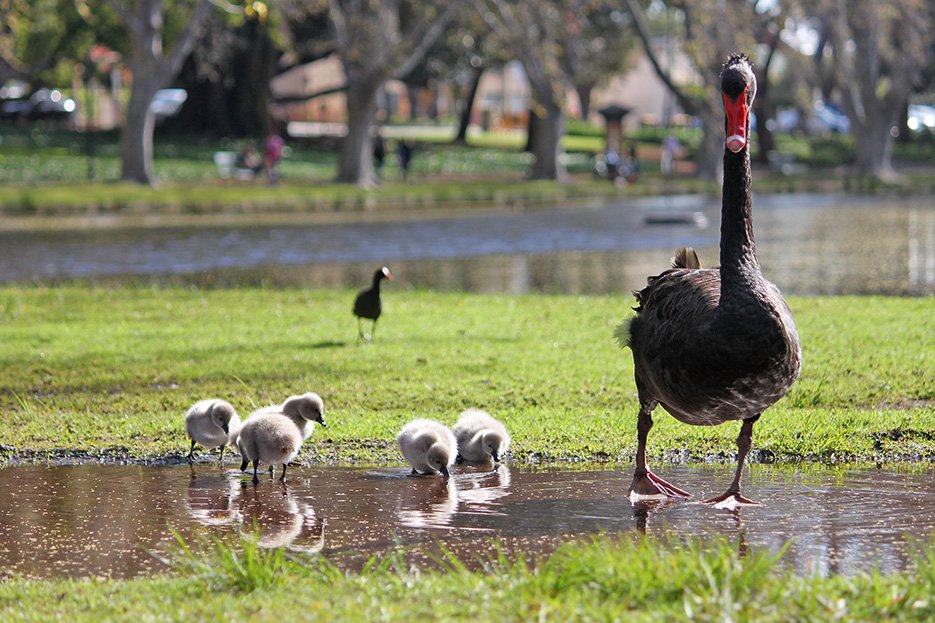
    SPRING is now official, with breeding swans returning to Hyde Park and showing off six fuzz-headed cygnets.

    No swans bred in Hyde Park in 2020. The reason is unknown but that was a bad year for water quality and a botulism outbreak killed an ibis and more than 50 ducks.

    Parkgoers were concerned there’d be no babies again this year as only a solitary swan had been spotted, until recent days when a pair swam out together and unveiled their six cygnets.  More new life was also seen in the park with some long-awaited long-necked turtle hatchlings waddling out of their nests. 

    The eggs were laid last November and have a varied incubation period depending on the temperature. Two nests hatched in the past few weeks, with a third nest of yet-to-hatch eggs north of the lakes fenced off and being monitored for a UWA study. 

    by DAVID BELL

  • Leedy green shoots welcomed
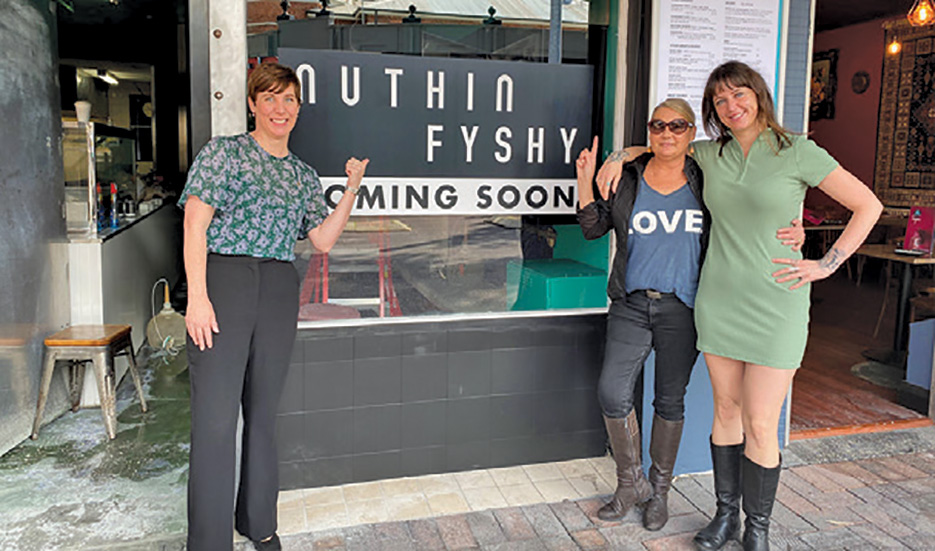
    Nuthin Fyshy owners Erin O’Brien and Kylie Pogorzelski with mayor Emma Cole.

    LEEDERVILLE’S seeing renewed signs of life after a summer of doldrums, with a bounty of new businesses popping up on the main strip.

    Earlier this year there were at least a dozen empty shopfronts along Oxford Street. Long term icon Greens & Co went out of business early 2021 citing rent troubles, Tom’s Kitchen closed mid-2020 when they couldn’t agree on lease terms with the landlord, some closed during Covid and other empties predated the pandemic.

    The strip’s now started to turn around with new openings and some “coming soon” signs hung in vacant windows.

    One big boost has come from ABN Group’s office building opening up in June and bringing hundreds of employees in. 

    Vincent mayor Emma Cole said “while it’s difficult to see empty shop fronts, I’ve always remained optimistic that this would be short-lived and Leederville would soon be thriving.

    “The injection of life from the ABN building and Electric Lane has helped drive more investment in the town centre, and businesses have seen the potential and growth in Leederville once again.”

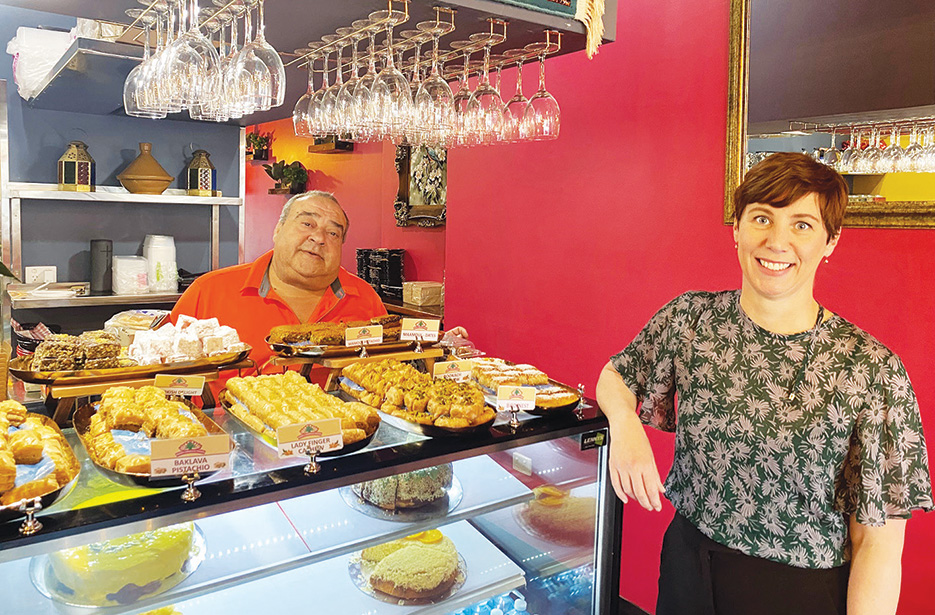
    On the main Oxford Strip Tagine Tapas and Grill moved into the old Caesar’s Pizzeria building this week. Bubble tea venture Presotea opened on Oxford in April and the owners like the area enough they’re already looking to open another type of business in Leederville based on what locals are keen for.

    Tagine Tapas and Grill owner Elyas Bahbah welcomed to Leedy by Vincent mayor Emma Cole.

    New businesses quickly moved into Electric Lane, the revamped alley between ABN and the recently renovated Leederville Hotel, including Abacus Espresso, hair salon Eesome, and Leedy offshoot restaurant The Servo servicing the lane. 

    New small bar Roberts on Oxford, which opened in December with a capacity of 50, is already looking to expand to 120 and the council’s due to decide at the next meeting.

    Expand

    There’s more on the way: Chef Will Meyrick opens his new restaurant Will Street on Carr Place this month and Vikka Pizza is coming to Oxford Street in October. The old Sweet Lips shop, empty since mid-2019, will soon host fish-ish restaurant Nuthin Fyshy, which uses vegan alternatives to alleviate the strain on the fish population. 

    Leederville Connect chair Anna Kelderman said the new openings would hopefully bring in new people who’ll fall in love with Leedy.

    “Leederville has that great mix of people, jobs and entertainment that keep activity running all through the day,” she said. “I think that is why we see regeneration after down cycles, because there are multiple reasons to be here.”

    With the suburb proving so popular, the council now plans to tackle parking concerns. 

    Options include asking for expressions of interest to build a multistorey carpark at the Frame Court or the Avenue carparks, to be considered at an upcoming meeting.

    by DAVID BELL

  • BBQ plan to liven Totterdell Park

    But are there devils in the detail?

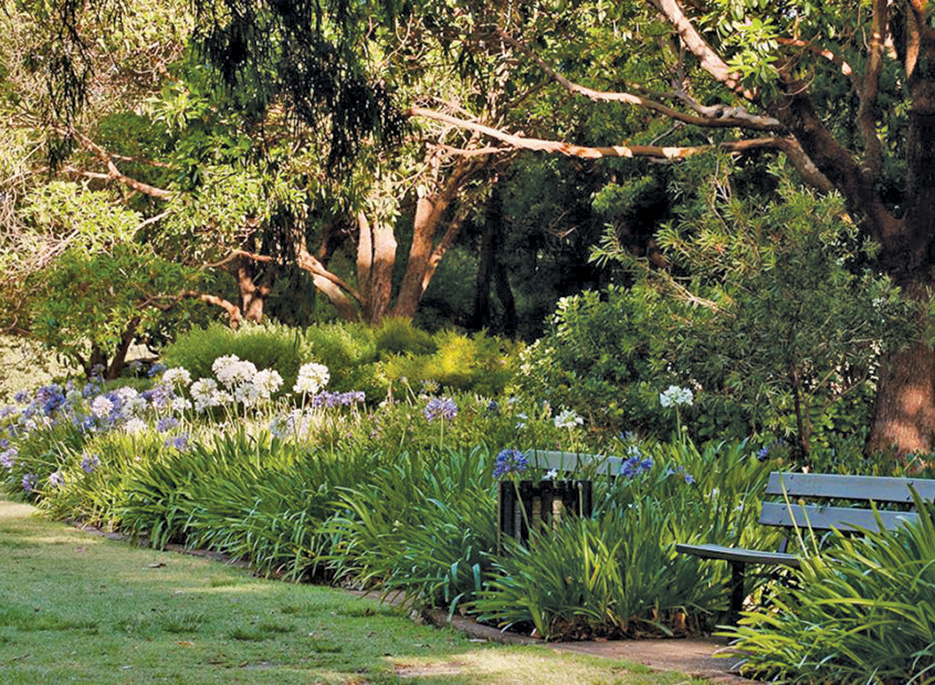
    The council’s website calls this park a “charming” and “tranquil oasis”, but nearby residents reckon it gets rough after dark. Photo from City of Perth.

    CAN the humble barbie help fight crime at the trouble hotspot of Totterdell Park?

    Nearby residents say there’s ongoing security issues and antisocial behaviour in the shadowy West Perth park, which doesn’t have CCTV or lighting, and Perth council’s considering activating the area in the hope legitimate users deter delinquents.

    Resident Hugh Myers is chair of the Lucknow Place council of owners, and made a deputation to council listing the park’s problems and calling for lighting.

    “We’ve been adversely affected as a complex and as a nearby community with regard to the ongoing crime in the area,” he said, with people prowling the shadows at night, residents followed after dark, bikes stolen, and cars broken into.

    “The park itself has been neglected for a long number of years. I feel it’s under-utilised. The lighting is just non-existent after a certain time of day.” 

    Deputy lord mayor Sandy Anghie moved that council staff investigate complaints and compile data on security issues there so they can ponder some upgrades.

    Council staff say lighting and CCTV would cost north of $300,000 and there’s currently no plan to install them, and the park has no power. 

    Cr Anghie pointed out the park’s advertised on the council’s website as a place for parties, and it might attract more legitimate parkgoers if there was actually a barbeque there, describing it as part of the “basic amenity” fundamental to making the area more appealing. 

    Staff have advised treading very cautiously and consulting first, given previous opposition from some nearby residents to livening up the park.

    “Barbeques may be a good option for some local residents, however, may also create an increase in later night usage of the park which may impact on other residents in the immediate area,” a wary and weary staff report reads.

    Back in 2019 the council proposed a small off-leash dog agility course there to activate the park.

    The report says “while the proposal received a high level of support from the wider community the residents overlooking the park were strongly opposed, due to concerns with parking, noise and the perception that it would attract antisocial behaviour”.

    A split council approved investigating the park’s problems and potential solutions, with councillors Anghie, Clyde Bevan, Brent Fleeton, Liam Gobbert and Viktor Ko in favour. 

    After community consultation a report will be drawn up for councillors early 2022 to consider any upgrades that’ll hamper crime but not irk neighbours. 

    by DAVID BELL

  • Housing cash hits the spot
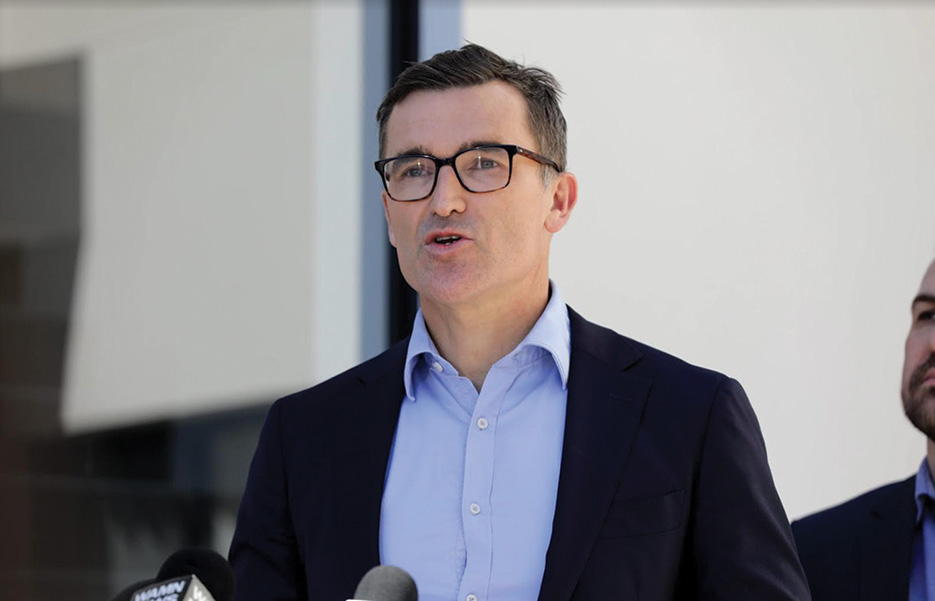
    Housing minister John Carey announces the funding.

    THE WA government will spot-purchase homes, convert mixed stock to more social housing and expand the upcoming Common Ground facility in an effort to put a dent in the number of homeless people on the housing waitlist. 

    Ahead of the March 2021 election, homeless advocacy group ShelterWA called on the government to spot-purchase 2000 homes to soften the end of the eviction moratorium. 

    The McGowan government last week announced $40 million to purchase homes as part of an overall $875m injection into social housing in the budget. 

    Market

    Housing minister John Carey says “where there is need, we’ll go into the market and purchase,” but he told us “we’d want to be very careful” to not inflate housing prices. 

    “If we went into a regional community or a particular suburb and said we want to purchase a large number of homes, you’re competing against other buyers, so you’d lift the price.

    While it’s fewer homes than they’d hoped, ShelterWA welcomed the move with CEO Michelle Mackenzie putting 

    out a statement saying “it is fantastic that the government has listened to the WA community who understand the benefits of everybody having a place to call home and demonstrated overwhelming support for new investment into social housing.

    “Housing stress has continued to increase with the wait-list sitting at around 17,000 households. The commitment to spot purchasing homes as an immediate boost will provide a great relief to some people desperately waiting for a safe, secure home.”

    With the construction industry busy building swank renos with federal Covid grant cash, a lot of the $522m is scheduled for 2022-23 once the tradies are freed up again.

    Ms McKenzie acknowledged “with the current challenges in our overheated building and construction market, counter-cyclical investment and planning for pipelines of work as the market cools is a smart approach”.

    In the meantime some projects that were intended to have a small portion of social housing homes amid a majority of affordable private housing will be rejigged to have more social housing.

    The funding also covers expanding the number of units in the upcoming Common Ground self-contained supported living complex in East Perth, going from 70 spots to 112.

    The extra $875m brings the social housing portion of the budget to $2.1b.

    Mr Carey says “this is the biggest social housing investment in the state’s history, and I’m really proud as the new minister for housing to be driving a program to accelerate the delivery of social housing”.

    by DAVID BELL

  • Hostel nearly empty

    A NEW 100-bed homeless facility in Perth remains near empty a month after opening.

    Boorloo Bidee Mia opened on August 9 but is at less than 20 per cent of capacity, and despite a ministerial press release stating “all vulnerable rough sleepers are eligible”, one homeless advocate has found that’s not been the case.

    National Suicide Prevention and Trauma Recovery Project director Megan Krakouer told the Voice she’d taken a client who’d been released from prison last week to BBM because there was a day’s lag before his secured accommodation was available. Being from Roebourne he had no nearby family to call on.

    “The response was ‘we only take referrals from the Heart program for people from Freo’s tent city’,” Ms Krakouer said.

    That’s left Ms Krakouer seething; she says it’s perverse the McGowan government went out of its way to dissuade people from going to tent city, but now they were getting preferential treatment.

    “They are discriminating against the people who were living on the street.”

    The Department of Communities said a sudden influx of people would lead to anti-social behaviour and therefore centre operator Wungening Aboriginal Corporation could not accept everyone.

    Wungening CEO Daniel Morrison said Boorloo Bidee Mia was the first step towards healing, as once people had a place to stay, they were much more likely to engage with service supports.

    “Boorloo Bidee Mia is not a crisis service or shelter, instead it provides a community to people with the intent of offering a pathway to longer term accommodation,” he said.

    But a secure home remains out of reach for many, with 17,000 households currently on the Homeswest’s waiting list – 2,000 of them on the priority list.

    In response to this the McGowan Labor government last week announced a $2.1 billion investment to boost social housing in Western Australia, saying it would provide an additional 3,300 new homes.

    But Ms Krakouer says that will still leave them short of tackling the wait list, and doesn’t take into account people leaving prison who aren’t on the wait list, or those homeless people who couldn’t get on there because they couldn’t afford to reproduce identification documents.

    Former homeless Perth resident Jye Maher said the Labor government was not doing enough.

    “The government has recently demolished over 1,000 social houses across Perth; they cannot honestly claim that they care about getting homeless people off of our streets” he said.

    The current social housing wait time in Perth sits at a record high of 100 weeks.

    by SASCHA COX and STEVE GRANT

  • Statue a ‘pet project’
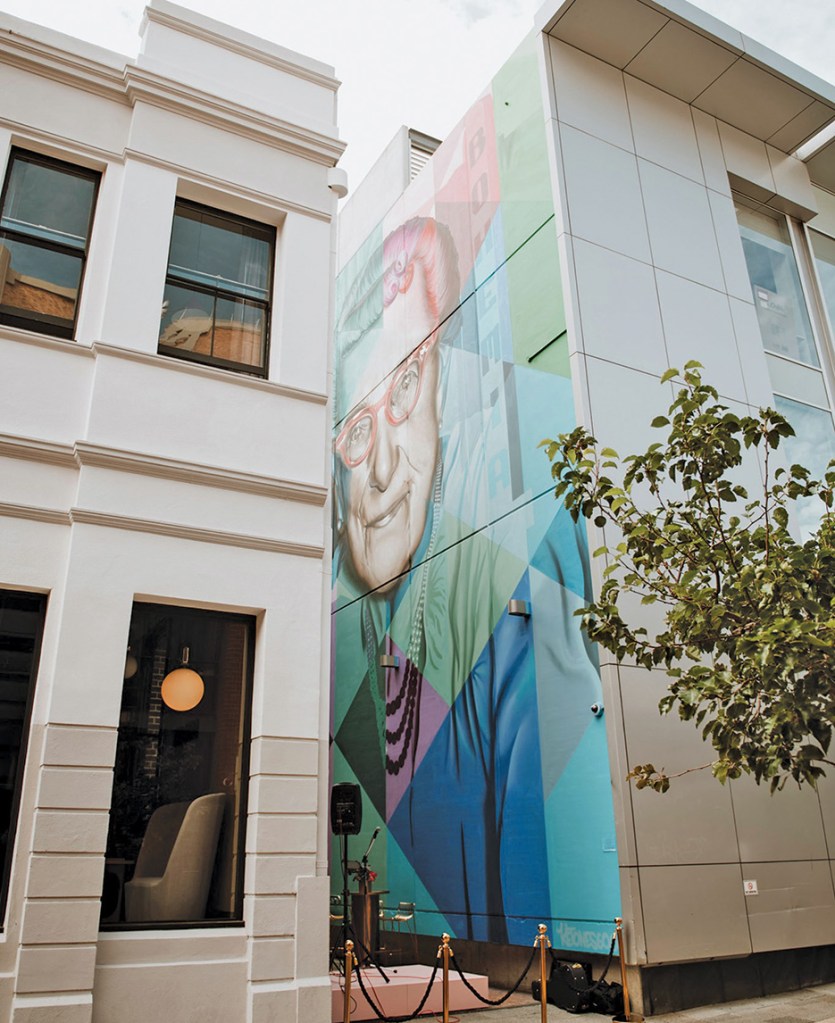
    It’s not a statue, but Mary Raine was memorialised in mural for her philanthropy, including leaving her property portfolio to UWA to fund a medical research foundation following her husband Joe Raine’s early death through a stroke. Mural by Jerome Davenport, photo from Raine Square

    THERE’LL be no new woman statue in the CBD for now, with Perth council narrowly voting not to pursue a new monument to honour women.

    Perth deputy lord mayor Sandy Anghie put up a motion that council invite submissions for statues to commemorate significant women in Perth’s history, to offset the overwhelmingly male lineup of current statues. 

    She acknowledged while it wasn’t the most pressing problem in the city, the imbalance should be addressed to tell women’s stories for future generations. 

    The motion was supported by councillors Clyde Bevan, Liam Gobbert and Viktor Ko.

    But they were voted down by lord mayor Basil Zempilas, councillors Di Bain, Brent Fleeton, Rebecca Gordon and Catherine Lezer.

    Cr Gordon said “I respectfully suggest that we focus on these more pressing problems and stop wasting administration’s time with pet projects”.

    She said “just last month this council considered and approved council policy 4.8: Public Art, to guide the delivery of all City of Perth public art projects and programs and inform public art projects delivered by others within City of Perth boundaries.

    “This policy seeks to be inclusive, and acknowledges and celebrates diversity. This policy is a strategic way of elected members having input on what art appears in our public spaces. One survey carried out by one elected member considering one type of artistic medium should not be a decider in pursuing additional expenditure when a properly considered and approved council policy already exists.”

    Cr Gordon said statues were a relic of the past and there were more modern ways to honour women, like the recent mural of philanthropist Mary Raine in Raine Square, commissioned by the square’s owners.

    Cr Anghie said the statue could be funded by contributions from corporate donors, community groups donors or other levels of government, but it wasn’t enough to tip the chamber’s mood.

    by DAVID BELL

  • Gorman keen to fight on for bronzed woman
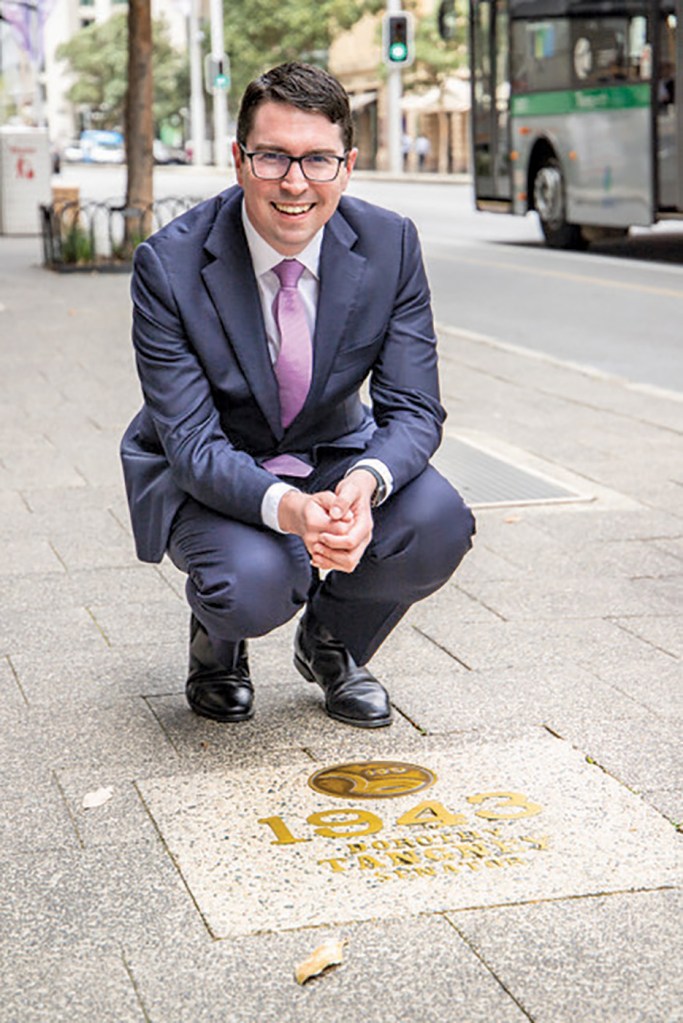
    Dorothy Tangney has a plaque on St Georges Terrace, but Patrick Gorman says we should bring her into the third dimension with a statue. 

    PERTH still needs a woman statue to inspire future generations, federal Perth Labor MP Patrick Gorman says, and he plans to keep chipping away to make it happen.

    He told us it’s fitting for Perth to add a woman to its lineup of mostly male statues: “Western Australia has the proudest history of women leading in our parliaments across the nation: Edith Cowan, Dorothy Tangney, Florence Cardell-Oliver, Carmen Lawrence and Ruby Hutchison.

    “Last year I raised with the prime minister the need to celebrate these Western Australian heroes of democracy. 

    “Public statues and public monuments in the Perth CBD will inspire the next generation. It is well and truly past time they are built.

    “We need local, state and federal governments to come together and get it done,” Mr Gorman says. “It should be added to the Perth City Deal,” the tri-government infrastructure building endeavour.

    Mr Gorman had nominated WA’s first female federal MP Dorothy Tangney as an ideal statue and put the idea to Perth council, but they told him to find some funding first before they discussed specifics like a location. 

    “I understand the community disappointment in the City of Perth council decision,” he says, adding he’ll keep working on the project. “I look forward to further engagement with councillors, including deputy lord mayor Sandy Anghie, to make this happen.”

    by DAVID BELL

  • Filmmaker Gaming reality
    Hayley Welsh’s wall-art brought to the third dimension in Never Alone.

    WHIMSICAL figures dotted around Perth’s walls have had their story brought to the screen with a short film created with software that usually makes video games.

    Last year filmmaker Ben Matei heard the video game developer Epic had put out a challenge to create a short film in their “Unreal” game engine.

    A toolbox for developing games, Unreal has been used to create everything from warzone shooters to hardcore railway simulators.

    “The technology really interested me,” Matei says, noting the new Star Wars show The Mandalorian partly used the engine to create virtual sets. “The film industry has started to head [toward] virtual production, so I thought this could be a great opportunity to get my hands on the engine, learn how to use it, and apply it in a creative way.”

    He just needed a story to tell, and inspiration came in the form of street artist Hayley Welsh’s intriguing critters daubed on local walls. 

    “We came across Hayley’s work… [she] has a lot of beautiful street art with these characters dotted around Perth, and this one particular painting had a story. It was very clear: Here is a character in a pre-existing, well-fleshed out world. I didn’t know what it was, but I was compelled to reach out to her.”

    They met up and a story firmed up around a lonely critter who befriends a balloon. 

    Epic trained entrants how to use Unreal, and Matei embarked on a two week crash course to learn the ropes. Nearly 2000 participants entered the training, and then Matei’s pitch was one of six chosen to receive $20,000 funding to make the film in just six weeks.

    “That’s an insane timeline,” Matei says. “They weren’t kidding when they called it a challenge.”

    To achieve the more ambitious parts of his vision he put out a call on social media looking for people who’d had more than a couple weeks’ experience in Unreal.

    One Unrealist who answered the call was Mark Thompson, a lecturer who teaches the engine at Northbridge’s SAE Creative Media Institute.

    He came on board to grapple with the less user-friendly parts of the interface, writing code to build easier tools for Matei and the animators to move Welsh’s creations about inside the game, and adding dynamic effects like raindrops and puddles.

    He also “put out the small tech fires” as occasional strange bugs popped up, like bits of the virtual landscape or clouds competing to jump to the foreground. 

    “They would fight with each other,” Thompson says. “So that’s a whole lot of trial and error.”

    The five-minute film is graphically beautiful but that came at the cost of a massive file size which meant part of the virtual production had to spill back into the physical world.

    “Final file size was 100 gig,” Thompson says. That’s about 12 hours upload time on the average home internet connection. “It was faster for us to physically transfer the project via hard drive” and drop it to the next person’s house.

    Matei says compared to traditional filmmaking, once the characters and landscape were built there were a lot of advantages to using a game engine.

    “With a film, to go back and reshoot is extremely expensive. So once you get to an edit, you’re stuck, you have to make do creatively with what you have.”

    With this project he could drop in flying cameras wherever he wanted, switch out lenses, or go back and make the character move differently.

    Never Alone was recently shown at the prestigious LA Shorts Film Festival, and is watchable online https://vimeo.com/500639994

    by DAVID BELL

  • Marvel on a shoestring
    Not even a shoestring budget, more a thong strap: the $12,000 feature-length film Good for Nothing Blues. Still from Jag Pannu Productions.

    TWELVE thousand dollars would cover the budget of about one third of one second of a big Marvel movie, but a small band of Perth filmmakers have made a full feature-length film on just $12,000.

    Good for Nothing Blues is a project five years in the making for director Alexander Lorian, who began writing in 2016 and ran auditions in 2018.

    He took a punt with a Kickstarter to raise funds with a goal of $20,000, but at the campaign’s completion they only just hit $4000, and Kickstarter returns all pledged if the target’s not met.

    He took a year to ensure the film could still go ahead on a minimal budget and cast and crew could still be paid, and with producer Elle Cahill they whittled a hefty 138 page script into a 131 minute film. 

    Despite a pandemic interrupting shooting, 28 days of filming gave way to months in the editing room to polish off the final product, a crime comedy following a group of dole-bludging friends who win $200,000 on lotto and find extra cash only brings more problems in the form of gangs, cops, drugs and debt.

    The homegrown film has a home town screening at Luna Leederville on September 12 at 6.30pm, http://www.trybooking.com/BTUBK for tickets

    by DAVID BELL