BIG changes are on the way for Leederville with a pair of proposed towers slated for 25 and 17 storeys in an area historically limited to five.
Developer Hatch and RobertsDay are in the early stages of the proposal for 40 Frame Court, the block next to the WaterCorp which sold for $12.5 million in 2018. They’ve put out a draft “local development plan” ahead of working on detailed designs, testing the water as to whether Vincent council might allow towers that high.
The current height limit laid out in the Leederville Masterplan is five storeys but the council’s made clear the future is taller, with recent nearby approvals nudging skywards to eight storeys.
The council’s working on its own version of a precinct structure plan which sets a mildly more modest 23 storey limit for 40 Frame Court, which is in the “Cityscape” fringe of Leederville. The inner “village” part on Oxford Street would have a three storey maximum.
Mayor Emma Cole says “with development demand increasing in Leederville, it is essential that council and our community consider a new and contemporary planning framework to guide this next phase of development,” calling for people to weigh in on what they want for Leedy.
Like a lot of high streets Oxford has had some empty storefronts in recent years, but the nearly-finished ABN Group building is expected to bring hundreds of workers in shortly.
The council’s plan is open for comment until July 5 and the Hatch and RobertsDay plan consultation runs til June 15.
IT’S been 134 years since Emile Berliner got groovy with with the world’s first flat gramophone disc; now a 25-year-old has opened up a bricks and mortar shop on Hay Street paying homage to vinyl.
Gavin Clancy was working in a supermarket before Covid hit and put him on a new path.
“The pandemic has made me change the way I think about things,” he says, highlighting the importance of “doing the things you enjoy, even the little things”.
Mr Clancy’s been into records for about eight years, enjoying the tangible aspect of having something you could hold to represent beloved music.
His collection had been growing over the years and he’d had a few thoughts about having a retail space but the last year’s ructions prompted him to make the leap. Whatever happens next, he says he’ll enjoy the ride.
“I’m willing to give it a go, even if it doesn’t work out.
He’s a big Beach Boys fan (a few of their records are in his treasured not-for-sale collection) and named the store Good Vibrations, opening up on June 2 in the Seasons Arcade.
He’s made sure to stock a wide range of classics, 12 inch singles for DJs, new indy exclusives, and he wants a big focus to be on supporting and stocking local bands.
His first customers on the opening morning were about 20 years old, and they picked up some classics like The Rolling Stones (whose drummer Charlie Watts marked his 80th birthday on opening day).
Mr Clancy says it’s not unusual to see young people into vinyl: “From my experience, the crowds you see at record stores are pretty varied.”
He’s at 3/1251 Hay Street West Perth, open Wednesday to Sunday.
THE trio of mixed-use “Karrinyup West” towers planned for Karrinyup Shopping Centre has been deferred, with Development Assessment Panel members seeking some tidbits of information to clarify the final design.
The plan by Rowe Group for owner AMP adds 270 apartments across the three towers measuring nine, 15 and 24 storeys, and joining an upcoming seven storey block that was already approved. The council’s usual maximum in the area varies from four to eight storeys.
Stirling council has a long list of objections including height, traffic, and the concerns of residents, but the call lies with the state-government dominated DAP.
Most nearby residents oppose the towers, with 72 per cent of those within 210m outright objecting, and only 1.8 per cent were in favour.
Usually a broader Precinct Structure Plan setting out a big holistic vision for an area is required before these big projects are allowed to go ahead, but the state government rule is pretty flimsy since the DAP can just decide a plan isn’t required if it feels a development “does not conflict with the principles of orderly and proper planning”.
The council and most residents think the proposed buildings do conflict with those principles, but the council only has two members on the DAP and the three other votes come from state-appointed members. Back in 2015 the DAP voted to approve the first stage without a PSP.
Residents’ group Karrinyup Residents for Responsible Development would prefer four storeys on the site, and contends the project shouldn’t be approved without a PSP. Member Simon Wheeler says he would’ve preferred the council got onto the PSP years ago but he’s glad the current elected lineup is backing their opposition.
Earlier this year the KRRD called for a special electors meeting where they convinced Stirling council to go ahead and put together a PSP.
But the Karrinyup West vote will likely be cast long before that’s set in stone, with the DAP wanting the last bits of info back so a decision can be made within 120 days.
The site owner reckons it’ll be good for the neighbourhood: AMP’s Scott Nugent told the DAP the project would transition the centre from a traditional 80s shopping experiences to a true mixed use outcome that’d lead to more vibrancy given the extra residents it’ll bring in.
He said it was a high quality development that’d underpin the whole Karrinyup redevelopment and create “an activity entertainment precinct”.
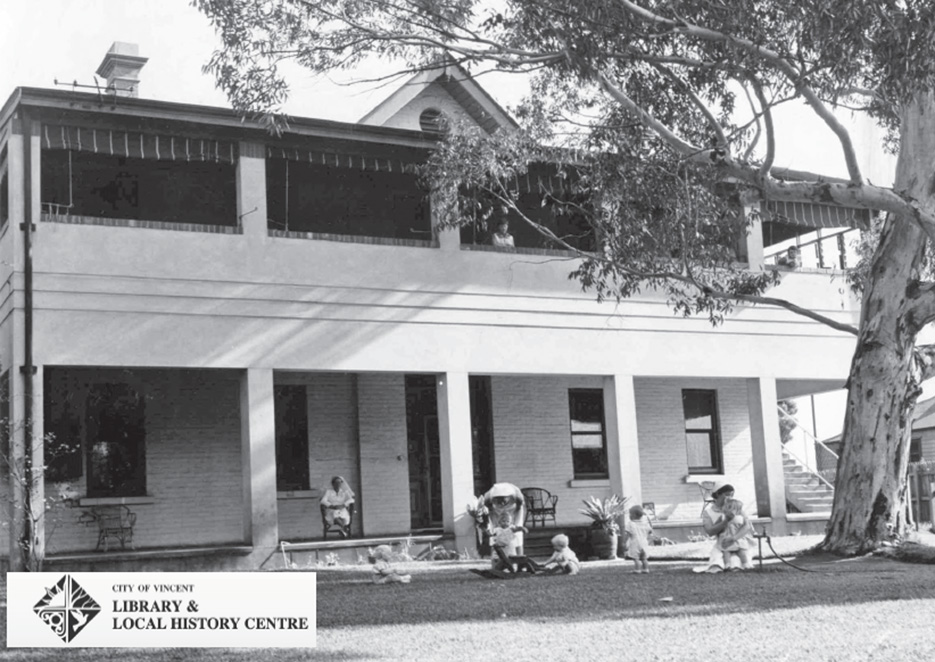
A house on Lincoln Street, the original House of Mercy. Photo copyright Ngala
This week’s tale from the Vincent Local History Centre looks back at a time when single mothers faced great prejudice, and a Lincoln Street house offered a refuge.
MANY Perth families would know and appreciate the work of the Ngala parenting and children’s support service which has operated out of its premises in Kensington since the late 1950s.
Fewer people may know about its early history and connection to the suburb of Highgate, where the organisation ran the House of Mercy (later renamed the Alexandra Home for Women) from the early 1900s.
The House of Mercy at 55 Lincoln Street, Highgate was designed by soldier/architect Sir Talbot Hobbs and was built in 1901 as a refuge for unmarried pregnant women.
The following description of the refuge appeared in the West Australian on September 24, 1926:
“For girls in desperate straits, sore beset with shameful sorrow, there is in Perth a haven. At the Alexandra Home in Lincoln-street, Highgate Hill, safe shelter is offered that seeks not to reproach, but to assist materially in re-generating the shattered lives of weak-natured young women. There they are helped in every possible way.
Inexperienced and ignorant young girls are also taught much that is useful, and to tend their babies in accordance with the laws of hygiene.”
The language used was a sign of the times and the prejudice faced by single mothers, although the intent of the refuge was to provide support and to teach valuable life skills.
In 1916, the House of Mercy became the Alexandra Home for Women, named for King Edward VII’s widow.
At the time, plans to build Perth’s first maternity hospital on Lincoln Street beside the House of Mercy did not proceed, and King Edward Memorial Hospital for Women opened in Subiaco instead.
The Alexandra Home for Women continued its work in Highgate assisting unmarried pregnant women and their babies in an era when there were fewer social supports available to women.
In the 1940s, the work of Alexandra Home for Women expanded to include mothercraft training.
In the late 1950s, having outgrown its original building, the organisation moved to new premises in South Perth and became the Ngala Mothercraft Home and Training Centre.
The house at 55 Lincoln Street was demolished in the early 1980s and the land is now occupied by aged care service provider Aegis Lincoln Park.
For its 130th anniversary, Ngala has commissioned a book on the history of the organisation written by Cherilyn McMeekin. Cherilyn will be giving a talk about Ngala’s early history in Highgate at the City of Vincent Local History Centre on Wednesday June 9 from 10-11.30am. The talk is free but bookings are essential. Call or email: 9273 6534 or local.history@ vincent.wa.gov.au
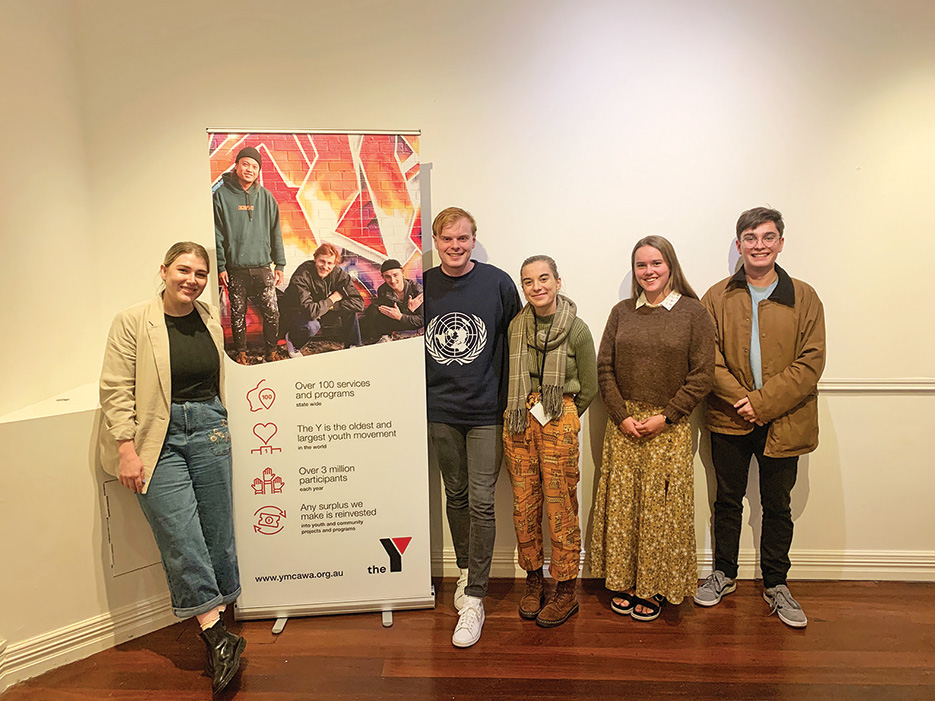
United Nations youth representative Lucy Stronach (left) and the crew from The Y WA.
THIS week’s Speaker’s Corner comes from LAURA DUNLOP, youth services manager at The Y WA (the new name for the YMCA). On May 26 the Y’s HQ Leederville was the site of a meeting between local young people and the Australian youth representative to the UN Lucy Stronach, who heard about the main issues affecting them to report to the UN at the end of the year.
WHAT would the world look like if young people were making the big decisions?
Last week a group of young people gathered at The Y HQ Leederville to meet with the 2021 Australian Youth Representative to the Unites Nations Lucy Stronach to chat about what the world would look like if young people were in charge.
What young people value doesn’t always align with what the government prioritises, but the future of the world belongs to them, so it’s really important to have their voices heard regardless of their age.
So when this group was asked what they care about and what they want to see changed, they were really happy to chat to Lucy, who will take her findings to the United Nations at the end of this year.
Education
The issues the young people raised covered a wide range of topics, including education, mental health and the environment.
The young people strongly believe that life skills, such as how to do taxes, needs to be prioritised within the education system.
They also said that they feel that more needs to be done for the environment and to slow climate change, and an increased emphasis needs to be placed on protecting and treating mental health. The group also said the lack of opportunities offered to young people living regionally and remotely in comparison to their metro-based counterparts needs to be remedied.
It’s no surprise that gender inequality was also raised as an issue, with young people calling for better education around consent.
They also offered up lots of valuable suggestions about how they think some of the issues could be addressed, such as by exploring more sustainable farming practices to better protect the environment, and adjusting the school syllabus to include more education about life skills.
Lucy is talking to young people all around Australia before presenting her findings at the United Nations.
This is an excellent example of how young people can be empowered to drive real change.
Young people are the future, and they’re smart and passionate –it’s great to see their ideas betaken up to an internationalplatform.
WHO says it’s impossible to get on the property ladder in a good area these days?
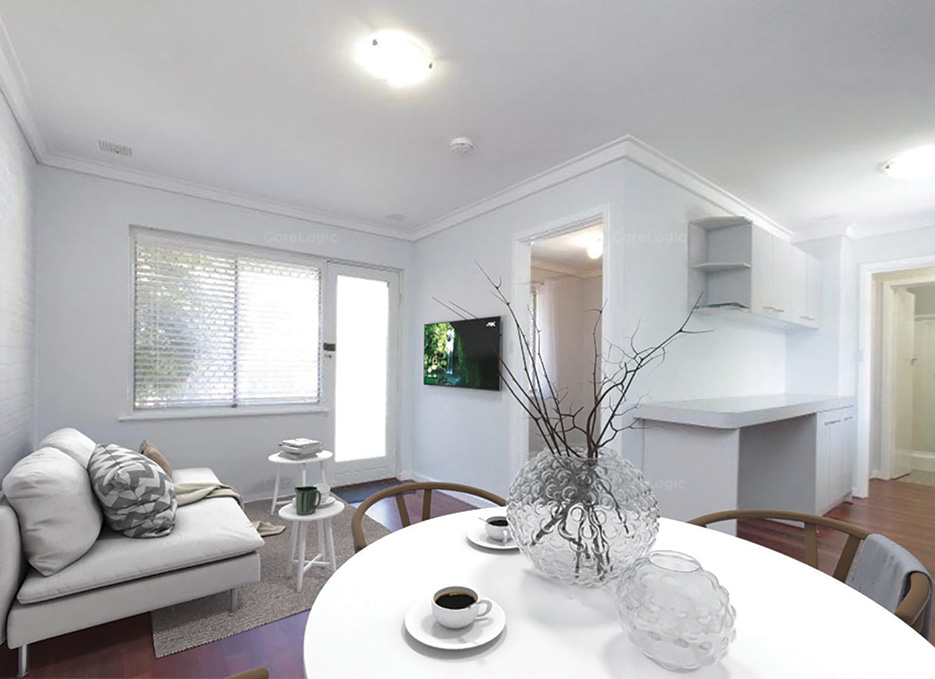
This two bedroom one bathroom home in Maylands is listed at “high $200,000s” making it a realistic proposition for the first time buyer.
It’s also a very nice apartment and only one of 10 in a boutique block on Kenilworth Street.
There’s a tenant in place paying $250 a week until March next year, so it gives a buyer plenty of time to save up for furniture or you might fancy becoming a landlord.
The open plan living/dining area is well presented with dark wooden floorboards adding a touch of class.
The kitchen is a decent size and has good bench space with plenty of cupboards and drawers.
There’s lots of natural light in this flat and both bedrooms are nice and airy, with the master having a built-in robe.
The apartment includes a communal courtyard, undercover parking and well-maintained gardens, with strata fees at $525 per quarter.
It’s located in a nice pocket on the Maylands/Bayswater border, within walking distance of Meltham and Maylands train stations, and all the cafes, bars, restaurants, shops and amenities in the Whatley Crescent/Eighth Avenue precinct.
This Maylands apartment is a great first step onto the property ladder for a prospective landlord or homeowner.
High $200,000s 8/54 Kenilworth Street, Maylands ACTON Mt Lawley 9272 2488 Paul Owen 0411 601 420 Carlos Lehn 0478 927 017
THE under-fire WA health system is one of the sectors that would benefit from people being able to process their emotions better, says the newly formed Emotional Intelligence Society of Australia.
Created by WA researchers and practitioners, including academics from the University of Notre Dame, the society aims to create a global network of individuals who apply emotional intelligence to their personal and professional life.
Emotional intelligence is defined as the ability of an individual to understand their own emotions as well as other people’s, and ultimately make decisions using this information in everyday life and the workplace.
Dr Laurel Collin, a lecturer at UND’s school of nursing and midwifery, says the WA health system could greatly benefit from the approach.
“Healthcare professionals worldwide are inundated with people seeking psychological and emotional support, and the waitlists for services increases daily,” she says.
“Healthcare professionals work closely with patients whose emotions are aroused, altered or diminished.
“We see headlines that indicate compassion fatigue, distrust of our hospital staff or hospital staff distrustful of their employer.
“Letters to the editor tell us that many citizens have no awareness or desire to be aware of the point of view of another.
“The constant demand for services and the complexity of cases being presented are taking a toll on the wellbeing of those staff providing psychological support.”
Dr Collin says emotional intelligence and self-compassion prevent burnout and compassion fatigue in professionals offering counselling and psychological support services.
The society aims to:
• Bring together researchers, scholars, professionals and others who are interested in the principles of emotional intelligence and their applications.
• Encourage and support the advancement of emotional intelligence theory, research and applied best practice.
• Disseminate emotional intelligence theory, research and empirical knowledge.
“Our affiliation with the international Society of Emotional Intelligence, will allow us to work together to bring the level 1, 2 and 3 EI training to a wider audience,” Dr Collin says.
AN electors’ vote to change the City of Stirling’s name because it is insensitive to Indigenous people has certainly poked the bear, but mayor Mark Irwin says it would take years to implement anyway.
Last Monday Coolbinia resident Jeff Bullen moved at the city’s elector’s general meeting to rename Stirling because of former governor James Stirling’s ties to a bloody colonial history (“Time of reckoning,” Voice, May 22, 2020.
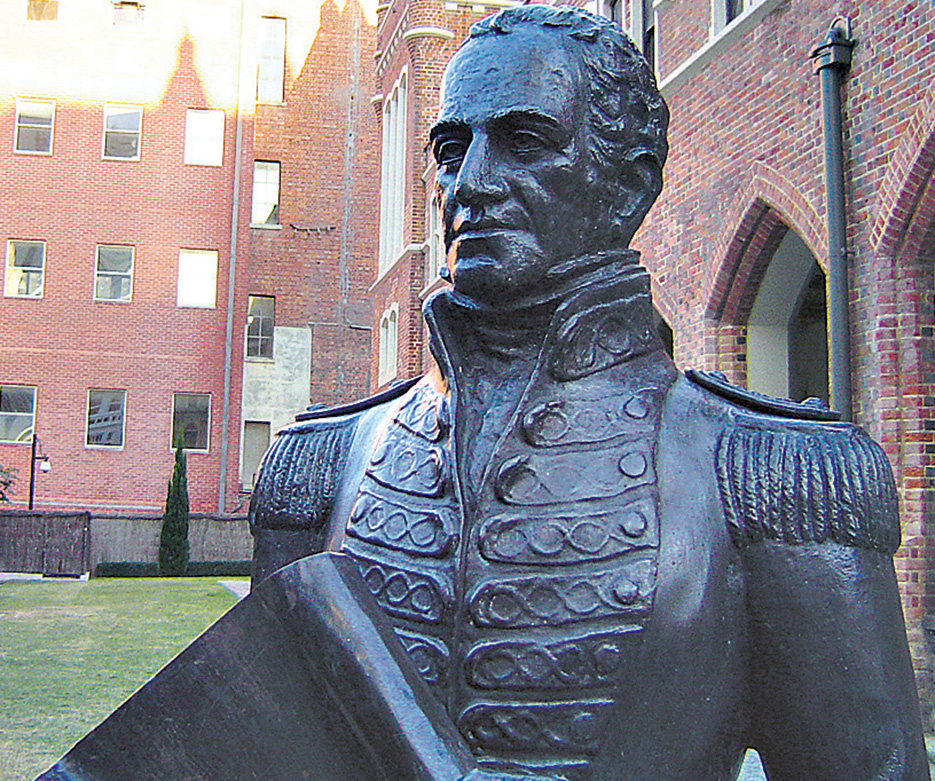
Stirling – WA’s first governor, arrived in 1829 with the first fleet and led the mass killing of Noongar people in the Pinjarra Massacre.
After the meeting, the City of Stirling released a Facebook post to inform citizens of the road that lies ahead of voting on the proposal.
“We understand that any proposed renaming will be of significant interest to our community, however given the state-wide influence of Admiral Sir James Stirling, advice and direction will also need to be sought from the State Government,” it read.
The Facebook post attracted dozens of comments reflecting a divided community.
“Retain the name and be proud of it,” Steve Danaher posted in response.
“He and the other early immigrants did a great deal of good work, exploration, mapping and made the beginnings of the great state that we enjoy”.
Misdeeds
Another, Ric Turren, said changing the name was a “great opportunity to remove the colonial influence and misdeeds of Stirling and his bunch of murderers”.
Dorinda Cox is a Yamatji Noongar woman who has advised governments on social issues and policy since 2013, and has been preselected as the lead Greens (WA) Senate candidate for the next Federal election.
Ms Cox said the name should be abolished if Stirling was serious about its commitment to reconciliation, because it is part of the truth telling process.
“Colonial names are used in order to recognise and pay respect to colonists,” she said.
“Continuing to celebrate colonialists like Stirling, who was directly responsible for massacring First Nations people, sends a clear message to our communities that the intergenerational pain and trauma First Nations people experience, simply doesn’t matter.”
Ms Cox said renaming the Stirling in consultation with traditional owners would acknowledge WA’s “dark past” and invite the community to engage with and learn about First Nations history.
“The WA McGowan government and local government councils must move to replace names like Stirling Highway and Governor Stirling High School to names that are inclusive of our First Nations communities,” she said.
Stirling Progress Association president Robert Paparde thinks the name change is “a slippery slope”.
“We need to take a careful approach and balance actual outcomes and let the ratepayers decide,” he said.
“Are they willing to pay for it in a rate increase?”
“What [is the City of Stirling] going to cut to allow the tens of millions on the rebrand?”
Mr Paparde said the cost of the name change would only be clear after some “real work” ahead of the meeting in June where the council will consider the electors’ vote, but has “no plans to change the name Stirling Progress Association”.
“It’s been the City of Stirling for many, many years,” he said.
Stirling is the largest local government area in Western Australia with 220,000 residents.
Mayor Mark Irwin told the Voice he wanted to assure Stirling residents they would be consulted in the decision-making process if the council verdict in June supported a name change.
Mr Irwin said it could take years ensuring all stakeholders had a voice.
“We’d have to go back to our reconciliation action working group,” he said.
Mr Irwin said in his most recent consultations, Aboriginal stakeholders had said “they want to make sure the community is brought along the journey, and they don’t want the decision to be made without that process.
“I think we’ve made it really clear that the acknowledgement of the injustices of the past, is what helps us all to learn,” Mr Irwin said.
“And that’s part of the discussion that we all have to have”.
A SOUTH Fremantle inventor who patented a helmet shown to reduce concussion rates in footballers by up to 75 per cent has been left scratching his head at the seeming lack of interest shown by the AFL.
Graeme Attey says the AFL’s reluctance is hard to understand given recent publicity about the long-term effects of concussion following Dockers captain Nat Fyfe’s heavy hit late in April and current concerns about the future of Collingwood veteran Levi Greenwood, who’s still on the sidelines five weeks after his latest headcrunch.
The AFL introduced new rules in January doubling the time concussed players must sit out from 6 to 12 days, but already Monash University researchers have called for it to be extended to a month because they were still detecting signs of brain damage after a fortnight.
Mr Attey says his Hexlid helmets have been scientifically tested to show they can actually prevent concussions, but the governing body seems to have a blind spot and maintains there is no evidence.
“Although the AFL have approved the Hexlid for use in AFL, I think the key personnel are either just ignoring our test data or don’t believe it, perhaps,” Mr Attey told the Herald.
Graeme Attey
He said the Hexlid reduced the g-force generated in a collision between players and the hexagonal pattern reduced rotational acceleration – a key factor in concussions.
“The frustrating thing is that we can’t get any better data; I deliberately went to the best test facility there is, so I can’t get more accurate testing done because there is nothing better. i.e. the data is correct.”
Mr Attey said his company Fuselage Design’s patented helmet also addressed other problems raised about other helmet designs such as weight, appearance, ability to breathe and comfort.
The ALF has also defended its position on helmets by arguing experts have suggested they may alter playing styles, with helmeted players tempted to take more risks, but Mr Attey believes that’s bunkum.
“The Hexlid will not change the playing style of players. It is a ridiculous statement because players don’t even notice they are wearing them.
“I surf in mine and I certainly don’t change my surfing style because I forget I’m wearing it,” Mr Attey said.
The Herald contacted the AFL for comment, but never heard back.
STIRLING council is aiming to run on 100 per cent renewable energy and cut its carbon emissions by 70 percent before the year 2030 as it does its bit to help Australia hit Paris Climate Agreement goals.
Stirling’s targets were detailed in the Corporate Sustainable Energy Action Plan (SEAP) draft, presented to council on Tuesday May 11.
The carbon and energy cutting goals outlined in the plan only apply to council owned and run facilities like recreation centres, city-owned vehicles and parks.
According to Climate Works Australia local councils collectively have a big environmental footprint in these areas and making sustainable changes to their operations can have far reaching implications.
“Local councils rank among Australia’s most important infrastructure owners and managers, with collective responsibility for over $380 billion in assets and land,” read the Climate Works website.
Climate Works and the Monash Sustainable Development Institute released a report last year assessing the emission reductions of Australia’s 57 largest local governments.
Collectively, they cover 52 per cent of Australia’s population; Stirling’s on the list with a population of 220,249.
When the report was released, 58 per cent of those local governments had a target to reach net zero operational emissions by 2050, but the Stirling wasn’t among them.
The new goals outlined in the SEAP will bring Stirling into line with the rest of the councils.
However, even with these new targets in sight, there were still some Stirling community members who felt the council was falling short.
In a community consultation for the SEAP draft, 80 per cent of respondents supported the new targets, but some in the remaining 20 per cent said the council wasn’t being ambitious enough.
During the council meeting, the committee said several respondents thought “the city should be achieving both renewable electricity and carbon emissions targets earlier”.
Stirling mayor Mark Irwin said “these targets represent a minimum achievement acceptable.
“We have clearly articulated that if the city can achieve these targets earlier in a cost-effective manner, it will do that as a priority,” Mr Irwin told the Voice.