• Brickbats to bullies
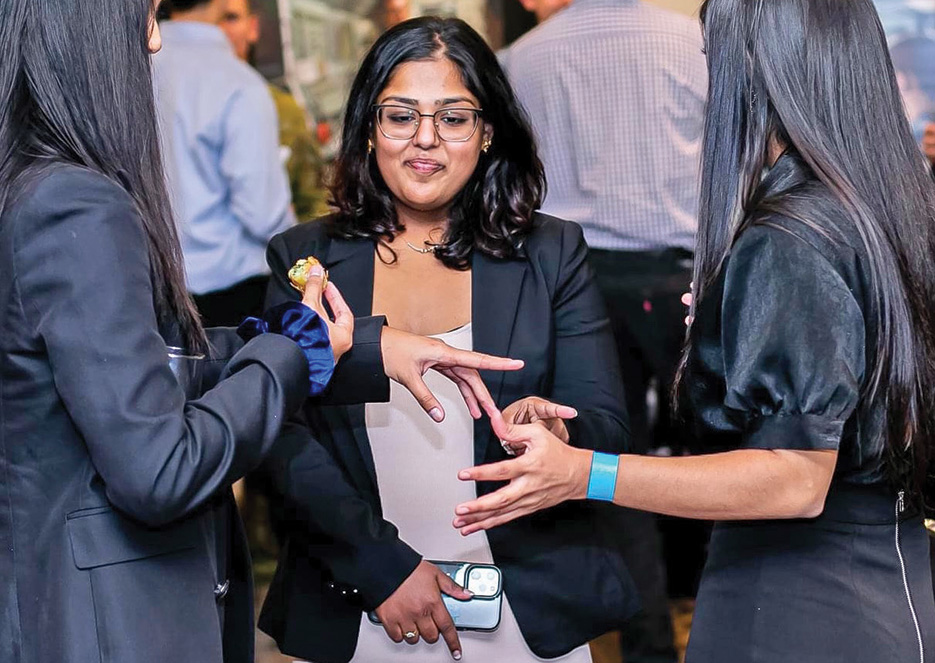
    Toastmaster Vanessa Joe says bullies can become just a brick in the wall. Photo supplied

    BULLIES will one day become “just another brick in the wall” says a former target of schoolyard jerks who’s left them behind to become a rising star.

    Melville resident Vanessa Joe (21) recently out-talked some of the state’s best speakers to win the Toastmasters divisional final and earn a place in the national finals this weekend. If she wins, the next round will pit her against international competitors.

    A member of the Murdoch Southsiders in Bull Creek, WA’s biggest Toastmasters club, Ms Joe has only been taking the floor for the last two years but has already taken out three of their competitions.

    Her speeches centre around bullying, body image, racism and women’s rights.

    “It isn’t about winning the title, it’s about two things: number one, to raise awareness on issues that will not only be affecting my generation but future generations as well, and also for WA to finally get some level of international recognition for its talents and capabilities,” Ms Joe said.

    Her father Joe, who coaches her, said the competition has only been won three times by an Aussie since the first was held in 1938 – all were eastern staters.

    Due to Covid the competition will be held on Zoom.

    Murdoch Southsiders meet every Tuesday at the Bull Creek Community Centre (behind the library) at 6.45pm.

    As for the bullies, Ms Joe told the Herald: “I know it sounds extraordinarily cliche, however, it really does get better. The people that are causing you this pain now are not going to be in your life forever.”

  • Bill locks in concerns

    PERTH advocates are concerned refugees could face indefinite detainment via new legislation pushed through Federal parliament last week.

    The Migration Amendment Bill 2021 targets refugees who have had protection visas cancelled on character grounds, but there are warnings it creates a legal limbo for those who can’t be sent back to their country of origin because of the risk of persecution.

    The new legislation doesn’t contain protection against indefinite detention. 

    WA Ethnic Communities Council president Suresh Rajan said the new legislation was “a level of cruelty that is beyond anything we’ve seen to this point”.

    “In the past, we would detain people, we would then process them to decide whether we wanted to keep them in detention or send them home,” but the processing used to be timely, Mr Rajan told the Voice.

    The average time people have spent in immigration detention in Australia has increased steadily from less than 100 days in mid-2013 to more than 600 days at the end of 2020. Despite Covid’s effect, it still stands at 545. 

    Refugee Council of Australia senior policy officer Asher Hirsch said “this is contrary to the right to be free from arbitrary detention under international human rights law”. 

    The Migration Act, section 501 outlines how refugee visas can be cancelled or declined on character grounds, which includes having served time in prison for over 12 months. 

    The Scrutiny of Bills Committee reported on the bill in April and raised concerns that it may trespass on personal rights and liberties. 

    It noted the “highly discretionary and non-compellable” nature of the immigration minister’s powers. 

    “The minister has broad discretionary powers to cancel a person’s visa if they believe a person is not of good character, even if they haven’t been found guilty of an offence,” Ms Hirsch said. 

    As of February 28, of the 258 detainees in the Yongah Hill detention centre, 125 were there because their visas had been cancelled. 

    Mr Rajan said most were men from New Zealand who had served criminal sentences of more than 12 months, and were waiting to be deported. 

    He is mainly concerned for the wellbeing of the Tamil family, Priya and Nades Murugappan, and their two Australian-born children Kopika (5) and Tharnicaa (3), who have been detained on Christmas Island since 2019.

    Human Rights Law Centre legal director David Burke said: “These new laws allow the Morrison government to warehouse people who have nowhere else to go.”

    The Voice contacted Perth Labor MP Patrick Gorman for comment but were told by his media advisors he would only be able to provide comment at a later date. 

    by KELLY WARDEN

  • School’s out … there
    Education innovators Peter Hutton and Jan Owen AO with All Saints’ vice principal Peter Allen and dean of learning Esther Hill.

    A NATIONALLY renowned education futurist says he expects demand for a radical new upper school planned for Fremantle’s CBD next year will be so strong they could fill 20 of its non-existent classrooms.

    The Studio School will be an offshoot of All Saints’ College where students in Year 10 – 12 will self-direct their learning alongside industry mentors to create projects with real-world application.

    Peter Hutton from the Future Schools Alliance said it was part of a glowing global trend to look for ways to educate and assess young people in a modern context, as more and more were falling through the cracks of traditional rote learning.

    “I was dyslexic and school was ritualised humiliation,” Mr Hutton said.

    But he rose to be principal of Australia’s most innovative school, and was so inspired by the idea of giving other kids the same opportunities he left to found the FSA.

    “I applaud All Saints who have an innovative model for their students and are reaching out to those who need it,” he said.

    “The Studio School is ‘innovative small’ in its approach, but because it is an independent school it is truly unique and that makes it ‘innovative big’.”

    He expects students will drive much of the interest in the school and will be dragging their parents along.

    “By the time the child gets to Year 9, they know the environment they are in, their wellbeing and whether their passions are being me,” he said. 

    Mr Hutton joined All Saints’ vice principal Peter Allen, its dean of teaching and learning Esther Hill, as well as Learning Creates Australia founder Jan Owen to view several prospective sites for Studio School last week.

    Ms Owen, who will be on the school’s advisory board, said it would harness students’ strengths and look at ways that could be recognised to help them achieve a qualification.

    “If you were to recognise the whole student, in and out of class, how would you assess that,” Ms Owen said.

    And while many a parent might bemoan their teen’s obsession with the X-Box, she sees opportunity.

    “There are most remarkable skills in gaming, or indeed in being a carer to your grandmother.

    “I am a specialist in workplaces of the future, and from my experience they are crying out to know more about the people they are hiring and how they are learning and how they collaborate.”

    Ms Hill, who is also director of the college’s Djoowak: The Beyond Boundaries Institute, said the studio challenged the notion of where kids learn, what their place of learning looked like, and who they learned from.

    “We are talking about the citizens of the now,” she said.

    “We know how capable young people are now, and they can achieve things in the real world.”

    She said fees would be about half those of All Saints, but that wouldn’t necessarily hamper students’ ability to further their education.

    “The unis are absolutely in the space at the moment, particularly as a result of the pandemic, to opening up that pathway and they are talking to us,” she said.

    by STEVE GRANT

  • Abortion clinic bill revisited

    THE McGowan Government says it’s committed to ensuring women seeking an abortion can have safe and private access to health services without fear of harassment or intimidation.

    After two and a half years of deliberation, the Safe Access Zones Bill, was re-introduced into WA Parliament on Wednesday (May 26), having previously missed the cut-off to be heard by the Upper House before this year’s election was called. 

    The new legislation, based on Victoria’s laws, would enforce a 150-metre exclusion zone around abortion clinics to stop protestors from congregating outside.

    It was formed off the back of a public survey in 2019 which found 70 per cent of the 4,100 respondents supported the measure.

    Most who rejected the bill cited religious beliefs and the fear that women would be “coerced” into abortions.

    But women’s interests minister Simone McGurk said examples used by protestors were a “convenient excuse to meet their ends.

    “This reasonable measure is already successfully helping women in other jurisdictions with appropriate access to legal medical procedures,” Ms McGurk said.  

    “It is well and truly time to bring WA into line with the rest of the country.” 

    The bill prohibits any behaviour, including photography or signage “reasonably likely to cause distress or anxiety” to someone accessing an abortion clinic.

    The maximum penalty for breeching the exclusion zones would be a $12,000 fine and 12 months’ imprisonment.  

    “The penalty rates really reflect the seriousness of the offence,” says Jamal Hakim, managing director of abortion provider Marie Stopes Australia.

    “It gets worse every year, and every Lent it gets worse,” Mr Hakim said. 

    He said the actions of religious groups are “stigmatising and attacking women, and coercing people away from their bodily autonomy and choice”.  

    Marie Stopes nurse unit manager Leigh Keane said the company spent more than $6,000 upgrading its Midland clinic’s security cameras after Right to Life advocates had spent almost 3,000 hours picketing outside.

    “I have worked for Marie Stopes Australia for five and a half years and the picketers that assemble outside our clinic have had a cumulative impact on me, my team, and the clients in our care,” Ms Keane, said.

    Human Rights Law Centre associate legal director Monique Hurley said “these laws are an important step towards bringing Western Australia’s laws in line with the rest of the country. 

    “We urge all members of the Western Australian Parliament to stand up for reproductive rights and vote in favour of enacting safe access zones”.

    Ms Hurley said the next step towards furthering women’s reproductive rights in WA be to fully decriminalise abortion. 

    “Until abortion is removed completely from the criminal law, pregnant people’s reproductive health will continue to be compromised,” she said. 

    During the bill’s first outing before Parliament in November last year, Burns Beach Labor MLA Mark Folkard had a bone to pick with the penalty rates.

    “I would triple the 150 metres,” he said, commenting on his experiences patrolling abortion clinics in the late ‘90s as a policeman.

    Bullying

    “I watched the bullying tactics that they used as people approached the clinic or drove up in cars, and how they would spit on cars or throw water on cars,” he said. 

    Mr Folkard recalled one “particularly tall fellow” who took photos of a teenage girl approaching the clinic, “yelling at her, that he was going to show the world her face, and what she was doing.  

    “The closer she got, the more abuse, intimidation and harassment she received.” 

    Mr Folkard said that half an hour after the girl went into the clinic, an ambulance pulled up at the front with its sirens on. 

    “This girl had gone into the toilets and used a set of nail clippers to try and tear her wrists apart in an attempt at suicide.” 

    He said that while he chaperoned the girl into the ambulance “she just kept saying ‘he’s got my photo, he’s got my photo’”.

    Mr Folkard said he’d arrested the tall man who took the photos, but the only offence he could be charged with at the time was disorderly conduct.

    “As I said, when I talk about this issue, I would triple the 150 metres,” he said. 

    “For the penalties involved, I would double it, because what those people did to that poor young girl, I will never forget”.

    by KELLY WARDEN

  • WA’s starway to heaven
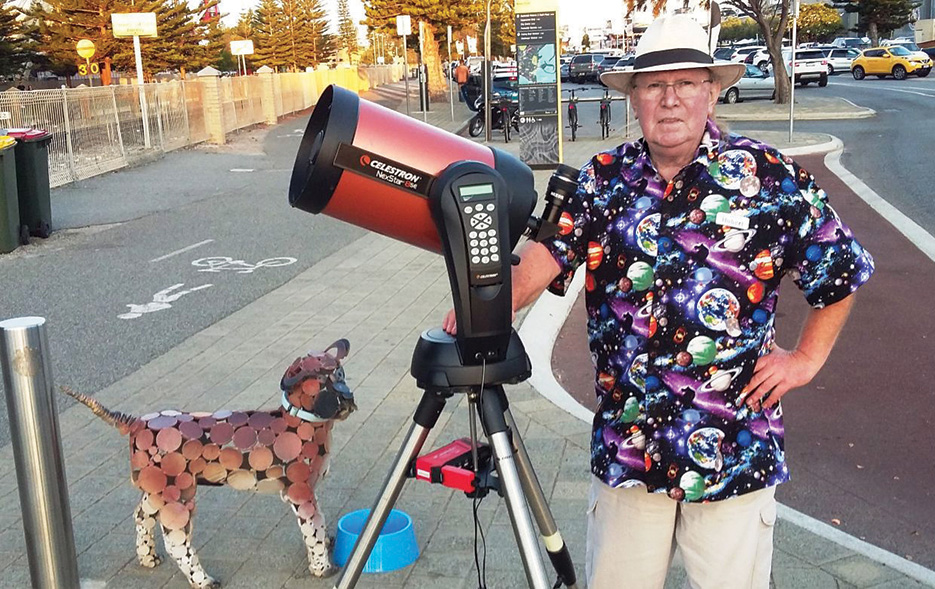
    Hubert Grady’s celestial attire leaves no doubt about his passion.

    FAR from the glow of Perth’s metropolitan area, workers have started on the next phase of the world’s largest radio telescope in the Murchison, a global project that a local astronomer hopes will help fuel interest in the universe and lead to WA being the stargazing capital of Australia.

    Astrotourism WA founder Carol Redford said WA’s light pollution was concentrated into a very small area around the metro area, making the rest of the state the ideal location for exploring the heavens. 

    Astrotourism’s strategic plan outlines a “pathway to increase overnight stays in regional WA, grow an economy around Astrotourism and take action to preserve the awe-inspiring sight of WA’s world-class dark night sky for decades to come”. 

    Due to the inaccessibility of the SKA for regular tourists and patrons, Ms Redford said regional towns had to work together to create stargazing trails, mentor tourism operators and work to protect the outback skies from light pollution. 

    “Astrotourism is any activity that a visitor can take part in that involves the night sky, whether it be going to an observatory to look through telescopes or by participating in an astro-photography workshop,” she said.

    “From an Astrotourism perspective, that’s more focused on visitors and people partaking in activities that involve the night sky because the SKA is a place we’ll never ever be able to go.”

    Ms Redford said WA had a prime opportunity to become the “stargazing capital of the world” when the Ningaloo coastline would host some of the best views of a rare hybrid solar eclipse in April 2023.

    “This event will attract tens of thousands of extra visitors to WA and will bring along with it worldwide media attention,” she said.

    Meanwhile back in Perth’s ‘burbs, local sidewalk astronomer Hubert Grady provides a surreal, otherworldly experience with his telescope at Fishing Boat Harbour in Fremantle.

    Whenever there’s something interesting up in the skies at night, Mr Grady sets up his Dobsonian telescope, dons his galactically colourful shirt, and treats tourists and locals heading down for fish and chips with an impromptu lecture.

    “Well, I used to enjoy the telescope tours up at the Observatory, like the public outreach part,” he says.

    “I came across it a few years ago, a thing about how sidewalk astronomy started in America and there was a bloke called John Dobson who started doing it.”

    Sidewalk astronomy dates back 50 years, with various amateur astronomical groups emerging, such as the San Francisco Sidewalk Astronomers founded by Dobson who revolutionised the world of astronomy by making it more accessible to the people on the street.

    Despite the opportunity to exploit WA’s dark skies and SKA telescope, the former Barnett government went on a sacking spree amongst astronomers at the Perth Observatory in 2015.

    Former Observatory volunteer Mark Davies said while the government’s lack of support stung at the time, the shift towards volunteering proved to have advantages. 

    “As far as the community is concerned, it was actually a positive thing because the WA government and the Department of Parks and Wildlife offered to hand over the keys quite literally for the running of the Observatory to the core group of volunteers who already ran the day and night tours,” he says. 

    “That actually allowed them to get the money which was being received from the tours and turn around and reinvest it into improving the equipment within the Observatory.”

    In November 2018 science minister Dave Kelly presented the Observatory volunteers with a $958,890 cheque from Lotterywest. 

    The grant was provided by the state government to “ensure [that] for many more years the Observatory can continue to inspire the public and young minds”. 

    The funding also helped create an Aboriginal Astronomy Centre outlining the Noongar people’s connection to the night sky.

    The Square Kilometre Array project is an “international effort to build the world’s largest radio telescope with eventually over a square kilometre (one million square metres) of collecting area”, the project’s website says.

    The Karoo Region in South Africa and the Murchison will co-host the project mainly due to being remote and “radio quiet”.

    Essentially, the SKA works by using “thousands of dishes and up to a million low-frequency antennas that will enable astronomers to monitor the sky in unprecedented detail and survey the entire sky much faster than any system currently in existence”.

    The Morrison government has invested $387 million towards the SKA project in the hope it will not only help astronomers learn more about the universe but also create more than 350 jobs during the 10-year construction and another 230 ongoing positions during the 50-year life of the project.

  • • Trudy Kassin with a photo of her husband Gerhard.

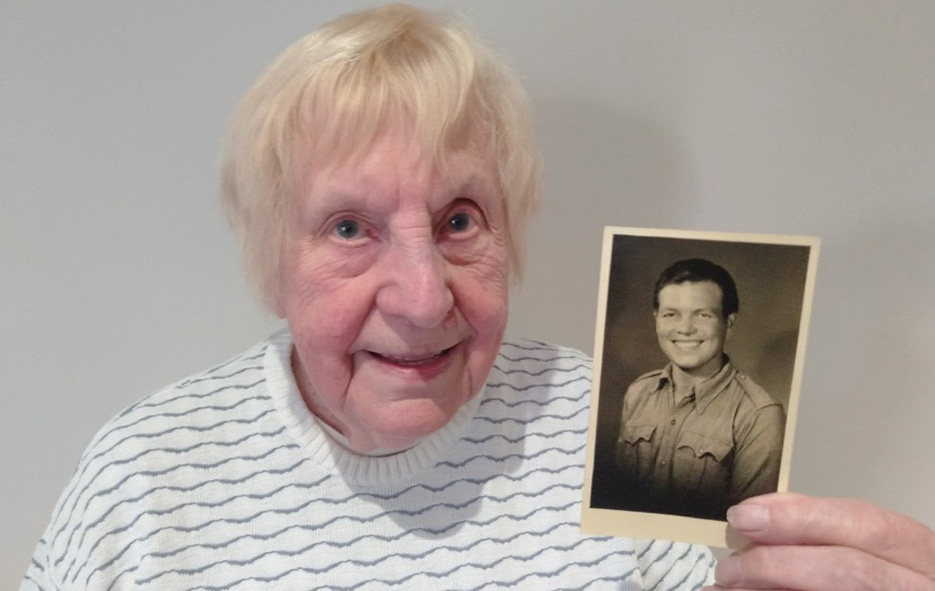
    IN 1954, Trudy Kassing and her husband, Gerhard, first set foot on Australian soil in Perth.

    Sixty seven years later, at the age of 87 and in declining health, Ms Kassing is back, accompanied by her son Peter, to bring her journey full circle.

    Mr Kassing senior died in 2019, and his wife is planning for Peter to mix their ashes when her time comes and release them into the ocean off Fremantle, with the hope currents may take a sprinkle back to Germany.

    Travelling from their home in Melbourne, the two are celebrating all that the Kassings’ journey from postwar Germany has made possible for the family.

    Having watched Nazis kick her father’s teeth out for refusing to cooperate, Ms Kassing and her new husband were seeking something they did not think they could find at home. He’d been a prisoner of war after being captured as Allied and German forces tussled over the strategically important Middle Eastern theatre. 

    “What are you expecting to find in Australia?” Ms Kassing remembers Gerhard’s mother asking in frustration before the couple left. 

    “Freedom, for one thing,” she responded.

    Ms Kassing, who carries a photo of her motorhome in her purse, was quickly taken with the stillness of the open country. 

    “You always have the freedom to disappear into the bush if you want to,” she says.

    Their recent flight from Melbourne hardly compares with the 32-day ocean voyage that first brought the Kassings to Australia. 

    The newlyweds, who were not allowed to share a cabin, were forced to take their intimate business elsewhere. 

    “We ended up in the lifeboat,” says Ms Kassing.

    The Kassings left Germany with more faith than information; sighting land, Ms Kassing says she was relieved to see her new country had electricity. 

    Now, revisiting the origins of her time in Australia, Ms Kassing says she feels “a surge of happiness, like butterflies in my tummy, and gratefulness toward my son for making it happen”.

    Despite the passing of time and her pride in what the couple contributed to their adopted home, where he worked as a damask weaver and she ran a sandwich shop for many years, Ms Kassing says she has never forgotten her roots.

    Her son confirms she has retained the German habit of always making sure everyone around her is well fed.

    by CARSON BODIE

  • Protect the Fitzroy River

    SUZY STANFORD is passionate about protecting the natural world and connecting people with the great outdoors. After living and working in the Kimberley, she was totally struck by the beauty and spirit of the place and now works as a community campaigner, chatting to people at markets and events around Perth about how they can protect this unique part of WA.  

    ANYONE that’s visited the Kimberley knows how special it is. 

    The red dirt, blue sea and spectacular natural scenery has a way of getting under your skin and draws you back again and again. 

    I work as a community campaigner, advocating for improved conservation and management for this part of the world. 

    I’ve spent many hours over the last year listening to people’s stories about why the Kimberley means so much to them. 

    Nights spent camped under starry skies, dusty dirt roads, ancient gorges, fishing trips and the feeling of being in a remote, pristine wilderness. 

    It really is a place like nowhere else in the world. 

    Yet the lifeblood of the Kimberley and WA’s largest river – the Martuwarra Fitzroy River is at a crossroads. 

    The next few months will see crucial decisions made about the fate of the Fitzroy; decisions that will have a huge impact on the environment, critically endangered species and the communities that live along the river and rely on its health. 

    In November 2020, the WA government released a discussion paper that outlines two options being considered to manage the Fitzroy River catchment. 

    This includes plans to allow giant pumps to extract a massive 300 billion litres a year from the river. 

    In comparison, this is the same amount as used by 2 million people in Perth and the South West every year.

    We only have to look to the Murray-Darling River system to see what can happen when dams and massive irrigated agriculture projects are given the green light.

    All West Australians should be outraged that our state government is considering opening up the Fitzroy to a similar fate. 

    Traditional owners, scientists, environment groups, and recreational fishers have all voiced their support to keep the Martuwarra Fitzroy River wild and free flowing; and to avoid the unacceptable risks that pumping surface water would pose. 

    All around the world, freshwater habitats face a multitude of threats.

    These systems provide the majority of people’s drinking water and are essential to our survival, but despite this many lakes, rivers and wetlands are being irreparably damaged by human activity. 

    We cannot continue to let this happen when we know how high the stakes are.

    The WA government has a clear choice — changing the Fitzroy forever by giving massive handouts of free water to wealthy irrigators, or protecting the river so endangered wildlife, sustainable industries, culture, and communities can continue to flourish far into the future.

    I’ve lived in Fremantle for over a decade and am proud that our community has a strong history of standing up for environmental causes. 

    Now is the time to make your voice heard. 

    The Fitzroy River water paper is open for comment until May 31 – send the government a quick submission online and let them know you want the Fitzroy River protected.

    http://www.consult.dwer.wa.gov.au/water-policy/managing-water-in-the-fitzroy-river-catchment

  • Lovely larder

    As I drove into Maylands, the sun burst through the dark clouds, turning raindrops on car bonnets into gleaming works of art.

    It was a pretty introduction to a pretty suburb, and as I parked on the corner of Eighth Avenue and Whatley Crescent, I marvelled at the art deco buildings, leafy trees and sunlit awnings.

    My reverie was soon destroyed by a man gnawing a KFC bone outside my car window; he then picked his nose and let out a raucous fart. 

    Ah well, if only life was like a Merchant Ivory film.

    My destination was Smoult’s Larder, a popular deli that has been getting rave reviews from locals.

    With the sun finally getting a workout after days of rain, the cafe strip on Whatley Crescent was pumping and people were eating alfresco at stylish cafes and popping in and out of chic boutiques.

    Unfortunately there wasn’t any tables left in Smoult’s, so I abandoned my plan to get something from the small breakfast/brunch menu and went for a toasted chicken panini instead ($11.50). 

    The star of the panini was the delicious citrus and herb dressing.

    It had a sophisticated tang, complementing the soft tender chook and the tomato and rocket garnish.

    The panini was tasty and light, but it needed a few more ingredients – perhaps olives and sun-dried tomatoes – to make it more interesting and promote it from a B to an A.

    Smoult’s display cabinet was a thing of beauty with rows of dainty treats creating a kaleidoscope of flavours and colours.

    There was everything from tarts, cheese, sausage rolls and kebabs to salads and pies.   

    I couldn’t resist and got a selection to take home for dinner. Coming in joint first was the chunky chicken kebabs ($8.50 each). 

    The minced chicken had a lovely smooth texture and was perfectly seasoned with the mixed herbs adding complexity to the flavour.

    The mild chilli kept things lively and gave the kebabs a latent heat that snuck up on your palate at the last minute.

    It was a pleasant spiceness and my two young kids wolfed them down without any convulsions or cries for help.

    Also joint first was the mushroom risotto cake ($8.50) which had a super intense funghi flavour. 

    No tins of condensed mushroom soup here with fleshy slices of funghi and spinach creating a delicious and potent treat.

    The risotto was well cooked and created a nice gloopy texture to bind everything together.

    Across the table my wife was enjoying her roast vegetable frittata ($8.50).

    “It’s very creamy with the feta going nicely with the tomatoes and Mediterranean vegetables,” she said.

    “All the ingredients taste super fresh and it’s a nice hearty dish for a cold night.”

    The Thai chicken cake ($8.50) was enjoyable, but didn’t hit the heights of the other dishes.

    Maybe my palate was fatigued by that point, or slightly impaired by the chilli, but I didn’t get a strong overriding flavour and it was all a bit ambiguous.

    The individual cakes and kebabs were very filling and my family were struggling to finish it off, so you won’t break the bank if you buy enough for a meal, especially lunch.

    The deli also had a larder stocking gourmet provisions.

    I enjoyed my takeaway from Smoult’s Larder and will be back to try their sit-in meals.

    By STEPHEN POLLOCK

    Smoult’s Larder
    186 Whatley Cres, Maylands 
    smoultslarder.com.au

  • Divisive mural
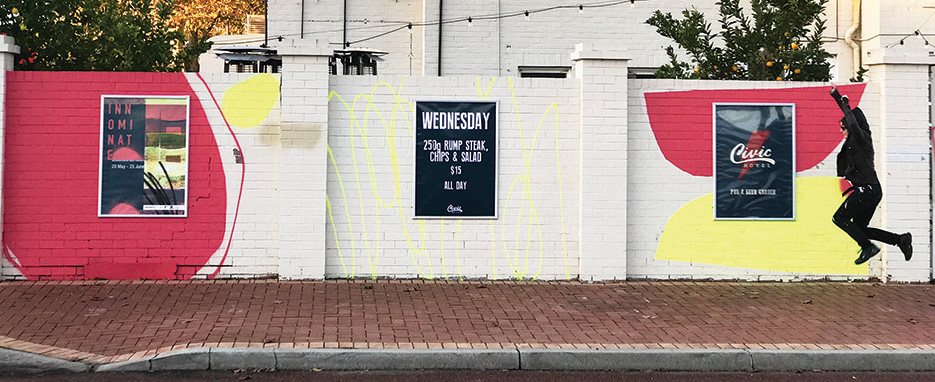
    Artist Sioux Tempestt jumps beside her controversial mural Photo by Sean Byford

    A mural outside the Civic Hotel in Inglewood has divided the community with baffled locals venting their anger on Facebook.

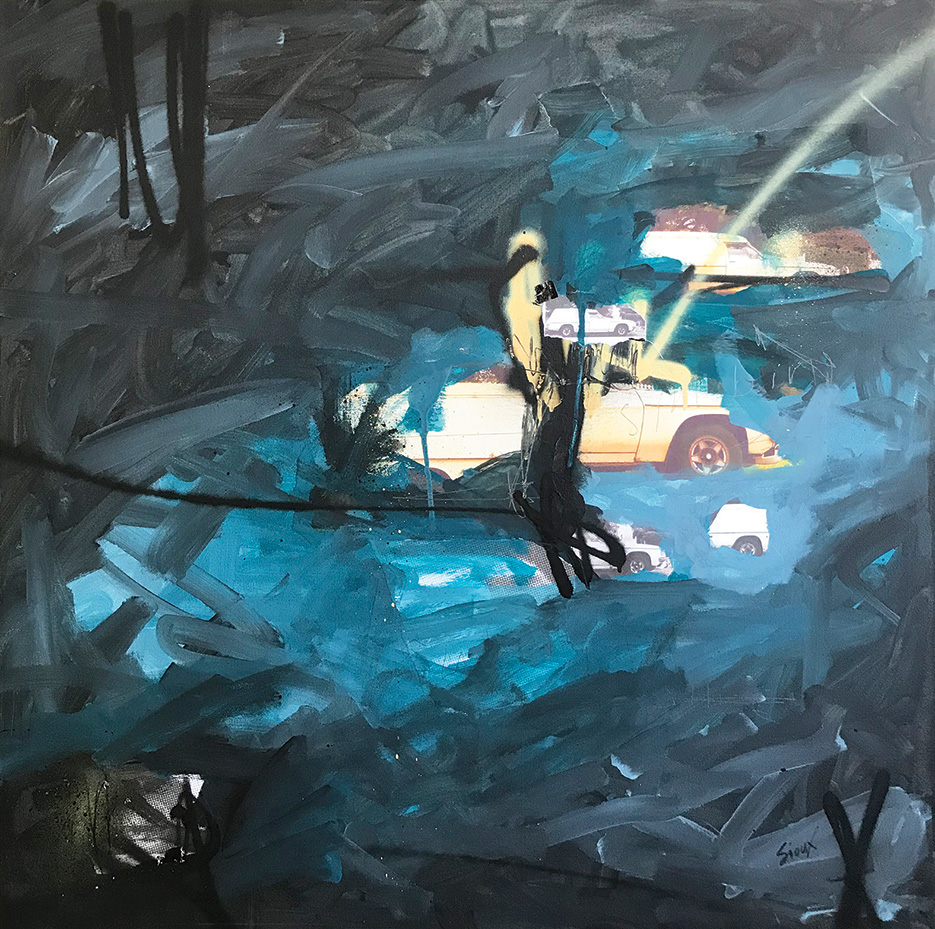
    The red and bright yellow paint on the hotel walls are part of the exhibition INNOMINATE by Mt Lawley artist Sioux Tempestt.

    She finds “quiet beauty in the ugliness of the ordinary” and likes to showcase dimly-lit laneways, vacant trashed buildings and urban decay.

    “Given the abstract, urban nature of the external artworks, I anticipated the art would draw criticism,” Tempestt says.

    “Obviously art is subjective, there will always be a group who don’t like it. 

    “Honestly though, I’m happy that my aim for the artwork to engage the community in a different art experience, offering an exposition at their local pub has proven successful. I’m glad to have created spirited conversation about public art!”

    Using acrylic paint, aerosol, deconstructed paper, graphite and gaffa tape, Tempestt takes us on a chaotic and grimy tour of urban Perth.

    Tempestt’s artwork Suburban Exposure.

    The exhibition includes fragmented notes from Tempestt’s journal, compounding the sense of disconnection and broken thoughts.

    “The brush strokes and mark making are energetic replicating the physicality I inject,” she says.

    “This draws parallels with the physical nature of the documentation process where I jog, cycle and walk while investigating. 

    “The ripping, painting and pasting is often somewhat frenetic. The works may appear chaotic, but I conceptualise content, layout and colours before starting a work.”

    A mother of two, Tempestt has lived on and off in Mt Lawley for 20 years. 

    She originally trained as a graphic designer before going on to explore multi-disciplinary art, holding seven solo and several group exhibitions.

    Her talent didn’t go unnoticed and she was a finalist in the 2019 Perth Royal Art Prize and has been highly commended and shortlisted in various other WA art competitions.

    Tempestt says she is inspired by artists like Stanley Donwood, Andy Warhol, Basquiat and Jackson Pollock.

    “In my studio practice I use mixed media, acrylic and aerosol paints,” Tempestt says.

    “I also explore the avenues of photography, digital compositions, video and more recently, music. 

    “With my public artworks I’ve worked with exterior paint for large scale murals then wood and metal to create sculptural forms.”

    As for the fuss over her latest work outside the hotel, Tempestt says “any conversation about art is positive”.

    “There are definite community supporters of the work too plus those who, while it’s not to their taste, feel that the brightly coloured walls are an improvement on the bland beige.”

    INNOMINATE is at the Inglewood Civic Hotel from May 29 to June 25, with a special opening night on May 28.

  • They’re back!
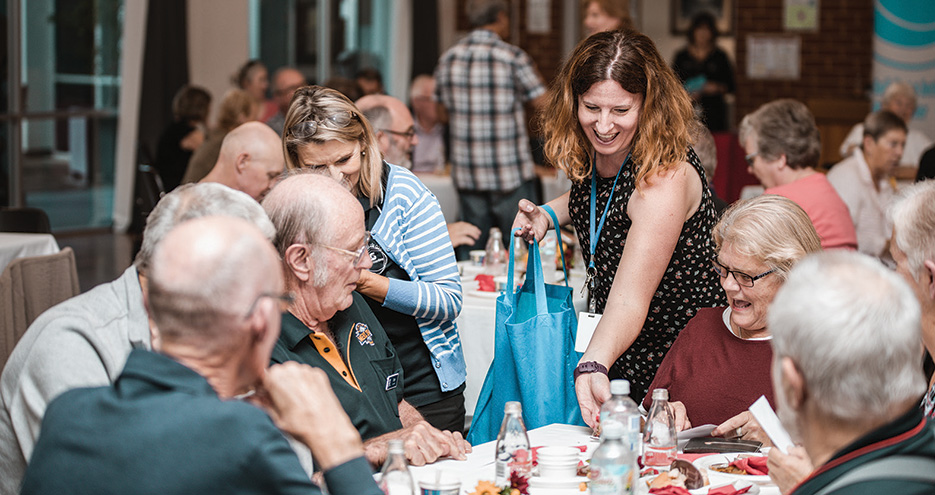
    Volunteers in the City of Stirling enjoy a “Thank You” afternoon tea.

    SENIORS featured heavily in the National Volunteer celebrations held across Perth last week.

    It’s no secret that retirees and the over 55s make up a large part of the volunteer army that help run countless services in WA including tourist attractions, community food  deliveries and libraries.

    So when covid struck last year, councils quickly became aware of how important they were to delivering local services.

    “Back in early 2020 the City of Stirling was faced with a difficult set of circumstances,” mayor Mark Irwin says.

    “At the time, a large proportion of our volunteers were considered ‘at risk’ with regard to covid-1, so we had to protect their health. 

    “At the same time, we faced unprecedented demand and we needed to deliver services to the community like we had never done so before. 

    “We diverted staff from facilities that were closed over to our community services, meals on wheels and transport services during the worst of the pandemic.”

    But with the vaccine roll-out now beginning to protect the most vulnerable in society, mayor Irwin was delighted to hold a special ‘Thank You’ afternoon tea to welcome back some of the 500 volunteers in the City of Stirling.

    “I am so very glad that we can welcome back our much loved and much needed volunteers, and continue to grow from strength to strength,” he says.

    “We are forever indebted to our volunteers who do this out of the goodness of their hearts for our Stirling community. Thank you from the bottom of our hearts.”

    In the City of Perth, retired public servant and retailer Barry Capes has been working as an iCity volunteer for more than 12 years.

    He helps Perth visitors find their way, answering questions or giving directions with a friendly grin. “The secret is you must adapt to the good and the bad with a smile,” Barry wisely says. 

    If you are interested in volunteering in the City of Perth contact info.city@cityofperth.wa.gov. au or to help out in Stirling go to stirling.wa.gov.au/volunteer