• First place

    IT’S not often a full block comes up for sale in Mt Lawley.

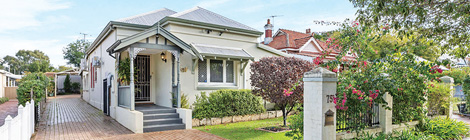
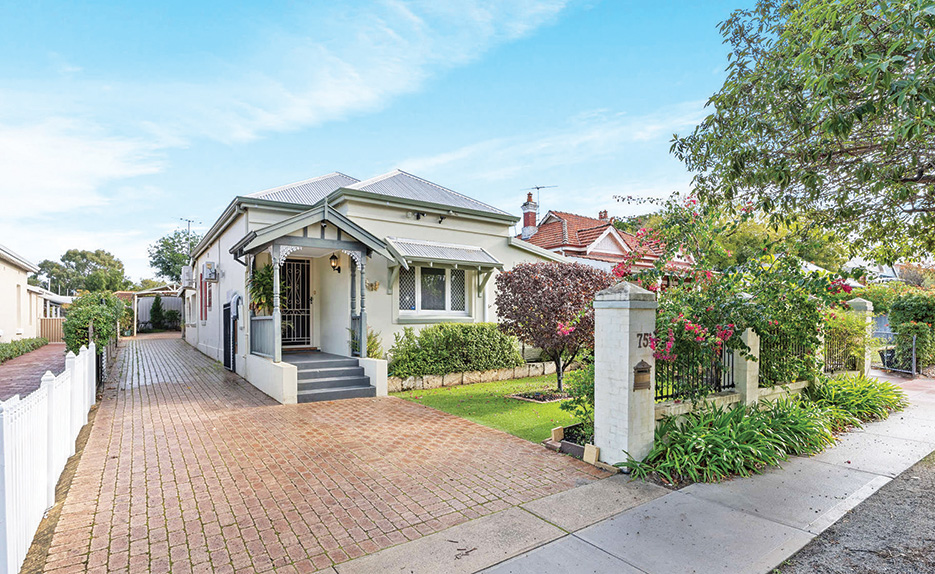
    This three bedroom two bathroom home is situated on 736sqm of land on First Avenue.

    With all that room it means there’s space for a pool and a lawn, whereas most inner-city abodes usually have one or the other.

    If all that space wasn’t enough, this home has tons of character including vintage fireplaces, high ceilings and jarrah floorboards.

    It has that classic Mt Lawley charm, but still everything you need for the 21st century family. 

    Homes are all about memories and family get-togethers, so the kids and their cousins will always remember playing in the massive saltwater swimming pool in the back garden.

    It’s a cracker and crystal clear thanks to the newly installed pump filters.

    If you’ve got a pool, you’ll need solar, and thankfully this home has a 6.5 kW LG solar system with a whopping 19 panels to power the house and pool.

    There’s a large swathe of lawn out the back as well, so if you have tiny tots who can’t swim or fancy a game of cricket after a plunge then it’s big enough for that (also handy if you have a dog). 

    When it’s time for dinner, there’s a sheltered alfresco or a patio shaded by mature trees, giving you a choice of outdoor entertaining areas. 

    The back garden and surrounding greenery makes this home a real urban escape, and it’s hard to tell you are only a few kms away from the CBD.

    The full block means there’s a large powered workshop, perfect for dad to tinker in, and because the home enjoys an elevated position you could build up and enjoy city views, or even extend back the way.

    The house includes reticulated gardens, gas bayonet in the lounge and alfresco, and a double car port with additional off-street parking.

    Situated west of Beaufort Street, you are within walking distance of bus stops, Perth College, Mount Lawley Primary and High Schools, Hamer Park, Second Avenue IGA, and everything Beaufort Street has to offer. 

    This is a lovely character home with an amazing back garden and pool.

    Home open today (Saturday May 29 1pm-1:30pm)
    From $1,290,000
    75 First Avenue, Mt Lawley
    ACTON Mt Lawley 9272 2488
    Agent Carlos Lehn 0478 927 017

  • Time of reckoning
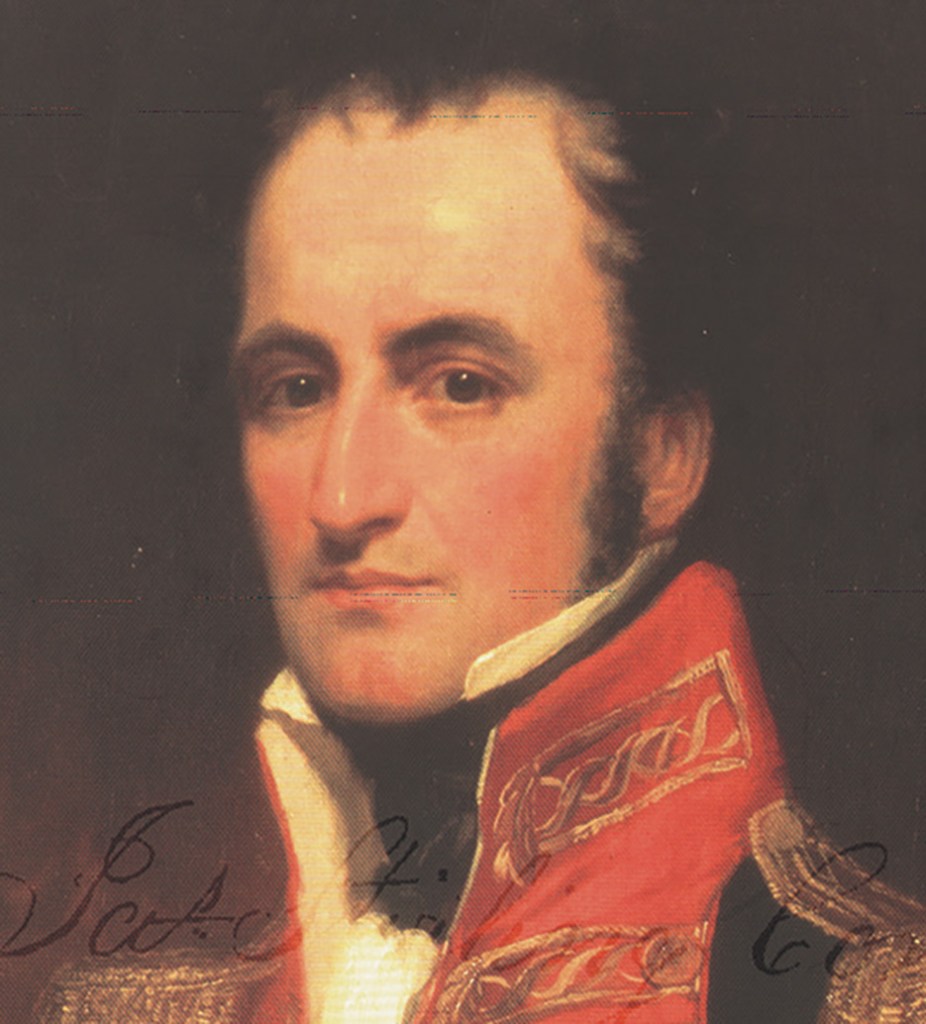
    James Stirling led a charge against Noongar families at the Pinjarra massacre which saw women and children killed. Stirling’s electors have voted to strip his name from the city.

    Governor … murderer? Electors banish Stirling

    STIRLING mayor Mark Irwin says changing the city’s name “has not been identified as a priority” after electors voted to ditch the former colonial governor’s name over his involvement in the Pinjarra massacre.

    On Monday at the annual meeting of electors, a vote was passed to rename the city “to reflect the long standing and relevant history of this land in such a way that is inclusive and in recognition of the Noongar community”.

    James Stirling arrived with the first settlers aboard the Parmelia in 1829 to found and administer the Swan River Colony, but almost immediately there was conflict with the Noongar owners who were forced from their traditional hunting grounds.

    Their treatment was so poor the British government was forced to write to Stirling warning him to crack down on the “atrocities” being committed by settlers, while at the same time the governor was under pressure at home to take action over an increasing number of Noongar retaliatory attacks.

    Things came to a head in 1834 following the murder of prominent settler Thomas Peel’s servant Hugh Nesbitt at Mandurah, with calls for a military barracks to be established in the area for the settlers’ protection.

    Dawn raid

    Stirling led a detachment of 25 soldiers, police and settlers against the Binjareb people blamed for the murder, surprising them on the banks of the Murray River in a dawn raid. Details of Stirling’s cavalry charge vary, but its estimated there were about 70 Indigenous people who faced the guns, while surviving men were hunted down and summarily killed.

    The death toll varies, but in a contemporaneous account unpublished for nearly two centuries, the Voice discovered the names of about a dozen potential victims, with three women, two children and two visitors from a neighbouring tribe included.

    There are those who argue that Stirling’s prime motivation for the attack was protecting his own financial interest; less than a month earlier he had applied for full title to his land grant on the mouth of the Murray River. Even at the time of the massacre sympathetic settler Robert Menli Lyon argued that Stirling was demonising the Binjareb in order to protect his own interests.

    Mr Irwin said the council “acknowledges and respects” the Wadjuk Noongar people as the traditional owners of the land.

    “The city has demonstrated a longstanding commitment to reconciliation, and indeed council endorsed the city’s third Reconciliation Action Plan just last week following extensive consultation with elders and a working group including local Aboriginal community members,” Mr Irwin said.

    “We recognise that reconciliation is a journey.

    “Through our Reconciliation Action Plans we remain committed to the naming and dual-naming of public spaces, and the inclusion of Nyoongar language and artwork in the city’s entry statements, however, changing the city’s name has not been identified as a priority to date.”

    The council says it would take advice from the state government given Stirling’s state-wide importance, particularly as any renaming would need approcal from the local government minister.

    by STEVE GRANT

  • Heritage rules ease
    A couple of years ago love for Inglewood’s heritage was so strong its residents fought of council amalgamations to stay in Stirling, but now the council’s agreed to ease some of its heritage rules – if it’s out the back. File photo.

    INGLEWOOD developers could get more creative in backyards and along laneways under a plan from Stirling council to add “flexibility” to its heritage rules.

    At Tuesday’s planning and development committee, councillors voted on whether to ease restrictions in the Inglewood heritage protection area after consultation showed it was broadly supported.

    Currently all developments in the area have to “strictly replicate the design and materials of traditional homes,” according to a planner’s report to the council.

    Character streets

    That will still stand for homes along clearly defined “character streets”, however the middle section of the block will get more flexibility along the less-visible ground floor and along the sides of upper-floor additions.

    At the back third of the block, new developments would only have to “reference” traditional designs and materials while conforming to the area’s bulk, scale and setbacks.

    “This will allow increased design flexibility, however where design flexibility is exercised, the development will not be permitted to dominate the existing traditional dwelling,” the report said.

    Those who responded to the council’s survey or attended workshops on the issue supported greater diversity along laneways, which were generally thought to have lost much of their heritage cred along the way. But it won’t be carte blanche for builders, who can go “contemporary” as long as they again reference the neighbourhood’s design elements and character.

    Solar panels are now in along the character streets, with concern about climate change overriding heritage aesthetics for now.

    If the council endorses the committee’s position and the new guidelines are accepted, they’ll be split from the current policy which also ropes in Mt Lawley and Menora to a stand-alone policy which will have to be publicly advertised before being adopted.

    by STEVE GRANT

  • Stirling leans against towers

    STIRLING council has knocked back the controversial redevelopment of the Karrinyup Shopping Centre as too big and too trafficky.

    Although it doesn’t have final say on whether the development will go ahead, the council can make a recommendation to the Development Assessment Panel, on which its representatives will be a minority voice, and will send a deputation to argue the point.

    The proposed three-tower, 270-apartment redevelopment has been a long time in gestation since the plans first lobbed on the council’s planning desk on December 5, 2019.

    They’ve been sent back to AMP Capital and its project manager three times for additional information; at one point the council “stopped the clock” on the application so it wouldn’t miss the mandated deadline for a decision, otherwise AMP could have forwarded it straight to the State Administrative Tribunal.

    No love

    Despite that the planners couldn’t find enough to love and have given 11 reasons, and a handful of sub-clauses, for the DAP to knock it back.

    “… the height, bulk and 

    scale of the development is not compatible with its setting and has a significant negative impact on the amenity of the locality,” a report to the last council meeting read.

    “…the traffic modelling does not accurately determine whether or not the traffic generated by the development will not have an adverse impact on the surrounding road network.

    “…submissions received in relation to the proposed development raise valid concerns surrounding the lack of orderly and proper planning as well as the proposed overdevelopment.”

    The report also noted the lack of an activity centre plan, structure plan or local development plan to guide the growth of the shopping centre.

    by STEVE GRANT

  • Hotels queried by quarantine expert
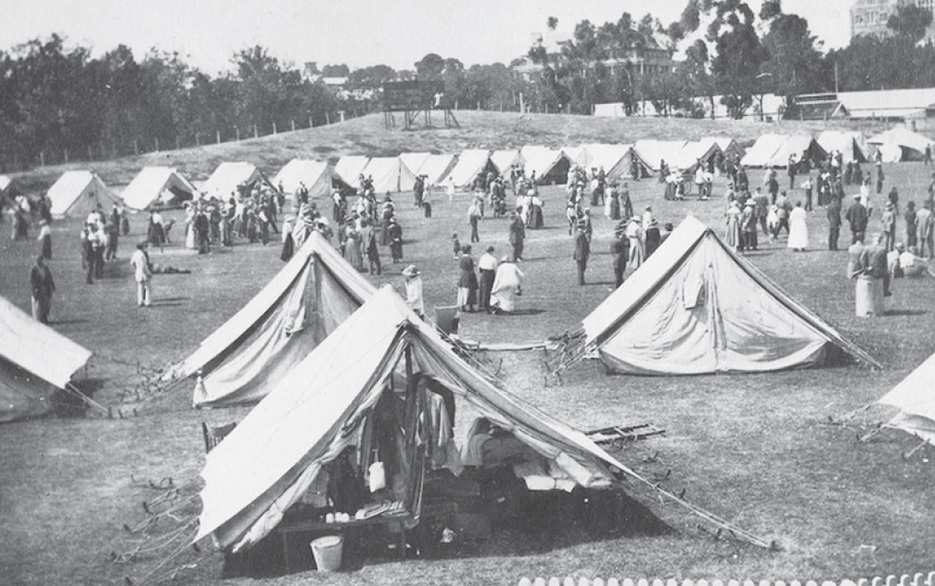
    A quarantine camp during the Spanish flu pandemic. Photo courtesy State Library of SA: PRG 1638/2/99

    AUSTRALIA should look to the lessons of past pandemics and use purpose-built quarantine facilities for international travellers, says an expert in the country’s historic maritime quarantine system.

    Ruth Johnson, who will be giving a talk on the Spanish flu’s impact on Western Australia at the Vincent Local History Centre on May 26, says authorities can look back at what worked and what didn’t to formulate its response to Covid-19.

    Covid leaks

    Earlier this month prime minister Scott Morrison revealed that his government was considering an approach from the Victorian government to fund a purpose-built quarantine centre on Commonwealth-owned land; it would be the first of its kind in the modern era and follows a spate of Covid leaks from hotel quarantine.

    Ms Johnson said historically police would be stationed outside the perimeter fence of a quarantine centre, but in the current hotel quarantine regime security guards sit on each floor and then return home each day.

    “If you are working at a quarantine centre, you should be staying there,” Ms Johnson said.

    Mr Morrison also flagged “vaccination passports” on Wednesday as a way of allowing Australians to travel interstate despite lockdowns and outbreaks, hinting they could also be used for returning international travellers.

    But Ms Johnson was already ahead on that issue, saying it would pose questions about policing the system.

    “If quarantine centres are full, do we stop international travel at that point,” she pondered.

    But Ms Johnson Australia’s isolation and the co-operation between states (bickering over hard borders notwithstanding) were major factors in Australia’s great record in keeping the coronavirus in check; the United States defied its name to allow it to flourish.

    “Miami has no idea what Florida is doing, and Florida has no idea what New York is doing,” she says. 

    Mrs Johnson says her presentation will outline the various state and metropolitan lockdowns of then and now, the similarities of people being locked out of their own state, and how people dealt with it and moved on with a post-war “female mindset” that allowed them to adapt.  

    The Spanish Flu in Western Australia is from 10-11.30am next Wednesday. Bookings essential on 9273 6090 or local.history@vincent. wa.gov.au

    by GEORGIA KEAMY

  • Perks back for Greens
    Caroline Perks

    CAROLINE PERKS will have her third crack at winning the federal seat of Perth and her fifth getting into higher office after securing Greens preselection for the next election.

    A climate change policy expert, Ms Perks scored the Greens’ best-ever result in Perth during the 2019 federal election when she landed 19 per cent. It was her second attempt at the seat after being beaten by Labor’s Patrick Gorman in a 2018 by-election forced by Tim Hammond’s retirement from politics.

    Ms Perks also had a go at the state seat of Maylands in 2017 where she also gave the Greens’ vote a 5 per cent push and ran behind Tim Clifford on the party’s upper house ticket for East Metro in March this year.

    “Perth needs someone that will go to Canberra and fight with urgency for action on the climate crisis,” Ms Perks said.

    “The major parties think they can talk about gas and coal projects in the bush and then turn around and say how good renewables are in the inner city and that people won’t notice.

    “Well, people in Perth notice because they know that we are running out of time before the planet is heated past the point of no return.”

    Ms Perks said she would also be making systemic racism and violence against First Nations people, and sexism in Parliament House, issues during the campaign.

    Prime minister Scott Morrison has indicated the election will be held some time in 2022, however some pundits believe he’ll run earlier to take advantage of good polling over Covid.

  • ECU plans ‘too slow’
    Donna Faragher

    EAST Metropolitan MLC Donna Faragher says the McGowan government has taken too long to establish a working group to develop a master plan for Edith Cowan University’s Mt Lawley campus.

    Last week Mrs Faragher asked planning minister Rita Saffioti in Parliament why it had taken so long, given the announcement the McGowan government was planning to move the campus into the city was made in September 2020.

    “It has now been more than seven months since the government’s announcement that a working group would be established and nothing has happened,” Mrs Faragher said.

    “All the minister could tell me was the working group was in the process of being established and its terms of reference, meeting dates and timeframes would be determined once the establishment of the group had been completed.a

    “It’s important the local community is aware of what the government is planning, the consultation to be undertaken and how far the plan will reach into the surrounding area.

    “The minister for planning needs to be transparent and deliver on her commitment to this community,” Mrs Faragher said.

  • Waste champ

    STIRLING council’s waste coordinator Keith Rickman has been crowned this year’s “waste champion”, just in time for his retirement later this year.

    Mr Rickman has been at Stirling for almost 50 years, all of it in waste management. Despite starting  when there was just one metal bin for everything and the garbos hauled them into the back of the truck by hand, he’s become something of a recycling guru.

    Mayor Mark Irwin recognised Mr Rickman’s award at the last council meeting, saying he’d implemented or initiated some of the biggest changes waste management had seen in WA.

    “Keith proactively manages over 50 charity clothing bins in collaboration with some major charities in WA,” Mr Irwin said.

    “It is known as one of the most impressive partnerships within Australia.

  • Whatley closed for station

    WHATLEY CRESCENT is to be permanently closed to traffic between Hamilton and King William streets from June 11.

    The area, which was blocked for a while in January, will be closed for more works on Bayswater’s new train station. 

    It will eventually be rerouted to link with Beechboro Road South.

    Whatley’s shared path will be relocated to the north side, while cars will be rerouted to Olfe, Newton and Slade streets.

    The car park on the corner of Coode Street and Railway Parade will remain open.

    Public Transport Authority spokesperson David Hynes said wayfinding signs would help people get around

    “The project team has put in place many directional signs to help alleviate any confusion and to help the community and visitors get accustomed to the changes,” Mr Hynes said.

  • Scouts get lease

    AFTER almost six years of uncertainty, the North Dianella Guides and Scouts look set to get a strong hold on their Morley Drive headquarters.

    The guides and scouts’ previous lease on their clubhouse ran out in June 2015, and since then they’ve been on a monthly arrangement while the council undertook a “global review of all leases with the Scouts association”.

    In February this year the council voted to offer new leases to Scouts in a number of locations across the city, but the North Dianella crew weren’t on the list.

    Their separate application came before this week’s council planning and development committee, which recommended giving them a five-plus-five lease with a rental income of $300 each year.