


• Pool ‘maybe’ won’t hold up WACA plans
    • The WACA redevelolpment is expected to start later this year.
     • The presence of pools are still a maybe.
     • The oval will be longer.

      PLANS have been released for the WACA redevelopment, with a big ‘maybe’ hanging over the addition of pools until Perth city council’s agreement and funding has been secured.

    The WA Cricket Association says it will stay in discussions with PCC in the hope it will come round on pool funding, but the association will go ahead with the rest of the redevelopment regardless. Works are due to start ahead of the 2021-22 cricket season and scheduled to be done by early 2024, and games can still be played there throughout.

    The non-pool works total $75 million: $30m is coming from the federal government, $30m from the state, $4m from Cricket Australia and the WA Cricket Foundation’s working on coming up with $11m.

    An extra $25m would be needed for an aquatic facility with a six-lane, 50m pool, a learn-to-swim pool and a fun slide.

    Perth city councillors are wary of the costs, plus the $1.4m they project they’ll need to spend on maintenance.

    Councillors are this week due to vote on preparing a detailed business plan and to go out to advertising to get the public’s thoughts.

    The business plan will take about two months and cost an extra $200,000 in consultancy costs.

    Apart from the pool the new plans show:

    • A lengthier oval so football and other sports can be played there too;

    •  A 10-lane indoor cricket and multi-sport facility;

    • A central pavilion with snack outlets and another public cafe;

    • A function centre overlooking the grounds;

    • Dedicated gym, change room and recovery facilities for “elite” players;

    • Community health club, sports medicine and rehabilitation sensor; and,

    • A re-built museum about the grounds’ history.

    The existing Inverarity and Prindiville Stands will be demolished, along with the current museum, cafe, turf shed and western Barry Shepherd Entry. But the old manual scoreboard will be kept in place.

    by DAVID BELL 

  • A little charred, but Pearl Villa survives blaze

    • Fragrance’s initial plans to preserve Pearl Villa and the facade of Hostel Milligan have not changed.

    THE plan to preserve parts of the fire-damaged Hostel Milligan and the venerable Pearl Villa will go ahead unchanged by last week’s blaze. 

    The building’s owner, Singapore-based Fragrance Group, got approval to build two towers on the site in April 2020. But they were required to keep the street-facing walls of the 1930s hostel, and to preserve the inner 1880s Pearl Villa.

    A fire on March 22 sparked fears the old buildings might be done for, but the project’s Perth-based architect Laurie Scanlan tells us it hasn’t changed their plans. 

    “The heritage work that we were going to do is on target,” he says.

    Beams

    “Fortunately the fire on Tuesday was caught early enough. We were probably half an hour away from losing the building.

    “We’ve had our engineering checks, we’ve got a written report saying… there’s a couple of floor beams that’ve been charred. 

    “We don’t want to load that floor, there’ll be a few timber beams to be replaced, but we’re very fortunate the damage wasn’t more extensive.”

    • The historic facade hides an even older treasure inside.

    A new start date for construction isn’t yet set, having been delayed due to flight restrictions. 

    The fire and repeated presence of squatters in recent months led to questions about how secure the place was.

    The heritage agreement signed between the owner, the WA Heritage Council and the City of Perth required the owner carry out weekly checks and keep the property secured.

    Mr Scanlan says they’ve worked hard to adhere to that, spending thousands on security and measures to board it up.

    “We’ve been trying our hardest to keep it secure to outside intruders,” he says. “We haven’t been able to do that very successfully.”

    He says the intruders are determined. Locks have been broken off and had to be replaced every second or third week. 

    “We’ve had security patrols… we’ve done everything we can to lock up the building.

    “We’ll continue to do that and we’ll continue to monitor it.”

    Police questioned a woman allegedly seen leaving the building around the time of the fire, but their investigation’s ongoing. 

    by DAVID BELL

  • Climate health plan hurry-up

    A SIMPLE puff on an asthma inhaler can be a life-saver, but it also pumps out a greenhouse gas 1000 times more potent than carbon dioxide.

    And while one squeeze doesn’t seem much, when you add together all the little things that help to keep Aussies ticking along, out health system is contributing a very unhealthy 7 per cent to the nation’s carbon footprint.

    That’s prompted a coalition of WA health groups to call on the McGowan government to get a wriggle-on and implement the recommendations of a climate health inquiry released in November.

    The key goal of the health coalition, which includes Doctors for the Environment, the WA Council for Social Services and the Doctors Reform Society, is the establishment of a stand-alone sustainability unit within the health department.

    Brett Montgomery is a member of the Doctors Reform Society and says while the government appears to have accepted the findings of the inquiry, to meet his organisation’s desired target of carbon neutrality by 2040, action is needed.

    “I can see how busy health managers would say ‘we are too busy to be thinking about sustainability’, so it makes it a no-brainer making it the job of a dedicated unit,” Dr Montgomery said.

    “The biggest contributor to the carbon footprint of the health sector is procurement.

    “It might be cheaper to use single-use surgical instruments than employing someone to sterilise them, but look at the sustainability of the practise.”

    Dr Montgomery says another example are the gases used by anaesthetists; they’re some of the most potent greenhouse gases around and a number 

    of countries have been working to phase out the worst.

    Sustainability

    Britain introduced a sustainability unit to the National Health System a decade ago, and Dr Montgomery said it led to a 20 per cent reduction in carbon emissions while also saving money.

    “It managed that at a time when the demand on the service was increasing he says.”

    Dr Montgomery said it was difficult for an individual GP to know if any of their patients’ ailments were attributable to climate change, but science pointing to more severe weather events and shifting diseases indicated doctors were operating more often in an uncertain world.

    “With infectious diseases, I do know mosquitoes that carry dengue fever are moving, so it’s likely North Queensland will get more cases.

    “We have not done enough to deal with the health impacts of climate change, which is why we need to get planning now.

    “We really need to look for some low-hanging fruit; we have to stop developing new fossil fuels.”

    Dr Montgomery said the Doctors Reform Society was formed in the 1970s by a “bunch of leftie doctors” who supported former prime minister Gough Whitlam’s then-proposed Medicare system, which was not popular with many medicos.

    by STEVE GRANT

  • Nurturing a future
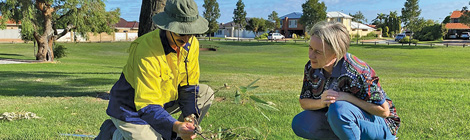
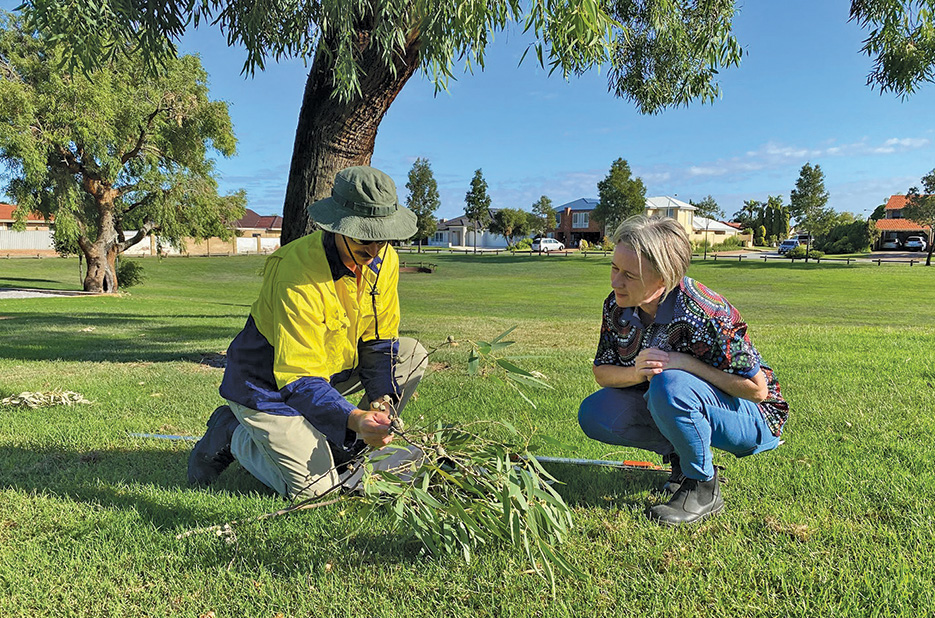
    • Apace Nursery’s Kieran Sekuloff and councillor Giorgia Johnson.

    SEEDS from Bayswater’s isolated endemic trees are being collected to protect their genetic biodiversity into the future. 

    Some of the trees in remnant bushland date back hundreds of years, but to ensure they don’t disappear if something goes wrong, Bayswater council is replanting the seedlings in other reserves as a back-up.

    Bayswater contracted Apace Nursery to collect the seeds from trees like pricklybarks, marri, jarrah and banksias. 

    Councillor Giorgia Johnson says “the retention and protection of our increasingly rare and threatened locally endemic species is vitally important.

    “They are our future biodiversity and natural resilience – our legacy, history, culture and connection to country.

    “Remnant trees have little opportunity to reproduce due to their isolation within urban areas, and this project helps secure the future of these species.”

    Cr Johnson says “this initiative is the result of years of hard work by the city’s environment and sustainability team, and the efforts of local plant experts, Glenn Cook and Mary van Wees, to preserve our local plants and biodiversity”.

    The seeds will be collected this month, propagated in October 2021, and then the seedlings will be planted in parks and reserves in the 2022 planting season.

    Extra seeds will be stored.

    By DAVID BELL

  • New residencies round for writers
    Maddie Godfrey at Peninsula Farm. Photo by David Bell.

    A NEW round of heritage residencies will run following the success of the inaugural Inspire Writers in Residence program last year.

    The National Trust WA got funding from the WA culture department to run the residencies, putting writers in heritage buildings to let history act as muse. 

    “The National Trust works to connect Western Australians with the story of their heritage, and one of the ways we do this is through the arts,” NT WA’s CEO Julian Donaldson says. 

    “Inspire provides an excellent opportunity to explore the links between art, heritage and culture.”

    Poet Maddie Godfrey stayed in Mayland’s Peninsula Farm during the first round of residencies (Voice, December 26, 2020). One of the pieces inspired by her surroundings, Unmade, won the Tom Collins prize for poetry in February. 

    She says for writers the Inspire program is “a care opportunity to focus wholeheartedly on their creative practice. 

    “The inclusion of a stipend for participants meant that I could pause all my other commitments, and focus on writing new work without stressing about how I was going to pay rent afterwards. This is an opportunity I am very grateful for.”

    The five residents this round can choose to stay at Woodbridge in Guildford, the East Perth Cemeteries, Peninsula Farm in Maylands, Samson House Cottage in Fremantle, or the Curtin family home in Cottesloe.

    There’s a broad definition of writer, with graphic illustrators and digital creators welcome too.

    Applications are via http://www.nationaltrust.org.au/initiatives/inspire-writer-in-residence-initiative-2021 and close on April 19.

  • Depression study a passion
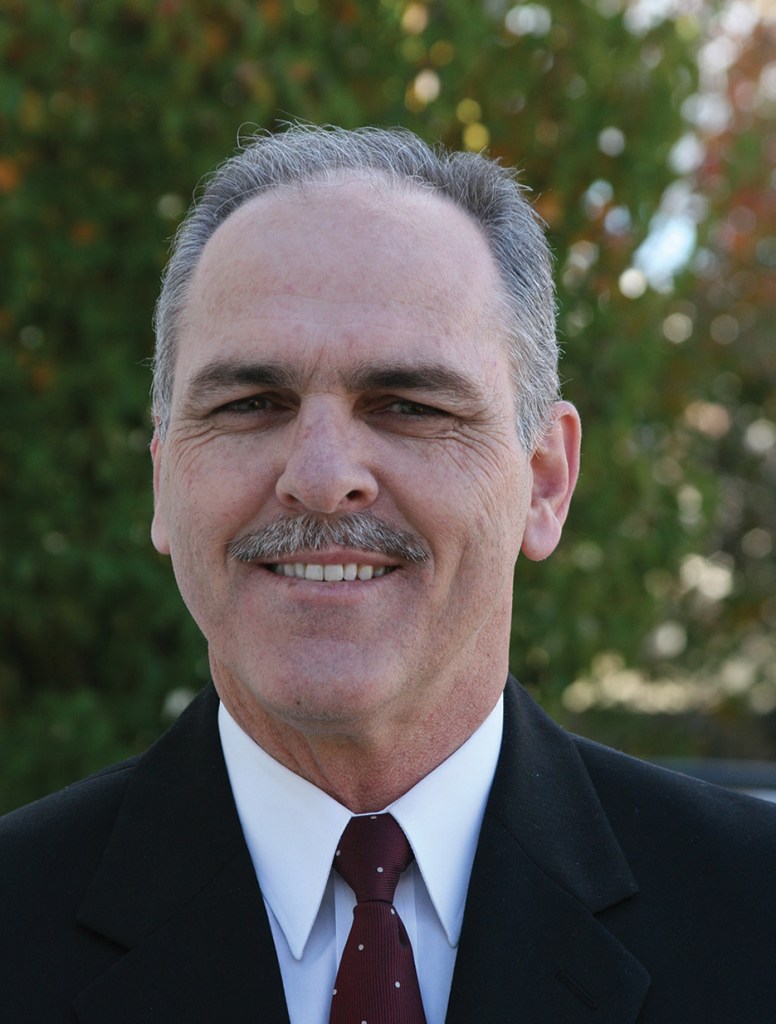
    Psychologist Nick Ramondo.

    PARTICIPANTS are needed for free group depression treatments as part of a UWA study looking into whether additional enhancements to widely-used therapy methods can improve outcomes.

    Clinical psychologist Nick Ramondo has 40 years’ experience in the field and as part of a PhD study will provide the group therapy to people between 18 to 65 experiencing depressed moods.

    Groups will be treated with the longstanding techniques of behavioural activation and cognitive therapy, along with different enhancements to study whether the outcomes can be improved by those additions. 

    The group therapy format has very similar outcomes to individual treatment for depressed mood, but is best suited to certain types.

    “It has pros and cons compared to individual treatment,” Mr Ramondo says. 

    “Group treatment is pitched at a typical or ‘average’ depressed person’s profile which may not always be the best fit because there are countless symptom profiles under the broad umbrella of ‘major depression’ – more than 1000 permutations to be more exact.”

    He says the group treatment format has some advantages: Providing a safe environment for “sharing one’s experiences with others; re-moralisation from support, encouragement and connections made with others in the group; the perspective that you are not unique in having depressed mood, [and] the ability to practice learning new skills alongside others in the same boat. 

    “It’s been heartening to see some of the connections people make with one another.”

    More socially-oriented people take to it quickly, but Mr Ramondo’s seen good results from shy people who stick to it. 

    “Shyness is certainly a factor that some people struggle with. Despite this, if the shy person can still make it to the first few groups, their shyness dissipates to some degree because their perception of how tough it is going to be is often much worse than reality. 

    “I can honestly say that some of the best improvements in group have been made by people who considered themselves extremely shy at the outset.”

    The study runs April to June at the Robin Winkler Clinic on UWA’s Crawley campus, and starts very shortly so inquire via unbouncepages.com/uwa-clinical-trial or call 6488 2644. 

    All the data is collated on a group basis only, and individual participant information remains confidential. 

    Mr Ramondo is running the trial as part of his PhD along with principal investigator Carmela Pestell.

    Mr Ramondo says he decided to return to his former uni to pursue a PhD four decades after graduating because he’d long wanted “to contribute to the field of psychology beyond what I could do in private practice”.

    He says “after researching topics for a couple of years, I decided I wanted to increase existing knowledge about improving psychological treatments for the number one presenting complaint to GPs around the world today”.

    The World Health Organization has cited depression as the leading cause of ill health and disability worldwide but very few people access help due to cost, accessibility and stigma. 

    Mr Ramondo says: “I have never been interested in researching esoteric topics with little real-world applications just to get a title”, so he embarked on “researching how to improve psychological treatment and how to better maintain outcomes for depression”.

    by DAVID BELL

  • Vincent in the spotlight
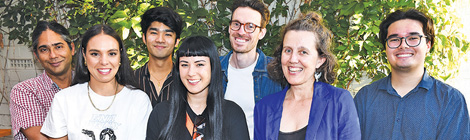
    L to R: Filmmakers Jay Jay Jegathesan, Maria Elena Amatulli, Radheya Jegatheva, Mel Branson, Lewis Potts, Jennifer Jamieson, Justice Goodrick. Photo by Steve Worner

    THREE new short documentaries about Vincent are in the pipeline for the 2021 City of Vincent film project.

    Partnering up with Revelation Perth International Film Festival, the docos will be screened at the upcoming RPIFF at Luna Leederville in July.

    This year the funding’s increased from $5,000 for each project to $7,000.

    The filmmakers are in the early stages of their careers and they’ll be tutored by seasoned figures in the industry.

    This year’s films are: There is no Stopping US: The story of our local radio station RTRFM that’s been broadcasting 24/7 for years.

    Mel Branson, Lewis Potts and Maria Elena Amatulli tackle the question: What happens when the station goes into lockdown?

    Pacing the Pool: Filmmakers Jay Jay Jegathesan, Radheya Jegatheva, Jenina David and Justice Goodrick tell the story of Richard Pace, who for the past 30 years has started each morning swimming laps at Beatty Park.

    We Had Mail: Jennifer Jamieson and Rebecca Riggs-Bennett’s film is a celebration of Vincent letterboxes, from the humble to the grand, but all of them becoming ever more vestigial

    Vincent Mayor Emma Cole says “we have a wealth of local talent and so many interesting stories in our community.

    “What better way to share these stories and unearth the film talent of the future than through quality documentaries?”

    “Past participants in the film project have gone on to win international accolades for their work. We are very proud to have helped so many emerging filmmakers realise their dreams of having their work broadcast on a local level and beyond.”

    Raising Joey, one of the 2020 films about local photographer Alex Cearns and raising orphan kangaroos, was recently accepted into the Venice Shorts Film Festival.

    And 2019’s The Throwback, about the now-closed Network Video Mount Hawthorn, won the grand prize at the 2019 Canada Shorts film festival. 

    By DAVID BELL

  • Food incursion

    CHANNEL NINE was rocked by a cyberattack this week with Weekend Today forced off-air.

    Some might call it digital terrorism, others an exercise in good taste.

    At the Voice we were taking no chances, and I had my mobile on airplane mode when we went for dinner at Kaguri Sushi in an undisclosed location in Perth on Monday night.

    Kaguri’s menu had an extensive range of sushi and sashimi, and hot dishes like soba, udon, tempura and teriyaki.

    The interior was quite upmarket with nice drawings of Geisha girls on one wall and belligerent sumo wrestlers on the other.

    Throw in some quality furniture and lovely oriental pots and dishes, and it was a cut above your usual sushi joint.

    My chicken spicy miso ramen ($17) was a comforting cacophony of flavours and textures.

    Spring onions, sweet corn and greens mingled with slices of katsu chicken, which had succulent flesh and a light, crispy coating.

    The test of any good ramen is the broth – will it be an oily inferno or a good platform for the ingredients to shine.

    Thankfully this was the latter, and it had the perfect balance of sweet and sour that kept you coming back for more.

    I would have liked a bit more heat in this “spicy” dish, but that aside, it was a great ramen with a superior broth and ingredients.

    It was the first time my kids had been to a sushi train, so they were transfixed by the metal conveyer snaking around the restaurant.

    They wanted to put their Barbie dolls and Pokemon toys on it, but I said that might result in some unnecessary dental work for the man a few seats down.

    Their avocado (six for $6.50) and cooked tuna (10 for $16) sushi rolls were huge, but they managed to finish them all and said it was some of the best they had eaten.

    I had a sneaky taste and can confirm the tuna was super fresh and the rice perfectly sticky.

    Meanwhile, my wife was enjoying her chicken katsu set ($20.50). It was nicely presented with stylish trays containing chicken, spring rolls, seaweed salad, miso soup and sushi.

    “This is a superior set menu and all the ingredients are lovely, especially the seaweed salad which has a vinegary tang,” she noted. 

    “The katsu chicken is good quality, as some I’ve had can be a bit fatty, but these strips are delicious. It’s great value for money and very filling.”

    We washed down the meal with some green tea ($4), which came in a beautiful oriental tea pot with ceramic hand-made cups.

    Throughout our meal the service was polite and efficient, with the man behind the till giving us extra napkins for our kids, who sometimes resemble Animal from The Muppets at feeding time.

    Kaguri sits in that nice range of mid-price restaurants serving up good quality cuisine that doesn’t break the bank.

    It also does lunch offers, making it a regular pitstop for casual meals at all times of the day. 

    With dinner out the way, I could go home and enjoy Married At First Sight with a home-made lobotomy. 

    Kaguri Sushi House 
    5/25 Preston St, Como 
    9474 3386

  • Aloha, artists
    Rocky Porter’s Elvis Series are some of the great artworks at Revealed.

    A giant neon sign, a  mini Elvis and some interstellar dust are just some of the great artworks on show at Revealed.

    Featuring more than 300 works by 100 new and emerging Aboriginal artists across WA, the exhibition is a salient reminder that not all Aboriginal art is dot painting and there is a burgeoning collection of young and innovative artists pushing the medium.

    Revealed starts with a tongue-in-cheek bang as you are greeted  by a giant pink neon sign “Moorditj!”  – meaning strong, good – as you walk inside the Fremantle Arts Centre.

    It was created by independent artist Amanda Bell, a Badimia and Yued woman, born on Whadjak country and raised on Wadandi land by the sea.

    “I had a vision of a beautiful Noongar word, as old as Boodja and as new as now, shining for all to see,” Bell says. 

    “I honour this word, this Country and our people.”

    From there on the exhibition is an explosion of colour and style, including everything from wool lizards to jewellery and strange sculptures.

    Highlights include John Morrison’s World Monsters, where you guide a cartoon character through a land of weird hybrid creatures.

    Situated in the kids zone, it’s part video game, part animation, and a great example of the eclectic pieces on show.

    Morrison works out of a Midland studio belonging to DADAA, a Perth-based organisation that helps artists with disability or mental illness. 

    Revealed is well suited to the huge rooms and super high ceilings at FAC, allowing the larger artworks to breathe and make a lasting impression.

    It’s a welcome return to form for FAC, as its last two exhibitions have been a bit underwhelming (understandable given the uncertainty generated by covid-19). 

    Revealed coordinator Jane Chambers says this year’s exhibition has the highest number of independent artists in the program’s history, including those from Broome, Derby, Wickham, Ngarluma (Roebourne), Wadandi (Bunbury  and South West), Whadjuk (Perth metropolitan) and Wilman (Dwellingup) Country.

    “Increasing participation for independent artists has been a major focus for this year’s Revealed,” says exhibition coordinator Jane Chambers.

    “Without the infrastructure of an arts centre to support them, it can be really difficult for independent artists to connect with audiences and find opportunities to pursue their creative practice. 

    “The strength and variety of their works add a different perspective to the exhibition, which we can’t wait to share.”

    Revealed is at Fremantle Arts Centre until May 23 and all the artworks are available to buy.

    by STEPHEN POLLOCK

  • Caring partner
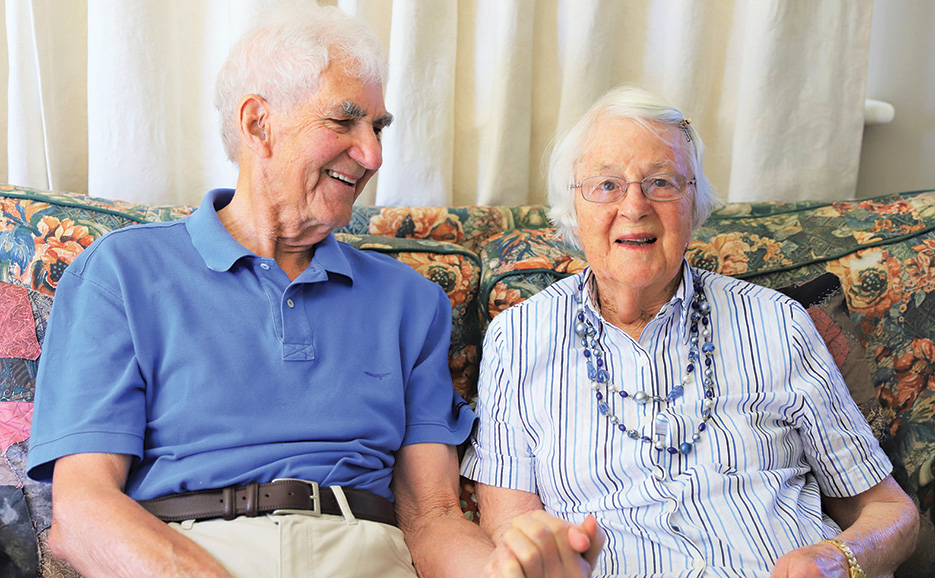
    Wally and Beth Meacock.

    AGE is no barrier to being active and sociable for 88-year-old Wally Meacock.

    Every morning he starts the day with a 6am ocean swim with the Port Beach Polar Bears in North Fremantle.

    Then on Thursdays he plays 18 holes of golf, and each month visits his local Probus Club to catch up with friends or listen to a guest speaker.

    But keeping fit and in touch with mates started to become more challenging a few years ago when Beth, his bellowed wife of 67 years, began to develop dementia.

    “It became difficult to care for Beth on my own, and while I would do anything for her, we decided that we needed to get some help,” Wally says.

    Thankfully a dedicated Baptistcare consultant guided Beth and Wally through the process of finding the right level of home care.

    Team members now visit regularly to help Beth (also 88) with personal care and social issues and prepare meals, cleaning, gardening and home maintenance.“

    Arranging for home care has given me my independence back, and I can continue to do the things I love knowing that Beth is well looked after,” Wally says. 

    “It has also been comforting to know she is in good company. I often come home to Beth teaching our support worker to knit and discuss her favourite recipes.” 

    Wally and Beth first met when they enrolled at the former Claremont Teachers College.

    Marrying in 1954, they taught at many schools across WA with Wally eventually becoming a principal and a superintendent of education. 

    Wally and Beth now have a family of four sons, 10 grandchildren and six great-grandchildren. 

    “For Beth and I, being able to remain at home with support and care means we can stay connected to our family at such an important stage in our lives,” Wally says.

    There are 33,300 West Australians with dementia, according to Dementia Australia WA. 

    Without a medical breakthrough, this number is projected to increase rapidly and in less than 10 years will reach 36,500. The 2010 Access Economics Report found the number of people with dementia in WA will rise to to 109,000 by 2050, with 117 new cases diagnosed each day.

    The top 10 council areas ranked according to dementia prevalence in 2010 were Stirling, Melville, Joondalup, Mandurah, Wanneroo, Rockingham, Gosnells, Canning, Bayswater and Swan.