Aside from the cost, there’s the interminable meetings and constant compromises.
So it’s a relief this free-standing townhouse in Mt Lawley is in a complex of three and has no strata fees.
Owner occupied since new, this three bedroom two bathroom abode is in excellent condition with polished timber floors, a large seperate lounge and an open plan dining area.
One of the highlights is the big and very stylish kitchen – the sleek white benchtops are super deep and complemented by swish cupboards and drawers.
The stainless steel oven and dark splashback really pop against the white, making this an eye-catching and contemporary space.
Off to the side is the open plan dining area, which has that classic herring-bone parquetry flooring.
There’s loads of natural light in this area courtesy of the large glass doors which open onto the back garden.
Out here is a decent strip of grass, which would be good for toddlers or if you have a dog or cat.
There’s also a pergola, but most of it’s uncovered so you could put vines on it or a quick solution could be some shade cloth from the DIY store.
There’s a decent amount of space in the garden and it’s a bit of a blank canvas and very-low maintenance.
All the bedrooms are upstairs, including the main which has his and her’s built-in robes and a renovated ensuite.
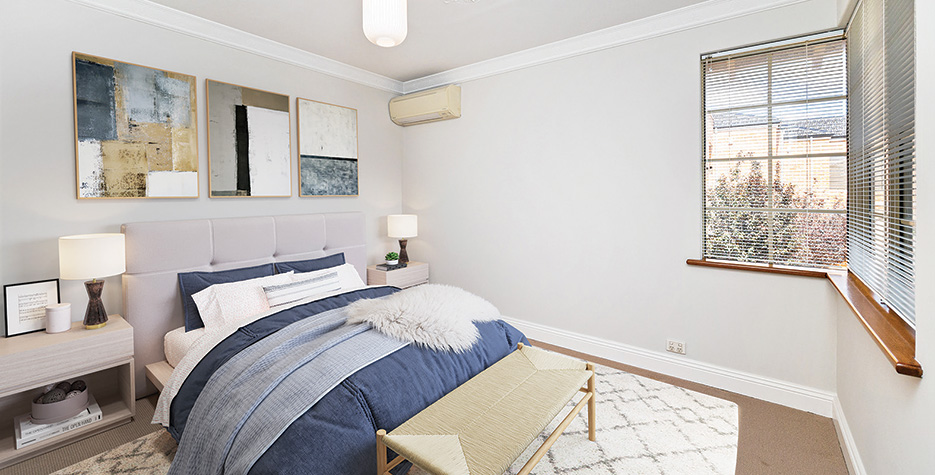
The bedrooms have a nice feel with carpets and a neutral colour scheme making them very cosy and relaxing.
This home includes air con, security alarm, loads of storage, a single garage and no strata management fuss (you only have to pay joint building insurance).
Situated on Whatley Crescent, this home is close to all the cafes and restaurants on Beaufort Street, the Swan River foreshore and the Maylands Yacht Club.
Plus there’s loads of venues within walking distance, like the new Seasonal Brewing Company, and a plethora of public transport including Mount Lawley train station.
This is a stylish townhouse in a great locale at a good price.
High $500,000’s 2/78 Whatley Crescent, Mount Lawley ACTON Mt Lawley Carlos Lehn 0478 927 017 Paul Owen 0411 601 420
ABOUT 200 Extinction Rebellion protestors held up traffic on St Georges Terrace for a couple
of hours on Monday morning as the group picked up the pace of their pre-Covid campaign to get the McGowan government to declare a climate emergency.
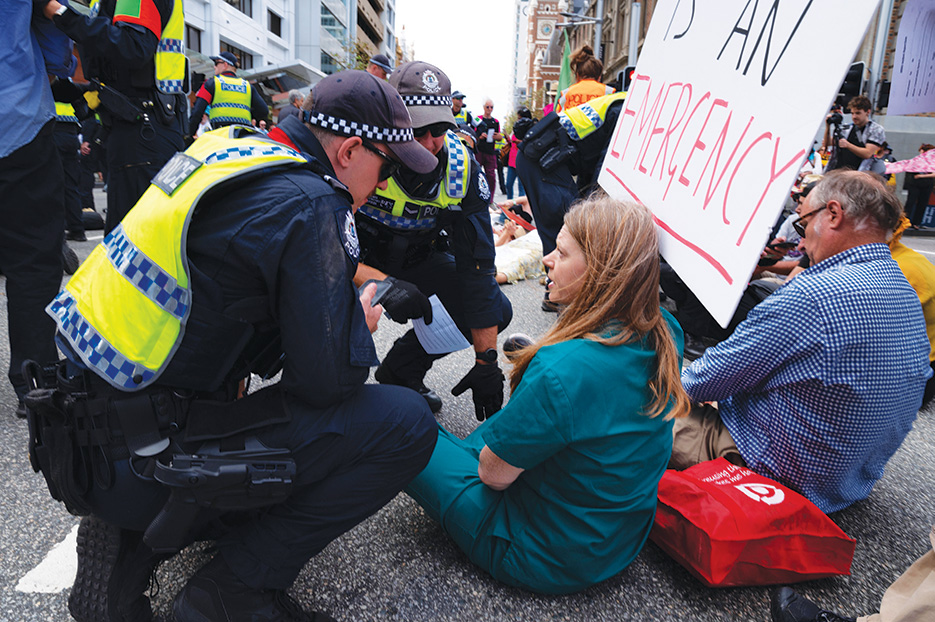
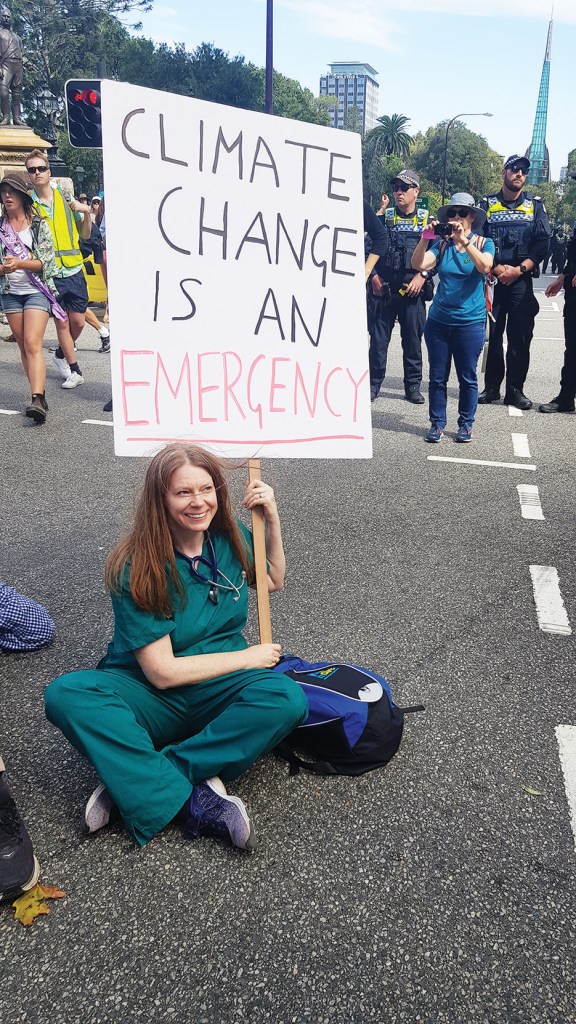
Police arrested 27 people, including Mt Lawley neurologists Carolyn Orr, as they conducted a die-in on the terrace as part of a three-day campaign.
Dr Orr is unrepentant about her activism, saying XR is only going to get bigger and next year police can expect 30,000 people on the streets.
This week’s SPEAKER’S COARNER comes from a speech given by Mt Lawley neurologist CAROLYN ORR. Here Dr Orr argues the pandemic is being overcome because people listened to experts, and she calls on people to do the same about the climate.
WE are here today to save ourselves and to save our children.
Each of the last four decades has been warmer than the one before. Since the mid 20th century Australian summers have become longer by
a month. The last five years have been the warmest on human record. Last year we saw Australia’s first megabushfire.
It won’t be our last.
We know that if we continue on our current path, we are on track for a world that’s four degrees – or higher – warmer than the safe baseline by the end of this century.
Even if Paris agreement targets are reached, we will hit 3C global warming by the end of the century. If we follow the accelerating trend of the last 10 years, we’re currently on track to hit 2C before 2040. At this point Australian summers in our major cities will be experiencing highs of 50C.
We face a nightmare future of ever-increasing deaths from fire, heat and smoke as megabushfires become our new norm; unprecedented cyclones, hurricanes and storms; spread of tropical disease into previously temperate regions; huge parts of the world becoming uninhabitable; global agricultural failure, mass starvation, refugees on a scale never before seen, and inevitably, war.
Fights over toilet paper during Covid were ugly enough. I hope none of us ever \ witness fights over food.
In 2020 during Covid Australians acted together quickly, cohesively and on a grand scale to face down a threat we all recognised was huge and imminent. Because Australians listened to medical scientists, we are now overcoming the pandemic.
We need to get to that same scenario with climate change:
• Where we listen to climate and environmental scientists with the same breathless attention and urgency.
• Where carbon emissions and CO2 levels are discussed by ordinary people hanging rapt on every scientific pronouncement.
• Where pollution levels and extinction events are water cooler conversation.
• Where the climate crisis dominates social media.
• Where everyone recognises net zero by 2050 as a plan to fail.
• Where fossil fuel companies and their lobbyists no longer pull our political strings.
• Where countries compete to reduce emissions the fastest.
• Carolyn Orr blocking traffic shortly before being arrested.
Climate change is the biggest thing that humans have ever done. It can only be met by a response that is bigger yet. Something transformational needs to occur.
Extinction Rebellion is that transformational event. We are this country and the world’s best hope to save the future for ourselves and our children. And we already know from history that peaceful civil disobedience is what we need to break the deadlock on climate change.
We have seen this strategy work for the suffragettes, for Indian home rule with Gandhi, and for the civil rights movement with Rosa Park and Martin Luthor King. We are their direct inheritors.
And we know this strategy works for climate change.
In the UK two years ago tens of thousands of demonstrators blockaded the City of London.
At first these people were castigated as loonies and anarchists. But then person, after person, after person, after person was arrested.
Tens, hundreds and finally over 1000 people were arrested performing acts of non violent civil disobedience.
Witnessing this mass voluntary sacrifice, public opinion swung massively in favour of the protesters and less than one month later, the UK declared a climate emergency and committed to net zero.
Here in Australia our numbers will only grow as the urgency and the scale of the problem is recognised by more and more people.
Today we have hundreds on the streets.
In September we will mobilise 5000 people.
Next year, there will be 30,000 of us on the streets of Perth.
We will do this, because we know that our future is not preordained.
Because we recognise this we will demonstrate again, and again, and again!
Some of us will choose to sacrifice our liberty to make the point.
We will do it because we are morally compelled to do so, and because we know we’re on the right side of history.
We won’t stop until the climate emergency in this country is treated as just that – an emergency.
So let’s save the future for ourselves, our children, and our children’s children!
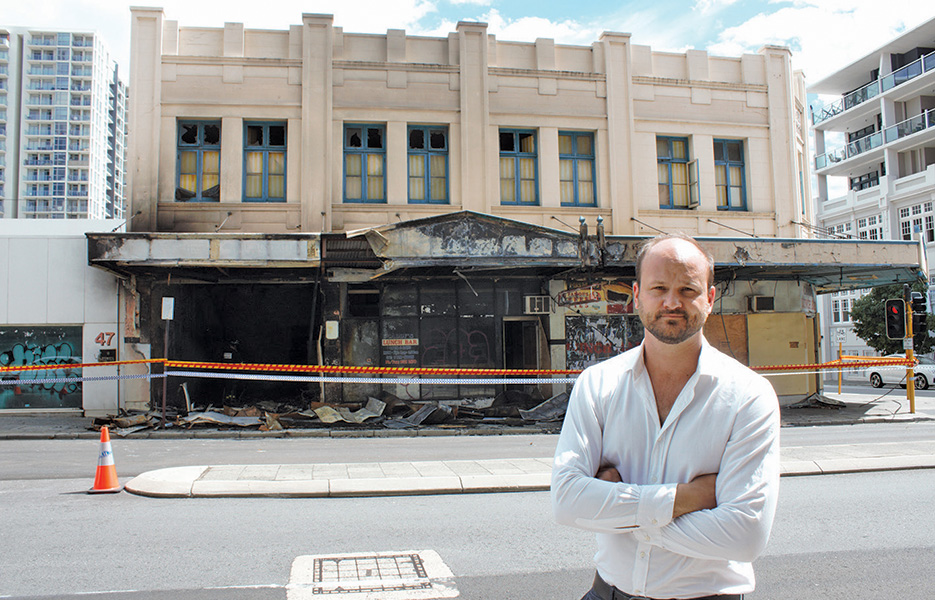
Museum of Perth executive director Reece Harley says the building should not have been left derelict and unsecured. Photo by David Bell
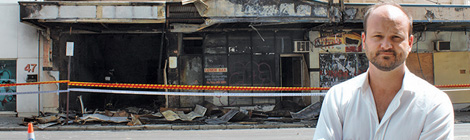
FIRE has ripped through the CBD’s abandoned Hostel Milligan, damaging the heritage-listed area supposed to be retained as part of a new development.
Fireys responded to a call about 1.30am Monday March 22. People were seen leaving the building shortly before the fire and one woman was taken into custody who’s now “assisting with the investigate”. The arson squad was called down Monday morning to go through the ashes and police are looking for more information.
The hostel was built around 1929 and surrounds an in-tact 1880s cottage named “Pearl Villa”.
In April 2020 Singaporean-based owners Fragrance Group won approval to build two towers on the site, a 37-level hotel and a 22-level office building. The hostel’s outer walls and the inner villa, now both damaged by fire, were to be retained.
They’d previously evicted the hostel’s last remaining residents, mostly elderly and down-and-out, in September 2019 in preparation for works.
But there’s been very little progress at the site. An urban explorer who gained access to the unsecured building two months ago tells us “many squatters” have been living in there since it closed, and they also recognised two small meth cooking setups in there.
That’s despite the owner being required to secure it.
As part of getting development approval for the new towers, the owner signed a heritage agreement with the City of Perth and the state Heritage Council.
The building was supposed to be secured, but Urban Explorers told us they found easy entry and evidence of squatting and even a makeshift meth lab in recent months. Images courtesy http://www.streetkidindustries.com
Trespass
It required that “reasonable measures are taken to secure the place against trespass, vandalism, vermin and pests” and the owner was supposed to carry out weekly checks to ensure the doors and windows were locked, and that security systems and smoke detectors were operational.
Museum of Perth executive director Reece Harley fears the building’s existence is now under threat and has called on the owner to commit to restoring it.
He’s written to Perth council, state heritage minister David Templeman, and Perth state MP John Carey asking for their assurance the building would be secured and restored, as per the Heritage Agreement, rather than demolished.
The agreement says if there’s any damage or destruction the owner must “fully and properly repair, replace or restore the destroyed or damaged place,” unless they can argue their way out of it at the State Administrative Tribunal.
Mr Harley says “the developers could have allowed the [hostel’s] tenants to remain in the building to secure and maintain the site until they were ready to proceed with a development,” instead of evicting the residents and hostel manager back in 2019.
He pointed out: “If the owners had adhered to the legal agreement they signed the building would have been checked 58 times in the last 13 months” and asked “have those checks been occurring?”
We lodged a query with Perth council asking whether any inspections had taken place. They said “the city regularly inspects the property and advises the owner of any action that needs to be taken.
“The property has been inspected and security repaired twice in the past two weeks.”
Whatever was repaired didn’t keep the squatters out.
As to possible action against the owner, they haven’t yet assessed the building as it’s still under police investigation.
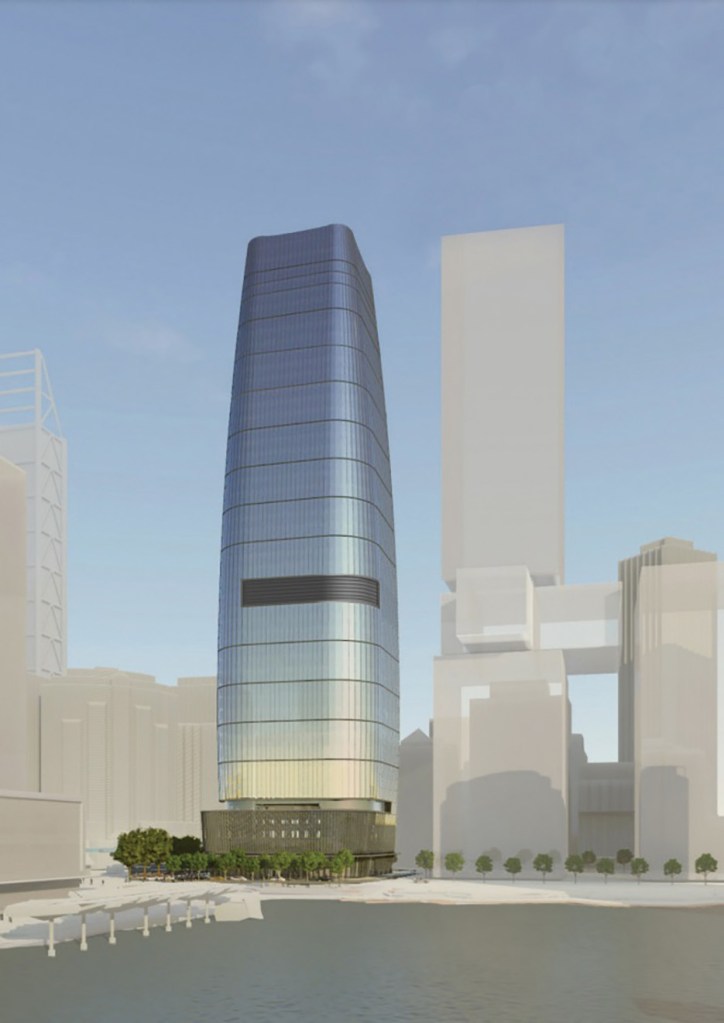
Element’s design for Lot 4. Every resident can drive to this attractively tapered building.
THE vision of a pedestrian paradise around Elizabeth Quay is set to suffer a further blow with another car-laden development in the pipeline.
The 54-storey tower will have 168 units, 24 office floors, and an upper level restaurant, bar and rooftop pool.
It will also have a lot of parking bays.
When the Barnett government was planning Elizabeth Quay it was meant to be light on private car ownership, with the planning rules setting a limit of 0.7 car bays per apartment. It was hoped the proximity to public transport and the wealth of nearby shops, restaurants and workplaces might encourage car-free living.
But last year the Voice reported the planned Brookfield towers for the landmark sites at lots 5 and 6 wanted nearly double that ratio, with an average of 1.9 bays per apartment equating to a total of 453 cars.
Now plans for lot 4 are being advertised with another surfeit of parking: 1.2 bays per apartment instead of 0.7. That’s a total of 204 bays for 168 apartments, plus office tenants will have 90 bays instead of the allowable 67.
In plans by the designer Element, the plea for more bays echoes Brookfield’s argument: Rich people like cars.
“Given the premium end of the market being targeted, there is an expectation and demand for car parking bays for some of the larger three and four bedroom dwelling’s,” the proposal states.
The proposal says what they’re asking for is “significantly less than the 1.9 bays per dwelling that was approved at Lots 5 and 6”.
Lot 9 also got extra bays, and lot 4’s proponents argue since “competitor product” has plenty of parking, “to not provide multiple car parking bays for some of the larger marketability”.
The state government’s planning superpower DevelopmentWA is responsible for approval and it’s up to transport minister Rita Saffioti to grant extra parking bays, on advice from the Department of Transport.
The proposal is out for comment at developmentwa.com.au until April 10.
Mini roundabouts: Good for cars, but maybe not walkers like Andrew Main or riders like Bike Friendly Vincent’s Geraldine Box. Photo by David Bell
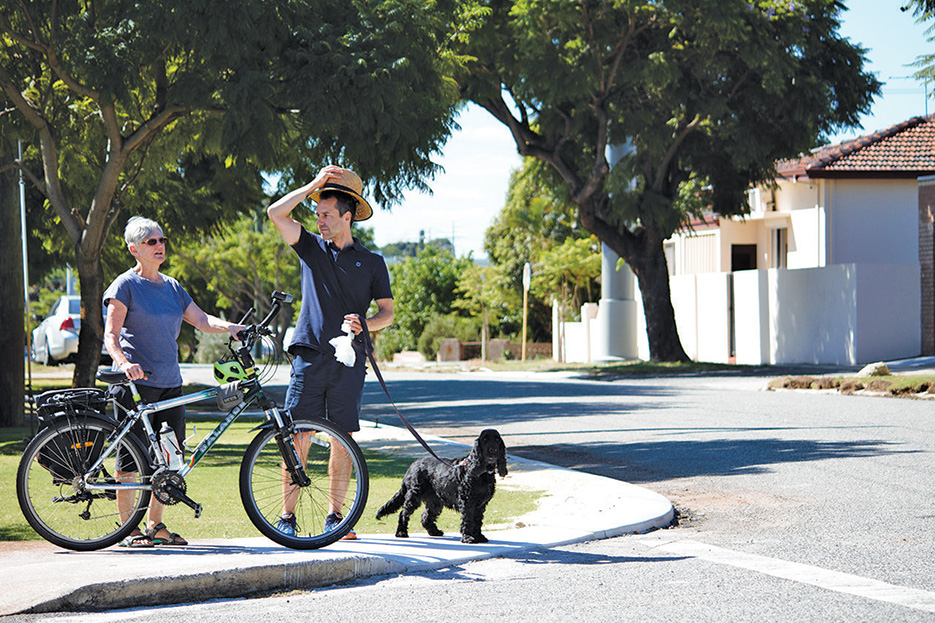
A PROPOSAL for an extra nine roundabouts in North Perth has walkers and bike riders fearing it’ll end in tragedy.
Nine intersections on Vincent Street between Fitzgerald and William Streets are under consideration for a Main Roads “mini roundabouts” pilot project.
They are meant to make driving safer as vehicle collisions happen at glancing angles instead of a jarring 90-degree t-bone.
Vincent councillors voted to put the idea out for consultation, and the state government will pay the bill if gets the go-ahead.
North Perth resident Andrew Main says it makes no sense to introduce roundabouts on local roads with high numbers of walkers and riders.
“What they are proposing to do is cheap and dangerous,” he says.
Roundabouts
“Roundabouts are dangerous for active transport users and only assist drivers. There are no crash statistics that seem to justify introducing the roundabouts either.”
Councillors weren’t provided numbers but were informed the area’s had some “low grade traffic incidents” resulting in property damage across the past five years.
The RAC straight up advises pedestrians not to cross near roundabouts, as does Victoria’s road department Vic Roads.
The Road Safety Commission says roundabouts should have separate cycle and walking lanes if they’re to be safe for riders and walkers ‚Äî and these mini roundabouts won’t.
Cr Dan Loden raised the safety issue when the council voted to advertise the idea. “I am concerned about cyclists in this context,” he said. “The issue is with the mini roundabout, you create less space in that junction, and so it then actually makes it more difficult for cyclists to get through.”
The council’s own draft “Accessible City Strategy”, meant to encourage people to drive less ‚ also warns against roundabouts as “increasingly problematic”.
“They were flagged as a consistent risk for cyclists during consultation,” the strategy reads.
“Roundabouts are generally designed to support the high-speed movement of cars in all directions, and the high-speed design of these facilities can adversely impact pedestrian and cycling safety.”
The strategy says compact roundabouts can be made safer if the road speed is reduced. But there’s no guarantee that’ll happen: Main Roads will apparently “consider” dropping the speed to 40kmh as a quid pro quo for Vincent playing guinea pig, but actually getting people to obey the limit involves a lot more changes to roads than just changing the signs.
Vincent mayor Emma Cole says the mini roundabouts “are a traffic calming device that reduces the speed of motor vehicles” making street safer for everyone.
“Traffic volumes and speed are a daily concern for our community,” Ms Cole said.
“We’re trying a number of different measures to slow down drivers on our inner-city local roads, which are often used for rat running.
“A mini roundabout is essentially a small mound in the middle of the road. They force cars and light vehicles to slow down and go around the roundabout. Bigger vehicles, such as rubbish trucks, can safely mount mini roundabouts but again at a lower speed. They are a small-scale, low-level intervention that can be installed on a narrow road.”
The roundabouts would go in at intersections between Raglan, Grosvenor, Chemsford Roads and Ethel, Norfolk and Hyde Street
They’re up for consultation until April 12 at imagine.vincent.wa.gov.au
PERTH state Labor MP John Carey has been promoted to Mark McGowan’s Cabinet, taking on the housing and local government portfolios.
“I’m deeply honoured,” the newly-minted minister said.
“Everything I’ve done to date in my role as MP, I’ve never taken the position of elected office for granted.
“My dad once said ‘one day you’re a rooster, the next day you’re a feather duster’, so it really is such an honoured and privileged position and I will give it my all.”
He said of the induction ceremony: “I really wish my mum and dad had been there”. His dad was a staunch Labor man and Mr Carey says “dad and mum never saw that I became mayor or elected member or minister.
He says “in relation to local government, I had a history of reform at the City of Vincent,” where he was mayor from 2013 to 2017. “I will be working with everyone to look at how we can do things better, how we can reform local government so we can get better outcomes from everyone”.
Mr Carey acknowledges housing portfolio will be a significant job. Homelessness advocate ShelterWA congratulated him on the role with CEO Michelle Mackenzie saying he’s “been a passionate champion for homelessness during his time as the member for Perth”.
But they’ve already issued Mr Carey, community services minister Simone McGurk, and new commerce minister Amber-Jade Sanderson a challenge to address urgent housing needs in their first 100 days.
THE City of Vincent Local History Centre brings us this look back at a time when Leederville was a manufacturing powerhouse, focusing on the Golden West Aerated Water Company and explaining the inspiration behind Carr Place’s curious bubbled building.
MUCH has been made recently of Australia pivoting back to local manufacturing in a post-Covid world.
Inspiration for this can be found in Perth’s history when factories of all kinds were ubiquitous in suburbs like Leederville.
From fencing to furniture making, munitions to drill rigs, Leederville in the 1900s was home to a range of manufacturing enterprises.
One former business that has inspired a new generation of manufacturers in Leederville is the Golden West Aerated Water Company.
Golden West began operating around 1896 at 41 Fitzgerald Street near the corner of James Street (now Farinosi & Son’s Mitre 10 hardware store). In 1906, founder James J Wallis moved the factory to a new and larger premises on what was then Leeder Street (now Carr Place).
The Golden West factory covered a broad area between Carr and Newcastle streets with space for tanks to capture rainwater used in the soft drinks manufacturing, as well as stables for the horses and carts used for deliveries.
Golden West produced a variety of soft drinks and cordials including strawberry creaming soda, kola beer, lemonade, fruit cocktail and the intriguing mystery flavour ‘Space-O’ advertised as giving a “boost for spacemen”.
The family run business was handed down to James Wallis’ son Ernest, and his son Ronald James also followed in the family business as a cordial mixer.
The company employed many generations of local workers including Michael Hatzistavridi who started work at Golden West from 1952 until after it was bought by Coca Cola in the 1960s and became ‘Gest’ soft drinks (a combination of the names Golden and West), eventually moving to a factory in Kewdale.
“The Golden West product was not concentrate, it was the ingredients. You bought the syrup, the citric acid all separate, and you made the formula yourself. That’s how it was and the ginger beer too — you made it all yourself,” Mr Hatzistavridi said.
The Leederville factory closed in 1972 and was redeveloped in 2018 as an apartment complex, with the design evoking the bubbles of the soft drinks once produced on site.
The Golden West Brewing Company, a group of friends with a shared love of unique brews, bought the rights to the historic name and logo in 2018. Tim Wren, head brewer at the rejuvenated company, is looking to history for ideas in developing a new range of hand crafted brews using locally sourced products.
“We currently have one product line which took inspiration from a heritage soft drink called the kwencher,” Mr Wren says. “With only the packaging to go off,
we created the Kwencher Pale Ale with its tropical fruit aroma and flavour. It would be great to continue developing recipes with inspiration found from original products.”
Mr Wren recently spent some time in the Vincent Local History Archives exploring the handwritten cordial and ginger beer recipes that the Wallis family donated to the Vincent Local History Collection, along with a wonderful assortment of photos and objects from the original Golden West factory.
While the ingredients and measurements of a bygone age can be a little hard to decipher and replicate in today’s world, Mr Wren is determined to find inspiration from the past for a new generation of beer lovers. We can’t wait to taste the results of his research and craftsmanship.
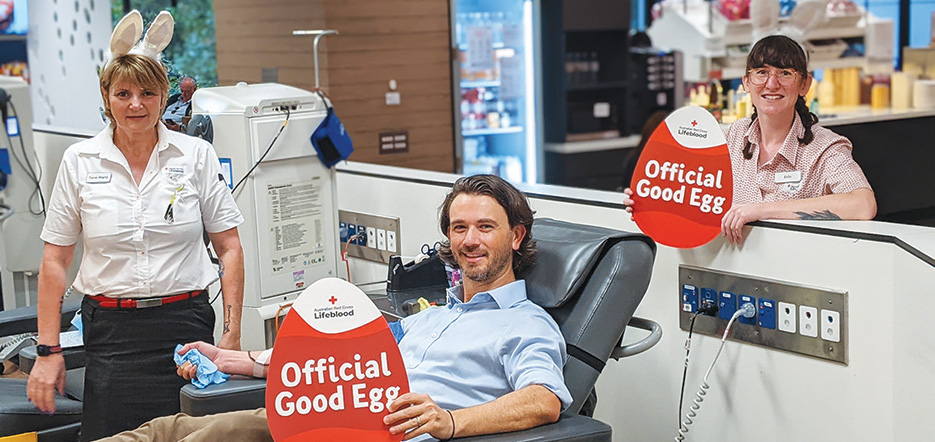
• Tana Marie Henry and Erin Watkins from Lifeblood, with donor Matt Sercombe.
BLOOD platelets spoil quicker than milk so the Perth CBD Blood Donor Centre is calling for an 300 extra donors over the coming long weekend.
Blood is especially needed for cancer patients going through chemotherapy and to meet an expected increase in road trauma.
On a typical Easter weekend admission rates start to climb on Thursday night as people travel on the last warm long weekend before winter. That trend was bucked last year during lockdown but more people may be holidaying intrastate this year meaning more car trips.
Red Cross Lifeblood spokesperson Jessica Willet says Easter was one of the hardest times of the year to collect blood and plasma.
“We traditionally see less donors at Easter, as many people take a well-earned holiday,” Ms Willet said in a media release calling for 300 extra donors, especially O-negative universal blood types that can be used in emergencies.
“Now that travel restrictions have lifted in many parts of the country, we’re expecting many regular donors to take an Easter break. But the need for blood never stops.”
If you can spare an hour to potentially resurrect someone this Easter, they’re open every day except Good Friday, hours via lifeblood.com.au and book on 13 14 95.
WITH the cooler weather arriving this week and Autumn beginning to bite, there was only one thing on my mind – curry.
I’ve always liked the Nepalese take on curry, but every time I’ve driven by Himalayan Nepalese Restaurant and Cafe in Inglewood, their sign has put me off.
I’m sure it wasn’t cheap, but the bold letters and colours have a bit of a fast food vibe, so I’ve never hit the brake pedal.
On Tuesday night I finally put my sign prejudice aside and took the family there for a meal.
I was pleasantly surprised – The interior was bright and modern with loads of spaces between the tables and a neat bar at the end of the dining area.
There were a few photos of Nepal and some vintage face masks on the walls – a nice nod to the homeland that wasn’t too ham-fisted or hokey.
The restaurant was also super clean (sounds like a basic requirement, but I’ve been in some real grubby ones).
The waitress was super friendly and gave us a pitcher of tap water straight away, which is always a bonus as some highfalutin places make you pay for bottled.
The menu had a nice range of tandoori and curry-style dishes with chicken, lamb, goat, beef, fish and prawns.
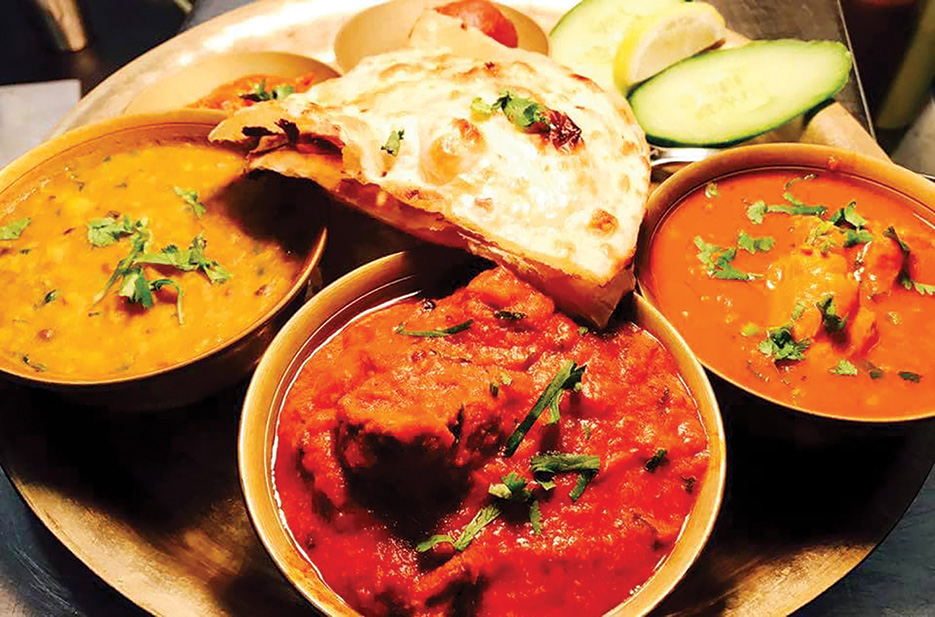
Highlights included Khasiko Sekuwa (French lamb cutlets marinated with yoghurt and spices and cooked in a tandoori oven) and the Chef’s Special Goat Curry (meat on the bone cooked in a traditional Nepalese style sauce with onions and tomatoes).
They also had a great range of veggie dishes including one of my mum’s old favourites Pancha Mukhi Daal – lentils, seasoned with cumin seeds, ginger and garlic – which I hadn’t seen on a menu in a long time.
The smiley waitress was soon back with my Khasi Ra Saag ($24.50) featuring tender diced lamb in a rich viscous sauce with dark green flecks of spinach.
The sauce was thick and addictive, with the gamey lamb and fresh spinach combining in a strong burst of flavour.
Rounding things off were some exotic spices and the odd cardamom seed to keep your palate on its toes.
The thin, crispy tandoori roti ($5) was perfect for dipping in the moreish sauce, while the steamed basmati rice ($5.50) was super light and fragrant.
A delicious dish that would be Popeye’s go-to if he ever climbed Mount Everest.
Across the table my wife was tucking into her creamy chicken ($24) – a benign and comforting dish with boneless chicken.
“The sauce is perfectly balanced and the cream isn’t too sweet or sickly,” she noted.
“I love the subtle addition of cashew nuts and the chicken is super tender. A very pleasant and tasty dish.”
She washed down her meal with a “deliciously thick and fruity” Mango Lassi ($6).
Hats off to Himalayan Nepalese for having a kids menu, as not many curry-style joints do.
We got our young nippers the butter chicken with a soft drink and ice cream for $16. I thought the price was slightly steep for a kids dish, but it was high quality and there was lots of it. A good way of introducing children to spicer food.
I’ve definitely overcome my sign prejudice and will be returning to Himalayan Nepalese Restaurant and Cafe for more delicious meals during the winter months.
“Despite looking for alternatives. Nothing looks like or behaves like blood.
“The larger work Angel is created with it entirely.”
The Voice was slightly nervous about asking what kind of blood was used in Wilson’s exhibition Otto and Annie, but there’s no denying the end result is arresting and somewhat disturbing.
Inspired by a 1926 painting of Anita Berber by Otto Dix, Otto and Annie draws parallels between present day and the 1920s when the world was recovering from Spanish flu and dealing with the rise of nationalism.
Despite all our advancements and technological frippery, have we progressed as a society with racism and sexism continually rearing its ugly head?
“The central idea of this collection is that in the 1920s, Germany and the rest of the world were in between the two world wars,” Wilson says.
“The Weimar Republic came and went, exacerbated by German dissatisfaction with the treaty of Versailles.
“This led to the rise of the Nazi party, the rise of extreme rightwing politics and ultimately the Second World War with all of its horrors.
“While I would very much hope that we return to centrist politics, my expectation is less positive. Here in Australia we witness politics which favour conservative values, nationalism, racial exclusion, social division and an economic environment which is polarised.”
Featuring large photos, cyanotypes and video, some of the works in Otto and Annie feature a woman drenched in blood. Wilson says he wasn’t highlighting misogyny or the mistreatment of women, but instead the lives lost in the pandemic and “contemporary deaths witnessed by wars, hostilities, and oppressive police practices worldwide.”
Wilson has enjoyed a colourful life and career, visiting 55 countries over the years and working a litany of jobs including jeweller, heavy vehicle operator, touring stage photographer, motorcycle courier and “sometime dominatrix”.
Now based in West Perth, he says he is inspired by iconoclasts who question the status quo like The Hitchhikers Guide to the Galaxy author Douglas Adams: “His way of thinking was to question the obvious, ridicule the status quo and gently question the validity of government.”
He also likes Warhol and the controversial installation artist Tracey Emin. Otto and Annie is at the Mudita Gallery in Central Perth from March 26 until about the end of April. The event is free, but ticketed. For tix and more info go to muditagallery.weebly. com/tickets.html