• Closed off… or set free

    VALERIYA KOVALYSHEN is a Cockburn resident who recently made a long-held dream come true. With WA’s sudden lockdown reminding everyone that border re-openings can’t be taken for granted, she says there’s some great opportunities for the whole family, right here in our backyard – if you’re willing to take the plunge.

    WE did something different this summer holidays. 

    Due to Covid or due to a decision to follow our dreams…

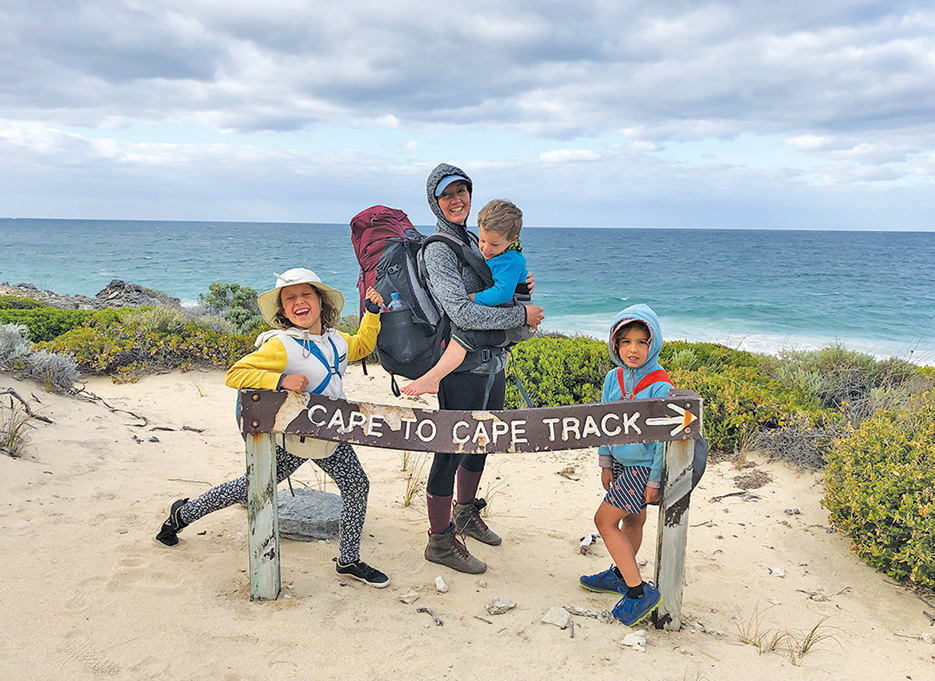
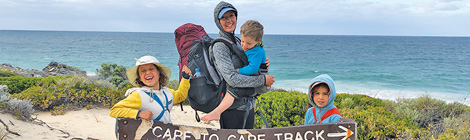
    We hiked the whole Cape to Cape Track as a family with our three little kids aged 2, 5, and 7 years old. 

    It took us nine days to complete the 130km trail end-to-end from Cape Naturaliste to Cape Leeuwin. 

    Hiking the Cape to Cape Track with kids was my dream for so many years. 

    We did our first attempt to hike part of it in 2015, when our daughter was 1 year old and I was 22 weeks pregnant. 

    We completed about 30kms of the trail and decided that it was definitely great but too hard. 

    However the dream to do the whole track with kids was still there. We just waited for when we would be ready, and when our kids would grow up, and when the weather would be good…

    The dream

    Then we decided to stop waiting and just go. 

    The Cape to Cape Facebook group recommendation is to hike the trail in April-May or September-October, when the weather is cooler and more enjoyable.

    For those who wants to hike in the summer the general recommendations would be: 

    • Start early to avoid day heat,

    • Carry plenty of water and do not rely on the water in the tanks,

    • Reduce the weight of the backpack.

    Well, we did the opposite.

    We could not start early, because it takes time to pack two tents, five mats, liners, sleeping bags, filter the water, feed the whole family, apply sunscreen, you name it…

    We carried plenty of water but not as much as we wished to. We heavily relied on the water in the trail tanks. 

    On the second day of our hike we were going to re-supply our water from the Quinninup falls. 

    Three different people on the trail told us it was dry and the waterfall was not even dripping. Luckily when we arrived we found it full and running.

    Our backpacks were heavy.

    Our daughters helped as much as they could and carried their backpacks. However there was still a lot to carry. Gear, food, water and our 2 year old son. 

    He was carried almost the whole way in a baby carrier. 

    As we love food and we eat a lot, we couldn’t carry all our food with us (even though it was dehydrated). 

    So we had three resupply boxes with food and nappies which we left in caravan parks before our trip.

    It was tough and hard at times but we absolutely loved our experience and super proud of our family achievement.

    They say Covid separates families and unites families. 

    Here in Australia we are now far away from our relatives overseas. 

    This remoteness of our families is bringing us closer together to our kids. 

    We are holding on to each other and helping each other like never before.

    No matter what is happening around, together we are stronger. 

    Together we still can follow our dreams and achieve goals.

    I hope this article will inspire families to set their family goals and fulfil their dreams.

  • Modern art

    THE last time I wore a mask in public, I was dressed as a werewolf and scaring old grannies.

    It wasn’t a psychotic episode – I was a young child going door-to-door on Halloween.

    Thankfully when the family and I went to The Modern Eatery in Mt Lawley this week, I opted for the standard white mask and didn’t terrorise any pensioners.

    The Modern Eatery in Fremantle has always been one of my favourite Japanese restaurants, so I wanted to check if the Perth outlet had the same high standards.

    Situated just off Beaufort Street on Chelmsford Road, the small eatery has a demure sign and is part of an unassuming row of shops (blink and you’ll miss it).

    The menu has an adventurous range of sushi, sashimi, cooked meals including don bowls and bentos, and a nice range of sides like otaku fries, pork gyoza and edamame.

    With the temperature starting to drop this week, I felt like something hot and went for the Wagyu Don bowl ($18.50).

    It was well presented with layers of thinly-sliced beef and seasonal vegetables perched on top of a bed of steamed rice.

    No stringy, fatty beef here; it was high quality Wagyu and melted in the mouth.

    The star of the dish was the moreish broth, which had great depth of flavour with a slight vinegary tang.

    Just when the Don was getting a bit monotonous, the rocket salad and spring onions refreshed the palate, and the inclusion of pickled cabbage was a masterstroke, adding a piquant coda to the meal. A top don.

    Across the table my wife was enjoying her indulgent Fry me to the Moon (six for $15.50) – deep-fried sushi with salmon and cream cheese, sweet chilli mayo and teriyaki.

    “The salmon is bold and in your face, but the cream cheese and mayo help soften the flavours into a pleasant whole,” she said.

    “I love the fried panko crumbs on the outside; it gives the sushi a crunchy texture.”

    My wife rounded off her heart attack with a fried chicken bao bae ($7.50), which she said was “deliciously light and moreish.” 

    The Modern Eatery was minimalism personified: white subway tiles, white tables and waiting staff in unfussy, black garb. 

    It had that less is more Japanese ethos.

    The only thing I didn’t like was the soporific music – imagine doctor’s surgery music on tranquillisers.

    Without a doubt, the best dish of the night was the creamy croquettes (four for $8.50).

    They had an exquisite light batter with potato mash and shredded crab sticks, creating a lovely sweet reprise.

    After their first week back at school my young kids were famished, so they demolished their avocado and cucumber roll (six for $6.90) and cooked tuna and cucumber roll (six for $8.50) from the children’s menu.

    Throughout the meal the service was polite and efficient and we got a warm hello and goodbye from the staff in the open-plan kitchen.

    The Modern Eatery is a bit more expensive than your usual sushi joint, but it’s well worth a few extra bucks as the food and service is top notch. 

    Plus there’s lots of lunch deals and specials to keep you coming back for more. 

    The Modern Eatery
    595 Beaufort Street, Mt Lawley
    9328 3661
    Tuesday-Sunday themoderneatery.com.au/perth/mount-lawley/

    by STEPHEN POLLOCK

  • Zapped 
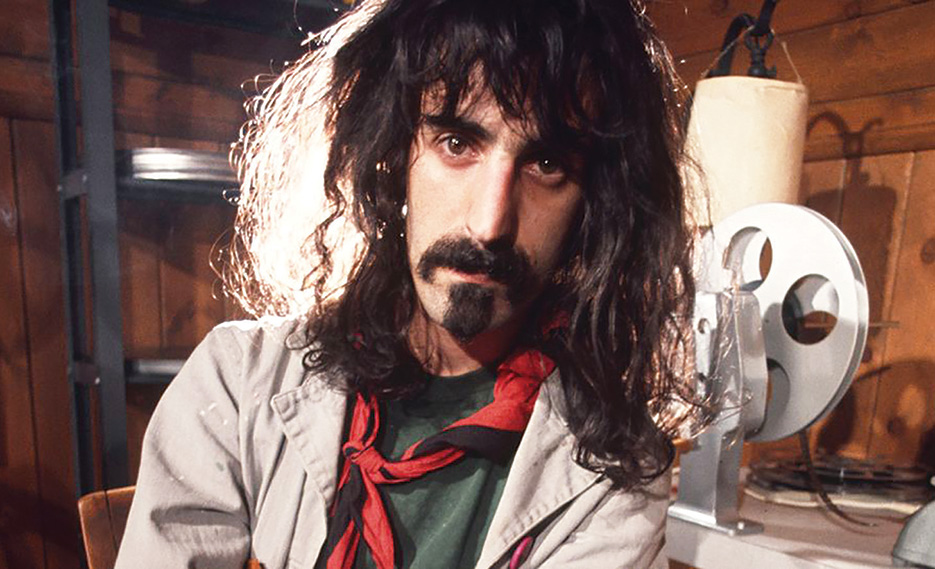
    • The documentary Zappa chronicles the lives and times of iconoclast Frank Zappa.

    ZAPPA could be the perfect documentary for people who don’t like Frank Zappa’s music.

    That’s because it’s the first time a filmmaker has been granted unlimited access to all the archive footage in Zappa’s vault. 

    The result is an all-encompassing documentary about his turbulent life – from his appearance in front of a US Senate committee to his battle with cancer.

    The film still includes historic musical moments along the way, like the footage of Zappa and The Mothers of Invention jamming with John Lennon and Yoko Ono at the Fillimore East in 1971, but it’s not just about the music.

    At times it feels very intimate as we see Zappa goofing around with his young kids, and at other times era-defining as he locks horns with the political establishment.

    Never one to shy away from controversial topics, Zappa spoke passionately on issues like religion (he was an atheist), he abhorred drugs, and battled with politicians and censors throughout his life.

    In 1985 Zappa testified at the Senate hearings on rock lyrics, attacking the Parents Music Resource Centre, a music organisation co-founded by Tipper Gore, wife of then-senator Al Gore.

    The PMRC consisted of many wives of politicians, and was founded to tackle song lyrics with sexual or satanic content.

    Zappa saw this as a conflict of interest and also a path towards censorship, calling their proposal for voluntary labelling of records with explicit content “extortion” of the music industry.

    Archive material is bolstered with revealing interviews with his widow Gail, who died in 2015, and several of his musical collaborators including Steve Vai, Mike Keneally and Ian Underwood. 

    The archive footage was restored using proceeds from one of the biggest ever Kickstarter campaigns, showing the love that still exists for Zappa some 28 years after his death.

    The documentary was made by actor and filmmaker Alex Winter, who is best known for portraying the slacker Bill in 1989’s Bill & Ted’s Excellent Adventure.

    However since the 2010s Winter has carved out a career as a serious documentarist, making films like The Panama Papers and Trust Machine: The Story Of Blockchain. 

    He did a good job of condensing Zappa’s complex life – the man had his fingers in a lot of pies and released countless albums – into a two-hour documentary.

    Sadly Zappa died in 1993, aged 52, after a four-year battle with prostate cancer.

    I came to him late after stumbling upon an interview he did on YouTube. 

    I didn’t really like his music, but became addicted to his insightful, candid take on life.

    This was a man who was intellectual light years away from the usual grunting rock star.

    In fact he wasn’t a rock star and didn’t really have a good word to say about the music business. 

    Zappa was a passionate man full of surprises and contradictions, which makes for a great documentary,

    Zappa is showing at Luna Leederville in Perth from Friday February 19 – Sunday February 21.

    by STEPHEN POLLOCK

  • Resort living 

    IF you’re looking for a luxurious apartment with resort facilities for less than $400,000, this could be the one for you.

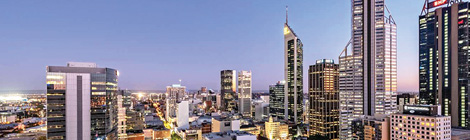
    Located in the heart of the city on Murray Street, this stylish one bedroom one bathroom apartment is part of a brand new complex with an infinity pool, outdoor cinema, and BBQ and lounges on the roof.

    If that wasn’t enough the complex also has a state-of-the-art gym, a 21m heated pool and a cedar-lined sauna and steamroom, so come winter you can do a workout without having to go outside.

    Throw in some stunning views and this really is a great inner-city abode.

    There’s nothing to do in this apartment; it’s walk-in ready with top-of-the-range fixtures and fittings.

    The kitchen is especially impressive with stone benchtops, elegant cupboards and drawers, and high-end integrated appliances.

    For a 54sqm apartment, the kitchen feels quite spacious and has been cleverly designed.

    In fact all the living areas have neutral colour schemes and clean lines, creating the feeling of extra space.

    I really like the glass floor-to-ceiling doors in the lounge: You can slide them back to let in the breeze and enjoy glorious views of Perth, including Burswood Stadium.

    The balcony is a decent size and has enough room for a table and chairs.

    I imagine this would be a great spot for drinks with friends, before heading out to enjoy the nightlife in the city. This luxury apartment is close to the restaurants and bars in Yagan Square, and is a short stroll from all the city attractions including Northbirdge, Victoria Quay and Kings Square.

    The apartment includes storage and a parking space, but with the train station around the corner and bus stops everywhere there are loads of public transport options. 

    For the investor, or those looking to move in and rent out later, it’s worth noting that the complex is within walking distance of the planned Edith Cowan University and WAAPA campus behind Yagan Square, scheduled to open in 2025.

    Strata fees are pretty hefty at $609 a quarter, but you have lots of top-notch facilities in the complex.

    This inner-city flat would be a great buy for those wanting to get on the property ladder.

    $383,000
    Home open today (Saturday February 13)
    12pm-2pm 708/380 Murray Street, Perth
    Ray White City Residential Agents:
    Brent Compton 0410 543 124
    Natalie Hatton 0421 232 274

  • The savage truth

    PERTH film-maker Bree Billington-Davies and her small production company Contingent Productions spent three years touring African and European conservation hotspots to get a warts and all view of what it’s like trying to save the world’s ever-growing list of endangered wildlife.

    Forget the headline-grabbing stories of cuddly critters settling into their new leafy sanctuary – when it all went pear-shaped Billington-Davies was there to capture the heartache and dissect the failure.

    “It’s an industry facing extreme adversity, especially in southern Africa, with wild animals and humans living in close proximity,” Billington-Davies said.

    “Recalcitrant governments are a serious matter of concern for conservation workers.”

    Contingent has faced its own adversity, as politics, legal issues and then the pandemic left the team unable to complete their project before having to return to the safety of WA.

    But Billington-Davies hasn’t given up and has turned to crowd funding to try and get the hundreds of hours of raw footage into post-production to create a documentary series called Saving the Wild.

    The project has the backing of Documentary Australia, which provides a platform for aspiring film-makers to pitch their projects to potential backers. 

    LOCAL film-maker BREE BILLINGTON-DAVIES set out to capture the good, the bad and the ugly of the wildlife conservation movement. It took her on a journey to the other side of the world, where she found poachers aren’t the only problem facing our increasingly endangered wildlife. Head to https://documentaryaustralia.com.au/project/saving-the-wild/ to support her series Saving the Wild with a tax-deductible donation.

    I TOOK on this project  because I wanted to tell the conservation narrative from the perspective of all the stakeholders in Southern Africa’s wildlife. 

    From reserve management, NGO’s, landowners, politics, government, rural communities – the good, the bad and the ugly. 

    The challenges, the solutions. How all these different elements in the bigger conservation picture influence each other, and what impact it has on those working on the frontline. 

    Over a period of roughly three years, Contingent Productions extensively filmed within the international conservation industry, mostly in Southern Africa and Eastern Europe. 

    From the outset, the objective was to ultimately produce an observational documentary series with the footage we captured. 

    Politics

    Unfortunately, with delays due to politics, legal issues and then the pandemic, we weren’t able to complete our initial project. This left us with a ton footage of countless topics with one common theme, the flip-side of conservation. 

    It’s an industry facing extreme adversity, especially in Southern Africa, with wild animals and humans living in close proximity. 

    Recalcitrant governments are a serious matter of concern for conservation workers. We witnessed this both in Bulgaria and South Africa. 

    In one incredibly emotional story, four elephant bulls escaped out of a Kruger National Park. 

    ERP (Elephants, Rhino’s & People), were called in for assistance to get the four bulls back to the park. But due to many factors against the operation, the operation ended in great tragedy. 

    Firstly, the South African government wouldn’t grant a large enough window of time to conduct the upliftment operation before they would issue destruction permits to landowners. 

    The reason more time was needed was because the team had to bring the proper elephant capture trucks from another part of the country and was therefore left with no other choice than to make do with transporting the elephants sedated on flat-bed trucks for a three-hour journey back into a suitable conservation area. 

    This method was most unideal and extremely risky for the elephants, as they had to be sedated for over six hours total, and to make matters worse, it was a 40-degree day in the middle of South African summer. 

    Sedated

    Elephants cannot regulate their body temperature when sedated as they cannot flap their ears. Manually cooling them off with water spraying is hopeless due to their immense body mass at 4 – 6 tons. 

    The fact that they were unable to track them (no gps collars), meant that planning the operation was unusually difficult and expensive as they would move significant distances every day. The only method of monitoring was by helicopter, which is a great and high-priced challenge. 

    Heartbreakingly, none of the elephants survived the sedation in such heat. 

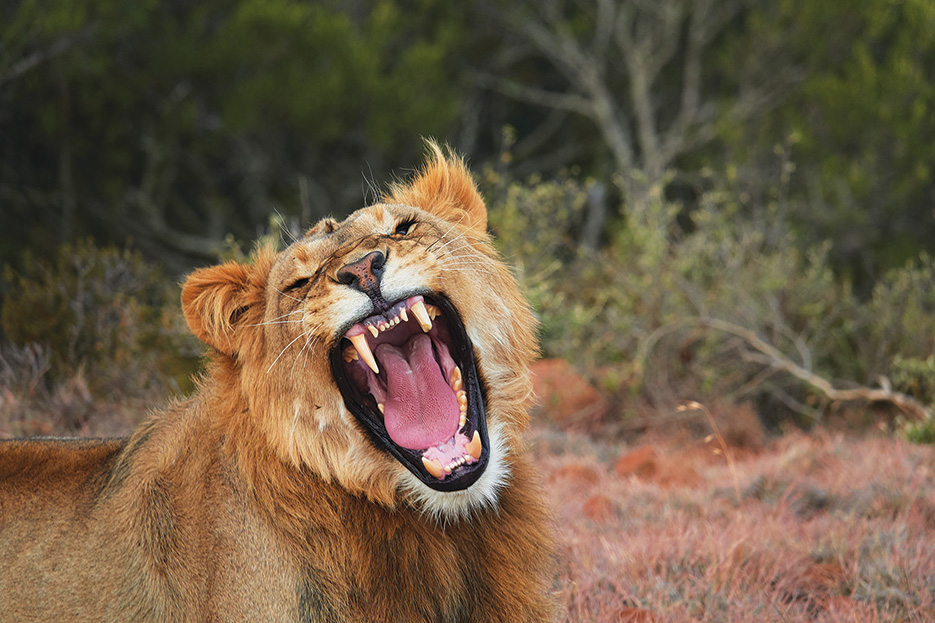
    In Bulgaria, a pride of inbred lions had been rescued from an illegal zoo. It was winter when we went there, and to see lions in a cage in the snow was heartbreaking.  

    Four Paws stepped in to rescue and rehabilitate them before moving them to a big cat rehabilitation facility in the Netherlands. 

    But the Minister of Health wouldn’t issue the permit to allow the animals to cross the border out of Bulgaria.  

    The powers that be were reluctant to let them go. 

    The lion is their national animal after all.

    Finally, after days of protesting in Sofia, from a public who was concerned about the animals’ health, the government allowed two of the three lions to leave. 

    And after two years, in the rehabilitation facility in the Netherlands, it appeared that one of the lion’s malgrowing due to its inbreeding was so extreme and it was in so much pain, had to be euthanized. 

    These are the stories the mainstream media don’t report on. Usually an animal transport is the happy story at the end of the bulletin. 

    These stories touch on the broader topics we cover in Saving the Wild, and how they relate to wildlife conservation. 

    Government, politics (and the repercussions after the operation), the pressure from climate change and last but not least “is it the right thing to do to spend huge amounts of resources on an emergency operation when the conservation return on investment is marginal?” 

    Would putting them down not have been the alternative right thing to do, and rather spend the same money and effort on other animals where more lives could be saved? 

    Ethical

    Throughout the series we cover stories that ask this ethical question. 

    This difficult but necessary discussion that threads through Saving the Wild. 

    To what degree do we need to look at individuals versus the population when practicing conservation? 

    Since resources are so scarce, it’s important to spend what is available sensibly. 

    We have a distributor who is supporting us to not shy away from the dark side or the flip-side of conservation. 

    It’s refreshing that they’re willing to take the risk on this kind of series. It’s not a wildlife show and it’s not another conservation series. 

    Saving the Wild also looks into ecotourism as one of the solutions that’s been successfully protecting wildlife in Southern Africa. 

    The impact of Covid-19 is having devastating affects on game reserves who rely on the tourism dollar. 

    The plan is to produce four 60-minute films, each looking at a different species including African cats, African elephants, rhinos, hyenas and wild dogs.

    Ultimately we’d love to do a returnable series with this format, showing the global conservation issues. 

    Contingent Productions is committed to pursuing the stories that matter. 

    We’re looking for financial support to help us get the project off the ground and in turn, bring awareness of these issues into our audience’s living rooms. Saving the Wild has been accepted into Documentary Australia Foundation (DAF) for its social impact merits.  All approved DAF projects have access to its deductible gift recipient (DGR) status, enabling donors to tax effectively support the issues they care about. Support us at https://documentaryaustralia.com.au/project/saving-the-wild/ 
  • Cold feet over WACA pool plan

    PERTH councillors may be getting cold feet over a state and federal government plan to put an aquatic centre in the WACA.

    Their nervousness over being left with a hefty running and maintenance bill comes as Vincent council ponders how to keep Beatty Park Leisure Centre in good repair and Bayswater council prepares to seek grants to keep Bayswater Waves afloat.

    The pool plan was flagged in the $1.5 billion Perth City Deal, an infrastructure program meant to link local, state and federal governments in big projects such as building a uni campus in the city. 

    It involved a $100m overhaul of the WACA including a training facility and public gym.

    In September last year the plan was supported by state-appointed commissioners running the City of Perth in lieu of suspended councillors.

    They believed it would provide a facility for residents and bring in others and endorsed a $25m contribution, while the state and feds both pledged $30m. The WACA would put in $10m, and Cricket Australia $4m.

    A feasibility report concluded fun water play elements like slides would bring in paying customers, with centres like Cockburn Arc turning into moneymakers. 

    But now Perth councillors have a second study and lord mayor Basil Zempilas is demurring over the maintenance bill and the current design. 

    On January 30 he told The West Australian (his employer) he’d like to see a pool in Perth “but not at any cost, it has to be a good pool and a good financial model.

    “Right now it is neither. It’s a six-lane pool wedged between a light tower and the last row of seats at the cricket ‚Äì with no shade.”

    The council report put the yearly maintenance bill at $1.4m. 

    Premier Mark McGowan’s urged the council to see the deal through. 

    Perth state Labor MP John Carey tells us the design’s not final and he’s hoping the council ends up happy and dives back in.

    “This is a once in a lifetime opportunity for the city to get a public swimming pool, [and] also other aquatic facilities, in particular slides.”

    He said the first report was done by the Pash Group, which ran the numbers ahead of Cockburn council building its Arc. That was so successful the council had to later expand it and it’s now a nice earner. 

    “We need to build amenities for residents, like playgrounds, skateparks, dog parks, senior facilities, youth facilities,” Mr Carey said.

    “The state government doesn’t accept the claim by the City of Perth that it would cost $1.4m a year.”

    While he thinks this one will be profitable, he said “if the argument is the city should only run services that make a profit or are cost neutral, then on that basis they’d have to shut the library down.

    “The library cost $60m to build and according to the last budget report, library services cost $5.8m each year.

    “The reality is local governments run public services for residents and they do subsidise them,” Mr Carey said.

    The councillors have yet to formally vote on a position. 

    Mr Carey says apart from this issue “I’ve been having a really good relationship with the lord mayor and council”. 

    He gave them props for the annual event schedule they’ve come up with and for adopting the “City of Neighbourhoods” approach, seeing the area as distinct neighbourhoods with different needs and not just a CBD with forgotten wings. 

  • Jilted jetskiers
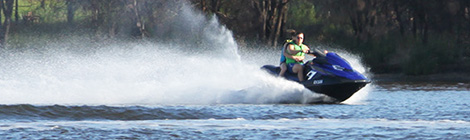
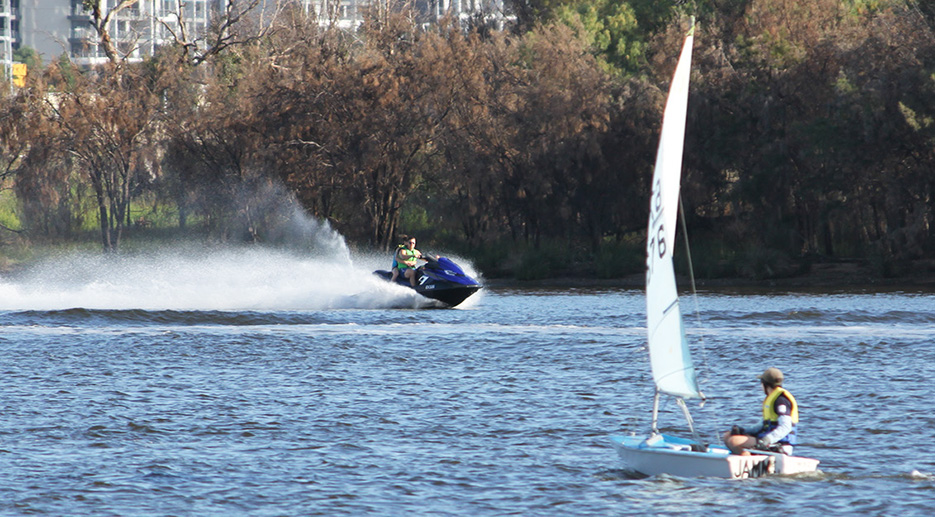
    • A sneaky jetski ignoring the ban on going past Windan Bridge.

    PEOPLE power has scuttled plans to allow jetskis and waterskiers into more of the Swan River.  

    The Department of Transport had flagged a two-year trial extension of the Belmont waterski area upstream by 100m and downstream by 145m – into waters used by the Maylands Yacht Club.

    A second prong of the plan would’ve let “personal watercraft” (or jetskis) further upstream of the river, whereas they’re currently banned from going any further than Windan Bridge.

    DoT waterways management director Chris Mather says more than 2000 people responded to the department’s survey and 1561 rejected the trial. 

    Mr Mather said the review “attracted a high level of interest and comment from a diverse range of riverpark users with more than half identifying as paddle craft users and around one quarter being recreational boat owners”.

    Maylands Yacht Club commodore Mimi Secco said sailors, radio controlled sailors and kayakers from around the club were thankful the department listened to the community. 

    Policing

    “River access for both motorised craft and non-motorised craft in its current form works well,” Ms Secco said.

    “I would encourage the DoT to enhance their policing of the speed limits, particularly on Sundays when club racing and sail training is held.

    “Most boaties do the right thing, but invariably, we see the few who breach the speed limit and generate excessive wash – not pleasant for the sailors and kayakers, or the health of the river bank.”

    The Friends of Maylands Samphires feared jetskis would impact the fragile foreshore they are restoring and disrupt bird breeding sites.

    Member Jo Bower tells us: “This is a good outcome for the vulnerable ecology of the riverbanks along the Swan River and for the many people visiting the river for quiet recreation.

    “The FoMS meets in Maylands on Tuesday mornings from 7am and we always see rowers, kayakers, and people walking, cycling and fishing along the river. 

    “We always see waterbirds and occasionally dolphins. This stretch of river allows contact with nature and a space for quiet recreation in our busy lives.”

    The DoT runs river-use reviews every four or five years.

    By David Bell

  • Homeless left in the lurch as city locks down again

    IT’S been nearly a year since Perth’s first Covid lockdown and the city’s rough sleepers are no better off this time around.

    Housing and homelessness advocate Shelter WA says while the streets are empty of workers and shoppers, the lockdown’s triggered a surge in requests from people needing a roof.

    “Service providers are being swamped by people who are sleeping rough pleading for accommodation,” Shelter WA CEO Michelle McKenzie said in a statement. “They are fearful and want to know ‘how can I lockdown? Where do I go? What do I do?”

    House the Homeless WA, which supported residents in the now-disbanded tent cities in Perth and Fremantle, said this week’s lockdown highlighted and worsened the plight of people living on the streets. 

    Tent cities

    One hundred homeless people have been offered hotel accommodation following the disbanding of the two tent cities, but 1000 more still sleep rough across the state. 

    One of the HTHWA’s spokespeople Betsy Buchanan said: “Once again our most vulnerable are abandoned on empty streets while the rest of us stay safe at home.”

    Ms McKenzie congratulated the McGowan government on providing accommodation for some people who were living in the parks, but wants recent initiatives expanded and more investment in social and affordable housing.

    “If we are to truly beat this virus and reduce the risk of transmission, all Western Australians need a place to call home … housing is a health response – safe, permanent social and affordable housing is a social vaccine.”

    The first of two “Common Ground” housing blocks with on-site services is still a long ways off in Perth – due to start construction in the 2021-2022 financial year. It’ll provide 70  apartments for as long as people need them until permanent housing is available.

    The state government also announced this week an extra $6.8m to bring on board the Aboriginal-led Noongar Mia Mia organisation to offer culturally-appropriate help getting people into its Housing First Homelessness Initiative which subsidises rent for 140 properties. 

    But Shelter WA’s figures put the number of rough sleepers at 420 in Perth and Fremantle, and up to 1000 across the state. Apart from rough sleepers, about 30,000 people (needing a total of 15,700 houses) are on the waitlist for social housing.

    The communities department said it was relying on advice from the chief health officer and health department on supporting rough sleepers during the pandemic.

    Protective equipment

    “Communities and its sector partners are working closely to prioritise delivery of practical supports to people currently sleeping rough,” acting executive director Glenn Mace said.

    This included getting rough sleepers food and protective equipment.

    “Each community service organisation is taking an individualised response to managing clients who are currently street present,” Mr Mace said.

    “Most centres are continuing services and providing masks to clients as necessary.”

    by DAVID BELL and KELLY WARDEN

  • Perth’s top citizen awards

    HOMELESSNESS advocate Mark Piggott has been recognised as Perth’s citizen of the year.

    Mr Piggott works at St Bart’s helping people work through their trauma to help get them back into stable housing. 

    West Perth Local scored the active citizenship group award for putting on events and advocating for their patch’s businesses and residents.

    The group was one of several neighbourhood teams set up after Perth MP John Carey’s Perth City Summit. 

    Perth’s youth citizen of the year was Zal Kanga-Parabia from Propel Youth Arts, for his help supporting local artists and non-profits. 

    Bayswater citizen of the year went to Anna Harrison, founder and CEO of Umbrella Community Care, while the group award went to Baysie Rollers, senior was age-friendly ambassador Ingrid Schubert, junior was Brady Rickert-O’Shea and the women in leadership award went to Lisa Li for her work with the Chinese Neighbourhood Watch Group.

    In Stirling, Gary Hale is citizen of the year for volunteering at football, basketball and softball clubs. Senior award went to retired teacher Kaye Liddelow who formed the Balga Action Group which has lobbied to improve the area. The young citizen award went to Akash Parekh from the Stirling Youth Advocates, and the group award went to the Good Chat Foundation for its work sponsoring kids from low-income families to get involved in sports. 

    Vincent doesn’t do Active Citizenship awards anymore, replacing them with other awards in 2014, and just holds the citizenship ceremony on Australia Day. 

  • Covid delays city’s safe spaces tender

    AS a snap Covid lockdown exacerbates problems for Perth’s homeless people, it’s also delayed the awarding of a tender for Perth council’s Safe Night Spaces for women.

    The council’s first SNS was intended to provide overnight shelter for women at Hay Street’s Rod Evans Centre. The project has a $575,000 budget for refitting the centre and was meant to be operational by “late January to late February”.

    Commitment

    But while councillors were due to accept a tender from Ruah Community Services on February 2 to run the space, Council House has been closed since 6pm Sunday and the meeting postponed. 

    On top of the delay, the council’s yet to get any commitment from the state government to help cover the costs. It was hoping for $4.5m of state money for the Rod Evans centre and three potential future spaces (an all-genders space at 18 Stirling Street, and then down the track a youth space and a culturally-specialised space for Aboriginal people). The Hay Street space will cost about $1m a year to run.

    When councillors endorsed the plan last November lord mayor Basil Zempilas said if the state government didn’t come through, the city could still afford to fund it for at least the first year. 

    The special council meeting report says “the City continues to advocate to State Government to support operating funding of the two Safe Night Spaces in future financial years”. 

    The safe night spaces don’t provide beds; just couches, a kitchen, laundry, toilets, a tv area and a quiet space. 

    The lack of beds led to the plan being criticised by the House the Homeless WA group involved in the now-disbanded tent cities, with the group arguing it would be cheaper for the state to rent out an empty backpackers.

    by DAVID BELL