• Putting the hard wood on premier
    Some of the Old Growth Grannies who come from across the state.

    A POSSE of grannies is planning to ambush premier Mark McGowan outside WA parliament on November 5 to give him a strict ticking off about logging in WA’s native forests.

    Forty of the Old Growth Grannies, as they’ve been tagged, recently blockaded a logging site in Nannup then set up a protest camp outside Mr McGowan’s Rockingham office.

    The nannas say they’re worried about leaving their grandkids a stuffed planet and want to show that even at their age it’s not too late to act.

    “Every plant and tree is precious to our wellbeing,” said Unice Robinson, who had a message for the premier.

    “Please stop logging native forests and clearing our wetlands and bushlands. We must protect these special places now.”

    The grans hope to motivate the next generation to join their Parliament protest on November 5 from 9am. Anyone busy on that day can help make tree-shaped placards and costumes to support them on Wednesdays from 6pm at the Boorloo Activist Centre on Aberdeen Street near the McIver Train Station.

  • Letter: Can’t make a silk purse

    IT is interesting to discover that the City of Vincent has asked its design review panel to develop options to improve the desirability of the ‘North Perth Common’ on the corner of View and Fitzgerald Streets. 

    One of the specific issues they have asked the panel to consider is a reduction in the size of View Street to make the Common more pedestrian-friendly.

    It is no surprise the city is looking for ideas on how this public space can be made more attractive to local residents. Because even with previous efforts by the city to ‘activate’ the site, residents are voting with their feet.

    What is really disappointing is that the expenditure of $600,000 of ratepayers money on a white elephant, may have been avoided if the city had just listened to its residents in the first place.  

    The city conducted a survey prior to a decision being made about the location of a town square. Only 7 per cent of respondents supported the current location and one can only speculate as to why the city stubbornly ploughed on.

    It is hard to believe that those lobbying for this site, and those on council that supported it, thought that a public space next to a noisy, polluted main road, with a busy road cutting through the middle, would be popular.

    And now, the city is looking at reducing the capacity of View Street, a local distributor, which if done will result in traffic diverting to residential streets such as Alma and Claverton streets.

    Instead of doubling down on a bad decision and a failed project, the council should consider cutting its losses. It may wish to engage with residents, this time in a genuine manner, to determine if a public square is needed and if so, where it should be located.

    Andrew Main
    Alfonso St, North Perth

  • WAFL or plain AwFL

    AARON SENZIO’S our footy writer. He loves the game, but reckons the AFL should take a lesson from the local boys on how to put on a show that doesn’t leave your ears bleeding and your enthusiasm waning.

    WHAT a weekend of football it was in WA!

    Two thrilling games; Saturday’s national league clash between West Coast and Collingwood, followed by a Sunday afternoon classic between South Fremantle and Claremont in the state league. 

    But it is easy for me to say which game I enjoyed more (and only part of it comes down to my support for the Bulldogs).  Like many other football fans, I am slowly being driven away from the AFL. 

    The entertainment factor of the game has undoubtably slipped from even 10 years ago, let alone from 20-30 years ago. 

    But what is really driving me away is the AFL Commission’s attempt to fill that entertainment void with a constant barrage to the senses from speakers and lights. 

    Going to a game at Optus Stadium (it should be called Perth Stadium but I will not digress) for me is close to unbearable. 

    Before and after the game they flicker the lights which illuminate the roof, play music as the umpires run the football back to the centre of the oval after goals are kicked, and there are video screens that run along the fence line of each tier that continually remind us to gamble, buy insurance, a car or some other non-essential product.

    It is a sterile environment, built for efficiency and consumption. 

    Contrast this with the WAFL grand final controversially (but rightly) held at the old Fremantle Oval. 

    With the beautiful Victoria Pavilion featuring prominently on the western wing, the high limestone walls of Fremantle prison visible on the other side, and tree roots ripping up concrete, it is so much more authentic.  Also contrast the seating arrangements at the two games. Both had limited capacity to comply with Covid guidelines. 

    At Optus Stadium spectators were seated in every other row in concentric rings I can only assume to ‘stop the spread’. I hope they all left the ground one by one so as to not come in contact with another potential ‘super-spreader’. 

    At Fremantle Oval I gladly stood shoulder to shoulder with thousands of other fans on the eastern wing, all attempting to spur their team to victory. 

    Laughably, the crowd was reminded to respect the government’s Covid-19 guidelines.  The WAFL is sadly not immune to the same disease afflicting the AFL. 

    A vain attempt was still made to stimulate the crowd during quarter breaks with an announcer trying to draw attention to a large screen showing highlights of goals and marks during the 2020 WAFL season. 

    It was unsuccessful due to the screen being obscured by sunlight and shadow. 

    When will these people responsible for organising events realise that much of the effort to amuse is futile. 

    Let the footy do the talking. 

  • On my radar

    LAST time I was in the Hyde Park Hotel I was wearing flares and humming the theme tune to M*A*S*H.

    Well it wasn’t quite that long ago, but it’s been many years, so I was pleasantly surprised by the hotel’s refurbishment which has brought it kicking and screaming into the 21st century.

    One of the best improvements is the creation of three distinct zones – sports bar, courtyard and restaurant, providing areas to suit all different ages and tastes (we’ve all been in so-called pub lounges where families don’t feel welcome and regulars get irritated by over-zealous kids).

    The menu was unashamedly Aussie pub classics like parmies, burgers, fish and chips, and pizzas.

    There was also daily specials like chicken pie ($20) and pan-seared barramundi ($32), as well as parmie and steak nights, and a discounted seniors menu.

    There were was no childrens menu which was a bit surprising, but there were entree and share dishes, so we ordered beef and onion sausage rolls ($13) and chips ($9) for the kids (don’t tell Jamie Oliver). 

    You could tell the sausage rolls were made in-house – the glazed pastry and thick rolls of dark meat looked irresistible.

    I had a sneaky taste and the beef was delicious with not a hint of gristle and a surprisingly sweet refrain that hinted at carrot or sweet onion. 

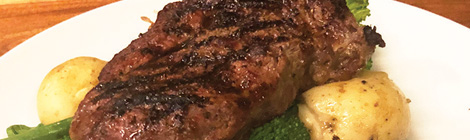
    It was steak night on Tuesday so I ordered the porterhouse ($25), but a few minutes later a staffer appeared at our table saying it wasn’t actually available, so I went for the Scotch fillet instead ($28).

    The 300gm slab was cooked medium, and had juicy pink flesh and a lovely smoky, chargrilled flavour.

    The accompanying mushroom sauce wasn’t too salty or rich and had tiny pieces of funghi, adding a subtle texture.

    You can get the steak with chips and salad, but I went for smashed potatoes and seasonal veggies for a change. There was plenty of broccoli and potatoes, and a life-extending mix of bok choy and green beans.

    It was a mouth-watering slab of beef and everything was perfectly cooked, but something was missing to bring it all together and elevate this dish from a B+ to an A. Either that or my brain is too accustomed to chips.

    Across the table my wife was enjoying her huge, heart-shaped chicken parmigiana, which came with chips and a ramekin of creamy coleslaw ($24).

    “The Napoli sauce is rich and moreish, and they haven’t skimped on the delicious ham,” she said.

    “The chicken is succulent and I like how they’ve used panko breadcrumbs and parmesan in the coating. A nice twist.

    “Creamy is the word I’d use to describe the chunky American-style slaw, which goes well with the crispy chips. 

    “All in all a top dish.”

    The Hyde Park Hotel certainly looks the part and serves superior pub grub without quite breaking into the very top echelon.

    There was a hiccup with our order, but it was quickly rectified by the pleasant and efficient staff. 

    I’ll return sooner next time, and might even dress up as Klinger for old times’ sake.

    Hyde Park Hotel
    331 Bulwer Street, West Perth
    hydeparkhotel.com.au

    by STEPHEN POLLOCK

  • Twisted fun 

    A Country Women’s Association battling hordes of zombies is just one of the wacky movies at The World of Dark Comedy film festival next weekend.

    Now in its third year, the mini festival at the Backlot Cinema in Perth will feature 15 twisted comedy shorts from across the globe.

    Festival co-ordinator Greta Schipp says many of this year’s films use humour to examine the relationship we have with our most feared adversary – the grim reaper.

    “From Rubbish Robbers protagonist’s hilarious denial of responsibility in wake of fatalities surrounding him to Wheel of Satan’s satirical take of satanists, the films really hold a mirror to humanity’s uncomfortable and sometimes bizarre reactions to being faced with our own mortality,” she says.  

    “I think this theme particularly resonates in today’s environment with all of us having to face our vulnerability in a sudden and unexpected way in the wake of covid-19. 

    “I think humour is a really helpful and important tool in helping us process these fears in a really light-hearted and fun way.”

    Festival highlights include Zombies v the CWA, where ladies armed with rock cakes and rolling pins take on the living dead, Horn Hubb, where intelligence officers find out that international terrorists are using porn sites to communicate, and Little Rocker, the poignant tale of a teenage fan who accidentally kills his favourite rock star before a show. 

    The festival is truly international with shorts from countries including Norway, Spain, the Czech Republic and the United States, as well as a strong showing from WA and other Australian states. 

    Festival co-creator Tanya Knott says they have become a haven for filmmakers and audiences who like to take chances and live on the edge. 

    The World of dark comedy was initially born out of limited space in festivals for risk-taking filmmakers who really pushed the envelope and dared go into the questionable aspects of society and human nature,” Ms Knott says.

    “We also loved a bit of plain, kooky, and sometimes messy fun that had a distinctively darker, twisted element to it that was surprisingly fun.”

    The festival is usually held in July, but because of covid-19 it was pushed back to the last weekend in October, which ironically coincides with Halloween.

    The World of Dark Comedy 3 is at the The Backlot in West Perth from Thursday October 29 – Saturday October 31. 

    To find out more and buy tickets go to darkcomedy.com.au

    by STEPHEN POLLOCK
  • Station redesign

    Future Bayswater still anxious road design will ‘cut off’ town. ‘Trestle’ aesthetic dropped.

    THE proposed Bayswater train station has been re-designed following widespread discontent over the concept plans released mid-year.

    The town centre’s advocacy group Future Bayswater delivered a 1024-signature petition to WA parliament in September calling for a redesign to accurately reflect the 2018 sketches Metronet first presented. 

    Petition

    The petition called for a design “worthy of a piece of community infrastructure that will be the dominant built feature in Bayswater for the next 120 years”.

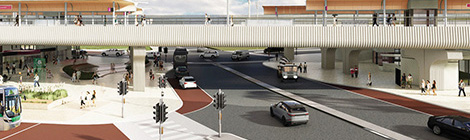
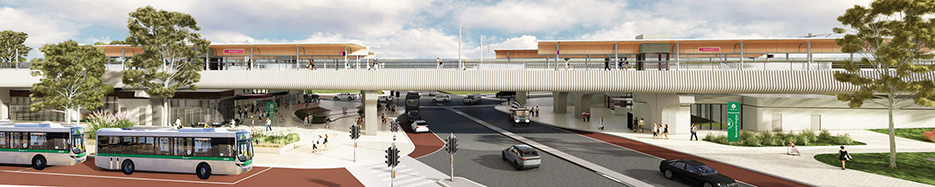
    They wanted “quality design and finishes, escalators, and proper shelter from sun, wind and rain” and opposed a big 10-metre high viaduct running almost a kilometre along Railway Parade and Whatley Crescent. The viaduct remains.

    Future Bayswater also opposed the closing of Whatley Crescent to Hamilton Street.

    On October 8 transport and planning minister Rita Saffioti announced a new “refined design aesthetic” to reflect local feedback. 

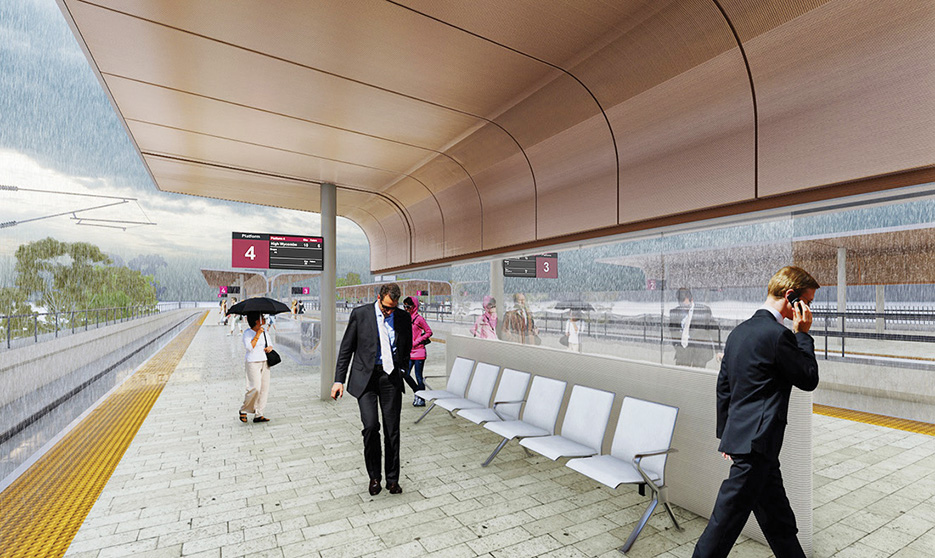
    It now has escalators, a cream colour theme that aims to fit into the area, “ribbing finishes” inspired by Perth’s passenger trains, and “wave” shelters with vertical screens to reduce wind. 

    FB’s Paul Shanahan said it was heartening that some of the original features from the more popular 2018 sketches had been reinstated, but they’re still concerned about road changes and that big viaduct which he calls “unacceptable and unnecessary”.

    “These improvements to the station will encourage more people to use the train and will enhance such an important site in the heart of our town centre,” he says.

    “The improvements include the provision of escalators, enhanced surface finishes, a better ground floor interface and improvements to shelters that previously looked like tables from Bunnings.

    “Unfortunately, the original slender design from 2018 has not been reinstated, with the large concrete bulkiness of the design still present, though there has been some slight improvements to the appearance of the bulky piers. The shelters, while improved, still will leave some travellers exposed to the elements. 

    “While the designs will not deliver the iconic station we all expected with such an important transport development for WA, what is proposed is much improved from the second round of designs released in June 2020 that created such concern in our community. We welcome improvements to the station, but many in our community are still anxious about the design of the local roads around that station that will cut off large sections of the town centre.”

    They’re still hopeful Metronet and the state government will keep listening and fix the remaining problems. 

    Maylands MP Lisa Baker said “I have a very engaged and educated community who have been active in working with the Government to get the very best outcomes in design and development for our village.

    “With the art and landscaping treatments still to come, the McGowan Government is responding to community feedback and I believe the current designs reflect the heritage character of Bayswater.”

    The new station design will still need approval from the WA Planning Commission.

    By DAVID BELL

  • Vincent warms up old Hyde plan
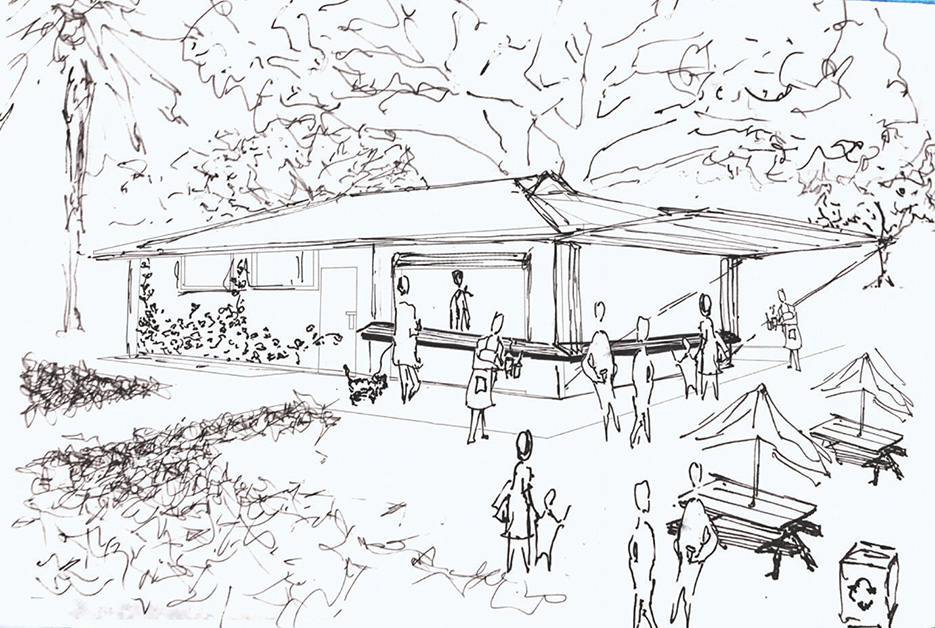
    A sketch of how the kiosk might look.

    A PREVIOUSLY rejected plan for a food kiosk at Hyde Park is back on the agenda.

    Vincent council staff have suggested a privately-operated kiosk could operate from the storage room attached to the toilet building near the west end to help activate the park.

    Former councillor Dudley Maier submitted a statement to this week’s council briefing reminding them the idea had already been extensively explored and shot down, and said it was “disappointing” this week’s staff report to councillors made no mention of that.

    “In July 2014, following community consultation including a robust community workshop, the administration recommended that the concept not be proceeded with,” his statement said. “The item was deferred and never came back to council.

    “The driver at the time revolved around activating Hyde Park – probably the most activated community facility in the City.”

    The kiosk is proposed to go in the storage shed because the 2003 Hyde Park Conservation Plan says erecting a new building “for a cafe, sporting club, or any other private business” would be forbidden. The Crown Grant that handed the reserve to the old Perth city council required that it be used for recreational purposes only and said no portion of the park should be used for building purposes. 

    But the storage building is described as “intrusive” in the conservation plan, so council staff state it wouldn’t have heritage implications to adapt that into a “warm kitchen” that sold coffee and pre-cooked items. A full commercial kitchen would need more infrastructure and may require a section 18 approval under the Aboriginal Heritage Act, which can take years. 

    The conservation plan also advises any changes or new uses in the park “should not require regular vehicle access for servicing,” but that guidance is less binding than the crown grant and food trucks have been allowed into Hyde Park for a few years. 

    Mr Maier is also critical of the council’s move to discussing items behind closed doors at council “workshops” in recent years, and noted it was also disappointing “this has been discussed at least twice by council without community oversight” at the May and September workshops. 

    The kiosk plan is up for discussion at the October 20 meeting, where councillors will consider putting the idea out for public comment.

    by DAVID BELL

  • ‘Elite’ uni warning

    PERTH CBD’s new uni campuses may end up “a playground for the elite” as a result of sharply rising course fees, warns federal Labor MP Patrick Gorman.

    The ink was barely dry on the Perth City Deal paving the way for ECU’s Mount Lawley campus to move into the city, when it was confirmed the Morrison government had negotiated to get higher fees for humanities and law degrees through the Senate. 

    On Tuesday October 6 South Australia’s Centre Alliance announced its senators would support the Morrison government’s fee hikes, and starting next year humanities degrees will double in price, while law and commerce degrees will shoot up about a third. Maths, teaching, nursing, and tech degrees will be cheaper, intended to encourage uni-goers into what the government sees as more employable fields in the future.

    The Perth City Deal also brings in a tech-based slice of Murdoch campus, but the bulk of ECU’s presence in the city will be WA Academy of Performing Arts, business and law students who will have to pay more. 

    “Think of the impact on Perth,” Mr Gorman says. “It’s kind of bizarre that we’ve got this great new Edith Cowan City Campus, but the students that are going to study at WAAPA are going to be paying twice as much as current WAAPA students, so it doesn’t make our universities more accessible, and indeed it makes our universities more of a playground for the elite than a great leveller for Australia.

    “Are we going to get a school for the best and the brightest [with] the most merit-based system, or kids having to choose whether they can afford to go? That’s what concerns me.” 

    Mr Gorman studied social science at Curtin Uni, costing $12,000 at the time in the early-mid 2000s. Including inflation and the fee hike, the course will cost three times that in 2021.

    SA’s Centre Alliance supported the fee change on the basis it’d address what they called a “glut” of law graduates at the same time we’re having to import tech graduates.

    By DAVID BELL

  • Local tourism back on its feet
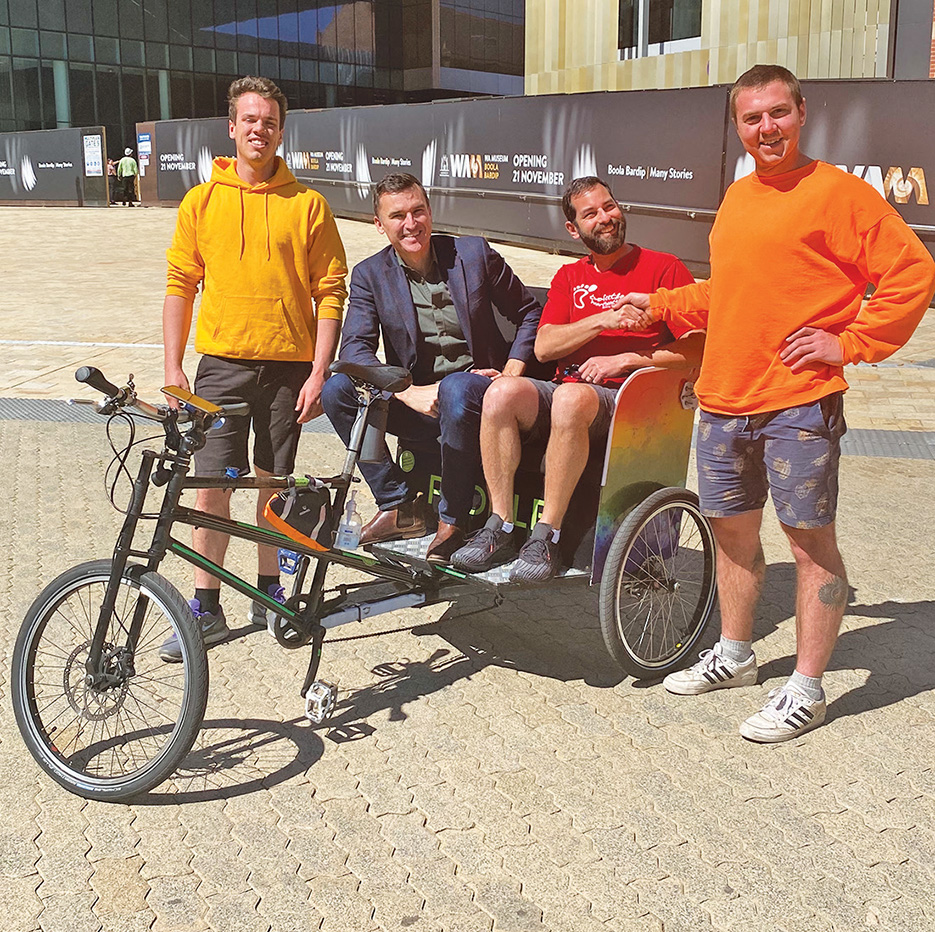
    Two Feet and a Heartbeat and Peddle Perth were among tourism business survival grant recipients.

    THE WA Tourism Council’s been urging people to “Holiday in WA”, but Perth Labor MP John Carey is imploring travellers to go even more local and support city tourism too.

    Two city tourism operators recently received state government “tourism business survival grants” aimed at keeping them going during a season without international or interstate tourists. Walking tourers Two Feet & a Heartbeat were funded for $25,000 and bike rickshaw riders Peddle Perth got $15,000, and the peddlers are looking at expanding into Fremantle.

    Mr Carey says “they’re both young companies that got hit hard, but now have adapted by catering to locals.

    “I would just encourage all locals: If you’re getting that $600 credit [the electricity rebate] and you can afford it, see your city in a new way, whether it’s a small bar tour, Christmas light tours or walking the laneways.” 

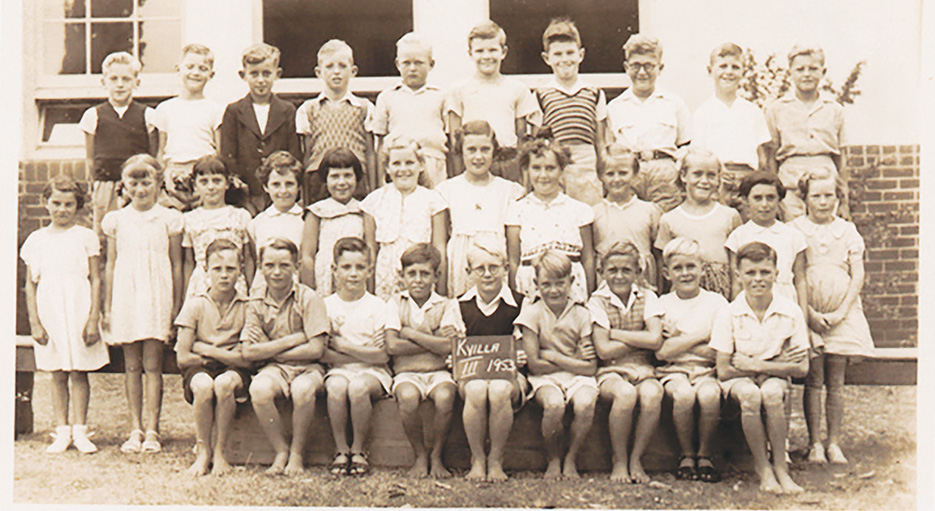
  • Kyilla celebrates its 75th
    Kyilla celebrates its 75th

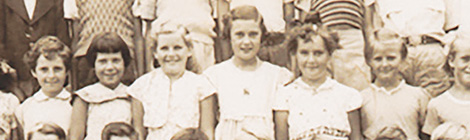
    KYILLA Primary School marks its 75th anniversary with an open day on October 24 to showcase its history.

    There’ll be displays and photos charting the key events, and a year 6 play will explore key moments such as the 1951 crash of a tiger moth plane just metres from the school fence. 

    There were plans for a school on the site since 1928, and nearby houses were advertised for sale as being conveniently located to a school that had yet to be built.

    In 1941 the growing population of young families in the North Perth renewed the calls for a school, but the raging World War had created shortages of materials and labour, so a plan was hatched to move an existing jarrah school room from Herne Hill.

    Perth city council and residents objected as the area had been designated “brick only” and timber buildings were forbidden, and a committed committee of parents finally convinced the education department to build a new school in 1944.

    Infants’ school

    It opened in February 1945 as “Selkirk Street Infants’ School” with two teachers and 74 students. It quickly expanded with more buildings in 1946, and by then the name “Kyilla” was being used in the press. The name is a bit of a mystery: the state Heritage Council notes the word was well known in the 1930s and 40s because of the “giant 21-seater inter-capital airliner” named Kyilla. 

    The plane visited Perth in 1937 to a huge reception at Maylands aerodrome, and a crowd of 5,000 broke down the barriers to get closer to it. There’s also an unconfirmed idea that Kyilla was an Aboriginal word meaning ‘north’. 

    The school’s been helped with research by Vincent local history centre’s Susanna Iuliano, and many local and national trends and events imprinted on the school’s history: 

     • 1955 many children were absent in term three due to an outbreak of measles, mumps and chicken pox; 

    • 1972 the latrines were replaced with actual toilets; 

    • 1974 the school reflected the area’s rich cultural mix, with children of 21 different nationalities attending; 

    • 1988 the school adopted the boomerang as its logo and introduced the motto “To See and to Understand”:

    • 2015 it became an independent school, and its numbers have grown from 74 students to more than 380 across the kindie, pre-primary and primary grades. 

    The open day is on October 24 from 10am to 2pm at 4 Selkirk Street North Perth. 

    Former teacher Ruth Leembruggen was in her 20s back in 1956 and is hoping to catch up with some past students.

    By DAVID BELL