• Business votes in doubt

    VOTES for businesses in local elections would be scrapped under a recommendation of the panel reviewing the rules around local government in WA.

    The panel, headed by Balcatta Labor MLA David Michael, released its final report on Wednesday.

    The report recommends advisory panels be used to help businesses get their voices heard in councils rather than via a couple of votes come election time.

    “If structures and processes are in place to ensure all segments of the community are engaged, there may no longer be a need to extend election franchise beyond residents of the district,” the report concluded.

    The recent inquiry in the City of Perth heard allegations of attempts to rig elections through the double-vote of businesses, with “sham leases” used to justify nominations and dozens of suspect voters linked to candidates.

    The panel also recommended the creation of a single Local Government Commission by merging the existing grants commission and advisory board. The new body would oversee minor border changes, with the review panel finding the existing legislative framework inexplicably convoluted. 

    It also wants to do away with referenda before amalgamations.

    Another initiative among the 65 recommendations was to establish community boards as an alternative to amalgamations, allowing bigger and smaller councils to provide cross-border services that played to each other’s strengths.

    “The panel noted that with 137 local governments ranging in populations from less than 200 to over 200,000, Western Australian local governments can be either too small to meet their responsibility, or too big to be properly representative of different localities within them, and respond adequately to varying community needs and demands,” the report said.

    Regional councils would be dismantled to be replaced by a new “flexible” system where council would “enter into voluntary arrangements outside of the legislated model”.

    Supply list queried

    THE panel reviewing WA’s local government sector has recommended that a preferred supplier system highlighted in the Voice a fortnight ago needs to be reined in.

    Bayswater recycler Resource Recovery Solutions is still on the WA Local Government Association’s Preferred Supplier Panel, despite the company repeatedly ignoring Worksafe orders (“Negligent recycler a ‘preferred supplier’,” Voice, July 25, 2020). 

    RRS copped a record $500,000 fine in July for “gross negligence” over an incident that cost a worker his arm in 2016, but it was only after the Voice inquired that WALGA said a review of its place on the panel had been initiated.

    WALGA admits it receives a payment from listed companies and there have been rumours of kickbacks for years, but the association won’t provide details because of what it argues is commercial confidentiality.

    The review panel says the system needs regulation and more accountability.

    “The panel supported the continuance of the WALGA Preferred Supplier Panel, subject to regular oversight and checks and balances to ensure that it is constituted correctly and there is accountability,” the review panel found in its final report.

    By STEVE GRANT

  • Hits the jackpot
    RTRFM chair James Hall, Mt Lawley MP Simon Millman, station acting GM Chris Wheeldon, treasurer Catherine Pazvakavambwa, and Lotterywest’s grantsman Antony Feldhusen.

    A COUPLE of Covid-19 grants have helped Beaufort Street radio station RTRFM fill the gap of cancelled fundraising events.

    The pandemic’s impact on the economy meant RTR was facing down what could’ve been a tough Radiothon, its annual August subscription drive.

    The station’s biggest fundraising event, In the Pines, was cancelled in April, along with the Many Styles dance party in Highgate and the Fremantle Music Winter Festival. 

    RTR’s two Covid-19 grants through Lotterywest total 

    $272,256 to keep the mics on. 

    Acting general manager Chris Wheeldon said in a statement: “RTRFM was facing some incredibly difficult decisions as our normal sources were dramatically affected by Covid-19.

    “This support from Lotterywest provides a measure of certainty to the station over the next few months.

    “It means we can go into Radiothon – our crucial annual subscription drive – without panicking. 

    “More importantly, we can be confident in supporting our local artists, musicians and performers as we all emerge from the shadow of the pandemic.”

    Mt Lawley Labor MP Simon Millman presented the grant and says he’s a grateful RTRFM subscriber.

    “The contribution the station makes to amplifying local stories and artists is priceless,” he says. 

    Radiothon 2020, “There’s No Stopping Us,” runs August 14 to 23, peaking with a Northbridge takeover for the Radiothon Party on August 15 spread across Ezra Pound, the Bird and the Rechabite. 

  • Society calls to save century-old homes
    These two homes linked to prominent Perth publicans have an application for demolition hanging over them.

    THE Mt Lawley Society has launched a petition to save two century-old Beaufort Street homes from demolition.

    The two homes are just on the periphery of Mt Lawley’s historic town centre and according to society president Tracey King are in excellent condition.

    Number 690 was built for the Schruth family in 1903 and 692 for the Cohen family in 1915.

    The properties fall within the heritage protection area of Mt Lawley and a local development plan.

    “The Mt Lawley Society is supportive of the Beaufort Street Local Development Plan, subject to the City of Stirling providing architectural design guidelines that will demonstrate how the community expects to integrate existing heritage homes on commercial lots with apartment developments,” Ms King said.

    “We would prefer to see applications developed in conjunction with the community rather than applicants reverting to JDAP, which has proven, time and time again, to deliver inappropriate community outcomes.”

    Marlene Smith is the great niece of Willy and Maud Schruth and wrote to Stirling councillors about the proposed demolition this week.

    “The Schruth family were prominent as owners of The Royal Hotel in Perth 1894 to 1905 and also The Aberdeen amongst others,” Ms Smith wrote.

    “Uncle Willy owned The Beaufort Arms. He. owned Morris Brothers 

    Ltd for radio repairs, player pianos, gramophones, etc, in Perth until his son Odee took over.”

    “Their lively federation home was used for many a social gathering, especially in the 1930s when [daughter] Mylee was older, including bridge parties in the lounge (1934) and sherry evening (1936) and the verandahs were used for gatherings of local identities.

    “As a child my family and I would visit there to sit and chat.

    “A town is not only made up of people but also their dwellings and I feel to lose the uniqueness and grandeur of days gone by is not in our community’s spirit.”

    By STEVE GRANT

  • A treaty by any other name?

    THE word “treaty” has been mysteriously scrubbed from Perth city council’s treaty with traditional owners.

    Answers as to who asked for the word to be removed have been difficult to get out of the council. The “Danjoo-Treaty” to symbolically acknowledge Whadjuk Nyoongars as traditional owners of the Perth area was supposed to be passed at the July 28 council meeting, the last one attended by former CEO Murray Jorgensen.

    His presence was symbolically important, having met with the city’s Elders Advisory Group bridyas (bosses) for “boss to boss” conversations while the treaty was developed and committing to present it to commissioners before departing. 

    While noting Mr Jorgensen’s efforts work on the treaty, chair commissioner Andrew Hammond said it couldn’t be signed off before his departure from the top job.

    Sovereign states

    “Look, we’ve got a small problem with using the word ‘treaty’, which I’m sure we can overcome with our staff and the elders’ advisory group,” he said. 

    “I’m strongly supportive of the intent and outcomes surrounding this treaty. We can still call it a treaty – draft treaty – until it isn’t, and I really look forward to it getting back here at the August meeting so we can regularise it appropriately.”

    But he wasn’t as forthcoming on exactly who raised issues with the term: “There has been much discussion around the use of the word ‘treaty’. Legally, treaty is usually referenced to sovereign states, and the Elders Advisory Group had previously raised reservations.

    “The EAG and the City of Perth are working on the most appropriate title of our intentions.

    “The deferral occurred through continuing discussions with all stakeholders, including state and federal agencies,” with no further comment.

    The treaty was largely symbolic and didn’t involve a land handover, but listed eight aims from the council including “acknowledge past injustices and commit to working in partnership together to build a better future for all” and “ensure the history of Aboriginal people is visible within the footprint of the City of Perth”.

    Reconciliation

    The treaty was described by city staff as important groundwork for future reconciliation, and a report to commissioners said: “It is recognised that had the city had a positive relationship built on mutual understanding, respect and trust with the Aboriginal community in the lead up to 2015, the protest camp on Matagarup (Heirisson Island) may never have eventuated; or could have been promptly resolved without force and with positive outcomes for many of the individuals impacted.”

    Instead, the council worked with police to confiscate camping gear, move on protesters, and in one case confiscated a large sacred stone not realising its significance. 

    The report says since then the city’s committed to the reconciliation action plan, built strong relationships with the EAG and wider Aboriginal community “through ongoing and genuine engagement and action.

    “The Danjoo-Treaty will further demonstrate the city’s intention to learn from the past and provide the guiding principles for how we will work together in our continuing reconciliation journey.”

    By DAVID BELL

  • FOGO back on schedule

    AFTER a corona-related delay Bayswater’s new FOGO three-bin system is back on the to-do list.

    The new bins are due on verges around March 2021. The “Food Organics, Garden Organics” system was originally scheduled to be in place by now but was delayed because the “community education program” couldn’t go ahead under the pandemic restrictions.

    The three bin system (one for non-recoverable landfill waste, one for food and compostable organics, one for recycling) is intended to send less waste to landfill where it festers and gives off climate-warming gasses. The WA government wants all councils to bring in the new system and is offering grants to cover the cost for early adopters.

    Not everyone’s welcoming the roll-out: Bayswater Residents and Ratepayers Association president Tony Green was at the July council meeting to roast council for deciding to bring in FOGO before consulting the community on it. 

    “Why does council seek to ‘educate ratepayers’ to use the FOGO system without first asking them if they wanted bins containing rotting foodstuffs stinking out their kitchens, and another stinking out their yards?” Mr Green asked.

    “On top of this are you seriously expecting us to pay at least $10 extra to generate all these antisocial odours?”

    Festering

    The FOGO bin for old food is collected weekly, but it can’t take plastic bags. Other councils already doing FOGO have been handing out little “kitchen caddy” bins and distributing biodegradeable liners.

    But the general waste bin only gets collected every fortnight, giving plenty of time for nappies, wet wipes and plastic dog-poo bags to fester.

    Council works and infrastructure director Doug Pearson responded that FOGO was a WA government imperative.

    “Education is an important component of ensuring that any FOGO system that’s introduced is effective. In terms of whether we should be consulting residents around FOGO, the bottom line is the state waste strategy says the FOGO waste collection has to be implemented, so we have to comply with that,” 

    Mr Green isn’t confident about the system: “It’s going to have quite wide social impacts and I doubt very much that it’ll be successful.”

    Mayor Dan Bull says he’s proud Bayswater’s at the forefront of waste management and FOGO is in line with a commitment to tackle climate change. 

    Vincent council was initially due to roll out FOGO in October 2020, but delayed the rollout by a year due to coronavirus. It spent three months consulting residents in 2019, finding out that 86 per cent of residents supported the move, but 44 per cent still had concerns like a lack of space for three bins and worries over the collection frequency. http://www.perthvoice.com

    By DAVID BELL

  • Sushi survivor  

    ROYAL STREET in East Perth resembled a ghost town on Tuesday night.

    Virtually everything was closed, and the neon lights in the distance cast an eerie glow over the deserted Claisebrook Cove.

    Thankfully Fuku Sushi was a culinary beacon, and I headed towards its glowing sign like a slightly overweight moth. 

    I last visited the eatery about six years ago with my wife. It’s downsized and moved a few doors down since then, but is still going and open on a Tuesday night.

    The menu included a classic mix of bentos, donburis, stir fries, curries and noodle soups.

    There was a good range of cold drinks and teas, including taro milk and honey red lemon red, and some intriguing asian-style burgers like katsu prawn and teriyaki fish.

    Within a few minutes of ordering the smiley waiter was back with my Japanese beef curry ($13.5). 

    It was piping hot with plumes of steam rising towards the ceiling, and I liked how the sauce came in a seperate bowl so you could decide how much to add.

    The viscous sauce was packed to the gunnels with curry powder and punctuated with dainty chunks of potato and carrot. It had a delicious savoury tang and was perfect for a cold winter’s night.

    I’ve had so many curries with fatty or stringy meat, but this incarnation had lovely slices of tender beef.

    The generous heap of coriander on the steamed rice added a flavour twist and kept things interesting.

    Looking around, the small eatery had lovely Japanese artworks on the wall, including a 3D geisha girl, and there were a few leather bench seats. 

    Takeaway was clearly its bread and butter, but it felt like this quality of food deserved a grander setting.

    Across the small table, the kids were busy tackling their giant chicken katsu bao ($12 for two).

    Normally the kids are deathly quiet when eating, but this time they were vocal and very excited.

    “I give this one zillion stars!” said my daughter.

    “It’s lovely,” my son chimed in. The bao looked delicious, but I was near bursting point and still had to try one of the chicken gyoza ($6.5 for four pieces).

    Thankfully they were super light with a soft steamed carapace and minced filling. Again the flavours were top notch and the dish surpassed my expectations. 

    Throughout the meal the service was superb, with a staffer rushing to my table to give me a new chopstick when mine fell to the floor, and asked if we wanted extra cutlery and some plates for the kids.

    My wife was feeling a bit under the weather so she went for the asian equivalent of mum’s chicken broth – chicken katsu udon noodle soup ($15).

    The presentation was spot on – slices of tofu bobbing on the surface were like pretty flowers, and rubbed shoulders with some spring onion and spinach.

    The katsu chicken, served in a seperate bowl on the side, was lightly brushed with a sweet tomato-based sauce.

    “The broth is light and isn’t oily, as some udons can be a bit greasy,” she noted.

    “The katsu batter is good and the chicken is nice and tender.

    “It’s the perfect comfort food and the serve is absolutely huge.”

    Fuku is super value with top-notch food worthy of a bigger setting. They get extra brownie points for being one of the few places open on Royal Street on a Tuesday night.

    This little gem is well worth a visit.

    Fuku Sushi
    2/118 Royal Street East Perth
    http://www.fukusushi.com.au

    by STEPHEN POLLOCK

  • Django buzz 
    Perth guitarist Lachlan Gear (left) and his hero Django Reinhardt.

    DJANGO REINHARDT is best known as the founding father of gypsy jazz on the acoustic guitar, but a Perth band is shining a light on his lesser-known electric recordings.

    The Electric Django Quintet focus on Reinhardt’s later years in the 1940s and 1950s, when he was inspired by be-bop and replaced his conventional string quartet with an American style line-up of electric guitar, drums, piano, horns, clarinet and piano.

    After World War II, Reinhardt went on a tour of the US and was impressed by some of the new jazz performers on the scene.

    “He heard players such as Charlie Parker and Dizzy Gillespie and was blown away by their fluidity and improvisational concepts and started to incorporate more of that sound into his playing,” says Lachlan Gear, guitarist with The Electric Django Quintet.

    “The electric guitar also freed up his technique as he could play a lot louder and could now compete sonically with a standard jazz rhythm section format including piano, drums and horns as opposed to his previous all string quintet. 

    “This allowed him to be more free, creative and spacious in his playing but also play really fast lines that would otherwise have been too quiet on the acoustic.”

    After Reinhardt returned from the US, he continued to play electric sets in Paris clubs, but he became increasingly unreliable as he embraced his free-spirited Romani lifestyle. 

    He sadly died of a stroke in 1953, aged just 43.

    Gear says one of his favourite Reinhardt performances is his electric version of Les yeux noirs, where he does some proto-shredding: “he plays one of the most technically perfect and burning solos I’ve ever heard him play at a very ridiculous tempo. That solo is one all Django aficionados aspire to be able to play one day.”

    Gear, 35, is a former WAAPA graduate who also plays in gypsy jazz bands Sassafras and Vipers Dream.

    “Django is definitely most well known for his acoustic work with Stephane Grappelli and the quintet of the hot club of France, but he actually has a huge catalogue of material he did on the electric. 

    “It’s nice to showcase some of this lesser known material as there are some really interesting and modern sounding things he did that go way beyond the standard gypsy jazz mould.

    “We are playing an eclectic repertoire, some of his later be-bop inspired tunes, some be-bop re-workings of his earlier gypsy repertoire…and a number of tunes from the guitar greats he inspired including Wes Montgomery, Bireli Lagrene, George Benson and more.”

    The Electric Django Quintet, featuring Gear, Harry Mitchell (piano), Steve Searle (saxophones, flute, trumpet, clarinet), Pete Jeavons (bass) and Daniel Susnjar (drums), play the Ellington Jazz Club on Thursday (August 13). 

    Tix at http://www.ellingtonjazz.com. au/event/the-electric-django-quintet-gypsy-jazz/

    By STEPHEN POLLOCK

  • The blight on society
    The King everywhere.

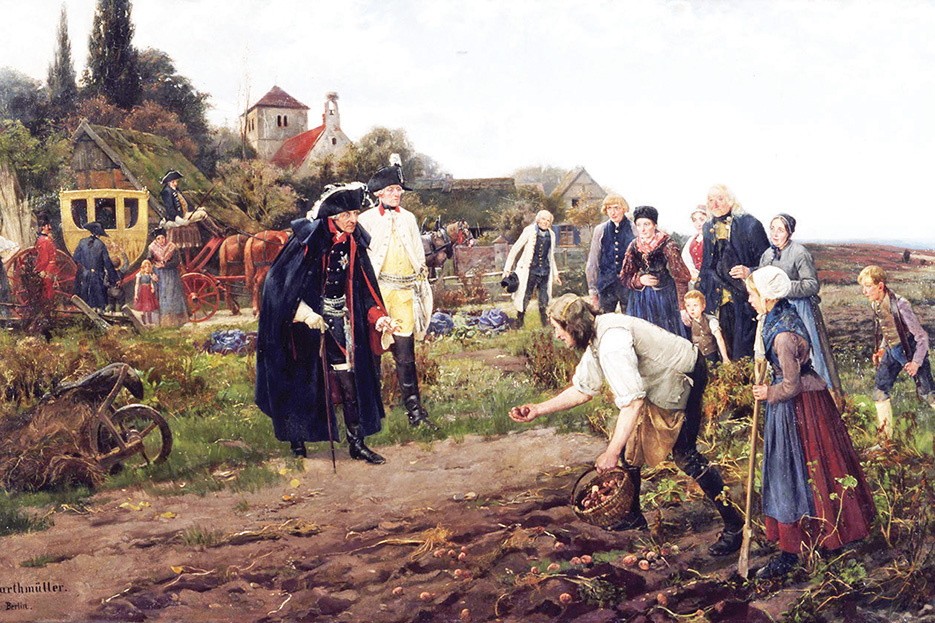
    IN this week’s storytime edition of Speaker’s Corner, North Perth sustainability and community gardening advocate Colin Scott tells us a parable about root vegetables and root causes.

    THE regional village was doing quite well for itself selling potatoes. 

    Many people were employed growing them and local kids had a pathway to earn income and then get married.

    Potatoes were traded with another village for bananas and the extra product added a dimension of choice to consumers.

    There was a bit of village-to-village trading profit going on but no-one was unduly worried.

    At some stage one local potato grower got “smart” and saved his money to buy a boat.

    Global market

    He then traded his potatoes overseas in a more global market place.

    This indeed made him rich but he kept asking his workers to tighten their costs. Wages were trimmed so he could get even richer.

    Other villages apparently could grow potatoes at a smaller overall cost so it got very competitive.

    Village workers had to cut back on their wages through their potato award and the main grower man cut hours for workers. He pushed them harder.

    It was a close run thing as to whether or not he could stay open and keep trading globally.

    He had regional market share and authorities took notice of what he said. And profit at any cost was what he said. “This is the road to riches,” he trumpeted.

    The village people had to readjust their expectations of what they wanted in life.

    Peculiar estates

    Very soon they could only afford closed-in housing in peculiar estates that were not especially sustainable. Large blocks of small apartments also became the norm.

    Just getting to and from work each day cost a lot of cash. Living costs exploded. Every business in the village wanted a profit (at any cost). They too listened to the “man”.

    It soon became a relentless procession to make money and “bugger everyone else”.

    Villagers had their hours cut back and so they had to take a second job doing menial work.

    They lived frugally by always borrowing money from the money lender, which was in itself a growth industry within the region.

    Some people owed so much money they often wondered how they got into such a ridiculous position. They remembered a time when they seemed reasonably happy.

    Then something unplanned happened and disease came to the village.

    The authorities absolutely forbade potato workers to go and work on the potato plantations.

    It was too risky to risk disease spreading in both the potatoes and the local workforce.

    But villagers could not afford to withhold their labour. They were living on borrowed breadcrumbs anyway.

    Infected

    Some people went to work sick. They infected other people in the workplace.

    But they were desperate. They were making life-changing decisions, for themselves… and for others.

    To put bread and food on the table now, even while working sick, or stay at home and do what the authorities said?

    There were decisions being made that might risk the whole potato growing industry and whereby there would be no future jobs at all… it was a risky thing for a whole workforce to think this way. The whole edifice of village society might easily collapse.

    They chose to take what they could now and forgo any future benefit.

    The village remained poor for many years. Authorities explained the situation away as being part of human nature. “What’s wrong with people,” many complained. “Do we live in a selfish society?”

    But in actual fact, the way the whole social system was set up in the first place was the root cause of the problem.

    The giving over of a sustainable and happy life, to a complete market and money driven economy that pushed average and law abiding citizens to pursue a money grabbing life at all costs that would ultimately decide how they would live and die, was the fable that the village had to live with forever more.

  • Style galore  

    Sometimes a home has one or two great talking points – but this Mt Lawley abode has loads. 

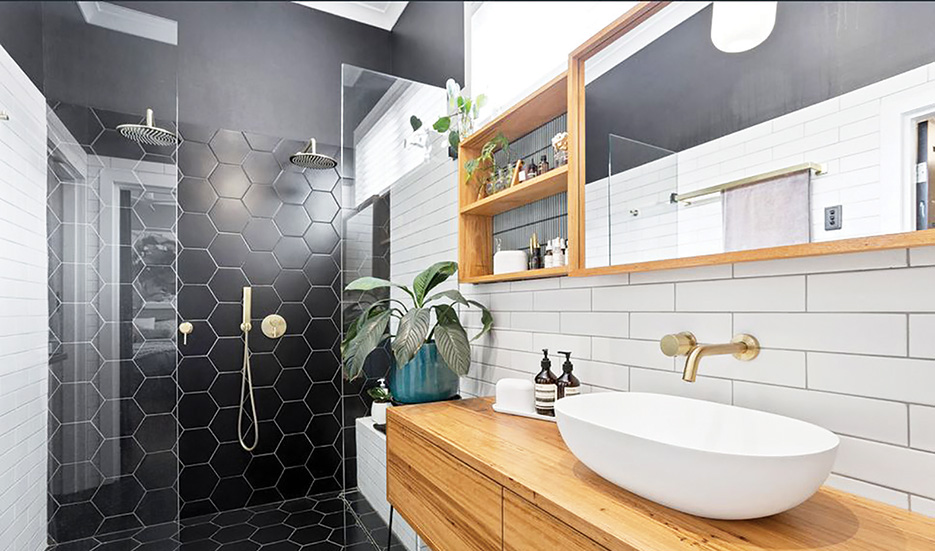
    There’s a dining room with a hung sliding door, a beautiful vintage fireplace in the lounge, and black hexagonal tiles in the ensuite. 

    I could gone on, but let’s not get ahead of ourselves and start outside. 

    This four bedroom two bathroom house has that classic Mt Lawley look – white picket fence, lovely garden and a cute porch beckoning you inside. 

    An old-school formal hallway leads to rooms with high ceilings and polished jarrah floorboards. 

    I really love the lounge at the front of the house – the walls are painted regal blue, accentuating the white picture rail and cornicing. Rounding off things is a heritage fireplace with a lovely grate and wooden mantle. 

    It’s a gorgeous, relaxing room to enjoy a coffee with friends or relax with a book. The open plan kitchen/living area has a lovely tiled floor and masses of benchspace to prepare a meal. It overlooks the back garden and is flooded with natural light, making it feel very airy and bright.

    The kitchen includes black cabinetry, European appliances and a large walk-in pantry. The owners have good style and everything has been done with a sense of restraint and elegance.

    All the bedrooms are spacious and well appointed, with the main featuring a walk-in robe and a stunning ensuite with gorgeous black hexagonal tiles, brass taps and wooden cabinets. In a decadent touch, the seperate WC even has wallpaper!

    Once dinner’s ready, slide back the hung sliding doors in the living area and walk into the dining room. I’m a bit old school and still like a seperate dining area where you can eat as a family, out of sight of the stove.

    After a quick bight to eat, open the bi-fold doors and head out to the patio, which has a good-sized entertaining area with a fire pit. If you fancy something a bit more formal, there’s another alfresco around the side with a huge shade sail and dinner table.

    There’s a large patch of grass for kids to play on out here, and some shady trees create a nice ambience. This home includes off-street parking for two cars, reticulated gardens and a seperate laundry.

    Situated on a 632sqm block on Fifth Avenue, this abode is close to all the cafes and shops on Beaufort Street, is in the catchment area for Mt Lawley primary and secondary schools, and is only a short bus ride from the city.

    This is an elegant family home in a great location.

    Buyers in the $1.2 millions
    73 Fifth Avenue, Mt Lawley
    ACTON Mt Lawley 9272 2488
    Carlos Lehn 0416 206 736
    Chloe Allen 0478 927 017 

  • Baysendean plan exposes divisions

    A PLAN to investigate a merger between Bayswater and Bassendean councils has been promptly knocked on the head.

    But the debate has highlighted divisions at Bayswater, and a communication breakdown that left some councillors with no idea staff were already being sent across the border to work in Bassendean. 

    Discussions

    At last week’s meeting Bayswater councillor Catherine Ehrhardt put up a notice of motion calling for the mayor and CEO to “commence discussions” with their Bassendean counterparts to look at sharing resources, services, facilities, and discuss potential amalgamation down the track.

    But Bassendean mayor Renée McLennan, who’d got wind of the motion, fronted Bayswater’s public question time to ask a few pointed queries and make clear she desn’t like the plan.

    She said the former Barnett government’s cancelled attempt to merge the two had “huge negative effect and impact due to the enormous drain of time and resources on our local governments”.

    Cr McLennan said she had a good working relationship with mayor Dan Bull and was disappointed Cr Ehrhardt hadn’t run this past her before it appeared on the agenda.

    Cr Ehrhardt said her motion called for nothing more than a “discussion”.

    “There are potentially many benefits to both of our communities, and this is something the report will address.

    “It might show that we can reduce operating costs by sharing services, that we might garner a better economy of scale and purchasing power.”

    The motion was lost, with only four votes in favour (Crs Ehrhardt, Filomena Piffaretti, Steven Ostaszewskyj, Michelle Sutherland.

    Bayswater currently contracts its staff across the border for jobs like killing Bassendean mosquitoes.

    Bassendean also pays to have development applications run past experts on Bayswater’s Design Review Panel, something deputy mayor Filomena Pifferetti said she’d never heard of before.

    “You’re contracting out our staff to the Town of Bassendean… is it because it’s operational that I’m not told about it,” she quizzed CEO Andrew Brien.

    He replied that he thought a memo had gone out to inform councillors of some of the service-sharing, but he’d have to double check.

    Cr Ehrhardt said her motion would lead to an “open and transparent report, a report that could identify potential cost savings to the city, a report on what we’re actually already doing”.

    Agenda

    Cr Sally Palmer, whose ward borders Bassendean, opposed the motion and said it “whipped up unnecessary, time-consuming articles, emails, etc”.

    She suggested the motion had a “hidden agenda”.

    “If anyone has a problem bring it on board, and not as a notice of motion to gain publicity – because in my opinion that’s what it seems to be,” Cr Palmer said.

    Cr Bull interjected and Cr Ehrhardt called for an apology. 

    “I take that back,” Cr Palmer said. “I apologise to you, my dear.”

    By DAVID BELL