• Family gem

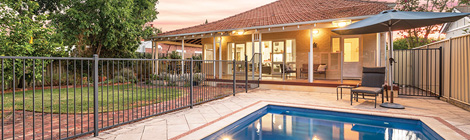
    OLD and new coalesce in glorious harmony in this Inglewood home.

    This home is within walking distance of Edith Cowan University and Mt Lawley High and Primary Schools, where the owners’ kids attended.

    “We’ve been here 26 years. It’s been a lovely location and a great street,” she says.

    Built in the early 1900s, this three-bedroom suburban home is situated on the quiet, leafy Ninth Avenue.

    The wide front verandah is a great spot to have a cuppa in the morning and for an aperitif after a hard day at work.

    The entrance to the house has a lovely domed ceiling and stained glass front door, adding a nice burst of colour.

    French doors provide access to the formal lounge/dining area, a dignified space with an attractive cast iron fireplace. There’s a second set of french doors that open onto a wrap-around side verandah.

    Two of the bedrooms have deep window seats where you can enjoy delightful views of the front garden.

    In the modern extension is the spacious living/dining/kitchen area.

    The original wood-fire oven has been replaced by a huge and modern Ilve oven, flanked by white cupboards and a big pull-out pantry.

    White stone benchtops and a spacious bench/breakfast bar overlook the family room.

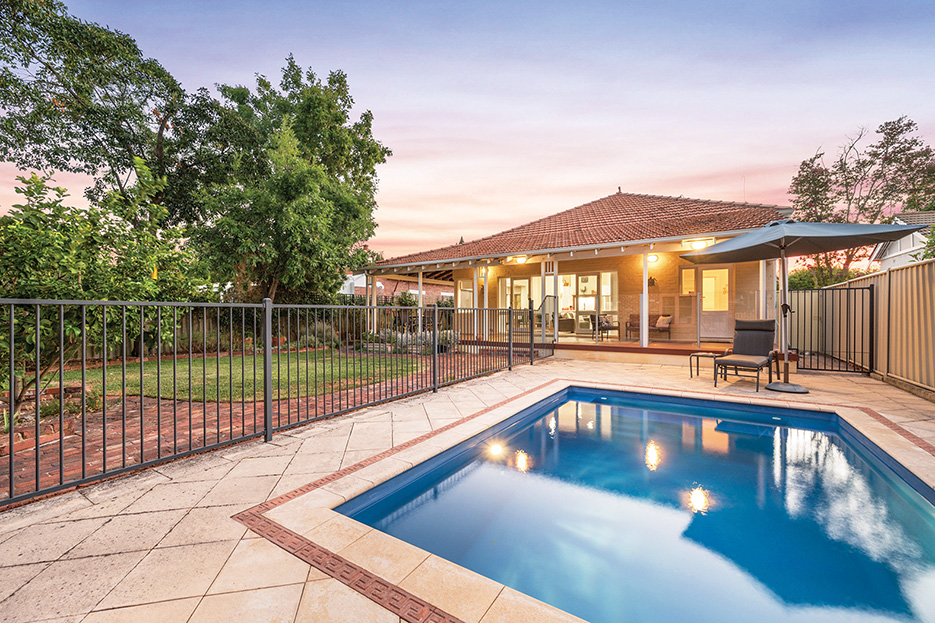
    Entertaining a gaggle of teenagers is as easy as opening the french doors to the garden, which has a pool and a large swathe of grass.

    A brick garage at the bottom of the garden is accessed off a rear right-of-way, and there’s more parking at the front of the home.

    This lovely family home is a 10-minute walk from the Beaufort Street cafe strip and it’s not much further to the cafes and shops on Eighth Avenue.

    By JENNY D’ANGER

    224 Ninth Avenue, Inglewood
    EOI in the $1.1millions
    Natalie Hoye 0405 812 273
    Bellcourt Mt Lawley

  • Dark side of orange

    IF you’ve ever bribed your kids into eating carrots by saying it’ll help them see in the dark, you’ve been an unwitting victim of a military grade ‘psy-op’ (psychological operation).

    This disinformation-disguised-as-an-old-wive’s-tale originated during the Battle of Britain in WWII, as England desperately tried to fend off swarms of German bomber aircraft.

    Hardy and versatile: The carrot conquers the world

    THE humble carrot, Daucus Carota (Sativus), is one of the most commonly grown foods around the world, finding favour for its hardiness, ease of cultivation and versatility.

    The carrot we know today is far removed from its Central Asian origins – now encompassed by Iran and Afghanistan – where it was first domesticated from wild carrots. It shares the Apiaceae family with anise, celery, coriander, poison hemlock, parsley and parsnip among others.

    The large part we commonly eat is the taproot, although many cultures eat the leaves and aromatic seeds as well, which is what they were originally prized for. Wild carrots can only be eaten when very young as the root quickly becomes woody, but the modern cultivars have selectively bred out this characteristic.

    Silk Road

    While the wild version’s seeds and leaves pop up throughout 5000 years of Eurasian history, being found in ancient Rome, Egypt and Greece, it is the Silk Road that is credited with bringing the Persian varieties to the world from the 10th century onwards, as well as skewing consumption to the root itself.

    Wild carrot roots are whitish in colour, but by the time carrots left the Hindu Kush-Himalayan plains purple was the predominant colour, finding favour with the trading caravans of the era. Yellow carrots later came about as a result of a random genetic mutation, and over time the roots were bred to be thicker, softer and sweeter.

    Muslim traders are generally credited with bringing the purple carrot to Europe via Spain somewhere between 800 and 1000AD, and by the 1100s red and yellow carrots were well established on the European continent. Heading east, Kublai Khan brought misery, destruction and carrots with him to China, becoming widespread there in the 14th century before jumping the sea to Japan in the 1700s.

    Historians note that this resulted in a wide variance in carrot species as they spread to different cultures and continents, but like many common plants, as the European era began to gain steam so too did the distribution of European seedlines, reducing biodiversity globally.

    The classic orange supermarket carrot is said to have been bred by Dutch farmers in the 16th century, and this is supported by paintings of the era depicting market scenes with orange carrots. Whether the Dutch were responsible for the breeding or not is still uncertain, but what is known is that in the 17th century a Dutch prince known as William of Orange led a successful rebellion against the Spanish crown.

    It is said that supporters of the House of Orange grew and displayed orange carrots as an emblem of the insurrection, and that farmers were sometimes punished for the ostentatious display of orange.

    Dutch

    Either way, as the Dutch had become the preeminent breeders of carrots in Europe, their orange version, tastier and nutritionally superior, became the standard throughout Europe and later the world.

    It was only introduced to the United States after the Great War, by returning soldiers who had eaten much of it in the trenches where it could be easily grown in the mud and surrounding fields, and World War II’s rationing and propaganda solidified the carrot’s place in the modern Western diet.

    Today, like many foods, China is by far the preeminent producer of global carrots, producing 48 per cent of the 42.7 million tonnes in 2016, followed by the European Union’s combined 5.9 million tonnes and central Asian Uzbekistan’s 2.3 million tonnes. By comparison, Western Australia managed to grow 112,140 tonnes in 2011/2012, exporting nearly 60 per cent of it to the Middle East, Singapore and Malaysia. The WA Agricultural Department notes “Chinese carrots dominate many of the markets that are also important to Western Australian producers. WA exporters do not compete on price … but trade successfully on quality, food safety and reliability.”

    How Doctor Carrot brought down Hitler

    WITH rapidly dwindling defence fighters and exhausted pilots, Britain’s key advantage to staying ahead of the feared German Luftwaffe in World War II was a secretive radar network codenamed Chain Home along the English Channel.

    It allowed commanders to judge the distance and direction of incoming Luftwaffe raids and guide the remaining Spitfires and Hurricanes to intercept them.

    Baffled by how the British were always there to meet their bombers, the Germans switched to night raids to make it harder for the defenders to locate their prey.

    The solution was the world’s first airborne interception radars which the Royal Air Force secretly introduced in 1940, just in time for the ‘Blitz’ where London was bombed 56 nights in a row.

    Knowing it was only a matter of time before the Germans cottoned on to their radar, the British Ministry of Information started seeding rumours about a heroic pilot, Group Captain John “Cat’s Eyes” Cunningham, whose 19 nighttime kills were ascribed to his impressive carrot-enhanced vision.

    A bit far fetched, perhaps, but repeating it regularly brought it to the attention of German intelligence and the Luftwaffe allegedly started feeding pilots extra carrots – just in case.

    While Vitamin A can help mildly with eyesight, it can’t help you see in the dark.

    As the war raged on and German submarines sank so many Allied ships that food shortages became the norm, Britain again turned up its propaganda, but this time on its own people.

    Faced with looming starvation and whole cities ‘blacked out’ every night, the Ministry of Agriculture capitalised on the carrot’s supposed night vision properties to peddle the concept that eating more “should overcome the fairly prevalent malady of blackout blindness”.  The reality was that they were just a cheap, easy food to grow in England’s backyard “victory gardens”.

    Following the success of wartime cartoon ‘Potato Pete’ in encouraging potato cultivation, Doctor Carrot (“the Children’s best friend”) was soon everywhere, from recipe pamphlets to billboards, before Disney was enlisted to add Carroty George and Clara Carrot to the Carrot Family. The indoctrination campaign was so successful that by 1942 the Ministry of Food used its 100,000 ton surplus of carrots as animal feed, likely compounded by an overload of official recipe suggestions that included carrot pudding, carrot marmalade, curried carrots, carrot cookies and even a dubious drink called Carrolade. (Carrot cigarettes never took off for some reason)

    Carrot growing tips

    • Ever had a weird shaped carrot? Chances are it was trying to navigate a path around rocks or clumps in the garden bed. Carrots need loose, fine soil to push their taproot through, so careful preparation of a garden bed is a must. Turning over the soil aerates it, and allows you to spot any lumps which can be sieved out.

    • While carrots will grow well any time, the hottest parts of the year make it difficult to keep the soil moist, which is a must for carrot germination. If you’re on top of your watering or have an irrigation system in place, go for it, otherwise wait until it cools off a bit, around March. Shade cloth can help to keep the soil from drying out, but not too heavy of a grade.

    • Don’t over-fertilise the soil, as excessive nitrogen is the classic cause of a forked carrot. As a general rule if the bed has been previously used to grow a different crop it will likely not need topping up, just turning over.

    • Carrots work best by being sown directly in shallow, parallel trenches, and the seeds should be distributed evenly to avoid bunching and overcrowding. Gently cover the seeds with soil, and water gently for the first few weeks, so as not to disturb the soil and dislocate the tiny seeds.

    • Like many plants, ‘survival of the fittest’ is the name of the game, and overcrowding will cause root tangling and make it hard to harvest one carrot at a time. Wait until the leaves appear and are big enough to help you judge who will be the strongest contender, then show the weaklings the door!

    • Carrots don’t mind waiting until you’re ready, and will happily sit in the ground growing larger, so don’t feel the need to harvest them all at once, rather take what you need and leave the rest, particularly if you’re growing heirloom varieties and want to wait for it to go to seed.
  • Philharmonic fantastic
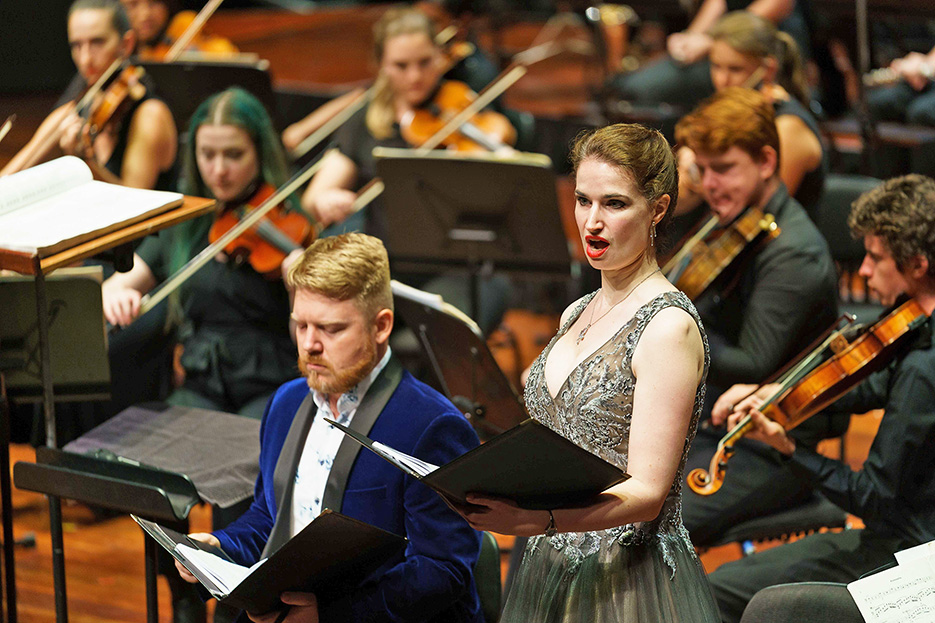
    • Soloist Katja Webb brings a high note to the launch of the West Coast Philharmonic Orchestra on Saturday. Photo by Matt Lim.

    DAVID MACONOCHIE is a violinist and GP and has been performing with WACO for three years.

    AS the last glimmer of sound from the violins faded away, leaving a faint pulsing from the basses, the lights of Perth Concert Hall dimmed and a multitude held their breath, tears in many eyes.

    For a full 10 seconds the world stood still.

    At last a roar of approval greeted the director and driving force behind Perth’s newest musical ensemble, the West Coast Philharmonic Orchestra.

    Who? More of that later.

    First, the music. We had just sat spell-bound through A Sea Symphony by the very English composer Ralph (pronounced Ray-ff) Vaughan Williams (note, no hyphen).

    The only dissenting sound throughout the entire concert was a single baby’s cry – not a cough, a mutter or a dropped program anywhere.

    A Sea Symphony is an unusual work for a classical composer from the turn of the 20th century and was Vaughan Williams’ first major orchestral foray.

    It could have been written by no-one else, such is the individuality of his style.

    It is scored for soprano, baritone, large chorus and orchestra and revolves around settings of poems by the American poet Walt Whitman from his collection Leaves of Grass.

    The work opens to a fanfare from trumpets and horns, and a rumble from the surf rolling back from the beach as the choir sings as one; “Behold …” before a massive wave draws itself up and  “The Sea itself” pounds into the cliff-face, sending shimmering clouds of string sound roaring into the air in one of the most dramatic key changes ever from B flat minor to a triumphant D major, and we are under way on a voyage that will last significantly over an hour.

    The first verse gives a flavour of Whitman’s style, both mystical and a little melodramatic.

    Behold, the sea itself,

    And on its limitless, heaving breast, the ships;

    See, where their white sails, bellying in the wind, speckle the green and blue,

    See, the steamers coming and going, steaming in or out of port,

    See, dusky and undulating, the long pennants of smoke.

    Behold, the sea itself,

    And on its limitless, heaving breast, the ships.

    The four movements have descriptive titles: A Song for All Seas, All Ships; On The Beach At Night Alone; The Waves; and The Explorers. The movements are in turns monumental and evocative, quiet and contemplative, dashing and exciting, and lastly, mystical and narrative.

    Words cannot do justice to this work or its performance on Saturday night. You had to be there.

    A word about the two soloists. Katja Webb is an alumnus of  WAAPA and was one of the WA Opera Company’s emerging artists for 2006. Since then she has built a career as a soloist here in Australia and in Germany.

    Webb has a rich, dramatic soprano voice which soared over the full orchestra, and a stage presence that greatly enhanced the music.

    Kris Bowtell is also home-grown, and combines roles as soloist with music director of the UWA Choral Society. He is shortly to appear as Peter in Hansel and Gretel on  February 22 for Opera in the Park.

    His rich but clear baritone voice was most profound in the meditative On the Beach at Night Alone.

    With such a monumental item for the second half of the concert, we might have expected a more lightweight first half.

    Instead the concert opened with a masterpiece of impressionist orchestral writing; Debussy’s La Mer.

    Suffice to say every one of Debussy’s detailed markings of sforzandi, sudden swells and subito pianos was observed to the letter in a performance that many a well-known orchestra would have been proud to call their own.

    Being of a generation that had never heard of Disney’s The Little Mermaid, my expectations for Alan Menken & Howard Ashman’s score were not high.

    But it turned out to be pretty reasonable; cheerful and entertaining and performed with enthusiasm by the chorus and soloists Jocelyn Campbell and Joanna Parry (standing in the choir stalls). It was an appropriate filler and sent the audience humming into the interval to build up stamina before the title piece of the concert took up the second half.

    Joy

    What is this about the new West Coast Philharmonic Orchestra, announced on the night  by director Sam Parry?

    The Western Australian Charity Orchestra was founded in 2008 with the twin aims of raising money for deserving causes, and bringing music and joy into the community.

    The WACO website says it best; “music has the power to touch human hearts in unique ways that can reach beyond the struggles of dementia, depression, anxiety and loneliness”.

    The WACO umbrella organisation now includes the orchestra, a fabulous and world beating Wind Symphony, and choir. From these, smaller groups bud off to bring music to hospitals and aged care institutions.

    It became apparent WACO needed a new name to reflect the high standard of performance exemplified by Saturday night’s concert, and incidentally avoid accidental association with an unfortunate incident in Texas, 1993.

    The West Coast Philharmonic Orchestra (or West Coast Phil as it inevitably will be called) is the result.

    While it is still the case that members of the orchestra are all volunteers, like most paid orchestras each has to pass an audition to gain a place.

    Around half are full-time professional musicians. Several are casual members of WASO, one was concertmaster of one of the world’s most prestigious orchestras in a previous life, at least two are medical doctors, another a psychiatrist, several are retired. All give up their free time for the love of music and their belief in the aims of the group.

    Look out for future concerts from the West Coast Philharmonic Orchestra, and tell your friends. Not only will you be doing yourself a favour, but you will also indirectly help in the community work that the orchestra does to bring joy to those who would not otherwise be so lucky.

    This is what you missed: https://www.waco.org.au/events/a-sea-symphony/

  • Locals dudded in sports rorts scandal

    BAYSWATER council, the Chung Wah Association and Mount Lawley Bowling Club have been caught up in the latest sports rorts scandal.

    Although the Morrison government has refused to name clubs that missed out on funding from a grants program exposed earlier this month as a political porkbarrel, the ABC on Tuesday published a leaked list showing Chung Wah and Bayswater were among the dudded despite being ranked among the country’s 50 most worthy projects.

    The Voice has also discovered the bowling club was in the top 100.

    Resign

    Former federal sports minister Bridget McKenzie is under mounting pressure to resign after an auditor general’s report found her office manipulated a Sports Australia grant program to allocate funds based on marginal seats the Coalition hoped to win ahead of the last federal election, rather than merit.

    The Liberals did not run a candidate in Perth at the last election and seemed to have little interest in spending any money here.

    Chung Wah’s $50,000 application scored 87 out of 100 when assessed by Sports Australia officials, but it was rejected by Ms McKenzie in favour of clubs in seats the LibNats hoped to win – one successful grant had only been rated 39/100.

    Federal Perth MP Patrick Gorman says “the Chung Wah Association has existed in Perth since 1909. It is completely unfair that they were denied funding which was recommended by Sports Australia.

    “Prime Minister Scott Morrison owes the Chung Wah Association an apology and $50,000.

    “This abuse of an independent program has a real impact on our community – local organisations such as the Chung Wah Association and the Noranda Netball Association have been denied vital funding after spending hundreds of hours putting together applications.”

    Bayswater council put in a request for $500,000 to resurface the Noranda netball courts, but its score of 83 also wasn’t enough to net funding once Ms McKenzie got to it.

    Bayswater CEO Andrew Brien says “we are disappointed our application was unsuccessful, and we will continue to take every opportunity to seek funding for this worthy project in the future”.

    Mount Lawley bowling club was in the top 100 in the independent rankings but the sports minister declined their $423,000 for synthetic green replacement.

    Volunteers

    Federal Labor Leader Anthony Albanese visited the bowling club on January 21 and said “this club put in an application for $423,000.

    “They had $40,000 of their own money that they were prepared to put in to contribute to the upgrade of this facility for, like many clubs of this size, a sporting organisation that is at the centre of local community activity, one that relies upon volunteers, one that contributes to the wellbeing of the local community here. And yet, they were not successful for the grant.

    “There’s no basis upon which success or no success has been determined other than politics”.

    The synthetic turf would’ve used less water, required less upkeep and is also immune to the turf mites the club had a problem with in the past.

    Mr Gorman says the grant “would have given the club a long-term sustainable footing for the future. These clubs don’t run at a huge profit, they don’t make lots of money, they’re pretty much entirely volunteer-led. They might have one person to maintain the grounds.

    “The government should be transparent and release the assessments of every application it received, to give every association an idea of the true picture of their project and Bridget McKenzie should apologise to sporting organisations across Australia and then resign.”

    by DAVID BELL

  • Otto’s bones are back

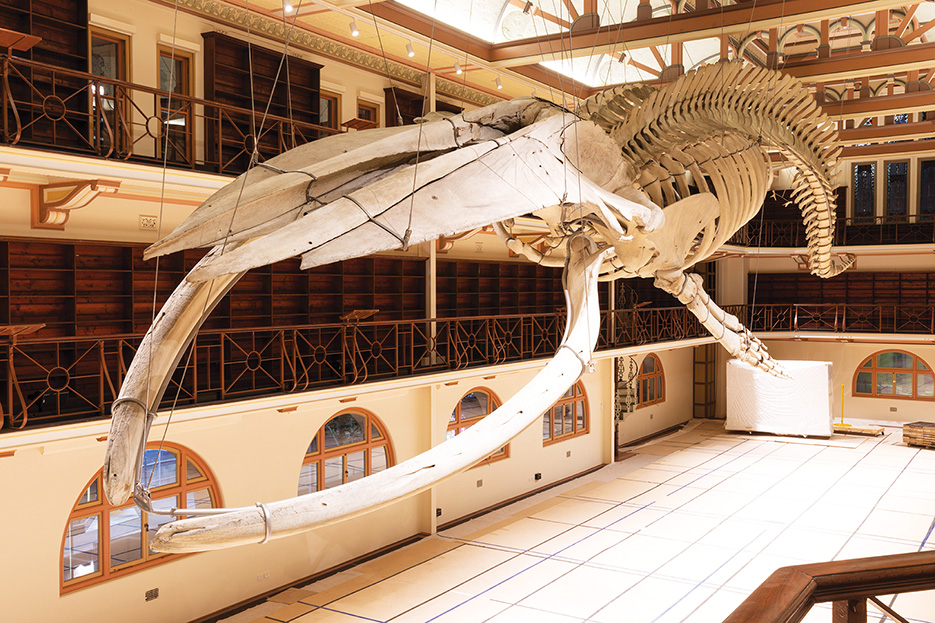
    AFTER 17 years in storage a blue whale skeleton will be put on display at the new WA Museum.

    This week the McGowan government announced the iconic bones would hang in the museum’s Hackett Hall when it opens November, suspended in a dynamic “lunge-feeding” pose based on recent research into whale hunting behaviour.

    The skeleton has been named “Otto” after WA Museum taxidermist Otto Lipfert who prepared it 123 years ago when it washed up near the mouth of the Vasse River.

    “The WA Museum’s blue whale skeleton may be more than 120 years old, but the technology and research behind its spectacular new display is ground-breaking,” culture and arts minister David Templeman said this week.

    “The foresight of the Museum’s taxidermist Otto Lipfert back in 1897, collecting and preserving the skeleton for the benefit of future generations, for us and for our children, was extraordinary.

    “Moving the skeleton up a beach by horse and cart to the Busselton Train Station, then packing it onto a train for Perth, where he reassembled it for public display is nothing short of incredible.”

    Canadian whale skeleton specialists Cetacea worked with local engineering firm CADDS Group to create the pose with technology usually used in the mining industry to design and engineer metal frames.

    In the ‘70s Otto was craned into the museum’s Francis Street building while the roof was off. The asbestos-riddled building was closed in 2003, and the bones moved to a research centre in Welshpool.

    When Otto was previously on display he was not quite a complete skeleton and was missing tiny hip bones that float amid the blubber. Whales’ ancestors once walked on land and have tiny nubs of bones left as their legs disappeared over about 55 million years.

    The museum’s Renae Woodhams told the Voice Otto’s original hip bones “probably washed away in the late 1890s”.

    But the new Otto has been made whole: “We replicated and 3D printed the bones so our whale is complete. When visitors come they have to look closely to see the bones — they are relatively small compared to the massive skeleton.”

    by DAVID BELL

  • No wallet fireworks

    AROUND 250,000 thrifty people attended Perth’s Australia Day Skyworks show, donating an average of three cents per person to bushfire relief.

    City of Perth commissioners decided to turn the event into a fundraiser with 50 volunteers walking among the crowd collecting donations in buckets and via EFTPOS.

    So far the total is $57,521.30, which sounds reasonable – except that $50,000 is a single donation from the council itself.

    Despite premier Mark McGowan’s encouragement to “dig deep” and “turn Skyworks 2020 into a huge fundraising event”, the $7251 raised by the public represents about three cents per attendee.

    While the cup didn’t run over, the council’s general manager of community development Anne-Banks McCallister said in a media statement the turnout was a great success and “I am delighted by the outpouring of generosity from our community”.

  • Horror heritage
    • Number 70 Thomas Street was halfway demolished on Tuesday morning.

    TWO heritage-listed West Perth houses and the former home of one of serial killer Eric Edgar Cooke’s victims are being demolished by the McGowan government.

    The Post Newspaper reports that 24-year-old social worker Constance Lucy Madrill was murdered at 70 Thomas Street in Perth by Cooke on February 15, 1963. Cooke killed eight people (that are known) and was the last man hanged in WA. The Post has long ties to the Cooke murders, as editor Bret Christian was instrumental in gathering evidence that helped exonerate two men wrongly convicted for two of Cooke’s crimes; Darryl Beamish and John Button.

    Demolition

    The two other houses on Thomas Street, numbers 66 and 68, were built in 1922 and are on Perth’s local heritage list.

    All three are owned by the WA Planning Commission.

    Empty for more than five years, they have long been earmarked for demolition to allow for street widening and the front third of each block is listed as road reserve in the Metropolitan Region Scheme.

    Demolition was approved by City of Perth commissioners in March last year, but the approval carried a note that “council advises the Western Australian Planning Commission of its disappointment in relation to the rate at which the subject buildings have been allowed to decline and deteriorate to a point which their retention and re-use was unfeasible whilst under the commission’s ownership”.

    Council staff declined to suggest any action beyond sending a disappointed note. Their report to commissioners states that given the road widening, future demolition is “inevitable”.

    Since the two houses are only on the council heritage register and did not make the state list, “demolition by neglect” legislation introduced in 2019 wouldn’t apply.

    The reluctant approval follows the demolition of 58 and 60 Thomas Street, approved in August 2016 and February 2019. In each case the property was neglected and a target for squatters and vandalism, and “approval was granted in recognition of the safety and security issues associated with the site”.

    The WAPC told the council it tried “various security measures” against squatting and vandalism, but to no avail.

    There’s no set date for the road widening and the site will get some landscaping in the interim. Two other occupied buildings will have to go as well.

    by DAVID BELL

  • Jack hits the road
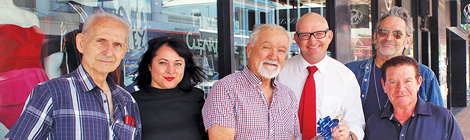
    • Neighbours bidding farewell: Astor Theatre owner Bruno Zimmerman, Sharon Wiley from Seven Willow Designs, John Higgins, Mt Lawley MP Simon Millman, Nick Sheppard from Elroy Clothing, and Charlie Salpietro from Grand Cru Wine Shop & Cellar.

    AFTER 30 years Mt Lawley retail veteran John Higgins is closing down Jack Clothing on the corner of Beaufort and Walcott Streets.

    Despite a conga line of other retailers folding due to the strip’s economic woes, Mr Higgins says he just wants to retire and spend more time relaxing and hanging with his family.

    Turning 70 this year, he says it’s getting trickier keeping up with fashion trends.

    “I’m not sure if I can keep in touch with everything, because it changes so quickly,” he said.

    “In the old days I would always be out on the town and going to clubs and pubs and what have you, and so I would be reacting to fashions as they actually started, whereas now I tend to be home alone with my dogs, pipe and slippers. I’m just not out on the town like I used to be.”

    His retirement has been on the cards for a few months, but he held off while Beaufort Street went through a downturn, hoping to minimise the impact on remaining shops.

    “I feel as though Beaufort Street is on the way back up again. We definitely had a decline here, but I really feel as though it’s on its way back up,” Mr Higgins said.

    “So I was trying not to add another ‘for lease’ sign to the shopping precinct because it just makes it look bad.”

    He’s also inured to economic downturns: “I started the shop in 1990, and at that time there was a very deep recession going on, the ‘recession we had to have,’ is what Paul Keating famously said, and boy did we have one.”

    Before opening his own shop he’d had experience working in sacred fashion grounds like Carnaby Street, Oxford Street and King’s Road in London, while in Perth he worked for “a very nice chap called Tony Barlow”.

    “I remember when I was leaving… he said ‘John, you won’t last six months!’

    “I think he was trying to find some way of persuading me to not go, because we did get on very well and we worked well together.”

    But he found a way to forge a path during those tough times: “I used to buy bankrupt stock and sell it in the shop cheaply, that’s how I got started because I had no working capital to start it off.”

    He recalls in the early days Beaufort Street was “very seedy and run down, and there was a lot of crime in the area. We were ram raided twice, which is very demoralising as you can imagine, because you end up with a stolen car in the middle of the shop.”

    At the time anyone on the market for a leather jacket could either buy one retail, or hang around in a pub until someone offered to sell them a cheap stolen one from their car boot.

    But the seediness had its nice tales: “We used to have a halfway house down the road here which was for prisoners who’d just come out of gaol.

    “Sometimes the ex-prisoners would come into the store and they’d have a docket from the halfway house, and they could buy an outfit with the docket and I’d reclaim the money from the government.

    “They were going for a job interview … I used to do my best to make them look really respectable, I wanted them to get the job, because then they’d become my customer.”

    Mr Higgins said he earned some loyal customers that way.

    He’s looking forward to singing in his two choirs, Men of the West and Voicemail (who are performing Highway to Hell for the Perth Festival) and spending time with his daughter and grandchild, but says he won’t completely disappear from the scene.

    “I’ll still be around the street. I’m one of those people, if you’re in the supermarket and get this annoying person who wants to chat to you in the line, that’s me. I’ve got loads of friends who live around here… I’ll certainly be around the traps.”

    Mr Higgins says he’ll miss the camaraderie between traders, such as his neighbours from the Astor, Seven Willow Designs, Elroy Clothing and Grand Cru. They all had kind words to say about him.

    “John’s been an institution in Mount Lawley,” Grand Cru’s Charlie Salpietro says.

    “Jack Clothing would be one of three or four Beaufort Street businesses to be around as long as he has. He’s a lovely man and we wish him all the very best in his retirement.”

    Mt Lawley MP Simon Millman, whose office is across the strip, applauded Mr Higgins’ timing: “I’ve been speaking with John about his plans for retirement for several months. It’s a testament to his dedication to our community that he delayed retiring to avoid being associated with concerns last year about the local economy.”

    The shop’s initial closing date was January 31 but the landlord, the amiable Bruno Zimmerman who owns the Astor, is happy for Mr Higgins to stay open another week or two to finish the store as it started.

    “It’s a little bit like harking back to when I first opened here,” Mr Higgins says. “A friend who has bankrupt stock has asked me to clear some for him.”

    by DAVID BELL

  • Flash back

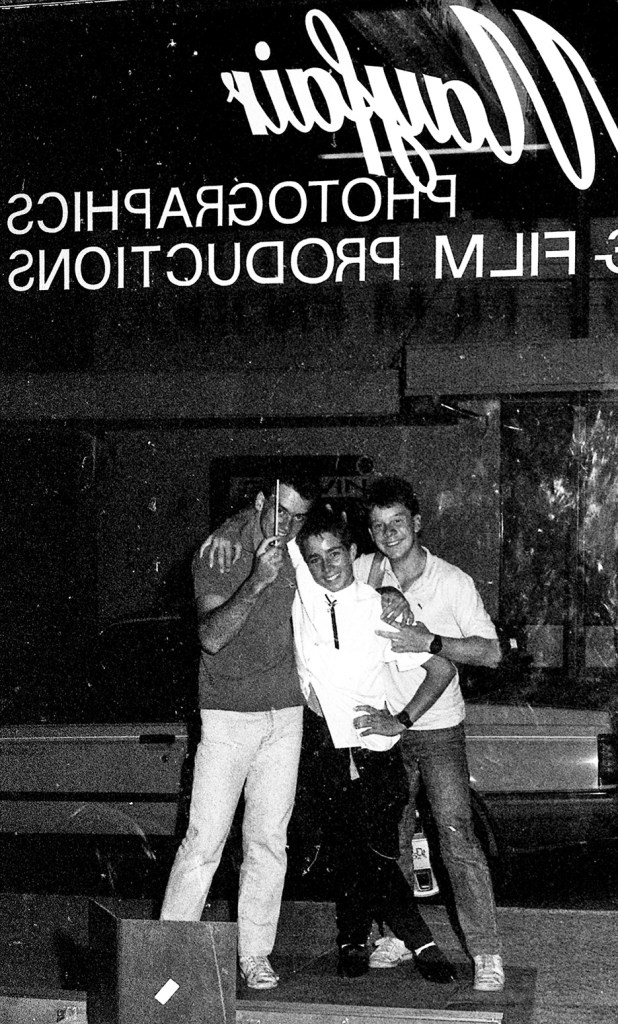
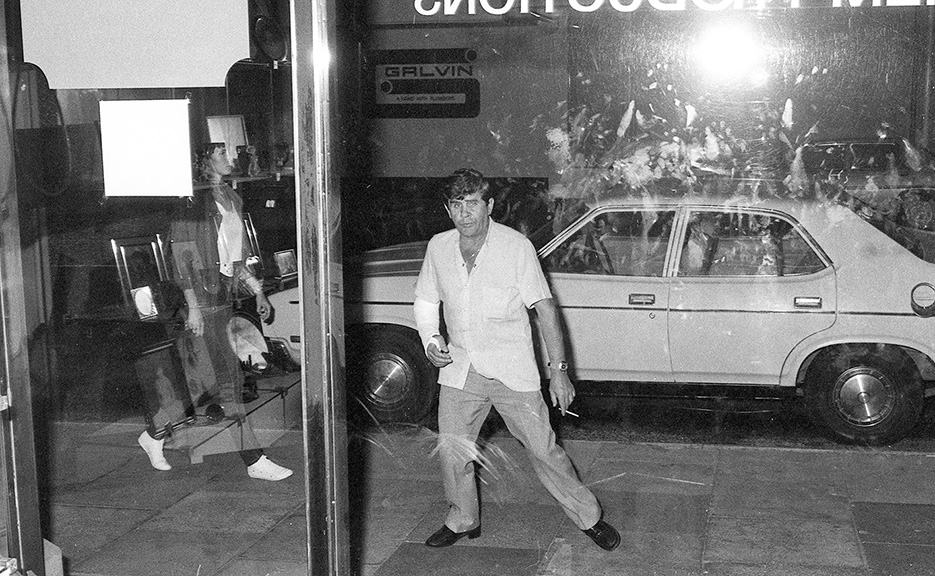
    A PHOTOGRAPHIC time capsule captures a snapshot of Northbridge street life from one night in 1983.

    Artist Andrew McDonald is known by many for curating “The Worst of Perth” blog from 2007 to 2017, a loving repository of our bland, underwhelming, or cliched cultural phenomena.

    But long before the first post he was a photographer working at Mayfair Photographics Studio, housed in Rechabites Hall on William Street.

    McDonald lived in the basement that year. After finishing a 12-hour job photographing an Italian wedding, he returned home one hot night and sat by the window with a beer in hand and armed with a studio Nikon.

    He photographed passers by, some subjects unaware of his lens, others performing for the camera and pressing their noses against the glass.

    There was only one angry subject, McDonald recalls: “The guy with the cast … everyone else is really happy, people are kissing the glass. He was the only one who wasn’t that keen.”

    The man threatened to smash the hall’s window to get to McDonald: “I really want to know how he broke his arm.”

    He says Northbridge was charmingly old-fashioned, but already changing. Across the road was a plumbing supply store, and nearby The Great Western (now the Brass Monkey Hotel) was still largely a working man’s pub.

    The era marked the estuary of immigration as businesses and restaurants established by the Italians still predominated, but the mix was shifting towards Vietnamese refugees who’d recently been welcomed.

    More than 36 years after that night in the window, McDonald’s images are on display in the same building during Fringe as part of the Displaced Souls exhibition.

    McDonald’s also taking new photos from the same spot. He says the area’s changed, but the faces of the people enjoying a night out in Northbridge are still familiar: The playful performers, the contemplative smokers and the lone wanderers.

    “The area still has that slightly rough, slightly risky sort of feel that all great entertainment precincts around the world have where at once it’s fun, but there’s something hiding behind it as well.”

    Displaced Souls is at The Rechabite, 224 William Street from 4pm to midnight until February 16.

    An online gallery is at ahcmcdonald.com/224williamstreet

    by DAVID BELL

  • SAT win for tree huggers
    • James Kozac discovers you don’t need to camp in a tree to save it; sitting underneath does the trick. File photo

    AN imperilled tree in Inglewood at the centre of a State Administrative Tribunal dispute will stay for now.

    The grevillea robusta is on land owned by the John Place unit block at 99 Ninth Ave. Last year some members of the units’ council of owners attempted to have the tree removed, saying it had termites and was too close to a fence line, particularly as it could grow to double its size.

    Residents June Winsome-Smith and James Kozak disagreed, saying the other owners couldn’t legally remove the tree without everyone having a chance to vote on it, arguing it went beyond “routine maintenance”.

    They sought an emergency application from the SAT to prevent the works, and when tree loppers arrived on October 4 last year, Mr Kozak sat under the grevillea to prevent the work going ahead (“Tree Warrior,” Voice, October 12, 2019). Police arrived to observe the standoff, and eventually the loppers left.

    Three months later the SAT says the application can be withdrawn following a commitment from the council of owners not to remove the tree unless it’s approved by a general meeting of the strata.

    The undertaking also covers a garden bed and bushes Ms Winsome-Smith had planted on the verge.