SAFETY at two notorious intersections in Maylands will be improved under Black Spot funding.
At the Eighth Avenue/East Street intersection, $120,000 will be spent installing a roundabout and upgrading street lighting.
At the Guildford Road/King William Street intersection, $750,000 will be spent installing mast arms to put traffic lights directly over the road and upgrading pedestrian facilities.
Another right-turn lane will be created on Guildford Road and the existing one extended, to stop cars turning onto King William Street from blocking the flow of traffic.
PERTH City Farm celebrates its 25th birthday this month.
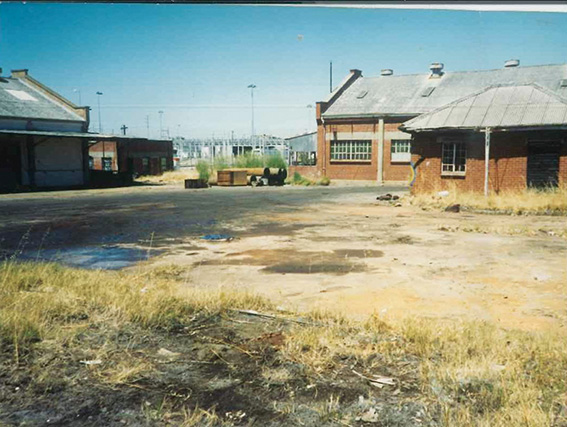
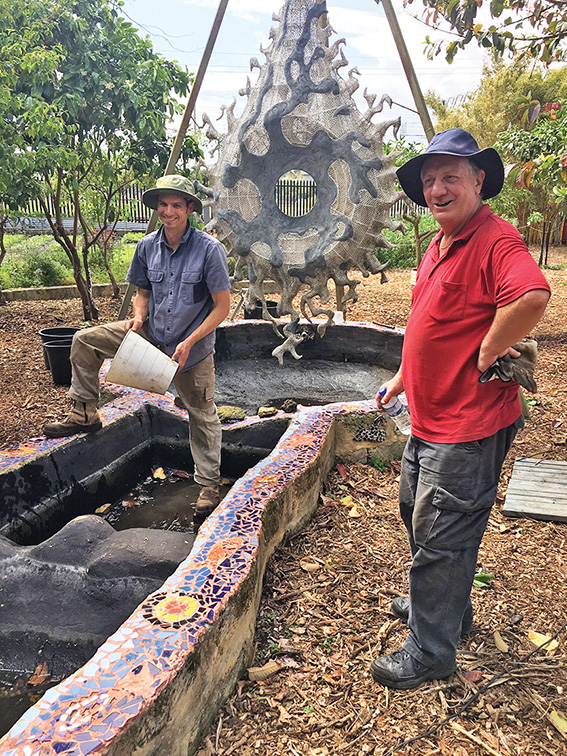
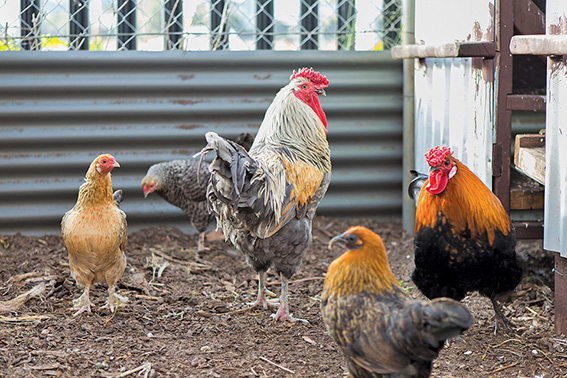
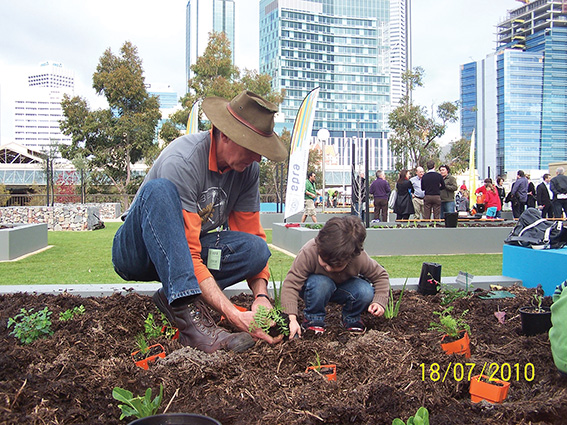
Once derelict industrial wasteland, the farm’s half-hectare nestled beside the Claisebrook train station has been transformed into a flourishing urban farm and community hub.
The project was started in the early 90s by a small group of folk led by Rosanne Scott, Joanne Tucker, Chris Ferreira, Clayton Chipper and Neal Bodel who envisioned an urban centre where people could get in touch with nature and meet others interested in sustainability.
With the backing of Men of the Trees they started looking for a home.
The East Perth Redevelopment Authority gave the group a two-year lease on a former metal scrapyard and battery recycling facility, with volunteers remediating the toxic soil, planting gardens and repurposing old warehouses into studios.
“Where the community garden is now was filled with scrap metal and machinery,” says Ms Scott, who is now PCF chair
“The buildings were just as dirty, full of grease and grime and dust.
“I think there was a bit of naivety, because I personally didn’t have any idea how long it would take.”
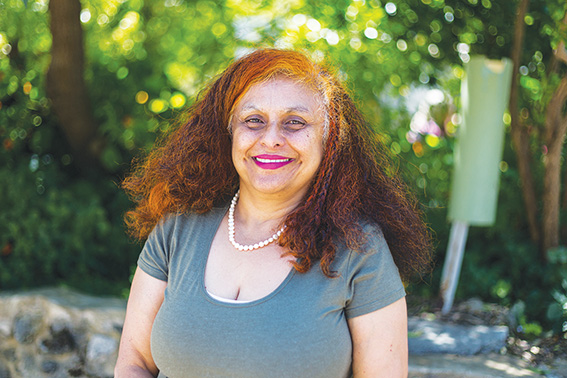
• City Farm chair Rosanne Scott. Photos supplied
A metre of contaminated dirt was dug out and liners put down. Fresh soil was expensive and the budget thin, but they had a bit of luck: the musical Bran Nue Dae’s premiere season was closing and a huge pile of red dirt trucked down for the show was up for grabs.
It was hauled over to PCF, mixed with compost, and used for the early garden beds.
In 1999 the Court government made moves to redevelop the site, but Ms Scott said opposition was “swift and loud”.
“We’d become a community hub for people from all over Perth and they banded together to save it.
Save City Farm Action Group won a two-year extension and the Court government promised a new home, but the founders dug in.
They put up a protracted fight, and a year after the Gallop government came to power in 2001, planning minister Alannah MacTiernan gave them a 40-year peppercorn lease.
“She was absolutely awesome,” Ms Scott says, noting the minister was regularly seen wandering through the gardens.
Former Perth MP Diana Warnock was also a crucial backer: “She just constantly campaigned to help us get this all the way through.”
Over the years City Farm has hosted Perth’s first organic farmers market (it still runs weekly), taught more than 2400 unemployed people horticulture and building skills, and kickstarted the community garden movement.
Performers like John Butler, Richard Walley, Stormie Mills and Tessa McKay have had their careers kicked along as well.
Traditional Whadjuk Noongar owners have explored the area’s Aboriginal history, and a bush tucker garden’s been started to commemorate early Noongar resistance figure Fanny Balbuk (1840 to 1907) who once foraged her food in the area.
They got their formal organic certification in 2004; a pretty big win for a former toxic site.
“The story is one of persistence,” Ms Scott says. “We got a contaminated site, and with lots of love — and compost — we grew a garden, and with those values we created a place where people could grow and play out their own vision.
“I really hope that when young people come up wanting to do things, that us older people and people in power don’t just squash it.”
A farm open day is being held on Sunday September 15 from 11.30am to 6.30pm at 1 City Farm Place, East Perth.
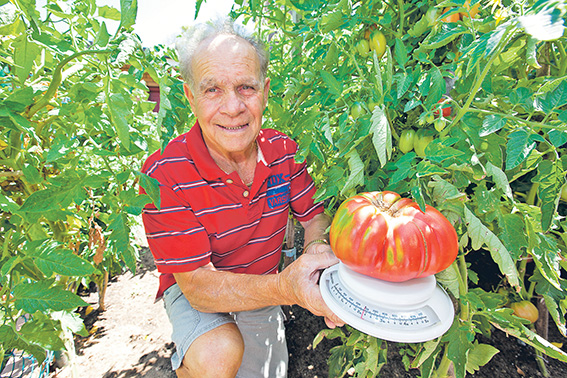
TO many gardeners, the humble tomato typifies everything that makes them get their hands dirty in the first place.
Tasty, colourful, versatile and easily comparable with other grower’s efforts, Solanum lycopersicum season says it’s finally time to do something with that overgrown mess out the back!
Commonly perceived to be Italian, (although arguably popularised and perfected by them!), it is actually a pre-Columbian native of the central and southern Americas, where it has been grown for at least a thousand years – possibly even two thousand. It was brought back to Spain in the 1500s by the Conquistadors after their obliteration of the Aztecs, but did not gain much popularity there until the early 1700s.
Despite growing well in the Mediterranean climate, it was widely considered poisonous and grown for its ornamental value only. Part of the reason for this was the common use of pewter plates by the elites of the time, who noticed the tomato acid stripped the coating from them.
Lead poisoning
It has been suggested that the subsequent lead poisoning contributed to its deadly reputation, but its botanical classification as a member of the nightshade family likely contributed more.
While still considered a somewhat dangerous curiosity in northern Europe and Britain, Spain and Italy pushed ahead with cultivation and breeding, and by the 18th century local and specialised versions had been developed, with the pomi d’oro (‘Apple of Gold’ – today simply ‘pomodoro’) fast becoming a fixture in Italian cuisine among the paesanos (peasants), who didn’t mind the negative connotations of a plant that grows close to the ground.
It is commonly held that Naples pizza chef Raffaele Esposito was responsible for making tomatoes fashionable in 1889, when he was invited to prepare a pizza for King Umberto I and his wife Queen Margherita. He was admitted to the royal kitchens, where he prepared three pizzas, one of which was made in the ‘Tricolore’ – the Red, White and Green of the Italian flag being tomato, mozzarella and basil. Queen Margherita loved it, and with this news pizza (and tomato) became widespread across Europe.
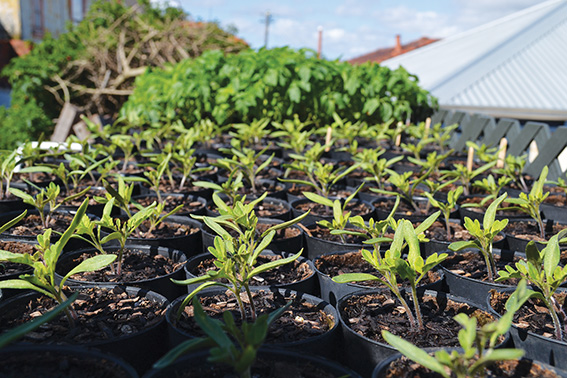
• Get your tomato seedlings in now – if you haven’t already. Photo by Justin Stahl
Thomas Jefferson was one of the early pioneers of tomato cultivation in America. In 1781 he ironically introduced varieties from Europe rather than its native Mexico next door. The United States was the last major region to adopt the tomato, where lingering suspicions and perhaps association with ‘the natives’ prevented widespread adoption as a food crop until the 20th century.
Even as late as the 1830s, American colonists lived in fear of an allegedly deadly Green Tomato Worm, held to be as deadly as a rattlesnake. However, an emergent capitalism soon meant that a certain Mr Campbell’s soup company found a method for reducing shipping and transport costs by ‘condensing’ (ie. removing most of the water from) tomato juice into a soup, and his famous red-and-white tins have been a fixture of Americana ever since.
The Spanish introduced tomatoes to Asia early in the 1500s via the Philippines and contact with Portuguese Macau, but it remained generally unpopular, with the Imperial Chinese referring to it as ‘fan qie’, or barbarian eggplant. Eventually it was found to be suitable for near year-round harvesting in the humid southern regions, removing seasonal bottlenecks in nutrition for the agricultural and fishing-based societies of the time.
China
Today, Asia dominates tomato cultivation, with the UN Food and Agriculture Organisation reporting that China alone produced a massive 59 million tonnes of tomatoes in 2017, a full third of global production, while India and Turkey hold second and third position with 20.7 and 12.7 million tonnes respectively. Italy (6 million tonnes) and Spain (5.1 million) now occupy the seventh and eighth positions, while Australia is ranked at 48, with a total of 371,000 tonnes.
China’s astonishing success, as compared to India’s small scale yet efficient localised farming and Turkey’s favourable climate, is due to a strategic, national investment in industrial food production.
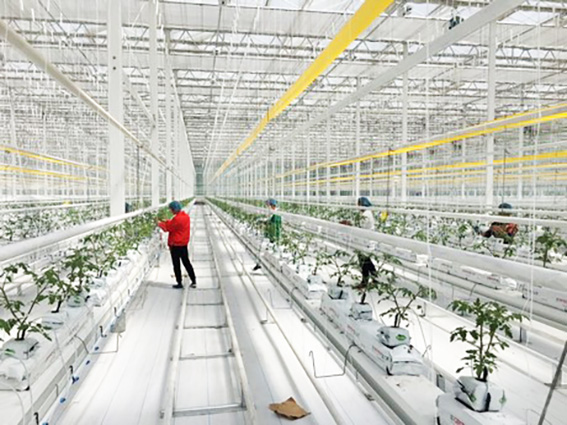
Massive ‘smart greenhouses’ regulated by artificial intelligence and produced with government subsidies, have quickly supplanted traditional open-field farms as the industry rapidly shifts to a new production paradigm in just a few short years.
• The world’s largest greenhouse recently built in China to support its staggering 59 million tonne tomato industry – even though they’re not that big on eating it!
However, as tomato still does not feature widely in Chinese cuisine, most of the product is exported, often as tomato paste or powder, to be reconstituted or reconfigured in the receiving country. This generally means that under most international labelling laws, including ours, a product made almost entirely from industrial, heavily-fertilised tomato can be labelled as “Made in Australia” if it is substantially processed here, which may be as simple as adding more than 51% water.
The Chinese track record when it comes to food safety is patchy at best, as demonstrated by Chinese domestic demand for non-Chinese baby formula, more than a decade after the infamous contamination scandal.
Control
Which, rather neatly, comes back to the key reason why you should grow your own healthy food – control exactly what you eat, from seed to salad. I’ve been involved in the food industry for a long time now, and I can say that while most operators are honest, decent people who love putting food on your table, there are some who deserve to be pelted with rotten tomatoes.
All the more reason to grow your own, I say!
—————————————
Tomato growing schedule for perth
1. Start tomatoes off in a small, preferably biodegradable punnet, so as to transplant with the least amount of shock.
2. Transplant now, or in the next 3-4 weeks latest, into soil prepared with compost and blood and bone, or you can even use a good quality bag of organic potting mix. Don’t use yellow building sand!
3. After transplant, 7 weeks of rapid growth should follow, so feed your hungry toms a liquid fertiliser such as Charlie Carp (an organic Aussie product that repurposes the Murray-Darling Basin’s carp infestation) once a week.
4. By the second week of November, the temperature will be high enough for the flowers to start setting fruit, and that will continue onwards until the second week of December, which is mid-season for spring planting in Perth’s Mediterranean-esque climate.
5. The fruit (it’s not a vegetable!) will start ripening as they mature, with the first vine-ripened tomatoes ready by the first week of January, dependent on the individual variety.
6. They will continue cropping for the next five weeks, finishing off around the second week of February.
Councils in hot water
IT is very disappointing to hear of the Maylands Waterland not reopening this year (“Waterland off”, The Voice, September 7, 2019).
I find it disappointing even though I don’t even live in the area nor use the facility.
However, it points to a greater scourge that has insinuated itself with local government councils…that being the never ending and often unreported overpayment of executive staffers that work within those councils.
The CEO of many councils is usually on a salary package of greater than $300,000 per annum.
There are often a few lieutenants that also get greater than $200,000 per annum.
Then there are the managers and all the rest who are getting ridiculously high payments. It’s out of control.
The thing is, we all know that any organisation or business has 80 per cent of expenditure of day-to-day running that goes to wages and salaries.
This runs contrary to the relentless and unforgiving nature of rate rises than none of us have a say in and have to “suck it up”.
The Salaries and Allowances Tribunal that oversees such payments to executives should be pulled into line.
Shareholders within big corporations have a say by corporate law that allows them to have oversight on executive salaries and payments.
We, as general ratepayers, basically have no oversight, no say in the matter, get no transparency in the “system” and generally get no relief from excessive rates that are obviously linked to excessive salaries.
The fact that one council has trouble funding a community facility points to an issue of council payments to staffers being completely out of kilter with community expectations, and it eventually shows up in such a way.
As the economic cycle gives us a pretty good opinion that we are in some sort of recession, then we should make changes that save us money.
And that should start by our council elected members insisting on some sort of cuts to executive staff salaries.
Those salaries grew by over 40 per cent in the few years leading up to 2017, and now is the time to peg them back.
Then maybe we’ll have a rate rise of zero per cent and maybe certain facilities will continue to provide a service. Colin Scott Deague Court, North Perth
Ping pong
DAVID SCHILDKRAUT’s letter (“You’re missing the point”, Voice, September 7, 2019) is a work of fiction.
Mr Schildkraut asserts that “Jewish settlement” (i.e. Israeli settlement) on what he claims to be “their historical land” has “always been legal”.
The justification for this assertion is the League of Nations’ “mandate system”, which handed over to two of the victors of World War I – Britain and France – colonial control over all Arab lands formerly held by the Ottoman Empire until they were deemed ready for self-rule.
Arab peoples rightly rebelled against the carving up of their homelands: the Palestinian revolt (1936-1939) provides one such example.
In 1917, Britain’s Balfour Declaration unilaterally declared Palestine a homeland for the Jewish people, despite Jewish settlers being a tiny minority.
When, in 1947, the United Nations carved up Palestine, just as the League of Nations had carved up Arab lands three decades before, most of Palestine was granted to Israel, despite Jewish settlers still being a minority of the nation’s inhabitants.
Moreover, Zionists (those advocating a Jewish homeland) demanded more.
In 1948 they occupied three quarters of historic Palestine and in 1967 occupied the remainder.
Since 1948, Israel has passed numerous laws that discriminate against Palestinians. Israel imposes military law upon Palestinians in the Occupied Territories and denies them basic human rights.
Israel is a colonial apartheid state. And I am not an anti-Semite for saying so. Nick Everett, co-convenor Friends of Palestine WA Victor Street, Hilton
Meddling lefties
NSW premier Gladys Berejiklian claims that Sydney is Australia’s only global city.
About three years ago, Perth would have begged to differ.
That was when a meddling Labor state government took over in WA.
In effect, it banned Perth’s apolitical lord mayor from further cultivating our ties with Canada, China, the United States and Europe.
Every such association helps ease international tensions.
One wonders, have the commissioners now running Perth council even been interstate? Winsley Hurst St Georges Terrace, Perth
Emotive debate
THANK you to the Voice for publishing letters portraying both sides of the highly emotive subject of Israel.
A very big thank you to David Schildkraut (“Flawed premise”, Voice Letters, September 24, 2019) for respectfully explaining the history, the actual facts, behind the creation of Israel.
There are so many voices denouncing this small country and so few people who remember anything about the history that brought about its creation.
Even fewer who have lived in a country that is shelled by its neighbour daily.
I also am puzzled how none of the same people, who take up the cry of “right of return” for Palestinians, voice the same requirement for the 850,000 Jews who were forcibly expelled from Arab countries between 1948-1970.
Is that because people don’t know their history or because….gasp..they are anti-semitic?
I would very much like to know. Lin Arias Address supplied
TARTS Cafe isn’t named after the ladies of the night who used to prowl Lake Street, but it’s a nod to the gorgeous cakes it makes and sells.
Premium real estate and upmarket residents have transformed the working class area into a Northbridge hotspot with trendy cafes and eateries.
On a mildly sunny working day, Tarts was the perfect choice for lunch.
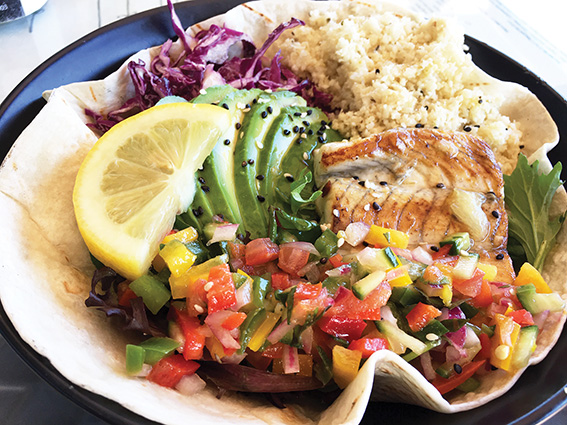
I sipped a fresh beetroot and apple juice ($6.90) and soaked up the beams as I waited for my barramundi bowl ($25.90).
Having eaten a few of these over the past two years I knew exactly what to expect–and it didn’t disappoint.
Lined with a soft, fresh burrito, the bowl contained a slab of perfectly cooked barramundi, fresh avocado, lime cauliflower rice, rocket, slaw, and an orange and fennel salsa.
The sundry flavours coalesced on my tongue in a taste sensation.
But there’s only so much healthy eating one can do, so I headed to the sweets cabinet to agonise over the mouthwatering selection.
Doubling my chances of sugar-overload heaven, I ordered a chocolate eclair ($5.90) and a tea to have there, and a strawberry and a lemon tart to go ($6.80 each).
Alone for lunch and with no one to judge, I sank my teeth into a heavenly eclair, pausing for sips of tea to prolong the experience.
The choux pastry was the perfect foil for the vanilla cream filling and chocolate topping.
I’m often disappointed by the lack of citrus, but the lemon tart we ate for supper had a nice sharp hit (the strawberry one was terrific too).
Make sure you check out Tarts Cafe—there’s always a happy ending.
by JENNY D’ANGER
Tarts Cafe 212 Lake Street, Northbridge open 7 days from 7am
SPARE Parts Puppet Theatre’s On Our Beach is fair dinkum fun for kids, but most of all it’s about a fair go.
Written by award-winning playwright Peta Murray, it uses interactive and immersive puppet theatre to explore ideas of identity, belonging and a connection to others.
Dressing up is encouraged and audience members draw a picture of themselves on a coloured circle while forming teams who go on an adventurous tour through Spare Parts’ theatre in Fremantle.
“[The audience] will experience what it’s like to experience unfairness for no particular reason,” director Philip Mitchell says.
• FOMO the dog with Tani Walker, Bec Bradley and Shona Mae. Photo by Jenny D’Anger
Beach
During the tour, viewers chill out in a beach tent, and wander brightly lit corridors and darkened passageways, before arriving on a stage transformed into a beach.
“[It’s] a journey that transcends flags and clothes, or the colour of our skin,” Murray says.
It also explores the fear of missing out (FOMO) in a world that is sometimes fair and sometimes not.
“Through games and activities the production explores the fear that all of us experience at some point of missing out, being left out, or simply just not being ‘in’,” Murray says.
Lance Holt and Fremantle Primary School students helped fine-tune the play, providing valuable lessons in corralling up to 100 kids while still having fun.
A dog called FOMO and his friends Shona Mae, Rebecca Bradley and Tani Walker guide groups of 20 at a time, in a show so immersive kids will swear they got wet.
Actually they will get a little wet as they enter the quarantine zone to be sprayed with a fine mist to repel jelly fish, budgie smugglers, jet skis and four wheel drives.
The zone nearby is about protecting nesting birds, sandcastles, fish, dolphins and personal space.
There’s music (by Lee Buddle) and singing, and a ball pit where 15,000 soft balls fall from the ceiling.
On Our Beach is on September 28 to October 12 go to sppt.asn.au, or call 9335 5044 for times and details.
BLACK is the New White is a rom-com that looks at Australian indigenous issues though the lens of humour.
The play follows the exploits of Ray Gibson (Tony Briggs), a retired politician who started out as an Aboriginal activist.
He and wife Joan enjoy a cosy, upper middle class retirement, and his only daughter Charlotte (Miranda Tapsell) has a brilliant career ahead of her in politics.
Dad even reckons she could be the next female indigenous Waleed Aly.
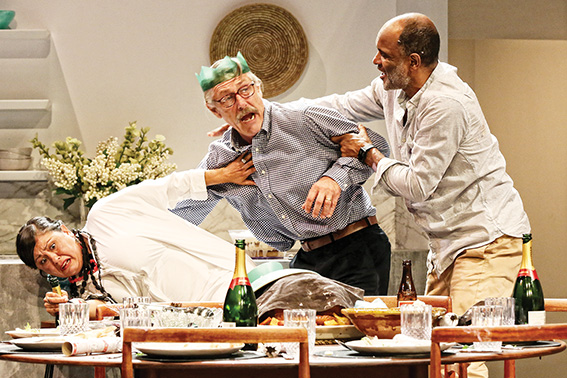
But Charlotte has other ideas, and when she brings her fiancé Francis Smith (Tom Stokes) and his family to Christmas lunch, things get hilariously out of control.
Not only is Francis an unemployed, experimental composer–he’s white.
Adding to the simmering tensions, his dad Dennison Smith (Geoff Morrell) is a retired conservative pollie who once locked horns with Ray in parliament.
The play, penned by award winning playwright Nakkiah Lui, is a cross between Meet the Fockers and Guess Who’s Coming to Dinner, with plenty of Australian larrikinism.
WA actor Melodie Reynolds-Diarra plays Charlotte’s mother Joan Gibson like an Aboriginal Katherine Hepburn.
• Melodie Reynolds-Diarra, Geoff Morrell and Tony Briggs ham it up in Black is the New White. Photo by Prudence Upton
Larrikinism
“My character has a bit of that,” Ms Reynolds-Diarra laughs. “She is wise and drops real truths about values.
“Whether black or white we all have those values, but she knows how to laugh.”
Ms Reynolds-Diarra, also a scriptwriter (Skylab), reckons the play comes at indigenous issues from a fresh perspective.
“Comedy is the perfect way to get across to people willing to absorb issues and opinions that come through. It doesn’t have to be the same sad story told again.”
Paige Rattray, associate director of Sydney Theatre Company, directs Black is the New White, and composer Steve Toulmin provides the toe-tapping soundtrack.
The show proves love is never just black and white, but complicated by class, politics, ambition and too much wine over dinner.
Black is the New White is at the State Theatre in Perth until September 22.
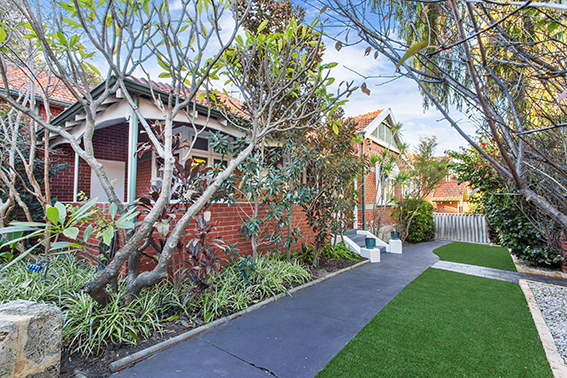
YOU take the high road and I’ll take the low road, and I’ll enjoy this Glenroyd Street abode afore you.
There’s a Scottish air to this four-bedroom home in Mount Lawley, with a number of surrounding streets no doubt named by homesick scotsmen.
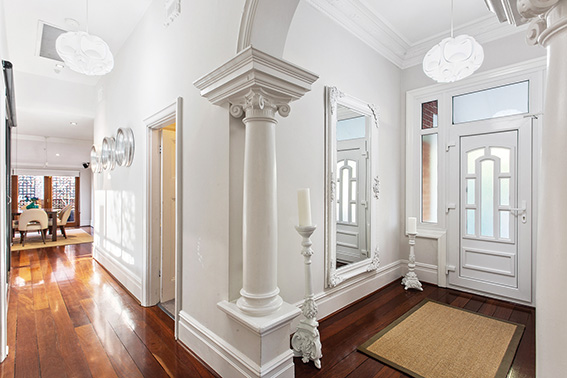
Judging by the decorative columns in the majestic entry, the original owner made a success of a moving to the colonies.
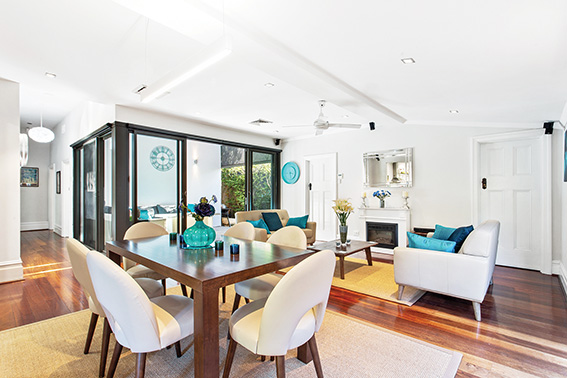
If the owner could look down from Heaven, I’m sure they’d be gobsmacked at the thoroughly modern extension to this 1930s abode.
Gobsmacked
They’d scratch their head at the carpet being ripped up to reveal rich jarrah floorboards, and be puzzled at the notion of a theatre room.
The sheer extravagance of two bathrooms would be a novelty, and the idea of alfresco dining would alien to someone used to huddling by the fire in the chilly Highlands.
The bedrooms are in the original section of the home, including the spacious main bedroom with its lovely art nouveau fire place.
Old and new morph in perfect harmony in the generous extension, which has huge windows and doors opening onto a protected alfresco.
There’s also bifold doors leading to a small deck on the other side of the family room.
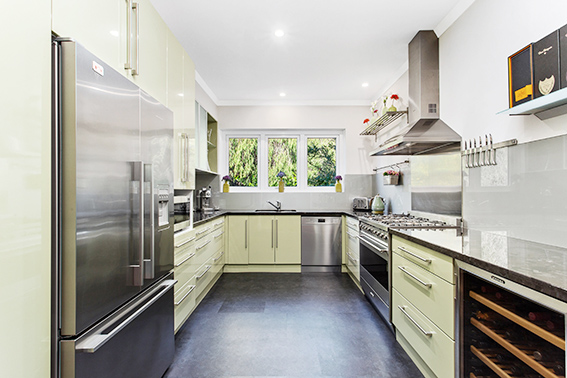
Cooking for the clan won’t be a problem in the huge kitchen which has loads of drawers and cupboards and a sweep of granite benchtops.
Double glazing ensures the property is whisper quiet and protected from the elements.
The lovely home is a short stroll from Beaufort Street, and Mount Lawley primary and high schools are close-by.
by JENNY D’ANGER
1 Glenroyd Street, Mount Lawley offers over $1.190 million Carlos Lehn 0478 927 017 Acton Mt Lawley 7272 2488
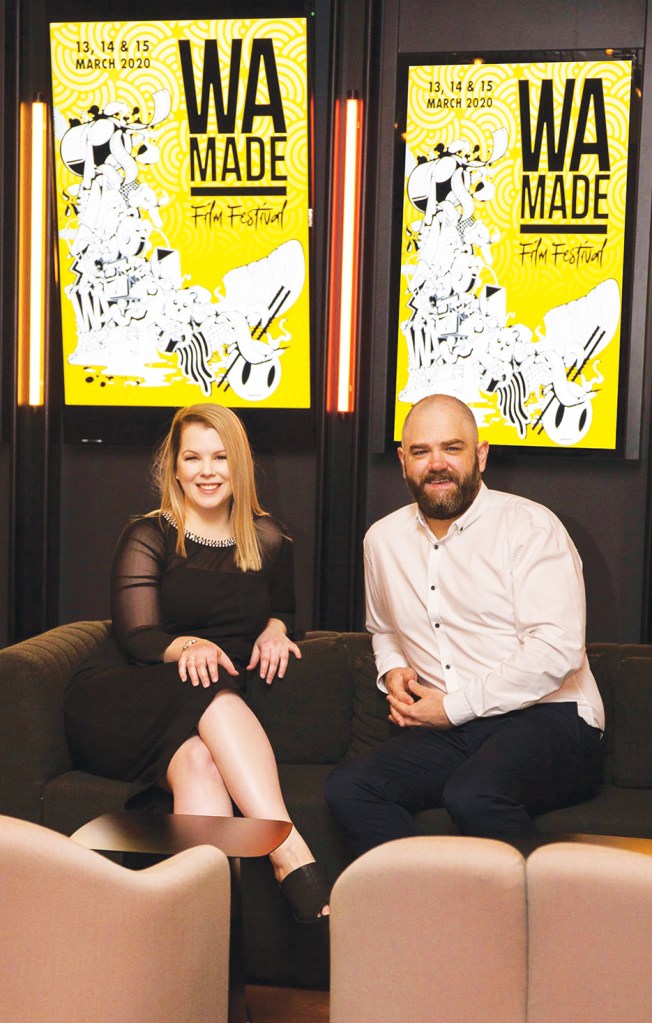
• Film buffs Jasmine Leivers and Matthew Eeles say WA filmmakers don’t get the credit they’re due, so they’ve created a new three-day festival to put their best efforts on the big screen. See page 6 for full story.
A NEW three-day film festival launching in March next year aims to give WA’s unsung film-makers the opportunity to shine in the spotlight.
The WA Made Film Festival will run March 13-15 at the new Palace Cinemas in Raine Square and is the brainchild of Cinema Australia founder Matthew Eeles and producer Jasmine Leivers.
Mr Eeles says WA produces some of the best short films in the world and has a passionate but modest following, but a lack of opportunity can result in real talent not getting the recognition it deserves.
He points to 2015 crime thriller Pinch, a little gem written and directed by Jeffory Asselin and featuring Craig Hyde-Smith (Cloudstreet) and Ben Mortley (McLeod’s Daughters) as one that flew under the radar.
“It was a small budget feature with a lot of talent, great acting and a good director, but he hasn’t made another feature since; perhaps as a result of being burned out,” Mr Eeles said.
Exposure can be even more elusive for film-makers in country areas, so Mr Eeles (a Northamite himself) says they’re also pitching hard to get them to nominate for the festival.
“There’s a lot of heart-felt stories being told in the country, especially indigenous stories.
“Everyone has a phone these days, so it’s not as hard to make a film as it was 15 years ago … we want those no-budget and low-budget films as well.
Ms Leivers added: “Getting your film funded is not easy for any film-maker, so we’re particularly interested to see what’s been made here on a micro-budget level.”
CHILDCARE centre Kidz Galore fears being kicked off the Haynes Street Reserve by Vincent council.
Kidz Galore has been on the North Perth site at the corner of Haynes and Sydney Street for 17 years and provides childcare for about 200 families.
In 2016 Kidz Galore offered to buy the block off the council and redevelop one site as a park.
But when council staff looked into the site’s history they found a deed of trust which legally requires Kids Galores’ space to be used for public recreation.
Invested
Kidz Galore has a lease until December 2020; the city now says it can’t continue with a long-term commercial lease after that.
Centre owner Sue Turner says in 2012 the council encouraged Kidz Galore to construct another building to meet the high demand for childcare. She says $700,000 has been invested in the facility.
”I believe Kidz Galore has become an integral part of this community and deserves more than we are now being given by the City of Vincent,” Ms Turner said.
“I know my staff and I have made a difference to the education and care of the children in the City of Vincent to date and all we want is a fair opportunity to continue to do so in the future.”
Vincent mayor Emma Cole says Kidz Galore’s lease “can continue beyond December 2020 as we do not have any set plan or date on any changes to the reserve.
“We first need to undertake consultation with our community about their wishes for the long-term future”.
Consultation workshops will happen in November, but Vincent selling the land is unlikely: In May 2019 the council voted 7 to 1 (Cr Josh Topelberg dissenting) to reject Kidz Galore’s offer and to keep the deed in place, saying they had to balance the community’s call for more public open space.
Removing the deed would be tricky as the council would need to convince a court the land is surplus to requirements. According to its open space strategy, Vincent has a big shortfall of public open space.