• Bellissimo

    A BUS load of Japanese tourists had descended on Ischia Restaurant and I surreptitiously checked out what they’d ordered.

    Pizza of course, its universal, but they were also tucking into bowls of mussels.

    Since my Japanese is limited to sayonara and saki, communication was difficult, but they seemed happy with sunny Perth and in particular the food in front of them.

    The feeling was mutual as I enjoyed the alfresco ambience of busy Beaufort Street.

    Having eaten at Ischia before I can recommend the pizza, as they proof the dough for two days to ensure it’s exceptionally light and fluffy.

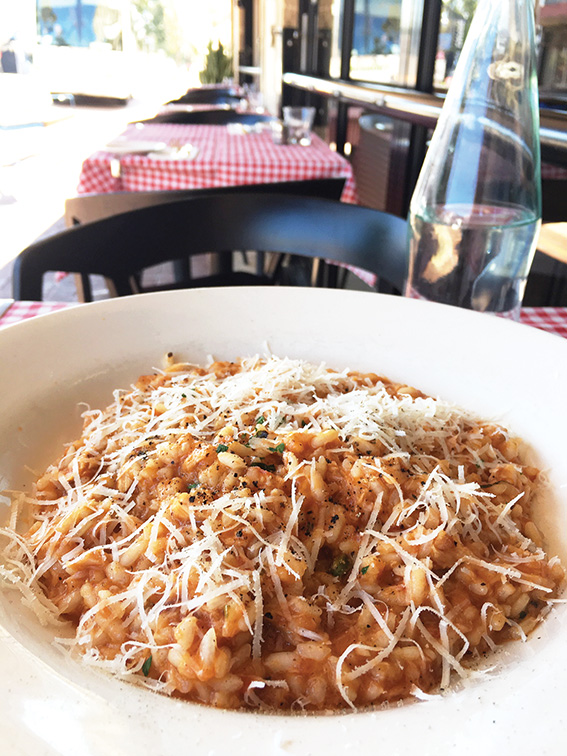
    Dining alone on this occasion, memories of a great meal in Sicily made me plump for risotto with Sicilian tuna ($25) from the specials board. Ischia’s service is top notch and despite being the only person sitting in the alfresco I was well looked after during my meal.

    From the first mouthful, the tomato sharpness of the risotto hit the sweet spot on my tastebuds, and the dish was rich and almost creamy.

    Tuna was flaked through the perfectly cooked risotto and a generous amount of grated parmesan made things pop, as did the side dish of freshly sliced chillies in oil.
    Ischia’s cakes are made by a “local nonna”, so I went with a torta della nonna (Italian grandmother’s cake $9) with my loose leaf earl grey tea ($5).

    The lemon and custard filling combined in perfect harmony and was encased in a moreish, crumbly pastry.
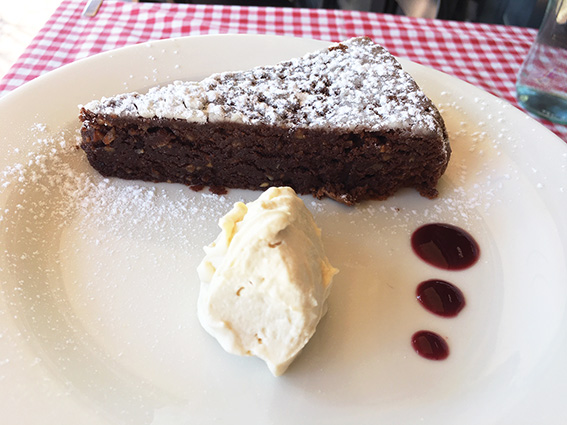
    Of course I had to take home a tiramisu ($9) for him indoors.

    “Delizioso,” mio marito exclaimed, as he shoveled the seriously rich cake into his mouth.

    by JENNY D’ANGER

    Ischia Restaurant
    500 Beaufort Street,
    Highgate
    9227 7762
    open seven days
    for lunch and dinner
    licenced

  • Timely tweet

    THE title Two Canaries doesn’t conjure up images of melting glaciers, rising sea levels or sinking islands.

    But this farcical play is proof that you can tackle climate change in an entertaining and frivolous manner.

    Two friendly canaries (Jess Nanda Moyle and Zoe Street) travel from the Arctic to the streets of Perth, where they encounter dangerously high sea levels.

    They humorously “Tweet” as they drift between their bird and human personas; skilfully weaving stories about climate change with personal loss.

    Moyle dreams of a future in which she has her own “fat dumb baby” – a dream undermined by the impending flooding of the stage and destruction of the natural environment.

    • Jess Nanda Moyle in Two Canaries. Photo supplied

    The stage does literally fill with water over the course of the play, leaving the performers stranded on sinking rocks.

    Theatre lights flash across the water creating an enchanting kaleidoscope, and vivid projections show the effects of climate change on the Arctic and Pacific regions.

    An imaginative musical score is brought to life by violinist Brooke Wilson, and Moyles and Street occasionally burst into song. As the play unfolds there is a sense that the truth we know it is unraveling, giving way to the destructive natural forces at work.

    Like the “canary in a coal mine”, the play is a warning we must all heed. Two Canaries is at the Blue Room Theatre in Northbridge until September 28. For details see blueroom.org.au/events/two-canaries/ 

    by ALEX MURFETT

  • High-end home

    I HAVE an amazing house you might like to review,” the agent texted me.

    Luckily I was having lunch nearby and was happy to pop around to Cavendish Street in Highgate.

    The minute I saw the interesting raw brick work and staggered skillion roof lines, I was hooked.

    Heading inside confirmed just how amazing this home is.

    Manicured garden

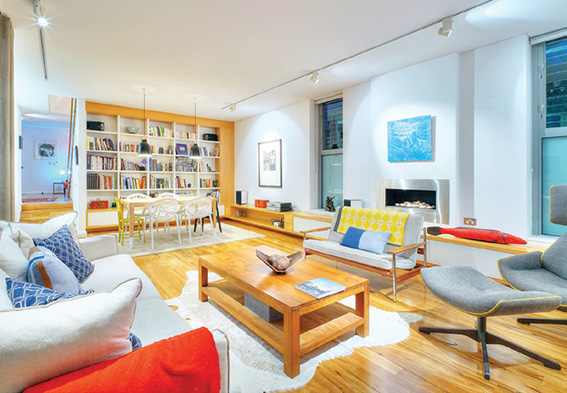
    Natural light bounces off gorgeous, honey-gold marri floors thanks to a plethora of glass, including a bank of floor-to-ceiling doors in the spacious open-plan living area.

    The sleek, modern kitchen includes white stone benchtops, a huge island/breakfast bar and golden timber drawers.

    Grab a book from the built-in bookshelves in the living area and curl up in front of the gas-powered fire, where smooth round rocks spread an even warmth.

    Or head out to the wrap-around timber deck and enjoy the manicured garden, dominated by a massive frangipani.

    The deck conceals four underground rainwater tanks, which feed a whopping 30,000 litres into the house for drinking and washing.

    Three of the four bedrooms are on the second level, including the huge main with its walk-in-robe, street-facing balcony and ensuite with double marble vanity.

    Located below ground level, a basement is acoustically soundproof, ensuring drum practice won’t disturb the neighbours.

    Terraced lawn and a pool separate the house from a two-storey studio/pool-house.

    The upstairs is currently an office, but it would make a great teenage pad or guest suite.

    Hyde Park, Birdwood Square and loads of eateries and shops are within walking distance.

    by JENNY D’ANGER

    1 Cavendish Street,
    Highgate
    EOI in the mid $1 millions
    Craig Brosnan
    0408 950 574
    Penny Brosnan
    0417 937 938
    Harcourts City Central

  • Underground resistance

    A GROUP of Mt Lawley residents have refused to pay a rates charge for underground power after discovering nine enormous transmission poles will not be sunk along Learoyd Street.

    Residents across Menora and Mt Lawley are paying on average $8000 for underground power, but some of the Learoyd Street residents have rejected a 20 per cent discount offered by Stirling council to compensate for the big poles and now risk getting 9 per cent default interest charges on their unpaid rates.

    Petition

    When homeowner Peter Antonas found out about the concrete transmission poles he collected 99 signatures on a petition calling for Stirling to cancel the underground power project, but that was rejected by the council which points out 65 per cent of respondents to a survey supported the project.

    “They’re pricks,” said Mr Antonas, who’s amongst those who’ve not paid the charge with his rates.

    “It’s totally unfair paying this exorbitant amount.”

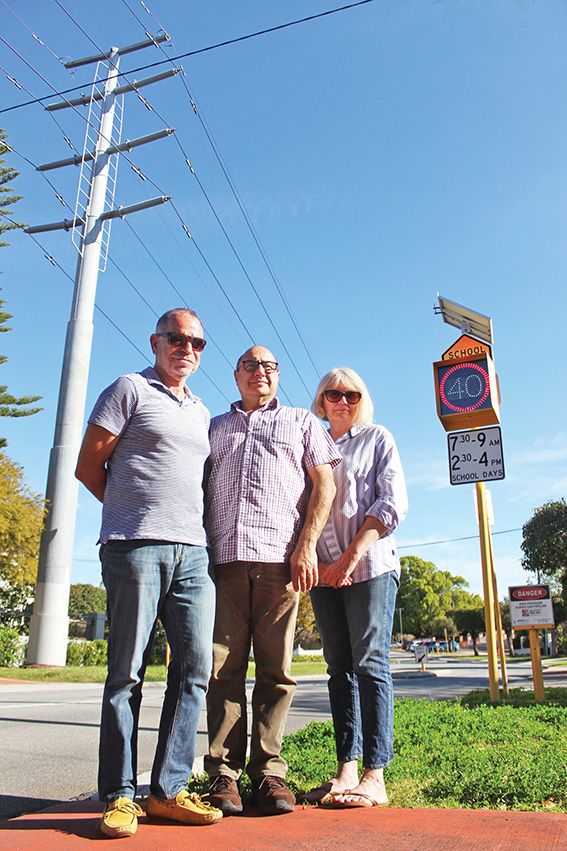
    • Does this power look underground? Learoyd Street residents Carlo Genovese, Peter Antonas and Moya Arentz are refusing to pay because the concrete poles are staying. Photo by David Bell

    The council says its discount, which takes Learoyd residents’ average bill to around $7000, is “more than reasonable … to reflect the additional and historic visual intrusion that will remain”.

    Smaller timber power poles that service the homes along Learoyd Street will be taken out, and Stirling told the residents as a result they would benefit from boosted house prices, not having to prune their trees as much, and safer streets where cars wouldn’t crash as often.

    “Whilst there is no doubt that transmission lines would also have a residual adverse effect, these transmission lines have been there for more than 45 years and every property owner should have factored them in when initially purchasing the property,” the council said in a letter to Mr Antonas and other petitioners.

    He described the response as “obnoxious”.

    The council says a brochure was sent to affected landowners as part of the consultation, though several the Voice spoke to said they didn’t recall receiving them, or might’ve tossed it among the junk mail; 55 per cent of residents sent the forms back.

    The brochure does mention exempted transmission lines, but did not explain how they are different to distribution lines, nor carry an image. There was no mention of potentially affected areas such as Learoyd Street.

    by DAVID BELL

  • Public drinking

    PUBLIC drinking still seems to be okay if you’re white.

    Bruce Campbell, the former chair of the WA Deaths in Custody Watch Committee, lives near Hyde Park and is tired of seeing picnickers boozing near the kids’ playground.

    Mr Campbell says he’d prefer to see a ban on public drinking scrapped since it often leads to Aboriginal people or other disadvantaged groups being targeted.

    But he says while the law’s in place it should at least apply to everyone equally.

    A few weeks ago Mr Campbell called police about drinkers near the park’s playground.

    Trouble

    ”The first thing the person asked me is ‘what colour are they?’,” Mr Campbell said.

    And it’s not just a polite tipple in the park; on Saturday August 31 he saw another group of about 20 drinkers getting blotto and causing trouble.

    After too many brews one man urinated on someone’s flower bed on Lake Street.

    Mr Campbell called out, and while he got a ‘sorry, man’ the man kept urinating.

    He called police at 5.10pm. Two hours later they called back and asked if the drinkers were still there.

    By that time they’d wandered across the road to drunkenly tag street signs.

    • Drinking double standards are at play at Hyde Park, Bruce Campbell says. Photo by David Bell

    Vincent council’s rangers weren’t able to help; they left without talking to the drinkers, saying it wasn’t in their remit and they’d have the same chance as him of getting police down.

    WA Police said it couldn’t provide statistics on the race of people stopped for public drinking, but Mr Campbell says he’s pretty certain, given the experiences of Indigenous friends, that his calls would have been handled differently if the drinkers weren’t white.

    Public drinking in WA is no longer a criminal act, attracting a $200 to $2000 fine. But it can escalate to a criminal matter if the person isn’t cooperative, and this remained an issue for years after the law was taken off the criminal books: A 1996 ATSIC report said: “While public drunkenness has been decriminalised, arrests are still frequently made for drinking in a public place”.

    WA Police said they take a light hand with minor street drinking: “When minor offences of this nature are complained of, or identified while on patrol, police are concerned in maintaining public order and amenity of the area. In most cases involving street or park drinking offending, a verbal warning is given and the liquor is disposed of to prevent further issues … police commonly attempt to provide assistance to the person if they are deemed vulnerable.”

    Fine

    Mr Campbell says even the fine is unfair, as $200 is a huge impost for a homeless or unemployed person.

    Vincent mayor Emma Cole says she’s asked staff to look into the ranger’s response on August 31.

    “We are getting increasing community concern over instances of anti-social behaviour in our parks,” she says, and they’re now looking at how to handle that and how they liaise with police.

    by DAVID BELL

  • Baysy a FOGO

    A “FOGO” bin system that recycles food scraps is set to be rolled out through Bayswater next year.

    The council has voted in a new waste management plan and will ask the community for feedback on the Food Organics Garden Organics (FOGO) bins in November.

    Bayswater was one of the first councils to adopt a three-bin system 20 years ago, adding one for garden scraps. Now it’s adding food scraps to the pick-up.

    “Residents are used to putting organic garden waste in their green-top bin; the only change is that food waste will now be accepted too,” said Bayswater mayor Dan Bull.

    “Organic material, including food organics and garden organics, makes up over half of all household waste.

    “Instead of ending up in landfill, this valuable material will be turned into nutrient-rich compost under the FOGO system.

    “The city will work with the Eastern Metropolitan Regional Council on an education program to provide residents consistent and clear guidelines around what can be placed in their FOGO bin.”

    FOGO was identified as the preferred bin system by the state government in February.

  • Misogyny persists

    SEXIST jokes, derogatory names and even groping still persist in local government, but the new president of the Australian Local Government Women’s Association WA branch says the sector is changing.

    Melville councillor Karen Wheatland was recently appointed to head up the branch and says there have been some positive signs of breaking down the blokey culture.

    “At the WALGA convention last week, I heard firsthand of a town council in the Kimberley that already reflected the diversity in its community,” Cr Wheatland said.

    “Of the seven members of this council, four were indigenous, three were women and three were Caucasian.

    “There may very well be a council out there from the dark ages and if there is one like that out there, that’s one too many in my mind,” she said.

    Bayswater councillor Catherine Ehrhardt is the branch’s new treasurer and says she’s seen a lot of misogyny in her time on council.

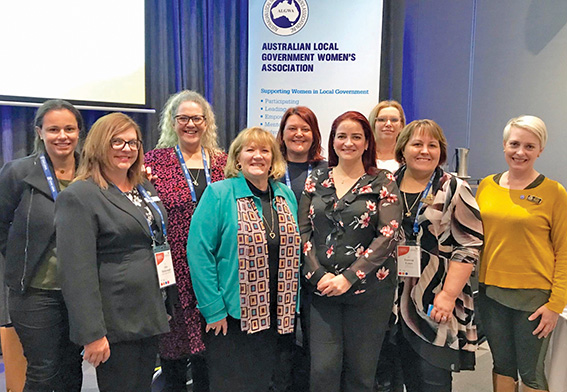
    • Karen Wheatland and Catherine Ehrhardt with the Australian Local Government Women’s Association WA branch.

    “I haven’t experienced too much of it recently” within the last two years, but at regional meetings with other local governments she used to have one member of another council “who every time he would see me he grabbed my arse,” she said.

    Cr Ehrhardt said she was also referred to as “slut” by another member of that regional meeting.

    Cr Wheatland says her organisation supported and encouraged women, and gave them a network where they wouldn’t be judged and could ask for help. Another is to improve female representation on council – particularly in senior roles.

    Bayswater is one of the metro area’s most gender lop-sided councils favouring women, with 7 out of 11 – though even there the mayor and deputy are men.

    Vincent is pretty evenly distributed with five women and four men, while Stirling’s still top-heavy with testosterone; eight males to five women.

    Across the sector on 30.7 per cent of councillors are women, while on the admin side just 20 per cent of women are senior managers and a meagre 5 per cent are CEOs.

    In 2009 local governments across Australia committed to a goal of 40 per cent women councillors, 35 per cent mayors and presidents, and 30 per cent senior managers by 2020.

    by ALEX MURFETT

  • Tears for the dying

    A TEARY-EYED Lisa Baker has shared heart-breaking tales from her Maylands constituents during debate on WA’s proposed euthanasia laws.

    Pausing to regain her composure several times, the Labor MP read out a moving letter from Inglewood resident Carol.

    “Many years ago I worked as a young registered nurse in a world-class, award-winning medical unit for people with terminal illnesses.

    “Many patients suffered excruciating, unremitting physical and emotional pain as they entered the last phases of life.

    “…Neither of my parents were eligible for palliative care. Once my father (a medical practitioner) knew he was close to death he signed himself out of hospital and refused to take any more medications even though these drugs were keeping him alive.

    “A medical colleague and friend helped him to die peacefully, painlessly and with dignity,” Carol continued.

    “Sadly his wife and children couldn’t be with him because of the risk we’d be charged with aiding a suicide.

    “My mother’s last months of life were appalling. She couldn’t talk, swallow, eat or walk and she was incontinent. She begged to be allowed to die but the nursing home and her GPs would not cease her medication because ‘nature’ must take its course.

    Humiliating

    “Medicine kept her alive not ‘nature’! Therefore my mother, who knew what was happening, was forced to wear a nappy and was fed by a tube in her stomach. The last months of her life were humiliating and emotionally painful.”

    “…After 12 years of profound disability my father chose the time and place of his death. He died in his bed cuddling his beloved dog. My poor mum, still wearing her nappy and being tube fed, took several weeks to die. She remained conscious until the last few hours of her life but was unable to tell us what she wanted.”

    Ms Baker also read out a letter from Mary, whose 42-year-old husband Chris died in December 1987, just six months after he was diagnosed with cancer.

    “I took the kids down to see him on Christmas day; by this time he had lost so much weight and hardly recognised us.

    “This was the last time we seen him. It was a very very painful death even in hospital.

    “He suffered so much as did our four children, they can all still see in their minds that last day.

    “If Chris had the choice he would have taken his own life. He felt degraded not being able to look after himself; he was complete bedridden.

    “For a man of 42 not being able to hug and kiss your family was the worst thing that could happen; he could not talk he could not do anything for himself.

    “This is our life, not the doctors’; we should be the ones to [make] our own decisions about our own lives.”

  • Fission for red herrings

    A FEDERAL inquiry into whether Australia should open its doors to nuclear energy is just a manoeuvre to placate die-hard supporters in the Liberal party, says federal Fremantle Labor MP Josh Wilson.

    Mr Wilson, who’s electorate was the heart and soul of the anti-nuclear movement from the early 1980s, is deputy chair of the Standing Committee on the Environment and Energy. It’s looking into the “prerequisites for nuclear energy in Australia” and is taking public submissions until September 16.

    Clearly feeling his time would be better spent elsewhere, Mr Wilson described the debate as a red herring.

    “Even at the first public hearing it was made clear by energy market experts that nuclear energy simply isn’t viable as a result of being massively expensive, slow to develop, and inflexible, with serious safety and environmental risks,” Mr Wilson said.

    “Currently available renewable energy and storage options are far cheaper, which is why there is a surge of investment in these projects yet no private investment appetite for nuclear projects.”

    West Perth-based Nuclear Free WA say they’re “gob-smacked” the issue is even back on the agenda.

    Long-time member Kerrie-Ann Garlick told the Voice they’d teamed up with groups across the country to ensure the inquiry heard there was still great opposition to nuclear energy in Australia.

    “It’s costly and the time to build an industry is slow, and with the climate emergency we’re facing, it’s obvious this is not the solution,” Ms Garlick said.

    But she noted that tossing nuclear energy into the mix showed the Morrison government did acknowledge the threat posed by climate change.

    But the committee is chaired by Queensland LibNat Ted O’Brien who told Radio National last week that because he hadn’t been inundated by emails he thought opposition to nuclear power was waning.

    “Climate change seems to have silenced the critics of the cleanest energy of them all,” Mr O’Brien posted on his official webpage late last month.

    “The anti-Adani movement has morphed into the Extinction Rebellion, and this army is busily trying to shut down central business districts around the country.

    “So shy hasn’t this highly mobilised movement orchestrated a backlash in response to parliament’s decision to assess nuclear energy?

    “The answers, I believe, are climate change and advances in nuclear technology.

    “Smaller, safer modular reactor units and their potential to support reliable and affordable electricity will be  a big part of the future for nuclear energy, but whether they’re suitable and feasible for Australia is yet to be determined and that’s what this inquiry is about.”

    To make a submission, either head to http://www.aph.gov.au and search for the Standing Committee on Environment and Energy or jump aboard Nuclear Free WA’s campaign and sign the petition at http://www.melbournefoe.org.au/federal_inquiry_nuclear_power

    by STEVE GRANT

  • Sixth of the best

    SIXTH AVENUE in Bayswater is officially the most sustainable street in the city.

    Edible verge gardens and superb up-cycling and recycling helped Sixth Avenue residents win the council’s inaugural Sustainable Street Awards this week.

    On Wednesday, September 11, Bayswater mayor Dan Bull presented the winning residents with a sign for the street and $500 towards a sustainability project.

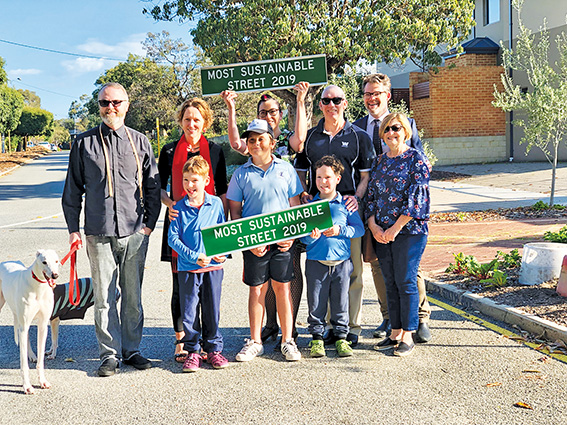
    • Sixth Avenue residents in Bayswater are sustainable champs. Photo
    supplied

    “Neighbours along Sixth Avenue have come together to organise sustainability initiatives for their street including composting and a verge garden tour,” he said.

    “After gaining permission from the owner of an empty patch of land on their street, Sixth Avenue residents transformed an unused space into a small native park open to everyone to enjoy. The title of most sustainable street is certainly well deserved.”