• Man time
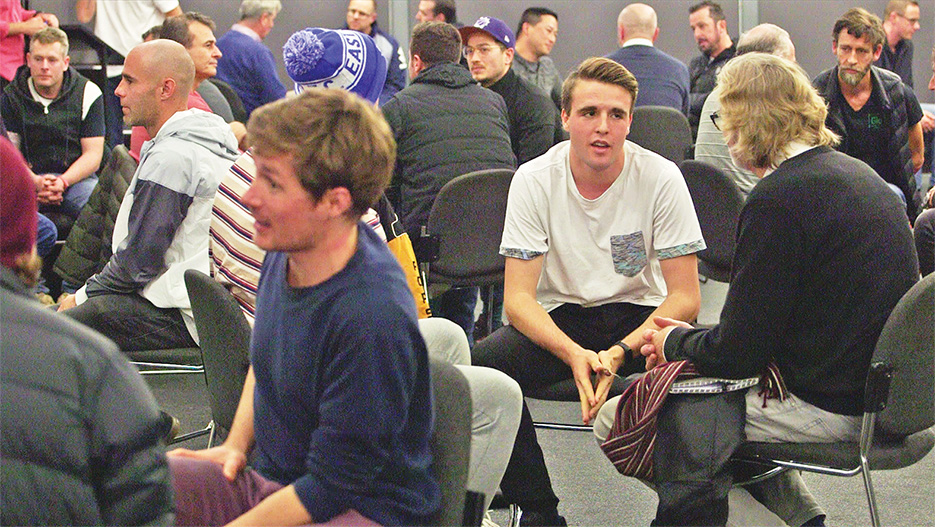
    • Men talk things through at a “Tomorrow Man” workshop.

    A “NIGHT with the blokes” conjures up images of boozy carousing and primal chest-thumping, but later this month Aussie men will get together for a fun chat about what it means to be a “modern man” in 2019.

    The free “Tomorrow Man” workshop will be lead by facilitators Ryder Jack and Andy Dennis.

    “There’ll be a free barbecue at 6.30pm, followed up by a highly engaging two-hour workshop exploring the current state of man in Australia in 2019: what’s working for us and what may need to change in order for blokes to take better care of themselves and their loved ones,” Mr Jack says.

    “The men who show up will walk out hearing incredible, powerful stories and practical tools to continue the conversation.

    “WA men are not the worst in the country when it comes to speaking about emotions and feelings. Most blokes are masters of banter.

    “They can also have a good yarn; it just needs to be in the right setting and environment.”

    The workshop was organised by the Kai Eardley Foundation, founded by Kai’s mum Claire.

    The East Fremantle lad committed suicide aged 20 in 2016 after battling depression and anxiety.

    Ms Eardley hopes the fun workshops will encourage men to not be embarrassed to ask for help if they are experiencing mental health issues. “My goal is to give boys the tools to talk and ask for help,” she told the Voice.

    “Indirectly my goal is to help reduce the number of male suicides – currently six men take their life every day.

    “If I can save just one life and prevent another family from going through what we have experienced, then I’ll be satisfied that I have done my job.”

    A night with the blokes workshop is at the Mosman Park Tennis Club 7pm-9pm on September 25.

    Register at bit.ly/blokesnightmosmanpark

  • Twice the features

    DJILDJIT is an excellent example of sustainable housing.

    The two apartments in White Gum Valley are split across one block, meaning two families can share resources to live more efficiently.

    Martin Anda, who owns one of the apartments, said he had hoped for three apartments on the block, but couldn’t get the plans past Freo council.

    Mr Anda said the apartments were designed to perform in four key areas; built form, energy, water use, and landscape.

    Both in themselves and taken together, these features create an impressive degree of sustainability.

    A lot of recycled materials went into the apartments, with the stabilised rammed earth walls using demolition rubble.

    The concrete floors also contain some recycled materials, and the apartments’ timbers include recycled jarrah.

    The walls are clad on the outside to improve thermal efficiency, as rammed earth in itself is not the most efficient heat-saving material. The windows are double glazed and light colours have been chosen for the apartment walls.

    The apartments have a combined solar energy rating of 5.5 kilowatts, and a hydraulic heating system which is controlled by an application, to suit different weather circumstances. On sunny days solar energy can be put back into the thermal mass of the building, so that it will be warm when the cold night falls.

    A shared water scheme makes for higher efficiency across both apartments. A 5000-litre underground rainwater tank supplies dishwashers, the shared washing machine, and toilets.

    All Djildjit’s organic waste is composted on site and no chemicals find their way into the garden.

    While Djildjit’s apartments are significantly smaller than Perth’s McMansions, Mr Anda is very content.

    “I would rather spend more money on sustainability features, and save money by having a smaller house,” he said.

    He said rather than build with an eye to what would sell in the future, he wanted an apartment that fitted his current lifestyle.

    He also believes a smaller, money-saving home could be more attractive than a larger, less sustainable house in the current depressed housing market.

    Djildjit will be open from 10am-4pm on September 15. See https://sustainablehouseday.com/house/djildjit from this weekend to get the address.

    by MIREILLE CHRISTIE

  • Truce offer from sacked CEO buried by ‘Team’ Scaffidi

    FORMER City of Perth CEO Gary Stevenson’s warnings that he was duty-bound to report misconduct led to councillors giving him sour performance reviews before eventually sacking him.

    Lord mayor Lisa Scaffidi took the witness box at the WA government’s Perth council inquiry this week, where she was quizzed about her role in sacking Mr Stevenson shortly after receiving a copy of a report he’d written to the Corruption and Crime Commission outlining non-disclosure of gift and travel at the council, including her own.

    • Lord mayor Lisa Scaffidi went to quite some effort to get hold of a review by then-CEO Gary Stevenson into potential misconduct at the council, including her own. She instructed her lawyers to write to the CCC to get a copy, and told him she’d got legal advice there was nothing to stop him handing it over himself. Within a day of receiving it, she pulled the trigger to get him sacked.

    Damning review

    To get the rest of the council on board with the sacking, Ms Scaffidi and her allies on a CEO performance review committee made it appear Mr Stevenson wanted to resign.

    The lord mayor and the two other councillors on the committee, Janet Davidson and James Limnios, had prepared a damning review, complaining about the fact “he is not watching our backs”. In a previous review some councillors had also complained about him using the CCC as a “veiled threat”.

    Mr Stevenson prepared a spirited defence, saying he was concerned councillors didn’t acknowledge his statutory obligations to report misconduct to the CCC. He said the council’s only options were to sack him, which he’d defend vigorously, or his preference of “ongoing collaboration” to move forward.

    But the committee never presented to the full council Mr Stevenson’s preference, providing only a single-page recommendation that suggested he’d offered to resign.

    “At this stage Mr Stevenson knew nothing about that,” counsel assisting the commission Kate Ellson put to Ms Scaffidi.

    • When Gary Stevenson was hired in 2012 he was the sole candidate put forward by the City of Perth’s three-member CEO selection panel headed by Ms Scaffidi; deemed so outstanding they didn’t nominate any other applicants for a council vote. Within months the relationship had soured, with councillors angry he kept raising the spectre of reporting misconduct to the CCC.

    Shattered

    “Correct,” the lord mayor replied.

    Mr Stevenson had previously told the inquiry he’d been “shattered” to hear of his sacking.

    The inquiry also heard Mr Stevenson wasn’t told about the hastily-convened special meeting of council called to vote on his termination, which was a breach of the local government act.

    In the lead-up, meetings discussing the CEO’s future were also minuted by Ms Scaffidi’s personal assistant rather that someone from the council’s governance team, while Cr Davidson signed off on the minutes of the performance review committee which falsely suggested Mr Stevenson had offered to resign.

    “Certainly the CEO performance review committee business is very much [Mr Stevenson’s] business, isn’t it?” Ms Ellson asked Ms Scaffidi.

    “True,” the latter replied.

    by DAVID BELL

  • Building business in Leedy

    LEEDERVILLE’S luncheries have a big boost on the way with 750 new office workers coming to town mid-2021.

    Builder Dale Alcock is moving his ABN Group from Osborne Park to a proposed $36 million, seven-storey office on the carpark where the Leederville Hotel’s old drive-thru bottleshop used to be.

    Developer Adrian Fini will be constructing the building for site owner Leederville Hotel Investment Syndicate, and ABN will be on a 12-year lease with two five-year extension options.

    • Hassell architects’ design for “Leederville Square,” the new ABN Group headquarters.

    Vibrancy

    Mr Fini said in a press release the development should “add to the vibrancy of the area, increase day trade and add to the culture of the Leederville hub”.

    Mr Alcock said the building “has the potential to become an iconic part of the Leederville community.

    “We have commissioned internationally-recognised artist Tom Muller to make the building façade something really special — this is going to be a memorable part of the local landscape when complete.”

    A ground floor showroom filled with building material samples will face Vincent Street.

    There are also plans to upgrade the laneway behind The Garden bar as an entry to a retail or restaurant area, depending on how the area’s economy is tracking when that side of the project is ready to go.

    The project was approved by the state government’s Development Assessment Panel on August 19 and has the backing of Vincent council.

    Mayor Emma Cole says ABN moving to Leederville is a vote of confidence in its commercial hub and will have big benefits for local businesses.

    “Daily foot traffic is what is is needed to keep our high streets alive and thriving so it will be a great boost for Leederville’s diverse mix of cafes, restaurants, bars and independent retailers,” Ms Cole says.

    Despite the project’s size there were very few dissenters; two rounds of mailing out 557 letters each time led to only five objections.

    There was some concern about parking problems stemming from such a large number of staff coming to town at the same time the 65-bay hotel carpark was closing.

    The new development will only provide 156 bays to staff. The rest will have to catch the train, bus, walk from a public carpark, or use one of the 196 bike racks on site.

    ABN says it will be “undertaking a cultural shift” to educate employees about about “alternative methods of travel”.

    To offset the loss of the hotel’s carpark, ABN will open up 122 of its car bays for public use after 5.30pm and on weekends.

    by DAVID BELL

  • Slow path to RAP

    ABORIGINAL reconciliation has been de-prioritised by Bayswater council.

    Many of the initiatives in the council’s Reconciliation Action Plan have been mothballed this year as councillors look to save money.

    RAPs are intended to improve relations with Aboriginal people and include actions like giving staff cultural training, hiring Aboriginal people and using Aboriginal-owned businesses.

    Bayswater councillors flagged a budget of $161,000 for a suite of projects this year when they adopted the RAP in January this year, including hiring a new Aboriginal reconciliation liaison officer on a 12-month contract.

    But during behind-closed-doors workshops for the council’s 2019-20 budget, where there are no minutes, that job was scrapped and the role will instead be shared by existing staff, while the budget was gutted to just $26,500.

    While providing a long answer about the transparency and robustness of its budget process, the council didn’t directly answer the Voice’s questions on who had proposed the slow-version RAP.

    On the path

    Mayor Dan Bull noted the delay at the May 14 council meeting: “What is important is that we are on the path of reconciliation … if it seems a bit slower than we like, that’s okay, as long as we tread our journey of reconciliation,” he said.

    The extent of the delays were revealed this week with a revised RAP showing many of the items shunted to 2020-2021.

    They include:

    • Co-naming city buildings and places, and naming new buildings and places with Noongar-only names;

    • Improving engagement with Aboriginal people and Torres Strait Islanders;

    • Creating a target percentage for hiring Indigenous employees;

    • Holding “yarning sessions” with the Aboriginal community and inviting them to city events;

    • Bringing in elders to tell stories about the area’s Aboriginal history;

    • Installing culturally appropriate artworks in public spaces to make them more welcoming to Aboriginal people; and,

    • Using at least 3 per cent Aboriginal-owned businesses.

    Reconciliation Australia, the peak body helping organisations get their RAPs together, diplomatically told the city a “12 month timeframe is preferred” but they understood the delays if there was “limited capacity” of an organisation to deliver it.

    The revised RAP goes to councillors for a vote at the September 3 meeting.

    by DAVID BELL

  • Pencil in a swing

    VINCENT mayor Emma Cole has announced she’ll be seeking another stint in the top job come this October’s council elections.

    While feeling the council is “really hitting our stride”, Ms Cole says there’s still more to be done.

    She was elected two years and eight months ago, taking over mid-term from John Carey when he resigned to fight for a seat in state government.

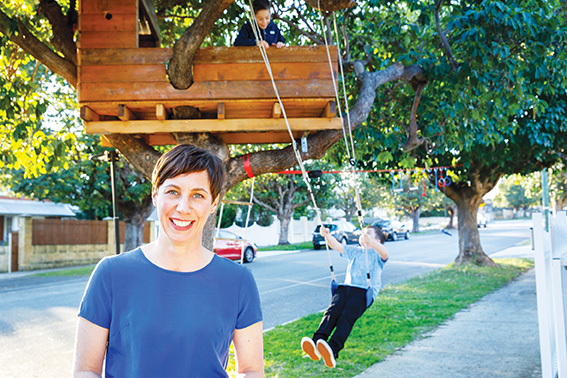
    •Vincent mayor Emma Cole with some of the verge swings now possible after her council scrapped cumbersome rules of olde. Photo supplied

    Practical

    She lists highlights of her current term as practical measures such as low-cost pop-up play areas like the Mt Hawthorn bike track, and scrapping some cumbersome legacy rules.

    “It still makes me feel incredibly happy when I see a swing in a street tree,” she says, having pushed for her council to scrap rules preventing swings, rope ladders and cubbies on verges.

    “It’s a really simple thing but it demonstrates that sometimes you have to push back on [what] people call red tape” and the risk-averse stance of the council’s insurers.

    Ms Cole says with town centres facing tough times she wants to be on council to help: “I feel like we’re giving it a red hot go on Beaufort Street.”

    The council’s one-year amnesty on change-of-use rules to speed up the process of creating a new business had some critics in the public gallery who feared a flood of cafes, but a month later the McGowan government was also trumpeting the same change state-wide.

    Ms Cole says she’s sticking to her mantra of eschewing further political aspirations, saying she simply enjoys local government.

    Non-stop social media criticism has been tough to deal with, with the council copping after stepping outside the old roads, rates and rubbish paradigm to tackle environmental issues by pulling investments out of the fossil fuel industry, switching to the FOGO bin system or weighing in on the marriage equality debate.

    Ms Cole copped “horrible abuse” when the West Australian wrongly reported Vincent council wanting to move Australia Day from January 26.

    “I’d describe myself as sensitive but resilient,” she says.

    Conversation

    “I do find it definitely can be tough, because you never can please everybody, and some people seem to take a dislike without ever really meeting you or approaching you to have a conversation.

    “I think you get better at dealing with that and you start to see that where there might be people who are very angry about something, the angriest voices are often the loudest.

    “To be frank, public life is not for me forever: It’s something where you come in and give it your best shot.”

    by DAVID BELL

  • What makes a hero sweat?

    WHEN retired vet Craig Challen clambered from a flooded Thai cave to replay the dramatic rescue of a young soccer team to the international media, he fell back on skills learnt at Banyandah Toastmasters in Maylands.

    Apart from being a seasoned cave diver, Dr Challen’s experience anaesthetising animals on the operating table made him a perfect fit for the challenging rescue. His dive buddy, Dr Richard Harris, was in charge of sedating the 12 boys to keep them from panicking in the narrow underwater passages, so Dr Challen was able to assist with medical checks and sedative top ups.

    When he emerged from the cave for the final time, the world’s media was waiting.

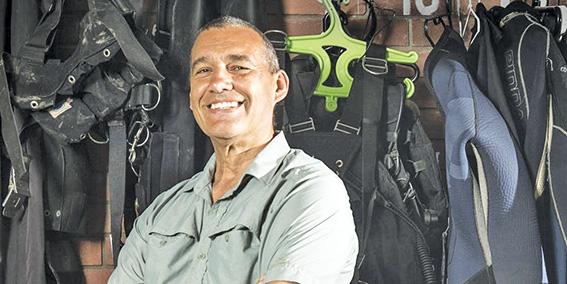
    • Diver, surgeon, and speechgiver Craig Challen.

    Rescue

    “The thought crossed my mind that I wish I’d kept doing it and wouldn’t be so out of practice,” Dr Challen says of his time at the Toastmasters public speaking club.

    “My experience over the last year snuck up on me. I never expected it to have the level of attention that it did.”

    Following the rescue and becoming co-Australian of the Year alongside Dr Harris, he’s been inundated with speaking requests and interviews: ”I’m almost speaking as a full-time job.”

    Dr Challen says even a small amount of public speaking training was useful.

    “You never know when something’s going to pop its head up”.

    Public speaking’s one of the most common phobias.

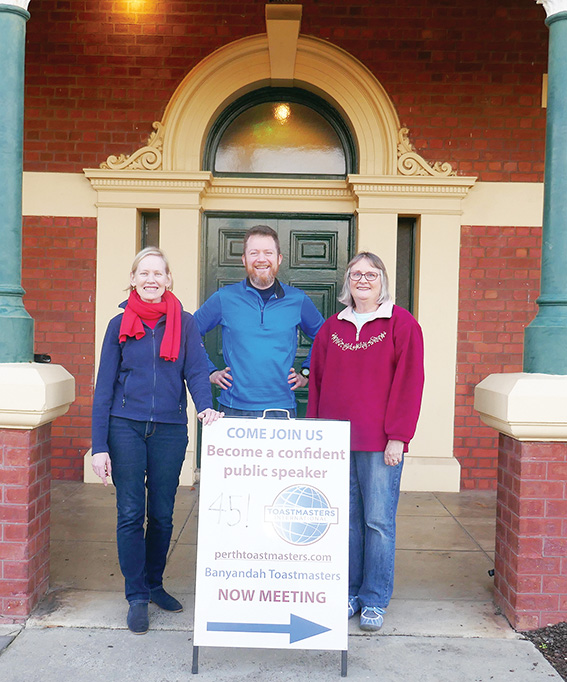
    • Banyandah Toastmasters president Kym Godfrey with past presidents Joe Taheny and Liz Fisher.

    Even though he’s faced down some of the scariest caves in the world (he holds records for the deepest dive in the Pearse Resurgence in New Zealand, heading down to a breath-squeezing 194 metres), Dr Challen was still nervous getting up in front of an audience in those early days at Banyandah.

    “It’s a funny thing, personal courage, it’s very situational. There are some things that individuals have no fear of, but the general man on the street might be terrified of it,” he says.

    A non-profit educational group founded in 1924, today there are thousands of Toastmasters clubs around the world; Maylands is WA’s oldest.

    Public

    Formed back in 1974 and now named “Banyandah Toastmasters” (an Aboriginal word meaning “place on the water”), Dr Challen is coming back to the club to celebrate its 45th year and talk about his time in the public eye.

    Current club president Kym Godfrey says it will be a chance for people to see how meetings run and experienced Toastmasters present, how to improve their public speaking skills and hear how Dr Challen benefited from his training.

    “When Craig was attending Banyandah, he had no idea his training would be put to the test in such a public way to a global audience,” Mr Godfrey said. “Seeing Craig’s example has really made me aware that none of us know when the spotlight might be thrust on us and putting in the practice in a safe supportive environment can really help you to feel well equipped and confident.

    “As long as people practise and present they will improve.”

    The club usually meet at the Maylands Dome Cafe, but the 45th birthday is on Monday September 9, 6.30pm at the Maylands Tennis Club. It’s free but RSVP to perthtoastmasters.com/45

    by DAVID BELL

  • Big bath gets the go-ahead

    PLANS for a large ritual bath at a Noranda synagogue have been approved by Bayswater council, with a parking shortfall excused on the basis Orthodox Jews don’t drive on the Shabbat.

    Council rules usually require 72 bays for a place of worship the size of Noranda’s synagogue, ensuring worshippers don’t clog up nearby streets.

    With two of the synagogue’s bays making way for the bath, it will only have 57 left.

    Council planning staff suggested giving the synagogue a bit of grace “as with the tenets of the Jewish religion, Orthodox members do not drive their cars to attend services”.

    It’s not unusual for councils to waive similar rules for good reason, but Christians from the car-going Living Faith weren’t so lucky coming up against neighbouring Stirling in August 2017 when it blocked their church for being 170 car bays short.

    Margaret Court’s application to expand her Victory Life mega church in Osborne Park was more fruitful following intense lobbying from the huge congregation, with Stirling’s councillors approving a shortfall of 230 parking bays under the gaze of 100 protestants lining the public gallery’s pews in June.

    They also waived the “cash-in-lieu” provisions, by which a developer can purchase pardon for a shortfall.

    The price per bay is based on how much it’ll instead cost the council to buy land and construct a parking spot. The price varies by precinct in Stirling, but if enforced at an average rate the church might’ve had to render more than $1 million unto council.

    by DAVID BELL

  • Festival to challenge stereotypes of Islam

    THE inaugural International Muslim Film Festival will premiere in Perth on September 7 and 8.

    It’s being organised by alternative media group Badayel House, and Festival director Joanne McKeown says the aim is to break down prejudice and misconceptions about Muslims and to humanise their stories.

    There’s 36 short films with some international selections and some local offerings in the mix, including Overcoat, a short mystery filmed by ECU students around Perth and Fremantle.

    • Overcoat was adapted into a screenplay by Fazal Subhani and filmed around Perth and Freo.

    Found, an Australian film about Islamaphobia, was shot following the 9/11 attacks.

    “The films are of a very high caliber and cover a multitude of topics,” said festival spokesperson Kuranda Seyit.

    “We had a large pool of entries and choosing the finalists was tough. However, I feel that we have some worthy winners.

    “Both Perth and Melbourne really need an event of this nature, which celebrates our diversity and our creative arts.”

    In another first, Perth’s getting something before Melbourne: Their screenings are a week after ours.

    The films are on at Backlot theatre at 21 Simpson Street, West Perth, see muslimfilmfestival.com.au or 0412 318 045 for screenings.

  • LETTERS 31.8.19

    Thank you
    THANK you for publishing Vincent Sammut’s opinion piece (“How I became an anti-Semite without trying”, Voice, August 17, 2019) regarding the emerging definition of anti-Semitism.
    In relation to Steve Lieblich’s response (“Defining letter”, Voice Letters, August 24, 2019), I note that he claims Mr Sammut and the leader of the UK Labour Party are seeking to redefine anti-Semitism.
    The point of the original piece is the opposite: Mr Sammut is pushing back against redefinition.
    He deplores hatred of Jewish people (as right-minded people do) but he does not accept that criticism of Israeli policy, and speaking out about Palestinian human rights should carry the label of anti-Semitism.
    Alas, we are increasingly seeing anyone who speaks out against Israel’s apartheid laws and practices being labeled anti-Semitic, and that effectively shuts down any discussion. Melissa Parke was ousted as the ALP candidate for Curtin because she spoke out against Israel’s treatment of Palestinians, treatment she witnessed first-hand as a lawyer for the UN, based in Gaza.
    Ms Parke was accused by members of Australia’s Israel-lobby of anti-Semitism and was dropped like a hot potato.
    The other letters you published talk of the Jewish people’s attachment to the land, which has not been denied by Mr Sammut.
    Jews have always lived there and prior to British colonisation after World War I, Ottoman rule of Palestine (as it was then broadly known) allowed for Jews to live and worship in the land.
    The manner of ruling over those Jewish subjects would not pass modern standards of equality or democracy, but that does not excuse the lack of equality or democracy now meted out on the Palestinians.
    I have volunteered in Israel and the West Bank for both Israeli and Palestinian organisations including on a kibbutz, picking olives, accompanying children to get to school when threatened by settlers, and helping with a home rebuilding program.
    I have seen the discrimination and racism inflicted by Israeli state policies such as separate buses, separate roads, refusal to provide civic services such as garbage removal for tax-paying Palestinian citizens, refusal of family reunification and the terrifying experience of home invasion in the dead of night.
    I am in good company with Mr Sammut, Jeremy Corbyn and Ms Parke and I will keep criticising Israel for violations of Palestinian human rights.
    Sarah Haynes
    Address supplied

    Brave Voice
    REGARDING the Speaker’s Corner by Vincent Sammut (“How I became an anti-semite without trying”, Voice, August 17, 2019), it was an interesting opinion piece to publish and an opinion that should be freely talked about and debated more often.
    The barrage of letters and the lynch mob mentality that followed was disgraceful, especially coming from prominent people and academics.
    I also found Vincent’s memory amazing, recalling in detail when he was only two.
    Professor David Trigger started by saying; “I am surprised there was no editorial oversight before publishing an opinion piece…” Then later on suggests “Public debate on the Israel / Palestinian conflict is most productive when seeking a balance between justice for Jews and Palestinians”.
    Confusing as it is, it infers censorship is required for any criticism of Israel or Zionism and that the terms of any debate should be set out in context of the broad ranging definitions of anti-Semitism.
    Steve Lieblich wrote in his Voice letter, “Not all criticism of Israel is anti-Semitic, but some is”. I guess it all depends on who you talk to and who’s criticising.
    There are many Jews including learned Rabbis that are anti-Zionists and Orthodox Jews that protest in the streets, but apparently they are labeled as self-hating Jews by the ones that they oppose (well I suppose it would sound ridiculous calling them anti-Semitic).
    As Zionism is a political movement, it should by virtue of its elitist construct be open to criticism. A quote from former Israeli education minister Shulamit Aloni comes to mind: “Well it’s a trick, we always use it. When from Europe somebody is criticising Israel then we bring up the holocaust. When in this country people are criticising Israel, then they are anti-Semitic…”
    Good on you Vincent for speaking your mind and good on the Voice for publishing his opinion, especially in these these times of the breakdown of free speech.
    Gene Lorenzon
    Mt Hawthorn

    Trigger happy
    IT’S interesting that of the three letter writers who responded to my Speaker’s Corner in the Voice (“How I became an anti-semite without trying”, August 17, 2019), only Professor David Trigger got my point, saying, “Those reading the full piece will see that the author recounts his opposition to anti-Semitism”.
    Therefore, I must remind my other critics of my original premise which is that as a person with a consistent record of opposing injustice (horses included), I have never been guilty of anti-Semitism.
    I reject the “new anti-Semitism” definition as so much facile and self-serving rubbish.
    It is as bereft of substance as a hot air balloon – pure absurdist, rhetorical sophistry,  designed to confuse and deter critics of Israel by directing the focus of attention on to the supposed blemished character of the individual rather than the gravity of the issue.
    The question then arises, “What is the likelihood of someone with my blameless track record, reversing an 80-year-old pattern of behaviour and adopting an anti-Semitic about-turn? The problem is not with me but with the unacceptable, illogicality of “new anti-Semitism”.
    To me, anti-Semitism is the undifferentiated hatred of all Jews: a better definition, to my way of thinking.
    I am also critical of the excesses of the Catholic church, as so many are these days, yet I’m not anti-Catholics.
    I deplore the actions of early white settlers and the government agencies who brutalised Aborigines but I don’t hate white people.
    I have nothing against Chinese people but I am critical of the policies of the Chinese government for oppressing minority groups.
    Similarly, I oppose the Israeli government’s ongoing, Jewish only, settlement policy of stealing the very land on which  Palestinians would build a future state.
    This illegal practice as well as the occupation itself, have been condemned by the United Nations for decades to no avail.
    I will continue to address this gross injustice as long as Israel refuses to recognise and honour the legitimate humanitarian claims of Palestinians.
    Vincent Sammut
    Leederville