Hunter & Barrel has been open for less than two months and the Raine Square newbie is already attracting big crowds.
When we arrived at 5pm on a Friday we were told they were fully booked, but thanks to some table shuffling they squeezed us in upstairs.
Hunter & Barrel has a sophisticated two-storey interior, with floor-to-ceiling glass walls creating a lively, urban backdrop.
The classy decor reflects the restaurant’s devotion to meat and barrel-aged beverages, with cushioned bar stools, leather booths, crystal decanter light shades and an antler chandelier.
We kicked off with the hot cheese dip ($13), a generous portion of silky mixed cheeses melted in a cast iron pot and served with fluffy, slightly smokey flatbread.
The delicious cheese has a smokey and moreish crust around the edges.
The main event here is meat, and the seemingly endless options include pork schnitzel ($29), Tasmanian kangaroo ($32), braised lamb shoulder wrapped in pastry ($32) and wagyu beef ($54).
There’s also a variety of coal-roasted meat skewers (beef, chicken, sausage, or pumpkin for the vegos).
The King’s Feast share board ($45 per person) is a great way to try most of what’s on offer.
It’s not every day you’ll hear me raving about chicken, but the thigh skewers were phenomenal.
The moist, tender poultry had a sweet and smokey basting that give it a chilli kick. We couldn’t stop raving about it between mouthfuls.
We didn’t think it could get any better, but the roast lamb shoulder was the best I’ve ever eaten. And I’ve eaten a lot of lamb.
It was sweet and moist and had a delicious, fatty flavour.
We thought we had saved the best for last, but unfortunately our eye of rump was underwhelming.
We had asked for it cooked medium-well, but it was overcooked and tough.
I’m confident the Hunter & Barrel chefs are more than capable of cooking a good steak, but this should never have left the pass.
It’s a shame we had to leave on a sour note, but the mishap with the steak won’t put us off returning.
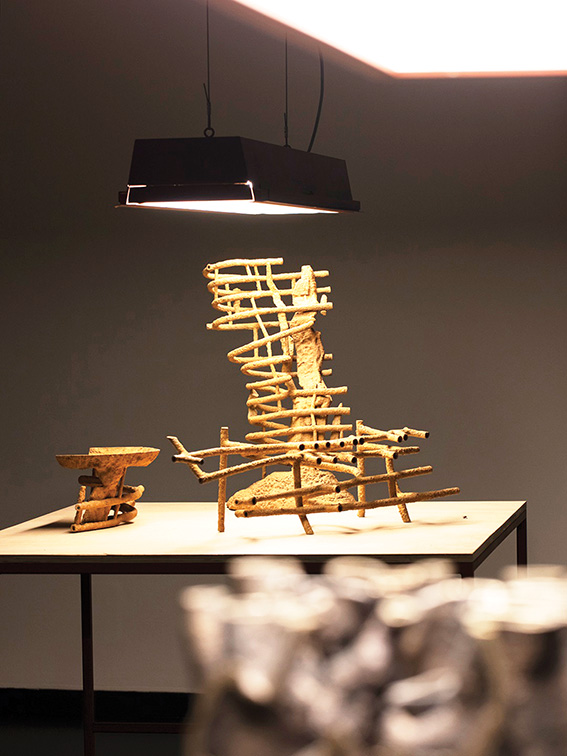
ARTIST Nicholas Mangan looks at how insects are becoming unwitting capitalist slaves in Termites Economies (Phase 1).
The exhibition was inspired by scientific research into how termites could be used to help find gold deposits during mining exploration.
Mangan says it was “such an interesting and perverse idea – putting nature to work for capitalism”.
• Some of the artworks in Termites Economies (Phase1). Photos supplied
“Whether we see nature for our taking, or something that we need to care for, termites have a cohabitation with their natural environment that’s not as exploitative.”
In the exhibition there are 3D printed sculptures fusing termite mounds and mining infrastructure and footage of Tindals gold mine in Coolgardie.
Gold mine tunnels have been scaled down to termite size, and 3D printers have been used to build up rock strata.
Mangan is based in North Melbourne, but travelled back and forth to WA last year, “almost like a FIFO worker”, to take footage for his exhibition. On a small budget, he filmed Tindals gold mine using a drone. In his artworks, Mangan has re-imagined the trails left by huge mining trucks.
“There is a process that termites build with called stigmergy; where one termite leaves a mound of dirt with a pheromone on it. The next termite that comes along will also leave a mound on top of that.”
Termites Economies (Phase 1) is at PICA in Northbridge until October 6.
THE grace and charm of a bygone era can be found in the many rooms of this 1920s Menora home.
It’s packed with beautiful period details including stained glass windows, jarrah floors, gorgeous fireplaces and art nouveau tiles.
A lovely plaster arch sets off the long hall, and the formal lounge is so vast it morphs into a music room with a baby grand piano.
In days gone by men would have no doubt retired to the wrap-around verandah for an after-dinner cigar, perhaps returning to the lounge for a musical soiree.
The huge main bedroom, one of five, is at the front of the home, and a generous walk-in-robe leads to an ensuite so large there’s room for a clawfoot bath, separate shower and double vanities.
The spacious, modern extension blends old and new in perfect harmony.
You’ll find a large open-plan with high ceilings, jarrah floorboards and a bank of white, timber-framed doors that lead to the garden.
The huge kitchen has masses of granite benchtops and a slew of white cupboards and drawers. There’s also a very large pantry and big appliance cupboard.
A cute garage/workshop (made to look like a studio apartment with faux dormer windows) adds to the charming garden and alfresco, ensuring the perfect setting for formal or informal gatherings.
A kids’ wing has its own bathroom with double vanities and puts the final seal on this delightful family home on Rookwood Street.
by JENNY D’ANGER
86 Rookwood Street, Menora $1.465 million Toby Baldwin 0418 914 926 Professionals Michael Johnson & Co 9370 7777
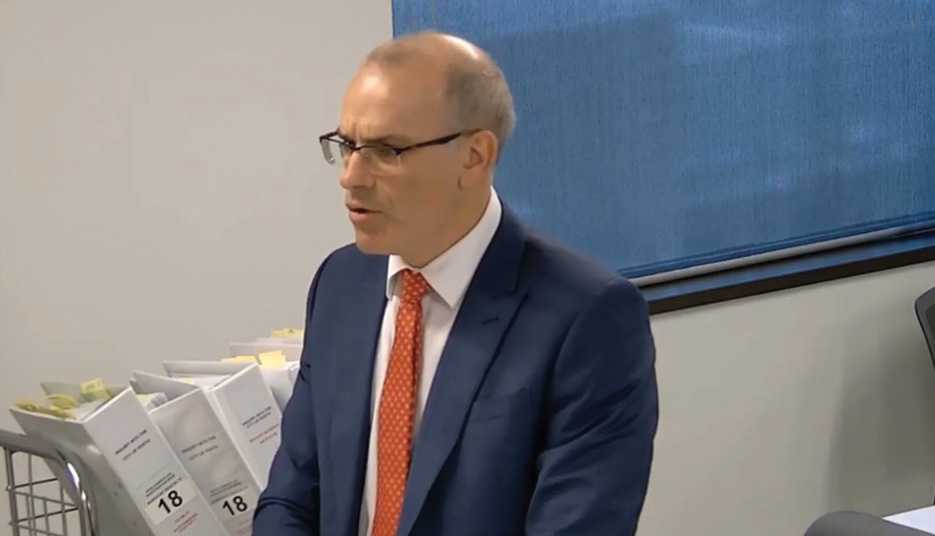
• Philip Urquhart, counsel assisting the inquiry, in action.
ABUSING expense privileges at the City of Perth was a “fact of life” for at least 20 years a long-time council insider says.
The insider, who requested anonymity, had privileged access to the inner workings of the council, and says staff were aware it occurred but were reluctant to step in.
“For 20 years it’s been allowed to go on and on without anyone having the balls to step in and say ‘this can’t continue’,” they said.
The source said it was blatantly obvious when family and friends were being ushered into the council’s dining room, while staff would have certainly seen some of the more dubious expense claims.
They believe there was a culture of “deference” at the council, and it needed a CEO to make a stronger response and set a standard that showed “no one’s above the law”.
Flagrant
The state-appointed inquiry into the city is only looking at the period from October 2015 to March 2018, but has already touched on the reluctance of staff to enforce the rules.
They did “precious little … preferring to maintain the status quo rather than rocking the boat of some well-fed councillors”, according to Philip Urquhart, counsel assisting the inquiry.
Some councillors maxed out their $12,000 a year dining room privilege, “flagrantly” ignoring an edict that it was only for official functions and bringing in family and friends for lavish meals.
Some councillors have used the inquiry’s public hearings to blame staff for not keeping them in line, echoing lord mayor Lisa Scaffidi’s claims during her 2017 misconduct hearing that the CEO or other staff should have given her better advice on declaring travel and gifts.
On the third day of the live hearings councillor Jim Adamos was grilled over claiming dry cleaning for his kids’ clothes: “I don’t know why I claimed it … the council should have knocked it back and said ‘are you sure about this?’,” Cr Adamos said.
Cr Adamos also said staff should have stopped him from claiming meal expenses that were against the rules.
“You keep on blaming council,” Mr Urquhart said.
On one occasion Cr Adamos took his wife, former councillor and state MP Michael Sutherland and his wife Michelle Sutherland out to The Point Bar & Grill, which Mr Urquhart described as “a very expensive night out”.
Cr Adamos said he told city staff who he went to dinner with: “If they considered it wouldn’t fit [the rules], they should have knocked it back,” he said.
Mr Urquhart retorted: “That might well be the case but really, you should never have made the claim in the first place.”
Our source also claims councillors renting “broom closets” in order to qualify for candidacy was also an open secret for decades, calling for new electoral rules requiring 12 months of genuine occupancy before an address can be used to run for council.
The inquiry heard former councillor Keith Yong rented a room within a building leased by a company of which he was co-director, making him eligible to run for council.
Mr Urquhart described it as a “sham lease”.
He also issued leases to family-linked companies in the same office, qualifying each company to have two votes in elections.
Cr Adamos had used a similar tactic to qualify to run as well as get new voters, telling the inquiry he thought the practise was okay because “the city was accepting of it”.
A CONTRACT which caught the eye of the state Corruption and Crime Commission was given the all-clear by the City of Perth’s governance unit without adequate investigation, an inquiry into the council has heard.
On January 10 last year the CCC sent a letter to then-CEO Martin Mileham after receiving a complaint that a senior staff member had favoured one contractor over another, possibly gaining a benefit along the way.
Emails between the staff member and his direct boss showed they were aware the decision to appoint the slightly more expensive contractor had the potential to raise eyebrows, with one stating “I can’t see a defence” if it was challenged.
In response to the CCC letter, the city’s governance unit contacted Stantons International to carry out a probity audit, but the company was not told to look into the allegation the staff member gained a benefit, whether for himself or others.
“What’s missing from that … is any reference to a review encompassing an assessment of the allegation contained in the CCC’s letter,” inquiry counsel Cheyne Beetham said while questioning the city’s governance manager Mark Ridgwell, who at the time was acting corporate services director.
While an untrained underling filling in for him wrote the audit request to Stantons, Mr Ridgwell wrote back to the CCC giving the staffer the all-clear saying there was “no supporting evidence” for the allegation, even though it hadn’t been investigated.
The most Stantons would say was that it hadn’t been given enough evidence to prove the selection process was unbiased, but even that got spun by Mr Ridgwell who told the CCC no bias had been established.
Mr Beetham put it to Mr Ridgwell that was “not true”.
Inquiry commissioner Tony Power chipped in: “One of the matters that was made fairly clear by the final Stantons report was that there was a reason why there was no supporting evidence, namely, it had not been got”.
Mr Ridgwell said he should not have sent that letter to the CCC, and “in the context of workload that I had at the time, I didn’t give it my full attention”.
by DAVID BELL
New laws to keep councils straight
WITH suspect tenders uncovered by the City of Perth inquiry, local government minister David Templeman says recent laws will empower the state’s auditor general to step in to keep councils accountable.
Previously councils were self-policing when it came to auditing, trusted to organise their own affairs.
The state government changed that system on advice from the CCC in 2015, which had found shonky contract dealings at many councils including Bayswater, Kalamunda, Cottesloe and the City of Stirling, where a building coordinator awarded contracts to his uncle’s business.
“The McGowan government passed legislation [in 2017] that saw the auditor general take responsibility for undertaking local government audits,” Mr Templeman said.
Some councils are already under that remit and it’ll be extended to all of them by the 2020/21 financial year.
The new system sees the auditor general empowered to audit areas aside from finance, including “efficiency, effectiveness and probity”.
Mr Templeman says “this provides more independent oversight than has previously been the case and increases transparency and accountability.
“The McGowan government is [also] currently undertaking a review of the Local Government Act to modernise the act and ensure that, among other things, it continues to provide a contemporary governance framework for local governments”.
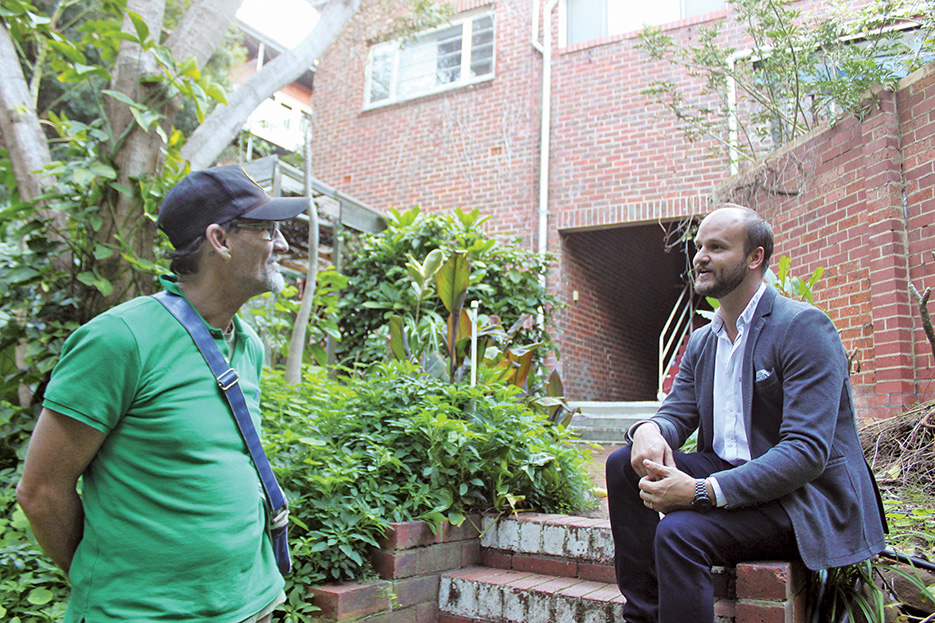
• While the apartment construction industry over east is being shredded over shoddy standards, cracking towers and flammable cladding, the architect who transformed Perth with thousands of affordable flats that have stood the test of time is being honoured in a new exhibition. Museum of Perth founder Reece Harley, a former tenant of one of Harold Krantz’s flats, discusses their utilitarian allure with current 40 Mount Street resident Hayden.
AT the height of his reign architect Harold Krantz was responsible for 1000 flats a year going up around Perth.
From the 1930s to the ’60s, credible estimates place Krantz as being behind more than 90 per cent of the city’s apartments.
A new exhibition at the Museum of Perth, The Krantz Legacy, is now celebrating his life and works.
Museum director Reece Harley says he got the idea for the exhibition after hearing Krantz’s son David speaking about his father’s legacy and philosophy.
Mr Harley himself had lived in a Krantz apartment on Mount Street, and looking into the story realised how much of Perth’s apartment stock could be traced to one man.
“Krantz’s design and business model is the reason why we have so many affordable flats,” Mr Harley says.
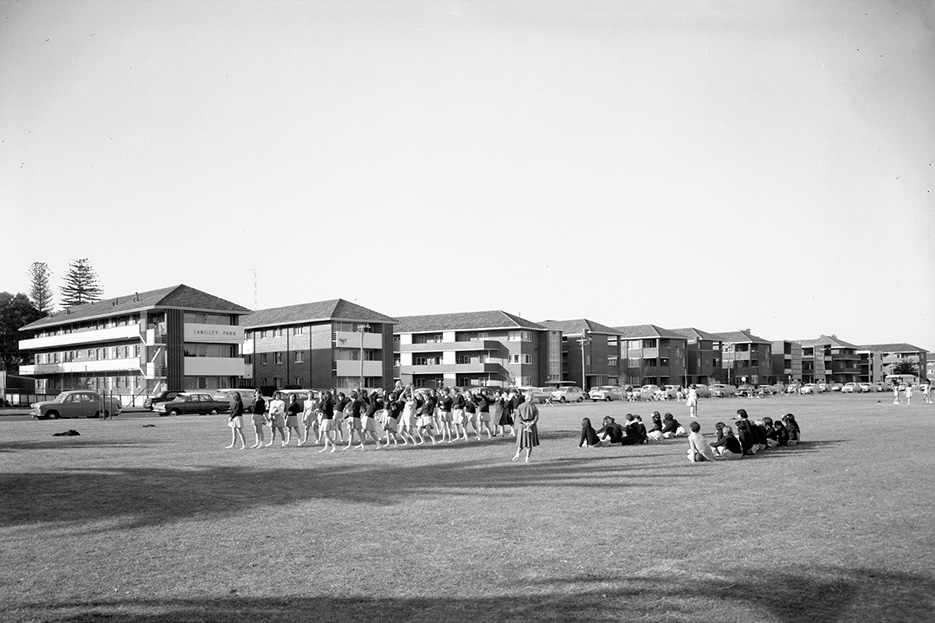
Krantz’ Terrace Road Flats in 1964, some of which are still standing.
Krantz (1906-1999) was born in Adelaide to Russian Jewish parents and qualified as an architect when he was 20 years old.
In 1927 he accepted an offer from his uncle Harold Boas, an influential Perth architect, town planner and councilman, to move west and work for the Oldham, Boas & Ednie-Brown architecture firm.
But work with the firm was patchy because of a slowing economy, so he took a brief side job in commercial art with Poster Studios. It taught him the value of economies of scale and cost minimising that would shape his design philosophy.
He returned to architecture in the midst of the Great Depression, gathering syndicates of investors to pool their money to build flats.
But unlike some of today’s unscrupulous developers who are in the spotlight over unsafe or shoddily built apartments, his philosophy was ‘cheap and sturdy’ . He focused on hardy materials that would last and wouldn’t cost a fortune in maintenance and replacement. The low-rise designs used in most of his buildings also meant no costly elevators, or other money sinks like pools or gyms.
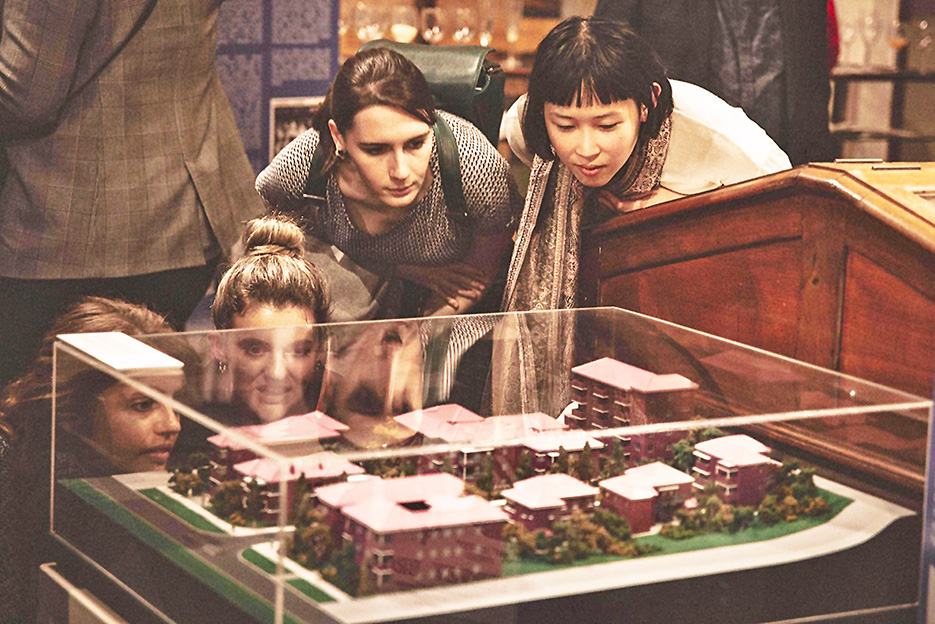
• A model of the now-demolished Burtway apartments on display at the museum. Photo by Miles Tweedie
His early brick buildings remain rock solid.
“There’s lots of lessons to learned here,” Mr Harley says outside the old brick flat he lived at in Mount Street.
Reflecting on his designs in 1980, Krantz said they “had to be as functional as possible with no frills, no decoration … the objective was to study every element in the building from the skirting, from the foundations, up to the top of the roof: Is there a better way of doing it for the same money, or a better job for less, or just as good a job for less money?”
Described as “functionalism”, his flats faced criticism that could come out of a modern day council meeting; they were “the slums of the future” critics warned.
Writing in The Western Mail in 1937, he said; “flats are condemned as being destructive of home life and encouraging slovenliness and laziness.
“There are many to whom the small self-contained unit affords the nearest to a real home that their limited income can accommodate.
“Young people saving for their own homes, and old folk whose families are married and to whom a large house is too great a responsibility are able to have the comforts and conveniences of a home at less cost, in more accessible positions and with less work and responsibility.”
Many of his early works have now been demolished, but his legacy is spread wide across Perth.
He’s associated with many prominent names like architect Robert Sheldon, whose works span both Vienna and Perth. Born in Austria in 1908, Sheldon arrived in Fremantle as a refugee in 1939 and would soon change his surname from Schläfrig.
“He walked into my office one day and said ‘I’m an architect from Vienna and I’ve come to Australia as I’ve run away from Hitler. I’m thinking of going to Melbourne; would you advise me to go there, or is there work here?’,” Krantz recalled in an interview in 1996.
Krantz asked to see some of Sheldon’s work, which he described as “superb drawings, beautiful … so I said, would you like to start on Monday morning? He started and he was with me ever since, until he died.”
The pair became the Krantz and Sheldon architecture firm in 1946, which was where renowned architect and fellow refugee Iwan Iwanoff got his start as a draftsman in 1950.
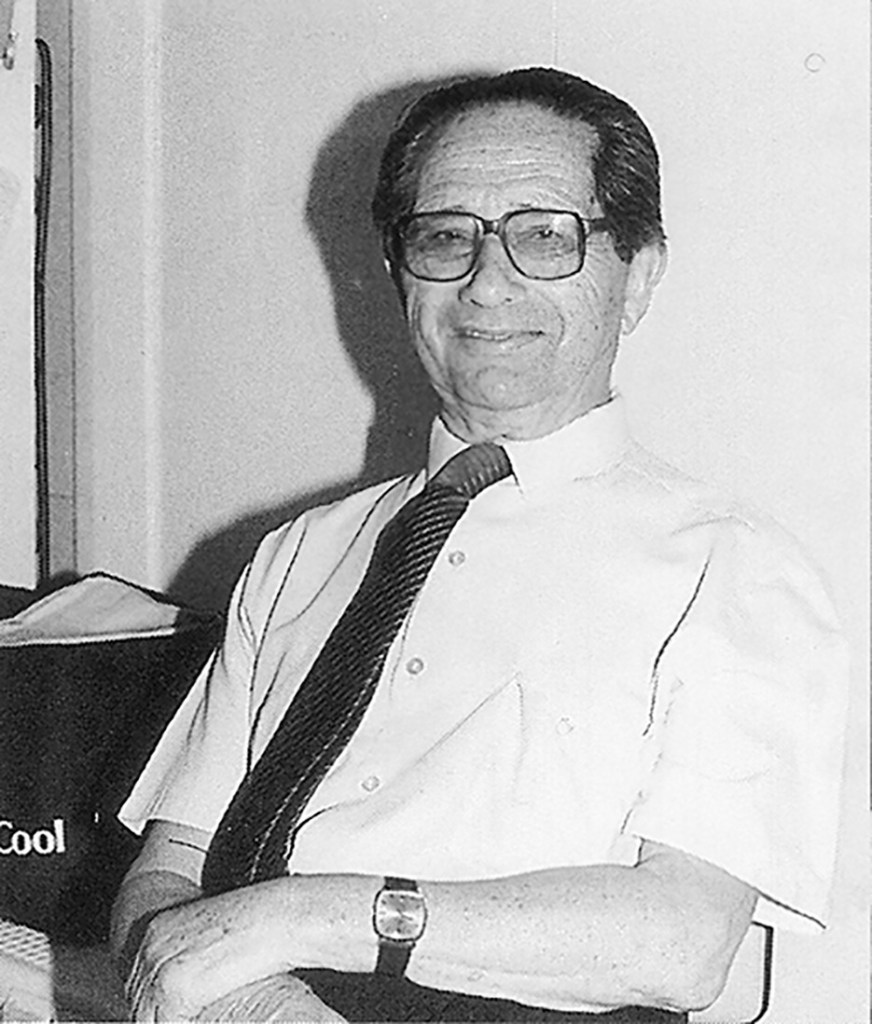
• Harold Krantz in 1986.
Across the decades Krantz would deliver the Burtway Apartments on Terrace Road, the Riviera Flats on Mill Street, and many of the flats around King’s Park and Mount Street.
Krantz’s legacy also lived on with his son David, who would follow in his father’s footsteps as an architect. As his father’s designs had been moulded by the economics of the age, the younger Krantz’s works reflected a different era and the differing taste of clients.
One of his most prominent designs is the 1964 Mount Eliza Apartments at 71 Mount Street, affectionately known as the “rocket flask” for its circular finned design around a central core, requested by the client.
Controversial
The Australian Institute of Architects notes the Mount Eliza Apartments “marked the change in generation from Harold to David Krantz”.
Like his father’s work, it too was controversial in its day, considered “a modernist imposition”. It’s now considered by the AIA as a landmark, and a nationally significant example of 20th century architecture.
The Krantz Legacy with photographs, displays, archival documents and the Burtway model is at the Museum of Perth, 8-10 The Esplanade (10am to 4pm weekdays, and the first Saturday of each month). There’s also an online repository of the research at thekrantzlegacy.com
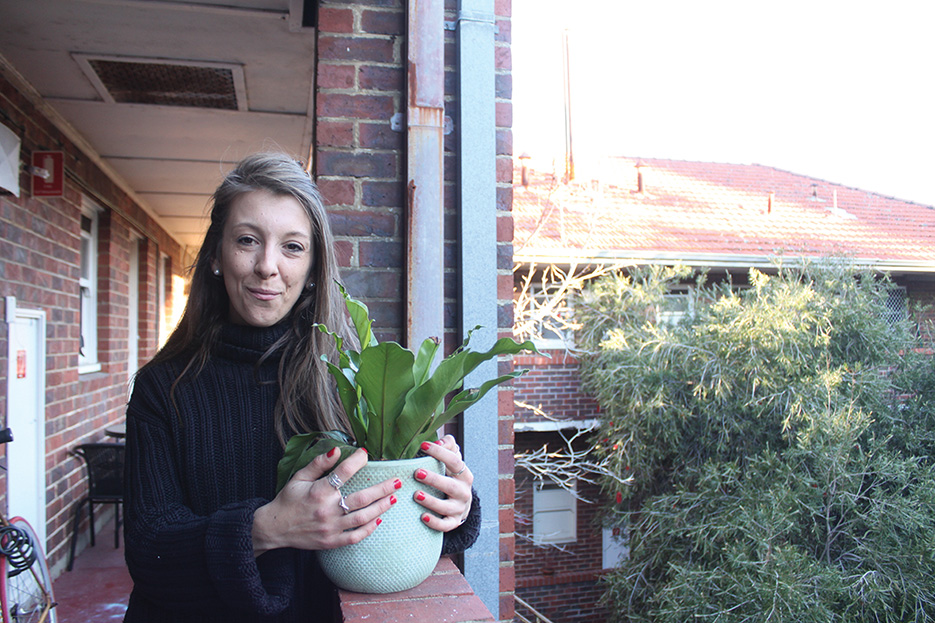
• Claudia taking her indoor plant out for a bit of sunshine.
NUMBER 40 Mount Street, West Perth, is probably the kind of micro-community Harold Krantz had in mind when he wrote of “young people… and old folk” living together in an affordable spot close to the city.
Built in 1939, today it houses a cross section of students, city workers, retirees, and cranky communal cat Faloush.
The U-shaped building means doors face inwards to the garden courtyard, encouraging a neighbourly feel.
A younger resident, Claudia has been there three years. She says “it’s really chill, everyone’s quite communal here”and can’t picture living anywhere else.
Built tough
Long-term resident Hayden’s been there for 22 years, moving between flats within the same block. He says when he first saw it, he couldn’t believe he’d found an affordable spot so close to the CBD.
“I couldn’t believe it… living on Mount Street.”
Hayden says the place is built tough. He knows mates who live in modern apartments that are so flimsy and thin-walled you can hear the people upstairs having a pee.
“This is a rock-solid build”, he boasts.
“This is home. It’s a good community. We try to look after each other.”
And everyone looks after Faloush. The chubby tabby was left by a resident who moved away and now hangs around the courtyard, growing hefty off communal feedings. Famously grumpy, he’s known to take swipes at people to defend his garden, and Hayden’s the only person able to pick him up.
The longest-term resident is former Perth MP Diana Warnock. She recalls seeing an ad for one of the flats back in the early ‘60s, saying it would “suit professional woman, £8 a week”.
Krantz flats are so ubiquitous that by coincidence she lived in another Krantz flat for the first few weeks of her life. Ms Warnock then grew up in the tiny country town of Kookynie before moving back to Perth and ending up at 40 Mount Street, falling in love with the building and its location. She hosted parties there during the early years of the Perth International Arts Festival, and more than 40 prominent cultured folk would sometimes be stuffed into a tiny flat.
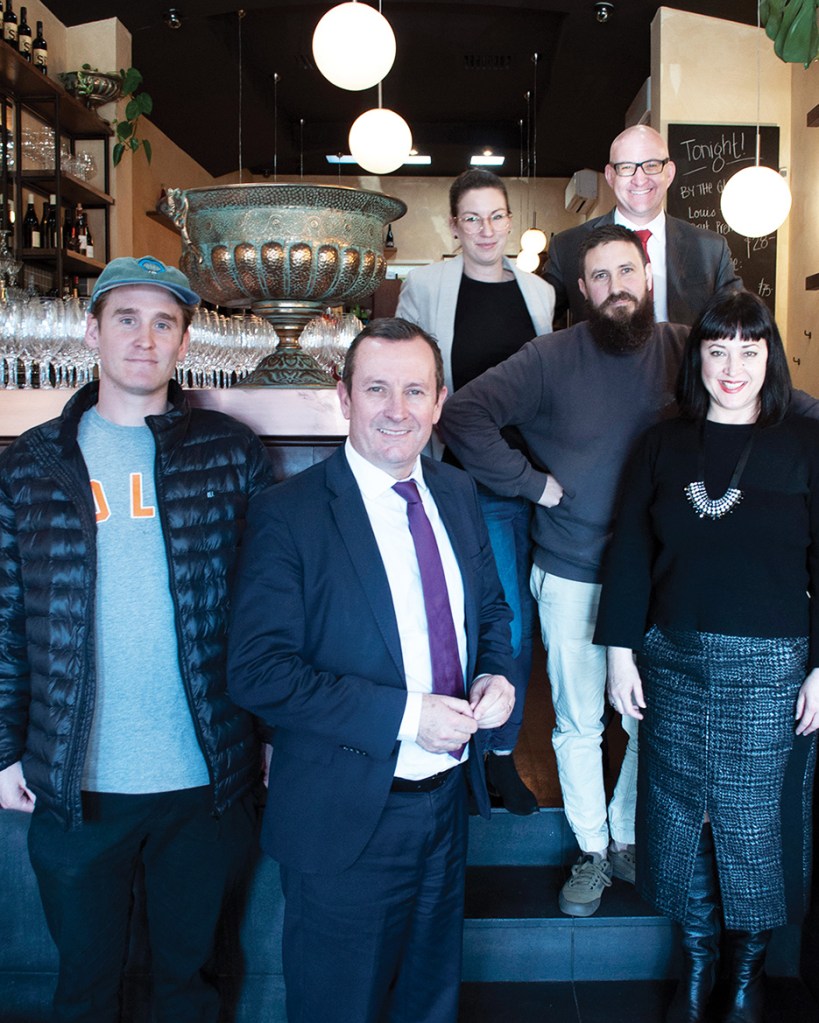
• Beaufort Street traders met with Mark McGowan and his cabinet at Le Rebelle to fill them in on their highs and lows.
MOUNT LAWLEY locals got the chance to bend premier Mark McGowan’s ear when he came by for a Community Cabinet this week.
Mr McGowan’s been hauling his cabinet members around the state to hear about local issues.
A town hall-style meeting at the Yokine Bowls Club on Sunday was followed by a whistle-stop tour of the ‘burb with Mt Lawley MP Simon Millman on Monday, including a catchup with Beaufort Street traders to hear about the recent challenges they’ve faced in the retail market.
Major issues raised include business closures and parking problems.
Sharon Wiley from Seven Willow Designs told the premier trackless trams would benefit Beaufort Street.
“We used to have trams along the street, so we have that historic connection and it would really add to the vibrancy off the community,” Ms Wiley said.
“Sadly we’re seeing off-street parking problems getting worse, so increasing public transport options is more important than ever.”
STIRLING council has tried to placate business owners in Mt Lawley by saying designs for a plaza on Beaufort Street aren’t set in stone.
Last week the Voice heard from landowners and business people dissatisfied with the consultation process, loathe to lose any car bays to the council’s plaza plan in the public car park just north of Walcott Street.
Stirling’s infrastructure director Michael Littleton says the plaza is just one aspect of a broader streetscape study and came from two workshops.
“At this stage, it is just a proposal. The piazza/plaza, along with all other elements that form the streetscape study will be the subject of further community consultation and engagement, which will kick off next week,” Mr Littleton said.
Consultation will be online at yoursay.stirling.wa.gov.au until September 30. A drop-in session will be at the Mt Lawley Bowling Club on August 28 from 6-8pm, and a “listening post” at the car park on August 31 from 10am-1pm.
“The city and council want the same outcome for the Mt Lawley area as its residents and local businesses – a vibrant, active and beautified town centre,” Mr Littleton said.
“We would love the local residents and businesses to continue to collaborate with us and get involved in the next steps of the streetscape study so we can deliver a final plan that we can all be proud of.”
Flawed premise REGARDING the Speaker’s Corner “How I became an anti-Semite without trying” by Vincent Sammut in your August 17 edition of the Voice.
Mr Sammut’s piece goes to great length explaining how his stance is a purely political one based on “truthful comments that…expose the injustices”.
He rests his premise wholly on the false contention that that the Arabs, in what was mandated Palestine, are an indigenous people “forced out” by European Jews (“a new cultural group”) who colonised the territory by force in 1948, which his 10-year-old “politically inarticulate” self “recoiled against”.
I posit that Mr Sammut remains politically inarticulate. He demonstrates no recognition of the fact that the Arabs, who were also granted a state in 1948, refused it and were the instigators of the conflict and were mainly responsible for the flight of their own people, as attested in Mitchell Bard’s Myths and Facts and many other authentic sources which, as the long-time proprietor of Books Etcetera, he would have had ample opportunity to consult.
There is no awareness or acknowledgment of the 4000-year-old Israelitic connection to the land, the continuous settlements even after the Roman expulsion, and the Mizrahi and Sephardi Jews who together outnumber their European Ashkenazi cousins.
Mr Sammut needs to be honest with himself and admit his anti-Zionism is just the same old anti-Semitism dressed up for a new millennium. David Schildkraut Northbridge
Defining letter VINCENT SAMMUT, like Jeremy Corbyn, seeks to redefine anti-Semitism to avoid being labelled as such (“How I became an anti-Semite without trying”, Speaker’s Corner, Voice, August 17, 2019).
The definition with which he disagrees, arose from the deliberations of European Forum on Antisemitism in 2004, hosted by the president of the European Commission, Romano Prodi, and later published as a Working Definition of Antisemitism.
The definition was later adopted by The London Declaration in 2013, which was signed in 2013 by thousands of lawmakers globally including Australia’s prime minister, the opposition leader and over 100 Australian parliamentarians.
It was also signed in 2016 by the International Holocaust Remembrance Alliance, which has 33 member nations, including Australia, and another nine nations in the process of becoming members.
Not all criticism of Israel is anti-Semitic, but some is.
Extreme anti-Israel activism is often anti-Semitic, or at least provides a cover for anti-Semites to express and promote their hatred.
The IHRA definition of anti-Semitism says: “Anti-Semitism…may be expressed as hatred toward Jews…toward Jewish community institutions…Manifestations might include the targeting of the state of Israel, conceived as a Jewish collectivity…” and it provides examples,
• Denying the Jewish people their right to self-determination, for example by claiming that the existence of a state of Israel is a racist endeavour [delegitimisation].
• Applying double standards by requiring of it a behaviour not expected or demanded of any other democratic nation.
• Using the symbols and images associated with classic anti-Semitism (e.g. claims of Jews killing Jesus or blood libel) to characterise Israel or Israelis [demonisation].
• Drawing comparisons of contemporary Israeli policy to that of the Nazis [demonisation].
• Holding Jews collectively responsible for actions of the state of Israel.
Israel is where Jews were sovereign for 1500 years before Christ, and has always been central to Jewish prayer, poetry, music, dreaming and longing for two millennia of exile.
Israel is the only place where Jews, as a collective, have sovereignty, self-determination and the ability to create a Jewish society: steeped in the language, values, calendar, history, art, music, poetry and wisdom of the Jewish people.
Jews began to return to their ancient homeland from the 1880s, bought land, and held out their hands in peace to their Arab neighbours.
The Arabs violently rejected peace and repeated offers of a 23rd Arab state in 1935, 1947, after 1967, 1992, 2000 and 2008.
However they apparently don’t want a 23rd Arab state.
They want to destroy the one and only Jewish state.
Criticising Israel is not anti-Semitism – it’s democracy.
But denying Israel’s right to exist is the new anti-Semitism. Steve Lieblich, director of public affairs Jewish Community Council of Western Australia Inc
An oversight I AM surprised there was no editorial oversight before publishing an opinion piece headed ‘How I became an anti-Semite without trying’, and ending with the statement that we need more ‘anti-Semitism’? (Speaker’s Corner, Voice, August 17, 2019)
At best, the choice of wording is extremely unfortunate and misleading.
Such headlines risk being read by racists as encouragement for anti-Jewish views.
Those reading the full piece will see that the author recounts his opposition to anti-Semitism.
And we should not equate any criticism of particular Israeli governments or policies with being anti-Semitic.
However, if there is only condemnation for Israel as an entire country, the encouragement of stereotypes about Jewish people is given room to grow.
In this context, the strange association by the writer of the establishment of Israel with his childhood memory of a man cruelly beating a horse is confusing to say the least.
Then there is a simplistic suggestion of ‘European Jews’ versus ‘indigenous Arabs’, based on a memory of watching a news item in 1948.
In fact, Israel’s population today includes a wide range of ethnic backgrounds.
Public debate on the Israel/Palestinian conflict is most productive when seeking a balance between justice for Jews and Palestinians.
Recognition of the history of Jewish connections to the land of Israel and the post-Holocaust circumstances associated with the declaration of the Jewish state are too often ignored among critics of Zionism. Certainly, a range of views on this complex issue should be given space in the media.
However, one-sided demonisation of Israel will always be disappointingly counter-productive. Professor David Trigger Inglewood