• Dancing with a mouse click

    WITH a shortage of affordable dance rehearsal and performance spaces in Perth, HQ Leederville is fundraising for its own studio.

    Over the past three years there’s been a steady decrease in government funding for the arts and social services sector, so organisations like HQ—a youth arts hub run by the YMCA—have turned to other means of support.

    Last year HQ managed to secure a $10,000 matching federal grant for their own studio, and they’re looking to raise the remaining $10,000 through crowdfunding.

    HQ youth worker and former professional dancer Taciano “T” Cavalcante has been driving the project: “There’s a shortage of affordable dance spaces in Perth, with a lot of demand from young artists and performers,” he says.

    “The spaces that are available are out of reach for many young people in the community, with most of these studios being strictly commercial and charging a hefty fee for hire.
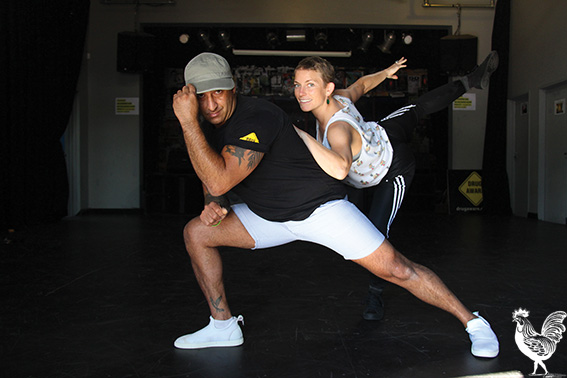
    • Taciano “T” Cavalcante and Natalie Allen at HQ Leederville . Photo by Steve Grant

    “Our studio will provide a space which will be accessible to young people from all walks of life, giving them a free or heavily discounted hire fee.

    “We already have a lot of interest from young WAAPA contemporary artists.

    We know that by providing this space, we will take kids out of the streets and also increase our artistic diversity and cultural reach in the Leederville community.”

    HQ has got a basic sprung dance floor and will use the additional $10,000 to install lights, mirrors and dance bars.

    HQ’s service delivery manager Andrew Rigg says the finished space will “provide a great art hub for the young people of Leederville and Perth. We really appreciate any contribution, no matter how large or small.

    The HQ crowdfunding page is startsomegood.com/ymca-hq-dance-space

    by DAVID BELL

  • History call-out

    VINCENT’S local history awards are back for another year and the city is itching to receive your heritage photos and yarns.

    The awards have been running for about 15 years and help populate the local history centre’s archives with photos and tales that might otherwise be forgotten.

    Vincent mayor Emma Cole says; “We are not only looking for older stories and photographs. The scope is anything during the 20th century so more recent memories are also welcome.

    “One of last year’s photographic award winners was a photo taken in 1983 of two kids playing in a concrete trough.”

    The photo of Emma and Michael Boyd was chosen by judges as it provided a record of the old cement troughs on legs that were once common in North Perth.

    • Vincent mayor Emma Cole with Emma Boyd (left, who is pictured in the photo with her brother Michael) and Mary Boyd who submitted the winning 1983 photo. Photo courtesy Vincent Council

    Other winning entries at last year’s awards included 1950s photos of Vincenzo and Angela Figliomeni’s house on Eton Street, complete with backyard grapevine cultivation as a symbol of the family’s migrant roots.

    Longtime Voice reader and contributor Marie Slyth’s four-photo series, featuring different fashions she wore back in the 1950s, also took out a prize.

    Every second year the awards have a written history category: The last time it was run in 2016 the award went to Andrew Duckworth’s well-researched tale of the Fireman of North Perth, 1902 to 1926.

    If you’re keen to enter head to library.vincent.wa.gov.au or get in touch with the local history centre on 9273 6534

    by DAVID BELL

  • A trialling journey

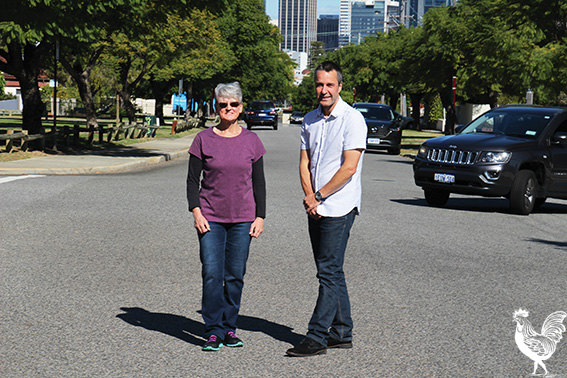
    A TRIAL to reduce speed limits to 40kmh on Vincent’s southern residential streets is just around the corner, mayor Emma Cole says.

    Last week we reported that new community group Our Streets at 40 had launched a campaign to get the speed limit on all residential streets in the city reduced to 40kmh (“Life begins at 40”, Voice, May 12, 2018).

    Vincent council had been trying to hold a 40kmh trial in the south ward for the last two years, but it would have cost about $150,000, so they asked the then-Liberal state government for some funding.

    That got a lukewarm reception.

    • Geraldine Box and Andrew Main from Our Streets at 40.

    In August 2016 Main Roads told the city that “council would be responsible for all aspects of the trial including funding”.

    Ms Cole has requested a meeting with road safety minister Michelle Roberts to see if the new Labor state government would be more receptive to funding the trial.

    The Vincent mayor says she’d support the council paying for the trial themselves if the state doesn’t want to contribute.

    by DAVID BELL

  • No more dreaming, Vincent’s scheming

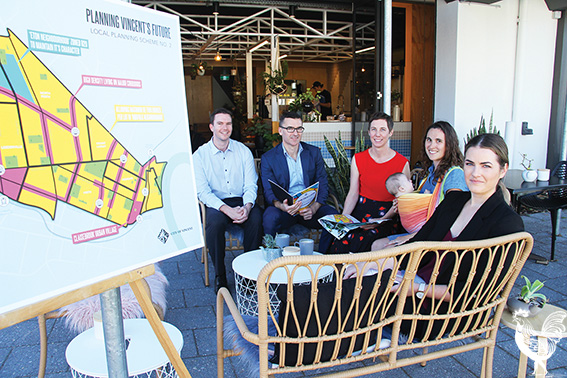
    IT’S taken around a decade and four mayors but Vincent’s second local planning scheme is finally set in stone.

    The scheme aims to preserve the amenity of neighbourhoods while encouraging medium and higher density developments on main streets.

    Usually these schemes have a shelf life of five to 10 years, but Vincent’s been using Town Planning Scheme number 1 since the council’s inception in 1994.

    It’s been an arduous process for the city to get the scheme approved, requiring sign offs from state government ministers and intense negotiations.

    Vincent mayor Emma Cole—whose birthday fell on the same day the scheme was approved—says “it’s very significant, it’s been such a long time in the making, and it’s something that we’ve desperately wanted to have in place for a long time. It’s a modern scheme, and we were limping along without this.

    “Before I embarked on council life I never understood how excited I’d be to have a scheme gazetted on my birthday.”

    •  Vincent strategic planner Tim Elliott, MP John Carey, mayor Emma Cole, Claisebrook Collective’s Deborah Karajas and Vincent policy and place manager Steph Smith celebrate the city’s planning scheme finally arriving. Photo by Steve Grant.

    The key points:

    • Historic residential neighbourhoods will be retained, with suburbs like Mount Hawthorn, Mount Lawley and North Perth remaining predominantly single-storey and lower density

    • Higher density will be allowed  along the city’s major roads, especially along high frequency bus routes

    • The plan aims to allow for more vibrant town centres by expanding land uses, making it easier for businesses to change and adapt rather than going through planning hell to rezone an office for another use, like a cafe

    One other major change is the rezoning of Claisebrook to force the eventual closure of the two concrete plants.

    The two batching plants have been on continually-renewed five-year licenses, but under the new zoning they’ll be phased out so the area can be rejuvenated with mixed commercial and residential development.

    Deborah Karajas from Claisebrook Collective, a new community group of residents and businesses, is hopeful the changes will rejuvenate the suburb.

    “The Claisebrook Collective team believe the new planning scheme is a good next step towards realising the potential of this precinct as a more complete, liveable urban village,” she says.

    “Our vision for the Claisebrook Station precinct is for a connected community, a thriving local economy, and smart, sensitive, sustainable development.

    “We now hope to work closely with local and state governments to put in place a more detailed planning framework specific to the precinct, to help realise that vision.

    “We want to see good quality, diverse housing options for all ages and stages and everyday amenities (including trades and services, not just cafés), so that it’s possible for people to live locally and put roots down. That’s when people start to really care about and invest in a place, making it a safe and friendly place to live and building a resilient local economy.”

    Perth MP John Carey, who had a stint working on this local planning scheme when he was Vincent mayor, says “density is controversial at the moment, but I think this has got the right mix.

    “We have to accept that we need to accommodate density in Vincent, but we want it done well.”

    by DAVID BELL

  • Maylands celebrates

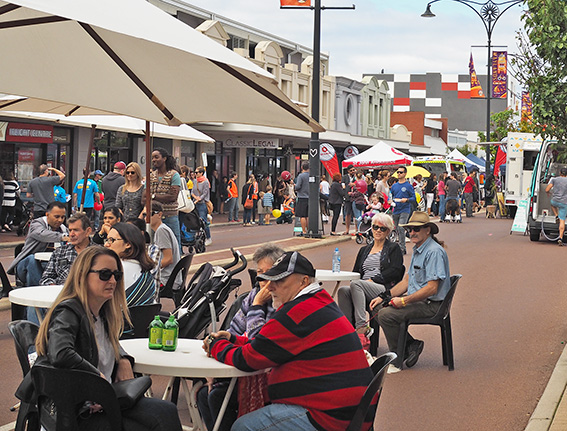
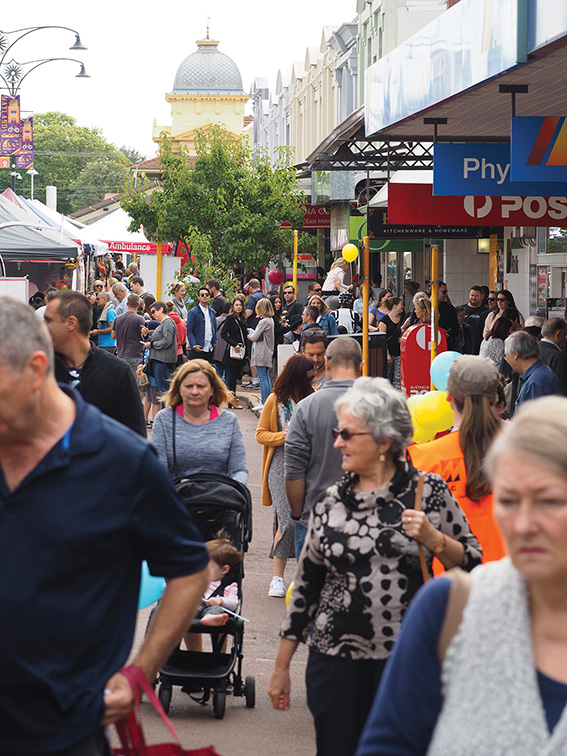
    THE Maylands Street Festival is back at  Eighth Avenue this Sunday.

    It’ll be a fun-packed day with roving historical entertainment, games, rides, pop-up bars and art installations.

    This year the festival is celebrating the 120th-ish anniversary of the suburb being named Maylands.

    • Photos by Rob Sheppard from RAW Human Resources.

    It’s still a bit of a mystery how the name came to be: Landgate’s database says it could’ve been named by the owner of the local foundary, Mephan Ferguson, in honour of his daughter who was named May.

    Another theory is that the area was named by Edgar W. Hamer after he purchased land there in the month of May.

    Festival organisers, Local Arts and Community Events group and the Maylands Historical and Peninsula Association, have teamed up with disability advocate group Cahoots to make it the most accessible festival in town.

    There’ll be an accessible priority lane to make it easier for the disabled to navigate crowds.

    The smoking ceremony kicks off festivities at noon and the festival runs to 6pm.

  • Long run for shorts

    THE Mt Lawley Society has announced they’ll bring back their short film festival for a third year after a successful 2018 run at the Astor Theatre.

    Roger Elmitt’s film McPherson Street, a short history of a Menora Street, won the $1000 prize.

    Mr Elmitt says “this film, based on my book of the same name, was very much put together with enjoyment and collaboration—both near and far.

    • Stuart Irving from Irving & Keenan presenting the Open Category First Prize to Molly Worsnop, Roger Elmitt and Scott Montgomery.

    “My brother in England, Ray, was the film maker, I wrote the screenplay, my daughter’s partner Scott Montgomery was in charge of sound and the wonderful Molly Worsnop—who has devoted her whole life to Perth theatre—was the perfect narrator”.

    The winner of the $750 student prize was ECU Student Corina Stag, whose film Heart in Hardware told the story of the Mt Lawley Hardware Store on Beaufort Street.

    Festival organisers Christina Gustavson and Mark Hodge says they are looking at making the biennial festival an annual event, because this year’s was so popular.

  • The forgotten war

    THE Boer War Memorial Society WA invites the public to a commemoration and reconciliation service at the South African War Memorial at King’s Park on May 27.

    The service marks the 116th anniversary of the signing of the Vereeniging peace accord, which brought the Anglo Boer war to an end.

    The WA branch of the Society was founded in 2016 as part of an effort to raise funds for a national memorial. On May 31 2017 the memorial was opened on Anzac Parade in Canberra, and now the society holds yearly services, with the aim of getting the Boer War included in the education curriculum.

    Often overshadowed by the Great War, the Anglo Boer War (1899-1902) fought between the British Empire and Afrikaans-speaking descendants of the Dutch East India Company’s colony was a war of little-known firsts.

    Some of the first Aboriginal Australians to volunteer for service in a foreign war were involved: About 50 Aboriginal men served as troopers, trackers and stock handlers, including WA’s John Robert Searle who was born in Albany in 1869 and served with the Imperial Bushmen.

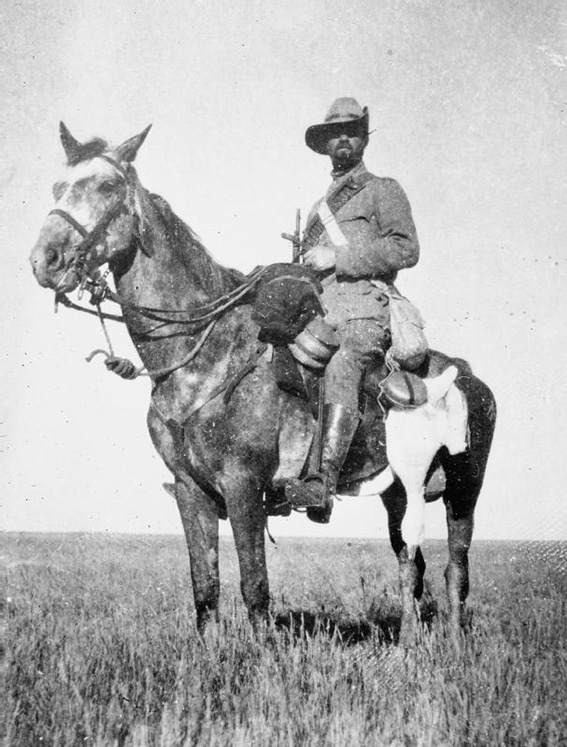
    William Skeoch Cumming’s image of a Mounted Yeomanry trooper.

    The war also saw the term “concentration camp” come into widespread use. In an effort to combat the guerilla tactics of Boer commandos who eschewed uniforms and were sometimes indistinguishable from civilians, the British rounded people up into concentration camps, where about 28,000 died from poor hygiene, malnourishment and a lack of medical treatment.

    More than 100,000 native-born Africans would also be interned, with 20,000 dying in captivity.

    Many Western Australians don’t know that to this day South Africa has a hill named after their state: West Australia Hill in the Eastern Cape Province was named for WA as it was the first place the WA Mounted Infantry saw action.

    The troop of 27 men under Major Moore happened upon a host of 400 Boers heading for a surprise attack on a nearby British camp and hospital. He sent a messenger to warn the camp and the remainder of his men delayed the Boers while those at the camp and hospital could move further back along the railway out of danger.

    Eventually Lord Kitchener’s scorched earth policy, involving the burning of farms and homes, would starve the Boers and many native Africans along with them. Though eventually the British would offer relatively generous terms of surrender to the defeated Boers, many farms would remain unworkable for years due to the burning and salting.

    The commemoration and reconciliation service starts 11am on Sunday May 27 at the King’s Park South African War Memorial.

  • An important meeting place

    ARCHAEOLGISTS have confirmed the Swan River area has been inhabited by human beings for at least 40- 50,000 years.

    During that time the Aboriginal people have been the custodians of the land on which Perth now stands and used the Swan River and its surrounds as an important source of food.

    As a result the area also became an important cultural meeting place for the Wadjuk Noongar tribe, who have gathered here for many thousands of years. This was all to change in 1829.

    Although Europeans had known about Western Australia for several centuries, it was some years after the foundation of the penal colony in New South Wales before any interest was taken in the western coast.

    In the wake of the Napoleonic Wars, the west suddenly became a place of interest to the British when intelligence information suggested the French were exploring the area.

    After centuries of conflict at home, the British were keen to avoid the prospect of French neighbours in the Antipodes.

    To help prevent this situation, a small British settlement was set up on the southern coast in 1826, which was logistically in the wrong spot.

    WITH WA Day fast approaching, heritage buff RICHARD OFFEN shares the fascinating tale of how Perth was founded in 1829 by an English woman felling a tree.

    To find an alternative, Captain James Stirling was despatched to explore the west coast for a suitable spot for a major settlement.

    Having spent time exploring the Swan River in March, 1827, he was overwhelmed by its beauty and misled by the lushness of the flora into thinking it was similar to the most fertile parts of Italy and thus perfect for the settlement of a colony.

    Following a recruitment drive for settlers back in Britain, the ‘first fleeters’ left England early in 1829 and arrived off the mouth of the Swan River at the end of May.

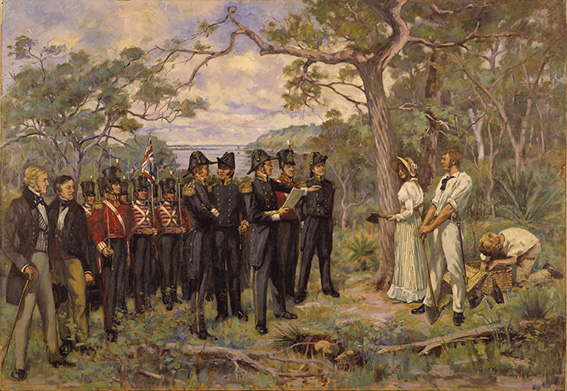
    The founding of Perth was marked when Mrs Helen Dance felled a tree on the King’s birthday, 12 August, 1829.

    Following the ceremony, Perth, named after the birthplace of Lord Murray the British Parliament’s Colonial Secretary at the time, gradually took shape as a town despite the problems of sourcing suitable building materials.

    This meant many were still sleeping in tents long after the declaration of the township.

    WA Day, held to commemorate the founding of the Swan River Colony in 1829, is on June 4.

    I have always found it very interesting that in a fiercely male-dominated society as Britain was in the 19th century, Captain James Stirling should choose a female to chop down the tree to mark the forming of the city.

    My daughters have suggested it was because he wanted the job done properly!

    The early days of the Swan River Colony, must have been absolutely terrifying for the settlers.

    They had no place to call home, no idea what could be eaten and what was dangerous and greatly troubled by rats, fleas and sand flies.

  • Art behind bars

    FANCY an exclusive peek at some of the x-rated art drawn by convicts and prisoners on their cell walls in Fremantle gaol?

    As part of Fremantle Heritage Week, the prison is putting on a special art tour that will focus on the murals, artwork and graffiti left behind on cell and exercise yard walls.

    The tour includes everything from languid landscapes to pieces featuring extreme profanity and nudity that are not normally shown to the public.

    Assistant curator Eleanor Lambert says some of the guerilla artwork dates back to 1854.

    “In May 1852 James Walsh, aged 21, was sentenced to fifteen years transportation for the crime of forgery,” she says.

    • Some of the art on Fremantle Prison’s walls is colourful and joyful. Some is a bit more risque…

    “Walsh served two separate sentences at the Convict Establishment and his cell at Fremantle Prison is covered in sketches, which date between 1854-1863.

    “Though very little is known about him, the standard of his artwork has earned him a place in the Dictionary of Australian Artists.”

    Art eventually became part of the prison’s educational program in the years preceeding its closure in 1991.

    The first art teachers were employed at the gaol in 1978 and more than 2000 students enrolled within the first five years.

    Initially the classes were only for Aboriginal prisoners, but as their popularity grew they were made available to other inmates.

    Ms Lambert says that in addition to the guerilla artwork on cell and exercise yard walls, the prison has over 500 “moveable” artworks by prisoners in its official collection, with most pieces created between 1978 and 1991.

    The Fremantle Prison art tour is on Saturday May 19 and June 2.

  • Somme sign

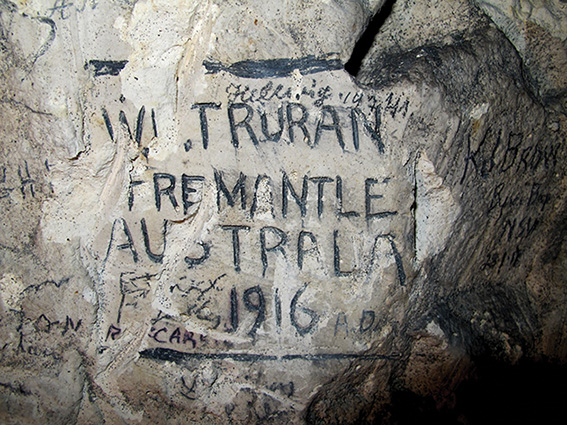
    A FRENCH archaeologist is searching for the family of a WA soldier whose signature is one of thousands left by WWI Anzacs in cave walls deep beneath the Somme.

    More than 3000 signatures were discovered by Gilles Prilaux, director of the National Institute of Preventative Archaeological Research, and with Australian government help they’ll soon be recognised as part of a small museum.

    “I discovered these signatures by the greatest chance during an archaeological intervention whose purpose was to date the origin of the caves,” Mr Prilaux told the Voice.

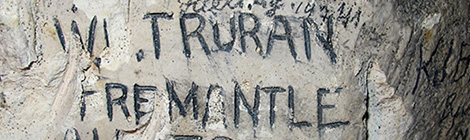
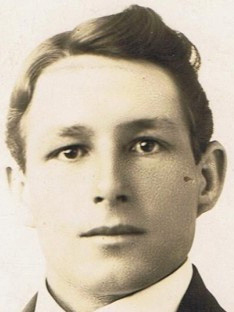
    • Pte William Truran’s (inset) signature carved into a cave deep under the French village of Naours. Photo supplied.

    The caves date back to the Roman era and started life as a limestone quarry, but in the intervening years locals from the village of Naours used them for storage and to hide from encroaching armies.

    “In December 2013 I had the idea to observe the walls of the caves to search for engravings and this day it was a real shock to discover all these signatures.”

    Mr Prilaux says he’s searching for any descendants of Pte William Howard Truran who left Fremantle on September 2, 1915. His battle baptism came in the hellish trenches of Gallipoli, but after the Allied retreat his unit was reorganised and sent to the Western Front in 1916, where he made his mark on the walls of the cave.

    by STEVE GRANT