John XXIII College is an inclusive co-educational community where students grow to become young men and women of substance. Integrity, intellect and personal faith are the heartbeat of this contemporary Catholic College. The university-inspired campus, located in Mount Claremont, is home to students from pre-Kindergarten to Year 12.
Every student benefits from the school’s deep commitment to the growth of the whole child. The extensive co-curricular programs fire young imaginations and advance every child’s development.
In 2016, John XXIII students achieved a median ATAR of 88.6, which was the second highest result for the College since 2007. In addition, 45% of students achieved an ATAR in the 90s, with 10 students scoring above 99.
At John XXIII College, the educational approach honours the Ignatian tradition of ‘striving for the more’. Every student is challenged and supported to achieve academic and personal excellence in order to make a positive contribution to modern society.
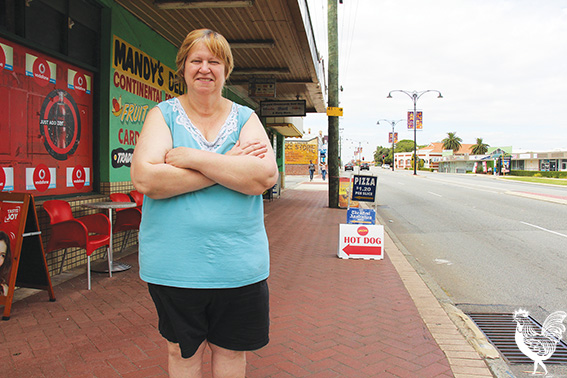
FOR 35 years Mandy’s Deli owners Dina and Frank Rechichi have dreaded the rain.
The Maylands couple say they’ve been plagued by flooding since they purchased the business and have been hand-balled between the local council and Main Roads ever since.
“The water comes in through the door every time there’s a downpour,” Ms Rechichi told the Voice in exasperation.
“And when the cars and buses come past the splashing covers the front of the building and up into the awning, as well as soaking people walking past. It’s very dangerous.”
• Mandy’s Deli owner Dina Rechichi says they’ve put up with 35 years of flooding while being hand-balled between departments. Photo by Steve Grant
Ms Rechichi says the rain also fills a Telstra pit outside the deli, so every time there’s a downpour her phone gets glitchy:
“I get calls coming in, but I can’t make any out,” she says.
There is a drain outside the front door on Guildford Road, but with water streaming down a short, steep, incline from Seventh Avenue, it’s unable to cope.
Problem is, Seventh Ave is Bayswater council’s responsibility, while Main Roads looks after Guildford Road.
Ms Rechichi said they have consistently blamed each other, making it impossible to resolve the issue.
Resurfacing
Main Roads spokesman Dean Roberts says the department’s aware of the flooding, and while some resurfacing works in the next three months will help, it won’t completely fix the problem.
“Given the topography of the location, a significant amount of stormwater from Seventh Ave flows onto Guildford Road,” Mr Roberts said.
“Main Roads is continuing to liaise with the City of Bayswater regarding options to overcome the problem.”
Mr Roberts said while there had been a number of minor improvements over the years, there was no quick fix.
“A major redesign of the drainage network upstream and downstream of the site will likely be required.”
However, as part of some planned safety improvements, another bit of tinkering with the drains might help, he said.
Bayswater mayor Barry McKenna put the issue squarely in Main Roads’ court:
“This is a Main Roads WA issue which unfortunately affects our ratepayers – the roads are owned by Main Roads WA,” Mr McKenna said.
“We have contacted Main Roads WA to get an update from them.
“We do appreciate the frustration being expressed by the shop owner and will work together with Main Roads WA to find a solution to the issue.”
CONTENTIOUS plans for a big upgrade to Rosewood Care Group’s retirement home on Cleaver Street were deferred by the Development Assessment Panel on Wednesday, leaving the 421 people who signed a petition against it breathing a temporary sigh of relief.
Perth’s in dire need of more aged care beds and the $65 million upgrade to the not-for-profit care home would add 100 new spots, but while many locals support the intent, they are concerned about the six-storey add-on.
Nearby resident Alf Parolo attended the DAP meeting and told the two councillors and three state-appointed experts on the panel that locals are “opposed to the height”.
• The design for the new Cleaver Street facility will add new beds for older folks needing care, but the size has locals alarmed.
He says “there’s support for aged care” but some neighbours are concerned they’ll be left in shadow.
They also don’t want to see the heritage cottage on the site so heavily imposed on by the big block that’ll sit behind it.
“There was a cry from the gallery about locals wanting more consultation,” he says, and they’re hoping RCG will hold more talks with affected neighbours before coming back with an amended plan.
Rosewood CEO Mario Zulberti said “we are contemplating our position and will not be making any further comment at this stage”.
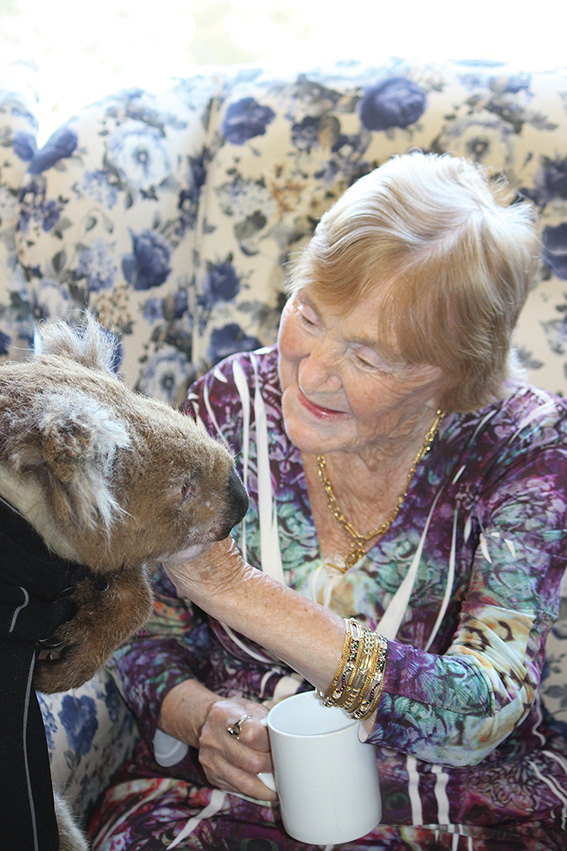
IN lighter Rosewood news, the old-timers at the Cleaver Street retirement home were visited by a koala, dingo and apparently, a python, for a therapeutic animal session.
WestOz Wildlife brought in the animals and coordinator Beth Mullany says “coming to nursing homes is one of the most rewarding parts of our job. Many older people have gone their whole lives without ever seeing Australian wildlife up close. We find that even non-verbal people with dementia light up and respond to our animals, sometimes even with tears of happiness”.
• Rosewood resident Shirley Lay hanging out with a koala.
The residents are aged between 68 to 103 and Rosewood occupational therapist Marianne Taylor says about half have some degree of dementia. Animal therapy has been found to be of great benefit to people living with the disease.
Resident Rob Allen said “it was fascinating being able to see them up close. Native animals are fascinating because they are so unique to Australia’s environment”.
The folk at Rosewood get regular visits from animals but they’re usually more domesticated: “Visits of animals, whether by Australian wildlife or the weekly visits by our volunteer therapy dog, encourage social interaction and provide invaluable sensory experiences,” Ms Taylor says.
GREENS party election signage has been graffitied up and down Beaufort and Oxford Street’s pavements and WA Police have been called in to find the culprit.
The #Green17 hashtag, used by Greens pollies for the impending state election, has been spraypainted onto footpaths every couple of metres in some parts of town.
Greens campaign manager Andrew Beaton says “we genuinely don’t know who did this…we don’t endorse this kind of behaviour but we could probably put it down to overly enthusiastic supporters”.
Vincent council CEO Len Kosova says “the city received a complaint about this last week and is in the process of investigating the situation with WA Police and removing the graffiti”.
The Voice asked council if the Greens would have to foot the clean-up bill.
“The Greens WA office has advised us that they were unaware of this and did not authorise or endorse any such action,” Mr Kosova says.
Greens supporters might’ve felt they had little choice but to launch a decentralised guerrilla ad campaign, given much of the rest of town is plastered in banners for the big two parties.
Perth Liberal MP Eleni Evangel’s got big signs on sites belonging to prominent supporters, including the old Michelides Tobacco Factory (demolished for an upcoming Graham Hardie project, but the site’s sat empty for two years), while Perth Labor candidate John Carey seems to have more yard signs on residential homes.
Punters on the street were divided about the graffiti, but with a slight tendency towards leniancy.
“It’s no more offensive than someone writing “no stopping”,” says Eamonn, pointing to a traffic sign stencilled on the tarmac.
“I’ve seen worse.”
But Maria says it shouldn’t be allowed: “I think it’s bad enough putting up posters and banners everywhere.”
Laura was doing a bit of window shopping with her mum Michelle and at first remarked that they hadn’t noticed the prolific stencils so perhaps it wasn’t such an effective campaign. But Michelle thinks it was probably targeted at Gen-Y voters who are invariably studying their smart phones while walking around. “Nobody looks up any more,” she said, noting that in Germany much of the signage these days is on the pavement and road.
But generally they’re ok with political graffiti: “People should be able to do wth they like — within reason,” says Laura.
“It’s not too blatant and it blends in with the bird poo.”
Michelle says it fits with the myriad small stickers and posters on walls, signs and lampposts throughout the Leederville town centre, which helps to give the centre life and vibrancy.
AN APP which marries small business owners with cheap unused premises will help transform Bayswater into a ‘Smart City’, says Future Bayswater chair Paul Shanahan.
Developed by Perth’s Alina Racu, The Local Tribe has been dubbed “Airbnb for industrial spaces”, and helps landlords find short-term tenants for properties that would otherwise lie empty.
Activating
Ms Racu is collaborating with council and community group Future Bayswater, who think the concept can help reinvigorate the moribund industrial area around Bayswater town centre and play an important role in activating the eastern economic corridor.
“Because of a downturn in the market there are many offices, industrial, or warehouse spaces that haven’t been in use for a long time,” Ms Racu told the Voice.
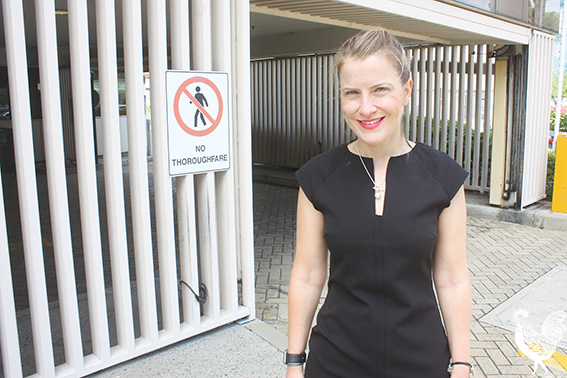
• Alina Racu
“My point is if you repurpose, re-boost, reuse some of these spaces in your community, then you’ll have more flux…it’s an opportunity for creating more jobs and getting inspired.
“So it’s changing the mindset of property owners: you can rent this in a short term contract and you can add these multi-purpose spaces.
“Once you have occupancy in those spaces, you will have people that will try open a new coffee shop, they will open restaurants, all this activity will help the local community.”
Ms Racu says budding entrepreneurs are nervous about signing long-term leases and she is aiming to provide lower-risk access to offices and workshops.
She is planning to pilot The Local Tribe in Bayswater and eventually do a roll out across Perth.
The app will initially be web based, with plans to release a phone version at a later date.
“If you look on social media, we are tending very much to use this component of creating different groups, which I like to call ‘tribes’, because everyone wants to create community and share the same interest with people,” Ms Racu says.
WHILE both major parties have pondered getting rid of the accident-prone Bayswater underpass, independent candidate Greg Smith reckons it’s part of the cultural fabric of the town centre and a “trucking calming device”.
Along with wanting to scrap the WA Planning Commission because it favours big developers over locals and steamrolls councils, he says if the underpass goes the Baysy town centre will turn into a freight highway.
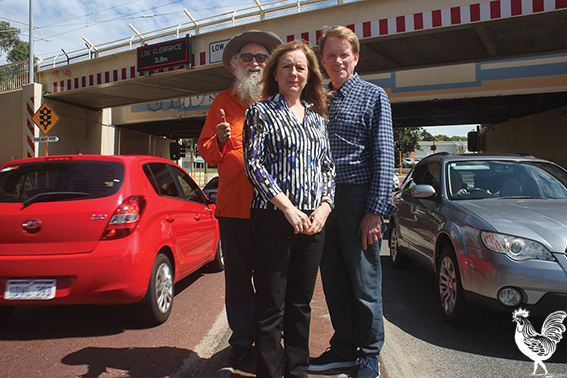
The underpass has a pretty low-tech method of preventing that: with surprising frequency trucks get stuck under the bridge because drivers don’t realise their vehicles are too tall to go under. Even drivers from Western Power and some Liberal party campaigners have been wedged under there.
• Party leader Julie Mathieson and candidates Greg Smith and Russell Goodrick: Keeping the Bayswater underpass is one of the many, many ways the Maylands candidate is setting himself apart from the big parties. Photo by Steve Grant
“I don’t want bloody Coode Street and King William Street to be a truck route, and if you got rid of that trucking calming device then it would be,” Mr Smith said.
Installing a couple of dangling chains before the bridge would give drivers an audible warning that they’re about to be scalped, he says.
“That may be a little bit cheaper than putting the station underground. Just marginally.”
If Labor won federal government last year they’d pledged to spend a million bucks investigating sinking the station.
Mr Smith was initially running for the Julie Mathieson for WA party in Mt Lawley but at the 11th hour put his name down for Maylands, the electorate where he lives. He reckons Mt Lawley’s a lost cause for the Libs so he’d rather get stuck into Labor in his home patch.
“I believe Simon Millman (Labor) is going to win Mt Lawley at a canter so given that Labor’s going to be in power I’m wanting to push them to adopt better policies.”
A town planning lecturer, he says he’d rather lobby Labor to fix up its planning policy, starting by scrapping the WAPC and handing power back to local councils.
He says with development assessment panels approving big projects and the WAPC having control over the big structure plans and zoning changes, at planning meetings these days “local government’s decision making power is relegated to choosing what kind of sandwiches are served at meetings: curried egg, cucumber or ham”.
THE population of Carnaby’s black cockatoos is declining by 10 percent each year, warns BirdLife WA’s Adam Peck.
Data from the annual great cocky count suggests there’s only around 1600 Carnaby’s left in the coastal plains between Mandurah and Gingin and their population continues to decline as their habitat is cleared to make way for housing, forestry or agriculture.
The ninth annual great cocky count will be held in April and bird enthusiasts across south-west WA are encouraged to take part as the census — WA’s biggest survey of black cockatoos — is used by the government when making important planning and conservation decisions.
“This is the most reliable cockatoo count of this variety,” says Mr Peck, BL project coordinator.
• A pair of Carnaby’s black cockatoos. Photo by Adam Peck
“Last year there were 700 registered volunteers.
“It gives very important data on black cockatoo numbers and movements.
Volunteers registering before March 19 will be assigned a roost site which they’ll watch for one hour during sunset on April 9 as the birds come home to roost.
Volunteers for the great cocky count can sign up at birdlife.org.au/projects/southwest-black-cockatoo-recovery/great-cocky-count-swbc
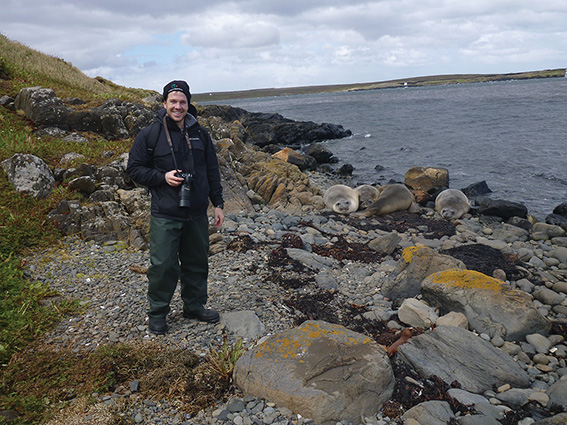
NORTH Perth’s Alex Hickling is one of two Western Australians involved in an “unprecedented” expedition around Antarctica.
Carrying scientific teams from all over the world, the Russian research vessel Akademik Treshnikov is hopping around the craggy ring of islands which surround Antarctica to collect data for 22 different projects in a wide range of interrelated fields – including oceanography, climatology, and biology.
Known as ACE, the circumnavigation has been organised by the Swiss Polar Institute and aims to further understand how the poles are affected by climate change.
SPI also hopes to enhance scientific collaboration between countries and ignite an interest for polar research in a new generation of young scientists.
One of these fresh-faced scientists is Mr Hickling, who will join senior research scientist Nerida Wilson who he met at the WA museum.
Their project is trying to understand the history of marine life on the sub-Antarctic islands to see whether animals living there now are recent(ish) arrivals, or whether they endured through regular climatic change over the last 40 million years.
Mr Hickling, who studied marine and environmental science at Curtin university, is in the early days of his research career and says he’s absolutely chuffed to be working on the ACE expedition.
“The expedition is unique in that it’s taking on a wide range of projects that cover terrestrial, atmospheric and oceanographic work. Each project will, in turn, add pieces to the giant picture of the Antarctic and sub-Antarctic area,” Mr Hickling said.
“With climate change becoming such a hot topic recently (pardon the pun), Antarctica is one of the places most likely to be impacted. We are already starting to see signs of this and when this starts to increase, there will be repercussions for everyone.”
A FREE one-of-a-kind legal clinic for WA asylum seekers could face closure unless emergency funds are raised, says Humanitarian Group CEO Helen Pearce.
The Abbott government axed legal funding for ‘irregular maritime arrivals’ in 2014, leaving asylum seekers in WA to muddle through complex visa application forms on their own.
Relying heavily on volunteers and philanthropic grants HG launched the Temporary Protection Visa project in 2015, and has helped over 2000 people negotiate Australia’s TPV process, which includes a 38 page form and 102 detailed personal questions in English (rarely an asylum seeker’s first language).
Many of the grants which funded the clinic have now been exhausted, so in partnership with Curtin’s centre for human rights education HG is crowdfunding $80,000 to help the 140 people on its waiting list.
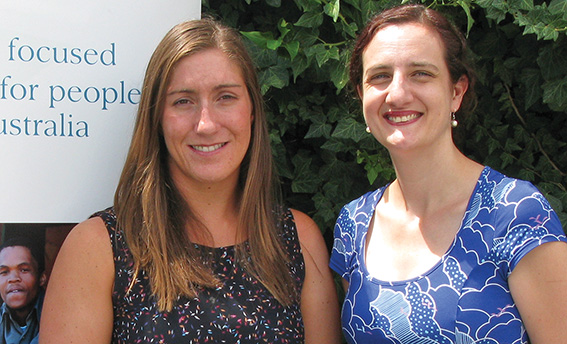
• Humanitarian Group solicitor Katy Welch and senior solicitor Kathy Bogoyev.
Ms Pearce says that without their service many asylum seekers, who have valid protection claims, risk being deported simply because the forms submitted to the department of immigration are poorly filled in.
“Australia’s protection application process has become increasingly complex in recent years,” Ms Pearce says.
“This makes it difficult to understand for people who come from different legal cultures and do not speak the language of the decision-makers.
“Without adequate legal assistance, the integrity of the visa process can be compromised, and people who are in need of protection can be wrongfully returned to the persecution and harm from which they originally fled.
Human rights
“We’re already running on negative so we’re at a point where if this is not successful, we will not be able to provide this free service.”
The crowdfunding campaign will be launched after a public lecture at Curtin university by former high court judge Michael Kirby, a doyen of human rights law in Australia.
Mr Kirby’s lecture will be held at 6.30 pm, February 17, at Curtin’s centre for human rights education.
To donate visit chuffed.org/project/seeking-refuge-wa














 Perth Voice Interactive