BAYSWATER council is reducing the red tape to encourage the city’s restaurants to take up street-side dining.
In theory local governments should roll out the red carpet for anyone wanting chairs and tables on the footpath, as it saves them from having to splash out on furniture or artworks to “activate” their streets.
But for years Bayswater’s forced restaurateurs to get full planning approval and an alfresco dining licence, along the way slugging them a $25.60 fee for each chair and $147 for the development application fee.
Those charges have been dropped and planning approval has been replaced with a simple licence mayor Barry McKenna says will ”streamline the process so it now takes less time and is less of a hassle”.
• Crs Chris Cornish and Catherine Ehrhardt discuss Bayswater’s easing of alfresco laws over a cuppa with Lyric Lane owner Michiel de Ruyter. Photo by Steve Grant
The move is one of the initiatives of the Red Tape Reduction Working Group, chaired by Cr Chris Cornish along with Catherine Ehrhardt, John Rifici and Brent Fleeton.
“I personally am a believer in a small, lean government which minimises interference in people’s lives,” says Cr Cornish.
“I believe that existing rules and processes need to be questioned, that people shouldn’t simply accept things just because that’s the way it’s been done, and I am fortunate to be in a position where I can hear residents’ concerns and advocate on their behalf for change when required.”
The working group’s got a few more irons in the fire, like putting together templates for people to submit traffic management or risk management plans if they want to put on events.
Currently it’s a jargon-heavy process that virtually insurmountable for an indy youngster wanting to hold a pop-up market one Sunday.
“All forms of government can become unwieldy as historic rules and processes are followed,” Cr Cornish says. “The red tape reduction working group can assess whether interactions with the city are as simple and efficient as possible.”
THERE were just two entries in the City of Perth’s heritage awards this year.
The entrants in the hotly contested field were the restoration of St Georges College at 44 Mounts Bay Road and the RPH Heritage Society for its community achievements.
The winner is still confidential, all we know is there was one “unsuccessful applicant” and the other is up for the $10,000 main prize.
When the awards were last held in 2014, there was a paltry eight applicants, and staff say there hasn’t been much happening since then.
“The lower participation rate is reflective of the amount of development and restoration work on heritage places within the city since 2014,” the report found.
Staff will review the awards, then report back to council in the coming months on whether an overhaul is needed.
WARNING: This story contains the name of Aboriginal people who are now deceased.
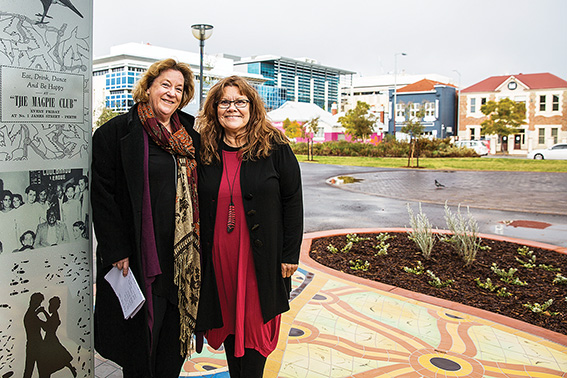
A NEW interpretive artwork installed at Weld Square has been unveiled, revealing the little-known story of the Coolbaroo League Social Club.
Coolbaroo was a social club for Aboriginal people, operating at a time they’d been banned from entering the city without a “native pass” by the state’s chief protector of Aborigines, AO Neville. The club operated in several locations, but its most familiar was on Newcastle Street, right on the border of the forbidden zone.
Vincent deputy mayor Ros Harley opened the new artwork.
“It was a very difficult time when Aboriginal people were essentially excluded from the economic and social benefits of being able to move freely in the city,” said Cr Harley, inaugural chair of the city’s new Reconciliation Action Plan group.
“When people talk about ‘can’t you move on and forget it’, there are still people alive today who were affected by that restricted area… think about the economic impact of that, the hurdles people faced.”
Weld Square was once a wetland where Aboriginal people camped, but it gained renewed significance in the 1900s as its southern edge bordered Newcastle Street and the prohibited era.
The Coolbarooo League formed in 1946 to improve civil rights for Indigenous people, as access to health and education was extremely limited. The name means magpie, and was chosen because it signified black and white coming together.
Activist Helena Clarke was one of the founders, setting out to scrap the prohibited area laws along with elders Thomas Bropho, Bertha Isaacs and Bill Bodney.
• Artists Jenny Dawson and Sandra Hill with their tilework and storytelling pillar. Photo courtesy www.studiophotopronto.com
Social side
Along with politics, the League had its social side too, and became an important focal point for Aboriginal people to meet and socialise.
A Daily News headline from March 18, 1947 reported “Aborigines, Half-Castes Have Weekly Dance, Social”.
The article says “an average of 300 aborigines and half-castes attend a weekly dance and social at East Perth Pensioners’ Hall”.
Vincent library’s local historian Julie Davidson’s study of the era says events were family oriented and “people were encouraged to perform and they offered a safe, creative and entertaining environment, with no alcohol allowed”.
“Beauty competitions became part of their calendar, with the first Miss Coolbaroo crowned in December 1947. White people could attend by invitation only.”
It was mostly trouble free, but a big fight at a dance spilled onto the nearby railway line and the league was barred from the East Perth Pensioners Hall.
By this time Helena Clarke had returned to Port Headland for her family, but some original members formed the New Coolbaroo Club in 1950 at the Braille Hall on the corner of Newcastle and Stirling Streets. The weekly dances continued. They held annual balls in larger venues like the Blue Room.
Nat King Cole and the Harlem Globe Trotters visited, and in 1956 they invited whites to their dance at Manchester Unity Hall on William Street.
“NATIVES END BAN, DANCE ATTENDED BY WHITES” the May 12, 1956 edition of the Mirror screamed in all-caps.
The club closed down in 1960 when key member Ronnie Kickett died aged 29, though its membership echoed through later organisations, and the Aboriginal Health Council of WA traces its roots back to people organising the weekly dances on Newcastle Street.
The interactive pillar designed by Jenny Dawson and Noongar artist Sandra Hill was installed for this year’s Naidoc Week.
Along with images of key figures, the pillar is emblazoned with one of the “native passes,” and accompanying oral stories are available with a button press.
AFTER a fractious council meeting Bayswater property owners face a rates bump of an average 3.25 per cent, more than twice CPI.
It took two meetings to pass the budget and councillors were split over it, with Chris Cornish and Brent Fleeton walking out of the first meeting after an hour of debate.
At the time the council was in a 5/5 deadlock, and while other councillors wanted a 30-minute informal chat about getting it passed, but Cr Fleeton said that wouldn’t be sufficient to resolve the issues he had with the budget and he walked away.
Cr Fleeton had wanted a 1 per cent rate increase on the back of a savings plan.
‘Not in control’
He’s been complaining for months that councillors are frozen out of important decisions like staff salary negotiations that could lock the organisation into big wage increases for many years.
Cr Fleeton, who favours small local governments focused on “rates, roads and rubbish”, says without a hand in those negotiations, which affect the Bayswater’s biggest recurrent overhead, “I strongly suggest this council is not in control of this city”.
Cr Cornish has concerns the council is pulling cash from reserves to keep rates artificially low, but won’t have enough left to maintain infrastructure.
The budget was passed second time round but was still a bumpy debate with Crs Cornish and Dan Bull voting nay, and Cr Fleeton boycotting the meeting.
The longstanding 15 per cent resident discount at Bayswater Waves and Maylands Waterland (and now the Rise centre) is on the chopping block this year, but council’s yet to decide how much of the discount to snip.
Major works for the year include $400,000 for new tree plantings in line with the new councillor-driven greening of the city, $196,000 on other environmental measures, $920,000 to upgrade Bayswater Waves, and $620,000 grand to fix up the various rusty sporting clubs around town.
Mayor Barry McKenna called it a “prudent” budget and says they strove to limit the rate rise “to no more than was needed”.
“These are difficult economic times and we recognised that family budgets would be under pressure, so we strove to keep the rise in rates as low as we could while also meeting community expectations,” the mayor said.
DRONES will not replace rangers at Bayswater council. Yet.
The council poured cold water on the idea after resident Ian Walters suggested robo-rangers could monitor parking.
He’s been dobbing in illegal parkers at the corner of Lawrence and Beaufort Streets near Chisholm College in Bedford but says “the parking breaches continue unabated”.
He can’t get answers about the number of breaches there, and during formal question time to council complained: “It is astonishing to learn the city’s corporate systems are unable to accurately generate a reporting list for the number of infringements and warnings issued for a particular defined area.”
Bayswater has four dedicated rangers and 11 that double as security officers and he wonders whether that’s enough.
“Will the council consider the purchase of photographic drones to be used by the rangers to monitor any part of the City of Bayswater to detect illegal parking?” Mr Walters asked.
“I am informed the cost is minimal.”
Alas, no luck for robo-fans. The city answered it’s “not currently investigating drones for monitoring parking” and hasn’t set aside budget cash for drones for “any other ranger tasks” either. The council’s reply to Mr Walters said the rangers will base their schedules around frequency of breaches at a spot, resident complaints and local knowledge, but they have a lot on their plate: “Rangers carry out a large number of duties to enforce a wide variety of legislation”.
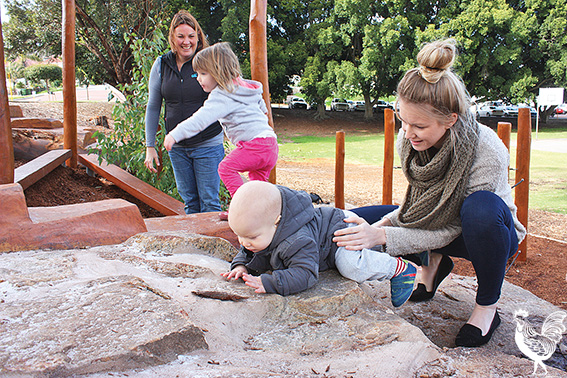
THE swish new $100,000 nature playground has opened at Bert Wright Park in Bayswater and chillens are flocking to it.
Even before the official opening last week kids informally opened it, about 40 of them swinging by to scramble up the woodchip slopes and clamber over the log steps.
On Tuesday more than 20 were still running about the place, while our photographer reported that there was only one other park in Voiceland where he saw kids playing, and they were involved in an organised sport.
• It’s school holidays and Benjamin Pearce and mum Laura Carpenter, and Emily and Karen Ross were helping to break in Bert Wright Park’s new nature playground. Photo by Steve Grant
It’s part of Bayswater council’s plan to reactivate the Bayswater town centre, and they let locals have their say on the final design.
There’s a whole boatload of research into how nature playgrounds are better for kids compared to the sterile, plastic and foam-floor offerings, from the way it teaches them to take small risks and overcome tasks, building resilience if they scrape a knee and even boosting immune systems when they get exposed to a bit of dirt.
Vincent council’s nature playground wasn’t a flash in the pan either: It opened a year ago but it’s still packed out with kids every weekend.
STIRLING council has picked up a national award for promoting indigenous recognition.
Last month mayor Giovanni Italiano and CEO Stuart Jardine traveled to Parliament House in Canberra to pick up the award in the national local government awards.
Stirling was the only WA council to take out a category, for its Stirling Aboriginal Engagement Project.
The project started after local Noongars complained they weren’t acknowledged or understood by the the city’s growing multicultural community.
Tours were organised which became so successful Wadgelas started turning up as well, and the project got some traction.
Oral histories were collected from the city’s elders to be stored in a local museum.
“What they did, their environmental and their commitment to land, animals, the water, the total environment changed the way that people thought of the Aboriginal community,” project organiser Trevor Holland said, noting Stirling now hosts WA’s biggest NAIDOC celebration.
It’s a big step for Stirling, which only in 2010 voted to fly the Aboriginal flag — and only during NAIDOC and Reconciliation weeks — and in 2011 then-mayor David Boothman described relations with the Noongar community as “strained”.
Other initiatives as they reached detente included a community art project in Nollamara, help for Aboriginal mums at the Herb Graham leisure centre and a weekly Aboriginal day at Nollamara Community Centre.
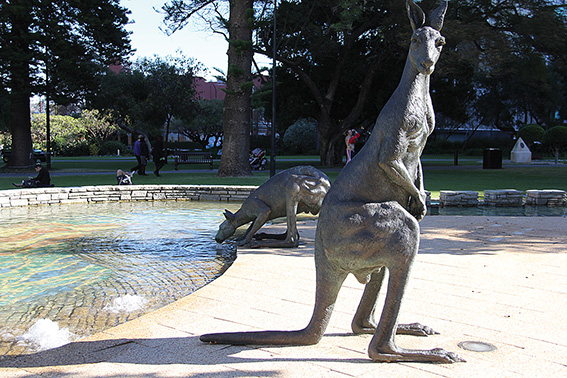
PERTH city council is encouraging ratepayers and visitors to get intimate with the city’s oldest public garden.
As part of its Walk & Talk series, the council’s long-standing arboricultural expert Alan Dolphin will be giving a guided tour of Stirling Gardens.
Mr Dolphin started in the council’s parks and gardens department as a trainee in 1975, and while he’s mostly desk bound these days, he says he feels privileged to be near some of the city’s oldest trees.
• Learn about Stirling Gardens with Perth council’s arboricultural expert Alan Dolphin.
“Working in Council House, alongside Stirling Gardens, there is nothing more relaxing and calming than getting out and sitting in the shade of these magnificent trees,” Mr Dolphin said.
Stirling Gardens was first used by colonial botanist James Drummond as an acclimatisation garden in the 1830s.
Hardly, as Perth council works on a new signage policy to remove some of the red tape surrounding advertising material and pave the way for large electronic signs – but Keeps a strict hand on where they’ll be allowed.
Under the new rules it’ll be much easier to have a sign on a building that relates to what’s actually sold there, and even third party signs with Brad Pitt awkwardly advertising perfume or whatever will have a little more leeway.
The council still wants them to have “a high standard” and “not adversely affect the amenity”, and they can’t be flashy if drivers can see them.
The signage policy doesn’t ease up on handheld signs at all, so the council can continue to persecute homeless people holding a scrap of cardboard with “hungry please help” scrawled on it (“Council taking beggars’ signs,” Perth Voice, June 4, 2016).
The council also won’t let owners stick third party advertising on heritage buildings unless there’s a “clearly established historical precedent,” but we’re not sure if that limits them to spruiking horseshoes or 1800s era miracle tinctures.
Big electronic signs have been hotly debated when before the council (just last month the council knocked back a 70sqm sign on St George’s Terrace as “inappropriate”) but under the policies they’ll be easier to get through, as long as they comply with various criteria.
The big signs will be restricted to public entertainment and retail places where people gather (such as Forrest Place), and the top of buildings greater the 29 metres high where only the name of the building or the tenants will be permitted. The new easy-going policy will go out to advertising and then back to council for a final decision.
STIRLING ratepayers are facing a modest 1.75 per cent rate increase, one of the lowest in the metro area.
The state’s biggest council has a budget totalling $307 million, with $95m going towards capital works ($28m on roads, paths, drains and parking, $8.2m on new parks, $10.1m improving the council’s own buildings and a $20m outdoor heated swimming pool at Scarborough Beach).
A lot of the juicy spends are outside Voiceland but there’s a million-dollar BMX club extension planned for Hamersley and $13.6m on the facelift of Scarborough.





















 Perth Voice Interactive