THE candidate who fell just 33 votes short of booting out Stirling mayor Giovanni Italiano from his council ward is “concerned” there might have been a miscount, and wants the WA electoral commission to review its systems to remove future doubt.
Teresa Olow read the Voice’s stories last week about alleged problems at counts in Bayswater and Canning and says she is “now concerned after reading the articles about how the counts were conducted”.
“As this is my first time running for council, I would expect that the electoral commission to do the counting in a professional manner,” she says.
“I would like the electoral commission to review the way the counting is done.”
Votes for Stirling’s Osborne ward were counted three times because it was so close, and on the third count, Cr Italiano had two scrutineers and Ms Olow just one, she notes.
However, Ms Olow’s scrutineer Mudji Nielson told the Voice ”they did very well” and is confident votes were counted correctly.
Cr David Lagan was in the room at the time and he says nothing looked awry. But he notes the returning officer Raymond Smith, who’d run the election on behalf of the commission, had only done the job previously in state elections.
Cr Lagan says “three or four” boxes arrived in the room half an hour into the count, and he never found out what they were for, despite asking about them on the night.
Voice calls and emails to Mr Smith went unanswered.
Cr David Michael was a scrutineer for Cr Italiano and he says there were “no problems”. He did not recall the allegedly unaccounted-for boxes.
In Perth, Cr Reece Harley, who ran against lord mayor Lisa Scaffidi, says he’s confident everything ran smoothly.
The Voice reported last week that former Bayswater councillor Michael Sabatino is taking the commission to court, claiming “something went terribly wrong” during the count.
He believes the count was rushed and got “complicated and piles were mixed up” after new counters joined the table.
The court was due to hear the matter on December 11, after the paper’s deadline.
THE honey made in John Faherty’s North Perth backyard is lemon-yellow and tastes like lollies.
In Karrinyup it’s a bit salty, whereas in rural Chittering bees feeding on red gums produce dark, molasses-like honey, he says.
Mr Faherty is on his way to setting up a beehive in every Perth suburb—all 120-odd—as part of his Postcode Honey business.
So far, he has keen residents on board in 40 urban and 30 rural yards.
Pointing to a jar labelled “6020”, he says, “that’s an old workmate”. Honey from 6286 is his father-in-law’s place and 6018 is where his brother-in-law is based.
• North Perth man John Faherty quit his job in oil and gas in July to work on his buzzing backyard business. Photo by Matthew Dwyer
Each postcode, and season, offers different accents of flavour and colour: it’s a far cry from the stuff stocked on supermarket shelves.
Scraping aside wax to taste his fresh, raw honey, Mr Faherty says his last batch was darker and slightly bitter because nearby peppermint trees had been in bloom.
He suspects the lemon-yellow honey he’s getting now is mostly because bees are feeding on box trees. His network of collectors has slowly grown since July, when Mr Faherty quit his oil and gas job to create the business.
“I worked for a beekeeper about 20 years ago as a student in New Zealand,” Mr Faherty says.
“I guess the interest in honey was reignited by an old guy at work who was bringing in jars of honey from his backyard. I set up my hive last year and started giving it away to friends and family.”
In a year, he’d collected 70kg—more than any sweet-toothed family’s domestic needs. He expects to harvest 100kg over the next year.
The 6006-postcode man says business is buzzing. Over the weekend, more than 200 people contacted him, wanting to set up their own hive.
He says he’ll take his time, and aims to have all postcodes covered in four years. His Italian neighbour, who’s quit using pesticides on his vegie garden, swears his bountiful crop is due to improved pollination from the 50,000-odd bees now living across the road.
Wax by-products are donated to the local bowling club to aid grip on bowls.
Find Postcode Honey at New Norcia Bakery in Mount Hawthorn, the Little Cheese Shop in Bayswater and North Perth’s Hobart Deli.
THE verdicts are in and punters want to see the old disused sewerage pump station on Langley Park turned into a cafe.
When we say punters, we mean the 13 who responded out of the 1200 that Perth city council asked.
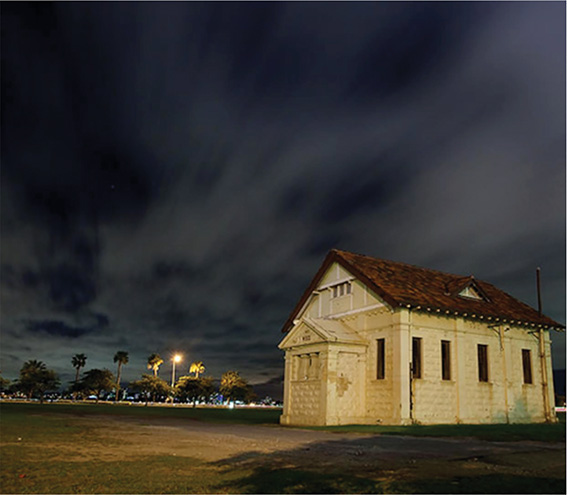
The station was built in 1912 as part of a new sewerage system to counter the problem of Perth “living on a dung hill”. But along with two others it’s been sitting dormant since 1989, when a new central sewerage station was built to take over.
• This heritage-listed former bog shack could be a cafe one day. Photo supplied
Ideas for what to do with the heritage-listed block have come and gone but after a pow-wow with interested locals a cafe seems to be the go.
If the council agrees it’ll hit up the water corporation (which has part responsibility for the building) for some cash to fix it up and see if it can be leased to a restaurateur.
Council staff reckon a small cafe or healthy takeaway venue would be the go since there’s low foot traffic and a bunch of casual sporting types using the park.
BAYSWATER council has dumped its “meals on wheels” mobile catering service for the elderly because of a 75 per cent drop in clients since 2001.
From July 1 Stirling will extend its service to feed Bayswater’s frail and elderly.
Bayswayer’s MOW, established in 1983, had 242 clients in 2001 and now there are about 60.
Last year, there were 64, and five years ago 141.
Council spokesman Julia Kogan says the service is no longer economically feasible.
“The number of clients using this service began to declining from 2010 onwards,” Ms Kogan says in an email statement.
“This was because of the increasing availability of alternative options, such as affordable frozen meals, commercial contractors and other food service options offered by providers of Home and Community Care services.”
Under Stirling’s much larger management, clients will continue to receive “high-quality meals” as well as a more-affordable service, Bayswater mayor Barry McKenna says.
But he and council staffers are unable to say what the exact cost implications are.
Bayswater’s MOW costs users $8.50 for two courses. Costs are expected to be reviewed by Stirling at budget time.
THE cash that Vincent council pulled from its seniors reserve to help plug a massive budget bungle has been replaced.
Last year it snaffled $745,000 to help cover a surprise $8 million deficit racked up under the previous administration.
It was a contentious decision, drawing fire from former councillor Dudley Maier as well as several candidates looking to unseat incumbent councillors at October’s election.
Now, with the budget looking healthier under new CEO Len Kosova, the cash has been returned.
The still community-active Mr Maier fronted public question time to remind councillors “you shouldn’t have taken [it] out” while expressing his doubt about the health of the budget, but wishing them a merry Christmas nonetheless.
Mayor John Carey described Mr Maier as “a lone voice that preaches doom and gloom”.
Meanwhile, another failing of the previous regime has been discovered that is likely to cause a paperwork nightmare.
The cash in the seniors fund comes from the council-run Leederville Gardens retirement village and, by law, it should have been kept in a tightly controlled Trust for the benefit of Leederville Gardens. But instead it had been sloshing around in a general “cash for anything to do with oldies” reserve.
Mr Kosova says it’s an obvious mistake: “It’s frustrating… anyone with any local government experience would know there’s distinct parts of the legislation that deal with the Trust and that deal with reserves.”
His staff now have to go back and see if any of the money was spent on general senior things, and research the legal ramifications.
AFTER a long and fruitless search for the gumnut baby stolen from Stirling Gardens, Perth city council looks likely to shell out $27,000 for a new one.
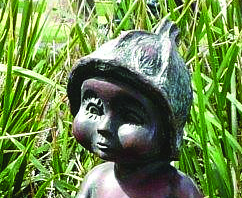
The bronze bub was nicked around March 23. Whomever made off with it had come prepared, because they had to cut through four “substantial” steel rods fixing the nutty nipper to the concrete.
• The stolen Gumnut Baby — not recovered despite a $1000 reward.
The council offered a $1000 reward but no luck. Now staff recommend going back to artist Claire Bailey to birth a new gumnut baby, which will cost $27,000 to make and install.
Ms Bailey no longer has the original moulds so the work must be recreated from scratch. This time the council will mount the baby on a cast bronze rock to conceal the rods connecting it to the concrete so it’ll be impossible to cut away without damaging the work. If all goes well and councillors approve, it should be in place by March 2016. Staff hope insurance will cover the cost, minus a $5000 excess.
ANTONIA TAYLOR is the WA State Manager for Oxfam Shop (Hay Street, Perth and Queen Street Fremantle) and Co-Convenor for Fair Trade Freo. In this SPEAKER’S CORNER Antonia explains how you can help make a world of difference this Christmas
IT is staggering to think that Australians will spend $46.7 billion this Christmas, according to annual spending figures released by the Australian Retailers Association (ARA) and Roy Morgan Research.
It blows my mind to think of the impact this money could have in the hands of some of the world’s poorest communities.
The really exciting thing about my work with Oxfam and as a Fair Trade campaigner is that we are actually in a position to witness how a small amount of money can have a very real impact on producers — none more so than in the wake of a disaster.
It has been more than six months now since we woke up to scenes of utter destruction in the aftermath of the earthquake that devastated great swaths of Nepal.
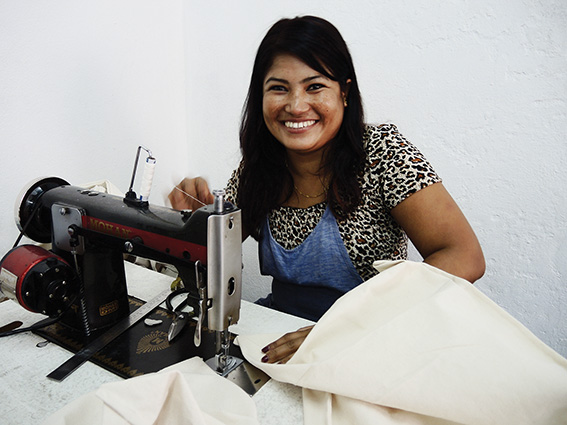
• Pramila Shrestha — a Nepalese trader whose livelihood depends on Fair Trade. Photo supplied | Angus Hohenboken, Oxfam Australia
Many workshops and small-scale factories that supply Fair Trade shops around the world were impacted by the earthquake, placing the livelihoods of artisans in peril.
As soon as the Oxfam emergency appeal opened, the communities of Fremantle and Perth opened their hearts (and wallets) in an incredible show of solidarity with the people of Nepal.
Australians from all walks of life poured into our two WA Oxfam Shops, handing over small and large change — some gave their week’s pension — and children donated their pocket money. Through these impromptu donations, the shops raised almost $30,000 for Oxfam’s Nepal appeal.
Just four weeks after the earthquake, Oxfam Shop general manager Julia Sumner and I attended the World Fair Trade Organisation bi-annual conference in Milan. The Nepal earthquake was high on the agenda for this gathering of global Fair Trade pioneers and leaders.
We were all moved to tears to hear from the nine members of Fair Trade Nepal Group who, despite the utter chaos unfolding in their country, had made the journey to Italy to attend the conference and tell the stories of their workers, and the efforts they were taking to distribute emergency aid to their communities.
One of these producers is Sana Hastakala, which works to promote traditional craft skills with predominantly underprivileged artisans, in particular women.
Pramila Shrestha, a hearing-impaired artisan who works with Sana Hastakala, was among those affected by the earthquake. When it shook Nepal on April 25, Pramila was thankfully in a safe place in a park in Kathmandu, attending a Deaf Association picnic, but her home was critically damaged.
Communicating through sign language, Pramila explains that when she couldn’t reach her husband through their usual method of video calls, she feared the worst.
“Immediately after the earthquake the reception towers were out, so I was trying to make video calls, but I couldn’t get through. I was very scared,” she said.
Rallied
Oxfam and others at the WFTO conference rallied behind our colleagues in Nepal who were representing hundreds of individual producers that make our beautiful hand-crafted products. We committed to help these resilient people to re-build their workshops and houses and grow their businesses so trade can, once again, bring hope to this country.
The re-building in Nepal will continue for many years but we are thrilled and astonished that just six months after the earthquake, products from Nepal have made it back on our shelves, just in time for Christmas.
Every product we buy has been touched by someone, somewhere with a name and a story but all too often their voices go unheard.
The difference with the Fair Trade supply chain is we take the time to really hear and react to the stories of our producers, because they are at the heart of everything that we do.
As consumers this Christmas, we have the power to choose where a small amount of that $46.7 billion goes and — if we listen to the human voice behind our products — we really can make the world of difference.
FONDUES are enjoying a bit of a ‘70s revival but I still wasn’t sure what to expect from a mushroom one. Melted cheese and a bunch of button mushies to dunk, perhaps?
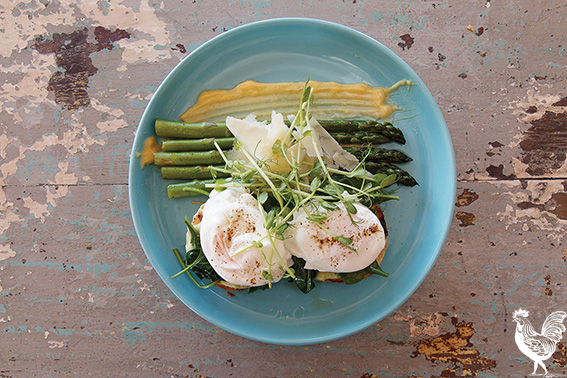
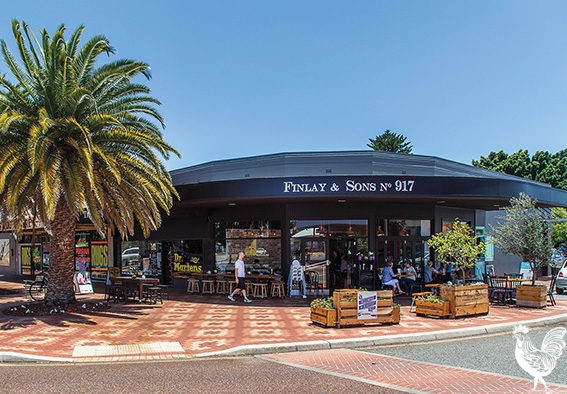
Keen breakfasters will love the menu at Finlay and Sons in Inglewood but — not being a fan of eggs — I found it short on choices for a non-meaty lunch.
I considered the waffle with mascarpone and caramalised banana ($9, $11 or $13), but was really hanging out for something savoury, and thought “in for a penny in for a pound” and ordered the fungi fondue ($17).
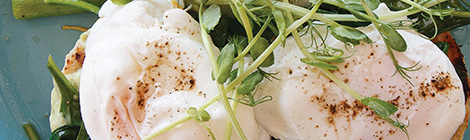
• Photos by Matthew Dwyer
What a splendid choice it turned out to be: a decorative copper bowl of juicy mushrooms swimming in a deliciously cheesy sauce, flavoured with basil and garlic, with slabs of toast on the side for dipping.
My lunch companion ordered the ribs ($27) and was in seventh heaven from the moment the huge serve arrived: the caramelised bits of carcass topped with chunky golden brown slices of potato.
“It just falls of the bone and is obviously cooked very slowly,” she said, intoning with great seriousness, “they are the best I’ve ever had.”
Finlay and Sons has been open just three months but is already drawing in the breakfast and lunch crowds.
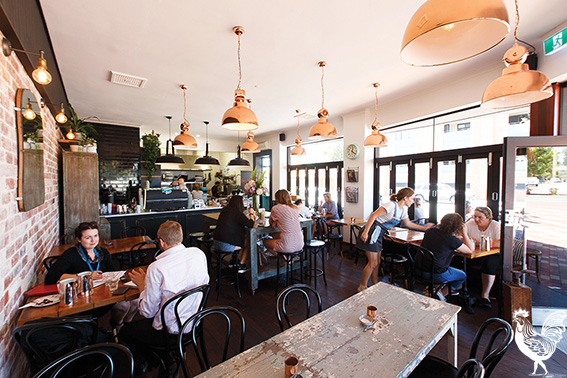
The decor is hip, with raw brick walls, black tiles in the open kitchen, over-sized copper lights and aged-worn timber tables and benches.
The inside was crowded and noisy for our visit so my mate and I enjoyed the outdoors, sitting almost under a huge palm tree, undeterred by the brisk breeze humming down Beaufort Street.
You’ll go a long way to find friendlier, more efficient staff and the service was great.
The night before, we were informed, the chef had been experimenting with a lemon, passionfruit meringue slice ($5) — all the elements I love — and it had made its way to the menu.
The chunky biscuit base was deliciously chewy and the lemon and passionfruit magnificent together.
My mate had the chocolate-topped caramel slice ($5), a wickedly rich indulgence. Both desserts were washed down with a couple of very mellow coffees.
by JENNY D’ANGER
Finlay and Sons 917 Beaufort Street, Inglewood open Tues–Sun 7.30am–3.30pm
WITH less than four per cent of Perth city council’s substantial art collection consisting of work by Aboriginal artists, the council’s looking to pick up a piece by Ben Pushman.
In a report to councillors, staff concede “there remains considerable room for development” in adding to the city’s 17 Aboriginal works.
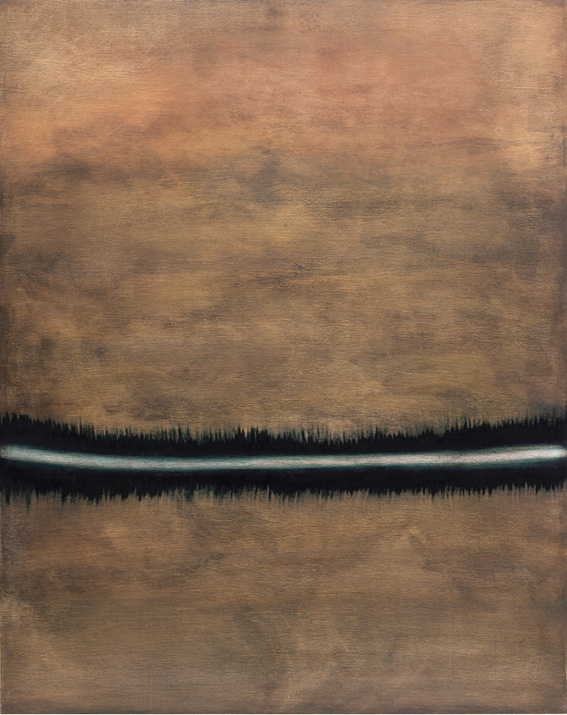
Pushman’s Washed Out “refers to an experience of being a Noongar person growing up in the urban environment of Perth,” staff write in a 13-point summary required to meet acquisition criteria.
Anna Kanaris, who runs Artitja Gallery specialising in indigenous art, says it would be good to see more Aboriginal works but notes, “it seems that public collections are a reflection of art trends in the wider community”.
“Although many collectors and members of the general public hold indigenous art, it still represents a small percentage of total art sales in Australia.
“Australian indigenous art is a niche market and it will take time and an improved economy before it becomes more widely represented and included as a major part of a collection.”
An image of the work was considered “confidential” and stricken from the council agenda. So we googled it and found it on Mossenson Galleries’ website in about four seconds.
A DUTCH cannon provides a menacing entry to Treasure Ships: Art in the Age of Spices, at the WA Art Gallery — rather fitting given the ruthless hold the Dutch East Indies Company held over a swathe of Asia for almost 200 years.
The 250 exhibits provide an arts-eye view of 400 years of the exchange of ideas and art between Europe and Asia through the spice trade, starting with Vasco da Gama’s voyage to India.
The highly lucrative (for Europe) spice trade led to a cross-pollination between previously isolated countries, and changes not only in art, but everyday life.
“Paisley, which we think of as so English, is an Indian motif that transferred across,” curator Melissa Harpley says.
• Van Doetecum Family, engraver Netherlands, fl.1554–1606 after Jan Huygen van Linschoten Netherlands, 1563–1611 Comportment and dress of the Portuguese citizens and soldiers in East India as they appear in the streets from 1599, Amsterdam; printed by Alberti Henrici and Cornelii Nicolai plate 9 25.0 x 31.7 cm engraving with contemporaneous hand colouring | Kerry Stokes Collection, Perth
Embracing cloves, nutmeg and cinnamon in the kitchens—now synonymous with Christmas—Europeans also took to Asian designs in crockery, art and furnishings. It was a two-way exchange, and Japanese and Chinese art now show western influences, Harpley says.
It’s surprising to discover the Portuguese introduced chilli to India, and Asia, from the Americas.
Unable to crack the secret to making porcelain until the 17th century, Europe was fascinated by it: “It was a technology they were envious of, referring to it as white gold,” says Harpley.
Holland’s famous blue and white delft-ware was inspired by Chinese porcelain, in turn inspiring Japan “[which] started picking up on Delft and [Italian] Maiolica,” Harpley says.
The world’s first multinational, Vereenigde Oost-Indische Compagnie (Dutch East Indies Company) was a ruthless, murderous conglomerate granted sweeping powers in 1602 to wage war, imprison and execute prisoners and establish colonies. It was also involved in the slave trade, and the exhibition shows paintings of slave ships, while Asian paintings depict the terror of European ships entering ports, cannons blazing.
There’s plenty in the huge exhibition for kids, including cannons and “amazing objects”, Harpley says.
And they can build their own Dutch man-of-war or treasure ship from Lego in the Gallery over the school holidays. (Check online for dates).
Treasure Ships: Art in the Age of Spices ends January 31. Tickets $15, students $10, kids u-12 $5.





























 Perth Voice Interactive