THE exterior of this Bayswater home has lovely mixed brickwork.
It’s like some urban, middle class mosaic, built on a grand scale for a nuclear family.
I do like the overall effect and it’s a welcome change from the prosaic renders you get on most modern abodes.
Built not that long ago, this three bedroom two bathroom home has some lovely high ceilings and top quality finishes.
Maybe it’s the neutral colour scheme and clean, uncluttered lines, but there’s a relaxed and welcoming feel.
The hub of the home is the open plan kitchen/lounge/dining area, which has lots of space and charm.
Whipping up meals in the kitchen will be a cinch with the six-burner gas cooktop and built-in pantry. There’s loads of bench space and a double sink and breakfast bar.
The mixed brickwork continues out the back where there is a cute, sheltered alfresco and some extra high raised garden beds.
Accessed via sliding glass doors in the lounge, the alfresco is a nice spot for evening drinks and a cup of coffee on a Sunday morning.
The three bedrooms are bright and airy, and all have excellent built-in storage.
As are both bathrooms with high-end fittings.
This no-strata fee home includes Daiken ducted reverse cycle AC throughout, reticulated gardens, a laundry, Crimsafe security doors, and a double garage with storage and additional driveway parking.
Situated on a quiet rear block on King Street, you are within walking distance of Bayswater train station, neighbourhood bar King Somm, Drip Expresso and Bayswater and St Columba’s primary schools.
Come the weekend enjoy a relaxing cycle or walk at the nearby Riverside Gardens and Swan River.
This is a well-priced, modern house in a good locale.
From $589,000 73B King William Street,Bayswater ACTON Mt Lawley 9272 2488 Carlos Lehn 0416 206 736
• Dressed up with nowhere to go: the Deen Clinic targets some of the state’s most vulnerable people, but can’t find a GP.
A BULK-BILLED nonprofit medical clinic in central Perth has been unable to open its doors due to WA’s shortage of doctors.
The Deen Clinic, founded and run by HepatitisWA, has had to push back plans to provide primary health care to Perth’s most vulnerable residents because it can’t find a GP.
Deen Clinic CEO Brent Bell says “a homeless-friendly primary health clinic like this has been needed in Perth for a long time, so we decided that we would expand our hepatitis clinical services and start it ourselves”.
Trust
The transition was a natural one, since hepatitis – and especially hep C, which is translated through blood-to-blood contact –is a disease that disproportionately effects vulnerable populations, and especially drug users.
Outreach programs like clean needle distribution and prison hepatitis screenings led by HepWA have allowed the organisation to form trust with the community it serves.
Hepatitis WA clinical services manager Angela Crawford explained: “They come to us for food, and we give them food and water and condoms and toothbrushes, all that.
Through that relationship, we are able to offer some kind of primary health care as well.”
The clinic has been operating on the very limited schedule of a half day per week for about two years, allowing staff to become acquainted with some of the barriers clients face to accessing care.
“A lot of these guys don’t have GPs. They’ll go to hospital only when they’re really, really unwell, often septic… They’re discharged as soon as they can and there’s no follow-up because nobody knows where they are.”
Left untreated, hepatitis can cause liver conditions like cancer and cirrhosis, but recent advances in medicines have made the virus much easier to treat, and the disease is now curable in 95 per cent of those who seek treatment.
Ms Crawford says one of the biggest reasons a person with hepatitis might have for avoiding the GP is the stigma they often experience there.
She recalls treating older patients who say they have never hugged their grandchildren for fear of infecting them. Since hepatitis B and C can’tbe passed on this way, instances like these have to do with both stigma and lack of literacy around the disease.
The Deen Clinic was founded on a principle of absolute non-judgement.
Ms Crawford credits this in part to the backgrounds of Deen Clinic Staff, who she says come from a range of experiences that have given them “an affinity for the vulnerable”.
“We’re all a bit quirky,” she says, “and we can usually identify with them.
“Sometimes their voices are lost, and we should carry their voices until they find their own.”
Patients may also feel rushed by traditional doctors, says Ms Crawford, who has a background in psychology. This can be stressful since “they’ve got a lot of other stuff going on in their heads”.
She says many GPs try to turn over patients quickly to make more money, and hepatitis B and C are both chronic conditions that take time to treat. Since there aren’t a lot of places willing to treat these clients, they can often wait for months or even years to see a doctor.
No barriers
“We want to offer people this reduction in barriers, this non-stigma, accepting environment where, okay, it might take 20 minutes, because they’ve got a lot to tell you, or they’ve got really complex health issues.”
By taking the time to understand them, the clinic hopes to reinforce themessage that their clients are worth it, that they deserve to be healthy and safe.
The Deen Clinic urges GPs who are interested in working with them to call 08 9227 9800, so that they are able to fully open.
“It takes a special person to work in community services, where you see some really, really bad stuff,” says Ms Crawford. “And, you know, it’s not about making money, it’s about making a difference.”
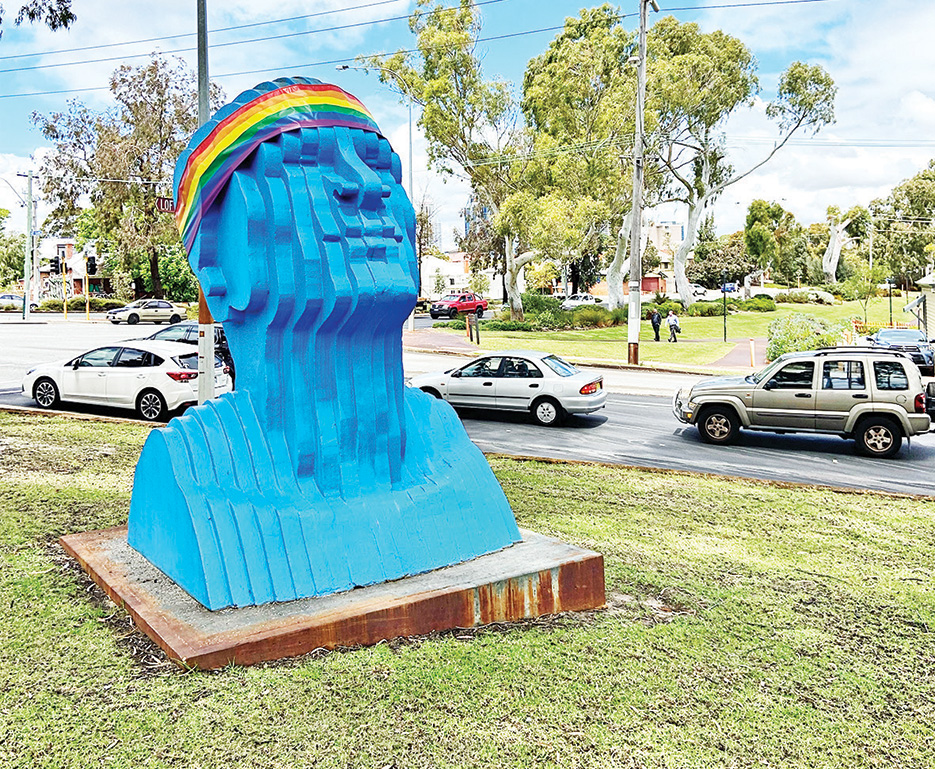
Did the person who swiped the rainbow headband love Pride, or hate Pride? Photo by David Bell
THE Big Blue Head’s big rainbow headband has gone missing midway through Pride month.
Vincent council had adorned the sculpture outside council HQ with a rainbow sweatband to celebrate local LGBTIQ+ sports clubs including OUTdance Perth, the Perth Rams, the Loton Park Tennis Club, and the Perth Spectres Basketball club.
But it’s mysteriously disappeared, with suspicions it was taken late Thursday November 11 or early the next morning.
Anyone with information about the missing headband is urged to call the council to help restore town pride.
BAYSWATER councillor Catherine Ehrhardt has applied for a misconduct restraining order against local resident James Kozak over a years-long campaign targeting her.
Cr Ehrhardt told the court her family felt unsafe and she was seeking an order that Mr Kozak not approach her, her children or their home. She also wants hundreds of social media posts about her removed.
Cr Ehrhardt describes Mr Kozak’s behaviour as harassment and intimidation, while he says he is exercising his right to be satirical and comment on political matters.
Cr Ehrhardt’s statement to the court complained about:
• Hundreds of social media posts, including claims she was corrupt and to blame for many social ills around Maylands;
• Mr Kozak posting an image of firearms in a local gunstore after being banned from one social media site for his posts about Cr Ehrhardt. It was accompanied by the text: “Since I am blocked on the other page by the Admin, and can no longer share these photos of mine, here is a couple just for entertainment”;
• Following Cr Ehrhardt and taking photos of her in public; and,
• Posting her address online.
Cr Ehrhardt stated Mr Kozak had never attempted to contact her in her capacity as an elected member to raise local issues with her.
At the first hearing at Midland magistrates court on November 15 Mr Kozak objected to the MRO, and the court will hear the case on January 13 and decide whether to make orders.
Mr Kozak argued the matter should be held in a higher court, contending it should be heardas a defamation case rather than an MRO, but the magistrate declined.
Mr Kozak also argued for a change of venue as Perth magistrates court was easier for him and his witnesses to travel to, but this was also refused.
A PROPOSED ban on scattering ashes in Vincent has been voted down by councillors (‘Scattered policy’, Voice, November 13 2021).
It’s currently allowable with permission from the council CEO, but staff recommended banning the practice altogether; “given the sensitive nature of the matter, the scattering of ashes may make some members of the general public uncomfortable or cause distress”.
The staff recommendation also said “scattering of ashes at Aboriginal sites or heritage places may be culturally insensitive and inappropriate”.
Councillors decided the ban wasn’t needed.
“It’s very important that we don’t clamp down where we don’t have a problem,” mayor Emma Cole said.
Cr Ross Ioppolo also noted a complete ban would prevent Aboriginal people from being able to have their ashes put to rest on country significant to them.
“We all recognise in the Welcome to Country that there’s Indigenous peoples who have a very special connection to the land and in those circumstances, absolutely I would expect that we would want to grant […] those types of requests.”
It’s currently very rare that anyone actually asks for approval, but councillors decided to keep the approval mechanism in place so there is some enforcement mechanism if ash-scattering suddenly reaches problematic proportions.
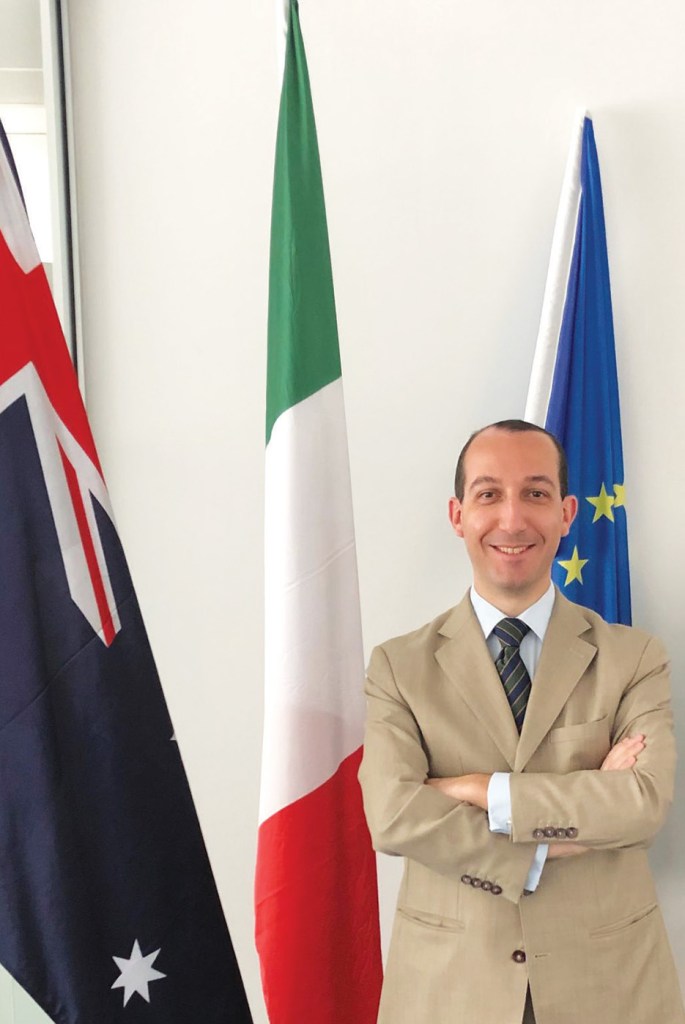
“RESPECT” and “an openminded approach” have governed Italy’s Covid vaccination campaign, with the government avoiding a strict mandate by allowing unvaccinated people a couple of days’ grace each time they do a Covid test.
Italy suffered during the early days of the Covid-19 pandemic, but WA Italian consul Nicolo Costantini is proud of howhis country has emerged and believes the rest of the world should follow their lead.
Italy has adopted a “green pass” system that’s neededto attend workplaces, public venues, or to travel.
A year-long pass is given to people who are fully vaccinated, six months to those who’ve had the virus and recovered, and people who are unvaccinated can get a temporary green pass if they come up negative on a Covid test.
But it requires paying €15 for a rapid test that gives a 48 hour pass, or upwards of €50 for a PCR test giving a 72 hours pass.
The Italian government hopes this will encourage people to take the easier route of getting vaccinated, which is free.
Mr Costantini says green passes help control outbreaks, but also reinforce the importance of being vaccinated to the hesitant.
“The vaccine is the only way out from this horrible tunnel of the pandemic,” he says.
“Even though we understand it is not a perfect means,” it mitigates the spread and severity of illness so outbreaks are more manageable.
“On November 14, 2020 in Italy, we had, in one day, 37,000 positive cases.
“On November 14, 2021, we had 7,000… [but] those 7,000 people are not 7,000 sick people; not all of them are at the hospital, not all of them are at the ICU.
“So as of now there are approximately 100,000 positive cases, but there are only 475 people in ICU.
“We see very clearly that without the vaccine, the situation is terrible and it’s very sad to see people that are against the vaccine getting the virus.”
When green passes were introduced two months ago, Italy’s vaccination rate went up 4.4 per cent ‚Äì higher than comparable countries.
There have still been some protests.
“There are people who do not agree with the vaccine campaign, with being injected, and we respect them,” Mr Costantini says.
“The green certificate should be seen as an incentive for them to go and get vaccinated, but as of now my government is not considering the introduction of compulsory vaccination.
Dialogue
“Hopefully with a very open-minded approach and with a friendly way with dialogue we’ll be able to explain to them and convince them if they do not get vaccinated they’ll be at risk and they’ll pose a risk to the community.
“Eighty per cent of people currently in ICU are not vaccinated.”
Mr Costantini says: “I’m not in a position to say what other countries are doing or if they have a different approach, but I think this is a very European approach… all of the European governments endeavoured to have an open-minded approach and [to] keep an ongoing dialogue with those who are reluctant and those who complain.
“A clash or contrast doesn’t bring anything good; A dialogue can helpin understanding people’s reasons.”
PERTH’S Italian community is commemorating 700 years since Dante Alighieri’s death, while using the occasion to preserve Italian culture and cuisine.
Nicolo Costantini is Consul of Italy to WA, and says Dante is a giant figure in Italian culture.
“He’s absolutely important because he’s the creator of modern day Italian language,” Mr Costantini says.
“Dante was the first one to create a common language. He took from different regions, but in particular Tuscany,” where he was from. “He thought the dialect spoken in Tuscany was the most understandable by everyone, and it is why he wrote his works in this language: the new Italian.
Worldwide
“Thanks to his creation and his language, we were ableto spread the Italian culture worldwide”.
Dante’s masterpiece la Divina Commedia has been translated into almost every language. Last month Mr Costantini took part in a reading at UWA where extracts were recited in 10 languages, including Noongar.
“We realised this was the very first time that part of the Divine Comedy had been translated into Noongar,” Mr Costantini, addingit was not easy to find precise words for every term, but the universality of a story of a journey seems to translate in every language.
La Divina Commedia weaves broad themes like religion and science, but it also has a recurring focus on cuisine
in a range of roles from sinful gluttony, to honest nourishment, and to food as part of meaningful rituals.
It’s fitting then that the Consulate of Italy and the WA Italian Club are marking the 700 years since Dante’s death by weaving performances amid divine comedy themed food stations for revellers.
The event falls just after the World Week of Italian Cuisine, and Mr Costantini said they decided to mix the occasions to strengthen the message they’ve been trying to get out about Italian food culture.
They want to “explainthat Italian food is part of the Mediterranean diet which is a nutritional model, a very balanced one, and it is also a healthy lifestyle”.
The Italian government has long opposed simplified food labelling measureslike the traffic light system because they can write off many Mediterranean foods as “red” (unhealthy) without taking into account proper proportions, preparations, and the lifestyle and activities intended to go alongside those foods that result in healthy living.
“Not by chance, Italy is the healthiest country in the world together with Spain,” Mr Costantini says.
“Another goal of this celebration is to fight against the so-called ‘Italian-sounding’ phenomenon, because all around the world there are fake Italian products.”
Outside the European union a product sold as “parmesan” might be completely unrelated to the genuine “parmigiano” of Italy.
Some of these Italian-sounding imitations can cause “a double damage,” Mr Costantini says, “because it is damaging to Italy’s
true products, but it is also damaging to the people, because these are not healthy products”.
The event ‘Dante Alighieri and the Italian cuisine:A divine journey’ is on November 26 at the WA Italian Club, tickets via https://www. trybooking.com/BVILZ
A Pride parade marcher celebrates the progress made. Photo from the PrideWA archive.
FIVE decades of activism by the local LGBTQI+ community is being celebrated in an interactive timeline project, with organisers calling out for memories, memorabilia and photos to tell the tale.
Rainbow Futures WA is a consortium of LGBTQI+ groups and individuals who’ve come together to focus on the community’s long-term wellbeing.
They’re collaborating with Vincent council’s local history centre team for the Rainbow Past, Present & Futures project to document the story so far.
The timeline starts with the founding of the Campaign Against Moral Prosecution back in 1971 and tells of the many grassroots groups that followed as they sought reform in areas of law, health, sports, culture, media, and First Nations advocacy.
People with flyers, photo, ephemera or stories are invited to bring them along to a workshop on November 21, and you can also register your interest in having an oral history recorded.
The workshop is free for all ages and it starts at 2pm at the North Perth Town Hall. You can also send info or photos to rainbowfutureswa@gmail.com to have them added to the timeline.
ONLINE voting was a notable omission from the state government’s new reforms for councils, and it was a smart call: Online elections can’t work if we want our voting to remain private and trustworthy.
Many of the proposed changes released last week were based on the 2020 report from the Local Government review panel, which recommended “provision in the new Act for electronic/online voting to be introduced in the future once the integrity of the process can be assured (including allowing for a pilot)”.
But the integrity of online voting can never be assured, and thankfully the final proposal for WA reforms quietly dropped this idea and didn’t go down the path of NSW’s ‘iVote’ system.
Online voting is different from other sensitive tasks because when we bank online or lodge our tax returns, having our identity attached to our activity is central to those processes.
Rigging elections
But our voting system is based on the principle of a secret ballot enshrined in our Electoral Act of 1856, written after we saw the chaos of New York’s Tammany Hall gangs rigging elections: We need to be able to cast a vote and have no easy means for others to confirm we’ve voted a certain way.
Without a secret ballot, voters are open to intimidation, blackmailing, or mass bribery.
Swinburne uni professor Dori Tunstall notes vote-buying or just threatening voters into compliance was the ordinary way elections were conducted in the US, until Americans saw how our secret ballot system worked here and adopted what they called “the Australian Ballot”.
But online voting is incompatible with the Australian Ballot.
If your identity can be connected to your vote, and you can log on afterwards and confirm your name is attached to your ballot and your vote is correct, we’re back to being susceptible to bribes and threats (only now it doesn’t have to be a thug standing outside the polling station, but an online blackmailer who doesn’t even need to be in the country).
If your identity can’t be connected to your vote, how do you ever know that your vote was recorded the same way as when you clicked?
You have no way to know if it was changed on arrival or en route by a corrupt official, a virus coded in another nation, or just a simple bug.
It’s true that you can’t double-check your paper ballot after you drop it in the box either,
but a fraud who tried to change a meaningful number of paper ballots would find it a time consuming and fraught process, risking exposure by scrutineers or other electoral officials.
UK computer security researcher Tom Scott has pointed out that with an online voting system it takes no more effort
to change one vote than it does to change a million, a massive upheaval of the benefit to risk ratio.
Corporations
Scott argues that given the stakes and potential profits involved in elections – think of how much lobbyists, corporations, and even foreign powers spend to try to sway outcomes – it’s plausible someone might spend a much tinier amount of their lobbying budget on paying an outside hacker or an electoral commission employee to intercept digital votes.
Hackers are not rare, and these are not farfetched scenarios from a 90s technothriller movie: About 30 per cent of computers have malware on them because people click risky links, plug in unknown USBs, or open dodgy email attachments (I have). Even Australian federal government agencies have been hit by dozens of significant breaches this year.
NSW’s iVote system has already been shown to be flawed thanks to the work of researchers like cryptographer Vanessa Teague, who uncovered flaws that could see valid votes discarded. But even if by some miracle of perfect coding everything was made safe and secure, there is still the issue of trust.
Claims of voter fraud, as difficult and rare as it currently is, have already led to violent riots. If people instead just have to flush their votes into the cyber pipes and hope for the best, that could further undermine confidence among voters who don’t understand computers, and especially among voters who do.