• Bruised and tender
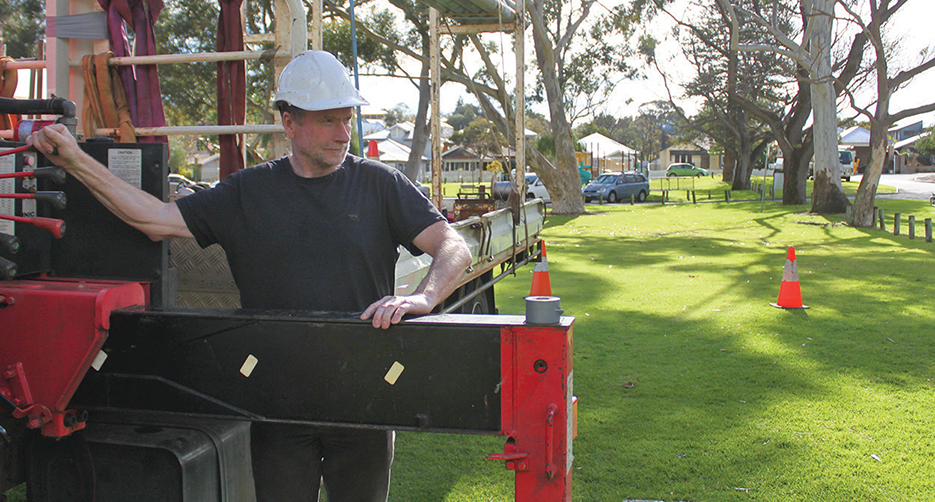
    Hydroquip owner Anthony Mcfadden’s quoted prices were “manipulated” by a City of Perth employee. Photo by David Bell

    Prices manipulated, undeclared conflict, complaints mishandled, CCC misled – and Anthony Mcfadden has to face them all again

    “IT is a lot worse than I first thought,” says a business owner who missed out on a contract due to “manipulation” of the City of Perth’s tender processes.

    The Power inquiry slammed the council over its handling of Welshpool-based company Hydroquip’s 2017 tender application to maintain the city’s bores and pumps, and of owner Anthony Mcfadden’s subsequent complaint to the WA Corruption and Crime Commission.

    Hydroquip had held the tender for about 10 years.

    Inflated

    But council staffer Blake Humble, who was overseeing the tender process and also sat on a panel assessing the applications, inflated Hydroquip’s quoted prices 

    in an analysis used to make a recommendation to then-CEO Martin Mileham.

    That manipulation contributed to Western Irrigation winning the contract.

    What the other panel members didn’t know was that Mr Humble had an undeclared conflict of interest due to his relationship with Western Irrigation’s managing director Andrew Ogden, who’d previously written job references for him ‚Äì including for his role at the council. The pair also sat on the executive of industry body Irrigation Australia WA.

    Commissioner Tony Power found that Mr Humble’s actions were “at the very least, affected by bias”.

    Mr Mcfadden said losing the big contract had a huge financial impact on Hydroquip, which had to lay off one employee.

    Three years later he’s won the contract back after the tender selection was outsourced to the WA Local Government Association, but he can’t believe most of the staff the inquiry found had let him down so badly were still employed by the city.

    A couple of them still call the shot on what needs repairing or replacing, and Mr Mcfadden says that’s another area where bias can creep in.

    “Given that ratepayers will be footing the $7 million bill for the inquiry, you have to ask what has changed,” he says. 

    After he lost the tender Mr Mcfadden complained to the CCC, suspecting something was up given he had the cheapest prices around. 

    The CCC asked the city to look into Mr Mcfadden’s complaint, but for reasons no one could “cogently” explain to the inquiry, an independent probity review commissioned by the council went through multiple drafts where a council employee cut out any references to the allegations Mr Mcfadden had raised.

    Although the first draft of the probity review by Stanton International included a “suggestion” that “the city may wish to consider referring the matter to the CCC to investigate”, that never made it to the final version.

    Instead the council told the CCC that the report had found nothing but “some procedural inconsistencies”.

    Excluded

    Mr Power found that “misleading” and criticised the council for failing to take any action to ensure it didn’t happen again.

    The inquiry found Western Irrigation should have been excluded from the contract at the outset because it failed to meet a mandatory requirement, but in less than one year it had billed the council more than half of what had been estimated for three years’ work.

    The Voice asked the council what action had been taken to overhaul its tender processes, whether staff had been trained or counselled, and whether the the city’s complaints handling process had been changed since the misleading report to the CCC.

    Chair commissioner Andrew Hammond said the city will respond to the report’s 341 recommendations in a report back to the local government minister to be considered at 

    a council meeting in the near future. For now “the city will not be commenting on any other specific matters, findings or considerations” from the report.

    By DAVID BELL

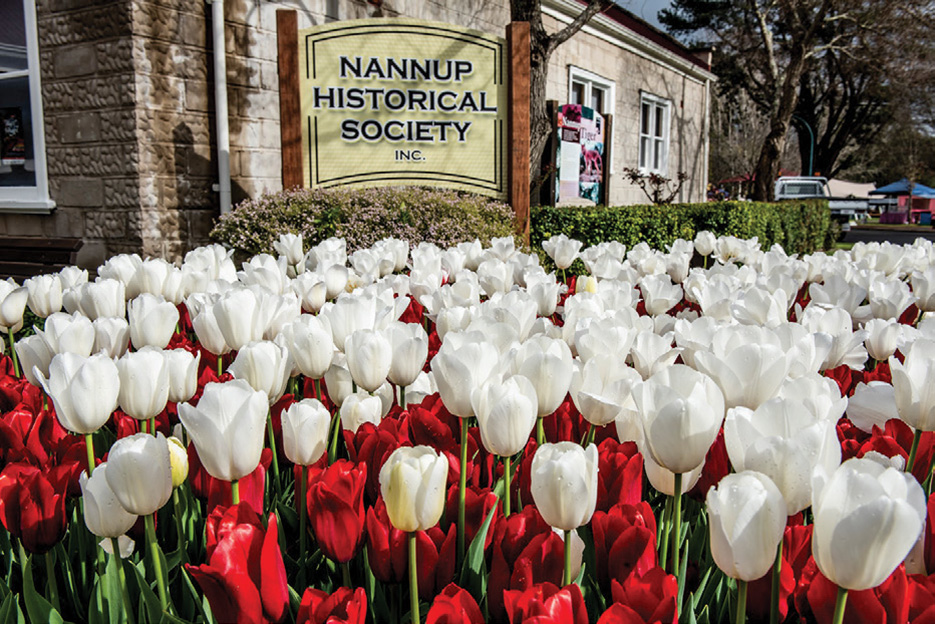
  • Nannup’s blooming

    BEAUTIFUL, historic Nannup on the Blackwood River is bursting into bloom. The annual flower and garden festival is on now, right through to September 20.

    The Chook flew into this former timber town half way between Bridgetown and Manjimup recently and found it with open, welcoming arms. 

    The main street was already a sea of colour with tulips and flowering trees, beautiful gardens, lovely places to eat and drink, artists and crafts-folk, plus locals bursting with passion for their wonderful festival, open gardens, weekend markets and lots more.

    With nearby forests, the Blackwood River and nearby hills and its history as a farming and timber town, a visit to Nannup is perfect for people wanting either a quiet restful getaway or wanting to recharge their families’ batteries, or for those seeking more action like walkers, cyclists, canoeists and horse riders. 

    Nannup is only three hours south of Perth and lies almost in a straight line between Margaret River and Bridgetown. There is plenty of accommodation in and around Nannup and other nearby towns.

    To plan your family weekend away, or your mid-week tryst, check out our eight page feature in the centre of the Voice. Or check out perthvoice.com – ‘Read Your Latest Edition’. Or go to nannupgardens. org.au 

  • Park a jazz hotspot 
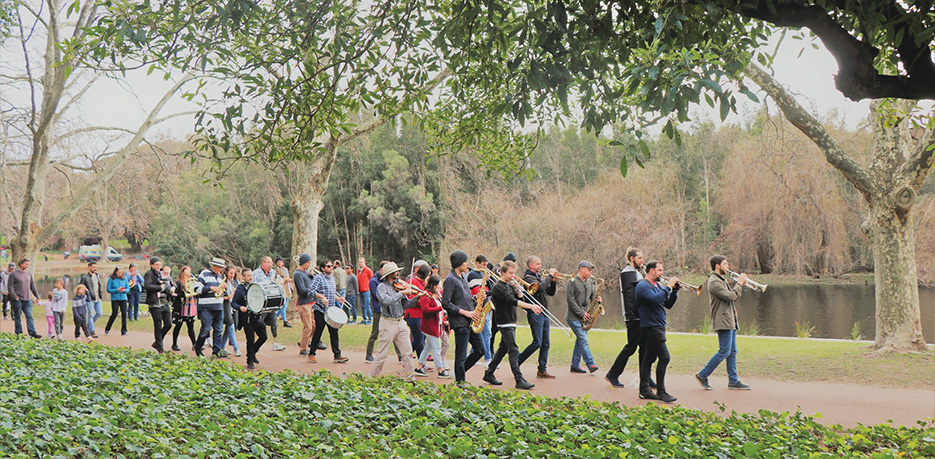
    The August 2 Hyde Park Jazz Parade.

    IT’LL be a while before WA sees a big music festival given this week’s extension of stage 4 restrictions, but a little park gathering for some jazz tunes can still be a treat.

    Local muso Mace Francis has been organising free “Hyde Park Jazz Parades” for anyone missing music or (modest) masses.

    “The idea is just to get together and play some simple New Orleans traditional jazz tunes while we make a lap of the park,” he says, adding they’ve got Vincent council’s blessing.

    “It is a way to celebrate music and how lucky we are in WA at the moment.

    “We encourage anyone to come down and walk with us playing an instrument – any instrument welcome that you can walk with, or just enjoy the music with us.”

    The first parade happened August 2 and Mr Francis tells us about 30 players came down and “there were people running around the park who stopped and walked with us… everyone had a really good time”.

    Carrying around heavy brass was good exercise too: “The biggest instrument was, I think, a sousaphone, a big wraparound tuba, and I had a bass drum which was big enough for me.”

    The next one’s planned for Sunday September 6 from 10am to 11am starting from the stage, and they’ve got a Facebook group “Hyde Park Jazz Parade” for planning. 

    by DAVID BELL

  • On the wing

    THE local character known as ‘Birdman,’ Alex Milivojevic, has reportedly died.

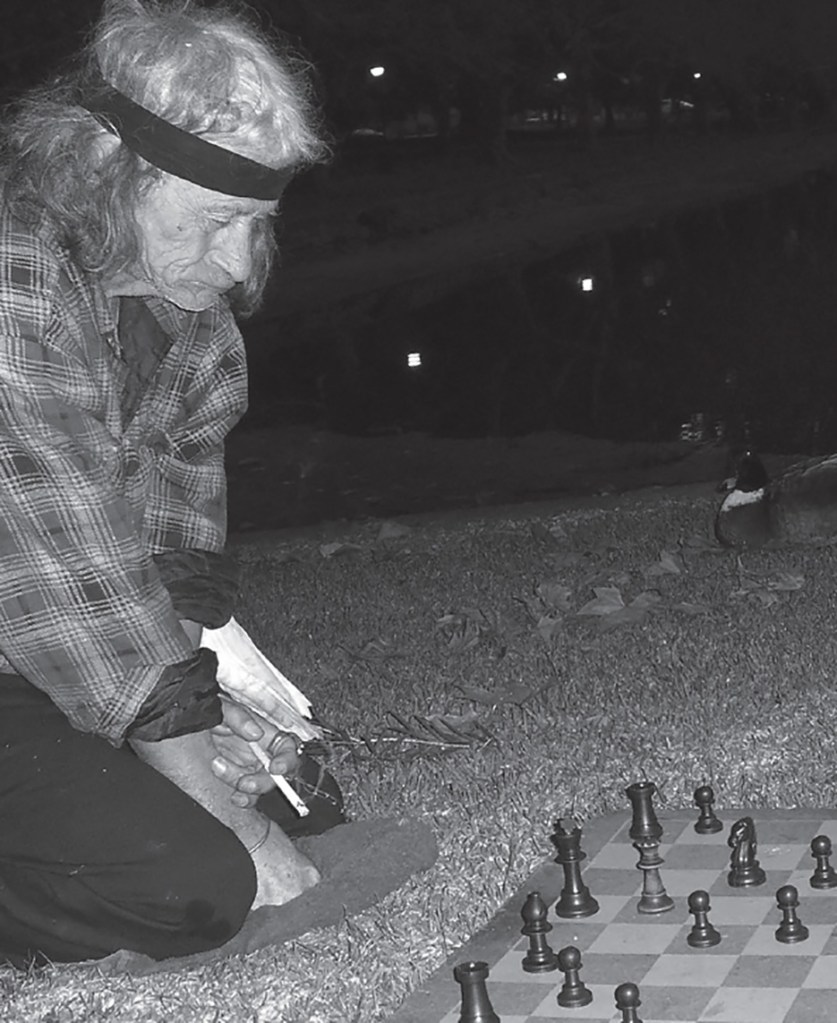
    Originally from Serbia, Mr Milivojevic was well-known through Highgate, North Perth and Northbridge, often seen playing chess, visiting the TAB, or out on his bike, and always hanging out with his pet corella Cheeky.

    Film industry figure Ian Hale reported Mr Milivojevic’s death and says his social media post about the passing saw an outpouring of love and warmth toward the Birdman. 

    Mr Hale often bumped into Mr Milivojevic over the years, first photographing him 15 years ago as he played chess in Hyde Park. While they’d usually just say a few words, he says the news still hit him hard.

    “To me, it shows the impact people have on your life, even when you don’t know they’re having it,” he tells us.

    When he heard Mr Milivojevic had died, Mr Hale contacted Screenwest who curate the Yagan Square screen, and asked if they’d play the 2013 short documentary The Disappearance by Ali Almond (née-Winters).

    It told the story of Mr Milivojevic’s friendship with his first pet cockatoo Cheeky, before the bird went missing in 2012. 

    “Forty four years we are together,” he said in the film. “Many times I would cry, cry, and think, where is my Cheeky?”

    After a desperate search was unsuccessful, he made a new friend, Cheeky II. As of going to print, we don’t know if Cheeky II has been adopted, but the birds can live til 70. 

    Ms Almond, now living in New Zealand, told us: “I hope he did have his pet Cheeky with him to the very end… I saw how much that bird was like a significant other in his life.

    “He chose to live life in society on his own terms and not participate in the normal social constraints or constructions. He chose to do it his own way, and he genuinely had a deep connection with nature and the birds around him… he was content, he was happy.

    “He was an eccentric person, but he brought his eccentricity to the public, to the outside world, and let us all share a part of that, and it’s really sad that now we’ve lost that vibrancy and colour in the city.

    “Anyone who hung around the city for a period of their life, they’ll have an Alex story, they’ll either have had a cigarette with him or played a game of chess with him.”

    Ms Almond says she took him along to the premiere screening and “he got more of a thrill out of seeing Cheeky on the big screen than seeing himself. He really was such a modest man. It was lovely seeing the joy he got from seeing the bird he lost up there on screen”.

    The Disappearance will be on the Yagan Square screen at 6pm on Thursdays and Fridays for at least the next three weeks. 

  • A pride that’s never forgotten

    ‘In these terrible times world-wide with the coronavirus, the values we learned serving our country should once again become prominent, and Aussie mateship is still the best mateship in the world; so let us stay united as a nation, and we will beat this’ – George Mills

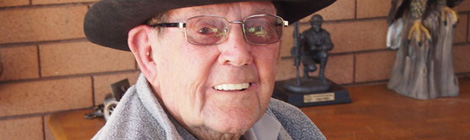
    SPEAK to Korean war veteran George Mills for a while and you sense in him a pride that the Australian forces – army, navy, and air force were as good as any of the coalition members that fought in the “Forgotten War”, as it has become to be known. 

    He explained that the principal task force – the Americans – said they knew that they could always depend on the Australians in battle. They were good friends with the Americans, and lived off their rations which apparently were superior to Australian rations. 

    Mr Mills, now in his early nineties, is a softly-spoken man who lives quietly with his son, Mark, in Eden Hill. 

    Anniversary

    He was a guest at the recent 67th anniversary of the end of the Korean War, held at Kings Park. 

    Mr Mills and other veterans and family members were honoured with a medal from the Korean government, along with a commemorative walking stick. Guests at the service included WA governor Kim Beazley, and other leading state political figures. 

    “It was a privilege to be at Kings Park; to see representatives of the South Korean government there. To listen to their speeches in which they acknowledged the contribution Australian forces made to ensure South Korean sovereignty,” Mr Mills said.

    “I’m especially proud to receive the medal, which now can be handed down into our family as a reminder of Australian sacrifices in the war, so that it will no longer be called the forgotten war.” 

    Mr Mills volunteered for service in the army when hearing that the Australian government was looking for recruits. He was just 21-years-old upon enlistment into 3RAR, Don Company, 12th platoon, as a rifleman. 

    “At the blunt end, I was,” he recalled with an infectious smile. He said he could think of no reason for enlisting, other than to explain that he realised the veterans of WWII had done their part for the defence of the free world; now it was time for the next generation to sign up. 

    “You’ve got to remember, the 38th parallel was just an arbitrary line drawn across the map of Korea. It cuts across many rivers, minor and major roads and railway lines. Not to mention cutting Korean families off from one another, in most cases, never to see each other again. History tells us that such division drawn on maps never succeeds, and this one won’t either,” Mr Mills said emphatically. 

    When asked about the experience of battle, this veteran was succinct: “It was savage. At times we didn’t know whether we were fighting North Koreans, or communist Chinese; and we didn’t care, either. They were simply the enemy. 

    “We would be in contact sometimes only 50 metres apart, shooting at each other, with our bayonets fixed, ready to charge if needed. 

    “In these moments there was no time for fear; our training took over. I tried to look at it as simply another training exercise and that helped keep me calm,” he explained. 

    Speaking of the Korean people on both sides of the 38th parallel, George said he felt for the Koreans during the war, saying that the civilian population suffered terribly, with atrocities, starvation and deprivation being the common element of suffering among all Koreans. 

    “This is why I say, there is no good war; all wars lead to bad outcomes and many good people, soldiers, sailors, airmen, not to forget innocent civilians, get killed, wounded, or suffer dislocation and heartbreak to last a thousand lifetimes.” 

    On mateship, Mr Mills said this was one of the benefits of service in the Australian forces, saying that they made mates for life, and stuck together through thick and thin, enjoying a welcome beer when out of the front line.

    Unification

    “My mother used to hollow out a loaf of bread and smuggle a bottle of scotch in it before posting; it was always a welcome gift to share with my mates,” he chuckled. 

    On the unification of Korea, Mr Mills said it would be amazing for him to live long enough to see it. 

    “All Koreans deserve nothing less. Let us hope leaders of Korea, America, China, and countries such as Australia can bring this to pass. That would be fantastic,” he said. 

    Over a cup of tea, Mr Mills said he was proud to serve as a serviceman, where he learned of the true value of Australian mates. 

    “In these terrible times world-wide with the coronavirus, the values we learned serving our country should once again become prominent, and Aussie mateship is still the best mateship in the world; so let us stay united as a nation, and we will beat this.”

  • ‘Socks, coffee and aliens’

    IF a picture is worth a thousand words, how many does a YouTube video tell?

    The organisers of a Perth science storytelling competition are hoping it’s a fair few: since Covid-19 has ruled out an in-person awards ceremony, they will be releasing all of the winning submissions online.

    In June, the International Centre for Radio Astronomy Research (ICRAR) invited creatives to submit songs, monologues, dances, puppetry performances, and poems that celebrate astronomy in WA. 

    Entries were to be based on the work done by one of 10 researchers. Omima Osman, the astrophysicist and Maylands resident who graced the cover of the July 18 issue of the Voice, was one of the 10 (“Dust off your pens”).

    Monologues 

    The winning monologues – including a monologue based on Ms Osman’s research on ’space dust’ – was due to be released on the ICRAR YouTube channel on Friday. The prize-winning monologues were written by Greg Wah, Kate O’Sullivan, and Rosie Sitorus; two were performed by Susie Conte and Lachlan Stokes. 

    Viewers won’t regret tuning in, says a spokesperson for Claire Bowen Management, the agency that co-ran the competition. 

    “Audiences will learn about socks and coffee alongside aliens and the interplay of language and history in Western Australia,” she said.  

    “Viewers will also witness the millennia of First Nation understanding of the skies and history, which is a key contribution to how humans observe the galaxy and the world around us.”

    Not quite your standard YouTube fare of cute animals and people falling off things! Tune in to ICRAR on YouTube .

    by LOTTIE ELTON

  • Online interface not a fit for some

    VINCENT council’s increasing online interface is locking some people out, particularly the elderly, say a couple of people who’ve recently received the “computer says no” treatment.

    Highgate resident Gordon Lee read in last week’s Voice that Vincent was consulting on six options to replace its bulk verge collection, including a repeated claim from the council’s website that the survey could be completed “in person” at its administration centre.

    Instead, admin staff gave Mr Lee a blank look, then a one-page generic “customer request”. 

    Blank

    “There was no information on it about the six options,” Mr Lee says. “It was more or less a blank piece of paper.

    “I don’t have a computer at home, so asked how people like me and the elderly can have their say on this.

    “I was told that a selected few were mailed out the survey, otherwise everyone else has to do it online. 

    “It would seem that the City of Vincent is so wrapped up in its own electronic, social media bubble, that it is not giving those outside that bubble a chance to get their voice heard.”

    Staff later apologised to Mr Lee and told him the lack of surveys was a mistake and hardcopies would be made available. Mr Lee says that given he was told adamantly the “mistake” was the website, he reckons it’s more likely they’ve had a “change of heart” and printed some out after the Voice started asking questions.  

    Technology also recently proved a barrier to award-winning writer Peter Jeffery, whose attempt to apply online to Vincent’s resurrected Arts Advisory Group went pear-shaped.

    He managed to get a paper nomination in, but by then he’d missed the deadline.

    “I applied for the new board but due to my computer incompetence I was not successful in being considered,” he chuckled at July’s council meeting. 

    Mr Jeffery, who was awarded the Order of Australia for a lifetime of services to the arts, was a member of the original Arts Advisory Group and hoped the council might make an exception and include him as a late nominee.

    Councillors wouldn’t accept a late nomination, but said they’d find other ways to harness Mr Jeffery’s talents.

    Mr Lee says Vincent’s technology wall is a growing trend he’s noticed: The new electronic parking permit system coming in October will allow people to register their number plate online, and rangers use number plate recognition to check it’s legit. 

    Instant

    Compared to getting paper permits mailed out, it’s instant and convenient for computer-touchers, but “once again, very hard for anyone such as the elderly,” Mr Lee says.  

    Vincent CEO David MacLennan says usually “all surveys are available in printed form” and the lack of verge collection surveys was “an unfortunate administrative error” and they’d apologised. 

    He says of the e-permit system: “Community members who do not use a computer, phone or tablet will be able to call our ranger administration team for help setting up or managing their e-permit account. We are ensuring there are strategies in place to make the system work for people who do not use computers.

    “We are committed to equity and social inclusion in all we do. 

    “We understand that there is a digital divide in the community, which is often experienced by people impacted by poverty or inequality,” and he says they’ll work to make sure they’re not excluded as more service delivery goes digital.

    By DAVID BELL

  • Happy badge 
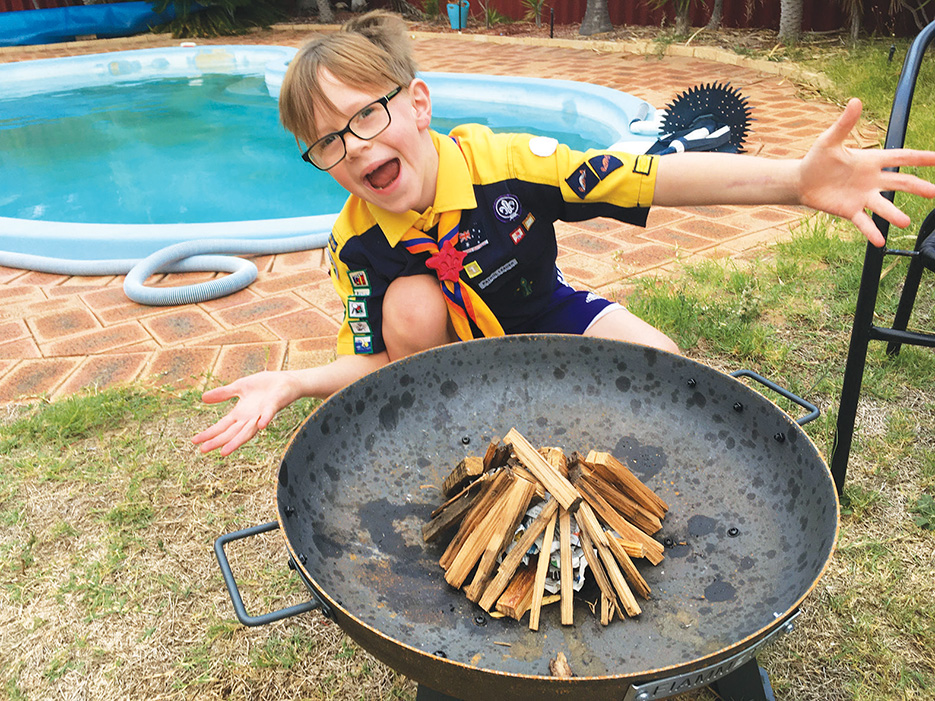
    Scout Freddie Sayer doesn’t need a tablet to make a fire.

    IT’S official – the scouts is good for you.

    A new survey has revealed countless benefits to having a woggle, with some of the biggest being resilience, self-confidence and mental wellbeing.

    Life skills that are invaluable during the covid-19 pandemic, according to Scouts WA Board chair Greg Higham.

    “Everyone needs the ability to stay positive after the devastating bushfires over summer and now the impact of covid-19 on the lives and livelihoods of Australians,” he says.

    The survey results collected by Resilient Youth Australia, found that Scouts have an overall better life satisfaction than their peers, and the longer they remained with Scouts, the more resilient they become. 

    More than 1000 young people participated in the survey, which found that Scouts were more likely to: 

    • Get along with people who are different to them (86 to 80.8 per cent)

    • Give time to help others (81.3 to 73.2 per cent)

    • Trust others (81.5 to 68.5 per cent)

    • Hold more hope for a positive future than non-Scouts (78.8 to 69 per cent) 

    • Forgive themselves if they make a mistake (71.1 to 63.3 per cent) 

    • Feel they make a positive contribution to their community than non-Scouts (58.8 to 43.4 per cent)

    • Scouts are less likely to report feeling tired or having little energy (79.1 to 67.6 per cent)  

    Mr Higham believes Scouts were more reliant because they had practical life experience and a better connection with their community.

    “The Scout Method includes learning by doing, one of eight key aspects. We empower young people to take the lead and give them a safe space where they can work with others to plan and embark on their own adventures,” he says.

    With more than 7000 youth and adult members from various cultural and religious backgrounds, Scouts WA is one of the largest and most successful youth organisations in the state. 

    After covid-19 social restrictions were imposed, they moved their activities online, altering programs to ensure members can still enjoy scouting activities during their daily life – meaning they learn, have fun and stay connected with their scout buddies.  

    The street cred of so-called “old fashioned” organisations like the scouts may have dwindled in recent years, but with boys becoming increasingly obsessed with screens at a young age, there has never been a better time for them to join.

    For more info contact Lloyd Owens, Fremantle Sea Scout Group leader, at gl.fremantle@scoutswa.com.au

  • The top dog

    MY love affair with hot dogs started when I was an exchange student in Denmark, Europe.

    The streets were littered with small huts, where vendors sold a mind-boggling range of hotdogs like ristet (ketchup, mustard, remoulade, onions and pickled cucumbers) and fransk (hollowed baguette filled with mayo-based French dressing).

    Since Denmark it’s been a bit of a sausage anti-climax, but my love affair was rekindled when I visited Wassup Dog in East Perth this week.

    The cafe specialises in gourmet hotdogs, but also does breakfast dishes, some mains and a roaring trade in takeaway coffees.

    The cafe had a lively, feel-good buzz with staff greeting customers by their first names and a steady stream of workers getting coffees to go.

    The decor was colourful and funky, and a 1980s mix was blaring out the speakers with Toto, Simple Minds and Tina Turner in full flight. All that was missing was the big talking robot from Rocky IV.

    After some deliberation I went for the Best hot dog ($10) which included lettuce, cheddar, aioli and onion.

    Wassup make their own sausages on-site and what a difference it makes; there wasn’t a hint of gristle in my silky smooth banger, which had that fine texture you get from a quality butcher.

    Everything was perfectly balanced in the hot dog, with the capsicum and corn sauté adding a lovely sweet refrain.

    The post-modern temptation is to pile hot dogs with lots of frippery; turning the meal into a soggy, clumsy mess.

    This dog was an exercise in tasteful restraint, and was nestled in a super fresh, lightly-toasted bun.

    The hand-cut chips ($5 small) were another masterclass – they were perfectly cooked and sprinkled with coarse sea salt.

    The moreish frites were reminiscent of something you would get in a good quality restaurant, and the accompanying Dijon-style mustard tasted homemade and had a lovely sweet tang.

    The owner/chef of Wassup is French and is renowned for his sauces; many of which he makes in the cafe.

    The chef asked if I wanted to try their chilli sauce (no charge), which had a strong punch of garlic and wasn’t too fiery for lunch. It tasted delicious, especially when added to the hand-cut chips.

    Throughout the meal the service was super friendly and polite, with the man behind the till even calling me “Sir” (must be my salt and pepper hair).

    To round things off I enjoyed a regular latte (4.50) which was smooth and inoffensive.

    The owner of Wassup started out selling hotdogs from a stall in Kings Square in Fremantle, much like those Danish vendors all those years ago.

    Since then he’s built up a reputation for superior hot dogs made from local fresh produce, with the sausages and many of the condiments made on-site.

    He clearly deserves all the plaudits, and I’ll be back soon to try some of the brekkie dishes.

    Wassup Dog Cafe
    113 Royal Street, Perth
    wassupdog.com.au
    9221 5436

    by STEPHEN POLLOCK

  • Other war 
    A home front propaganda poster during Word War II.

    THERE’S been countless books about the daring exploits of Australian troops in World War II, but what about the unsung heroes back home?

    Perth author Gary Mentiplay shines a light on the resilient Aussies who coped with years of shortages and rationing in his latest book Australia in the 1940s – Life on the Home Front.

    “One of the motivations in writing the book was to record something of the home front for the benefit of the younger generations in the 21st century – the grandchildren and great grandchildren of the World War II generation,” he says.

    “They will then gain an idea of the environment that existed during the 1940s in Australia.”

    Written in chronological order from 1939-1948, the book meticulously documents the austerity measures that affected Australia, including an acute rubber shortage from 1942-46 that prevented motorists from buying tyres, and the continuation of petrol rationing after the war.

    Mentiplay takes a look at motoring, road and rail transport issues that have not been covered in great detail in the past.

    Being at war didn’t stop natural catastrophes like bushfires, floods and droughts wreaking havoc in Australia.

    And in 1945 there was a tragic plane crash in Perth, just months before the war ended.

    At the time it was one of the worst air disasters in Australian history.

    “There were ten US servicemen and three US Red Cross women on board,” Mentiplay says.

    “There was bad fog and shortly after take off from Guildford airport the DC-3 crashed into Gooseberry Hill and everyone on board was killed.

    “The plane crashed only a few hundred metres from an occupied house.”

    Mentiplay, 69, is a retired security officer who previously wrote BMC Leyland in Western Australia and spent more than two years researching his latest tome.

    “My parents served in the Australian armed forces during the war: my father was in the army and my mother was in the Women’s Auxiliary Australian Air Force,” he says.

    “Their generation had grown up and lived through the Great Depression of the 1930s, which hit Australia particularly hard. 

    “They were used to shortages and ‘making do’ – hard times produce resilient people.”

    The book mostly focuses on the home front, but also includes war briefs and war news inserts to give perspective on the state of the war at that time.

    Mentiplay will give a talk on his book, Australia in the 1940s – Life on the Home Front, at ANZAC Cottage in Mount Hawthorn next Sunday (August 30) 1.30pm-4pm.

    by STEPHEN POLLOCK