
• Events push to bring back crowds
    Hopes are high Chinese New Year can pull people back to Perth’s CBD.

    A RELOCATED Chinese New Year celebration, a Festival of Sail, and a multi-generational LGBTI+ barn hoedown are on a lineup of events hoped to kickstart the city’s post-coronavirus recovery.

    Perth city council has set aside $1.25 million for post-Covid events this financial year, focusing on bringing visitors back to the city centre and reversing the decline in retail spending.

    The first round of funding is to be considered by commissioners at the next council meeting. 

    The Chung Wah Association’s Chinese New Year has been rated most highly on an assessment by council staff, ticking so many bonus boxes (like including people from all walks of life) that it got 116 per cent on its assessment score.

    Staff have recommend Chung Wah get $70,000 for the  2021 Year of the Ox celebration, which could be moved from the Northbridge stretch of William Street to the Perth Cultural Centre and museum precinct.

    The cost of “hostile vehicle mitigation” has prompted the move. Barriers to stop vehicles have been increasingly required for events approvals by councils and state agencies in line with federal guidelines that came out following the Nice truck attack in 2016 and the Bourke Street car attack in 2017.

    But it’s pricey: HVM measures cost $30,000 for the the 2017 Anzac Day Commemoration.

    Chinese New Year celebrations usually gets PCC funding and is one of the most popular among local businesses, who report a 28 per cent increase in trade compared to a typical Sunday, and an economic impact of about $1.1 million. 

    This year a photo exhibition of Chung Wah’s history is planned to be held in conjunction with the new WA Museum due to open in November. 

    The multi-generational barn dance held by GLBTI Rights in Ageing at City Farm in August is slated for $3,000, the 10-day Perth Festival of Sail starting January 25 is also up for $25,000 funding, and council staff have recommended Channel 7 gets a huge $120,000 to run the Christmas pageant, in line with the spend of the past three years.

    Staff recommend refusing funding for events below an 80 per cent assessment score, including the Perth International Boat Show, some more TED talks, and the West Aussie Fur Frenzy. The annual Fur Frenzy convention is for the “furry” subculture who enjoy and even dress up as anthropomorphic animals, but the council report notes it’s a ticketed event at a city hotel and “aimed at a niche audience with very small attendance numbers, and limited opportunities for the wider community to connect”.

    Events have to have a Covid contingency plan in place if the outbreak gets bad again, and they range from limiting numbers via tickets (but free ones), to outright cancellation.

    by DAVID BELL

  • A La Perchoine
    • Channel Island evacuees at Stockport railway station, ready to depart for a day trip to Disley, Cheshire. Photo courtesy Gillian Mawson

    Eighty years on from a dramatic month 

    PATRICK GUITON is an Attadale resident; but he hasn’t always been so lucky to have such a prestigious postcode to call home. Eighty years ago, he called the Channel Islands home, and in this Speaker’s Corner remembers the day war really hit home.

    JUNE 1940 is well known in World War II history for the dramatic evacuation of British troops from Dunkirk, completed on June 4.

    Two weeks later another evacuation was being hastily contrived which would in the days from June 20-27 see the removal to England of 40 per cent of the population of the Channel Island of Guernsey, including 80 per cent of its children. 

    Aged five, I was one of these evacuees taken with my elder sister’s school by cargo boat to the port of Weymouth and thence by train to Rochdale in Lancashire where a few days later my mother would find us and take us to her brother’s family home in North London just in time for the Blitz. 

    On June 30 German forces invaded the Channel Islands where they would remain for five years.

    The Channel Islands were component parts of the Duchy of Normandy and therefore came to Britain with William the Conqueror in 1066.

    They have a proud history of independent self government over which the Westminster Parliament has no jurisdiction, with the Privy Council carrying responsibility for foreign affairs and defence.

    And of course it was the decision to demilitarise the islands and the removal of British troops which prompted a frantic process to facilitate evacuation. 

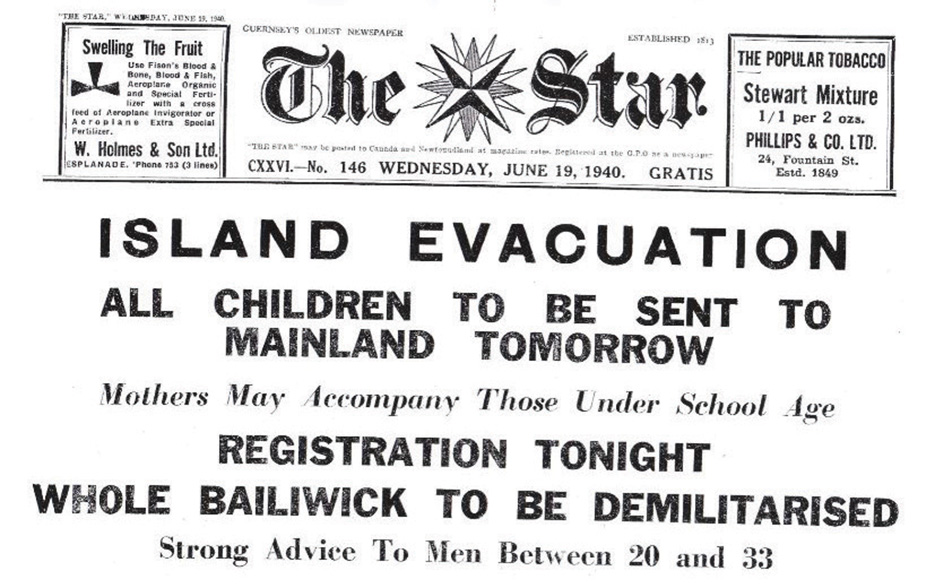
    On June 19 the Guernsey Star newspaper carried a dramatic headline; “Island Evacuation: All children to be sent to mainland tomorrow. Registration tonight”.

    In the event the removal of children was less than total with some parents preferring to stay and to keep their families intact. 

    For those with farms or businesses to protect it was a very hard decision to make; many decided that the relative physical safety of children was paramount but one eyewitness was reported as saying: “I saw parents change their minds and remove their children from the ship at the very last minute.”

    My father stayed.

    • The star’s dramatic announcement of the evacuation.

    It seems that leadership was important too with the Greffier 

    (leader of the government ) on Jersey emphatic in calling for families to stay intact with the consequence that less than 20 per cent took evacuation as compared with 50 per cent on Guernsey.

    In a chaotic week chance factors would also have been significant.     

    Many of the Guernsey child evacuees, and more particularly those without accompanying parents seem to have remained in Lancashire with Stockport as an ongoing focal point.

    Our experience was different.

    After a difficult summer in North London, during which we sometimes slept on the London Underground platform rather than spend the night under bombing at home, my mother looked for alternatives.

    Landed gentry families in country estates had lost their servants to the forces or munitions factories and so we spent most of the war living ‘behind the baize door’ in a large country house where my mother cooked and cleaned and where we were relatively safe.

    I recall that one of the major routes to the south coast ports ran past the gate at the foot of the drive where, for weeks on end I watched the long logistical build up for the D-Day invasion.

    In 1945 we went home. But for many of us the evacuation had taken us out of the islands at a very formative age and our lives moved on from there.

    Who knows how things would have gone in the past 80 years had I stayed.  

    On the granite wall of the harbour at St Peter Port is a plaque commemorating the evacuation  which carries the Patois French term my grandmother always used when saying “farewell – for now”: A la Perchoine.

    Life on Guernsey during the occupation is, of course, another story. There are several excellent books, notably The Model Occupation: the Channel  islands under German Rule by Madeleine Bunting ( Harper Collins 1995 ). Suffice it to say that there’s a hell of a lot more to that story than Potato Peel Pie.

  • Sushi zilla

    GODZILLA was literally breathing down my neck when I went for lunch at Mr Oro Sushi on Sunday.

    Thankfully he was just a giant mural on the restaurant wall, and I didn’t have to summon Rodan to fight my corner (he was one of Godzilla’s arch enemies who, ach, it doesn’t matter…)

    The small Mt Lawley eatery, tucked away in the Astor Arcade, had a quirky interior with pink doors hanging on the walls, a Manga-style mural, and tables with oversized hooks (I presume to hang your bag or jacket).

    The restaurant used to be called Captain Munchies, but the owners recently repainted and rebranded so they could focus on “quality and creativity”.

    In the small open plan kitchen the chef was beavering away, making wave after wave of delicious sushi. He was clearly working very hard.

    The menu had a small range of Japanese entrees and mains, including donburi, bentos and salads, and fusion sushi like katsu Kilpatrick, sweet-chilli Philly and beef bulgogi roll.

    You could also order traditional sushi or place a custom order.

    The place was reasonably busy on a Sunday arvo and the tables we’re filling up nicely when we arrived.

    Maybe the staff were a bit weary after a hard week and patrons were nursing a hangover, but it felt quite flat and needed some background music or something to get things going. 

    The waitress was soon at our table with some nicely presented mixed sashimi ($18.90).

    The glistening slices of raw tuna and salmon tasted super fresh, and were perched on a bed of rocket with a scattering of spring onions.

    The Japanese vinaigrette and garlic oil really brought this dish to life, giving it a moreish spicy kick. A top notch, if perhaps slightly over-priced, sashimi.

    My wife was busy eating her El Mexican sushi (eight large rolls for $16.90).

    She thought the ingredients were all high quality, but the Latino mash-up of seared beef, corn, avocado and salsa didn’t quite work.

    “It needs more tomato salsa and there’s not really that much of a Mexican flavour to it,” she noted.

    Across the table, the kids were pretending to fire nuclear warheads at Godzilla, while rough-housing their cooked tuna ($8) and avocado rolls ($7.90).

    There was heaps of tuna, but I thought the chef skimped on the avocado a bit. Anyway, the kids’ plates were empty after about five minutes, so mission complete in my book.

    On a chilly winter’s day we felt like some hot comfort food, so we shared some Japanese croquettes ($8). As we cut into the large deep-fried balls, plumes of steam rose upwards and we got a waft of cheesy goodness.

    The panko crumb coating was super crunchy and not greasy, and inside was a guilty medley of gooey cheese and potato, conjuring up memories of mum’s apron.

    To keeps things interesting, the dish came with a dainty bowl of chilli mayo and BBQ sauce.

    Loved this one. Super addictive. We had a lovely lunch at Mr Oro Sushi and the food is high quality, but the dining-in experience could be improved with a better ambience.

    Mr Oro Sushi
    669 Beaufort Street (Astor Arcade)
    Mt Lawley

  • Geneve’s garage to the core
    The video for Don’t Wanna Be Your Lover was filmed in the Perth Voice’s garage.

    THE Voice played a small role in the success of Carla Geneve’s latest single Don’t Wanna Be Your Lover.

    The video was shot in the garage of our heritage-listed offices in the West End of Fremantle.

    The opening bars of the catchy song are ingrained in my subconscious, as they were replayed for hours until the video producer got the perfect take.

    The 21-year-old Perth singer-songwriter has enjoyed a meteoric rise over the last year: her debut self-titled EP won several gongs at the 2019 WA Music Awards, sparking a series of sold-out gigs in Australia and a support slot with San Cisco on their North American tour.

    Don’t Wanna Be Your Lover is the first single from her forthcoming self-titled debut album.

    There’s a searing old-school honesty to Geneve’s music: the sound is stripped back to bass, guitar and drums, with Geneve’s raw, emotional voice up front.

    She’s likely to be wearing a singlet or plain t-shirt with little make-up in her videos – a big two fingers to the manufactured glamour and pretension of the music industry.

    Geneve had to postpone a series of international dates because of the covid-19 pandemic, but will play Mojos Bar on Saturday August 8 as part of a three-date mini WA tour.

    By Stephen Pollock

  • Bedford beauty 

    FROM top to bottom winner.

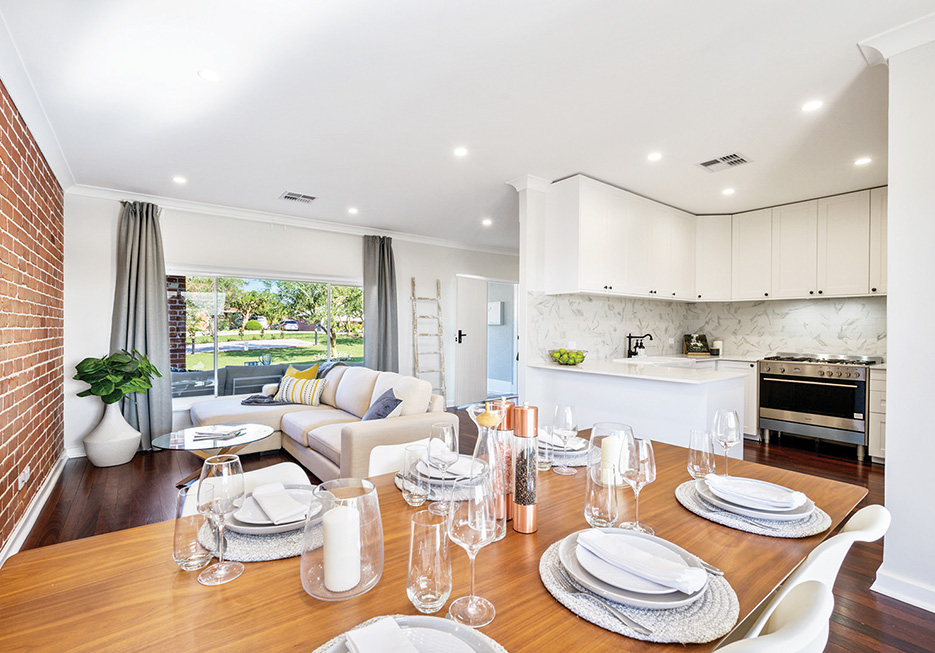
    Built around 1950, this three bedroom three bathroom house has been restored and enhanced to an impeccable standard.

    Everything looks brand spanking new with pristine white walls and polished floorboards.

    I love the open plan kitchen/living/dining area; it flows nicely and gives the home a communal feel.

    The kitchen itself is a cracker with gleaming white benchtops and cupboards, a double heritage style sink and a gorgeous tiled splashback.

    After you’ve prepared a lovely meal sit at the dining table and peer out the large windows at the winter sky, or when it starts to get warmer, slide back the glass doors and head out to the large balcony for an alfresco dinner.

    Just when you think the neutral colour scheme in this house might be getting a little bland, a raw brick wall in the lounge creates a pleasant contrast and texture. It’s the perfect spot for hanging a TV and kicking back with Netflix. 

    The main bedroom is spacious and well appointed, with the ensuite featuring double vanities and a shower with twin shower heads.

    The large family bathroom is lovely as well and includes a semi frameless shower screen and bath.

    Out the back is another entertaining area, which overlooks a lovely garden with a neat, lush lawn and mature olive and frangipani trees.

    You’ll be glad to know the gardens are bore reticulated so they are low cost and low maintenance.

    The huge undercroft storage in this house is almost a mini-basement, offering loads of extra storage space. It’s very unqiue.

    Or if you are into the finer things in life you could turn it into a wine cellar to keep all your lovely vino from Margaret River.

    Situated on a 429sqm street-front strata lot with no fees, this home is a short stroll from Chisholm College and Beaufort Street, and is close to all the facilities and amenities in Inglewood and Maylands.

    There’s nothing to do to this home and it’s walk-in ready.

    You get more bang for your buck in Bedford and this is a great house at a great price.

    Offers in the mid $600,000s
    123 Lawrence Street, Bedford
    Bellcourt Property Group
    Agent Natalie Hoye 0405 812 273

  • Dust off your pens
    Omima Osman

    MOST people only think of dust when it’s spring cleaning time, but a Maylands astronomer says without a special kind of dust we might never get to enjoy a beautiful starry night.

    Omima Osman is a final year PhD candidate at UWA where she’s spent the last two and a half years researching cosmic dust, which she believes is a critical building block for new stars.

    Cosmic dust is made up of tiny particles formed by dying stars which hang in the space between stars and galaxies. The particles are so small they appear like a gas. 

    Ms Osman, who graduated from Sudan’s Khartoum University, then moved to Italy to obtain postgraduate qualifications in physics and cosmology, says just like regular dust, cosmic dust can be a pain. 

    “Dust gets in the way [of telescopes] as clouds get in the way of the sunlight,” she said. 

    But without it, new stars could not form. 

    “Dust has a crucial role in star formation because it helps in creating the material (molecular hydrogen) from which stars are formed,” Ms Osman said. 

    Newly formed stars also act as ’dust sinks’ sucking in more as they grow. 

    “From this point of view, dust is very important in building up galaxies and could considerably influence their evolution.” 

    Cosmic dust isn’t the gunky sort you get on grandad’s boxes in the attic, but it’s more familiar than you might think. 

    Just before dawn or after sunset, an eerie cone of light can often be seen. Particularly common in spring, this “zodiacal light,” is created by sunlight reflecting off dust grains circling the inner solar system. 

    To Ms Osman, understanding dust is a crucial part of astronomy.

    “My research is all about cleaning our window to the universe of cosmic dust so that we can more clearly see and understand the universe.

    As the window gets cleaner, the importance of the dust becomes more and more apparent. New research is revealing how dust helps to form very complex organic molecules. A relatively new field of research, astrobiology, is exploring how this might be linked to the creation of life itself. 

    Lots of people want to make a song and dance about cosmic dust — quite literally. The International Centre for Radio Astronomy Research (ICRAR) is running a new competition that invites writers to celebrate WA astronomy through song, monologues, dance, puppetry performances, or poetry. Entrants can base their entries on the work being done by one of 10 researchers, including Ms Osman.

    Song and dance

    She thinks the competition is a great idea, because for scientists,“art has always been a part of our world just to translate what we are doing”. 

    Claire Bowen, who is working with ICRAR to organise the competition, agrees: “Separating the arts and sciences is an arbitrary dichotomy – you only have to look at Leonardo da Vinci, who was both a scientist and an artist.”

    She points to the artistic membership of the ICRAR team as more evidence; two are improv comedians, two are songwriters, and one is a poet. 

    Competition closes July 31. Enter at https://bit.ly/ICRARmonologueEOI

    by LOTTIE ELTON

  • Site chosen for homeless project
    Announcing the spot: Community services minister Simone McGurk, Perth state Labor MP John Carey and Perth city council commissioner Gaye McMath. Photo supplied.

    A SITE’S been chosen at the corner of Hill and Wellington Streets in East Perth for the Common Ground housing block for homeless people.

    The Common Ground model lets people stay in self-contained homes as long as they need and provides them with intensive support services, and has seen good results in other cities. The current model only offers people short-term emergency housing, which often sees them drifting from one provider to another.

    Perth state Labor MP John Carey says it’s the best way to end homelessness and “we need to shift the focus away from managing homelessness, to ending rough sleeping.

    Rough sleeping

    “I understand that so many people want to help… and we see so much effort on distributing food, and goods and services. But at the end 

    of the day, if we want to end rough sleeping in the city, then these initiatives are the only approach: That is, getting rough sleepers off the street into supportive accommodation with wraparound intensive support, because you break the cycle of homelessness.”

    apartments and Mr Carey says: “This is not a drop in centre.”

    He doesn’t expected it will attract trouble. 

    Common Ground is intended to operate like Oxford Foyer, the Leederville unit block for homeless youth (and despite early concerns before it opened, we’ve not heard any complaints about residents since).

    It’s the first of two facilities, and designs are still to come, and construction isn’t scheduled to start until the 2021/2022 financial year. 

    In the meantime, Mr Carey said a more immediate measure on the way was to provide 50-beds for temporary accommodation, intended to be available within a month. Over $1 million of WA government money will go into that program, run by Uniting Care West, Ruah and Noongar Mia Mia. 

  • A bitter brew

    A PERTH mum is steaming after car clampers swooped while her son was grabbing a quick takeaway coffee in Bayswater at 6.38am – hours before businesses were due to open.

    Local executive Maria McAtackney says her son stopped for the pre-dawn coffee at Drip Expresso on Friday July 10 when he was stung by workers from Auto Clamp; perversely, they’d taken up one of the bays in a neighbouring clamp-free car park.

    The clampers demanded he pay $170 on-the-spot before they’d release the car. 

    Ms McAtackney branded the fee “predatory” and “a scam”, echoing the label slapped on clampers by premier Mark McGowan in February when promised to ban the practice through legislation. 

    The Road Traffic Amendment (Immobilisation, Towing and Detention of Vehicles) Bill was introduced to Parliament in June, but needs a second reading and endorsement by the Upper House before becoming law.

    Ms McAtackney says her son has paid dearly for trying to support a local cafe through the Covid-19 pandemic.

    “I don’t think any business would expect anyone to clamp a car at 6.40 in the morning when no business was happening,” she said.

    Auto Clamp’s Susan Chapman said she couldn’t comment on this case “under instruction by our client” because it’s a pending police matter. She said a woman who’d been clamped in the same car park “shoved one of our drivers into a moving vehicle”.

    We mentioned Ms McAtackney’s son was male, but that didn’t help.

    “We’re well within our rights to clamp,” was all Ms Chapman would offer.

    WA transport minister Rita Saffioti said the best replacement for clamps is for car park owners to enter into agreements with their councils to manage parking.

    Those who overstay can be given warnings or fines like a normal council parking spot. Many councils already have those “local parking arrangements” in place and the state Department of Transport is encouraging the rest to pick up the practice.

    by DAVID BELL

  • Palliative praise
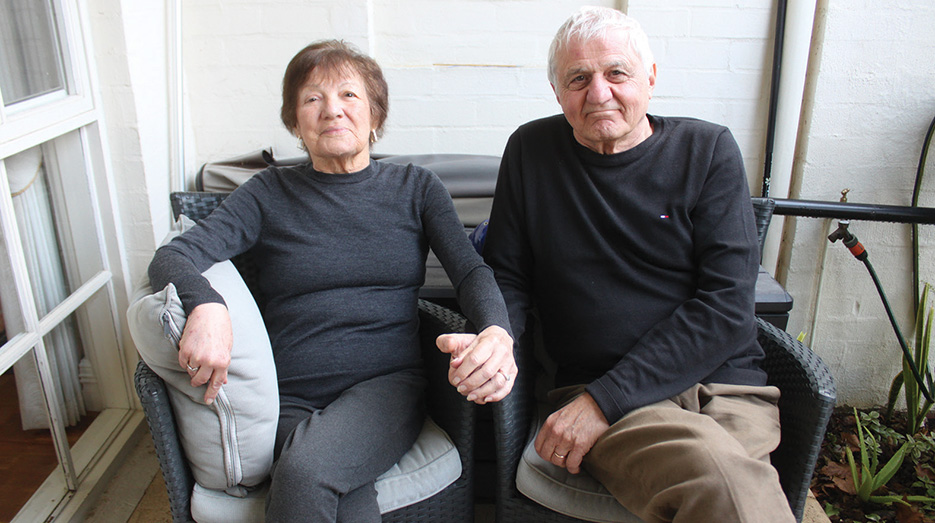
    • Zvi and Carmela Yom-Tov at their home overlooking Hyde Park. Photo by David Bell.

    SINCE coming out of a palliative care ward in March, Carmela Yom-Tov says she feels full of gratitude for the care she’s received.

    Dr Yom-Tov has terminal blood cancer and didn’t know what to expect after her release from hospital, when she was referred to Silver Chain’s palliative care team “to have as easy a death as possible”. 

    “They’ve been just astonishing,” she says, contacting the Voice because she thought the organisation deserved a pat on the back.

    “I don’t think I was home for more than a few hours, I got a phone call from Silver Chain to make sure I was okay, and that they’d send a nurse in a short while.”

    Services

    A retired clinical psychologist who’s lived in South Africa, Israel, and now Australia, Dr Yom-Tov says: “I’ve been here 33 years so I’ve got a comparison. 

    “People are quite used to getting services here which in other countries they may not get… you rarely hear praise for the magnificent organisations we have here in Australia – complaints are more common. 

    “Here’s Silver Chain, doing this fantastic bit of work for people who are on their way out, and they do it with such commitment, and it’s all free.”

    Visits from nurses, a social worker and a palliative care doctor have helped with medication, diet, and seeing if she needs any other help or mobility aids. 

    “They’ve all proved so positive and empathetic and knowledgeable and professional.

    “I don’t have to worry about a thing. It makes life so much easier when you’re feeling at the end of the world.”

    Dr Yom-Tov says before they were referred to the palliative care team “we were managing, but when they arrived it felt very supportive and very secure.. the fact that you know the support is there, it just gives a little sense of security that there’s some place that’s professional, efficient, and knowledgeable that you can contact”. 

    Her husband Zvi (featured in the Voice last October for his portrait of local MP John Carey) has been her caregiver, and Dr Yom-Tov says there’s been support offered to him as well.

    “When the time comes, and there are clear significant factors when people are at the end stage, then they can help the caregiver decide whether he’d like me to stay home and cope with the symptoms,” or “they will help me get to a hospice”. 

    “If I do die at home, then Zvi can just phone them and they can come and help with the papers and so on. [He] won’t need to call the doctors and the ambulance and police.”

    Dr Yom-Tov says Zvi is doing okay now “because I’m okay with it. 

    “He’s concerned about losing a partner of almost 50 years, but I think we can make it more normal, because it is normal. At some stage we’ve got to go.”

    Dr Yom-Tov herself feels “a calm lack of anxiety”.

    “There’s a sense of fatalism: That’s what happens to people, we all die, and I’m okay with it. I’ve lived quite an exciting life really, if I look back it was adventurous. I suppose I would call it successful on the whole, so I haven’t had any of the usual anxieties that people feel about dying.”

    ‘It’s what we do’

    We passed on Dr Yom-Tov’s glowing review to Silver Chain’s palliative care team. 

    Their clinical nurse consultant manager Sarah Hunter has been a palliative care nurse for over 10 years and says “it continues to be inspiring”.

    The palliative team cares for more than 3000 people in Perth a year and she says “we are privileged to be invited into their homes to share and support their journey.

    “Our focus is to support choice in relation to each person’s preferred place to be cared for, and alleviate distress caused by symptoms associated with a progressive illness.”

    Doctors, nurses, social workers, care aides, spiritual care workers, volunteer coordinators and volunteers themselves make up the teams to look after everything that might come up during palliative care. 

    Ms Hunter says Dr Yom-Tov’s words are “a welcome affirmation for our whole team, and it is important to know that we have met her needs and are making a difference.

    “Palliative care is a unique speciality where you experience such variety from the people we meet, to the stories they tell and the medical conditions we manage, making it a rewarding, yet challenging career and such a privilege to be part of”.

  • Flat out flattening
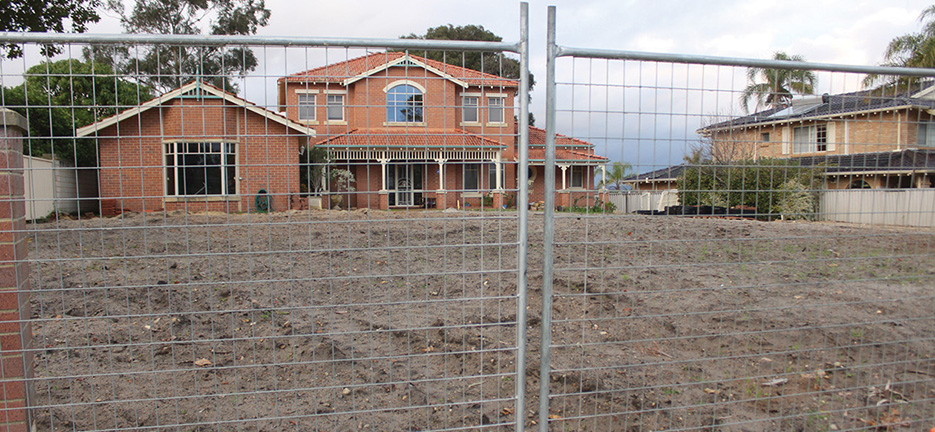
    Houses will mostly fill what was once (below) a leafy garden.

    YET another prominent garden denuded to make way for a subdivision in Bayswater has put the WA Planning Commission under the spotlight over its lack of protection for trees.

    The latest significant clearing was the front half of 13 Swan View Terrace, which Maylands residents Katy and Murray Riggall describe as an “iconic Maylands garden” in a letter to the Voice.

    “Many residents have been deeply saddened and angered at the loss of up to 10 mature trees,” they wrote.

    “Over the past decade or so we have seen block after block cleared, removing all trees to make way for multiple dwellings.

    “Regulations to protect trees from clearing are urgently needed. This would help prevent Maylands from becoming an urban heat island, protect wildlife diversity, maintain river health, suburban character and of course provide us with the oxygen and clean air we need.”

    Bayswater council wrote to the WAPC in April last year following the deforestation of the Carters’ Block, urging the state’s planning mandarins to put more value on greenery.

    Councillors wanted “tree retention and protection” written into the WAPC’s guidelines on subdivisions, which are currently under review.

    Mayor Dan Bull tells us they didn’t get any response, but still push the barrow.

    Their decision

    “In referring subdivision applications to the WAPC for approval, the city strongly advises it considers the issue of tree retention at this step in the process. 

    “Ultimately it’s their decision.”

    Mr Bull said they’ve continued to make efforts on the local front: “The city has introduced a provision in its town planning scheme and a planning policy – Trees on Private Property – that encourages the retention of trees on private property and requires the planting of new trees on any new development.”

    The encouragement is that if you keep a worthy tree, you can plant one fewer new tree than would normally be required (or two fewer if the one you’re keeping is particularly worthy).

    The council has also updated its significant tree register to allow trees on private land to be included, but only the current owner can nominate a tree so those intending to clear are unlikely to sign up.

    Following local backlash over the clearing, the owners of 13 Swan View Tce popped a letter in neighbours’ letterboxes saying they had wanted to keep a mature tree at the front, but it had been damaged in recent storms.

    By DAVID BELL