• Only one rep
    • How the Bayswater flyover will look.

    ONE City of Bayswater representative will sit on a panel of five that will make decisions about the future of the Bayswater town centre.

    DevelopmentWA’s “land redevelopment committee” will set policy and determine significant development applications.

    The local representative is meant to “enable the community and local government to be involved in the development and delivery of urban renewal projects”.

    One member will be from DevelopmentWA, and three others are appointed by the state government.

    Bayswater council won’t even get final say over who its member is: It can nominate three options and then lands minister Ben Wyatt gets to pick one. This week the council nominated mayor Dan Bull, deputy mayor Filomena Piffaretti, and CEO Andrew Brien. 

    Watering down

    The 1:4 local representation ratio is a further watering down of the 2:3 ratio that make up Development Assessment Panels, with many controversial decisions across the city in recent years having recorded votes of three state-appointed members for, and two local councillors against.

  • Clamp ban may push up tow cost

    A BAN on wheel clamping might lead to even pricier tow truck operators filling the gap in the market, according to WA’s transport department.

    The clamp ban idea came about after Stirling mayor Mark Irwin asked for an investigation August 2019, as he’d seen clamps used for “detaining of people and their property and extorting them for unreasonable amounts of money”.

    His plan made such a splash that before long premier Mark McGowan clamped onto the idea and wanted to see them banned state-wide, and the legislation’s been introduced to parliament this week.  

    Other immobilisation methods like “barnacles” that are suctioned onto windscreens to block the view until the driver ponies up a ransom would also be outlawed.

    When the idea was floated some businesses wondered how they’d keep people from clogging up their parking lots if they couldn’t clamp them.

    The other solutions aren’t perfect: The DoT document suggests more carpark owners will resort to having cars towed, but that’s an industry that’s about as popular as clampers and has been criticised recently over criminal organisation involvement, cowboy operators and standover tactics.

    Getting a clamp off usually costs $170, but the towing fees can be $400, not including whatever detention fee the company decides to charge before they’ll release your car from custody.

    Regulate

    Anticipating more towing, the DoT will “regulate” carpark towing and set maximum fees and set out timeframes for vehicle removal. 

    The regulations won’t affect breakdown towing, so tow truck companies will continue to be able to charge a thousand bucks to move your car a few kilometres.

    The DoT says a better solution is for carpark owners to enter into “local parking agreements” with their councils.

    Stirling does this already, sending rangers out to patrol the private carparks and issuing infringements to recalcitrant parkers. The fee’s $250 a year for a small carpark with up to 99 bays. 

    At their June 9 meeting Stirling council decided to halt progress on its own local law and instead put in a submission of “strong support” for the state law. 

    By DAVID BELL

  • Letters 27.6.20

    You’re just mint, Khin

    I CAN’T ever remember reading anything so heartfelt, so thoughtful, so profound and so moving as Feeling like an Aussie (Voice Letters, June 13, 2020).

    Khin Myint, you’re a gem. Thank you so much for sharing. You are Australian. We all are. I came here in the 70s. 

    I had lived in the multicultural Zambia in Africa for a few years as a child, and couldn’t understand the apartheid in South Africa as a child passing through. 

    I was so confused that all of a sudden I couldn’t talk to anyone irregardless of nationality. 

    Hopefully we will all use our past experiences to embrace the future and become a great group of Australians.

    Mairead Como
    North Perth

    The other stolen generation

    I READ with sadness the story of Maria Williams, a victim of the stolen generation. 

    There is however another rarely talked about “Stolen Generation”: the 130,000 plus children who were removed – “stolen” – from their parents and placed in the care of various charitable institutes where they, like Ms Williams, suffered both sexual and physical abuse and virtual slavery, told their parents had died and had no other family, resulting in many never having contact with any member of family again.

    There was no difference in the abuse and heartache suffered by both groups, except the 130,000 children were English and white, and the compensation they were offered and received was far less than their black cousins.

    While this will no doubt have the politically correct-touchy feely fools jumping up and down, isn’t this ‘racism in reverse’?

    I do not expect this letter to be printed because my comments are not politically correct; it does not make them any the less true.  

    Bob Loftus
    Beach Street, Fremantle
    The Ed says: A little clarifier, Bob.

    If you’re talking British child migrants, Australia’s share was around 7,000 children of the overall 130,000 sent out to various former colonies between 1920 and 1970. In terms of compensation, we had a look and it’s complex. Some white fellas took individual legal action and received more, some reparations were tied specifically to sexual abuse, each Australian state had its own scheme (WA offered money to the Stolen Generation but then immediately slashed the payment), while Britain offered its own compensation scheme. The reality is that both Indigenous and Wadjela people who were taken from their families are still fighting for just compensation.

  • We are not a democracy 

    GORDON WESTWOOD is Maylands resident and not-so-loyal subject of Her Majesty Elizabeth the Second, by the Grace of God Queen of Australia and Her other Realms and Territories, Head of the Commonwealth.

    IT is very odd the United Kingdom of Great Britain is desperately trying to convince themselves and everyone else through their disreputable mainstream television and news media that they are not only a “democracy” but now they are the “birthplace of democracy”; concepts delivered up to them by aliens from another planet, perhaps?; or pointing to their half-cocked Westminster system of government?

    Maybe, though, their evidence is a selective interpretation of the Magna Carta of 1215 which only benefitted powerful barons and the Roman Catholic Church clergy, who wrote it in Latin, and not the subservient English barely 150 years after the Norman invasion and at a time French was the official language of the royal court and would remain so for at least another 100 years. 

    Chattels

    Women were regarded as chattels or property.

    Similarly, in 1776 the American Declaration of Independence proclaimed: “All men are created equal with certain unalienable rights….”, provided you were not a black negro slave or a native American Indian. 

    Women did not have the right to vote until 1920.

    That selective (mis) interpretation of the Magna Carta, the Great Charter, is taught to our schoolchildren as somehow being relevant to their being led on by their teachers and ABC Education (ABCTV, BTN Specials, etc.) into falsely believing Australia is a “democracy” from year 3 and

    NAPLAN tested from year 5 in the civics and citizenship course.

    The Brits are not a democracy and never have been, and nor are we. The false democracy myth creation we are repeatedly duped into believing is a fraud fabricated from non-existent spun threads by duplicitous politicians and the mainstream news media.

    The Press Council of Australia will not consider complaints unless they are based on the false notion Australia is a “democracy”.

    The people of Britain, Australia, Canada and New Zealand do not have the political power of democracy in their hands to popularly elect their own head-of-state.

    We are constitutional monarchies with the Westminster system of government where we only have the constitutional right under the crown, not the democratic right, to elect representatives to parliament; and that is all.

    We do not popularly elect the queen’s allegiant prime ministers she undemocratically appoints by her royal assent, conferred in Australia by her unelected representative ceremonial governor-general appointed by a PM with her approval.

    We do not elect our party political governments which is the incorrect answer to an Australian citizenship test question. They are undemocratically formed and headed by prime ministers with their appointed cabinets of ministers of the crown.

    A prime minster can resign or be freely dumped by their party midterm in government and replaced by another to form and head a new government and parliament without us going to an election.

    Governor-general

    A democracy simply does not have a monarch and religious prelate, the Queen, as unelected head-of-state by undemocratic inherited royal succession who must defer from voting at elections to be above common politics.

    The Queen’s governor-general seeks and gains exemption from voting without the penalty applied to us.

    The seven permanent party politically appointed judges of the high court of Australia, by the government of the day’s federal executive council convened by a non-voting governor-general when the need arises (insanity, retirement, death, resignation, crime of a sitting judge), have the sworn duty to validate and uphold the constitutional monarchy and legitimise the queen as our head-of-state; elitist and undemocratic.

    Federal parliamentarians, the judiciary and members of our armed and police forces are required to swear allegiance to the queen before they take up their positions. 

    Why, if we are supposedly a “democracy”?

    We would be better off by popularly electing a head from each of our states and they form a national executive council along the lines of the Swiss with their frequent referenda, citizens initiated referenda and a comprehensive bill of rights; an option not offered to us at the republic referendum.

    A republic of Australia with a dummy president appointed by parliament or by the overriding power of a prime minister, to appoint and sack, favoured by the Australian Republic Movement (and PM Gough Whitlam tragics?), are undemocratic and unacceptable.

    This type of set-up would leave us with the same system of corruptible party political governments formed and headed by prime ministers who as majority party or motley coalition leaders only represent and receive votes from their one electorate in the same way as the Westminster system of government only without the queen.

    The democratic right to popularly elect our state governors and separately elect deputy governors, not necessarily of the same political persuasions, is a given in a democracy.


  • Winter warmer

    AS my family and I got out of the car in Mt Lawley, the heavens opened and we got absolutely drenched.

    We quickly scampered into Beaux Lane and took refuge under a dripping gutter.

    “We’re soaked through; we’re freezing,” complained the kids.

    Having been brought up in Scotland, I was non-plussed.

    “It’s just a shower – you’ll be fine.”

    As the thunder roared the kids fled inside Chuan Yue Garden, a modern-looking Chinese restaurant.

    It must do a great takeaway as rows of delivery bags were lined up on the counter on a Tuesday night.

    Chuan Yue’s extensive menu had all the old favourites (sweet and sour, black bean, garlic prawns) and a chef’s section with more traditional and outre dishes.

    Succulent

    The uber helpful waitress was happy for the kids to have a main between them, and helped us save money by upsizing dishes to share.

    When you are eating out with young kids on a week night, good service can be the difference between an enjoyable meal and a disastrous one.

    There was also a big pile of toys in the corner, so Chuan Yue gets brownie points on the kids front.

    The excellent service continued throughout the meal and the waitress was soon back with a large pot of green tea ($6) and spring rolls ($9).

    Housed in a pot with ornate artwork and a wicker handle, the piping-hot tea was nice and smooth with no trace of bitterness.

    The spring rolls were crunchy with a pleasant medley of vegetables, but I wanted more of a spicy kick from the accompanying chilli sauce.

    My king prawn Szechuan ($25.80) arrived sizzling in a cast iron tray shaped like a cow.

    It was a cute touch and made for an eye-catching presentation.

    The dish had just the right amount of heat, so I could enjoy the well-cooked prawns and liberal punch of garlic and sesame oil.

    Previous Szechuan dishes I’ve tried have been tomato-based, but this darker and saltier version was still enjoyable and the assorted vegetables were well cooked and tasty enough.

    Looking around the restaurant was nicely fitted-out with wrought iron lanterns and decorative Chinese wallpaper. It wasn’t twee and was well executed.

    The waitress was soon back with my wife’s lemon chicken ($18.80), perched on a bed of lettuce in a dainty ceramic boat.

    I eyeballed the succulent chicken breast coated in thick layers of glistening batter, and began to drool on the other side of the table (my deep-fried genes were kicking in).

    “The chicken is so tender and the lemon sauce is just right without being too cloying,” reported my wife. It’s delicious.”

    I feigned a smiled and begrudgingly ate a chunk of cauliflower from the kids’ black bean chicken ($18.80).

    The dish was going down well and the kids were enjoying the salty bursts of flavour.

    I had a sneaky taste and can testify the chook was nice and tender, with no fatty bits, and the accompanying vegies, including carrot, broccoli and cabbage, were fresh with a satisfying crunch.

    My wife said the plain rice ($7 to share) had a lovely texture and was well cooked.

    Chuan Yue Garden is a solid bet for a Chinese meal with decent prices, friendly service and a well-presented interior.

    Chuan Yue Garden Beau Lane,
    609 Beaufort Street, Mount Lawley

    6260 8088

  • C’est bien
    Scenes from Les Misérables (above), The Bare Necessity (below) and Zombi Child (bottom).

    A GRITTY drama about  immigrant abuse in Paris, Les Misérables, is one of the highlights of this year’s Alliance Française French Film Festival.

    Set in the volatile Paris district of Montfermeil in the aftermath of the 2018 World Cup, the tense drama is based on real-life police brutality that was filmed by director Ladj Ly.

    Street-wise and full of energy, the film depicts abuses against poor immigrants, especially teenagers from sub-Saharan Africa and the Maghreb.

    Some of the movie was filmed using a drone, giving it a cinema verite quality, and Les Misérables builds to a thrilling denouement that will have you on the edge of your seat.

    The film was Ly’s full-length directorial debut and won a jury prize at the Cannes Film Festival last year, and was nominated for the academy award for best foreign film.

    Audrey Lureau, managing director of Alliance Française Perth, says several movies at this year’s festival like The Extraordinary, School Life and Oh Mercy, also deal with social issues. Now in its 31st year, the festival will screen 28 French flicks, including those by break-out French directors like Ly and Erwan Le Duc.

    Le Duc’s debut feature The Bare Necessity was shown in the directors’ fortnight section at last year’s Cannes Film Festival.

    Full of quirky characters and droll humour, it follows a broken family in a quiet rural French town coming to terms with a tragedy, and will appeal to Wes Anderson fans.

    If your after something a bit darker then check out Zombi Child, directed by Bertrand Bonello.

    The film begins in 1962 in Haiti, where a man is resurrected from the dead and trapped in a nightmare of slavery. 

    Fast forward to modern-day Paris and Haitian teen Mélissa, the new girl at an elite school, is invited to join a secret ‘literary sorority’. 

    But the dark family secret she harbours becomes a source of fascination to others, who exploit her voodoo heritage with shocking results. 

    The festival will kick off with the critically-acclaimed La Belle Epoque (a man is given a second chance to revisit the love of his youth when he finds a company that lets him relive memories through orchestrated re-enactments).

    The French film festival runs from July 14 – August 4 at Palace Raine Square, The Windsor and Luna on SX. 

    For more details go to http://www.affrenchfilmfestival.org 

  • A history unwanted
    Maria Williams spent nearly 20 years trying to piece together her identity, much of it now in the bin after authorities broke up her family’s makeshift camp at Lotus Park. Photo by Steve Grant.

    MARIA WILLIAMS spent nearly 20 years trying to piece together who she is.

    A member of the Stolen Generation, she was taken to Sister Kate’s Cottage Home for Children as a seven-year-old, banned from speaking her native tongue and told nothing of her family history.

    Notorious for the physical and sexual abuse the children had to endure, Sister Kate’s churned Ms Williams out as a 12-year-old to work as a domestic slave in farms throughout WA’s South West.

    “There was a lot of housework; we worked with the farmers and their wives, looking after the children, sending the kids to school,” Ms Williams said.

    On the rare occasion a relative passed through a farm, her “foster parents” would allow her just a fleeting moment to speak with them before she was told to go back to work.

    Maralinga

    Ms Williams didn’t find out her mother was sick with cancer until after her death (it was possibly linked to the Maralinga nuclear tests), but the funeral finally bought the family back together for the first time and her father Gerald successfully applied for custody.

    He sparked an interest in her Minang heritage when he later became involved in several native title claims in WA’s Great Southern region, and in the years following his death she collected a trove of newspaper clippings, books and documents she believes connects her by blood to famed peacemaker Mokare, whose statue stands in Albany’s main street.

    Gerald successfully applied for custody.

    He sparked an interest in her Minang heritage when he later became involved in several native title claims in WA’s Great Southern region, and in the years following his death she collected a trove of newspaper clippings, books and documents she believes connects her by blood to famed peacemaker Mokare, whose statue stands in Albany’s main street.

    threw out many of her documents when they removed a makeshift camp near HBF Stadium where the family tried to shelter during the Covid-19 lockdown.

    “Our ID was all taken, personal certified documents, documents from my father’s native title agreement, tents, sleeping bags,” Ms Williams told the Voice.

    “I was distraught, disgusted, so hurt that they have taken away 45 years of family history, because it’s  a connection to my children and grandchildren.”

    But Vincent CEO David MacLennan says rangers only took away items that looked “unwanted”.

    “City rangers would not have removed or disposed of anything that was left at the site which would have been deemed to be important or seem to be personal belongings.”

    Mr MacLennan said the city had strong “partnerships” with Nyoongar Outreach and United Care West, who “offered support and accommodation services” to Ms Williams and several other families when they were told to move on.

    Homeless

    Homeless advocate Jesse Noakes said most crisis accommodation beds were already filled during the crisis, and Ms Williams and the other homeless people really needed more long-term solutions.

    “Where are they supposed to go?

    “It’s all very well to move them on and take their stuff … but until they’ve got a home to go it’ll just be a repeat cycle.”

    Mr Noakes said taking homeless people’s tents and supplies during the grip of a cruel winter, added unnecessary costs onto the already stretched budgets of homeless services.

    “We just end up having to give them more; you simply can’t let people go without any shelter at all.”

    For Ms Williams and her family, this is the fourth time they’ve lost possessions.

    Clutching a sheet of around 10 names as he surveys the 25-odd people camped on Beaufort Street, Mr Noakes assures them he’ll try to sort out something about the ID; without it they have little chance of getting into emergence accommodation should any beds become available.

    By STEVE GRANT

  • Backpedal consultation
    A few of these routes don’t make much sense from a local perspective.

    VINCENT council will hold off rubber-stamping a WA government bike plan until it does its own community consultation.

    That will see it risk missing out on funding by blowing past an “incredibly unusual” deadline.

    The WA Department of Transport wanted all councils to endorse the new “Long Term Cycle Network” plan by July 16 in order to qualify for future cycle route funding (Voice, June 13, 2020).

    Vincent staff have known about the plan for nearly two years, but only received the final draft on May 21, and only recently informed councillors who were fuming about the late notice.

    “There was no engagement with elected members and no engagement with advisory group members,” deputy mayor Susan Gontaszewski said at the June 16 council meeting. It “could have been brought to the attention of elected members… we would have been able to recognise that this is something our community would want to have meaningful input into”.

    Angry

    Cr Joanne Fotakis said: “To say I was disappointed is an understatement. I was quite angry going through this.”

    She said the council had been a leader in the fields of both bike lanes and consulting, and they had a switched-on cycling community which could’ve helped with the plan.

    Mayor Emma Cole said the DoT’s deadline for funding was “incredibly unusual” and she wanted to carry out meaningful consultation before getting back to the department.  

    The council ultimately endorsed an alternative motion by Cr Josh Topelberg to “support in principle” the plan, but only subject to further consultation, and subject to the unpopular route through Hyde Park being removed.

    Proper endorsement is expected to take place around August. 

    Instead of reporting back to the DoT, the council endorsed Cr Topelberg’s motion to go 

    “straight to the top” and explain the decision to transport minister Rita Saffioti. 

    Stirling council endorsed the LTCN on June 9 without community consultation, even though council staff didn’t like the Walcott Street route. Their report said: “Given the timeframes imposed by the DoT, it has not been possible to advertise the draft LTCN to the public at this stage,” but they could do some consultation post-endorsement.

    Bayswater council votes on the LTCN at its June 23 meeting. It hasn’t done community consultation, but did send staff out on e-bikes to ride the routes before giving feedback to the DoT.

    Carey slams lane

    PERTH state MP John Carey says the WA Department of Transport’s plan to put a cycle lane through Hyde Park is “just idiotic”. 

    “Certainly as the state member for Perth I won’t be supporting that,” he said, but stopped short of blasting the DoT for its overall handling of the draft cycle network. 

    He said: “I understand the intention was you want a direct route, because cyclists use direct routes” but given Hyde Park’s popularity with walkers “having a full bike lane going through would cause enormous conflict between pedestrians and cyclists”. 

    Been there before

    IN 1913 another contentious route was planned through Hyde Park, with a roadway to run North South.

    Locals were furious. A letter to the editor in The West Australian on June 26, 1913 said “the ‘improvements in Hyde Park are simply samples of huge bungling”. Many feared horses and carts roaring through a children’s play area. 

    One North Perth councilman dismissed those concerns saying if children did not get knocked down on the roadway outside the park, then they could keep clear of traffic in the park too. 

    Preparatory works saw the large single lake split in half, giving us the two lakes there today, but the roadway was called off following months of community protest.

  • Council out of Anzac battles

    VINCENT council says it has “no legal basis” to intervene in an internal battle at Mt Hawthorn’s Anzac Cottage, but will still offer to broker an armistice.

    The council owns the 38 Kalgoorlie Street building and the Vietnam Veterans Association (WA) has a long term lease on it through to 2041.

    The Friends of Anzac Cottage ran educational events there until bubbling tensions with the VVA saw them pull out in February this year. 

    FOAC recently put a petition to Vincent council asking to take over the lease. 

    This week the council voted to advise the FOAC they have “no legal basis” to intervene as the VVA is meeting the terms of its lease. 

    But the council is still willing to sit down with both groups and review the “memorandum of understanding” that came into place two years ago which was meant to help the two groups get along. 

    Mayor Emma Cole said she appreciates the work FOAC has done engaging the community with the cottage, but “what the petition seeks from the city is not legally possible for us to do.

    “The offer to continue to work with the groups stands, we’ve never walked away from that… we can’t fix everything unless others are willing to come to the table, but our offer remains.

    “Now that we’ve given a very clear answer on what we can or cannot do, perhaps we can get the parties back together and get the cottage focused on what it’s supposed to do.”

    FOAC has been running online engagements since pulling out. VVA ran one event in March before in-person events were suspended due to coronavirus.  

    By DAVID BELL

  • Plantings blossom
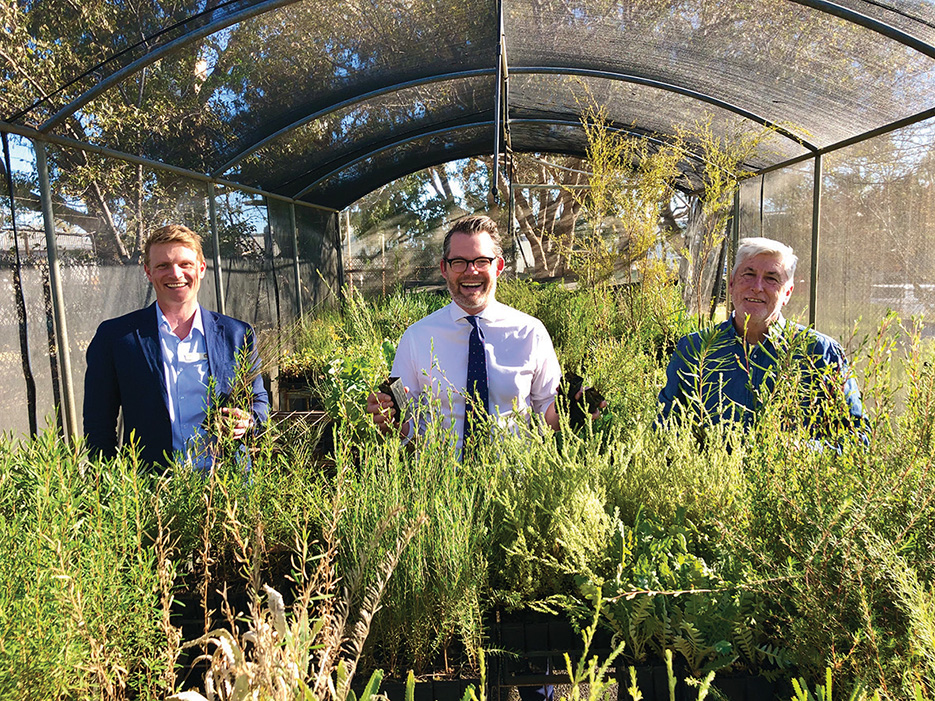
    Bayswater council’s natural area expert Alex Devine, mayor Dan Bull, and Friends of Lightning Swamp’s John Williams.

    AN army of volunteers is needed to plant 40,000 native seedlings along Bayswater’s foreshore and bushlands to create future homes for frogs, birds and other critters.

    Bayswater council’s winter tree planting program is putting down 2000 youngster trees in July and August along with the seedlings, and mayor Dan Bull says “we are focusing on some of the city’s most environmentally sensitive areas including Lightning Swamp, Baigup Wetlands and Gobba Lake.

    “A mixture of local native trees, shrubs, sedges and groundcovers have been selected to improve biodiversity.”

    He says they couldn’t get them all into the ground without the community and “it’s heartening to see volunteers come out in force each year to help rejuvenate local wetlands and nature reserves at our community planting days.”

    Cr Bull says many are from local environmental groups, but “everyone is welcome and you don’t need any planting experience to take part. Just show up with a pair of gardening gloves and weatherproof clothing, roll up your sleeves and we will help you get started.”

    Planting day dates are pending for July and August, to be announced via the city’s Facebook page.