BEDFORD copped a battering in Sunday night’s storm with a row of Grand Promenade Shops badly damaged by high winds.
Grand Promenade Fish & Chips, the deli and Lahori Resturant copped the worst damage, with the awning ripped away and even a large section of the upper storey brickwork being torn off.
Bible
The Fish and Chip Store had half its sign torn down leaving only “romenade chips” visible, but a giant billboard urging people to “Read your Bible” was unscathed.
Elsewhere the damage seemed pretty minor: Tree branches fell, there were long power outages through Mount Lawley and Highgate on Monday night, and the Maylands foreshore was so flooded the jetty was completely underwater.
EVENT organisers wouldbe banned from lobbyingcouncillors for funding undera new draft sponsorship policybeing considered by Perthcouncil.
Applicants would also have to demonstrate their organisation’s “financial viability” to be eligible; that follows big-ticket recipient Perth Fashion Festival going into administration in November last year.
The draft policy also “clarifies” the council won’t fund salaries and administrative overheads to keep organisations ticking along between events, a trend that started when it stopped funding Heritage Perth’s salaried executive. Those arrangements were rare but they’ve now made clear money is for events or projects only.
It’s part of an ongoing tightening of the funding purse since commissioners were appointed in 2018, starting with temporary freezes on business and heritage grants until they were satisfied the city’s accounts were healthy and the grants were good bang for ratepayer buck.
The new policy against bugging councillors for money says“applicants may not lobby, or seek to influence the decision making” of councillors after submitting their funding application or they may be disqualified. They can’t even “provide additional information, either directly or indirectly”.
Stern ban
It’s a step softer than the stern ban originally suggested by council staff, which forbid“canvassing” councillors or providing them information at anypoint, not just post-submission.
Commissioner Len Kosova said last week while looking over the first draft that some further clarity was needed “so [applicants] don’t inadvertently overstep the mark”.
He wanted the rule clarified so organisers chatting to councillors in the early stages wouldn’t get eliminated without knowing they were doing anything wrong.
Commissioners endorsed the draft on May 26 and it’ll go out for public comment for 21 days before it can be made official.
Cmmr Kosova said at the May 26 meeting: “I’d encourage all relevant community groups as well as prospective councillors who might be interested to review the policy… and provide any submissions they may wish to do on that, because it will specifically inform future decisions around sponsorship and grants by the city”.
The new rule is a far cry from the days of councillors and staff being showered with free tickets in return for sponsorship.
That longstanding practice ended in 2016 when some at the city grew nervous following the Public Sector Commission’s report into Healthway staff accepting freebies from sponsors.
Hand-painted cards prepared for those at the healthcare frontlines.
PERTH’S en plain air painters have used their time stuck indoors to come up with a great way to say “thanks” to WA’s frontline Covid-19 workers.
En Plein Air Perth members have traditionally gatheredto paint in the great outdoors each Monday, but since the shut down, social distancing rules have prevented them meeting.
EPAP member Sue Hibbert said while forced to sit around at home, her thoughts turned to the nurses, doctors and other frontline workers putting themselves at risk to keep everyone else safe.
Cards
“I’m not a nurse, I’m not a doctor; I’m thinking, ‘what on earth can I do?’,” Ms Hibbert said.
“I thought, how aboutwe paint cards for the Covid workers, and we’ll just put messages inside them saying thank you very much, messages of gratitude”.
The painters were due to collect all the cards on Friday, with hundreds to be handed over to hospitals and clinics this week.
Ms Hibbert, who teaches watercolour painting at the Beaufort Street Community Centre, says the project turned out to be a good way to keep in touch with students and other EPAP members, using their Whatsapp group to share source photos and ideas.
“It kept us all connected while we’re in lockdown, and kept us painting,” Ms Hibbert says. “We felt like it was doing a lot for us, as well as at the end of it we’ve got these lovely hand-painted cards we can give out.”
En Plein Air Perth painter Sue Hibbert.
Some have painted what they can see from lockdown, others have painted what they miss.s
“Some people have done[indoor scenes], some people have painted from trips they’ve done overseas … and also local scenes: Some of Rottnest Island, the beach, birds, sunsets.”
EPAP was planning an exhibition of members’ work later in the year, but it toohas been delayed due to uncertainties stemming from coronavirus
PERTH’S new lord mayor may have to Uber around town or get behind the wheel themselves under a new round of cost-cutting at Perth city council.
Previously lord mayors were provided a “luxury” vehicle costing $12,000 a year and a part-time chauffeur costing$45,000 a year. The old policy said nothing about restricting the use to official duties.
The new draft policy was initiated by chair commissioner Andrew Hammond to bring the transport arrangements “in line with community expectation” and also acknowledging the“dignity and respect for the role”.
He said at the May 26 council meeting: “It’s important we set some ground rules in place that support the lord mayor in going about their business in a cost efficient, effective, but also a dignified manner in accordance with the respect that should be afforded that very high office.”
Under the draft, whoever is elected lord mayor in October will get a “medium sized and well appointed” car to drive, or they can use their own car and claim mileage.
If the new lord mayor deems it unseemly to drive themselves to a particularly ceremonious event, they can bill the city for a taxi or “prestige ride share service”. That’s predicted to cost less than $10,000 a year if they get driven to 40 official duty events, compared to the $45,000 being spent on an in-house chauffeur in previous years.
The policy’s heading out for 21 days of public consultation and should be up at engage. perth.wa.gov.au shortly.
Patrick Gorman says he’s seen a lot of good in Perth lately, like at Whipper Snapper Distillery where Alasdair Malloch’s team converted their whiskey-making operations into producing hand sanitiser.
THERE’S been a lot of flashes of good amid the Covid gloom, and federal MP for Perth PatrickGorman says he wants to recognise locals who’ve gone above and beyond to help out their community.
“We’ve been getting a lot of feedback into the office like, ‘the IGA is being amazing’ or ‘this teacher has gone above and beyond’,” Mr Gorman said.
“During this crisis, we have seen the very best of the Perth community on display. Right now, everyone can think of someone who has gone out of their way to help others.
“And I wanted to give something to every one of those people.”
It’s not a competitive process pitting nominees against each other or judges scrutinising deeds to find a champion of champions, just anyone who’s nominated will get a certificate from Mr Gorman as a feelgood measure.
“Everyone who’s not a fake[name], like Joey Jo-Jo Junior Shabadoo, will get a certificate saying: You’re a Perth Community Champion, thank you so much.”
He’s hoping to hit at least 200 nominations, and “the more the merrier”.
“It might be a business ownerwho has persevered, a teacher who has juggled online teaching or even someone who has just extended the socially distant hand of friendship.”
A RETIRED equity fund manager has warned retirees are still panic selling investments because of the impact of COVID-19 on share markets.
Peter Jackson, who worked at Sydney-based Investors Mutual Limited for 20 years, believes retirees will lose out in the long run if they continue and has urged them to hold fast.
“We are dealing with something the likes of which we’ve never seen before,” Mr Jackson told the Voice.
“People are panicking and are scared they are going to lose their retirement funds.
“Lots of people are selling their shares in a desperate attempt to hold on to their money. This is exactly how they will lose their money.
“It’s just a matter of waiting for the markets to recover. Share value will go back up and their investments will yield them a lot more if they hold on to them instead of selling them now at a low.
“It’s a tough time for most people…if you sell shares and sit in cash, you’ll be going backwards financially,” he said.
Veteran investor Jim Rogers believes the stock market will drop even further as the pandemic continues, meaning retirement savings could be worth substantially less money.
His views are supported by TS Lombard, a team of experienced economists and analysts.
“[The] real bear market starts now,” Lombard’s head of strategy Andrea Cicione warned early in May 4.
Mr Cicione said US president Donald Trump’s $US2 trillion stimulus package wouldn’t stop the world’s biggest economy from slipping into recession, while the five big technology companies Facebook, Amazon, Netflix, Alphabet and Microsoft had been great performers in the past but couldn’t hold up the share markets alone.
Jean Beaton, an 88-year-old local retiree, is not concerned for her money or investments.
“I haven’t sold anything; I’m actually looking to buy more Westpac shares,” Ms Beaton said.
“Dividend payments will probably be less, but the value of the shares will be okay.”
University of WA professor of finance Raymond Da Silva Rosa has good faith in the economy and its resilience.“There’s a reasonably good prospect that the market will recover quite well,” he said.
The view from Thomas Street for the new West Perth Woolies. Preliminary concept only, by Cottee Parker.
AND that makes four: Another new Woolworths is coming to the inner city, with a West Perth supermarket in the pipeline.
Another of the supermarket giant’s planned stores, on Charles Street, Highgate, was also given approval this month despite some concerns it could take away business from existing town centres.
The Development Assessment Panel unanimously approved the Charles Street centre housing a Woolworths supermarket, liquor store, restaurant, child care and medical centre. The site is currently three vacant lots and two empty buildings.
Brothel
Its southern neighbour is the high-end brothel Club 316 and two objectors raised concerns over having a child care centre so close to a gentleman’s club. Woolies’ planners responded “the child care is located on upper levels to the north of the development, which is largely separated from any surrounding developments”.
Fear of competition drewan objection from Hawaiian Group, which operates Mount Hawthorn’s Mezz shopping centre.
Hawaiian pointed out the new Charles Street Woolies is expected to lead to a drop in sales of between 7.5 and 11.6 per cent for the wider Mount Hawthorn district.
acceptable” by industry standards, according to the DAP report prepared by Vincent council staffers, and the project was approved at the May 13 DAP meeting.
Perth state MP John Carey said this week he’s now working to build the case for the school crossing near Albert Street/Charles Street to become a full green light pedestrian crossing, and he’s encouraging people to fill out his “Perth Walking Survey” to show the need.
Woolworths is on a tear, spending tens of millions buying up land for new stores throughout the inner city as the population grows. A new store in Highate(corner Bulwer Street and Stirling Street) is being built this year and an Inglewood Store at the old Beaufort Street Bunnings site is due to open early 2021.
Another incoming store for 707 Murray Street in West Perth also made it over the first planning hurdle this week, with Perth city commissioners endorsing the site for a supermarket use at their May 26 meeting.
The site’s a former staff carpark for the old Princess Margaret Hospital just across the road, sold by the WA government last year for $12,375,000.
The planning amendment will need to go out for public comment and then the planning minister has the final say. The state government’s likely to support it: Its press release at the timeof the sale said a supermarket with apartments was anticipated, servicing local resident and encouraging infill.
Currently the nearest large supermarket is several busy stoplights away in either Subiaco or North Perth.Woolies hopes to have a development application for the West Perth store lodged around the new year.
A SURVEY of WA youth has found an alarming 90 per cent believe the Covid-19 pandemic has had a “significant impact” on their mental health and wellbeing.
The Youth Affairs Council of WA recently ran a Covid-19 survey on its website, which had 345 respondents from around the state.
YACWA policy and advocacy officer Stefaan Bruce-Truglio said the survey raised a range of issues worrying young people, including their health and mental health, employment, education and access to information about welfare support.
“In particular social restrictions and reduced access to education, employment and youth services are taking a significant toll,” Mr Truglio said.
“The loss of social interaction is a primary concern for a majority of young people.
Mental health
“They revealed significantly increased mental health issues as a result.”
Some of the young people said they’d struggled engaging with Centrelink.
Mr Bruce-Truglio said respondents had called for increased government funding for a more diverse range of mental health supports targeted towards young people, particularly vulnerable cohorts such as the LGBTQIA+ community.
“Over the past few weeks, YACWA has been engaged with a number of key state government decision-making bodies responding to Covid-19 and have provided recommendations from feedback of the survey making sure the outlined concerns are being heard,” he said.
Unemployment
Last week federal treasurer Josh Frydenberg revealed Australia’s youth unemployment rate had jumped to 13.8 per cent.
That’s the highest it has been since the GFC, and according to analysts Trading Economics it’s likely to peak at more than 18 per cent by the end of the year before trailing off.
Prime minister Scott Morrison acknowledged the impact of the pandemic at his weekly news briefing last week, saying he recalled friends who’d lost work during Australia’s last recession in the early 90s.
“This is harder. We haven’t seen this before,” Mr Morrison said.
“And for many young people who have never experienced that, this is beyond anything they could imagine.”
But the PM finished witha message of hope, saying the country had emerged from the last recession into its longest run of economic growth on record.
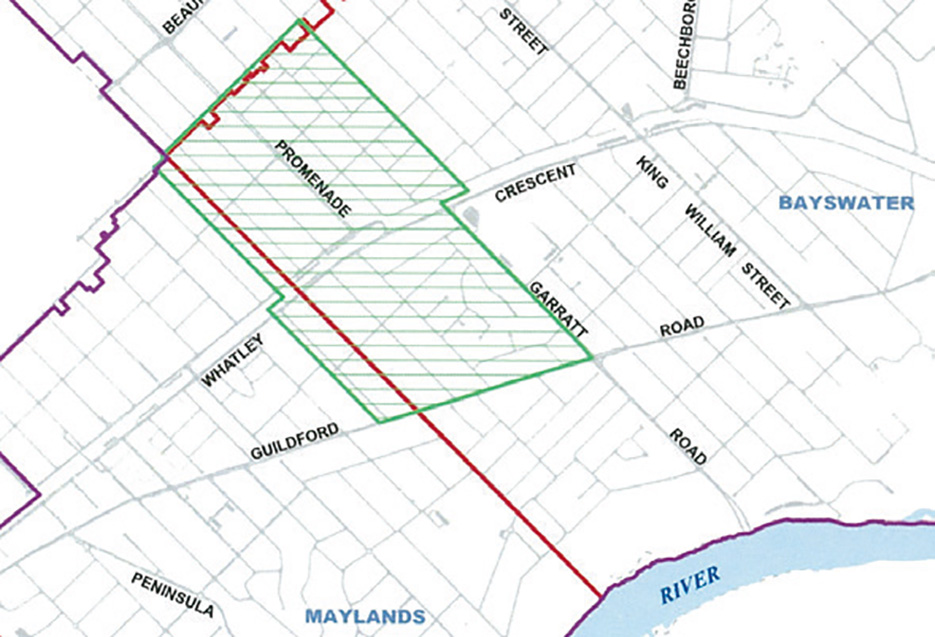
The proposed – and dumped – suburb of Meltham boundaries.
A PLAN to form a new suburb dubbed “Meltham” around the Meltham train station will not go ahead, but building heights will be boosted in the near future.
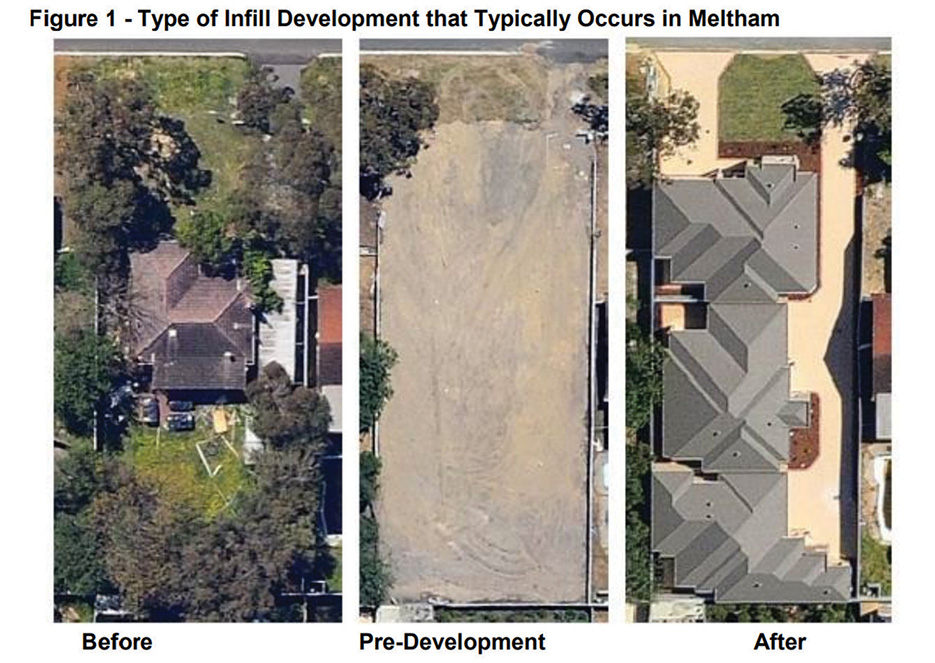
The renaming debate proved more lively than the planning changes introduced by Bayswater council, which will see five-storey buildings near the station, and three storeys about 700m away.
The inner “core” was already granted a six-storey limit by the state government, leaving the council to decide what to do with the 200m to 700m doughnut around that.
A few draft ideas for planning rules were put together by the Meltham Surrounds Community Panel, 26 “random and representative stakeholders” who met last year, then their ideas were sent out to 2,200 households.
Gradual
A majority of residents who weighed in liked the idea of having a gradual step-down in building heights.
The new rules encourage tall-but-slim developments. Residents didn’t want to see blocks subdivided into one-storey battle axes, instead happier with building upwards if it meant more trees. Those changes, ratified by council in April, are now with the state government for final rubber stamping.
Mayor Dan Bull said people consulted “were willing to accept a building could be one storey higher if it meant its footprint could be reduced, resulting in larger spaces between buildings and the ability to plant and retain trees.
“They wanted breathing space between buildings… what they didn’t want was blanket density, they didn’t want cookie cutter development.”
… but don’t give us Meltham, please
THE symbolic plan to rename the suburb brought more people out of the woodwork than the concrete changes.
Bits of Bayswater, Bedford and a slice of Maylands would have been dubbed “Meltham”, centred around the train station, following a suggestion from the Meltham Surrounds Community Panel.
A Bayswater council letter to nearly 4,000 locals about the name change got a response rate of 13 per cent, while 2,200 letters about building heights only rustled up 4.5 per cent.
54 per cent were against the renaming, with reasons including:
Fear it could “decrease property values”;
“The name Meltham has no historical links to Western Australia, native flora and fauna or indigenous people – only possible links to West Yorkshire”;
“The name Meltham means a hamlet where they slaughter pigs”;
“Meltham is synonymous with low-socioeconomic values and anti-social behaviour”;
It “seems to only perpetuate a type of neighbourhood snobbery”; and,
Those in the Maylands sliver didn’t want to give up their suburb’s good name:
“Maylands is developing as a trendy area with entertainment, shopping, cafes, restaurants that people want to be associated with, Meltham has none of these things”. Oof.
Bayswater councillors decided at the May 26 meeting to follow the majority.
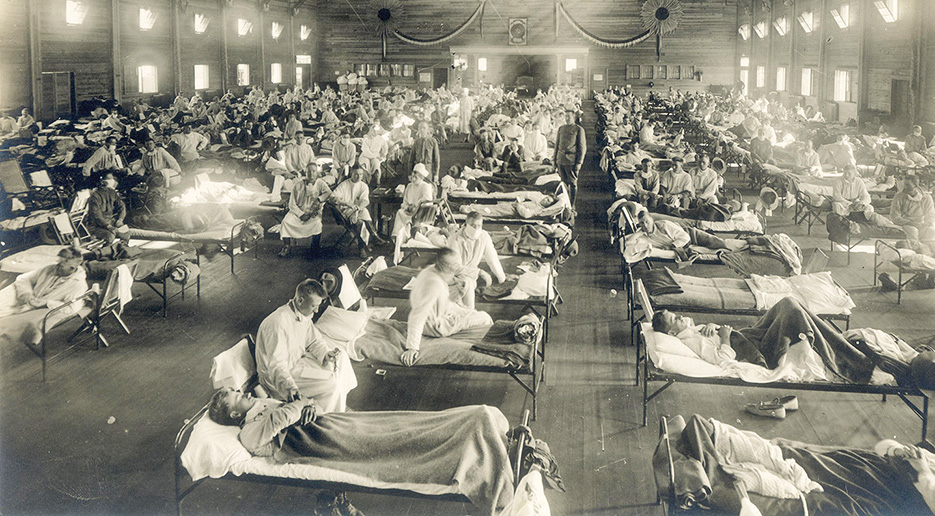
• Soldiers receiving treatment for Spanish flu back in 1918. There’s an interesting attitude to masks.
‘Unprecedented’ or unprepared?
A MEDICAL historian says today’s Covid-19 pandemic isn’t quite as“unprecedented” as politicians would like us to think, with many similarities to the Spanish flu in the early 20th century.
University of Sydney honorary affiliate Peter Hobbins says during the 1918 pandemic, the most effective measures were quarantining and restricting public assembly. He said maritime quarantine, equivalent to air travel bans today, worked “amazingly”.
Dr Hobbins says about 15,000 Australians died of the flu, which had similar social and economic effects as Covid-19: “Many businesses were shut down, many people were sick; people that weren’t sick were afraid,” he said.
With no Medicare in 1919, Dr Hobbins says he has a “strong suspicion” morepeople would have died from the pneumonic influenza pandemic if notfor the charity of neighbours as well as emergency depots and hospitals set up by local councils and charity groups such as Red Cross.
“In 1919 if you were sick and needed help, you would hang up a yellow flag or a white sheet or a card printed with the letters SOS on your doorway,” Dr Hobbins said.
He likens this to the teddy bears in windows and rainbow chalked footpaths that have been used during the current crisis.
Dr Hobbins says another important similarity between the two pandemics was Australians pulling together and voluntarily staying home to maintain social distancing.
Low socio-economic areas in Australia were the hardest hit in 1918, with working-class suburbs in cities such as Sydney and Melbourne the worst affected.
GIVIT has continued operating during the COVID-19 pandemic to support the Australians in need. The charity is currently running a nationwide Covid-19 appeal to provide essential items such as food and cookware.
GIVIT support worker Sarah Visser says needs that have always been there have been “exacerbated” by Covid-19 and more people are needing charity than ever.
Poverty
“If it’s not in your immediate experience you don’t realise the extent of the poverty here in WA,” she said.
With many families struggling toput food on the table, she says GIVIT is supporting neighbourhood centres which are providing emergency relief.
The Australian Charities and Not-for-profits Commission, which regulates Australian charities, says a mix of initiatives and interventions are needed to support those suffering during the pandemic.
“In many cases, charities are in the best position, with expertise, experience and resources, to address immediate needs,” an ACNC spokesperson told the Voice.