• Classic home  

    THE front of this home is quintessential Mt Lawley.

    There’s a leafy verge tree, a white picket fence, and a cute 1920s cottage with a gorgeous verandah and lead light front door.

    But inside this three bedroom, one bathroom home has all the mod cons.

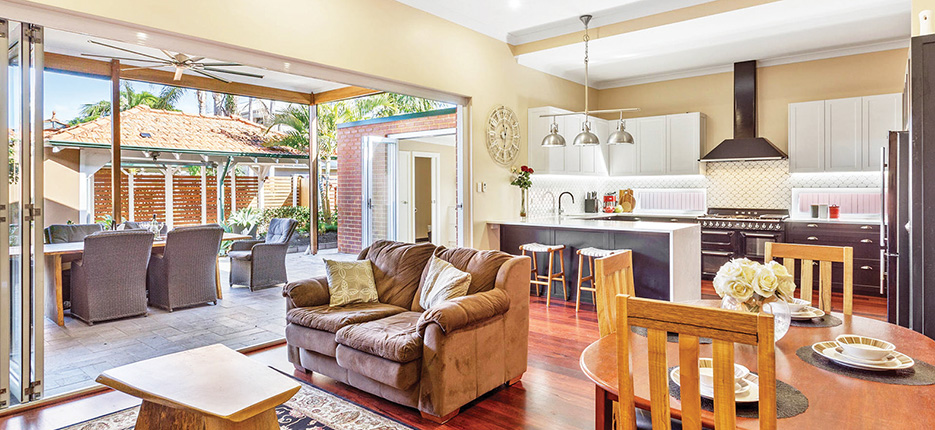
    As you walk down the wide central hallway you enter an open plan kitchen/lounge/dining area with a neutral colour scheme, high ceilings and a bank of bi-fold doors, letting in plenty of natural light.

    I love the polished jarrah floorboards in this house, and they really set off the lounge.

    The kitchen is an absolute stunner – dark wooden cupboards and black SMEG appliances contrast beautifully with white stone benchtops and wall-mounted cabinets. 

    A fish scale splash back breaks up the monochrome design, and rounding things off is a cute breakfast bar with overhead industrial-style lights.

    The bold design really catches your eye. Pull back the wide bank of bi-fold doors in the lounge and head out to the superb alfresco.

    This large area is really an extra living space with a high roof, ceiling fan, downlights and weather proof electric blinds.

    There’s even a wall-mounted TV for watching The Eagles (or Dockers!) when the AFL finally resumes.

    This is a great, all-year-round entertaining area and I could imagine sitting out here in winter with a nice bowl of homemade soup. The alfresco overlooks a low-maintenance courtyard-style garden with small garden beds and bore reticulation.

    Keeping your clothes clean won’t be too much of a chore in the huge laundry, which has bi-fold doors overlooking the neat back garden. There’s also a second toilet in here. All three bedrooms have polished jarrah floorboards and plantation shutters, with the semi-ensuite main including walk-in robes and air conditioning. 

    The colour scheme in the main bathroom is similar to the kitchen, with black subway tiles contrasting with crips white walls and grey tiled floors. Again it works really well. The luxurious main bathroom feels spacious and has a free-standing bath, shower, double vanities and a heated floor and towel rail. Parking won’t be an issue as the house has a carport with an electric door, and there’s room for a couple of more cars on the driveway. 

    Situated on a 401sqm block on Fourth Avenue, this home is close to Hamer Park, Mount Lawley Primary and High schools and ECU. Beaufort Street is also within walking distance. 

     Mid $900,000’s
    127 Fourth Avenue, Mount Lawley
    ACTON Mt Lawley 9272 2488
    Agent Carlos Lehn 0478 927 017

  • Council kept in dark on virus tracing

    A “VERY disappointing” Health Department response over a coronavirus case at the Terry Tyzack Aquatic Centre in March hasn’t convinced Stirling council to take responsibility for notifying patrons if another case is discovered.

    Internal emails obtained through a Freedom of Information request show Stirling staff butted up against non-answers from the department’s Communicable Disease Control Unit and waited 10 days for a response about contact tracing after a gym user was diagnosed with Covid-19. 

    The council immediately closed the centre after being notified of the positive test and briefed “staff and any concerned members of the public” who were there, according to the emails.

    Centre members were sent email messages the following day telling them the centre was closed, but not why. Only those visiting the council website and navigating into a drop-down menu would find out about the coronavirus case.

    The council had received advice from the department that the exposure risk was “low” but wanted to know if the CDCU was contacting people, and emails and telephone calls were sent throughout the week.

    The CDCU’s one-line response came on April 1 and didn’t even answer the question.

    “The public health issues have been managed and as the centre is now closed, there is nothing further that needs to be done,” the email read. “Cheers.”

    Protocol

    An internal email from Stirling’s planning and development director Stevan Rodic shows he forwarded the response to council colleagues saying “not much in it, very disappointing”. He had urged the CDC to respond after Tyzack Centre users contacted the council for information. 

    Not even a prompting from department colleagues to respond “ASAP” helped.

    The TTAC reopened this week, but the city isn’t going to take notifications into its own hands; community development director Michael Quirk said that’s up to the department.

    “The city has a clear protocol to immediately report any cases to the Department of Health‚Äôs Communicable Disease Control Unit and then follow their direction and advice,” Ms Quirk said.

    “Regardless, the city will ensure that all notification responsibilities are clearly understood between the city and the Department of Health in future.

    “It is also important to note that the Department did not consider any users of Terry Tyzack Aquatic Centre as a close contact of the person in question; therefore there was no official requirement to notify other users of the facility. A list of all recorded users was provided by the city to the Department of Health with the expectation that these people would be contacted by the department if they deemed appropriate as the responsible agency.”

    By DAVID BELL

  • Skyworks decision in June

    THE fate of the 2021 Skyworks remains up in the air, with City of Perth commissioners to make a decision at the end of June.

    They were scheduled to decide whether to go ahead with the Skyworks at the May 26 meeting as this is usually the time of year when they lock in the contract to buy the 40,000-odd fireworks needed. 

    But tucked away on page 269 of a 288 page Covid-19 recovery strategy presented to commissioners for approval, city staff recommended that $1.9 million from the Skyworks budget be reallocated for homeless support.

    It was based on a survey sent out to 250 “key stakeholders” from the tourism, hotels, property, arts, culture, retail, hospitality and community sector. 

    Of those, 74 replied, and only 34 plumped for Skyworks. Meanwhile 70/74 wanted more done on homelessness. 

    There was no other reason given until the city issued a media statement saying the recommendation was based on “uncertainties related to mass gatherings and the possibility for second-wave infections to occur into late 2020”.

    The statement said it usually took 10 months to plan the Skyworks and it would be a big financial risk to plough ahead ahead only to have it cancelled. 

    Premier Mark McGowan said on Monday it was “premature” to decide the fate of the Skyworks and Perth MP John Carey said it was “a slightly overcautious approach; we don’t know what’s going to occur”.

    Chair commissioner Andrew Hammond told the May 19 council briefing that commissioners would need more time and a lot more information before making a decision about the Skyworks and two other mass gathering events, the Christmas nativity and New Year’s Eve celebrations. Before the June 30 meeting he requested information on lead-up times, the cost of cancelling, the economic benefits, advice from the chief medical officers and whether smaller events would be safer.

    “The contents of the report and strategy is extremely good work in the circumstances and with the pressures placed on staff,” Cmmr Hammond said.

    “However the three items that are contained in the report, being the Australia Day Skyshow, the Christmas nativity and the New Year’s Eve events, are events that have taken place for many years and therefore require, in my view, a greater depth of analysis and consideration than would be afforded other matters in the strategy.”

    Mr Carey also noted traders who’d suffered during the shutdown didn’t usually see a huge return from the Skyworks.

    “When you do speak to small businesses in the city, they don’t get the economic stimulus or benefit.

    “It’s great for WA, but for the businesses in the heart of the city, they don’t see people coming through. People go to the river, they bring their own food, they sit down and as soon as it’s over they nick off.”

    By DAVID BELL

  • Tomb savers
    A walk among the tombstones: Perth MP John Carey welcomed the new register entry as providing clarity for “one of our city’s best kept secrets”.

    THE East Perth Cemeteries have been given a permanent entry into the state heritage register. 

    It sets in stone a process started back in 1992 when the cemeteries were given an “interim entry” on the register after former Liberal MP Phil Pendal raised concerns gravestones were being vandalised and ghouls were interfering with remains in some of the crypts.

    Some places sit on the interim list for a few months or a few years, but 29 years later the cemetery still didn’t have a permanent entry. 

    The “interim” category no longer exists in WA’s new Heritage Act 2018 and for the past year the Heritage Council of WA has been working through a backlog to tidy up the books.

    Announcing the permanent entry, heritage minister David Templeman said “as we continue to forge our modern identity into the 21st century, it is more important than ever to recognise important places and times from our state’s history that we can learn from and appreciate on an aesthetic level.

    “East Perth Cemeteries offer a window into our state’s colonial past and development into the late 19th century, with each headstone telling its own story and feeding into the collective story.”

    The cemeteries at 2 Bronte Street were used from the 1830s. About 10,000 people were buried there including the only colonial governor buried in WA, Andrew Clarke (the rest went back to England). 

    In 1899 it was designated a “disused burial ground” with burials to cease by 1916, but a few were still permitted through to 1924. 

    There were once gravestones nearby where the Perth Girls School now sits, but it was decommissioned  in the 1880s and built over. Resuming bodies from remaining unmarked graves started earlier this year and they’ll find a new resting ground at Karrakatta. 

    Confusion between the two sites had fuelled the fears of redevelopment and Perth state MP John Carey welcomed the clarity.

    “There have been concerns which are unfounded, but I get it – a fear of part of the site being redeveloped. But that was never the case, and this heritage protection clearly locks it away.”

    Mr Carey says he sometimes hears suggestions from people saying “why don’t you beautify the land, put in landscaping and put in rose bushes. But we want it to be retained the way it was in colonial times. 

    “The idea of beautifying it would not be an actual historical reflection.”

    By DAVID BELL

  • Club costs fear
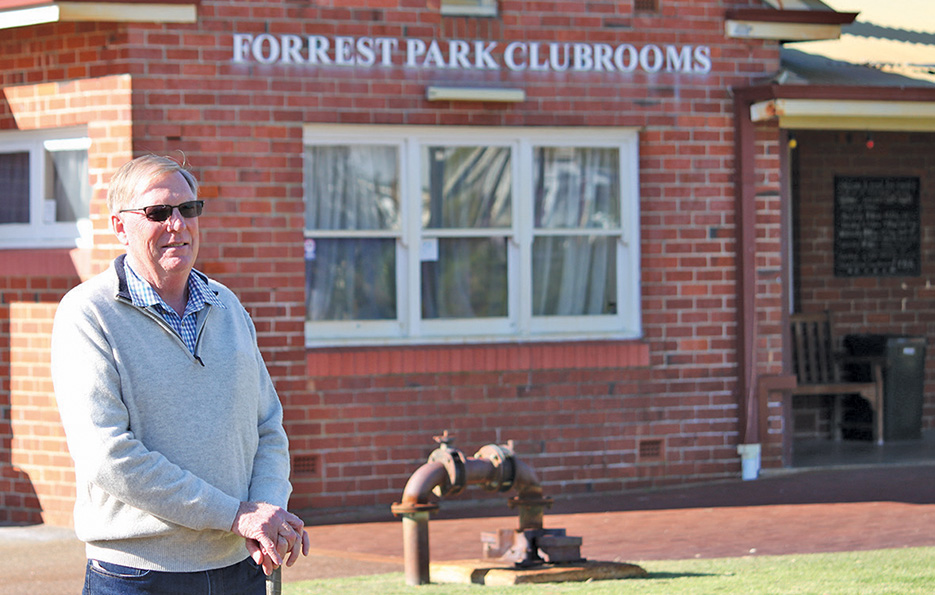
    President of the Forrest Park Croquet Club John Gartner says having to shoulder all maintenance and upgrade costs could end the club.

    THE Forrest Park Croquet Club says its future is in jeopardy under a proposed lease policy being considered by Vincent council.

    The draft policy replaces individual agreements and will see small sporting clubs pay for minor maintenance and capital upgrades. 

    The council would pay for main structure maintenance and “capital renewal”. It says the aim of the plan isn’t to stick clubs with bigger bills but a lack of definition has led to concern over who pays for what.

    Croquet club president John Gartner says “if this goes through, the likelihood is we will fold. Not tomorrow, but somewhere down the track”. 

    Mr Gartner says different clubs are in different positions; some have new facilities needing little maintenance, and some clubs only pay for their building and not the grass they play on.

    “Forrest Park Croquet Club invests about $25,000 per annum in maintaining the grounds, which not only enhances the local amenity of the area, but helps ensure the facility is available to host community group activities, parties and celebrations for local residents,” Mr Gartner says.

    “We, like many clubs, make significant contributions to the city. We maintain our own lawns, paid for by membership fees. Therefore we directly contribute through our passion for croquet by providing community connections and contributing to a thriving community for the benefit of the city ratepayers.” 

    The croquet club building is 1950s era and is in need of a few upgrades, including new toilets to meet accessibility standards. The club had hoped for the council to pick up the tab, but Mr Gartner says by his reading, it’s now up to the club.

    Vincent mayor Emma Cole says given Mr Gartner’s concerns, it looked like the policy needed more clarity.

    “The city is responsible for structural changes, so if there’s an upgrade to a toilet block to make it universally accessible, that would be at the cost to the city.”

    The policy also sees an end to peppercorn leases, and clubs will instead pay between 5 to 10 per cent of the market rental rate. 

    The FPCC says it can absorb the rent increase from $1,121 to an estimated $5,600; it’s the maintenance costs that are the bigger concern.

    The policy is out for comment until May 29 at imagine.vincent. wa.gov.au/policy-updates

    By DAVID BELL

  • Letters 23.5.20

    That’s not all
    YOUR article “Staff Cuts Revealed” (Voice, May 16, 2020) did not fully portray the work the City of Vincent has done to support staff and the community during the pandemic.
    The city has maintained full employment for all permanent employees which is consistent with many other local governments.
    We were heavily impacted by the closure of Beatty Park Leisure Centre which is a large regional facility with many staff casually employed to deliver classes, coaching and pool safety – some for a few hours a week.
    The Beatty Park closure resulted in a nearly $2 million loss in revenue for the last quarter of this financial year and local governments are not eligible for JobKeeper payments. These two factors have made it impossible for the city to sustain the full casual workforce. However, we have provided every casual employee with additional pay and ongoing assistance if they are experiencing financial hardship.
    Over the last two months, 28 people were offered redeployment to work in other areas of the city. Maintenance and improvement projects have provided meaningful work for other employees within existing teams, avoiding the need for additional redeployment.
    We are excited to re-open the doors of Beatty Park this week in line with the Phase 2 easing of restrictions and look forward to returning staff to work as we follow the State Government’s road map to recovery.
    The City of Vincent has made available up to $1 million in Leederville Garden trust funds to charities to support the most vulnerable in our community – and we are offering grants of up to $10,000 for local artists in an arts relief project from cash-in-lieu percent for art developer contributions.
    Our highest priority is supporting our community and staff during this difficult time.
    David MacLennan
    CEO, City of Vincent
    The Ed says: Suggesting casuals got “additional pay” is a contradiction in terms given they’d just lost their jobs. The city’s Covid-19 Relief and Recovery Committee Agenda of April 21 also clearly states that 33 “permanent” staff “have been stood down”.

    Well done
    I COMMEND Vincent council in trying to make savings wherever possible and that includes standing down workers when they are not required. (“Staff Cuts Revealed,” Voice May 16, 2020)
    The other way to look at it, is to ask whether or not we want Vincent council ‘dreaming up’ jobs to keep people employed and whereby this effectively means ratepayers subsidise an economic response.
    Some would say it is clearly the state and federal government responsibility to determine any economic response.
    I completely understand the argument that ‘we must do whatever we can to help people’.
    My comment about any council economic subsidisation is basically an ‘in principle’ argument. In the real world people need help.
    I have written to council to ask about rate relief for ratepayers. And not just for a few, but for all of us.
    I have written to council to ask about staff using accrued long service leave because too many staff accrue too much leave and it has a negative effect on the council’s liabilities going forward.
    More recently I wrote to ask about the ‘dreaming up jobs’ issue but I have not received any response.
    I have been looking at how council formulates its rate amounts and hopefully we ever-suffering ratepayers might be excused from any rate rise this coming July.
    Making savings is essential to this process.
    However, the other side of the coin is excessive expenditure and I am led to believe that to move the council main desk from the admin building to another location cost an almighty $205,000.
    Perhaps someone forgot that they are supposed to operate in the real world. That figure is clearly ‘unreal’.
    In this current climate it is a good time to discuss rates and other fixed costs that impact upon the average household.
    To own a house is nearly not achievable for some people and not merely because of mortgage payments or employment opportunities.
    I can see we are moving into a situation of many households being asset rich (owning the house) but cash poor (too many costs related to the keeping of the house).
    I can remember as a teenager the situation where little old ladies owned rather splendid houses in Dalkeith and Nedlands but had big problems every year raising the amount payable for rates and the like. I always saw that as a sad thing as our society progressed.
    But now I am talking about this very effect here in Vincent.
    There is the ability for ratepayers to NOT pay the rates and council is able to get that money when a property is sold (usually after the death of the ratepayer).
    But really, should we be going down that track at all?
    Now is a very good time to have a real good think about what we want our council to do and what rates should be levied. There is no inherent law that says council rates cannot move down. Maybe by some miracle they will.
    Colin Scott
    Deague Ct, North Perth

  • Dying alone

    DYING ALONE is an entry to the Museum of Perth’s Covid-19 Digital Archive written by JULIE McCLYMONT, about her father James Clarko who was unable to see his wife Edith and their children in his last days. 

    THIS story describes the loss of our elderly father, affected by hospital and aged care restrictions on visiting hours and limitations on funeral attendance due to Covid-19.

    In this terrible period of social isolation; at the least best time ever; our father James Clarko, former history teacher and former Speaker of the Western Australian Parliament, entered residential care at Chrystal Halliday Karrinyup. 

    Jim had first spent four weeks in Sir Charles Gairdner Hospital, following a seizure.

    During this period the hospital had implemented steadily more restrictive visiting hours until he was allowed one visitor only for one hour a day.

    This meant it was almost impossible for his beloved wife to see him, particularly once the Covid Clinic occupied the front half of C Block. 

    On the last day she saw him alive, he was sleepy and confused and initially did not recognise her. 

    Fortunately just as the end of the hour approached he awoke, smiled and said “Hello Edith”.

    We made the decision to transfer him to a local care home, knowing that they were in lockdown, but having no alternative as his health was declining and we were no longer able to care for him at home. 

    We had intended to greet him in the driveway at the care home to reassure him but this did not work to plan. 

    The driver told me Jim had believed they were taking him home (his dearest and most persistent desire) and when told of the real circumstances he could not be calmed without sedation. 

    I cannot comprehend the feeling of desolation which must have overcome him, when he awoke in the strange environment without us.

    Jim was provided appropriate and caring support at Chrystal Halliday for 13 days. 

    However he was alone, confused and heartbroken. 

    All his life he had had a fear of hospitals, and of being alone. 

    In his confusion and declining capacity he believed he had been abandoned by his family. 

    Like most West Australians during this terrible time, his family and friends accepted the visiting ban and did our best to give him comfort and hope, by sending dozens of cards, hoping to assure him we would see him soon. 

    We could not speak to him by phone or social media, or see him face to face. 

    During these 13 days I saw him once; via a “balcony visit” where I stood in the driveway and waved to him on the balcony above. When told to do so by the carer, like the good little boy he had been, he waved to me. I hope he knew who I was and that I loved him.

    Despite our efforts, he had no hope within his heart; and on April 7, 2020 we were called urgently to the care home. 

    It took some time to “sign us in”, be issued the electronic pass and to sanitise our hands. As my mother walked into his room, speaking words of love to him, he died. 

    We hope he knew we were there.

    Frustration

    I could express our frustration at the rules regarding funerals – the limit of 10 mourners meant not all his immediate family were able attend let alone the hundreds of friends and community supporters who meant so much to him. 

    Our simple ceremony focussed on his extraordinary character and the philosophy he had taught us: Friends are family and Family are friends.

    But I will just say to those who made the rules, which I support even in my grief: This visitation restriction was a cruel policy. That there must be many other similar stories around Australia and the world. Where much loved elder members of our communities died alone and in desolation. 

    What was intended to keep them safe kept them from the loving arms of their families and friends at the time of their greatest need. That if given the choice of living for another few months or so, or seeing their family, Dad and many others would choose family. This is a burden we will carry. Let us hope that this most wonderful, resilient generation forgive us for the loneliness we forced upon them without their consent.

  • Food SOS 

    CHINATOWN has always been there in a food emergency.

    There’s always something open in the Northbridge square, whether it’s 4am on a Saturday or on a public holiday (it’s become a tradition for many American Jews to eat at Chinese restaurants on Christmas Day).

    So it was a grim picture when City Garden Chinese had to close its doors as the Covid-19 panicdemic hit, but thankfully they were still doing takeaway. 

    I’d invited a friend round for a night of cooking way back in February 25 when another emergency hit Perth – a freakishly severe storm.

    My place was flooded, her place had no power, and cooking was looking unlikely. 

    Very little was open, but Chinatown was a glowing beacon of hot food. 

    At 10pm on a Tuesday night, City Garden was still pumping – the outdoor and ground-floor tables were full – but the staff found us a spot upstairs.

    The menu is broad by most restaurant’s standards, but brief for a Chinese (it’s not got hundreds of dishes like Uncle Billy’s legendary sprawling menu). I fancied oyster kailan, but I’m not a big fan of fishy greens, and the chef was happy to do a garlic-based version ($14.80). 

    It was crunchy and refreshing; a nice pitstop between the heavier-hitting dishes.

    The chilli and vinegar chicken ($17.80) had crispy skin and juicy innards, and came with a biting thin sauce. 

    The generous amount of chopped chilli makes it personably hot – you can scoop up a bunch with each bite or leave it behind if it’s getting too spicy. 

    The salt and pepper bean curd was a nice savoury interlude between the rainbow of flavours, and I swished them around in surplus sauces from other dishes. 

    It’s $14.80 for a huge pile and well worth it.

    The Peking ribs ($17.80) are slathered in a rich, sweet sauce, just this side of sensory overloaded. 

    The super tender meat is served on the bone, although it’s not the rib cut I was used to in Texas barbecue, with all different sizes and shapes.

    Even though we felt full, we couldn’t leave any of the ribs behind – they were that good.

    The food’s so fresh and finely balanced that I was full to the brim, but wasn’t feeling gluggy, just grateful we have eateries that eschew Perth’s conventional 5.45pm – 7.15pm dining hours. 

    And City Garden is great value – for about $70 for two people, I had enough leftovers for lunch and dinner the next day.

    City Garden
    Chinese Restaurant
    11/68 Roe Street, Northbridge

    9227 8145

  • Virtual country
    Perth singer-songwriter Siobhan Cotchin.

    AWARD-WINNING Perth muso Siobhan Cotchin played a rip-snorting gig at Mojo’s in Fremantle last weekend.

    But before you call the self-isolation police, there was no audience there and the performance was streamed live.

    It’s just one of the innovative ways artists are getting live music out to the public while social gatherings are restricted.

    Cotchin says playing a deserted Mojo’s was very surreal.

    “It was so strange! As a performer who really thrives off of that interaction with the audience, it was difficult to act normal,” she says.

    “I just wanted to fill those awkward silences with lame jokes…I kind of already do that at regular gigs though.

    “Luckily, I did have an audience – my mum has come to every single one of my shows so having her there is such a relief. My manager Amber was also there dancing along.”

    The alt-country/rock singer-songwriter is only 20, but has already been nominated for a West Australian Music Association award (Song of the Year) and won the emerging artist award at the Fairbridge & Nanny Music Festival. Despite her young age there’s an introspective quality to her music, which blends sweet melodies with poignant lyrics and dark themes. 

    There’s a nod to artists like Lucinda Williams and Bob Dylan, and her songs have the depth and maturity of an older, battle-hard performer.

    “I’ve quite enjoyed being home a bit more and having time to myself (this whole situation is kind of an introvert’s dream), but it’s been really difficult coming to terms with the fact that I can’t play shows; being on stage singing your heart out and seeing your friends sing back and dance is my most favourite feeling in the world,” Cotchin says.

    I have been using this time to write songs and find new music to obsess over, which is the best form of self care for me.”

    A full-time musician, Cotchin says she has managed to make ends meet during the Covid-19 pandemic by selling her artist merchandise and staying at home with her parents.

    “I can’t wait to return to my second home, the stage, and play gigs again. I can’t stop thinking about how incredible and rewarding that first gig back will be.”

    Cotchin’s new single Do You Know What I Mean? was released on all streaming platforms this week and you can watch her gig at Mojo’s on their Facebook page: http://www.facebook.com/mojosbarnorthfreo/

    by STEPHEN POLLOCK

  • Swish retreat

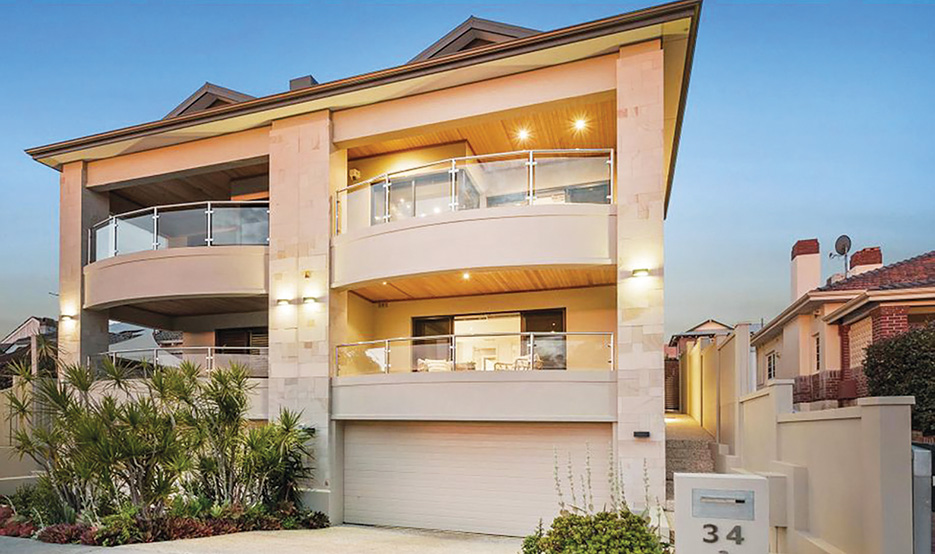
    THIS luxurious Wembley home is perfect for those who like being close to nature and the city.

    Located just a few streets from the tranquil Lake Monger and near to West Leederville and Subiaco, you have the best of both worlds on your doorstep.

    The front of this three-level home is dominated by large sweeping balconies and gorgeous limestone.

    As you walk inside you enter a lovely open plan area with high ceilings and a neutral, contemporary colour scheme.

    At one end is a stylish huge kitchen with grey-flecked stone benchtops, crisp white drawers and a mass of stainless steel appliances including an AEG cooktop.

    You can tell this four bedroom, three bathroom home is a top property – it has a lift going from the three-car garage in the basement to the first floor.

    After a hard day’s work, open the bi-fold doors and head out to the massive cedar-lined alfresco, which has a mini kitchen including a five-burner Turbo barbecue.

    Massive balcony

    This outdoor entertaining area overlooks a decent-sized salt chlorinated pool with a waterfall feature.

    Once you’ve enjoyed a nice dip, pop inside to relax in the peaceful lounge with a glass of vino.

    Up on the first floor is the main bedroom – an enormous affair with a massive balcony overlooking the tree-tops, and a luxurious ensuite with shower, double vanities and a deep spa bath, perched on marble by the window.

    There’s two more spacious bedrooms up here and another generous living area, making it a nice retreat for the kids.

    The remaining lounge/guest bedroom is located on the ground floor, with direct access to another huge balcony.

    This top-of-the-line property has a mass of features including ducted reverse cycle air-conditioning, instant gas hot water and a central vacuum system. 

    Located on Gregory Street on 372sqm, it’s close to local shops and cafes, public transport and is about one km from Bob Hawke College. This is a luxurious property in a lovely spot.

    34A Gregory Street, Wembley
    Offers above $1,900,000
    Home open Saturday May 23 12pm
    Edison Property Residential 9201 9800
    Adam Marchant 0414 434 686