• Walking a new history

    ARTIST Cim Sears was in her early 50s when she learned of her Aboriginal heritage and her ancestral connection to the western desert.

    “There’s an enormous amount of stories that haven’t come to the surface about western desert Aboriginal communities,” Sears says.

    Her latest exhibition draws on practice-led research exploring those connections, creating works and walking the land.

    White records from the area are rare because of the remoteness, and many of the Aboriginal peoples’ own stories were erased or suppressed.

    “The colonists wanted the land and wanted the minerals. They just wanted the Aboriginal people off the land, they weren’t going to celebrate anything cultural,” Sears says. “If you want people out of there you’ve got to spiritually and culturally and physically destroy them.”

    Sears’ mother, a member of the stolen generation, did not know of her own heritage, and the artist says that added an extra layer of complexity to her 15-year exploration of her ancestry.

    “I tried to protect my mum at the same time as being excited about these sorts of discoveries … it’s somebody else’s private story – my mother’s – so you feel like you have to honour that as well.”

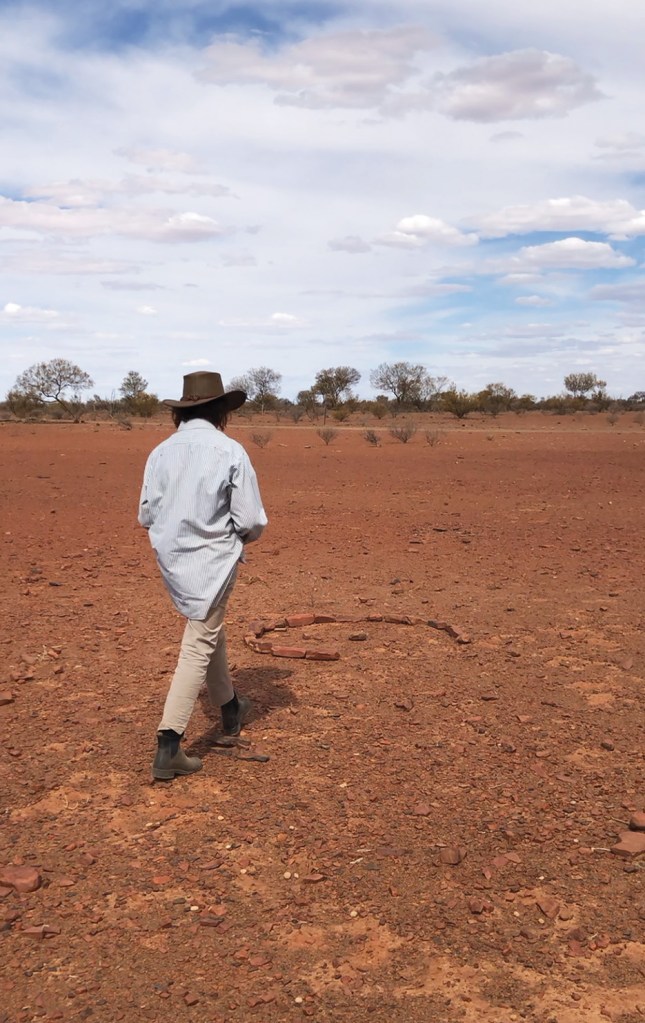
    Documents in archives filled in some of the pieces, but it was through “walking and making” that Sears felt a powerful connection. 

    Ancient crafts

    As part of a Masters of Arts research project at ECU, Sears walked the region around Wongawol where she’s traced her connections, and made works inspired by the peoples’ ancient crafts.

    “As soon as you take off from Wiluna, it’s incredible how the environment impacts on you as a human being.”

    Sears says the feeling of connection to humans living a hunter gatherer lifestyle for thousands of years “is quite palpable when you get there”. 

    The “making” has been through other mediums rather than re-enacting the traditional processes. Photography, ceramics and painting set out to capture a connection to old practices.

    Even working in a different medium – crafting ceramics into the shape of a bowl that would’ve once been made out of wood –  was an immersive practice. 

    “It becomes meditative. You start to feel that you’re becoming part of it.”

    Discovering her own family’s history and walking ancestral lands has led to a rewriting of Sears’ personal history, and she hopes it contributes to the rewriting of WA’s history too.

    “History and Aboriginal culture was non-existent when I went to school,” Sears says, and today many of the stories aren’t widely known, or only the white side is told.

    For some western desert people, their first close contact with white people would have been when the WA government surveyor Alfred Canning plotted the Canning Stock Route from Wiluna to Halls Head in 1906.

    He’s a celebrated explorer, but few know he only found waterholes by putting Aboriginal people in neck chains to force them to act as guides.

    To the north-west, Aboriginal people, including those from the desert regions, were enslaved on pearling boats and as station hands.

    WA’s 1905 Royal Commission on the Condition of the Natives makes that clear in a section on the “contracts” signed between authorities and businesses for the labour of Aboriginal people, who had no say in the outcome.

    Indentured

    “Wages are not stipulated for in the contract, and it is only in about one case out of seven that they are alleged to be paid,” commissioner Walter Roth found.

    But Cmmr Roth noted the vast majority of Aborigines didn’t even make it onto a contract and were forced to labour without documentation.

    “According to the evidence brought before your commissioner, none of these natives throughout the North West receive wages,” he wrote in his report.

    Commr Roth also discovered “at least 85” instances where children were “indentured” without permission of authorities. Scores more were on the books.

    “At Broome quite one-half of the children, ranging from 10 years and upwards, are indentured to the pearling industry and taken out on to the boats,” he said.

    Perhaps his most chilling observation: “With regard to the most suitable age at which a child can be indentured as laid down by law, the Chief Protector [of Aborigines] considers this to be about six years.”

    Slavery

    Children received no education and no wages.

    “WA practised slave labour here for many years,” Sears says.

    “There’s things that happened in Derby, the blackbirding, to go out and get slaves to work on the pearling boats. They were chained… They were shackled to bolts on the floor. 

    “We’re talking about slavery in WA, and most people would go, ‘what?!’

    “It’s not acknowledged at all. You don’t hear people talking about it. That’s human nature. 

    It can’t face facts. Even within families, when something really bad happens, you go into shock.

    “It’s a human trait. But I don’t think it harms us to actually unfold the stories.”

    Walking to Wongawol is at Gallery25 at ECU Mt Lawley campus, Tuesday to Friday, June 9 to July 24. 

    By DAVID BELL
  • Played to perfection
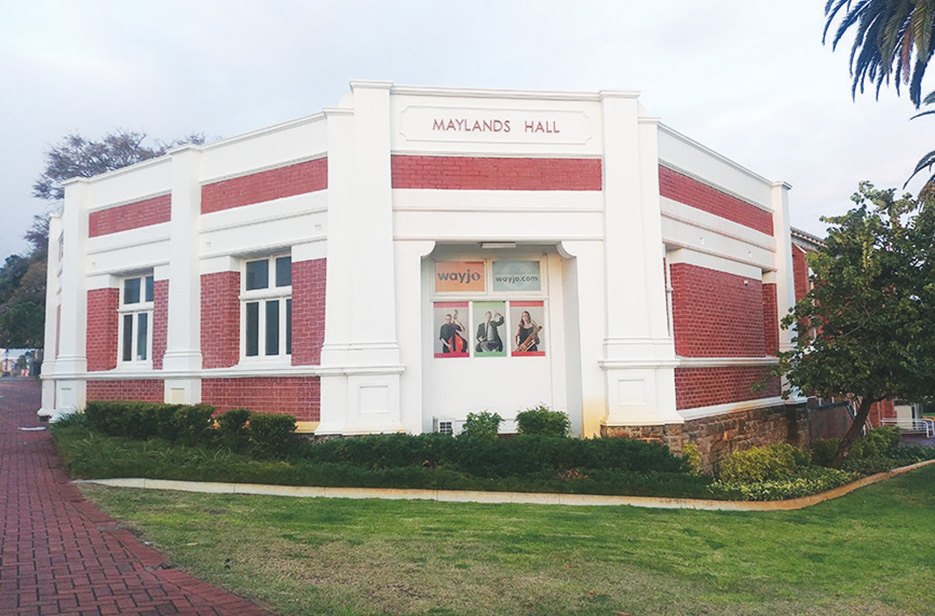
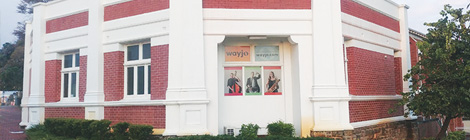
    The Maylands Hall held the library until that moved to the Rise in 2011. Photo by Elli Petersen-Pik

    WAYJO scores rent deal

    THE WA Youth Jazz Orchestra will stay put in Maylands after Bayswater council approved a massive rent discount.

    WAYJO’s been at the historic art deco Maylands Hall since 2015, paying $6,600 a year in rent, another $5,000 in rates and levies, and $11,800 on utilities.

    Its lease is up for renewal and Bayswater council staff recommended the rent go up to $22,000 a year, offset slightly by the yearly rates bill being removed. 

    That’s consistent with the new council facility lease policy, which asks for “funded” not-for-profits who get government money to pay 40 per cent of the market rent. 

    Sweeter

    WAYJO was hoping for a sweeter deal and brought out the big brass with a letter of support from WA Local Government Department director Duncan Ord.

    “While the organisation receives a small amount of government funding, the subsidy provided by the department is modest,” he wrote, with the department’s $100,000 annual funding about 15 per cent of their turnover.

    He wrote they add “to the artistic vibrancy of Maylands”. 

    Bayswater councillors agreed and had them classified as a not-for-profit, which reduces the rent bill to $1,360 a year. The council will eat the cost of $5,000 in rates and levies, and even pay the $11,800 utility bill. 

    Mayor Dan Bull said: “It’s a very important organisation for the Maylands arts hub and the arts community.”

    Mr Bull would like to see the main hall opened to other groups. Currently one theatre troupe uses it, while WAYJO has transformed the basement into rehearsal space. 

    Cr Elli Petersen-Pik added a condition to the lease that WAYJO provide two free community concerts a year, and open up the main hall for public access once a year.

    “If council will go ahead in reducing the rent so significantly there should be something on the other side,” Cr Petersen-Pik said, adding the free shows “will offset in some way the reduction in fees”.

    “I hear so many people in Maylands talking about this building, and not seeing it from the inside.”

    In a report to councillors, Bayswater staff warned giving cheaper rent “sets the precedent” for other groups to try to get classified as an unfunded not-for-profit too.

    The point of the new facility lease policy was to get a consistent rule in place and not have to barter with each group, and staff reckon this will lead to more coming forward “which will take a significant amount of City officer time to negotiate”.

    By DAVID BELL

  • Leedy to get ‘uplift’ 
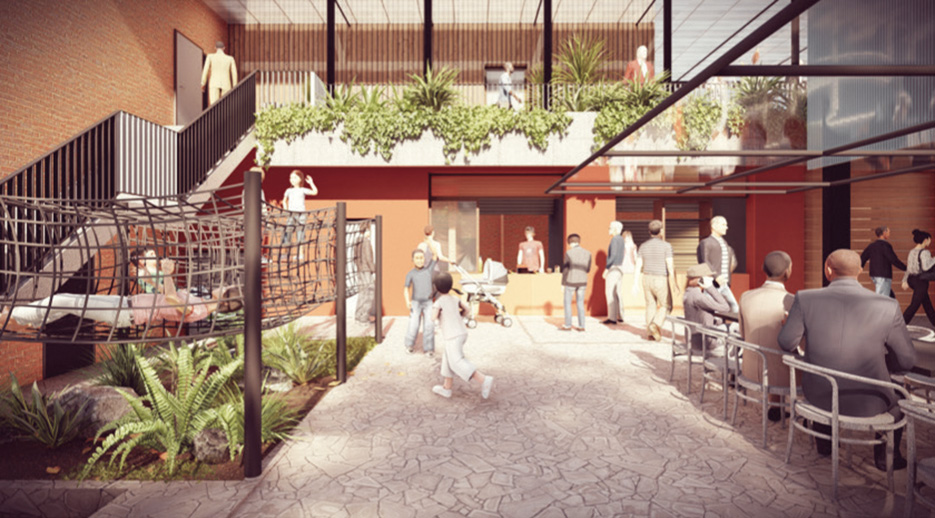
    Renders of the plans, which open up a new breezy entry to the northern alleyway.

    ANOTHER major redevelopment of the Leederville Hotel site is in the works just six years after the last big revamp rebranded it to “Bill’s Bar and Bites”.

    Owner FJM Property is seeking approval for what it’s calling a “a new social centre for Leederville”.

    It’s a $3 million “general uplift” of the hotel’s interior, the upstairs Babushka venue, The Garden restaurant and the courtyard, with a new lift to let everyone access the upper level drinking decks.

    Some of the newer outbuildings behind the old hotel will be demolished including the Blue Flamingo tavern, to be replaced by a new piazza and a dining/bar venue and a shop. 

    Last year FJM partnered with builder ABN Group to develop ABN’s new office on the hotel’s old carpark just to the north, bringing in some 750 office workers into Leederville next year.

    The new hotel redevelopment’s planned to capitalise on that: The demolitions make for two wide open areas leading into the alley between the courtyard and the office block, aiming to make it a more inviting “laneway precinct”. The laneway’s accessible currently, sometimes, but it’s a dark alleyway right out of a noir movie and the Voice wasn’t sure we were even allowed back there or if the door was left open by accident.

    There’ll also be a kids’ play area in the courtyard, a far cry from the days of the hotel being known as the “Seedy Leedy” before its last upgrade. 

    FJM director Adrian Fini says: “The goal is to create the pub of the future offering multiple spaces with differentiation and interconnection. It will have a family-friendly component with provisions for both day and night trade.”

    A development application’s been sent to Vincent council and if approved the upgrades are expected to be finished some time in 2021. 

    By DAVID BELL

  • Maj sparkles again
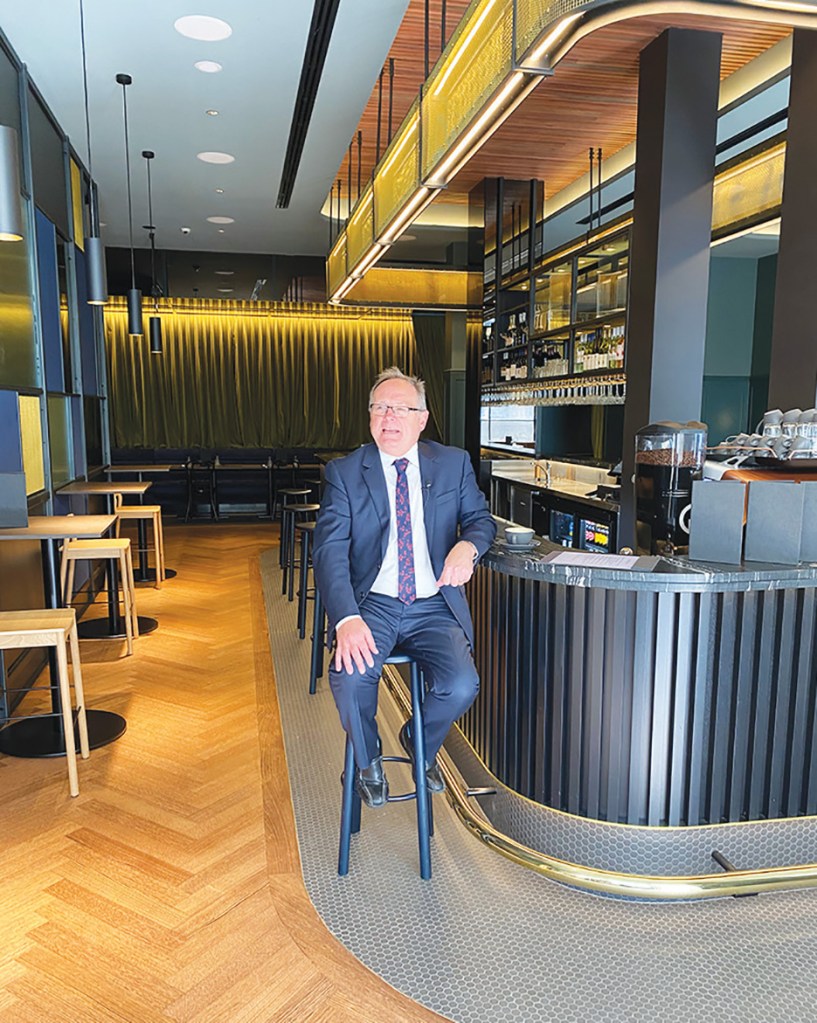
    Arts and heritage minister David Templeman gets the first cuppa at the reopened cafe.

    THE two-year refurbishment of His Majesty’s Theatre has been completed.

    The WA government put $6.5 million in the ‘18/19 budget for the works, including a new automated orchestra pit lift, new acoustic treatments, better air-conditioning that won’t interfere with sound quality, new accessible toilets, a new staircase straight from Hay Street rather than the old in-and-around snaking patron flow.

    The new “Crew and King” Cafe is now also open this week, delayed only slightly by Covid-19 restrictions.

    A new bar and foyer space in the space that used to hold the Museum of Performing Arts “will continue to showcase some of the beautiful items” from the enormous collection, according to a government media statement.

    Built 1904 at the time of King Edward VII, it’s the only remaining Edwardian theatre in the southern hemisphere, and is on both the state register of heritage places and the Register of the National Estate. 

    Arts and heritage minister David Templeman said “The Maj is such a unique asset and it is important that the state continues to look after her for the people of Western Australia.”

  • Foreshore retreat

    “RETREAT” has been sounded for parts of the Maylands foreshore which is succumbing to dire erosion.

    Bayswater council has a new 10-year plan for stabilising the shoreline and retreating some parts, but it’ll need a lot more money; it currently budgets $150,000 per year for the riverbank, but $4.6 million is needed over the next 10 years.

    If the works aren’t done, footpaths, gazebos, and countless trees will fall into the river, and the heritage-listed Peninsula Farm is at risk of being undermined. 

    Managed

    “Managed retreat” is recommended for the part of the Tranby House Reserve foreshore just north of the farm, with the gazebo’s foundations already exposed as the soil underneath disappears. The footpath will have to be moved inland and the gazebo will have to go unless heroic efforts are made to shore up the banks.

    Retreat’s also the plan for part of Claughton Reserve, with a large Katanning tree and park benches to be relocated inland. 

    Most of the rest of the shoreline will be stabilised with more soil, plantings, and restoring the degraded walls.

    Mayor Dan Bull says the problem’s built up over 100 years with “significant change and degradation as a result of dredging, reclamation and human use. 

    “Now is the time to act if we are to have any chance of restoring this unique ecosystem,” Mr Bull said. “The City has previously worked to protect this area on an as-needed basis. We now know that this is not enough, and what we need to do is set out a long-term, evidence-based approach to find sustainable success in this area.”

    Government funding will be needed but councillors decided not to try writing to the state environment minister asking for more money, as council staff advised that “political approach” has been tried repeatedly and hasn’t got them anywhere. 

    Instead they’ll keep working with the WA conservation department DBCA (which does chip in some money already), show them the 10-year plan, and team up with them to have a better chance when applying for state and federal grants. 

    Tranby’s woeful score

    Bayswater council’s retreat plan comes from a report by consultant MP Rogers & Associates which found the bank along the council’s area has suffered between 5m and 20m of erosion since 1995.

    They rated the different areas of shoreline based on a severity system used by the US Army Corps of Engineers.

    Each area gets a score for how bad it is from 1 (excellent, no work needed) to 5 (very poor, major work urgently required). That number’s then multiplied by a rating based on how bad the consequence is of not fixing it (1 being minor, 5 being risk of death and irreversible environmental impact), to get a final score anywhere between 1 and 25.

    The timber walling and stairs at Tranby House reserve scored the worst possible score of 25, requiring action within the next year or two and estimated to cost more than $1 million to stabilise.

    The wall failed years ago and the stairs are damaged, and an “unacceptable risk to public safety. The warning tape currently in place is not a sufficient barrier,” the consultant’s report warns.

    Four other sections got “high risk” ratings between 18-21: Maylands Reserve, Hinds Park, Bayswater riverside gardens, and the bit of Tranby House Reserve that’s north of Peninsula Farm. 

    The report warns rising water levels and an expected increase in boat traffic will only make erosion worse.

    By DAVID BELL

  • Festival of recovery
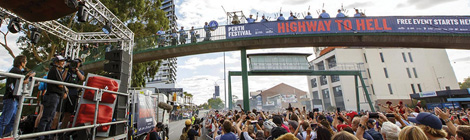
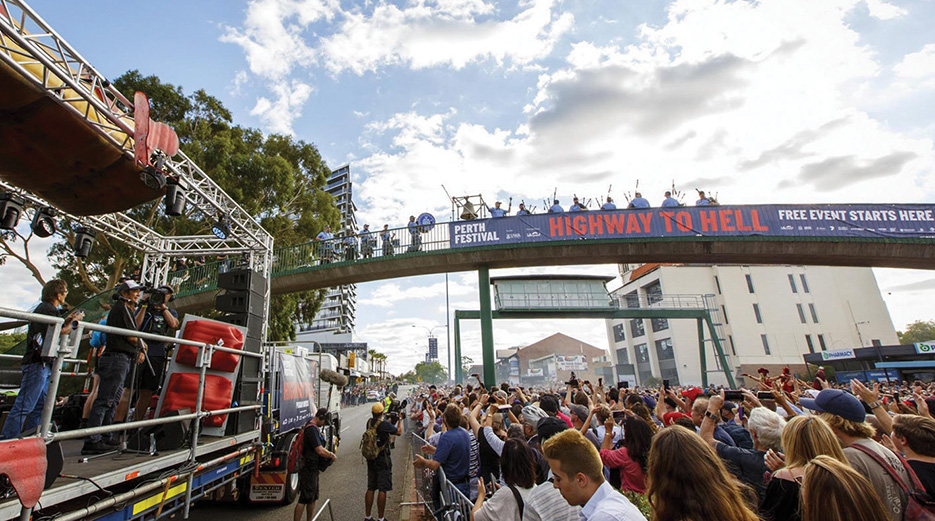
    Highway to Hell packed a punch and brought in many punters who’d never been to a festival event before. Photo by Jessica Wyld.

    THE Perth Festival’s ability to inject millions of dollars into the state’s arts economy will make the next instalment vital to help the creative sector recover from Covid-19.

    The Festival’s annual report was released this week, around the time Perth council and other sponsors are looking at their own budgets and what they might be able to skimp on in a lockdown-ravaged economy.

    “Like so many sectors, our state’s arts and culture industry has been hit hard by the Covid-19 shutdown. Artists, venues, workers and companies have endured severe job losses, show cancellations and crippled income streams since March,” a media release accompanying the report said.

    “Perth Festival is well placed, as a ready-made cultural stimulus package, to help re-invigorate our state’s vital arts sector  for the benefit of the entire WA community.”

    economic impact from artists and audiences spending was $30 million in 2020, up from $19 million in 2019. That’s even with the tail end movie season having to be cancelled due to pandemic restrictions. 

    The Highway to Hell closing event was deemed a huge success attracting 144,850 people, and 42 per cent of those had never been to a festival event before. Traders saw a $6 million boost on the day. 

    The festival paid $10.8 million to artists and local suppliers and workers, with three quarters of the artists from WA. 

    The festival’s executive director Nathan Bennett said the 2021 festival would be even more important as people “will be looking for creative ways to relax and relate to one another after a period of great stress on our financial, mental and social wellbeing.

    Perth council’ Covid-19 recovery plan looks to “events and festivals” as key to rebuilding the hospitality, retail and tourism sector.

    By DAVID BELL

  • Hospitality, sociability, rational amusement
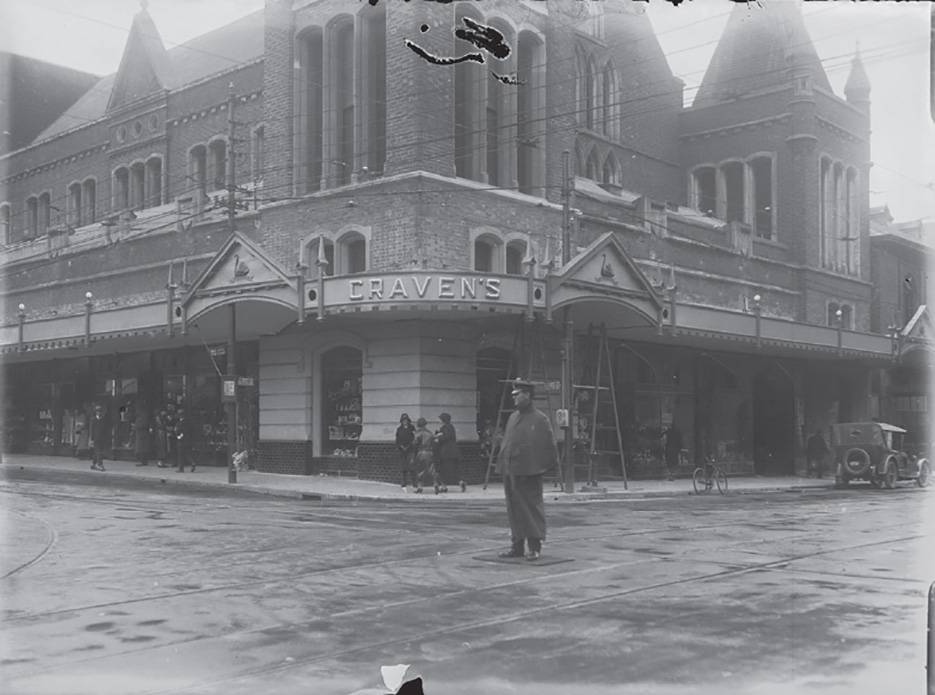
    Craven’s Pharmacy occupied the lower level in 1925. Photo from the State Library WA collection 008314PD.
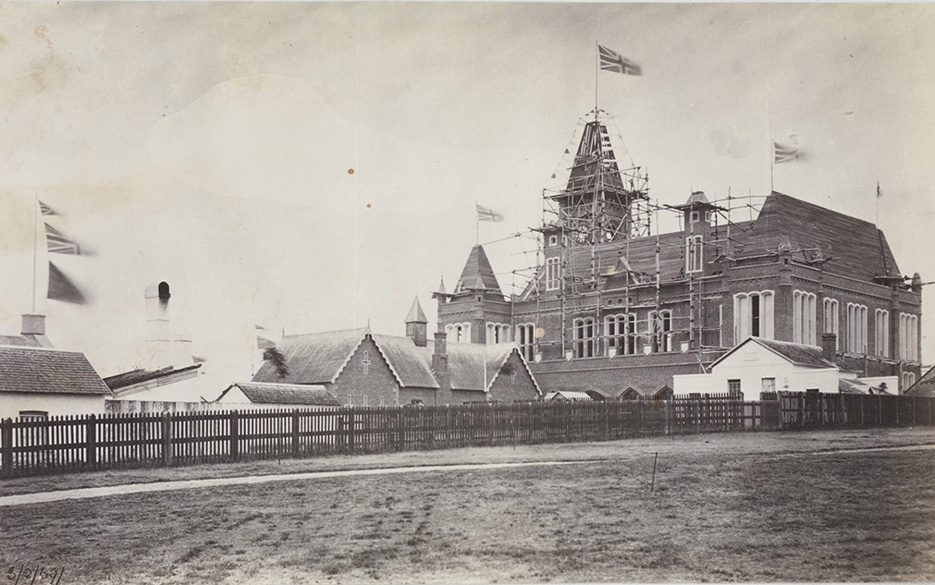
    The Perth Town Hall under construction in 1869, from the State Library WA collection b3984988.
    Elder Margaret Culbong did not have fond memories of the town hall, but is pleased to see some recognition that it was built on an important Whadjuk Nyoongar site.

    A PLACE for “hospitality, sociability, and rational amusement for the people”: The Perth Town Hall has marked 150 years since its official opening on June 1, 1870.

    Perth city council has marked the date with an online exhibition on the history of the building, the only town hall in Australia built with convict labour.

    The hall was built as part of an 1867 public works initiative by governor John Hampton (who spoke the “rational amusement” line), which also saw construction of Government House. 

    It took three years to build, and he died in England in 1869 before it was finished; remembered for his harshness towards convicts and for using their cheap labour to save money while the state was in debt.

    One convict, David Gray, worked as a bricklayer for the whole of the project. He received his ticket of leave in 1870, but stayed on for the last few months to see the job through to the end. 

    Kuraree

    The exhibition is named “Kuraree” after the ridge of land it sits on, acknowledging the site as a meeting spot much older than the building, and the council brought in elders to tell the ancient and recent Whadjuk Nyoongar story.

    Exhibition curator Caroline Bird said “Kuraree would have been an important meeting place for Nyoongar people. The town hall site was actually a favourite camp for prominent Whadjuk Nyoongar Miago and his family”. 

    Elder Farley Garlett recounts Miago’s history in the exhibition, saying “he was well-known among the settlers, and local papers often mention him as a messenger of peace and an ambassador”. 

    For a long time it was off limits to the traditional owners who were largely excluded from the city’s “Prohibited Area” in the early 1900s, requiring them to have a work pass.

    Elder Margaret Culbong recounts not being allowed to go in the hall as  a child: “I think of the Perth Town Hall as one of the historic buildings in the city, one of the buildings which shows racism and discrimination,” she says in her recollection. 

    “We weren’t allowed in it. We had to walk on the other side of Barrack Street. I was conditioned at the time to all the racism and discrimination … it was just a part of my life growing up. We hardly went into Perth because we were only allowed in parts because of the racism and discrimination.”

    The prohibition was revoked in 1957, but Ms Culbong still felt no warmth for the place.

    “When I was in my 20s I was nursing at the Royal Perth Hospital. I‚Äôd no inclination to go into the Perth Town Hall. That was White Man’ Building.”

    Significant site

    In the intervening years she has visited, and was saddened there was no recognition it was built on a significant site.

    “It’s important to bring that recognition back to our culture,” she said, “reuniting our young people to our history, our lore and our country”.

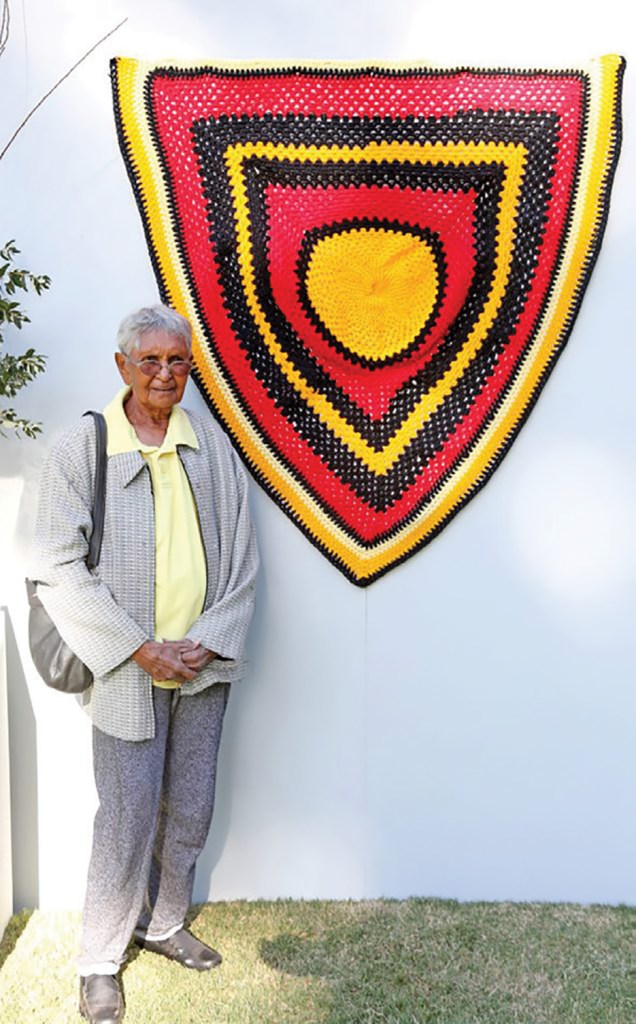
    A keen crocheter, Ms Culbong started working on a woollen shield in the shape of a council coat of arms, but with the black, yellow and red traditional colours.

    She says at first it had “no real significance, but then as I went along with the crochet it did begin to matter. It became something. It mattered. It had the white man’s shape and size but it was putting our mark and our claim on our country. 

    “All my grandkids and great grandkids will be excited to see my crochet shield… Recognition of Whadjuk people, Whadjuk land, Whadjuk country, I think it‚Äôs a good thing. It’s quite significant that there is something in there of ours.”

    The online exhibition is up at kuraree.heritageperth.com.au

    By DAVID BELL

  • A little bit of sunshine

    AS I drove up to Perth on Tuesday lunchtime, the sky was battleship-grey and the wheelie bins were lined up like plastic sentries.

    Things weren’t much better when I arrived in a moribund Northbridge – most restaurants on James Street were shut and the few that were open had very limited or no seating.

    There was a strange atmosphere and as I walked up William Street; a man across the road made a noise like Chewbacca getting a root canal.

    I was ready to call it a day, when I saw Little Willy’s cafe was open and ducked inside.

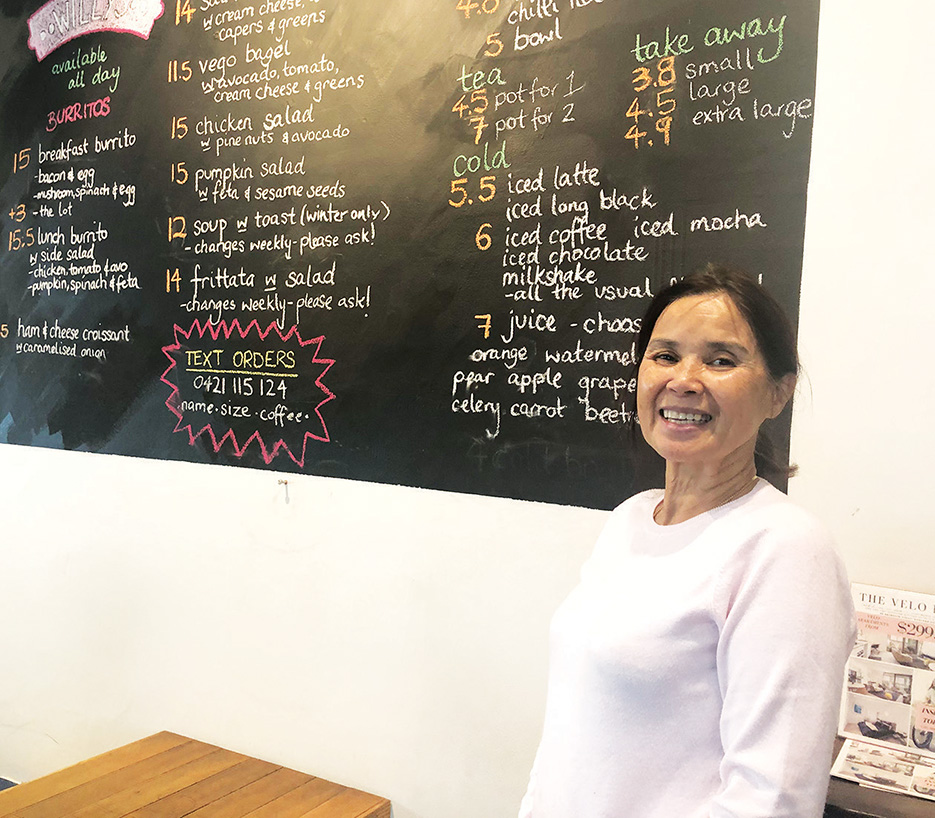
    A sanguine lady behind the till, Huon, greeted me with a beaming smile.

    Breakfast

    “Come in, come in and sit down.” She chaperoned me through the chalkboard menu, which had a nice range of breakfast and lunch dishes, including raspberry porridge with rhubarb and banana, frittata with salad, and omelette with corn salsa. 

    Huon told me the lunch and breakfast burritos ($15) were a favourite with locals and backpackers.

    She was so friendly I nearly forgot about the pandemic, before she asked me to fill in a form with my name and time so the state government could keep track of who was coming and going.

    It was amazing she was so up-beat as the cafe had lost power from 7.15am to 9am, meaning she couldn’t sell any coffee or breakfast in the morning rush.

    After all the economic drama of Covid-19 it was another kick in the teeth, but she wasn’t giving up.

    “What can they throw at me next?” she laughed.

    I took a seat at the window with my complimentary pitcher of water.

    The cafe felt like a cosy nook with quirky art lining the walls and rustic wooden tables.

    Huon

    It wasn’t looking before I was drinking my creamy cappuccino ($4.50), which had a mellow flavour but was still piping hot. 

    Too often I get tepid cappuccinos that are like bastardised flat whites with extra shots, but this was nice and smooth. It also looked the part with a leafy swirl on top.

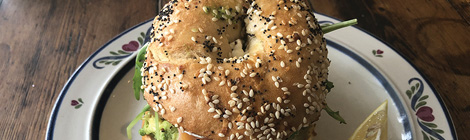
    My towering, freshly-made bagel was layered with smoked salmon, avocado and lettuce ($14).

    There was no skimping on the salmon and the avocado, and they hadn’t overdone it with the rich cream cheese.

    Just when the flavours we’re getting a bit mundane, a caper zinged my taste buds back into life.

    The accompanying wedge of lemon helped to cut through the rich filling and keep things on track.

    Superior

    The bagel itself had a nice chewy texture, and was far superior to pre-made ones from display cabinets.

    I’ve been to Little Willy’s cafe a few times over the years and their unassuming food is always filling and very tasty, and the service is second to none. 

    As I was preparing to leave, Huon tells me that she immigrated to Perth some 40 years ago, and the family-run cafe had remained open throughout the Covid-19 pandemic.

    She starts to get emotional as she talks about trading through the first few days of lockdown.

    “I remember looking outside and Northbridge was just empty – it was so strange.” 

    Little Willy’s
    267 William Street Northbridge 

  • Little ripper 

    THIS Highgate flat is perfect for someone who wants an exciting inner-city lifestyle.

    Located in a leafy, secure complex on Beaufort Street, this one-bedroom, one-bathroom apartment is close to a fantastic range of bars, restaurants and cafes.

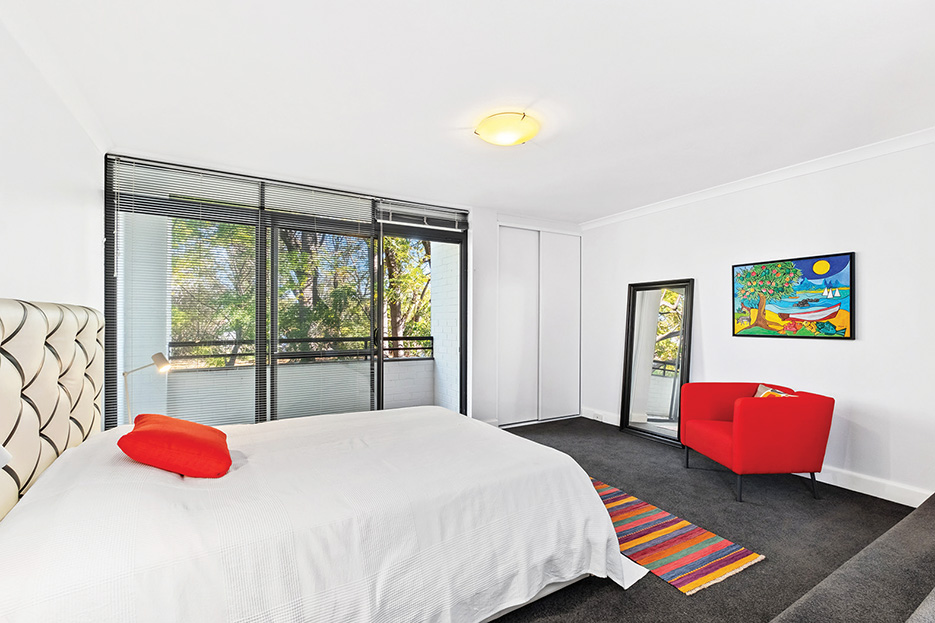
    Inside it is compact and bijou, with a crisp white colour scheme and modern fit-out.

    The living area is carpeted, which is quite unusual, giving it a cosy and slightly upmarket feel.

    At one end is space for a small circular dining table, in the middle is the couch and TV, and at the far end is a spacious double bedroom with a recessed wardrobe and sliding glass doors leading to a south-facing balcony.

    Natural light

    There’s some large windows on the eastern side of the apartment as well, ensuring plenty of natural light. 

    Off the living area is a lovely modern kitchen with sleek white cabinets that contrast nicely with dark benchtops and stainless steel appliances.

    It’s a great kitchen for this size of apartment, and perfect for putting on some banging tunes while cooking up meals after work.

    The bathroom is neat and modern with a dark tiled floor, a shower cabinet and white subway wall tiles.

    this flat is at the end of the building with only one common wall; making it nice and quiet. The complex also has a laundry on-site.

    Once you’ve had enough of the bustling nightlife on Beaufort and William Streets, take a short walk to the beautiful Hyde Park, where you can relax by the duck pond and watch the world go by.

    Or walk into the CBD to do some shopping or go and see Perth Glory at HBF Park when the soccer resumes. 

    Whatever you feel like doing; it’s close-by.

    Parking

    Parking is notoriously tight in the inner-city, but don’t worry, this flat has a secured allocated car bay. 

    But I imagine you won’t be using the car much with public transport right on your doorstep.

    When I first moved to Perth I stayed in similar-sized apartment and it’s a great option, as you’re out a lot and don’t want to spend time cleaning or having to worry about looking after a huge place.

    This could be a great starter flat, an Airbnb rental or a nice city base for people living in the hills.

    20/432 Beaufort St, Highgate
    Home open 11.30am-noon today (Saturday June 6)
    $239,000
    Harcourts City Central 1300 149 116
    Agent Penny Brosnan 0417 937 938

  • Budding bards 

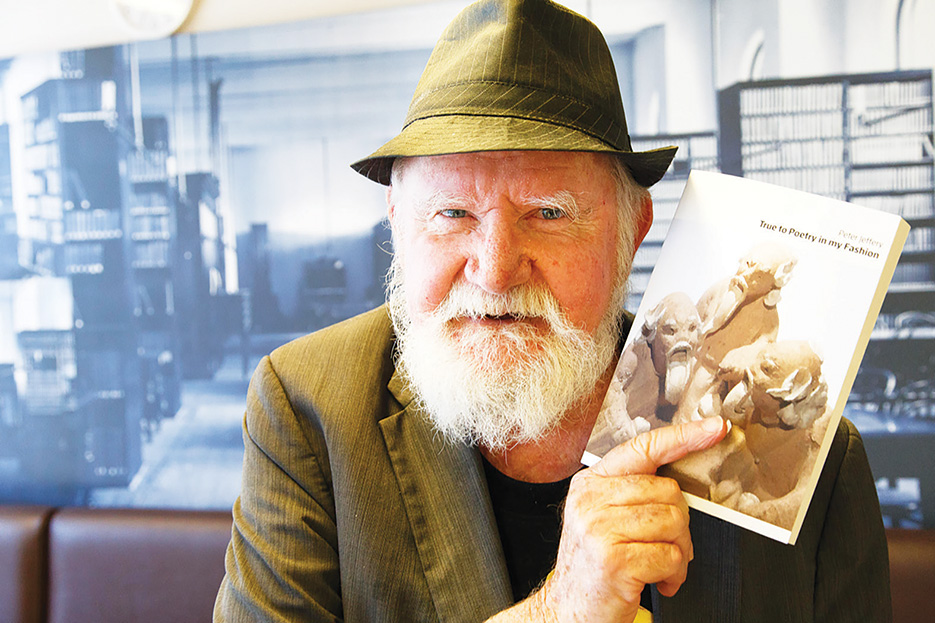
    IT’S the perfect time for seniors to write that best-selling book they’ve always talked about, but never got around to, says award-winning Perth poet Peter Jeffery OAM.

    Mr Jeffery hopes we’ve had time during lockdown to dust off any half-finished manuscripts or come up with new ideas for novels, poems and plays.

    “From what I have heard it has led to a productive time of tidying up extant writing, imagining new projects, poem swapping by email, preparing for contests, and I am sure you will have publishers, after clear time, having a picking feast.”

    The Mt Lawley bard knows a thing or two about writing: he’s won prestigious poetry competitions including The Tom Collins Prize, published several books of poetry, appeared in magazines like The Bulletin, and edited several poetry journals. 

    More recently he’s headed up the Vincent Writers Centre, where budding authors, including plenty of seniors and retirees, meet-up to share and critique each others’ creative writing.

    “After our very successful launch of our second anthology, that was produced at a professional level with State Library registration and placed competitively on the shelf of the Bodhi Tree Cafe, 

    it returned a very handy profit and some of this had been planned for the third anthology, until ugh, corona arrived.

    “The good news is that we will be able to resume on June 5 with our regular Thursday meetings between 10am and noon at the lesser North Perth town hall.

    “If we have stability by say July, we may resume our work on the anthology for a Christmas launch and maybe some poetry and prose cards, and chap books.”

    If you do beaver away for months and complete a book, what are your chances of getting published in the post-Covid-19 economic landscape?

    Fremantle Press CEO Jane Fraser says small publishers are used to doing it tough and she hasn’t furloughed any staff.

    “We have had people asking us if we’re still taking submissions during Covid-19 and the answer is yes – we’re still here and we’re still reading them,” she says.

    “I would say that we might see an increase in book submissions in about a year or so because people may start working on novels or memoirs during this time at home. We brought some titles forward to make sure local booksellers had new releases for families needing more books at home, we pushed some books to later in the year, and a couple have gone into 2021.” 

    Ms Fraser says that Christmas is going to be huge for smaller publishers.

    “In many ways smaller and radical publishers are the cultural and intellectual lifeblood of the industry and we shoulder much of the risk associated with publishing new and emerging local authors. 

    “So, with smaller backlists and cash reserves to draw on, smaller publishers will need public support more than ever to keep going. 

    “Our award-winning crime list is going through the roof: Along with new books from Alan Carter (Doom Creek), Dave Warner (Over My Dead Body) and David Whish-Wilson (Shore Leave) we have a cosy crime novel by debut author Alexander Thorpe called Death Leaves the Station.”

    If you fancy having a stab at creative writing then go to https://wapoets.com/vincent-writers-centre.