• Alfresco fees easier to swallow

    THE City of Perth has abolished alfresco fees for restauranteurs and publicans.

    Perth councillor Reece Harley has been pushing for the fee to be dropped since 2015, but says he was met with “fierce resistance” from the council and senior staff.

    Back then the annual alfresco fee was an average of $140/sqm, plus application charges. In 2017 council agreed to cut it to $40/sqm.

    Mr Harley is currently suspended along with the rest of the council and lord mayor, and had to watch last week as the state government-appointed commissioners abolished the fee.

    Commissioner Gaye McMath moved the motion to scrap it, saying they wanted to remove roadblocks to outdoor dining and support the struggling hospitality sector.

    Commissioner Andrew Hammond agreed, and also moved that they look into an online-application system to further cut red tape.

    Vincent uses an online system and has no fees, and Bayswater abolished alfresco fees in 2016.

    Reflecting on the decision, Cr Harley congratulated the commissioners on their decision, and noted the old adage “first they ignore you, then they ridicule you, then they fight you and then you win”.

    He said “I’m overjoyed for city cafes and restaurants who benefit from this change…these guys are going to be literally thousands of dollars better off, and that’s a huge amount for a small cafe.

    “Hopefully we see more of it; hopefully it will result in more alfresco areas in the city.”

    by DAVID BELL

  • Bands can Amps gigs
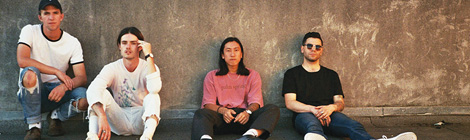
    • Storm the Sky has cancelled its gig at Amplifier Capitol.

    TWO bands have cancelled appearances at Perth’s Amplifier Capitol in the wake of a public backlash over female staff being forced to wear low-cut tops.

    This week a staffer at the inner-city club posted on Instagram the shirt that male staff wear and the one the owner wanted its women workers to wear.

    Amplifier Capitol’s Facebook page was flooded with comments from people saying they’d never go back and demands for bands to cancel gigs there.

    The New Zealand band The Beths’ April 12 gig page has now disappeared from Amplifier Capitol’s website and the Facebook event page is a dead link.

    The band are instead playing at Badlands Bar on April 11, and they’ll also be playing with the Smith Street band at the Astor Theatre on April 13.

    Storm the Sky have also cancelled a gig at Amplifier Capitol, putting out a statement saying the uniform policy was “blatant sexism and puts women at risk which is completely unacceptable and something we are vehemently against.

    “We do not tolerate any such behaviour and want nothing to do with Amplifier Capitol moving forward. As such, we are moving our Perth show next Thursday night to The Civic Hotel.”

    The heat’s on Heaton

    LESS than a year after the birth of the #metoo movement, Amplifier Capitol has demanded its female staff wear a low-cut, breast-revealing top.

    Known for their 80s nights, the venue was intent on going back to 50s when the club’s duty manager Artur Rafal posted on a private staff Facebook page: “To our amazing Bar Ladies, as we have been busy raising the dress code on our doors our focus is now shifting to bars—one thing that has slipped for a while is the tolerance of girls wearing the men’s uniform shirt while on bar—from next week I will be taking your men’s shirt back from you and replacing it with the ladies bar uniform shirt—let’s work together to get the dress code back to how it should be.

    “This is compulsory,” he signed off with a peace sign.

    Amplifier Capitol chairman David Heaton commented under the post, “as a condition of your employment, the team member is required to wear the uniform. If you don’t feel comfortable in the uniform then you are welcome to find employment elsewhere.”

    But after one woman posted the difference between the male outfit and the women’s outfit on social media, a public backlash ensued, and Mr Heaton posted a 500-word apology on the Amplifer Capitol Facebook page.

    “The proposed uniform change will not be enforced at the venue…the proposed changes were made in poor judgement, without full consideration of the implications for our female staff,” he wrote.

    He said “comments that female staff already face sexual harassment as part of working within the nightclub industry, and that these uniform changes would only exacerbate the issue, have resonated with us”.

    He said “it was wrong to comment that any staff uncomfortable with the changes should find employment elsewhere – this was a throwaway comment that I very much regret. I would like to make clear that no staff have been, or will be, fired in relation to the uniform issue”.

    But some staff had already left, and the Voice understands that more progressive venues have offered them work.

    Hospitality workers union the United Voice has offered free preliminary advice for any workers concerned about this, calling the management’s post “unacceptable behaviour”.

    A lot of people weren’t satisfied with the apology, saying it’d only come about because the issue went public and if it weren’t for the backlash they would’ve got away with it.

    One poster interpreted the apology as essentially saying “sorry I got called out for being a pig and in the current social climate am now realising that my pig-ness is becoming less acceptable by the day”.

    Stories by DAVID BELL

  • Letters 26.1.19

    More glory
    THE graphic content in the Voice article “WA’S glorious history”, seems to be the focus of Angelika White’s complaint (“No glory for whole story”, Voice Letters, January 19, 2019).
    Other museums have emailed the WA Museum and myself for more information about the door with the glory hole in it.
    While Ms White may not see its value, professional historians believe the door has social significance importance and should be publicly displayed. The Gosnells Historical Society has also asked me to record an oral history for there records.
    The Voice article touches on the homophobia and discrimination that GLBTI people had to endure, which was often very violent and in some cases led to murder (there was one a couple of years ago in Perth). The cowardly packs of men and women who hunted down and bashed gay men with protection from prosecution – “GLBTI being illegal at that time” –is an issue that should not be kept in the heterosexual closet.
    Telling our truth may be confronting to people who are homophobic and discriminatory, especially those from an older generation.
    The constant use of children as a shield for homophobia is abuse of children. We saw children used as pawns in the plebiscite and religious freedom debates. Please stop teaching children how to hate.
    It is hard for people to change who grew up in a time when it was the norm to discriminate, or to drop their long-held prejudice.
    Congratulations and thank you to the Voice for carrying the article and its support for the GLBTI community and our history.
    Neil Buckley
    (aka Mother Gretta Amyelleta),
    rescuer of the door
    Perth Sisters of Perpetual Indulgence

    Not for kids
    IF the WA Museum put the toilet door with a glory hole in it on show (“WA’s glorious history”, Voice, December 8, 2018), then I just hope it is in a separate room with a big ‘R Rated’ on the door.
    I would not like to have to explain to my grandchildren on a visit there what the glory hole was for.
    An entry charge to the new WA Museum is planned, and I just hope that it keeps true to being a family-friendly museum.
    Maureen Green
    Belfast Street, Morley

  • Summer Reading: One Wing Willie

    Short story excerpt by MARY HOLLIDAY

    LET me introduce you to “One Wing Willie”.

    He was a thin dark haired long term Irish bachelor of average height, well-spoken to the point of deferential as though he had been high born or had been used to being around such people.

    Nobody was ever told, least of all us children, of his origins or indeed how he developed the amazing skills he demonstrated while with my family.

    However there was some speculation we children “listened into” when the adults thought we were out climbing trees.

    But I’m losing the run of myself here and need to get this story going.

    It was speculated Willie may have come from one of them big estates up north, set up during the Ulster plantation, maybe Antrim or Tyrone.

    Takes a lot of money to maintain the upkeep of those places.

    Folks said there was a woman involved too, a tragic story to be sure.

    Josephine was the prettiest of the daughters, with wild red ringlets, piercing green eyes, an infectious laugh and a tiny waist any man would want to put his hands around.

    Wandering in the garden one day Josephine and Willie set eyes on each other and time ceased to exist.

    However Josephine’s father was in financial trouble, apart from the estate running costs, his gambling and womanising lead him into such disrepute that we was in serious danger of losing his parliamentary set in Westminster.

    The pretty daughter was his way out of trouble….

  • Summer Reading: Highgate stinker

    HISTORY buff RICHARD OFFEN is the author of Lost Perth, and the former executive director of Heritage Perth. In this week’s HERITAGE CORNER he tells us about  “Dumas’ Folly”, a towering sewer ventilation stack in Highgate which caused a stink with locals.

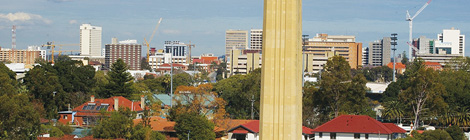
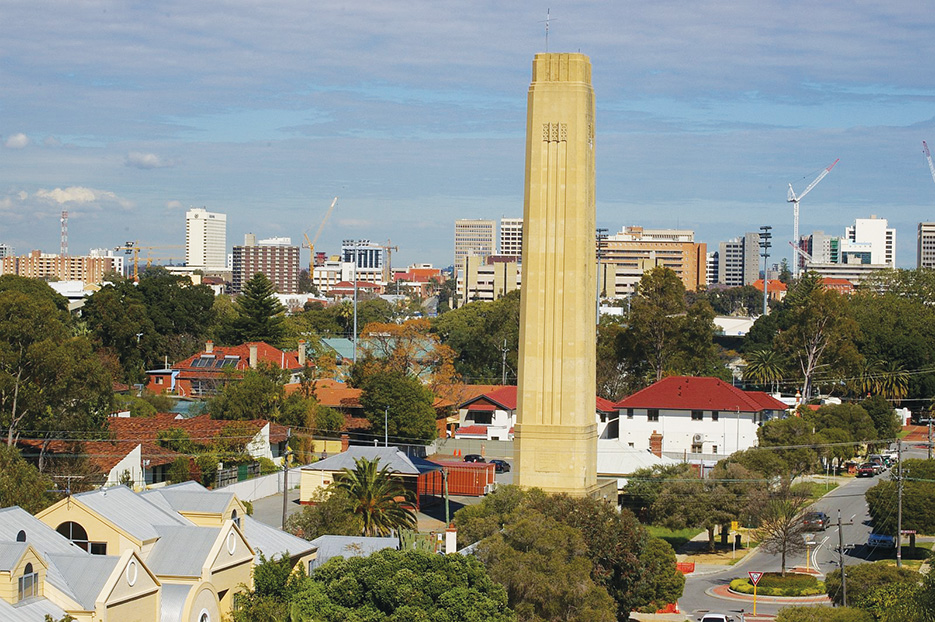
    STANDING high over the surrounding area of Highgate, many assume the noble art deco structure of the Lincoln Street sewer ventilation stack, at 38 metres high, is some kind of war memorial.

    In reality, it is a memorial to a good idea which rapidly became a failure.

    In the 1840s the lakes in the area where Lincoln Street is now situated were drained to create more fertile land to feed the growing population of Perth.

    Eventually, in the 1880s the new suburb of Highgate Hill began to grow and displace the market gardens and farms.

    The gold rush of the 1890s brought about a huge population explosion in Western Australia, and Perth in particular.

    Typhoid cases

    To create better living conditions for the increased population better infrastructure was required including a bespoke a sewerage system.

    The earliest sewerage system consisted of septic tanks and drains dug alongside town streets to carry refuse and wastewater to the Swan River.

    These systems could not cope with the substantially increased volume and contaminated water began to seep through the sandy soil into drinking water supplies, resulting in 2000 typhoid cases being reported in the 1890s.

    C Napier Bell, a Scottish civil engineer who had worked in New Zealand for the Christchurch Drainage Board, was commissioned to create a sewerage scheme for Perth.

    As a result, septic tanks were built in 1912 at Claisebrook, with an underground pipe transporting the contents to filter beds on Burswood Island, from whence the treated water flowed into the river.

    This system was significantly enlarged in 1927 by the construction of the Subiaco Treatment Plant, which was again enlarged in 1935 to create the basis of the present sewerage disposal system.

    The 1935 improvements, which included pumping stations in East Perth to move sewerage from the low-lying eastern regions, followed complaints of algal blooms in the Swan River around Burswood, produced by the concentration of nitrogen nutrients in the water from the effluent discharge.

    A year later, the Claisebrook and Burswood Plants were closed and all sewerage was diverted to Subiaco, and after treatment, pumped out to sea.

    Spectacular failure

    As part of the new system, ventilation towers were to be built along the central mainline sewer every three miles.

    Ventilation had become standard practice in sewer system management from the late 19th century, as airflow was important to keep sewerage ‘fresh’ and prevent a build-up of anaerobic bacteria, which produces noxious and corrosive gases.

    Apparently, hydrogen sulphide (‘rotten egg gas’) was present in high concentration in the expanded Perth sewerage system and it was decided to remove this gas from the system using the newly built ventilation towers, which were to be fitted with motorised extractor fans, to pump the gas out into the atmosphere above the surrounding residential areas.

    The first tower, a basic steel shaft, was built on the hill behind Subiaco Treatment Plant, near the corner of Selby and Hay Streets.

    The second stack, known as Lincoln Street Ventilation Stack, was opened in late 1941. Constructed for the Metropolitan Water Supply, Sewerage and Drainage Department, it was designed by A E (Paddy) Clare, architect of the Public Works Department, and the project supervised by chief engineer Russell Dumas.

    Once commissioned however, things did not go according to plan. The foul smelling and poisonous hydrogen sulphide gas did not disperse into the air as planned, but fell on the surrounding houses, causing vehement complaints from residents.

    The acidic gas also corroded the extractor fans so quickly the tower became completely inoperable four weeks after opening. In 1942, Lincoln Street Ventilation Stack was given a new function as a mast for the WA police department radio system.  Sadly, the ventilation system was a spectacular failure in the otherwise illustrious career of Russell Dumas and the tower became known locally as “Dumas’ Folly”.
  • Perth council a dud
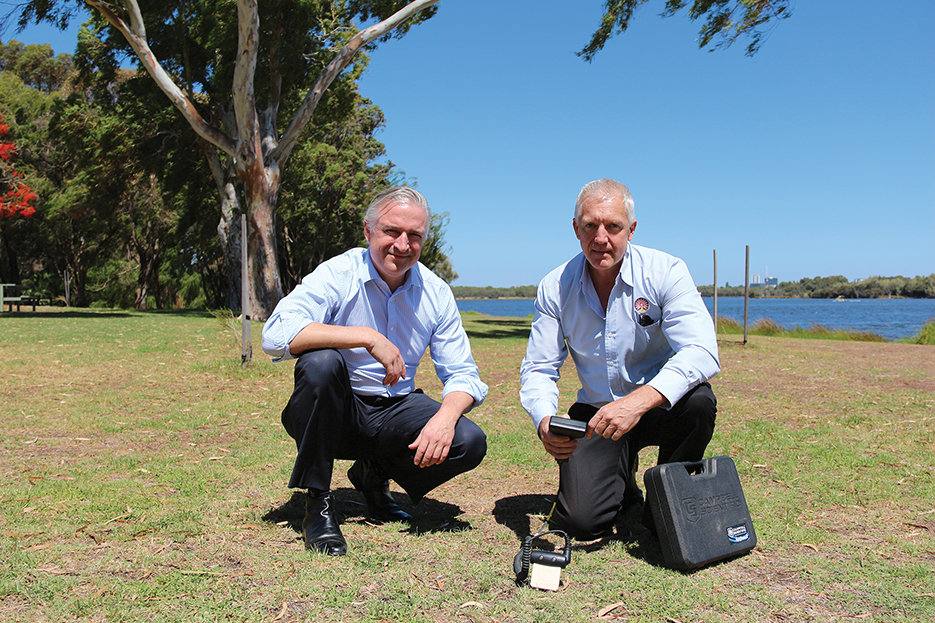
    • Bayswater acting mayor Chris Cornish and the council’s manager of parks and gardens Rod Strang at the foreshore with water quality monitoring equipment. Pic
    supplied.

    Bayswater and Vincent win waterways survey

    THE City of Perth has been ranked third bottom in a survey of how councils protect their waterways, while neighbours Bayswater and Vincent were joint first.

    The 2018 survey, carried out by the independent South East Regional Centre for Urban Landcare, gave Perth council a “best management practice” score of 44 per cent.

    Toxic blooms

    SERCUL notes that “the Swan and Canning River systems, and many wetlands, are suffering from regular, sometimes toxic, algal blooms.”

    The blooms are caused by excess nutrients, phosphorous and nitrogen entering the river, and SERCUL says councils need to carefully manage their use of fertiliser on turf and monitor the impact of new developments.

    In the four categories related to development control, the City of Perth got red marks for the past five years, including failing to do enough to impose river-friendly conditions and monitoring compliance.

    With big grassy areas leading straight to the river, the City of Perth was also deemed unsatisfactory for using too much fertiliser in foreshore areas.

    Only the Town of Cottesloe, with 37 per cent, and Nedlands with 43 per cent, scored worse.

    A total of 22 councils along the river took part in the survey, which SERCUL has been running for 18 years.

    Vincent and Bayswater councils had equal top scores of 72 per cent, indicating best management practice in most areas.

    Vincent doesn’t use fertiliser on foreshore reserves and parks, and scored strongly when it came to keeping developers in check.

    Top marks

    Bayswater council hasn’t used fertiliser in foreshore areas since 2016, and likewise imposed tough conditions on developers to prevent nutrients getting into the water. They got top marks for water quality monitoring and educating locals about the environment.

    Bayswater’s acting mayor Chris Cornish says they’ve “made great strides in how we manage our precious environmental assets”.

    He says Baysy includes a 10km stretch of the Swan River with many sensitive wetlands, and 188 parks, ovals and public open spaces.

    “We know that our parks, gardens and open spaces are one of the top reasons people love living in the City of Bayswater, and we’re conscious of our responsibility to maintain the amenity of these spaces while minimising our impact on the environment.

    “Fortunately, the city has been an early adopter of smart technology to help us monitor and manage our use of water and fertilisers. We’re using a satellite monitoring irrigation scheduling system that allows staff to operate sprinklers remotely, and know exactly how much and when watering is required to optimise the health of our green spaces, while avoiding wastage.”

    Green roll

    “We’re also carrying out regular soil and leaf tissue analysis to ensure we’re using just the right amount of nutrients required to keep the grass healthy, without over fertilising.”

    Bayswater, whose “Garden City” moniker was once an ironic joke, has been on a green roll lately, having won awards for the Eric Singleton Bird Sanctuary.

    The council also plans to transform three more drainage areas into living streams, like its project at Russell Street Park.

    by DAVID BELL

  • Comment: More 
media fund bias

    THE Perth Voice has discovered more Victorian bias in the allocation of federal government small media development funds.

    As reported last week most of the $3.6 million stage one, first round innovation fund for small publishers went to Victoria, the Senate electorate of federal communications minister Mitch Fifield (‘Big Victorian bias in media funding’, Perth Voice).

    Now the Voice can report that 11 of the 14 successful Victorian applicants for the innovation fund were also funded for cadet journalists.

    Not one successful applicant was from West Australia.

    Pork-barrelling

    A common link among many of the the winners of both grants is the Country Press Association which does not operate in WA.

    As yet, there’s not been one peep about this ministerial ‘pork-barrelling’ from Rupert Murdoch’s News Limited, Channel 9 (the new owner of Fairfax newspapers including the Financial Review), nor any other mainstream media, all beneficiaries of the 2017 changes to the cross media ownership laws. And neither has there been any report from the ABC.

    COMMENT by ANDREW SMITH

  • Groundbreaking square

    THE first sods will be turned on the North Perth Common town square this Monday (January 21).

    It’s hoped the square, on the corner of Fitzgerald and View Streets, will become the “heart” of the North Perth strip and used by locals for events or just as a nice spot to hang out.

    Fill the void

    Vincent council contributed nearly $500,000 and the state government kicked in $250,000 to the project, and town team North Perth Local is involved in the working group.

    NPL member Ida Smithwick says “it’s always been hard to find a place to go to meet” and the square will fill the void.

    Vincent mayor Emma Cole says “North Perth Common will be an iconic meeting place. With more trees, seating, a dramatic artwork and space to hold events, it will bring people to North Perth and give a great boost to our local businesses.”

    Ms Cole says the artwork is “central to its design: A striking circular lighting installation will feature overhead, and provide light to the area and project images and video into the space after dark”.

    The lighting will react to people moving through the square and can be colour-themed for different events.

    Other artwork includes 70 tiles with pictures of flora and fauna, created by kids from North Perth Primary School, which will brighten up the in-built seating.

    There’ll be about 40 per cent more tree coverage, once the new trees mature (the strip could use some shade as we got sun burnt taking a photo on Tuesday).

    Perth MP John Carey, whose office is just across the road, says “this is the delivery of a $250,000 election commitment. This is really about driving more foot traffic to the North Perth town centre. It’s proven that when you make retail and cafe strips more pedestrian friendly, it attracts more people and that’s good for small businesses”.

    It’s estimated it will take 10 to 12 weeks to complete the Square.

    The eastern snippet of View Street, from the car park to Fitzgerald Street, will be closed until May.

    by DAVID BELL

  • Vincent council starts street works

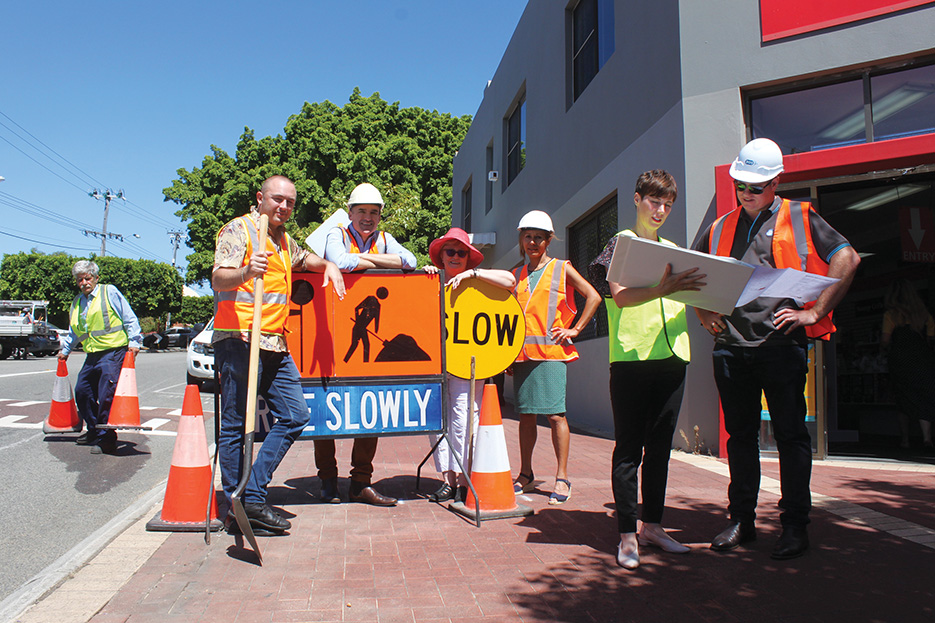
    STREETSCAPE upgrades are underway at the northern stretch of Oxford Street to brighten up the Mount Hawthorn town centre. On Monday (January 14) Vincent council started works on the section between Anzac and Scarborough Beach Roads.

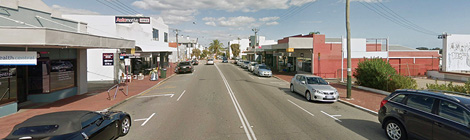
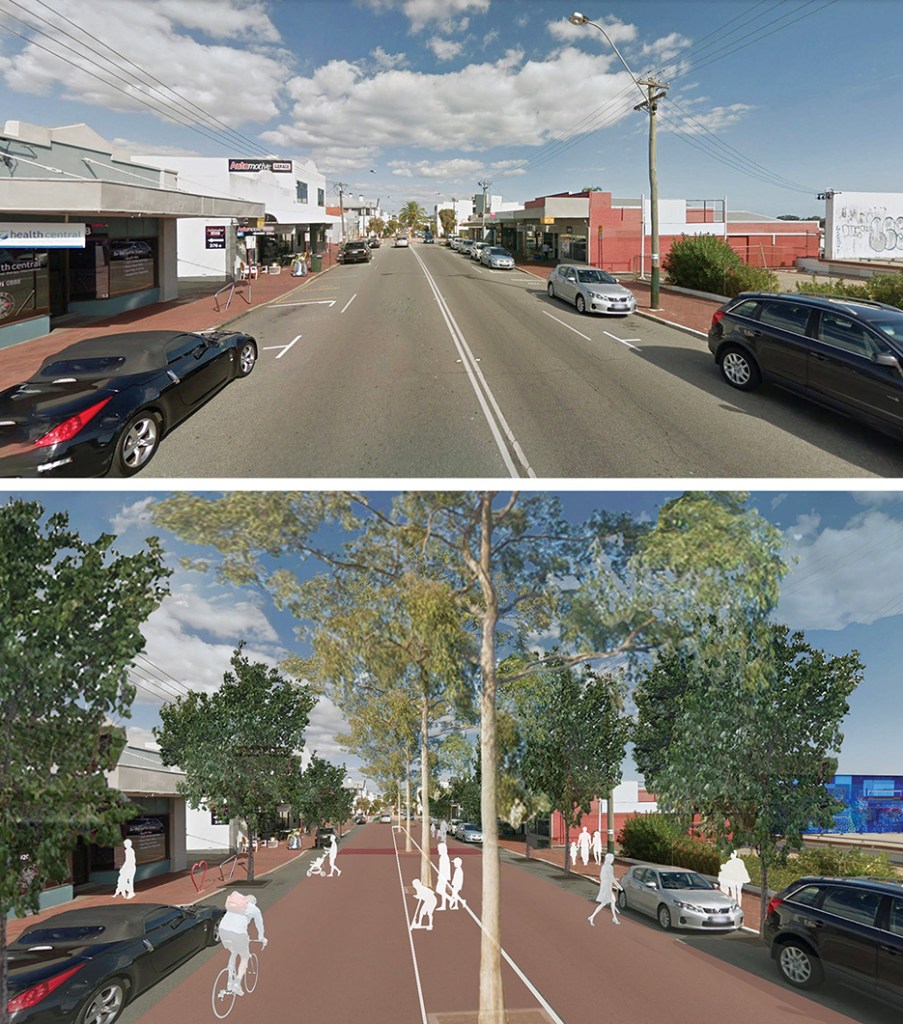
    The works include 38 new street trees, low profile speed humps and a red asphalt shared space to slow down drivers, and a pedestrian refuge median strip.

    The council’s hoping to get Main Roads to lower the speed limit to 30km/h there.

    The goal is to improve connectivity between the Leederville cafe strip and the Mouth Hawthorn centre, as it’s a long, Nullarborous scorcher of a walk.

    The upgrade was planned several years ago, but had to be put on hold in 2016 while the Water Corporation did their “Pipes for Perth” upgrades.

    Construction is scheduled to run until February 10, and the section of road will be closed on the nights of February 9 and 10.

  • Cat buses for Fringe

    WHAT started as an idea at the Perth City Summit in 2017 has partly come to fruition, with nighttime CAT buses operating during the Fringe festival.

    The free buses will run every 15 minutes, shuttling Fringegoers to the Girls School venue in East Perth.

    Buses leave from Perth bus port between 7pm and 9.45pm, and return between 7.35pm and 11.20pm, except on Fridays and Saturdays when the service is extended to 12.05am.

    Perth MP John Carey hosted the Summit to get feedback from residents and businesses on how to revitalise the CBD and inner-city.

    “One of the most popular ideas to come out of the Perth City Summit and other community meetings has been to extend the CAT bus service into the evenings,” he says.

    “This is all about supporting more vibrancy, activity and nightlife in the Perth CBD – and this partnership with Fringe is a fantastic example of that.

    “We know the CAT bus services are a much-loved part of Perth’s transport system, and I’m looking forward to finding out what passengers think we can do to make them even better through our review of the CAT bus system.”

    This year the Girls School venue is hosting the show A Midnight Visit, about a troubled ghost named Lizzie, which is heavily influenced by Stranger Things, David Lynch and steampunk.

    If you like the nighttime CAT buses, the state government is surveying the public about when the free service should run.

    A total of 500 people have weighed in so far, and consultation is open until January 31 at http://www.mysaytransport.wa.gov.au/perth-cat-buses

    For info on the bus routes go to http://www.fringeworld.com.au/plan-your-fringe-journey

    by DAVID BELL