• Mailbox bandits
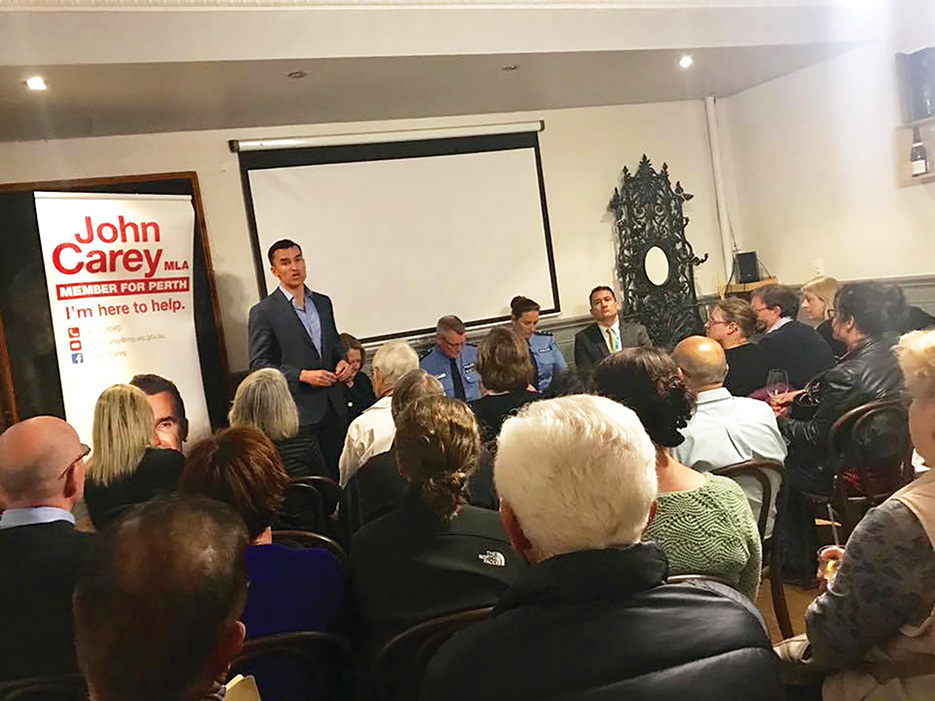
    • The West Perth community safety forum was packed out on Monday night.

    MAIL thieves are targeting credit cards in West Perth.

    On Monday, Perth MP John Carey hosted a packed-out community safety forum in the suburb and locals said mail theft was a major issue. 

    “Crime has declined in West Perth in comparison to previous years,” Mr Carey says. “The key issue that was raised – and police have been running operations on this in the past and dealing with it – is theft from apartment letterboxes…that was the overwhelming complaint.”

    “It seems this particular crime has escalated with the rise of tap and go credit cards—you don’t need a pin.

    “Some are automatically approved and so people are breaking in, getting either cash if it’s sent, or going for the card and using that for up to $100.”

    He said “police have been doing a good job—they had success in East Perth, they busted people doing this.”

    Some residents have resorted to installing locks on their letterboxes, but the Voice witnessed a dodgy gent banging on a mailbox lock with a big rock across from Hyde Park.

    “Some apartments are changing their security, either installing CCTV or moving the letterboxes to a more secure location,” says Mr Carey.

    Grouped mailboxes inside a gated-apartment complex are a goldmine for thieves, and they wait for a resident to go in and tailgate them.

    WA police minister Michelle Roberts and local police attended the safety forum.

    Officers encouraged residents to report every crime so they can build-up accurate statistics and focus resources.

    Mail theft is also an issue in East Perth, and Maylands had a serial mail thief operating during Christmas last year.

    Earlier this year police caught a prolific offender nicking letters in Claremont and Crawley.

    by DAVID BELL

  • Letters 6.10.18

    Bad drivers aren’t shot
    I’VE just read Stirling council is applying for permission to dispose of swooping magpies by firearm.
    Every year at nesting time we have this problem. It’s been going on for a very long time given that Magpies, like all parents, want to protect their young.
    I recently read that four sharks had been shot for causing injuries to swimmers.
    It seems to me that when animals hurt people the animals are destroyed; yet it is us venturing into their territory without due caution.
    Is it so hard for people to learn to respect the behaviour of wildlife and therefore live in harmony with it.
    Or do we as a species have trouble learning and adapting.
    Must we kill everything that we find difficult to accept and live with.
    About 17 folk have been killed by sharks during the last 18 years: that’s an average of one fatality per year, and mostly occurs when we venture into their breeding zones and migratory pathways.
    At the same time, hundreds of people are killed every year on the roads due to reckless and dangerous driving, caused by the use of mobiles, alcohol and drugs.
    Yet I’ve never read of anyone demanding the culling or shooting of offending drivers.
    It seems to me we have a serious case of bias and disproportionate morality.
    If with sharks and magpies we can’t use our intelligence to behave appropriately in their territory, surely the responsibility is up to us to simply do the right thing. People acting with intelligence is the answer; not using firing squads on wildlife.
    Richard Playle
    Mt Lawley

    Testing times
    THE “School Crisis Meeting” story in the Voice (September 15, 2018) has brought the focus on NAPLAN testing in North Perth Primary School.
    I wonder how many readers, who do not have school-age children, know that from year three kids are taught Australia is a democracy in the citizenship and civics course, and NAPLAN-tested on this from year five.
    That is fine if we were actually a democracy; but we are not.
    A democracy simply does not have a monarch and prelate, the queen, as head-of-state by undemocratic royal succession.
    Monarchy and democracy are absolutes in themselves, like virginity, so a monarchy cannot be a democracy in whole or in part.
    We are a constitutional monarchy with parliamentary representation and not parliamentary democracy or representative democracy.
    The false claim we are a democracy is a monumental confidence trick, which is targeting our most vulnerable and must cease.
    Gordon Westwood
    Coode Street, Maylands

  • Heads must roll

    This week’s SPEAKER’S CORNER is by year 12 student JOEL VAN BOXTEL, who is calling on the government to consult with young people the next time it considers Australia becoming a republic. Is Joel an emerging leader to shake up the dormant Australian republican movement?

    ALL Australians should have a say in who becomes our head of state.

    Furthermore, this right should not be limited to only those of voting age.

    Instead, every young person in this commonwealth should be able to dream of that role being within their reach, and it must be shaped to suit their future interests, rather than the current interests of an elite few.

    The inevitable changes from the impending loss of the monarchy in the United Kingdom are for my future, and the future of the young.

    In a republic, some have argued that the head of state should only function as a figure head with ceremonial functions and duties.

    With this constitutional measure, conventions can be altered and removed or ignored.

    If Australia is to move forward we have no time to lose in such constitutional reform.

    With our rule of law and our separation of powers, what purpose does a theocratic monarch—from a nation that has not even separated its church and state—have in our secular federation of states and territories?

    The privileged bubble of Elizabeth II’s monarchy has no real function in her own nation; let alone ours.

    Although the UK has no written constitution, no secular protection of its citizens from a fusion of church and state, and although there are a number of unfair ways that people are appointed—such as the rule that a certain quota of the House of Lords must be senior anglican bishops who are generally older white men—even the common law of the UK prevents the Queen or any member of the royal family interfering IN politics.

    However, the Queen’s role as the head of state of Australia, delegated to her governors general through the Australian constitution, creates various powers above the people, rather than through them. This is anathema to our Australian way of life.

    Questionable bloodline

    In today’s age, the Queen is a figurehead. And yet, she has exclusive powers in matters that call for experience and qualification, rather than authority resting in a questionable bloodline of power.

    This bloodline represents a postcolonial control over our national discourse and identity which infects our politics.

    The current yet dated head of state model, is managed by the political parties of the day which allow for conflicts of interests such as the constitutional Crisis of 1975.

    The Queen is overreaching with her powers, when she appoints a powerful figurehead such as governor general.

    Ruling the people rather than serving the people, is outrageous in an enlightened world shaped by the great republics of our allies.

    In a republic the head of state is elected by members of the public and is sworn in.

    However, one person alone is easily corruptible, so why not have a complete panel, much like the high court of Australia?

    This ruling group of elected citizens will hold each other to account and we will have a broader representation within the head of state—with women, Aboriginal and Islander people, and people from all walks of life.

    The question inevitably arises: Will young people be able to vote on this major issue and what age requirements shall the government impose when we go to a referendum?

    The objective truth is that young people matter, regardless of the fact that governments constantly ignore us in their policies. Young people should be allowed to vote. The other side of the argument is that having a cut-off at 18 would ensure a quality decision has been made.

    If age determined quality, why is our government becoming increasingly dysfunctional?

    The prime minister of the day would benefit from a debate with young people and a council taken from the community regarding on how the head of state should be appointed.

    With every new generation comes new social and economic challenges, and new governments are elected to serve the people in each given time.

    A government that does not adhere to the will of the people is ineffective, in this regard. The republic is perhaps the final step of Australian independence.

    It is certainly a grand move away from the postcolonial era, and a fatal dependency on the post-Brexit economy of a long deposed British empire.

  • Pasta perfect

    Could Yagan Square be the start of a hospitality resurgence in Perth?

    Only time will tell, but the copper-coloured precinct underneath the Horseshoe Bridge is made up of high calibre eateries, offering local and international cuisine like Japanese street food, New Orleans-style po’ boys, honey cakes, gourmet European cheese and pub favourites.

    The best of the bunch is the compact pasta joint Wheat St.

    Pasta around town is rarely worth paying for, but Wheat St is dishing up Perth’s best.

    It’s so good, I’ve returned three times since my first visit two weeks ago.

    The menu is limited but every dish is of the highest quality.

    The Lamb Ragu ($17) is the kind of stuff culinary dreams are made of – wide strands of pappardelle coil around chunky pieces of tender, pulled lamb and perfectly cooked peas.

    I’m not a big fan of coriander but the small handful of fresh leaves added extra depth to the dish, and the pasta was perfectly al dente.

    Smokey Bacon

    The penne ($16) is served with thick strips of smokey bacon, cherry tomatoes and Kalamata olives drenched in a rich red wine sugo. It’s utterly delicious and topped with a punchy parmesan.

    Wheat St’s gnocchi bowl ($16) has a moreish sauce containing buffalo ricotta, roasted pumpkin and firm kale.

    The fluffy gnocchi pieces were so large that I could only get through half the dish, but the team were more than happy to pack it up in a doggy bag.

    It’s not all pasta at Wheat St, with a variety of lighter options available including salad and bruschetta.

    Wheat St’s goats cheese salad is a heavenly combination of salty roasted vegetables, leafy kale and nuggets of luscious, pungent cheese.

    Since writing this review, Wheat St has updated its entire menu.

    As good as everything was, I can’t wait to get back there a fourth time to discover what they’re cooking up now.

    by MATTHEW EELES

    Wheat St
    Yagan Square, Perth
    9328 2472

  • ‘A most able artist’
    • Bassendean author Amanda Curtin outside Kathleen O’Connor’s Fremantle studio (above), and one of her paintings (below). Photo by Jenny D’Anger.

    FOUR years after the tragic death of pioneering engineer CY O’Connor, his daughter Kathleen immigrated to bohemian Paris in 1906.

    The artist spent most of her life there, occasionally returning home, but her Parisian manners and dress sense didn’t go down well in conservative Perth.

    The painter’s life and art are featured in the exhibition Being There: Kathleen O’Connor in Paris, commemorating the 50th anniversary of her death in 1968.

    The exhibition leans heavily on Amanda Curtin’s biography Kathleen O’Connor of Paris.

    The award-winning Bassendean author travelled to O’Connor’s birthplace in New Zealand, and her haunts in Paris and London to get a feel for her fascinating life.

    Curtin unearthed obscure newspaper articles and letters to family and friends, providing tantalising glimpses into O’Connor’s personality.

    Curtin fleshes out the bare bones to create a riveting story, but it never veers into fiction, despite the temptation.

    “I might weave a story around a surprising piece of correspondence…suggesting that Kate, in the year before the Spanish Civil War began, considered moving to Barcelona,” she writes.

    “All plausible. A blank slate for a novelist. Which I, currently, am not.”

    A trip home in 1948 was the basis on an urban legend that O’Connor threw 150 of her artworks into the Indian Ocean to avoid paying a hefty customs tax bill.

    Curtin says there’s no evidence it’s true: “But it’s a story befitting Kate.”

    O’Connor’s life was full of incident and she was a passenger on a train that was bombed as she fled Paris in World War II.

    When she turned 80, ill health began to take its toll and she returned home for good in 1955.

    The painter produced an incredible body of work that received good reviews overseas, but she failed to impress Aussie art critics in her lifetime.

    Fremantle Arts Centre curator André Lipscombe says critics are now reassessing her legacy.

    “Kathleen O’Connor is a truly significant figure in WA art and I would argue that she is one of the most able painters of her generation,” she says.

    “Once ignored by eastern states galleries, she is definitely not overlooked in a survey of Australian art now.”

    Being There: Kathleen O’Connor in Paris is at FAC until November 4.

  • Jumbo gem

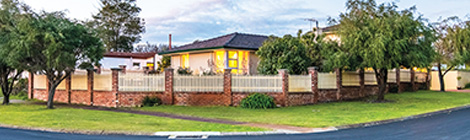
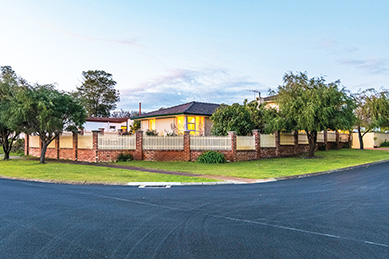
    THE huge portico at this Dianella house hinted at the vast unconventional spaces inside.

    A passageway at the entry led to a wing with the main bedroom, but here you’ll also find two huge lounge areas – one upstairs and one on the ground floor.

    The ground-floor area has a brick-patterned parquetry floor, a gas “open” fire and a bank of french doors leading to a secluded courtyard.

    Next door a timber-lined study is as cosy as a ship’s cabin, with built-in-cabinetry and a huge floor-to-ceiling bookshelf.

    The second-level lounge is a large area perfect for a games room or artist’s studio.

    There are infact three lounge rooms to choose from; but the owner’s favourite is in the open plan area.

    Natural light floods through huge windows, and dark-gold timber floors are offset by a Toodyay stone feature wall.

    Stone benchtops add a touch of panache to the recently renovated kitchen, and German-designed cabinetry ensures every centimetre of space is utilised, including carousel shelves for hard to reach corners.

    There’s a generous floor-to-ceiling pull-out pantry and the kitchen sink is big enough to soak the racks from the double Ilve ovens.

    The main bedroom is spacious with a walk-in-robe and en suite with double vanities, while the other three are all double with built-in-robes.

    Sitting on 790sqm there’s a delightful garden with enough grass to host a cricket team, and a heap of fruit trees including a lime, fig and mango and a couple of lemon and orange trees.

    As well as the alfresco, there’s a gazebo nestled in a pleasant corner.

    But don’t worry, the garden is low maintenance thanks to bore water and reticulation.

    Situated on Wanndina Avenue, Dianella Heights Primary School is a five-minute walk away and there are plenty of shops just up the road.

    By JENNY D’ANGER

    1 Wanndina Avenue, Dianella
    $799,000
    Licia Santoriello 0416 195 602
    Property Selection 9242 2099

  • Expand Your Horizons

    A HERALD PROMOTIONAL FEATURE

    Travel expands your horizons and gives you the opportunity to experience unique cultures. It immerses you in unforgettable moments that enrich your life, while contributing to the wellbeing of the local communities you visit. It provides you with the opportunity to meet people who are different, yet similar, to you. Orbit World Travel’s specialists are handpicked and have a passion like no other for travel. They have experienced the extraordinary and they give you the opportunity to enjoy the exceptional, amazing and remarkable.

    The Orbit team specialises in high-end travel experiences. Being Virtuoso travel advisors means that they can maximise the value of your trip with customised itineraries, exclusive pricing and additional perks. These tailored itineraries are created from the Orbit’s team own experiences, guiding you down the paths they have walked, which café or restaurant to dine at, or which Chateau in the South of France to visit. Orbit’s travel gurus take you on a journey of discovery!

    Orbit’s specialists travel the world every few months, their reputation is built on trust and knowledge and these are qualities you will never find on a website. From the moment you engage in conversation you quickly become aware that they will listen and advise to create that perfect trip away! A trip of lifetime, every time!

    Contact Orbit World Travel today
    Phone 9221 2133
    Email teresa.mason@worldtravel.com.au

  • U-turn

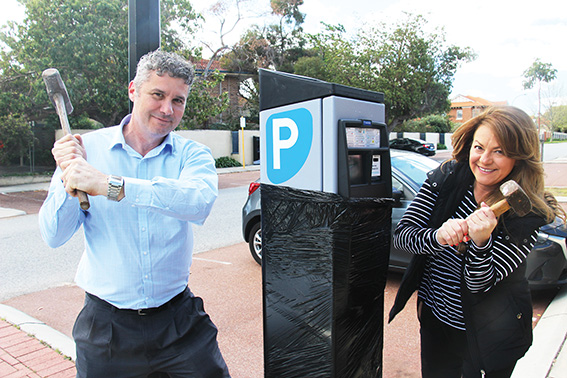
    AFTER receiving a petition from locals, Stirling council is removing parking meters on the Mount Lawley stretch of Beaufort Street – less than three months after they were installed.

    The council voted to bring in paid parking in March this year in line with a recommendation from their staff, with only councillor Elizabeth Re voting against it.

    The machines were installed at 680 Beaufort Street and Field Street parks at the start of July, charging $2 an hour, and letters to the editor complaining about them came not long after.

    In August nearby real estate agent Stuart Irving described the rollout as “incompetent to the highest degree”. He said the empty spaces would “indicate that the meters and lack of signage are doing their job of…driving people away from the area”.

    • Joe Ferrante and Suzanne Migdale get ready to knock these meters out. Photo
 by 
Steve
 Grant

    The first hour is free, but it wasn’t well advertised in the first six or so weeks, so people would drive past (down the road at Vincent council’s carparks they have huge signs promoting the first free hour).

    More than 300 people signed a petition calling for the council to remove the meters on Beaufort and Field Streets.

    “Since the introduction of paid parking, many residents and businesses have been impacted with less business patronage and night parking in front of residential homes.”

    They delivered the petition to councillor Joe Ferrante, who moved that the city scrap the meters at the September 18 council meeting. It’ll cost between $3000 and $5000 to remove them. His motion read: “Businesses and consumers are facing an incredible amount of economic hardship and paid parking is adding to the burden.

    “In review, the time is not right…”

    by DAVID BELL

  • I failed your kids

    FOLLOWING the Voice front-page story “School Crisis Meeting” (September 15, 2018), about parents threatening to pull their kids out North Perth Primary School over bad grades, we received this emotional letter from parent and former school board member Alex Apostolou:

    I READ about the plight facing North Perth Primary School and am writing to apologise to all staff, students and parents, past, current and future. 

    I am responsible for your miserable primary education experience. 

    Through my lazy and inattentive ways I have caused the present malaise. 

    I could have acted but didn’t, could have spoken out but didn’t; all in the name of going along to get along. 

    Now, with the writing well and truly on the wall and the knowledge that for so many kids, the bright light of education never got above a mozzie zapper’s sizzle, my confession is overdue. 

    Back in 2011, North Perth Primary School was an amazing place. 

    Our kids loved going to school, they loved their teachers, they were involved in tonnes of after-school activities.

    All the school families and staff were constantly initiating projects to build things, improve the school’s facilities, hold events and the kids were the centre of this universe – just as it should be. 

    Cassandra

    I was on the board then, joining in with others parents, teachers and the then-Principal to help coordinate that amazing array of activities. 

    They were heady times. The kids were thriving and excelling. Only a fool would have missed the signs of the impending catastrophe. 

    I remember the first time I learnt that a departmental law was forcing our beloved principal from her fast growing school.

    One might have thought that maybe once, perhaps not during the longish period of disbelief, but maybe during one of the farewell get-togethers, the what-if sessions over coffee, dinner, port; just once, it might have occurred to me…but no. 

    You see, there is/was a law that said that a school board (this was pre-independent public school), with the support of the then-current principal, could apply to the regional head to be involved in the selection of the next principal. 

    But did I bother to familiarise myself with those very laws that I as a board member was elected to uphold? 

    No, your honour, I did not. 

    To say that my rear-guard actions, after the decision was sealed, were ineffectual and embarrassing to the parent community would be an understatement. 

    No amount of evidence to the contrary would raise an eyebrow, let alone lift a public servant from his northern regional seat to effect proper scrutiny. What I learnt then was that no one likes a Noah or a Cassandra, especially not with the long arc of a child’s education at stake. Who amongst you would deny their child the school’s highest academic award – morning tea with biscuit and principal. 

    I am gladdened to read that the school has plans for an exciting future. I’m only sorry that due to my inaction that future will be arriving seven years too late altogether for a whole generation of our kids.

  • Fuelled-up sale

    STIRLING council has sold off public land without testing if it’s contaminated, despite the site’s historic use as a petrol station.

    Stirling flogged the strip of land at 80 Walcott Street to a neighbouring owner in August (“Call for developer contact to be listed,” Voice, September 22, 2018).

    The council has owned the site for decades but never reported it to the Department of Environmental Regulation as a potential contaminated site, which could’ve put a hitch in plans to sell.

    The Contaminated Sites Act 2003 requires “suspected contaminated sites [to] be reported to the DER, investigated, and if necessary, cleaned up”.

    • Artist’s impression of the upgraded Wellington Square.

    Buried tanks

    One resident long-termer, who owned petrol bowsers himself,  believes there are still buried tanks that are likely to have leaked because of their age.

    “They’ll have to excavate the tanks and take all the soil away.”

    Concerns about the site’s history as a servo were raised with councillors ahead of the vote.

    Deputy mayor David Lagan later confirmed to the Voice: “I voted against the sale as in my opinion there remained some unanswered questions around the history of the block and its previous use”.

    The city’s acting CEO Michael Littleton said they’d looked into land title documents from the 80s “and no disclosures were noted” (although, that was two decades before the Contaminated Sites Act 2003 existed).

    He said an additional search of the DER’s contaminated sites database “showed no contamination listing” for the lot.

    Many contaminated sites aren’t on the list because no one ever declared them.

    by DAVID BELL