• Dancing for dementia

    EMMA JACK knows firsthand the impact dementia can have on a family.

    Her mother was only 58 when she was diagnosed with early-onset Alzheimer’s.

    The news was devastating and Jack, a keen dancer, began to look at ways she could communicate “non-verbally” with her mother as her speech deteriorated.

    Jack discovered that Aussie ballet dancer Michelle Locke had developed a specific version of Wu Tao—a dance-based therapy similar to Tai Qi and yoga—for dementia sufferers.

    Jack added some freestyle dance into the mix and came up with her own unique take that has worked wonders for patients and their family carers.

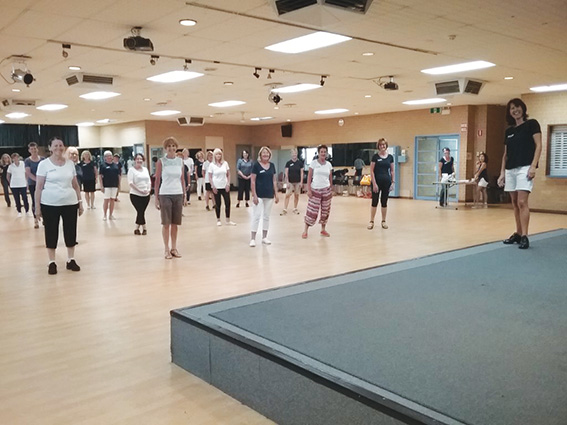
    “People suffering from dementia and their carers come along to my free community workshops,” Jack says.

    “The dance promotes a sort of deep listening between the two and helps them communicate in a natural way that transcends verbal communication.

    “At the end of the session you can see everyone is more relaxed and they have managed  to break through the symptoms and connect in some way.

    “That’s on top of the normal benefits you associate with gentle exercise and dance.”

    The workshops have proved so successful that Amana Living has trialled Wu Tao classes in their aged care homes in Coobellup, BullCreek and Salter Point, bringing in Jack to run classes for low and high-care residents.

    Emily Lees, Amana Living’s volunteer manager said: “We decided to introduce Wu Tao during the Amana Living Arts Festival to give seniors with dementia an opportunity to try something new. It was important to us that the festival was inclusive and provided artistic experiences for every one of our residents and clients. We met with Emma and her passion for connecting with people through dance shone through.

    “We also know the positive impact music can have through our experiences with Tune into Life our music program for people living with dementia. It can calm and soothe, bring back memories, and help people to reconnect with loved ones.

    “We’re going to review the festival feedback from our residents, clients and staff and will then make a decision about those sessions that we’ll introduce on a more regular basis.”

    But the classes are not only for dementia sufferers and could help prevent the disease, according to scientists.

    “Dancing dramatically reduces the occurrence of dementia and Alzheimer’s disease,” a New England Journal of Medicine article says.

    “[Freestyle movement] which requires constant split-second, rapid-fire decision making, which is the key to maintaining intelligence because it forces your brain to regularly rewire its neural pathways.”

    Frequent freestyle dancing has been shown to reduce the risk of dementia by 76 per cent, which is twice as much as reading.

    A study by Dementia Behaviour Management Advisory Service, at Alzheimer’s Australia WA, found Wu Tao lowered resident agitation and reduced carer stress.

    Jack says family carers are under a huge amount of strain and are often the unsung heros, with the role taking a huge toll on their mental and physical health.

    “My vision is to provide creative and nurturing spaces for people with dementia and their carers to connect and enjoy life,” she says.

    “As my mum’s early onset Alzheimer’s has developed, my heart has been opened to the rich world of non-verbal connection.”

    For more information go to http://www.facebook.com/embodyWA

  • End of the jab?

    UWA’s School of Medicine and Pharmacology at Fremantle Hospital is conducting a research project for people with diabetes who experience very low blood sugars.

    The project is testing a new device for monitoring blood sugar levels that does away with the daily prick of the finger. This device has federal government approval and is widely used in other countries

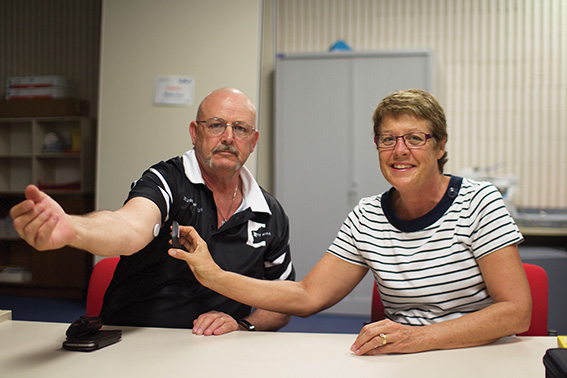
    The Freestyle Libre Flash Glucose Monitoring System bundles a tiny sensor and 5 mm needle into a discrete adhesive patch that is then applied to the upper arm.

    Waving a Bluetooth reader over the sensor determine the glucose reading under the skin.

    The results can then be downloaded to a computer and the patient can take action based on the levels including whether they are heading up or down.

    The six month trial was initiated by study doctor Professor Timothy Davis with one of the aims to see if the device helps people to avoid very low blood sugar episodes and if so could become routine recommended care for people who are prone to this.

    • Penny Dwyer helps Rod Brewer check out his blood glucose levels without having to prick his finger. Photo by Molly Schmidt

    “We are hoping that this research will show benefit for people who have diabetes” says UWA Research nurse Penny Dwyer.

    Mrs Dwyer says very low blood sugar episodes are an acute complication with substantial costs on a personal and social level.

    Severe reactions may account for as many as 25 per cent of avoidable diabetes related hospitalisations and emergency department presentations she says.

    The Freestyle Libre is expensive and therefore is cost prohibitive to many people.

    Mrs Dwyer says some trial participants say the device has changed their lives: “With this device they don’t have to prick their fingers anymore. They absolutely love it.

    FIFO worker Rod Brewer says the Freestyle Libre device has made life easier.

    “I’m glad I got the device, especially working up in the mines, it’s made it a lot easier to manage and read my sugars.” he says

    “The reader is in my bag, I grab it, scan it and put it in my bag again. Before I would have had to pull over, prick my finger…… by the time you stop and get going again your’re losing 10 minutes.

    The research has been funded by Spinnaker Health Research Foundation with no contribution from the manufacturers, Abbott Care Australia.

  • Keep movin’

    BELGRAVIA Leisure took over managing Vincent’s Loftus Recreation Centre a decade ago, but continues to look for new opportunities to improve the experience for seniors.

    Recently it brought in three new groups aimed at getting seniors up and moving; a critical factor in living longer and happier.

    Prime Movers is a community based non-profit organisation which holds low-impact classes for over-50s in an atmosphere that deliberately focuses on the social aspect.

    With 5000 members between Quinns Rock in the North to Mandurah down south, they must have got the recipe right.

    The program starts with a warm-up, stretching, low impact aerobics, muscle work and ends with a cool down and relax.

    Light weights while getting the muscles working helps to slow down the effects of osteoporosis.

    Prime Movers costs $15 for a yearly membership and just $3 a class, but if you’re not signed up yet, chuck in an extra dollar and try a class out. For more information check them out at http://www.primemovers-exercise.com.au.

    If your heart is telling you that you’re Fred Astaire but your knees are more Fred Flintstone, perhaps Scooters Modern Line Dancing is the place for you.

    Dance routines, patterns and rhythms choreographed to modern music encourages positive and quick mental reactions that stimulate the memory every time a dance is performed.

    Scooters is also a very social environment with professionally organised social events.

    There’s new classes starting up this Tuesday April 3, which you can register for at http://www.scooterslinedancing.com.au.

    The Loftus Seniors Sessions are also designed to help get participants more flexible so they can get about with more ease each day.

    The sessions boost energy, help maintain independence, protect your heart and manage the symptoms of illness or pain.

    “Our Seniors Program is just one way that we ensure to aid health, independence and improve strength and stability within the older population,” says Belgravia’s programs manager Jess Godwin.

    “In combination with groups such as Scooters Line Dancing and Prime Movers, the centre is such an enjoyable place to be on any given day.”

    For more information on the Loftus Recreation Centre or any of its programs, call 9227 6526.

  • MP flips lid over law

    A GROUP of 22 cyclists ditched their skid lids on Saturday to ride from Maylands to the CBD as part of a national protest against helmet laws.

    Australia was the first country to introduce mandatory helmets in 1990 and there’s been ongoing debate about whether they make cyclists safer or simply put people off a healthy past-time.

    The Perth protest was organised by Freestyle Cyclists WA, and Liberal Democrat MP Aaron Stonehouse joined them for the illegal ride into the city.

    The 27-year-old is WA’s youngest MP and after being elected last year he declared war on the “nanny state”, in keeping with his party’s libertarian ideology.

    “Mandatory bicycle helmet laws are perhaps the most glaring example of nanny state paternalism and finger-wagging in Australia,” the MP says.

    • MP Aaron Stonehouse joined the helmet-free protest ride into Perth’s CBD. Photo supplied

    “Adults should be free to manage the risks involved in a bike ride, and not have the government imposing laws to protect us from ourselves.

    “I’m not arguing for people not to wear a bicycle helmet. I’m arguing for the right of adults to decide for themselves whether they need one when they ride a bike.” Mr Stonehouse says cycling rates in cities like Seattle have “plummeted” after the introduction of mandatory helmet laws.

    “Helmet laws only strengthen the idea that bicycles are a dangerous mode of transport. That leads to a decrease to the number of cyclists, and that again leads to a decrease in road safety, because the more cyclists there are, the more other road users will consider them.”

    The Perth protest was trouble-free, but in Sydney the police deployed seven patrol cars to crack down on helmet-free protestors who were riding around Centennial Park. WA cyclists can be hit with a $50 fine for not wearing a helmet.

    Butting heads

    A 2011 study in New South Wales found helmet laws resulted in 29 per cent fewer head injuries, and a 2010 study found helmet-free riders were five times more likely to have intracranial bleeding or a skull fracture if they fell off.

    But health researcher Colin Clark argues cycling improves people’s fitness and reduces the burden on the public health system. Helmet-free supporters say extra cyclists would make drivers more vigilant and less likely to crash into them, while there’d be less traffic congestion and the government would be more likely to improve cycling infrastructure.

    by DAVID BELL

  • Fees irk traders

    MORE paid parking in Mt Lawley could be the final straw for struggling businesses, say local traders.

    Recently Stirling councillors voted to abolish free parking on Field Street and in more sections of Beaufort Street.

    Motorists parking on Field Street or at 679/680 Beaufort Street will now get the first 60 minutes for free, but will then have to pay $2 per hour.

    Michael Matusik says there are seven vacant shops near his business, Matusik Jewellers, on Beaufort Street.

    “We’ve been here for nearly 40 years and we’ve never seen this many vacant businesses in the area,” he says.

    Mt Lawley Hardware Store owner Glen Stagg says the timing of the decision is poor.

    “I know it might be the way of the future; I just think at the moment it could be great to get Mount Lawley back on its feet again,” he says.

    “Mount Lawley is a little bit quiet at the moment: I think all the businesses around here need all the help they can get to survive.”

    Accountable

    Stirling Cr Elizabeth Re, who voted against the paid parking, says the retail slump is not confined to Mount Lawley, but the new fees will make the situation worse.

    She says the council did not specifically consult with Mount Lawley stakeholders before making their decision.

    “Collectively finding the groups that are most affected and actually saying we’ll have a meeting with you is what they should be doing.”

    “Consultation before the event saves the council from retrospective changes and shows the community we’re being open, transparent and accountable,” Cr Re says.

    “They’re going and endorsing policies at the council level without consulting and advertising it to the public.”

    Stirling council community development director Trevor Holland says 800 people responded to consultation on the city’s parking strategy.

    Cr Re notes that councillors voted not to introduce paid parking at the Main Street plaza precinct in Osbourne Park after discussions were held with key stakeholders. “Why didn’t they do the same thing for Mount Lawley?” she asked.

    by ALICE ANGELONI

  • Historic letter

    THE Mount Lawley Society has delivered a letter to planning minister Rita Saffioti imploring her to preserve the character of Beaufort Street.

    Stirling council created a local development plan for the street, following a consultation process so thorough and collaborative it won an award from the Planning Institute of Australia.

    • Mount Lawley Society members Paul Collins and Terry Tyzack meet with Maylands MP Lisa Baker and Mount Lawley MP Simon Millman. Photo supplied

    Character

    But before the plan was signed off by the planning minister’s office, key parts were changed by the WA Planning Commission, including rules that developments had to be done in an architectural style sympathetic to the street.

    The society was also concerned the WAPC inserted a clause that all new developments on the three kilometre stretc, from Walcott to Salisbury Street be a minimum of two storeys.

    Friday’s letter asked Ms Safiotti to revert to the original plan, which has support from Maylands Labor MP Lisa Baker and Mt Lawley Labor MP Simon Millman.

    “I’m eager to see the heritage and architectural character of our local area protected. I look forward to working with the minister so that we can arrive at an outcome the community is happy with,” said Mr Millman.

    Society president Paul Collins says it was bizarre that the WAPC had sponsored the award Stirling won for the consultation that led to the plan’s creation.

    “We hope Mr Millman and Ms Baker succeed in convincing the panning minister that we as community members know what is best for our community rather than letting the minister affirm the governing of our communities by bureaucratic elites.”

    by DAVID BELL

  • NEWSCLIPS
    • Shelley Blechynden and Jodie Ferdinando in October last year with the fig tree they hoped to save. 

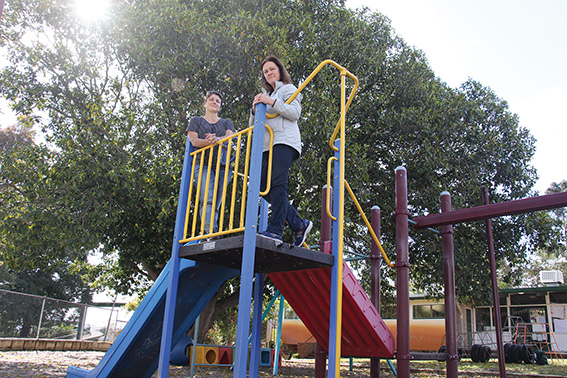
    LOCALS fought hard to save the 75-year-old tree at Mt Hawthorn Primary School, but the old Port Jackson Fig is now gone. The group Trees4Vincent petitioned education minister Sue Ellery to alter plans for a $3.5 million early learning centre at the primary school so the tree wouldn’t have to be removed. But despite a 1000-signature petition, the minister maintained the alternative ideas weren’t suitable and the tree’s now been removed.

    A 15-YEAR-OLD boy has been charged with stabbing a woman five times outside Claisebrook train station on Saturday night around 9.20pm. The boy allegedly demanded Stella Trevisani’s phone and stabbed her five times, leaving her bleeding badly and requiring 300 stitches. The boy fronted the Perth children’s court on and attempted to plead guilty but the judge implored him to talk to a lawyer first, as he reportedly has learning difficulties and didn’t fully understand the charges. Ms Trevisani, 27, is on a working holiday and she’ll likely need months of rehabilitation. Her boyfriend Billy-Joe Birch has set up a gofundme page to raise money to replace the loss of income and help with physiotherapy, and it’s smashed the $10,000 target and was at $14,000 donated by 300 people, as of going to print.

    THE Department of Health has issued a measles alert after two people came back to WA infected with the disease. One of the infected had been in Bali and the other in three South-east Asian countries. The department’s released a list of locations the two have been since returning to WA and warned the disease can remain infectious for four days. Local hotspots include Busy Bee Pharmacy in Northbridge on March 12, 12.30pm to 1pm, March 14 around 12.10pm to 12.45pm, and March 16 around 8.40am to 9.15am. They were also at the emergency department at Royal Perth Hospital on March 17, 11.30am to 2.30pm, and then in the acute care unit from 2pm to 7.30pm. Imported measles cases are treated as a public health emergency because of the speed it can spread and the danger to infants too young to be vaccinated, pregnant women and people with low immune systems. If you’ve been in any of those spots and notice a cough, runny nose, sore red eyes and a rash developing, the health department says “stay at home” and call ahead before going to your doctor so they can make preparations. For measles tips see http://www.healthywa.wa.gov.au/Articles/J_M/Measles

  • Family wild over scammer

    A CON MAN pretending to be collecting for a wildlife charity is door knocking in Mt Lawley, says WA ScamNet.

    The organisation received a report that a 12-year-old boy answered the door to a man holding an iPad, who claimed to be either from Wilde Life or The Wilderness Society.

    The man asked the child a number of questions before his mum came to the door and asked what charity the man represented and to see his ID. He refused to do either. Both wildlife charities told Consumer Protection that the man was not from their organisation.

    World Wide Fund for Nature told CP they have door knockers in the Mount Lawley area, but they carry ID and wear a black polo shirt with a panda emblem.

  • Bridging the gap

    THERE was a huge turnout for the first meeting of new precinct group Northbridge Common, with about 180 people attending the sundowner at Stuart Street Reserve on Monday night.

    The group, similar to Beaufort Street Network and Leederville Connect, is comprised of residents and business owners who want to improve the inner suburb.

    The business collective OnWilliam had already created an action plan for parts of Northbridge, and NC will expand the concept to the rest of the suburb, which stretches from Roe to Bulwer Streets.

    The idea for precinct groups was floated at last year’s Perth City Summit, organised by Perth MP John Carey, and so far West Perth Local and NC have been created.

    • It’s the liveliest precinct group meeting the Voice has ever seen. Photo supplied

    Blown away

    “I have to admit, I was blown away by the amount of people turning out,” Mr Carey says.

    “What was really lovely is that out of all the events I’ve done, there was an incredible community feel there.

    He says along with the hipster element you’d expect from Northbridge, “there was a lot of families with kids”.

    He says the big turnout at the mixer demonstrates that there is a yearning for more of a community in that part of town.

    Mr Carey says they’re aiming for “quick wins—things that add to Northbridge—before tackling longer-term actions and strategies to make it a more liveable community.”

    He says the group’s goal is to work out “how to make Northbridge more connected, a stronger community and a better place to live.”

    Activate Perth chairperson Anne-Maree Ferguson says they want to develop a Northbridge brand, and are planning to coordinate a series of community events and street activations across the city.

    You can get in touch on the Northbridge Common Facebook page or contact Ms Ferguson on 0439 820 177.

    by DAVID BELL

  • Levy torpedoed

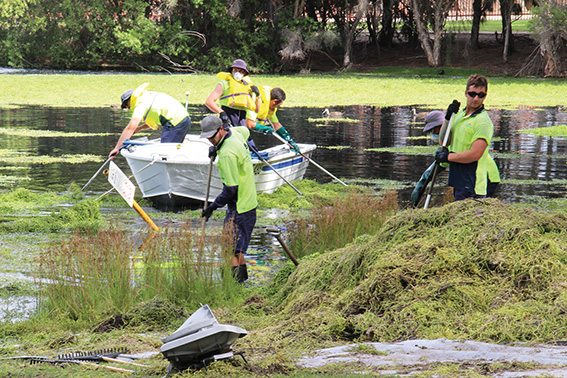
    A PLAN to charge residents near the Maylands lakes an extra $4000 in rates has been axed by Bayswater councillors this week.

    The ailing lakes are expensive to maintain and the council has budgeted about $1.25 million for improvements in the near future.

    Bayswater council staff proposed charging the 313 residences near the lakes an extra $802 per year in rates, for the next five years, to pay for the work.

    At Tuesday night’s council meeting, Kevin Hamersley from the Friends of Maylands Lakes implored councillors to scrap the idea.

    “It is clearly evident that this item, discovered by residents at very late notice, has generated considerable anger, stress and anxiety, not only for the residents concerned, but also from those who reside in other wards of the city,” he said.

    “The assumption that residents of the lakes estates should be responsible for the restoration costs is particularly galling”.

    Mr Hamersley asked “Is the city oblivious to the fact that the lakes precinct is one of its major assets? That its parklands, playgrounds and cycle/walking paths are frequented by residents from across the entire metropolitan area? A major cycling, running and walking route runs the length of the lakes and is used by numerous clubs, visitors and commuters. People visiting Waterland and the Maylands boat ramp will often detour to the lakes precinct to stroll, picnic and take photographs.”

    “Let’s not pretend that this project is improving residential amenity,” he said, pointing out there was an environmental and health-based impetus to fix the lakes because they were a “health hazard” from algae spores blowing around.

    • Bayswater council workers doing a clean-up of Maylands lakes in March last year. File photo

    Health hazard

    Ward councillor Elli Petersen-Pik agreed: “it’s not fair and not consistent for various reasons. The Maylands Lakes are currently accessible to the general public and enjoyed by many others including walkers and cyclists”.

    He said it’s also a haven for animal life.

    He pointed out residents there already pay high rates, which are based on how much rental income they could receive from their home, and they lived in a desirable spot beside the lakes.

    Fellow ward councillor Catherine Ehrhardt said: “I’m very happy that a specified area rates will not be applied to the Peninsula Estate. The Maylands lakes are there to be enjoyed by everyone and our ratepayers deserve to be treated equally. If there was a time to do specified area rates it was back in 1998 when the lakes were completed, not 20 years later”.

    Impost

    Councillors also voted down Cr Petersen-Pik’s plan to charge extra rates to owners of vacant “eyesore” blocks. The plan was designed to encourage them to develop the blocks and ease the rates burden on the rest of the city.

    Cr Ehrhardt said some blocks are owned by wealthy owners who are landbanking, and that double or triple rates wouldn’t force their hand.

    She said at the other end of the scale there are others who can’t afford to develop blocks and the proposed plan would have been an impost.

    by DAVID BELL