• Art paints a picture of life on the streets

    AN Aboriginal woman walks into Ruah Community Service’s art group and sits down.

    It’s been a tough week; already homeless, she’s sporting a black eye after being assaulted on the street, her partner’s in gaol and she’s got barely any money to feed herself.

    But for the next hour she sits quietly and fills a canvas with vibrant colours, her images a swirl of optimism.

    That, says group organiser Len James, is what makes the sessions so important to the homeless people that attend them.

    “For an hour, you can leave all the stress and anxiety behind, and just pour everything into your art,” Mr James says.

    The sessions also give participants the opportunity to display their skills; to show they’re far more than invisible people with nothing to offer.
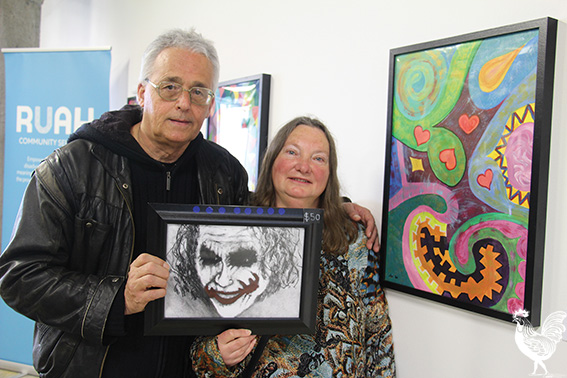
    • Len James and Ann Tew display their art at The Ruah Creative. Photo by Steve Grant

    Mr James spent two years on the streets, and while he was recently housed, he says being retired makes it difficult to reconnect to mainstream society. Like the other participants, it provides him with an important place of contact.

    This week Ruah took over one of Perth’s many empty offices, along Adelaide Terrace, to hold an exhibition of works from the group.

    CEO Debra Zanella says the aim of The Ruah Creative was to give the broader community an insight into homelessness.

    “In particular, the exhibition will tell the stories behind the estimated 1000 people who sleep rough on Perth’s streets every night,” she says.

    “My hope is the exhibition will challenge community perceptions of homelessness.”

    One of the initiatives for the exhibition was to give art group members a disposable camera. The resulting images are understated but speak volumes about the issues facing the homeless. There are almost no people, with the photographers capturing the safe, in-between parts of the city; while there’s a big focus on their few possessions and where they can be stored safely during the day.

    Ann Tew came to Perth about year ago. Although housed, she’s vulnerable having spent most of her life living with family violence and mental health issues and spent some time living on the streets.

    She’d been artistic as a child, but as life got tougher and more complex she gave it away.

    Mr James says when she first came to Ruah’s art sessions, he had her pegged as a mediocre amateur, but as she came out of her shell, she opened up a couple of art journals and blew him away. Recently three of her works sold at an exhibition organised by a UWA students group.

    Ms Tew says that’s given her great confidence and she’s now feeling more positive than at any other time in her life.

    by STEVE GRANT

  • Doctor: homeless strategy wrong

    THE state government could virtually wipe out homelessness by rethinking how it spends money on the issue, says a Royal Perth Hospital doctor.

    Amanda Stafford is the lead clinician of Royal Perth Hospital’s homeless team and this week addressed a mental health, housing and homelessness forum organised by Shelter WA.

    “From my point of view the system is not dealing in a smart way with homelessness,” Dr Stafford said.

    “Government departments and agencies are spending a lot of money on people who just cycle through their services.”

    Dr Stafford says, as an example, people who are released from prison and straight onto the streets are almost guaranteed to be back behind bars before long, costing taxpayers hundreds of thousands of dollars every year. Helping them get into housing would be far cheaper in the long run, she says.

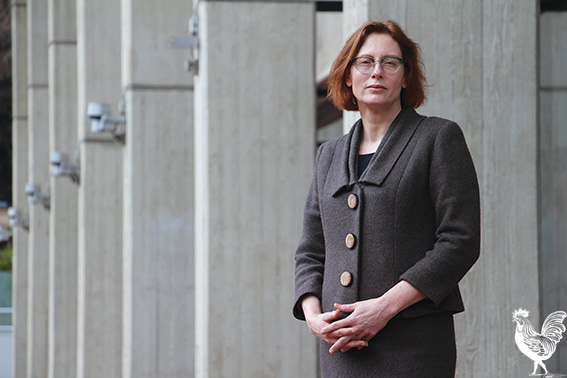
    • Dr Amanda Stafford says a reallocation of funding could virtually wipe out homelessness in WA. Photo by Steve Grant

    Similarly, the stress of living on the streets exacerbates mental health problems, so homeless people are over-represented in emergency departments and clinics.

    Dr Stafford says getting them a home could take a significant strain off the system.

    “The key is getting government departments to talk together and act together and work with the NGOs. It’s no point saying to Housing that we have 9000 homeless people so you need to provide 9000 homes, because they don’t have the capacity.”

    But Dr Stafford says if they can convince the state government, and particularly Treasury, to reallocate some funding from departments that use it for band-aid solutions, towards Housing, it would make a difference.

    The homeless team has recently been working with researchers from UWA to identify exactly what homelessness costs, and are on the way to getting ethical approval to cross-reference information from a range of government departments.

    Dr Stafford says once they’ve collated the information, which she hopes will happen within 12 months, the data can be taken to health minister Roger Cook with a raft of suggestions on where money can be reallocated to provide more housing to get people off the streets.

    She acknowledges that there will still be challenges, particularly over WA’s mental health system. Despite a raft of inquiries over recent years and a new legislative act, the system is still in crisis, and Dr Stafford says that can be sheeted home to the meth epidemic.

    “I don’t think they have got to grips with what to do, given the circumstances have changed; it was a nicely thought-out plan but it has spun out of control because of the meth epidemic.”

    by STEVE GRANT

  • Madalena’s Story: Part 2

    HOMELESSNESS WEEK runs from August 7 – 13, and apart from giving a donation to any of the noble charities providing succour to people on the streets, there’s a few activities you can take part in. Head to http://www.shelterwa.org.au/homelessness_week to have a look at the program of events. Meanwhile, the Voice presents part 2 of Madalena’s Story to raise awareness about homelessness. 

    I found myself separated from normal people by an invisible wall which I guess I erected due to people’s responses when they found out my living circumstances.

    I’d decided to no longer try to form worthwhile relationships until I was settled in a more normal living circumstance.

    I was an observer only and not a participator. I wanted to be invisible to others because I didn’t want to worry them or be a burden on anyone. I had no one to blame for my circumstances except my own stupidity. This statement is said because it is true, not because I don’t like myself.

    I was trying to get myself out of it and this involved a lot of time where I observed life only. The world was marching by me while I was stuck, unmoving, simply watching, not unhappy, but alone. Sometimes someone would reach their hand where I sat and I loved them for it but I couldn’t afford to be a burden to them, nor did I want to be doubted or abused by anyone again – I’d experienced this from some others during this homeless time. These bad experiences were very much a rude awakening for me.

    A typical day: rise at 5am so no one could see me and know I’d slept in my car. Dress, wash face, do hair. Drive to a toilet I’d located the day before. Six was too late. (I could not hold on long enough. Too much information?? –  sorry!)

    Drive to Shell garage as coffee is $2 for a large cup. Find a place to sit and drink it to fully wake and plan my day.

    Cans of soup

    Deciding where to shower was always a big one for me and making up my mind took planning and time. I know where most of the free hot showers are. Only used one­—leisure centre. That’s rather scary, to walk into a leisure centre acting as if you belonged there. It takes bravado and I’m not a brave person.

    I’d love to give my knowledge of showering to other homeless people but the one time I did tell two people about one to help them out, in no time many people were using it, so the powers that be closed it to the public.

    It could only be accessed on electronic card. I can’t blame them for doing that. It only takes one rat bag to spoil it for others. And the cost of power and water is to steep for local councils to foot the bill.

    So many homeless people using facilities put in place for their constituents.

    It’s expensive to live in a car. Just to have one cup of coffee a day is $28 per fortnight. Fresh food does not keep longer than two days.

    So, to have veggies I had to buy $2 cans of soup, preferably low in salt but still way to salty for my taste buds. I could buy pre-made salads but I couldn’t afford to eat that every day.

    Fuel was a higher priority for me than food because the car was my home and I needed it to move around and where would I go to the toilet if I ran out of fuel?

    There is an upside to this and it was I had no electricity bills, etc, to pay. However, I was fined $338 for a first-time ever offence due to not receiving mail (no postal address) and I had no knowledge of the matter, never knew I was going to face such a hefty fine.

    I had looked at getting a post office box but felt it was too expensive. I was looking for a room to rent. I was too embarrassed to go into a post office, explain how I was living and ask for them to look after my mail. I thought they would never forget me and forevermore be seen as a homeless person.

    Eventually I did do this and it wasn’t the awful experience I had envisioned; a shock to the person, yes, but I wasn’t the first. It was also five weeks before I moved into a house and that in five weeks I never received any mail.

  • Get a science Yoda

    IT’S like speed dating, but an innovative event being held in Perth on August 19 and 20 is not looking to land teenage girls a boyfriend, but a mentor to guide them into a scientific, technological, engineering or mathematical (STEM) career.

    The event is part of National Science Week and is being organised by the Innovators’ Tea Party, which was founded last year by mining engineer Evelyn Chuk to help boost the 16 per cent of professional women in Australian STEM fields.

    The free speed-networking events are being held at Flux on St Georges Terrace and will give participants from years 10 to 12 access to women working in medicine, astronomy, agriculture and data science, to mention just a few.

    Tea Party treasurer Sarah Henn, a medical research scientist at UWA, says the response to the networking event has been overwhelming.

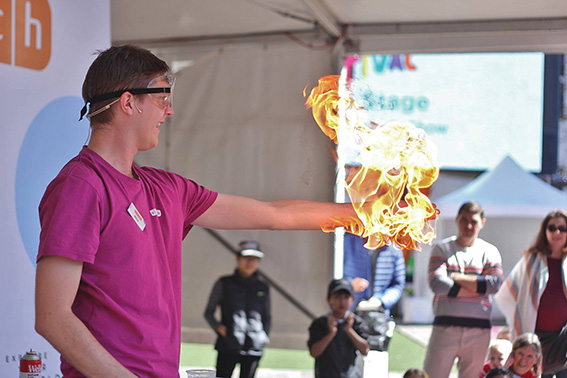
    • Scitech’s element of surprise shows are designed to show kids science isn’t just about boring numbers and equations. Photo supplied

    “We were inundated with applications from professionals wanting to volunteer their time to mentor young women,” Ms Henn says.

    “We had to turn away dozens of great applicants, but it allowed us to ensure our mentor team are from a diverse range of backgrounds, industries and career stages.

    “We hope that by exposing young women at an influential age to passionate and successful women, they will be more inclined to follow the same path or have the confidence to follow in their footsteps.”

    There are places for over 250 students, with four general STEM sessions, and four themed sessions on offer. Registrations are essential and more information can be found at http://www.innovatorsteaparty.org.

    Meanwhile the Perth Science Festival will kick off National Science Week at the Perth Convention and Exhibition Centre this weekend (August 12, 13).

    The free family-friendly event will have more than 70 stalls and events, including Scitech, the Gravity Discovery Centre, Perth Observatory, Kanyana Wildlife, Native Arc and Western Power.

    There’ll also be a range of shows, tours and even a dance workshop with Creative Moves WA who’ll be looking at maths and movement.

    Guest speaker will be 17-year-old innovator and CEO or Fiftysix Creations, Taj Pabari, who’ll be giving his thoughts on how to create future innovators on Saturday.

    To find out more about what’s on, read our national science week feature on pages 8 and 9.

  • Comedy to the rescue

    SANDLE-WEARING environmentalists can be a bit self-righteous and didactic when it comes to saving the world.

    Thankfully the show Global Gamble uses comedy to surreptitiously teach school kids about serious issues like greenhouse gases, climate change and the importance of being energy wise.

    “Comedy and theatre combined is a powerful methodology to educate students as it provides a platform which engages the students on both an emotional and intellectual level,” says Tim Minturn, director of Echelon Productions.

    “When kids laugh, they learn so much more willingly and enthusiastically.

    • A sketch from the educational comedy show, Global Gamble. Photo supplied

    “The story moves quickly to keep kids excited, and it’s that excitement that makes them so ready to absorb what they’re hearing and inspires them to take positive action.”

    Global Gamble is an interactive show, with actors incorporating information from students into the energetic live sketches, such as their favourite band or something they always dreamed of having.

    Student volunteers are also called up on stage to assist the performers in some of the scenes.

    “For National Science Week 2017, we have two casts of two professional actors per cast, touring into schools all across Australia reaching over 15,000 secondary school students,” Minturn says.

    Global Gamble is at Scitech, West Perth, on August 12, 10.30am to 4pm.

    To find out more about national science week visit http://www.scienceweek.net.au/wa/

  • Carey targeted by homophobes

    GAY Perth Labor MP John Carey says he was bombarded with homophobic  emails in the lead up to Liberal MPs rejecting a free vote on same-sex marriage on Tuesday.

    As a state MP it’s not in Mr Carey’s remit and he’s not a Liberal, but he still got several dozen messages from anti-gay campaigners, ranging from mildly homophobic to straight up nasty.

    “I have been constantly receiving emails, but none from my electorate,” he points out, suspecting it’s an organised campaign.

    “I greatly respect diversity of opinion in our community…but I am deeply disappointed by the tone of some of the emails.

    “I’m a bit shocked…I don’t accept this hysterical view that society’s going to collapse, or some of the other disgusting homophobic things if we let people marry who they love.”

    Putting the marriage question to a plebiscite is considered the worse option by many marriage equality advocates who fear it will lead to a lengthy campaign where vulnerable young queer people get their lifestyle questioned in nasty, no-vote media campaigns.

    Unlike a vote in parliament, it’ll also cost between $110 to $160million and voting is non-compulsory and non-binding on parliamentarians.

    This week WA Liberal senator Dean Smith, who has urged his party to allow a free vote in parliament, described a potential plebiscite as “corrosive: they are divisive, I think they are stains on parliamentary democracy”.

    A self-described “smaller government, lower taxes” type-Liberal­—who thinks the government should stay out of people’s businesses and bedrooms—he got only six backers in the Liberal party for a free vote.  Now the only way that marriage equality could get passed is if some Liberal MPs cross the floor when it comes to a parliamentary vote (a pretty unlikely prospect), otherwise expect postal ballots to turn up in your mailbox in the coming months.

    by DAVID BELL

  • Maier claims low Vincent morale

    VINCENT council staff fear for their jobs and morale is low, says former councillor Dudley Maier

    In July the Voice reported that 14 staff members had been offered redundancies or redeployment, some at a lower wage (‘Redundancy stoush’, Voice, July 22, 2017).

    Mr Maier, who still keeps a close eye on council business and is in touch with staff regularly, said a lot of them are unhappy.

    “In the 15 or so years I have had contact with Vincent staff I was always impressed with how careful they were in what they said about their work environment,” he told councillors during question time.

    “But a couple of years ago I noticed a change. Staff were starting to refer to the place as “Vineroo,” he told the meeting, a reference to new CEO Len Kosova’s previous position at Wanneroo.

    “They were saying things like ‘it isn’t a fun place to work any more’; that ‘there is no life in the staff room anymore’—which I took to be a reference to the diminished esprit d’corp. Worse still, they were starting to say that they feared for their jobs. And this was from staff members I had always respected for their solid work ethic and commitment to do the right thing by the community.”

    Mr Kosova says Mr Maier’s claims were based on “hearsay and speculation” and he says he’s offered to discuss the issue directly with the former councillor but got rebuffed.

    “The city has been on a constant and deliberate change journey for the past three years,” Mr Kosova told the Voice.

    “In line with council’s priorities, we want to provide a better customer experience; to better respond to community needs; and to provide even better value for money for the services and facilities we offer.

    “We cannot achieve these outcomes by standing still, relying on the status quo and taking a business as usual approach to what we do and how we do it.”

  • Return to bender

    THE historic Maylands Post Office on Whatley Crescent may soon have a new life as a small bar.

    Bayswater council’s planning and services committee is due this week to vote on an application by architect Nori-Lynn Munoz to turn the building into an upmarket bar offering international wines and local boutique beers, with staff recommending it be approved.

    The State Heritage Office has given the proposal a big tick, saying it would give more people the opportunity to visit the long-vacant post office.

    • Maylands Post Office.

    The SHO applauded plans to remove some internal partitions and a portion of a mezzanine addition, saying it would “uncover the original features including the double hung sash windows, which will provide a positive outcome”.

    Other elements of the Federation classic style are to be retained, including the front door, fireplace, timber floorboards and skirtings.

    The Maylands Post Office was constructed in 1910 in response to the rapid growth of the suburb (and because the previous post office was in a rented building which got condemned, causing a minor furore in state parliament).

    It continued to operate until the 1980s, when the move towards malls dragged shoppers away from main streets. It was ultimately sold to an antiques dealer in 1988. It’s owner is now listed as Maria Havilah.

  • Clampdown on naming rights

    BAYSWATER council has moved to crack down on opportunistic sponsors trying to permanently saddle community landmarks with corporate names.

    In May last year the council got a call from a very excited Bayswater City Soccer Club which had secured sponsorship from Wangara-based financiers Finance 365 and wanted to rename Frank Drago reserve stadium after its new benefactor.

    While the change was approved, some councillors were a bit nervous about ditching long-held names which commemorate notable citizens, and called for a review of the policy.

    It comes before the council’s planning committee this week with staff recommending that sponsors be allowed “short-term names for the purposes of event promotion of sponsorship”.

    The updated policy doesn’t signify a time frame. It does, however, simplify the list of suitable candidates deserving of having a named landmark; war veterans, ex-councillors, MPs and senior council officers are no longer singled out, with anyone who’s a “figure of local historical note” now in the running.

    “Names chosen for city parks, reserves, streets and infrastructure are expected to be permanent, and re-naming is discouraged,” the new policy will read if adopted.

    “Renaming will only be considered in exceptional circumstances and where significant community support has been demonstrated.”

  • Let there be…

    GOD might have said, “Let there be light,” but Bayswater council has disagreed and told the Jehovah’s Witnesses to turn off an illuminated sign outside their Maylands hall.

    The congregation, which is run by a body of elders, recently installed a couple of new signs at the Eighth Avenue church, but they were bigger than what’s allowed under the city’s planning scheme without the council’s official blessing.

    As a result the Jehovah’s have had to submit a retrospective application, along with double the usual fee as penance for breaking the rules. They also had to consult with neighbours, a couple saying the 24-hour glow from the new signs has been “disturbing” and obtrusive.