• LETTERS 12.8.17

    Cultural change needed
    THE Australian Human Rights Commission report of the findings of a survey of 39,000 university students across the country revealed a disturbingly high rate of sexual assault and harassment (‘ECU bucks assault stats’, Voice, August 5, 2017).
    While it is important to carry out these surveys to highlight the issue from time to time, harassment of vulnerable people in the community we live in is not ‘news’.
    Nor is the prescribed solution of cultural change as the only way to improve the situation a new idea.
    The former US Secretary of State Madeleine Albright once remarked in an interview with TIME that “there’s a special place in hell for women who don’t help other women”.
    I believe that we women have “a special duty of care” to help the vulnerable people we come across in our daily lives.
    In our own community I have come across people who live alone (of any age or gender) being an easy target for bullies—we can offer help by doing simple things such as asking someone out for a coffee or taking them out to one of the many free community events available.
    Sometimes an anonymous call to the police is all it takes if you do not want to get personally involved and see someone being bullied or harassed.
    The cultural change needs to come from within each of us.
    It is not a task that we can conveniently leave to the Human Rights Commission, a government department, or the police to deal with.
    S Adjie
    Longford Rd, Beaconsfield

    Baysy beef
    THE 4.9 per cent increase in rates by Bayswater city council is absurd and cannot be justified.
    How they can be applying this sort of increase when we’ve been subjected to nothing but absurd behaviour from the lot of them.
    Recently SAT in an unprecedented decision ordered council to pay $112,000 in legal costs and are now liable for an additional $170,000 in ancillary costs as a result of a failed action opposing a concrete batching plant on Collier Road (‘Council must pay concreter’, Voice, August 5, 2017).
    The harshest criticism was levelled at an unrepentant Mayor McKenna whose evidence was considered to be, “clearly incongruous when set against all of the professional advice that was before him and appeared to be contrived in an attempt to appear to genuinely decide the proposal on its merits”.
    They ought to all tender their resignations as a result of this scandalous conduct with most councillors presented with a one way ticket back to Jurassic Park.
    In order to rectify the council’s inability to make coherent and plausible decisions, it has recently appointed a new shire clerk on an absurd salary [about 10 per cent less than the state premier] in the expectation he will carry them as well as do the thinking for them and be accountable for any of their outlandish decisions.
    This is a council that spends too much time arguing with one another, then adjourning to an inner sanctum to discuss goodness knows what, instead of concerning itself with very basic and core issues like fixing roads, maintaining parks and gardens, collecting garbage, operating the dog pound and issuing basic building licenses. Those might not exceed their intellectual capacity; instead they insist in getting involved in lesbian and homosexual affairs, etc. which belongs in another forum.
    We should all be thankful SAT exists because it is the only avenue any ratepayer can receive an unbiased and equitable decision.
    If ratepayers feel aggrieved on any matter before SAT they should stump up at least half the money to fund appeals.
    George Bouzidis
    Grosvenor, Road Bayswater

    George is our winner. Congratulations, George Bouzidis! You’ve won our letter of the week competition and a $50 lunch voucher from The Terrace Hotel Restaurant, 237 St Georges Terrace. We hope a good feed and a trip to the city gets the Baysy council blues out of your system. If you would like to be in the running for letter of the week, make sure you email us your ripper at news@perthvoice.com.

  • Muchas gracias

    I’M not a well-travelled man and I’ve never been anywhere near Spain.

    But friends who have been there tell me that Pinchos in Leederville is the closest I’ll get to an authentic tapas experience in Perth.

    I’m always excited to eat at Pinchos, as the food is of the highest quality and Leedy has a pumping vibe.

    The record store, the bars and the boutique clothing shops are always full of diverse punters—teens fuelling their acne breakouts at Grill’d, families gathering to enjoy a cheap feed at Siena’s and hipsters having a late night coffee, before watching The Human Centipede at Luna.

    Slap bang in the middle of this social smorgasbord is Pinchos, one of Perth’s best casual dining restaurants.

    At Pinchos you order food by ticking a paper menu, which is whisked to the kitchen by a waiter approaching the speed of light.

    The process reminds me of passing a love note to a girlfriend at school, but this time the girl is pork belly, which has a date with my mouth.

    The menu is a real dilemma because everything is so tempting, including croquettes, organic beef meatballs, mushrooms with blue cheese, fried calamari, slow cooked beef cheeks and rosemary honey lamb. Foodie heaven.

    I love a good porking and couldn’t get past it on the menu, ordering the chicharrones ($10.90), a large dish overflowing with chunky pork belly cubes.

    The juicy and tender meat was insulated by crispy, salty crackling, and every mouthful was delicious.

    Scattered on the top of the dish was some dukka, which tasted indulgent after it absorbed the fatty juices oozing from the pork.

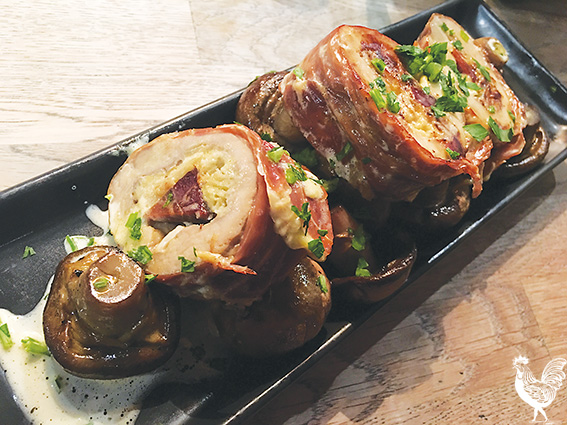
    My main course, solomillo ($21)—tender pork fillet, stuffed with jamon and wrapped in prosciutto—was so good it almost drew a tear.

    The fillet was perched on a bed of truffle mushrooms with a splash of rich tarragon cream.

    With all this pork on the menu I was curious to know if it was locally sourced, as good value meals of this size are hard to find.

    “All our food is sourced from local WA suppliers including our Linley Valley free range pork belly,” says Justin Bell, Pinchos owner.

    “When needed, some of our produce is imported direct from Spain like the Jamon Iberico, aged for three years.”

    I wasn’t surprised. The food was so fresh and everything I’ve eaten here has been faultless and of exceptional value.

    Just go!

    by MATTHEW EELES

    Pinchos
    112-124 Oxford Street,
    Leederville
    http://www.pinchos.me

  • High-wire art

    LEOTARDS, nipple pasties, and outrageous colours take centre stage in Wendy Sharpe’s Burlesque and Circus.

    The exhibition mixes drama, romance, a slice of life lived on the edge, and a liberal sprinkling of naughty bits, in a nod to her beloved burlesque.

    “At its best it’s a bit like vaudeville,” Sharpe says.

    “It can be beautiful but I prefer it when it’s satirical, funny and out there.”

    One of Australia’s most awarded artists, her prize-winning Archibald entry in 1996 was a self portrait showing Sharpe as a burlesque-stye figure in a voluptuous green bra and clinging animal-print tights.

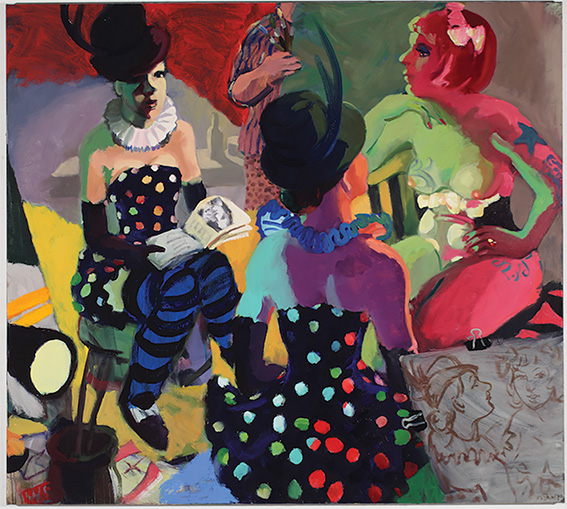
    • Wendy Sharpe’s Glitta and Ya, one of the oil paintings in her latest exhibition, Burlesque and Circus.

    The painting exudes sensuality and depicts a larger than life woman who’s up for a good laugh at herself and anyone else; a theme in many of the works in Burlesque and Circus.

    Sharpe says she has a straightforward figurative style, but the stories behind the scenes are more cryptic.

    “You are looking and wondering what’s going on,” she tells the Voice.

    While many of her subjects are voluptuous, Sharpe discounts the idea she only paints “chunky” people.

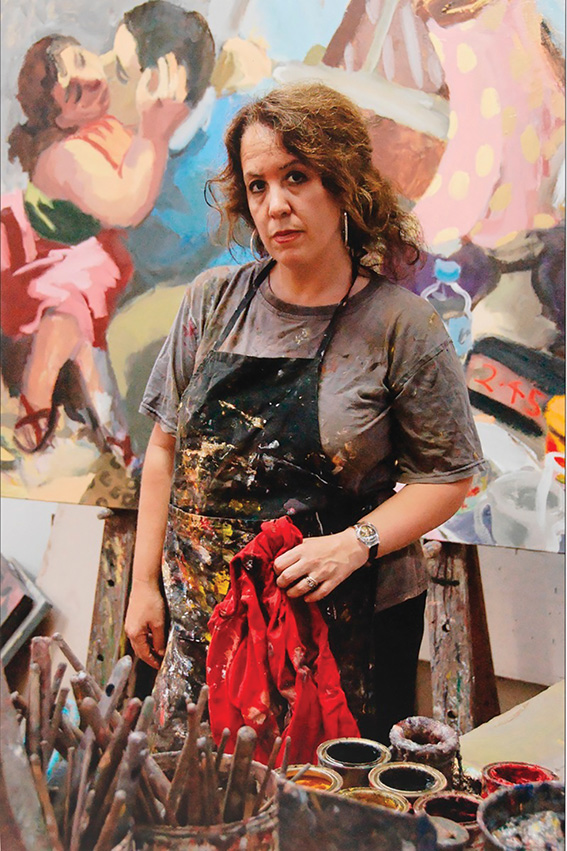
    • Wendy Sharpe.

    “There are thin people in my works and very large people in my works,” she says.

    Women are a large part of a burlesque audience and one of the appeals is the mix of body shapes, Sharpe says

    “It’s not about a bland standard look…it’s about an exciting and interesting person.”

    Along with winning an Archibald, Sharpe has been a finalist six times, and has won the Sulman Prize, two travelling scholarships and the Portia Geach memorial Award.

    And she is the first woman since WW II to be appointed official artist for the defence department, being deployed to East Timor with Australia’s peace keeping troops.

    Burlesque and Circus is on at Linton and Kay Gallery, St Georges Terrace, Perth until August 20.

    by JENNY D’ANGER

  • ASTROLOGY August 12 – August  9, 2017

    ARIES (Mar 21 – Apr 20)
    The Moon is passing through. This will hit you with a few waves of emotion that will leave you wondering if you are coming or going. It will soon pass. Don’t take these tides of feeling too seriously. If you don’t tune in, you will make people defensive that don’t really need to be.

    TAURUS (Apr 21 – May 20)
    Venus is passing through the waters of Cancer. She will have you feeling acutely sensitive. If you are clumsy, she’ll have you behaving defensively. If you have your wits about you, she’ll have you loving those around you like there is no tomorrow. This is a good week for eking out truth.

    GEMINI (May 21 – June 21)
    The fact that you are having to navigate responsibility, could have you behaving with more rigidity than is normal or healthy. Rigidity and chaos – they are both unhealthy states. Snap yourself out of the idea that you have to be retentive. Stay loose, natural and playful. You are smart enough.

    CANCER (June 22 – July 22)
    Venus is in your midst. She is adding a whole new level of sensitivity to your daily equation. The moment you feel pushed from the outside by others who don’t quite understand, you will clam up. It’s only natural. When you are in the company of those who understand, you’ll flower.

    LEO (July 23 – Aug 22)
    The Sun and Mars are firing you up with energy, enthusiasm, passion and openness. It seems that the existential gates are open for you to take all this energy out into the world and play. Add sensitivity and pragmatism to the mix and you have all the ingredients for true wonderfulness.

    VIRGO (Aug 23 – Sept 22
    Mercury is keeping you light on your feet. You know as well as anybody that the moment rigidity sets in there’s trouble. Keep exploring deep water. Explore the widening parameters of life’s capacity to deliver delight. Hunt beauty in the world around you. It’s closer than your nose.

    LIBRA (Sept 23 – Oct 23)
    Jupiter keeps widening the world of possibility; and Pluto and Venus keep making expansion feel like it’s slipping out of your hand. Tricky. Let life’s challenges come to you. You don’t have to aggressively go out after them. Deal with things as they come to you, not a moment before.

    SCORPIO (Oct 24 – Nov 21)
    Get grounded. It’s time to store some acorns, to get your foundations set – to send your roots down to where there’s plenty of love and nourishment. Shedding the old skin of conditioned behaviour is an on-going process. Let it happen effortlessly, by simply staying true to who you are.

    SAGITTARIUS (Nov 22 – Dec 21)
    There’s a fine alignment of the planets going on for you right now. As Saturn has taught you to stay steady, so you are now able to juggle a more spectacular set of possibilities. Change is coming but it  isn’t flooring you. It’s an adventure that you can take in your stride. Trust your pride.

    CAPRICORN (Dec 22 – Jan 19)

    Life has put you in an interesting spot. It’s going to take courage to stay on track and find your way through. The Leo Sun is giving you open access to the big-heartedness and courage you require. Don’t let others’ defensiveness put you off. They are hiding their vulnerability. Take it easy.

    AQUARIUS (Jan 20 – Feb 18)
    There’s not much holding together all the old habits that snag relationships. Habits that once held weight are becoming flimsy and easy to swat away. Uranus is very near the end of his journey through Aries. Turmoil will slowly turn to groundedness and surety over the next few months.

    PISCES (Feb 19 – Mar 20)
    The pressure to be what you think you ‘should’ be continues. The most radical move you could possibly make, is to ask this critical voice to step back and get out of the way. Whatever purpose it once served, is now over. Freedom, ease and personal responsibility are more relevant now.

  • Dreamweaver

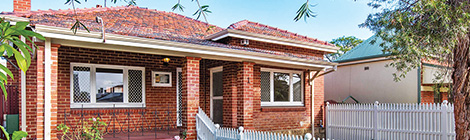
    A  house is made with walls and beams, a home is built with love and dreams,” mused American philosopher Waldo Emerson.

    Which made we wonder, how many and what kind of people have lived in this Emmerson Street home in North Perth?

    Looking at its white picket fence, the character three-bedroom house would have seen some family drama over the years, including the dreams of newlyweds, and the love of children growing up.

    Kids would have played on the street and at the nearby Smiths Lake Reserve, long before it was officially designated as parkland.

    And mum no doubt hollered them in for dinner from the raised verandah.

    With the arrival of television in Perth in 1960, the family would have surely gathered in the street-facing lounge, with its decorative art deco ceiling.

    In winter the fire would have added a warm glow to the exciting, but cold, flicker of the black and white screen.

    From the lounge, a connecting door leads to an open-plan kitchen/dining/family area.

    Glowing jarrah

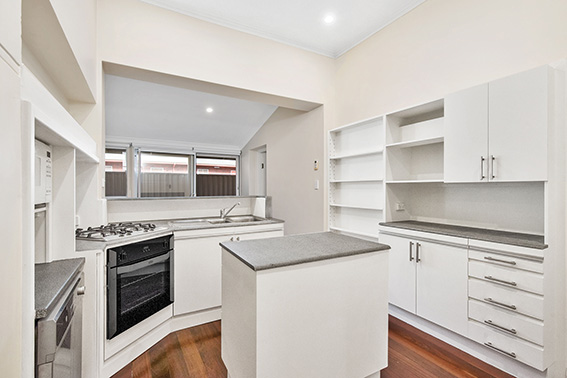
    The renovated kitchen is a compact, but not cramped, with an island bench creating additional bench and storage.

    It’s a sparkling white space, with soft grey tops and a glowing jarrah floor.

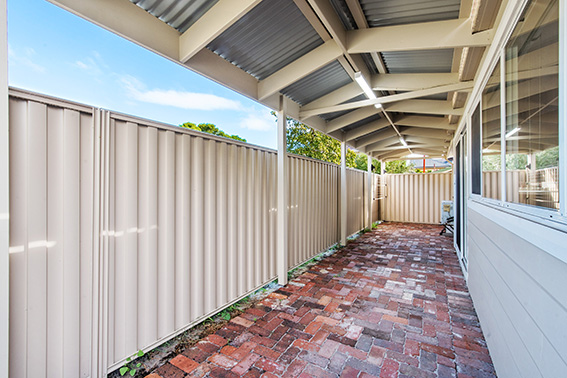
    The dining/family area has a bank of windows and doors opening onto a covered alfresco area, paved in recycled brick.

    Subdivided to create two 257sqm blocks, there’s not a lot of garden, but there’s no shortage of parkland nearby, including Smiths Lake Reserve, which is almost on the doorstep, Charles Veryard Reserve, Leederville Oval and Beatty Park.

    Positioned on the edge of the city this home has all the advantages of an urban lifestyle, including Leederville’s bustling entertainment scene.

    by JENNY D’ANGER

    1 Emmerson Street, North Perth
    $670,00–$699,000
    Steven Voros
    0419 915 125
    Abel Property
    9208 1999

  • Engineering mankind’s future

    IMAGINE a future where a father can ensure his son has a large penis, or where a mother could guarantee that her daughter will have “perfect” breasts.

    Or worse still a mad scientist breeding an army of genetic mutants to wipe out the human race.

    But then, take a step back, and contemplate a world free of horrible inherited diseases, like cystic fibrosis or Huntington’s.

    The debate swirling around human genetic engineering is an ethical maelstrom, where religion, science and humanity collide in deafening claps of thunder.

    In 2015 a group at Sun Yat-sen University in China reported they had created the first genetically-modified human embryo, altering mutant DNA that created the human disease β-thalassemia, which is life-threatening and affects 100,000 people worldwide.

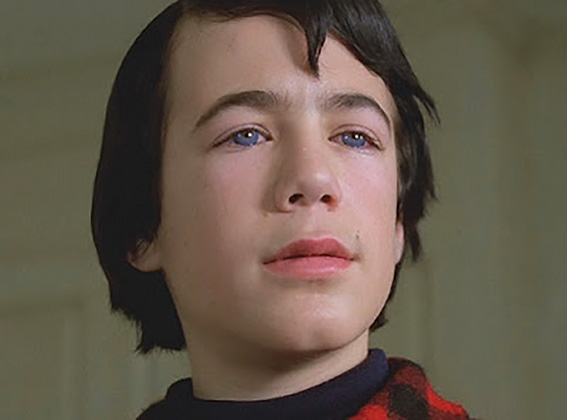
    • A Hitler clone (above) and Dr Josef Mengele (below) in the film The Boys from Brazil.

    The news sent an ethical shudder across the world, with commentators concerned about  the use of embryos for scientific research, and the prospect of the technology eventually being used to create designer babies.

    Genetically modifying DNA to further eugenics—where the human population is improved by increasing “desirable” heritable characteristics—has captured filmmakers’ imaginations.

    In the spine-chilling 1978 film The Boys from Brazil, Dr Josef Mengele, the infamous Auschwitz doctor, flees to Paraguay after WWII and hatches a plan to create a master race by fertilising woman with a sample of Hitler’s DNA.

    Ninety-four clones of Hitler are then born and sent to different parts of the world for adoption.

    And in the 1997 film Gattaca, Vincent Freeman (Ethan Hawke) is conceived outside the eugenics program and struggles to overcome genetic discrimination to realise his dream of traveling into space.

    A free screening of Gattaca during Science Week will be followed by a “spirited” debate on the future of genetic science with commentators from ethics, science and the creative arts, including Dr Jacqueline Savard from Sydney University’s Centre for Values, Ethics and the Law in Medicine.

    “Gattaca is a great example of how this complexity challenges the simplistic idea that our genes are our destiny,” Dr Savard says.

    “The society in which the film is based believes genes determine who and what you are meant to become.

    “The story of the main character Vincent is the antithesis to this idea.  Not only does he challenge and con the system, he succeeds and defies the odds—his genetic odds, to become what everyone told him he would never be.”

    At the time of Gattaca’s release, the human genome project was still ongoing, and a battle between public and private interests and who had the right to patent genes was at its height.

    Dr Savard says that tussle is still ongoing, but the genome debate has moved on.

    “People are aware that genetics is only part of the story,” she says.

    • The film Gattaca examined genetic engineering and eugenics.

    “They actively acknowledge and understand that the environment, how we each respond to and adapt to challenges and even historical impacts from previous generations will all contribute to who we are.

    “The complexity in our world means we should move beyond simplistic ideas that our genetics determines everything.”

    In Australia, research performed on human embryos is tightly regulated by the National Health and Medical Research Council, which also prohibits human cloning. But with the emergence of new biotechnoligies—including non-invasive prenatal testing, consumer genetic tests that can be purchased on the Internet, the increasing availability of whole genome sequencing and newer technologies, like CRISPR-Cas9 (the ability to edit the genome)—the debate on human genetic engineering is set to rage on.

    “Before we leap into the future where we might seek to alter and control our genetics, it is worthwhile to first talk about why we want this ability and what we think it could or should be done with it,” Dr Savard says.

    Genomics and the science of Gattaca is at the WA State Library on August 12 at 6pm.

    To find out more about national science week visit http://www.scienceweek.net.au/wa/

  • Boys Ready to STEAM Ahead

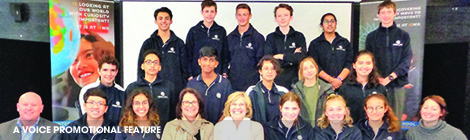
    In 2017, Christ Church Grammar School became the 100th institution to join the international coding phenomenon CoderDojo. Originating in Ireland, this social movement of computer programming clubs was formed to address the looming worldwide shortage of computer programmers. Christ Church offers coding as part of its curriculum to build 21st century skills such as critical thinking, problem solving and creativity.

    Christ Church also partners with Fire Tech Camp, a leading provider of technology and STEAM clubs for students in Australia. This partnership allows Christ Church boys the opportunity to learn how to design smartphone applications, build robots and create games. STEAM (Science, Technology, Engineering, Arts, and Mathematics) is an educational approach to learning that involves guiding inquiry, dialogue and critical thinking.

    “It is wonderful to see our students developing the core competencies that will allow them to make a positive difference to their world in the near future,” says Christ Church Principal, Mr Alan Jones.

    For more information, please  visit www.ccgs.wa.edu.au

  • Science – Career of the Future

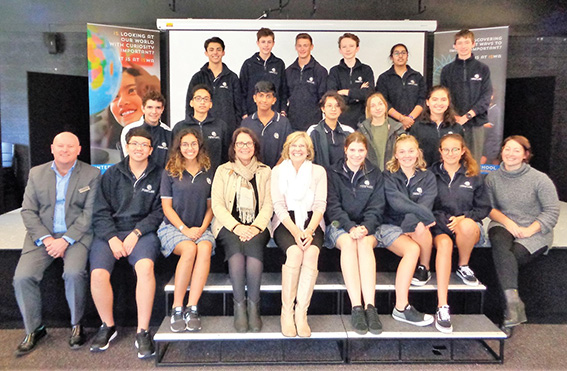
    Last Wednesday students at Perth’s International School of Western Australia (ISWA) enjoyed an inspiring prelude to National Science Week, with a visit from esteemed neuroscientist and educator Professor Lyn Beazley AO.

    Speaking at ISWA’s City Beach campus on the future of Science, Technology, Engineering and Mathematics (STEM) in Australia, Professor Beazley gave an engaging talk on various research and discovery fields in WA, such as agriculture, public health, medicine, astronomy, genetic diseases and marine biology.

    The students enjoyed Professor Beazley’s visit immensely and were able gain insight into how STEM relates to their futures, as well as the incredible achievements already made by WA scientists. Year 12 student Jamie Dehouck explained: “It’s easy to just think of science as as a school subject you have to take. But when Prof Beazley visited, she provided an interesting point of view, showing that science is so much more than that. It can be applied to every part of your life. She was very inspirational and I now have even higher regard for scientists and those in STEM-related careers.”

    Professor Beazley is an excellent ambassador for STEM and for all WA students contemplating a STEM-related career. ISWA Head of Science/STEM Simonetta Cavilli commented: “Lyn has contributed enormously to the progress of scientific discovery in WA. She is an excellent communicator and educator and a wonderful advocate for science. We definitely look forward to her visiting ISWA again later during the year.”

    For more information on STEM learning pathways at ISWA,
    please contact Megan DePiazz on 9285  1144
    or visit iswa.wa.edu.au

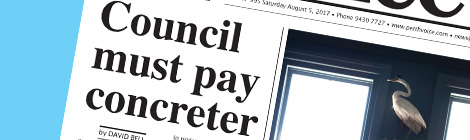
  • Council must pay concreter

    THE State Administrative Tribunal has ruled that Bayswater council acted “unreasonably” in opposing a proposed concrete batching plant on Collier Road.

    The SAT has ordered the council to pay $112,000 in legal costs and consultation fees to the applicant by August 11.

    The SAT usually doesn’t award legal costs and the move could deter other councils who side with angry residents and refuse point-blank to approve developments, despite them complying with regulations.

    The city’s prolonged and unsuccessful fight against the proposed concrete batching plant dates back to 2011, and by 2014 the council had already spent $170,000 on its own lawyers. The total cost to ratepayers is now at least $282,000.

    The SAT finding said Bayswater council, “took the view it would always oppose a concrete batching plant at the subject site regardless of any professional advice or previous decision of the tribunal.

    “The Tribunal found, whilst the respondent may oppose a concrete batching plant at the subject site, the respondent was still obliged to consider the proposal on its merits”.

    It said the council “acted unreasonably in refusing to approve the superior design” in 2016.

    “…cost orders are generally only made in review proceedings where a party has acted unreasonably” and not made a decision on its merits.

    The finding says that when Bayswater mayor Barry McKenna gave evidence at the SAT hearing he “appeared to have little substance underpinning his own reasons for refusing the proposed development beyond stating a number of times in different ways what the tribunal finds to be implausible statements to the effect that the decision ‘… was for valid planning reasons’.”

    “The mayor’s evidence and an examination of the reasons for decision of the respondent in the reconsideration appear to the tribunal to be clearly incongruous when set against all of the professional advice that was before the respondent and appear to be contrived in an attempt to appear to genuinely decide the proposal on its merits.”

    Bayswater council has not said if it will appeal the SAT’s decision.

    In 2011 Bayswater council initially rejected the proposed batching plant, but the SAT overturned the decision and approved the application in 2014, subject to conditions.

    There was still community concern about the dust and health risks, and in 2015 the plant made further modifications and presented the new version to Bayswater for approval.

    But the council knocked it back, meaning the applicant, Ransberg, had to go back to SAT in 2016, pushing for costs because of its own mounting legal bills.

    by DAVID BELL

  • A long, cold stint

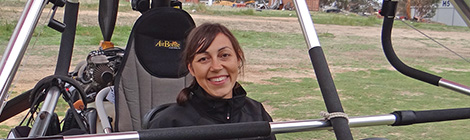
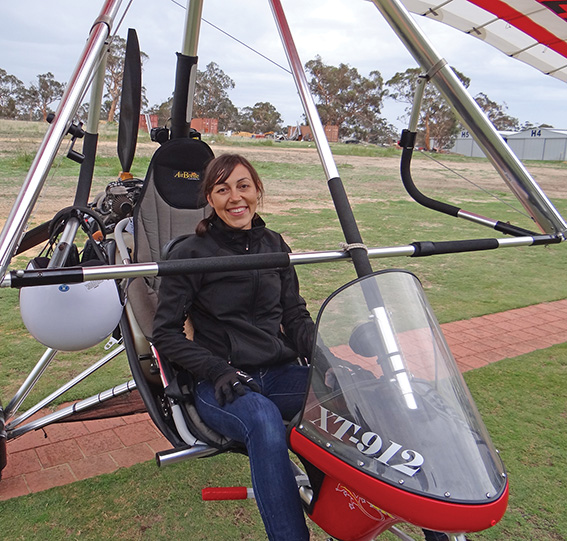
    PERTH’S Milly Formby is planning to brave the chills of Siberia by following the migratory route of the red-necked stint in a ultralight aircraft to highlight the birds’ vulnerability.

    The stints are the smallest of 36 Australian migratory shorebird species and weighs about as much as a Tim-Tam.

    Every six months they embark on the longest known migration in the natural world, flying 25,000km from WA to breeding grounds in the Arctic Tundra and back.

    They follow the East Asian-Australasian Flyway (EAAF), the largest of eight global airborne highways.  Due to habitat loss along the EAAF, the ancient migratory phenomenon is now under threat.

    Throughout the flight, Formby will collect research data for UWA and study the behavioural ecology of shorebird migration using geolocators and satellite technology.

    • Milly Formby’s heading to Russia in an ultralight.

    The project is called Wing Threads: Flight to Tundra, and aims to collaborate with people from science, aviation and arts to conduct a research project and produce a documentary film to raise awareness of migratory birds declining numbers.

    To celebrate National Science Week, the Swan Estuary Reserves Action Group is hosting an event at Point Walter on Sunday August 6, educating the community on the significance of the Swan River Estuary and the pressure the ecosystem is under from urban development and recreation.

    Formby will present at the event, as will local bird expert Mike Bamford and respected elder Noel Nannup.

    SERAG member Catherine O’Neill says Perth is in the middle of a biodiversity hotspot and of international significance: “We still have an opportunity to protect the small amount of habitat remaining.”

    by JAYDEN O’NEIL