• Tale of the tunic

    A MYSTERIOUS World War II tunic discovered in the roof space of an Inglewood home has sparked a fascinating historical investigation.

    “As we were renovating that space, we had to take the ceiling down,” Courtney Kemp from Ta-Da Transformations told the Voice.

    “This thing fell on our head—it was a dusty old tunic.”

    When the company started the renovations, they received a letter from Kay Sleith, the granddaughter of Frederick Winstone Sr who built the weatherboard cottage on Ninth Avenue in 1923.
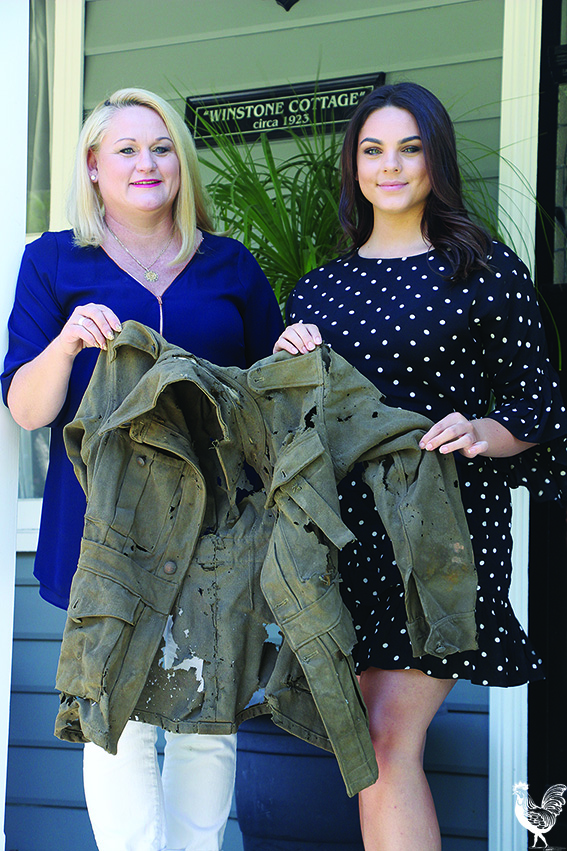
    • Natalie and Courtney Kemp with the old tunic. Photos by Steve Grant

    Papers

    Ms Sleith had grown up in the house and her letter read “the floorboards have gaps and I often wondered if any family photos or papers had fallen down the cracks.

    “I would love to have them if any have been found”.

    She also sent a photo of Frederick Winstone Sr in uniform.

    It was a puzzle: the tunic that fell out of the ceiling had World War II buttons on it, but the picture of Frederick Winstone Sr looked from an earlier era.

    We asked militaria expert Jamie Blewitt, from JB Military Antiques, to have a look at the photo, and he confirmed it was a WWI coat.
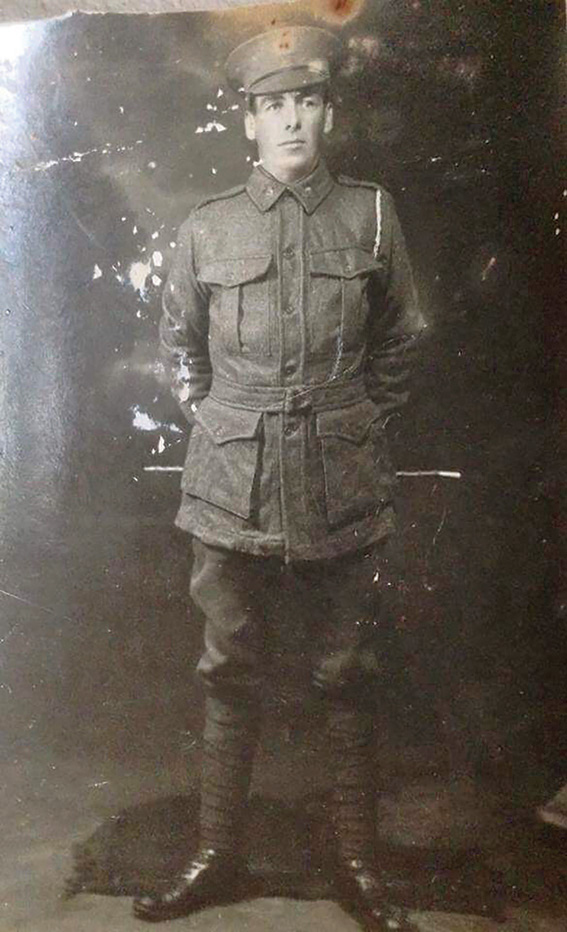
    • A Great War-era photo of Frederick Winstone Sr.

    He said it was likely that the photographer had kept the coat in his studio to put on the many soldiers coming to have their photo taken, as was common in the day.

    Ms Kemp did some more digging and contacted Mr Winstone Sr’s granddaughter again.

    She found out Frederick Winstone Snr was indeed in World War I, and had been sent home after being shot in the face, and went on to build the Ninth Avenue home.

    His son Frederick Winstone Jr was also a soldier during the 1930s, but the tunic itself belonged to his nephew Leslie Piper, a World War II veteran who would later live in the same home.

    Remembrance Day

    Ms Kemp is now organising to meet up with Ms Sleith to return the coat to the family.

    Ms Sleith also told Ms Kemp that they’d also been to the house when their grandfather passed away, and had found a German war helmet on the back door step, which they donated to a museum.
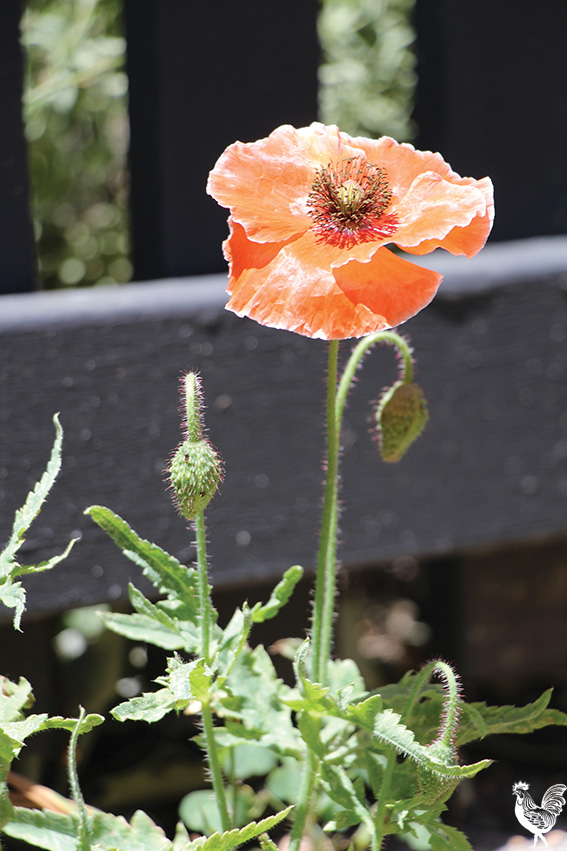
    • A sole poppy flowered at the Ninth Avenue house.

    Ms Kemp tells us “another funny thing happened on Remembrance Day: one singular poppy came up, even though we have never planted poppies there before.”

    She says “in honour of Mr Winstone and to respect the story and history of the home we named the home ‘Winstone Cottage’ after him so that this will always be his home and so he will he remembered for years to come.”

    by DAVID BELL

  • Daub in vandals

    MAYLANDS is being targeted by paint bombers.

    Over the last month a public artwork has been vandalised twice and another artwork and three venues were splattered with paint last weekend.

    Artist Daek William had just finished fixing up his popular mural at Gemma’s Health and Wellbeing Spa, when it was paint bombed early Sunday morning.

    The mural at Rifo’s Cafe, and Mrs S, Mandy’s Deli and Takeaway and the 7th Avenue Bridge were also splattered.

    South ward Councillor Catherine Ehrhardt says it’s depressing to see such senseless vandalism.

    She was chair of non-for-profit LACE Inc when it donated $2000 towards commissioning artworks for last year’s Maylands Street Festival.

    “A month ago artworks done as part of the festival were vandalised,” she says.

    “They’d been done as a way to enliven Maylands and get some great pieces of public art around.”

    She says it is odd the second round of vandalism occurred exactly one month later.

    Another mural in Mount Lawley, by artist Fieldley, was damaged on the same night, one month to the day as well.

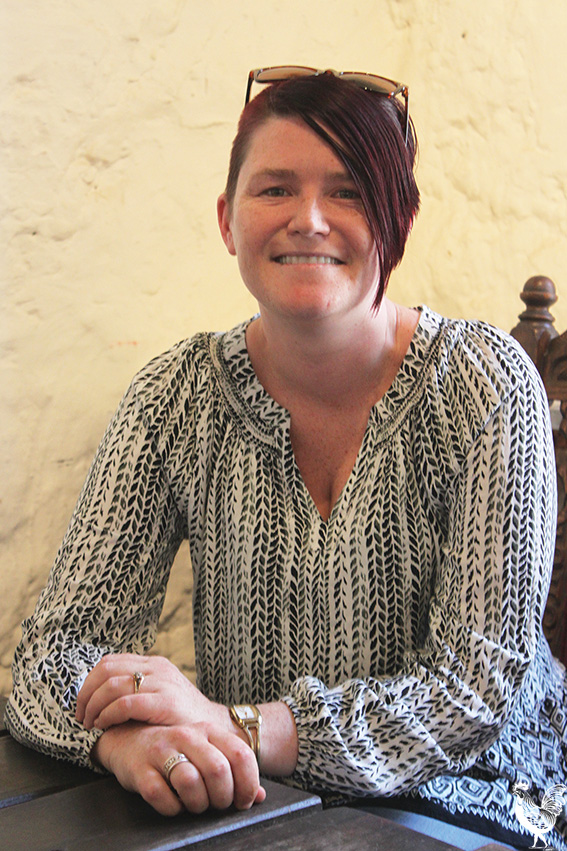
    • Paint bombing In Maylands: last month (top two images) and last Sunday (bottom two). Photos by Catherine Ehrhardt

    Wanton

    “Whether people like the painting or not is subjective, but to wilfully destroy someone else’s hard work is not cool at all,” says Cr Ehrhardt.

    She says last month only murals were vandalised, but this time it “seems a bit more mindless”.

    “It’s more than just artwork: at Mrs S it was a blank wall,” she sighs.

    “It’s random wanton destruction.

    “If someone needs a wall to splatter, they should give me a call and I’m sure I can hook them up with one to splatter to their heart’s content,” Cr Ehrhardt said.

    William acknowledged the paint bombers when he touched up his work after the first attack, leaving pink highlights where it had been splattered.

    A new spattering of yellow has again ruined his mural.

    But William says artists shouldn’t be too precious about their public art.

    “Just as street artwork is a statement, this is someone’s way of their statement,” he says.

    “This doesn’t bother me, it’s just some paint.”

    The artist says he thinks more vandalism could occur now it has captured the community’s attention.

    “Giving it attention is that they want, so I guess it’s working,” he says.

    CCTV may have captured two of the incidents, but Cr Ehrhardt says because most of the paint bombings happened on private property, the owners need to file police reports to help council catch the vandals.

    by MOLLY SCHMIDT

  • Small bin cash back

    Vincent residents can now get a $40 cash back on their rates if they swap to a smaller bin as part of the city’s waste reduction trial. Vincent mayor Emma Cole says they want to reduce the amount of waste going to landfill.

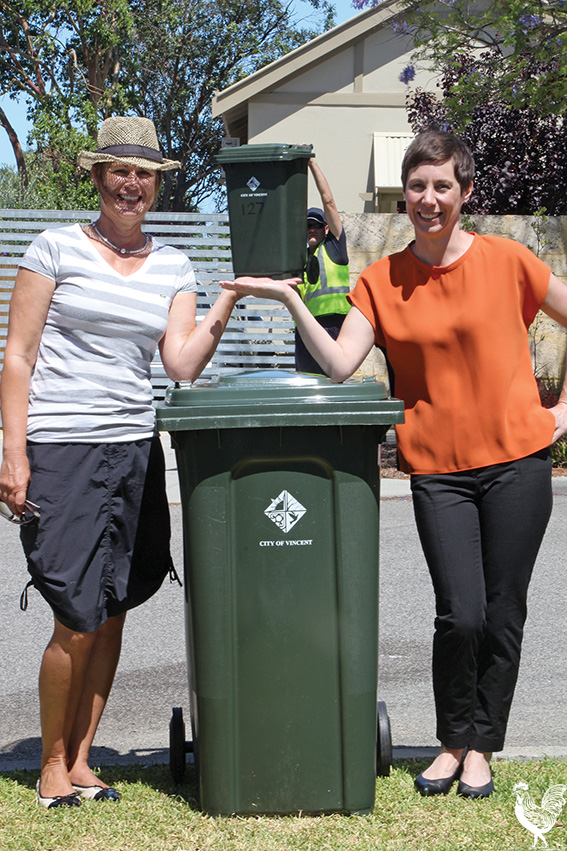
    • Simone Sigismonde and Emma Cole show off the new smaller bin, with a little help from Vincent staffer John Kirby. Photo by Steve Grant

    “We are encouraging residents to reduce waste and save,” she says. “This key 2017/18 budget initiative delivers a one-off $40 cash back to residents who are willing to take up the waste challenge by swapping their big 240L bin to a smaller 140L bin. What we do with our waste today will impact our generation and our future generations. Sadly the amount of waste we produce is growing, with 52 megatonnes generated a year in Australia, according to ABC’s War on Waste.”

    Currently the minibin trial’s just for owner-occupiers of single dwellings, and not for strata units. If you’re a homeowner in Vincent and want to sign up for the minibin trial, give them a call on 9273 6000 or head to http://vincent.wa.gov.au/140Lbin.

  • Alfresco fees cut

    THE new balance of power at Perth city council is leading to change, with the council voting through a previously-stymied plan to cut alfresco fees.

    This week councillors reduced the fee charged to restaurateurs for setting up an alfresco from an average of $140 per square metre, to a flat rate of $40 per square metre.

    The move will result in a revenue loss of $217,000.

    It was the first council meeting with acting lord mayor Jem ma Green in charge, while Lisa Scaffidi has stepped down from her duties awaiting an appeal over her suspension.

    It was also the first full meeting for councillors Steve Hasluck and Lexie Barton.

    Cr Reece Harley has been pushing for the council to completely scrap the fees for a couple of years now, arguing alfresco dining makes the city more lively and they shouldn’t be discouraging it.

    It was also raised as a priority at the recent “Perth City Summit” consultation forum, organised by Perth Labor MP John Carey.

    But at last June’s meeting the fee reduction was voted down by Ms Scaffidi and a majority of councillors.

    Cr Harley said he’s happy with the result but “I’m going to keep pushing for abolition, it should be set at a rate of zero.”

    The renewal period’s also been changed from annual, to every three years.

    “At the moment people have to submit it every year and our staff have to review it every year,” Cr Harley says.

    “It’s costing everyone time and money, so extending that up to three years is a huge win.”

    The amount of space that has to be left for pedestrians between the shop and the alfresco has been cut from three to two metres, and diners will now be able to have a drink outside while standing (provided the liquor licence allows it as well).

    City businesses got more love on Tuesday night with councillors voting for free parking in some city carparks after 4pm in the two weeks leading up to Christmas.

    Cr Green says “Free parking from 4pm in selected car parks from 15 to 24 December will also encourage people into Perth to shop, enjoy the Christmas Lights Trail or simply rediscover bars, restaurants and entertainment venues.

    “We know small business has been doing it tough due to recent global economic conditions, and these measures can be implemented to help stimulate the economy.”

    A selected free-parking trial had been something councillors James Limnios and Harley had pushed for in the past, but were defeated by the former council line-up.

    by DAVID BELL

  • HIV: break the stigma

    WHEN Kristal Walker tested positive for HIV seven years ago, she knew very little about the illness and says “I thought I was going to die”.

    Nowadays, modern medication given to people living with HIV is largely side-effect free, can keep the illness under control, and renders the viral load completely undetectable.

    In recent years several pieces of research, including the landmark PARTNER study, have followed thousands of couples, revealing that when the viral load is undetectable, it was not sexually transmitted.

    Misguided

    Ms Walker is one of the faces of the new Undetectable=Untransmittable awareness campaign, aimed at getting the message out about the latest research and debunking outdated attitudes.

    Ms Walker contracted HIV from a former partner in South Australia.

    He disappeared, and she then lost her job at a Telstra call centre after management found out about her condition.

    She moved to WA and has been trying for a baby with her current partner for three years. He remains HIV negative.

    Ms Walker says she was shocked that he didn’t run for the hills when she first told him she had the virus.

    • Kristal Walker is taking part in the Undetectable=Untransmittable HIV awareness campaign. Photo by David Bell

    “It is scary to tell your partner, it really is,” she says.

    “But I explained it to him at the start.

    “I’d always wanted kids, and seven years ago when I found out, I thought there was no chance in hell—I thought my sex life was over.”

    Ms Walker now liaises with an specialist who helps HIV+ mothers at Princess Margaret Hospital.

    With no treatment, a pregnant woman has about a 10 to 20 per cent chance of passing HIV to her baby.

    Treated and with an undetectable viral load, the risk just about disappears, and prophylactic medicines can be given to the baby shortly after birth.

    But Ms Walker says the message is hard to get out there, and many people are still operating on old and misguided information.

    “The most shocking response is when they don’t know there’s a difference between HIV and AIDS,” she says.

    “I’ve been asked that question about ten times.”

    HIV (Human Immunodeficiency Virus) can progress to the more serious condition AIDS (Acquired Immune Deficiency Syndrome) when it is untreated for about five to ten years.

    On modern medication, people can live out their lives with it never progressing to AIDS.

    Now studying counselling and 30 years old, Ms Walker says many women with HIV often don’t speak up, and she’s hoping the campaign encourages more to come forward.

    “I only know one or two: most women when they do get it brush it aside and power on, and keep really quiet about it,” she says.

    “In the gay community, people are more open about it.”

    She says her life has felt a lot more free since she started being open about it, first telling her fellow counselling students and getting an understanding reaction, then featuring in a DVD telling her story for the AIDS council, and now with the U=U campaign.

    She is also a member of the new group, Positive Organisation of WA.

    “I just wanted to get it off my chest,” she says.

    It also led to her meeting another woman with HIV, one who’d had the illness for 30 years. Knowing someone who’d had HIV for as long as Ms Walker had been alive, made her more optimistic about her own future.

    Ms Walker, and other people living with HIV, will be sharing their stories via videos posted on positivewa.org, from November 26 to World Aids Day, December 1.

    by DAVID BELL

  • Bombed out

    IT took petty vandals just three days to wreck the yarnbombing on trees in Maylands town centre.

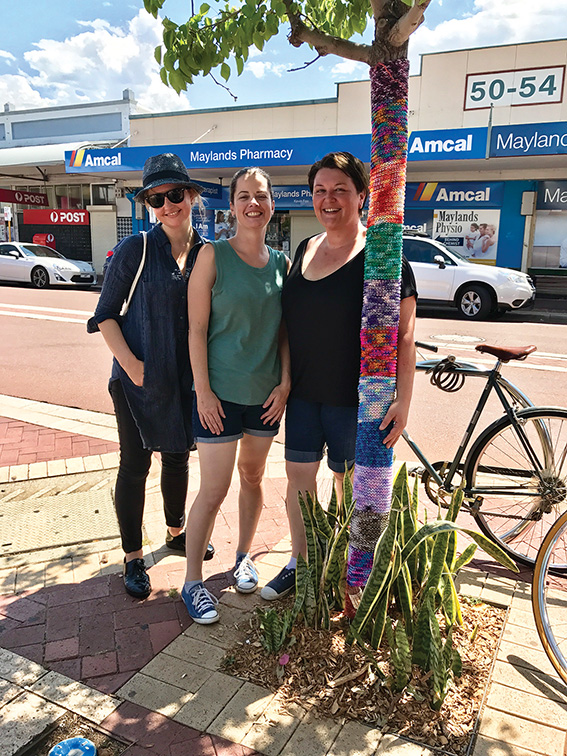
    Bayswater councillor Catherine Ehrhardt, the city’s placemaker Emma Snow and Creative Maylands’ Kate Thomson had a walking bee recently, installing knitted, rainbow skivvies and polls on some Eighth Avenue trees.

    A few days later, three of them had been pulled down.

    • Emma Snow, Kate Thomson and Catherine Ehrhardt’s yarnbombing did not last.

    “This is why Maylands can’t have nice things,” Cr Ehrhardt told us.

    “We have no idea who did it, or why, but it would have been nice for everyone to participate in the joy that a little bit of colour brings.”

    Public artworks and buildings in Maylands have also been targeted by paint bombers over the last month.

    See “Daub in the vandals” on page three.

    by DAVID BELL

  • Baysy art reboot

    BAYSWATER council’s trying to get better public art in the city by introducing a more flexible per cent for art scheme.

    Previously, owners of developments costing more than $1 million had to set aside 1 per cent of the cost to pay an artist to incorporate an artwork on site.

    Critics argue this has led to some artworks being shoehorned in solely to satisfy the letter of the policy, with little regard for having the piece in an appropriately artistic context.

    The new policy will instead let developers pay that money into a rolling fund that Bayswater council can then use to erect a really speccy piece of art in a public space, where more people can appreciate it.

    • This $720,000 public artwork at the old Ross’s Auctioneers and Valuers metal site in Bayswater divided critics. File
    photo

    Cash pool

    Bayswater mayor Dan Bull says “developing and fostering art and culture within our local community is vitally important.

    “The ability to express and celebrate our creativity, identity and history is an integral part of our cultural identity.

    “In contributing 1 per cent of the cost of new or renovated buildings towards public art, developers are giving something tangible back to the community,” Mr Bull says.

    The rolling fund will enable the city to take a proactive and coordinated approach to the delivery of public art in public spaces.

    “Artworks will be located in areas all of our residents love to gather, shop and linger—our retail centres.”

    “Public art creates a sense of place and expresses the identity of the local area as well as making streets and buildings more easily identifiable.”

    Vincent council introduced a similar all-in public art cash pool after a few incidents where developers stuck underwhelming art projects on their buildings.

  • Chef to the stars

    WHEN Steven Spielberg dropped in on mate Gwyneth Paltrow, it was love at first bite, and he promptly hired her private chef Kate McAloon.

    It wasn’t long before McAloon was running between both of their Hollywood homes and cooking up a storm.

    “When I was super busy I’d do brunch in the morning and the Spielberg’s in the afternoon,” she says.

    McAloon has whipped up breakfast, lunch and dinner for a bunch of famous stars, including Miranda Kerr and Orlando Bloom, and was Courtney Cox’s chef for four years.

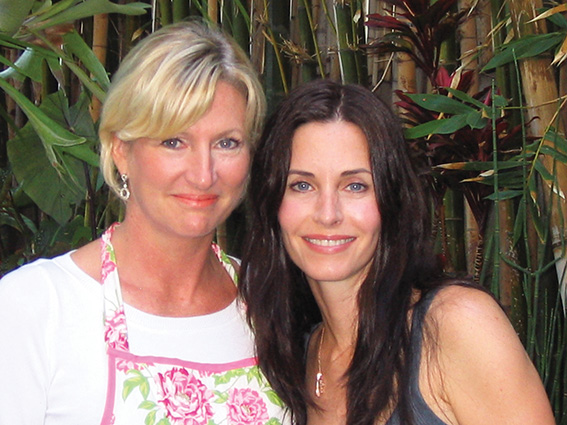
    • Chef Kate McAloon and Courtney Cox. Photos supplied

    McAloon’s in Australia to spruik her cookbook The Flavour of Joy, and is giving a series of talks on cooking with oil, in this case Young Living essential oils.

    Born with a mixing spoon in her mouth and a natural talent for amazing flavours, McAloon uses a range of 35 oils, including cinnamon, celery, lime and ginger, in a swag of her own recipes.

    “I like to finish with an oil—you can put it in ahead of time but at the end it adds vibrancy,” she says.

    “I spray it on, drop it on, and with a roast chicken I put some in the oil, and at the end spray or brush with more.”

    Cardamon, and all the citrus flavours are McAloon’s favourite. “Cardamon is amazing—I love it in a latte.”

    • Cooking oils

    McAloon fell into cooking, has no formal chef training, and only worked in one restaurant in France.

    Her cooking career took off in Hawaii, when McAloon dropped into a real estate office to promote her feng shui services.

    A casual conversation about her cooking was overhead and before she knew it, McAloon was hired by TV stars Nick Offerman and wife Megan Mullally who were filming there.

    “I cooked for them for three weeks,” McAloon says.

    Word spread in celebrity circles about her amazing food and pretty soon she was cooking for the who’s who of Hollywood.

    Preparing food for finicky stars isn’t as tricky as it sounds, McAloon says.

    “I can make everything flavoursome,” she says.

    “And I understand how to make flavoursome vegetarian and vegan.”

    McAloon is passing on her years of experience at a workshop at the Stirling Community Centre, 12–2pm on December 3. For more info go to flavourofjoy.com. Tix $55 trybooking.com/KMcAloon.

    by JENNY D’ANGER

  • Master of disaster

    WHAT’S the worst film you’ve ever seen?

    I can almost guarantee it’s nowhere near as bad as The Room, Tommy Wiseau’s self-funded disasterpiece, starring his friend and acolyte Greg Sestero.

    Often described as the Citizen Kane of bad movies, The Room got a critical drubbing when it was released in 2003 and more laughs than Bob Katter’s take on same-sex marriage.

    Wiseau spent $6 million making the romantic drama, but it only took $1800 at the box office.

    What happened next is difficult to fathom.

    The Room became a cult phenomenon and continues to screen to packed audiences across the world, including Perth’s Luna Cinemas, where the film has run for the last five years.

    In 2013, Sestero released his book The Disaster Artist: My Life Inside The Room, documenting his experiences working on the infamous turkey.

    • Greg Sestero (Dave Franco) and Tommy Wiseau (James Franco) in The Disaster Artist. Images supplied

    Hollywood actor James Franco loved the book and decided to make it into a movie, The Disaster Artist, released in Australia later this month.

    “God bless those fans, man,” Sestero told the Voice. “They’ve really turned this thing into what it is. Three weeks after the book came out I had a call from James [Franco].

    “James had never seen The Room before. He read the book first which was great because I really wanted the book to stand alone from that film. It was a great feeling to know that he had read the book let alone wanted to make it into a movie.”

    Sestero’s goal was to tell an inspiring story without ridiculing The Room and its creator Wiseau, who was convinced his film was going to make him the next Marlon Brando.

    • Tommy Wiseau in a scene from The Room.

    “The book was never meant to be about mocking anyone in any way, especially Tommy,” Sestero says.

    “He is obviously very sensitive and I know he didn’t really care too much for the stuff regarding the way he behaved on set.

    “I have a lot of respect for Tommy but I had to share the truth about my experience for the story to work. I’m sure there’s things in there that he’s not crazy about, but he calls the book the ‘Red Bible’, so he must like it.

    • Greg Sestero

    “Making The Room was very intense and The Disaster Artist has captured the spirit of my experience making that film and my friendship with Tommy Wiseau very well.”

    The Disaster Artist stars Dave Franco as Greg Sestero, James Franco as Tommy Wiseau and Seth Rogen as Sandy Schklair.

    It is showing at Luna Leederville from November 30.

    by MATTHEW EELES

  • Local and proud

    No one makes anything in this country anymore” is a common refrain heard across Australia.

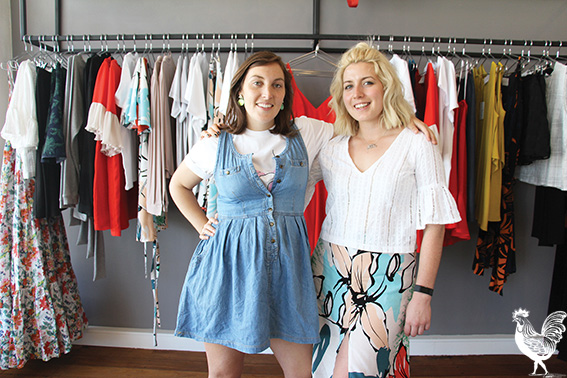
    But as as the service industry continues to subsume our economy, Erin Taylor and Kate Wilks, co-owners of clothes store Ilka, are bucking the trend.

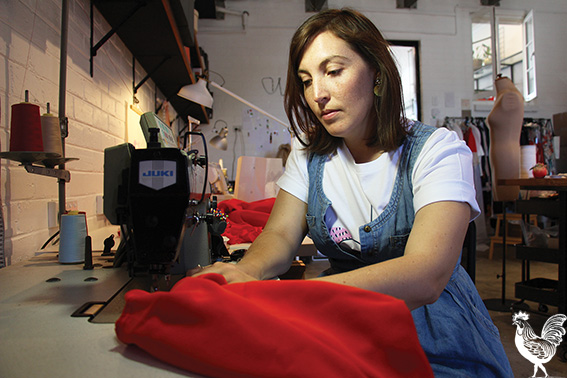
    They produce their clothes as locally as they can, with many pieces made by hand in the workshop at the back of their Mt Hawthorn shop.

    “We get everything produced in Perth where possible,” Taylor says.

    “We have a line of t-shirts now where the fabric is made in Victoria, we get the shirts made in O’Connor, and all the screenprinting’s done in Ozzy Park.”

    Wilks says; “I had this misconception that when you’re succeeding [in fashion] you’re travelling the world.

    • Mt Hawthorn’s Ilka is run by Erin Taylor and Kate Wilks, who make a lot of their wares in the workshop behind their showroom. Photos by Steve Grant

    “But why not create an industry that’s right at your front door?

    “Our production team is not even five minutes down the road…you can’t get any more local.”

    The local approach means their clothes don’t rack up huge amounts of carbon miles, so their transport costs are low, and getting everything done locally means their clothes are ethically produced, and not coming out of sweatshops in Cambodia or Bangladesh.

    “The other side of this is that you’re stimulating the local economy as well,” Taylor says, “and if you do that then they can support you.”

    The pair met while studying fashion design at TAFE, and while some aspiring designers looked down on the term “clothesmakers”, they’ve embraced it and love working with their hands.

    From early on they shared ideas of ethical fashion, and wanted to make “trans-seasonal” clothes that didn’t get tossed out at the end of the season, like a lot of the fast fashion styles with a short lifespan.

    “On the ethical, sustainability side of things, the clothes from last season aren’t old, they aren’t gone, they’re collector pieces,” Taylor says.

    Their design ethos is ‘classic made contemporary,’ putting their own spin on timeless designs.

    “They don’t lose their relevance after six months.”

    “Perth, and Australia as a whole, is proving that those fast fashion models coming from England and Europe aren’t working over here,” she says.

    “Topshop opened and closed already.”

    Taylor says Australia’s taste in clothes is a bit like our taste in coffee.

    “We have good stuff here and people like to shop local,” she says.

    She says it’s comparable to Starbucks, the coffee giant that’s taken off just about everywhere but struggled to crack the market here.

    Ilka has been open for a year and in the future they’d like to expand the workshop out back and ramp up production, but for now they’re happy working as a duo.

    “Our relationship’s way better than it’s ever been,” Wilks says.

    Ilka
    377 Oxford Street, Mt Hawthorn
    Open Tuesday to Saturday,
    10am to 5pm