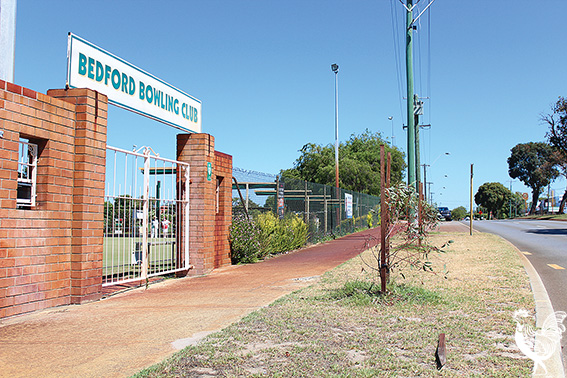
THE Bedford Bowling Club has asked Bayswater council to replace four recently-planted saplings on its verge.
The city doubled its tree budget to $400,000 last year and planted an extra thousand street trees, but the bowlers are concerned four coral gums along Grand Promenade will drop leaves on the club’s greens when they grow up.
•These baby trees weren’t appreciated by the Bedford Bowling Club. Photo by Trilokesh Chanmugam
They want non-droppers instead.
“When these trees get a little older and start to shed their leaves our grass greens are going to cop the brunt of it,” the club wrote to the council.
“Due to the nature of the greens they cannot be raked and as such can cause the grass to mildew.”
The city sent out an arborist who reckons the trees shouldn’t be much of an issue, as they’ll only grow eight metres tall and are six metres from the turf, so staff have recommended they stay put.
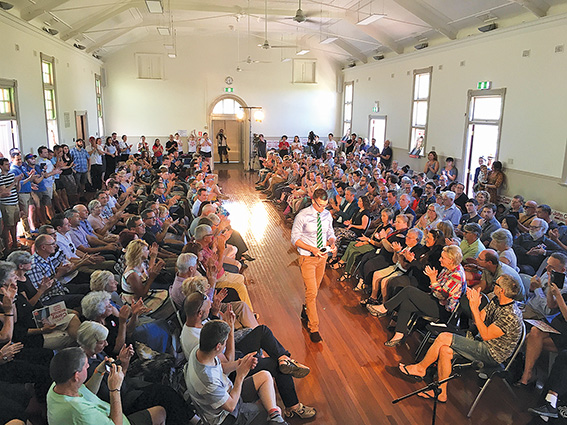
LABOR’S candidate for the state Perth seat John Carey launched his campaign Saturday January 21, with about 270 people packing out Perth town hall to wish him well.
During his speech Mr Carey recalled his father’s advice: ‘In politics, one day you’re a rooster, the next day you’re a feather duster’.”
He said its message was to avoid becoming arrogant or feeling entitled: “In today’s climate this saying is more important than ever, and I think my dad should have whispered into Colin Barnett’s ear.”
• About 270 people turned up to see John Carey launch his campaign for the state seat of Perth.
Diversifying
During his speech he criticised the government’s management of the new children’s hospital and overcrowded high schools, while calling for more work on diversifying the economy.
Come the March 11 election he’ll be facing incumbent Liberal MP Eleni Evangel, a former Perth city councillor who won the seat with a big 12 per cent swing in the primary vote against Labor in 2013.
Ms Evangel is urging voters to stick with a Liberal government and continue their efforts to strengthen tourism with big projects like Elizabeth Quay and the Perth Stadium.
Ms Evangel has recently taken aim at the “misrepresentation” in Labor’s campaign against the privatisation of Western Power saying the Opposition’s scare-mongering.
TWO candidates popped in last-minute nominations for a vacancy in Vincent council’s south ward.
A solicitor practicing family law, Amy Fels has lived in south ward three years and has some previous political-ish experience as a guild councillor at UWA. Ms Fels says she’ll use her “experience working with constituents and stakeholders to foster transparency at the council level”.
Dave Evans is a 29-year-old engineer who says he’s “not politically affiliated,” and wants to develop community forums “to discuss safe and economical commuting to local schools, shopping strips and workplaces [and] making better use of our streetscapes”.
They joins candidates Mai Nguyen, Frances Harrison, Jonathan Hallett and Malcolm Boyd, the latter who’s also running against Emma Cole for the position of mayor caused by John Carey’s resignation.
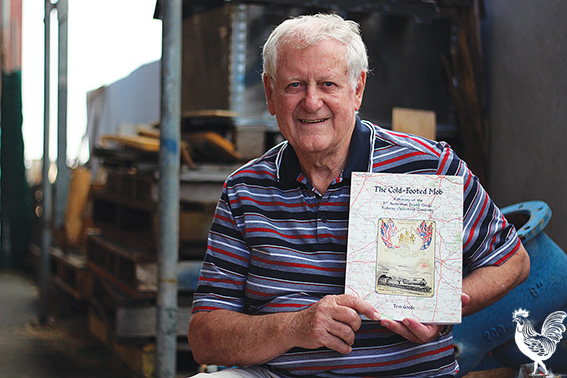
TOM GOODE has uncovered a little known part of World War I history.
The Mt Lawley railway buff has penned a book about long-forgotten railway workers who brought ammunition and supplies to the trenches of Belgium while under threat of German artillery fire.
It’s rare to find even a Great War buff who knows about the 5th Australian Broad Gauge Railway Operating Company, and Goode only found out about it by chance while volunteering at the Fremantle army museum.
“You get used to answering all the queries about army abbreviations, unit patches, and you reckon you know a fair bit,” he remembers.
“Some people turned up one day with a donation of a postcard from a great uncle, and it was signed by a bloke with his rank and just the initials 5AGBROC. We all looked at each other and said … ‘what’s that?’ We couldn’t find a record of it at the museum.”
• Tom Goode with his book The Cold-Footed Mob. Photo by Trilokesh Chanmugam
British command
The unusual company wasn’t given a lot of official recognition because it was placed under British command at the front, while most Aussie journos and diarists were nested with ANZAC units.
But as Goode pored over old war diaries a picture of the company and its unusual beginnings emerged.
The poms were having a hell of a time getting supplies to their front lines, particularly ammunition (they fired 1.5 million shells in the opening assault of the Battle of the Somme alone) because many of the railwaymen who’d rushed to sign up had already been killed and there were few to replace them.
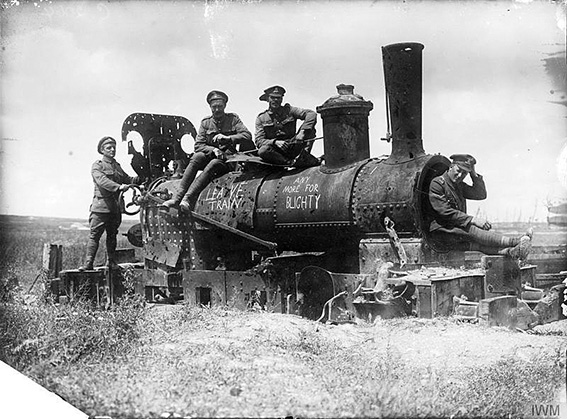
• Allied railwaymen aboard a captured German train at Ypres in 1917.
“By 1916 the British government needed more railwaymen, so they asked the colonies,” Goode says.
Prime minister Billy Hughes didn’t think there’d be much enthusiasm to sign up as Australians had recently rejected conscription in a referendum, but he’d underestimated the country’s enthusiasm.
Conscription
“They put out an advert in November 1916, and the response was such that they could make five companies,” says Goode.
Most signing up were often over-age or below fitness standards, but still eager to go to the front.
“They relaxed age and fitness requirements,” says Goode. “The oldest bloke I tracked down was 65. He just shaved his moustache off and joined up.
They operated the train lines in Belgium near Ypres, running countless tonnes of artillery shells to the frontline and moving around the giant railway-operated howitzers, setting them up to fire and then moving them if the German counter-artillery got too intense .
It was more up close and personal than anyone expected; other troops mocked them as the “cold-footed mob” who be “going off on a picnic” miles from the action.
After about 10 years of research, The Cold-Footed Mob is being launched on January 28, 100 years to the day after the railway unit left WA, at the Old Midland Courthouse at 10am, and copies are available from the publisher at http://www.hesperianpress.com or from Tom himself at tomgoode@iinet.net.au
THE Museum of Perth has moved into new digs at the historic Atlas Building on the Esplanade.
Plans to restore the building and build up a presence include reviving a tradition of flying the Australian flag, one that’s been dormant for half a century.
The Atlas Building was opened in 1931 to house the Atlas Assurance Company, and Museum chair Reece Harley says they’ve pored over old photographs and the last flag they could spot fluttered for Queen Elizabeth’s antipodean visit in 1954.
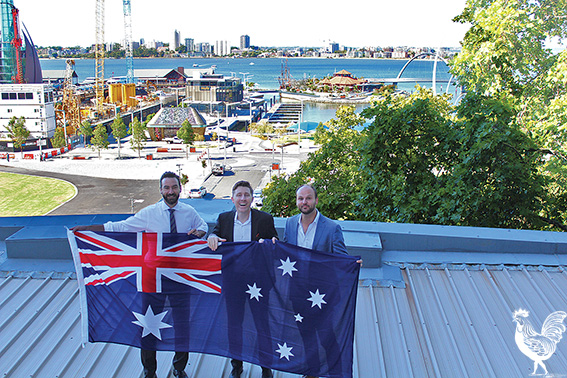
In the lead-up to Australia Day federal MP Tim Hammond dropped by to donate an Australian flag.
Mr Harley says there are also plans to restore the iconic Atlas statue that stood on the roof until 1969. “We’ve found it … it’s at a secret location, and we’re working with the owner of the building to put it back there,” he says.
• Tim Hammond, Reece Harley, and Atlas building manager Steven Hasluck restoring the flag tradition at this 85-year-old building. Photo by Trilokesh Chanmugam
Great Depression
“We want to put the statue in the foyer and get a replica made for the roof.”
The museum’s first exhibition in the new spot is a history of the building itself, and it’s riddled with interesting tales. The foundations were laid before the Great Depression hit full swing, and construction continued despite tough economic times: “It was opened right in the midst of the depression, and it’s a statement of confidence in WA that they continued building it,” he says.
It’s also significant for having all of its architectural detailing done by Margaret Pitt Morrison, the first registered female architect in WA. Daughter of famed architect George Pitt Morrison, she’d go on to design many more of Perth’s buildings.
Over the years it’s hosted the AB Webb School of Art, the Road Board of Perth, the Stock Exchange of Perth and the Wheat Board. In 1933 Professor Frank Beasley gave a lecture there on Fascism to the Perth Junior Chamber of Commerce.
The history of the Atlas is on until February 10 at 8-10 The Esplanade, Perth. Times and info at http://www.museumofperth.com.au
FIXING up Maylands Waterland could cost more than anticipated, with some plans coming in at double the $3 million Bayswater council had earmarked for the project.
It’s a beloved community asset popular with young families (since the shallow waters are more youngster-oriented than nearby Bayswater Waves) but it’s tired and falling apart. This will be the last season it’s open without a costly renovation.
The council’s been undertaking a lengthy consultation process, workshopping ideas with locals about rejigging the park.
But the two preferred options have rung up at almost $6 million.
Council staff say they could come up with a couple of cheapy options to keep the cost down or councillors will need to approve a bigger budget.
Whichever option’s chosen, it’ll go back out for consultation in mid-March.
Meanwhile Bayswater Waves will also need a pricey refurbishment, with just under a million set aside for works this year. The “underutilised” outdoor dive pool may be nixed to save money. It barely gets used because the diving boards that were meant to be installed were never put in because of “public liability issues,” so it only occasionally gets used for scuba training.
PORTRAITS of early Chinese migrants are displayed alongside those of Perth’s current Chinese community in the free exhibition Kiss the Sun, Marry the Moon, held for the Chinese New Year.
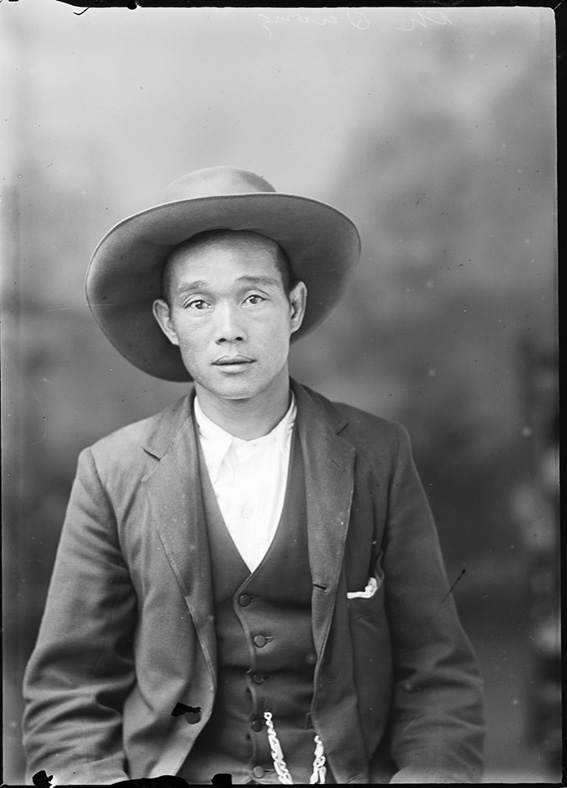
The vintage portraits were taken by Perth snapper Denis Dease between 1900 and 1927, but were lost after the studio’s closure.
• Ah Quong
They were unearthed in the 1980s in the basement of the Perth fire station, and now local historians Kaylene Poon and Marjorie Bly are now trying to unearth the details of the Chinese subjects, unveiling stories of hardship, resilience, love and loss in a new country.
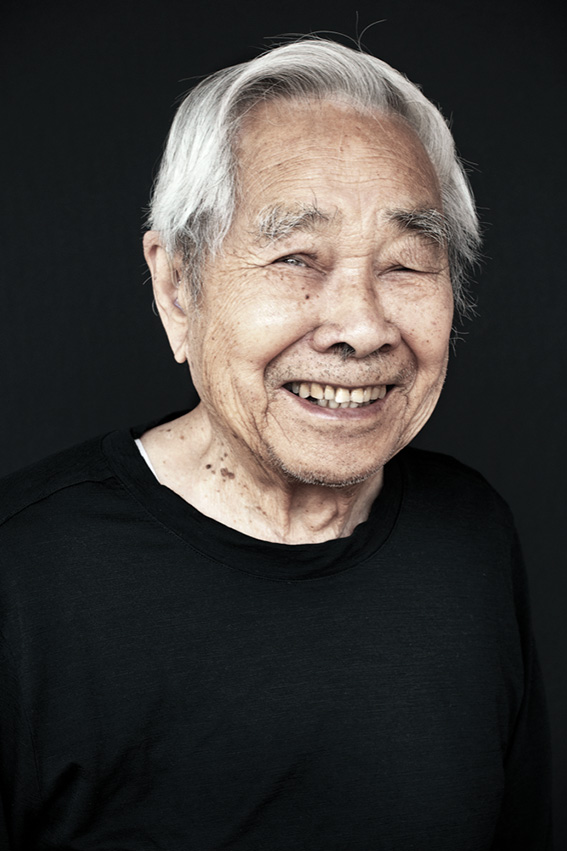
The vintage images are paired with modern day portraits by Brett Cánet-Gibson who’s photographed figures like William Chiew, now 91 years old. Born in 1925, he was one of the first Chinese market gardeners of the day. Contrasted with the older images, they tell a tale of hope and new beginnings as the Chinese community established itself firmly in Perth.
• Bill Chiew
The free exhibition for the Year of the Rooster runs from January 29 to February 5 at lots 5 & 6 Elizabeth Quay, times at http://www.cny.wa.gov.au
State election March 2017: With the state election just over the horizon, the Perth Voice takes a look at some of the policy announcements affecting seniors.
THE Liberal party is turning to film-makers to help sell a positive message about ageing.
Seniors and volunteering minister Paul Miles recently launched the Life in Pictures short film competition, to be held in partnership with the Revelation Perth International Film Festival.
“Society often values youth and beauty, while messages about ageing can focus on the negatives of getting older,” Mr Miles said.
“Research shows these negative attitudes can often lead to social isolation and have significant impacts on seniors’ health and wellbeing. People who view their own ageing negatively also tend to live on average 7.5 years less than people with positive attitudes.
“This competition will encourage everyone, the film makers and the viewers, to stop and think about how we view getting older. It will stimulate discussion about ageing in a positive way that values and shows respect to older people.”
The minister said the new initiative had received the endorsement of the International Federation on Ageing and World Health Organisation.
“Competition entries should highlight how older people add to WA’s communities, including their contribution to families, culture, the economy, volunteering and tourism,” Mr Miles said.
State election March 2017: With the state election just over the horizon, the Perth Voice takes a look at some of the policy announcements affecting seniors.
WA Labor says it will look at what government-owned sites can be converted into aged care facilities if it’s elected in March.
Aimed at freeing up public hospital beds, Labor’s plan also includes cutting red tape to let aged care providers build new facilities more quickly. The government would identify suitable land and get councils and state departments to expedite their development.
“Demand for aged care beds currently outstrips supply in Western Australia,” says Opposition leader Mark McGowan.
“As a consequence we currently have nearly 150 elderly waiting in our public hospitals until an aged care place can be found.
“The average wait for an elderly person in hospital to be transferred to an aged care bed is 68 days.
“At a cost of approximately $1910 per day, this is hardly the best use of taxpayers’ money.”
—————–
Tackling elder abuse
LABOR has also promised to address the growing problem of elder abuse.
The Opposition has pledged to speed up amendments to the law surrounding enduring powers of attorney and guardianship. It follows growing number of people looting their parents’ and relatives’ assets because oversight is lax.
Labor says it will establish a register of enduring powers or attorney and guardianship.
It would also set up education programs for professionals who regularly deal with elderly people so they can better identify possible abuse. Labor would also implement measures to assist isolated elderly people
State election March 2017: With the state election just over the horizon, the Perth Voice takes a look at some of the policy announcements affecting seniors.
THE WA Greens will create a policy unit for ageing.
The unit would develop and implement policies for seniors across the whole of government.
The Greens are also committed to providing suitable and affordable accommodation, both public and social for seniors, which would go hand-in-hand with appropriate support services so they can stay in their own homes.
The Greens will initiate and support legislation and actions that work with the building industry to adopt the standards of universal design for accessibility, adaptability and environmental sustainability.









 Perth Voice Interactive