• Maiden speeches

    SIMON MILLMAN and JOHN CAREY had their maiden Parliamentary speeches this week. DAVID BELL takes a look at what they had to say.

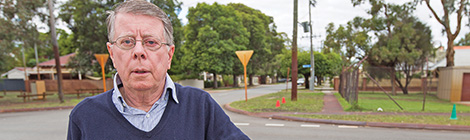
    John Carey

    IN his debut speech in parliament, Perth Labor MP John Carey warned against the “cheap, populist” politics of fear, called for a better standard of leadership, and quoted Yoda from Star Wars.

    “What we need is the type of political leadership that listens and generates solutions with our local communities to respond to this changing landscape as technology recasts the jobs environment and the global economic climate remains uncertain,” he said.

    “Ultimately we all have a choice about the type of political leadership we have to pursue.

    “The first is the cheap populist option.

    “Those leaders who prey on and perpetuate our worst fears, who exploit division in our community and promote the fear of difference.

    “They offer sound bites that do not address the causes of complex policy issues facing our community.

    “In this regard we should not be surprised by the rise of the likes of Donald Trump.”

    He told parliament the other option is “leadership that seeks to understand people’s concerns and the cause of those fears, has honest, open and upfront conversations about those issues, and works to take people on a journey about potential solutions.

    “This type of leadership brings out the best in people and human nature, to provide a positive vision for the future.”

    The former Vincent mayor said people have lost trust from broken promises, bickering in parliament, and “when they see politicians using taxpayer funds to fly to polo or sport matches, and wonder how one rule applies to ordinary workers and yet another standard appears set for politicians”.

    Mr Carey said parliamentarians needed to do better and trying wasn’t enough, “Or, as the 900-year-old philosopher Yoda once so wisely advised: ‘Do, or do not. There is no try”.

    Mr Carey said family tragedy shaped his views on healthcare:

    “Every west Australian has the right to receive quality healthcare when they need it, and that is the primary obligation that a state government must deliver to ensure trust and confidence in our hospitals,” he said.

    “I know this from first hand experience.

    “In seven years I lost my mother, father and sister, with my mum and sister in and our of hospitals due to cancer. I have the utmost respect and admiration for all those who work on a day to day basis in our hospital system. But we must never allow another fiasco such as the failed oversight of the Perth Children’s Hospital.”

    As he wound-up his speech, he quoted his dad’s mantra on politics: “One day you’re a rooster, the next day you’re a feather duster.”

    Simon Millman

    MOUNT LAWLEY Labor MP Simon Millman delivered his inaugural speech in parliament on Tuesday, saying he hoped to be part of a movement that would restore credibility to democracy after years of pettiness in politics.

    Mr Millman cited a recent Lowy Institute study that found only 42 per cent of 18 to 29-year-olds thought democracy was preferable to any form of government.

    “So often, people would tell me that they had been put off politics by the divisiveness, bickering and pettiness of our politicians,” he said.

    “They were disappointed by so many broken promises, and by a government that had lost belief in the important role of government in society.”

    He said “it was because I felt I could make a difference, advocate on behalf of my community, and restore some of the credibility to our democratic process, that I decided to nominate as the Labor candidate for Mount Lawley”.

    Mr Millman worked as a lawyer for Slater and Gordon on discrimination and native title cases, but he said it was the industrial manslaughter cases that stuck in his mind.

    “There is nothing quite like sitting down with Rose Marie Vojakovic to hear the story of a young woman in her 40s who is dying from mesothelioma because she played with deadly asbestos dust and fibres when she was a little girl in Wittenoom,” he said.

    He says industrial manslaughter “remains prevalent throughout the industry,” citing recent cases of under-trained backpackers dying in workplace accidents in Australia.

  • Town centre win

    BAYSWATER and Maylands residents have been quick off the mark to secure a tranche of $29,000 “quick win” funds to help activate their town centres.

    Bayswater council’s two new place managers recently held workshops with residents from Baysy, Maylands, Noranda and Morley, who helped develop a clear vision for their centres.

    At the well-attended workshops, participants were told the council would provide up to $1000 in seed funding for community-led activities that energised their town centres.

    Subsequently, the council reallocated $25,000 from its street festivals budget to get the ball rolling, concerned that if residents had to wait until the next budget cycle, they’d become disillusioned.

    • Henry on Eighth owner Steve Lavell with Bayswater council place manager Emma Snow. File photo

    Baysy and Maylands residents were quick to get their applications in, with funds now being recommended for an actor-led heritage tour of Baysy’s retail sector, a parklet, moveable speaker’s corner, pavement design competition, local artists exhibition, artwork around the Maylands Train Station, and hopscotch and colourful painting to delineate Whatley Avenue’s retail strip.

    Noranda and Morley’s residents weren’t so inspired and council staff had to come up with some ideas for them.

    Each town centre also has its own activation plan, which the place managers hope will eventually be superseded by ideas developed by grassroots organisations.

    Bayswater’s plan prioritises improved streetscapes and traffic calming, including diverting the 400-odd trucks that roar through each day with a new right turn at Garrett Road for trucks travelling along Guildford Road.

    A local events calendar is also proposed, along with reducing the red tape for events, including ditching a requirement for buskers to get permits.

    Bert Wright Park would also become a “green heart” with community plantings, edible plants, lighting for night-time activities and trees throughout the park.

    Maylands folk want a lush, green town centre with more street trees, flowers, parklets and “living” median strips.

    They’d also like to see Eighth Avenue improved so it’s a public space rather than a thoroughfare for cars.Locals want it resurfaced and remarked in the short-term, and eventually narrowed and curbed to slow traffic, becoming one-way or a “pedestrian street”.

    by STEVE GRANT

  • Fifteen storey Leedy

    A FIFTEEN storey building planned for Frame Court in Leederville is three times higher than council regulations permit.

    The site’s owned by Bankwest and developer TPG has prepared a “Local Development Plan,” hoping it will persuade council that its five storey limit for the area is outdated.

    TPG’s report says the 4,306sqm block is a prime site for more height because it’s close to Leederville Train Station, is in the heat of Leederville town centre, it’s near the Water Corporation offices (which is expected to be higher when redeveloped) and is right on Mitchell Freeway for easy traffic access.

    Vincent mayor Emma Cole says they’ve had 15 submissions about the LDP, with eight objections.

    She says the Leederville Masterplan and the more recently minted Built Form Policy state the area should be a maximum of five storeys, so any change would need justification.

    Vincent council’s Design Advisory Committee has looked over the proposal and are keen to see more detail.

    “The DAC has said they would really like to see how the LDP positively contributes to the locality,” Ms Cole says.

    The DAC’s comments and submissions will now go back to the applicant to see if they’re open to changes, before going to council for the vote.

    If the LDP is approved, that only sets a limit on paper, and any actual building on the site would still have to go through the usual council approval process.

    TPG says the proposed development site is “not in proximity to any sensitive residential land uses” and it is confident that local heritage gems won’t be impacted as the nearest significant historical property — 62 Frame Court, currently the HQ youth centre, but formerly Cullity Timbers — is 40 metres away. The Frame Court building, circa 1954, is listed on Vincent council’s heritage inventory as “Category A: Conservation Essential”.

    by DAVID BELL

  • Advert stoush

    STIRLING council adverts for the Terry Tyzack Aquatic Centre give the veteran councillor an unfair advantage at election time, says Cr Stephanie Proud.

    The city spends $38,500 a year advertising the aquatic centre, named after the former Stirling mayor who is still a councillor and up for re-election this year.

    Cr Proud wanted a moratorium on sitting councillors’ names appearing in ads until the local government elections in October, but city staff said that canning ads between now and October would result “in a predicted loss of $401,025 in revenue” and plunge the aquatic centre into the red.

    At last Tuesday’s meeting Ms Proud tabled an alternative motion to keep advertising the centre, but without any reference to Cr Tyzack.

    • Stirling Cr Terry Tyzack. File photo

    She was outvoted, only getting support from councillors David Boothman, Giovanni Italiano, and Keith Sargent.

    Councillors happy with the status quo were Karen Caddy, Mark Irwin, David Lagan, Elizabeth Re, Rod Willox, and Cr Tyzack himself (he disclosed an impartial interest, but was still able to vote).

    Council voted to name the Inglewood aquatic centre after Cr Tyzack in 2001.

    He was a sitting councillor at the time but didn’t vote on it.

    Neighbouring Vincent council only allows facilities to be named after a person, posthumously, unless there are “exceptional circumstances”.

    by DAVID BELL

  • Calling all Botanists

    KINGS PARK’S guides are in the process of training up the next crop of volunteers, with Linley (they don’t like using last names apparently) trying out her new skills on South African traveller Brenda Raubenheimer and pal Joanne Grant.

    Photo by Steve Grant

    The guides are also busy preparing to host the 2019 Australasian Botanic Gardens Volunteer Guides Conference, as they’ll be following in the footsteps of the prestigious Australian National Botanic Gardens in Canberra, which is hosting this year’s event in October.

    Topics covered in Canberra’s event including looking at climate change and guiding, adding a digital experience to garden visits and safeguarding Australia’s plants.

  • New tennis clubhouse 

    A REPLACEMENT for Bayswater Tennis Club’s dinky clubhouse has taken another step forward, with the local council approving the new designs.

    In March Bayswater council approved a $450,000 top-up to the $150,000 it had already reserved for the new clubhouse, with an additional $750,000 coming from the federal government and $50,000 from the club.

    Although the new clubhouse will be roughly a metre above what’s allowed in the planning rules, council staff say it’s well set back from the street, and no one has complained.

    The new building will include a players’ lounge, office/pro shop, toilets and a small bar and kitchen servery downstairs, and a function room with full kitchen upstairs.

    Demolition of the old clubhouse is expected to start next month.

  • Meltham plan rejected

    FOLLOWING a wave of community opposition Bayswater councillors have voted not to support the Meltham station precinct structure plan which allows bigger and denser buildings in the area.

    However the council’s vote is only a recommendation and final approval rests with the WA Planning Commission.

    The proposal was put forward by consultants WA Planning Solutions, on behalf of developer Pindan and land owners with substantial holdings in the area.

    If approved the structure plan would allow high-density retail and six-storey apartment blocks along Whatley Crescent and Railway Parade, tapering to three- and four-storey apartments within a 400m radius of the train station.

    • Bayswater locals opposed to the Meltham Station Precinct Structure Plan. File photo

    Hundreds of submissions along with a score of deputations to Bayswater council had a common theme — six storeys is too high.

    Several members of the Future Meltham residents group fighting the plan were happy with a modest level of development, but felt the proposed plan went too far.

    Bayswater mayor Barry McKenna said “the fact that council received over 350 submissions from the community speaks volumes about the anxieties the proposed structure plan has generated.

    “Council was concerned that the increase in density and scale of development would put the character, heritage and amenity of the area at risk.

    “The lack of public open space and potential for significant traffic congestion were also areas that in our view had not been adequately addressed.”

    The council’s resolution specified that if the WAPC approves the plan, it should be amended to include a reduction in building heights, more public open space and road intersection upgrades to ease traffic congestion.

    by DAVID BELL

  • Million dollar salvo dies

    SHIRLEY MORT, who spent 26 years collecting for charity on the Perth train station footbridge, has died aged 92.

    Ms Mort raised more than $1.7million for the Salvation Army, rattling her tin into her 90s when she retired last year.

    Perth lord mayor Lisa Scaffidi issued a public statement farewelling Ms Mort, however the council’s new rules effectively ban charity collectors from standing in the footbridge.

    We asked Mrs Scaffidi if she was aware the city had made it impossible for anyone to continue her work. She told us she was, but “it’s a different era to when Shirley was in the upper concourse walkway and it’s necessary for us to ensure city visitors are not overly imposed upon by collectors particularly given the vast number of charities and needs”.

    Mrs Scaffidi says a lot of charities are using other methods these days.

    “Most registered charities have significant strategies in place that see corporate or individual donations possible via annual contribution or online methods,” she says.“The city is very considerate to many homeless charities and others can seek formal approval for collections on preset days,” adding it’s about finding a balance for all.

    by DAVID BELL

  • LETTERS 20.5.2017

    Australia Day
    THE call by some councils and a very small minority of individuals to change Australia Day, does not speak for the majority of Australians or me.
    These minority individuals say they are speaking on behalf of Australians and Indigenous or culturally sensitive people, well that’s there opinion.
    These people are trying to rewrite history and next they’ll be wanting to do away with ANZAC Day, Christmas, Easter, etc.
    Indigenous people have been born, raised, housed, schooled and received medical treatment from Australians for the past 100 years or so, and it’s about time they finally accept that they are Australians just like the rest of us.
    Why should I/we be held responsible for what happened 150 or 200 years ago: we weren’t around then. It’s time to move on.
    If council or state government want to change Australia Day, then put it to the people and if rejected then you personally pay for the cost of having the vote.
    Why should ratepayers/taxpayers have to foot the bill for a few minority individuals.
    It is well overdue that Indigenous people realise that they have been living under Australian privilege for the past 100 years (not too many have been around for over 100 years).
    They are only wanting compensation for something they have no claim to.
    Nowadays a large majority of Indigenous people live within major cities and towns and have received special benefits that the rest of us have not.
    There should be no more them-and-us society.
    It will be a great day when our government stops treating Indigenous people as a separate group and treat us all as Australians.
    So to all those radical lefties, and trouble makers who like to protest at anything, please remember you are only an individual and you can’t force your opinion onto me or think you are speaking on behalf of me and other Australians because you don’t.
    Let’s remember history and move on to make Australia a better place to live, work and enjoy the facilities that has shaped Australia since Federation.
    Every country has things in their history that they would like to forget or are ashamed of; should it stop a nation from growing?
    Hell NO. I am an Australian born and raised and proud off it.
    Steven Cruden
    Witts Lane, Kwinana

  • ‘Welcome’ to Oz

    JASMINE KAZLAUSKAS’ grandfather was one of the original “boat people” — a Lithuanian refugee who came to Australia after becoming stateless at the end of World War II. In this week’s SPEAKER’S CORNER, Jasmine examines if Australia has ever really lived up to its self-promoted image of being a welcoming and hospitable country for immigrants.

    For those who come across the seas, we’ve boundless plains to share”.

    Despite this idyllic notion that has been instilled into the consciousness of our country, I don’t think that Australia has ever truly been the warm and welcoming wonderland that our jovial national anthem would have you believe.

    My grandfather, Petras, was just a teenager living in a rural Lithuanian village when the Second World War ravaged Europe.

    He was fortunate enough not to be of Jewish faith and thus ended up in a few relatively benign German labour camps instead of the lethal alternative.

    • Petras Kazlauskas in 1945. Photo supplied

    After the American liberation in 1945, he was unable to return to his devastated homeland which was now under strict Soviet occupation.

    He was officially stateless and became a ‘displaced’ person, a refugee, and thus didn’t belong anywhere.

    His dramatic anecdotal recital of his journey to Australia always enchanted me as a child.

    “I came to this country with nothing but a pillow,” he would always tell us.

    Social fabric

    “I had never even heard of Australia but that’s the boat my friends were getting on so I just went with them”.

    Migration has played an integral role in crafting the social fabric of our nation.

    However, people who have found themselves stateless due to internal conflict, human right abuses or natural disasters are not considered equal to other foreigners.

    Politicians are swift to label them simply as “boat people”.

    Thus, in an instant, these people are stripped of their status as human and are turned into a national crisis.

    Contemporary governments in Australia have been outspoken in their views on immigration.

    They’re adamant there is a right way and a wrong way to enter our country. There is no argument here.

    • Petras and Lilian Kazlauskas on their wedding day. Photo supplied

    There is an unequivocal need to protect our national borders from persons who may be dangerous to our national security. Terrorism and religious extremism is a real threat to the entire world and it would be extremely irresponsible to simply open the floodgates and allow anyone to immigrate to Australia without the proper precautions and background checks.

    However, as is the case for immigration, there is a right way and a wrong way to treat asylum seekers

    The United Nations has condemned our treatment of refugees and cited that Australia has committed direct human right abuses.

    What I am struggling to comprehend in this situation is the disparity between the way our government treats displaced persons now compared to 70 years ago.

    Despite the similarity of the situation, i.e. conflict that completely destroyed people’s home countries, we are far less accepting of refugees now than ever before.

    I have a theory: (some) Australians have always been inherently fearful of foreigners.

    Migrants have continually been met with varying degrees of tensions and hostility. Throughout history, people from faraway lands have been a source of fear and trepidation for our politicians and urban middle-classes.

    For such a young nation, there has always remained a certain level of Aussie pride and patriotism that has shaped our national identity.

    Whether it was the Chinese during the gold rush era, the Japanese during World War Two or the Vietnamese fleeing war in the 1970s, certain attitudes have meant that Asian minorities have continually faced a harsh reception here, from both everyday Australians and politicians (yes, I’m looking at you, 1990’s Pauline Hanson).

    The next groups to be vilified were the Italians, Greeks and Eastern Europeans who made Australia home after the Second World War.

    Although my grandfather’s similar skin colour made it easier for him to integrate into the social fabric, he was not immune from being called a “wog” or a “commie” now and again.

    Fast-forward to the modern day and national attention has shifted to migrants of Indian and Middle-Eastern background.

    A relatively new term has been introduced into the public consciousness during the last few years in light of the global refugee crisis: the phenomena of the Boat People. Let’s think about this for a second. Unless one is an Indigenous Australian, aren’t we all boat people? Or at least descendants of them? I know I am.

    The government is so fanatical about protecting “our land” from invaders and boat people that they seem to have forgotten what this nation was built upon: British foreigners arriving by boat to implement the largest invasion in this history of this country.

    The theft of sacred land and the execution of a colonial genocide upon an ancient people and their culture: now that is an invasion.

    A round of applause for the original boat people.